

A Country Gardener's Gardening Class
 |
Description
Book Introduction
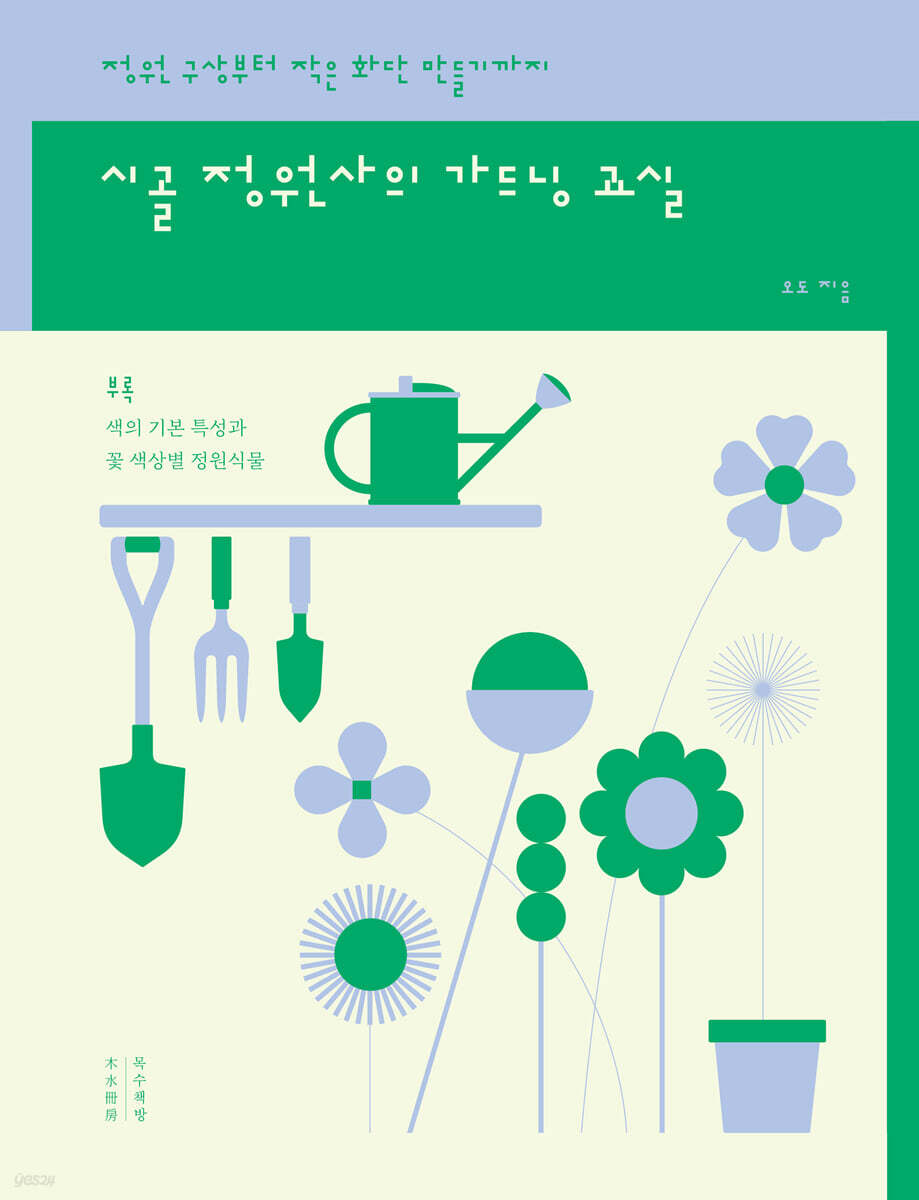
This is the kind of book that "The Country Gardener's Gardening Class" is!
A friendly introduction to gardening from a farming and horticulture instructor that provides step-by-step guidance on the essentials for beginner gardeners just starting out with gardening.
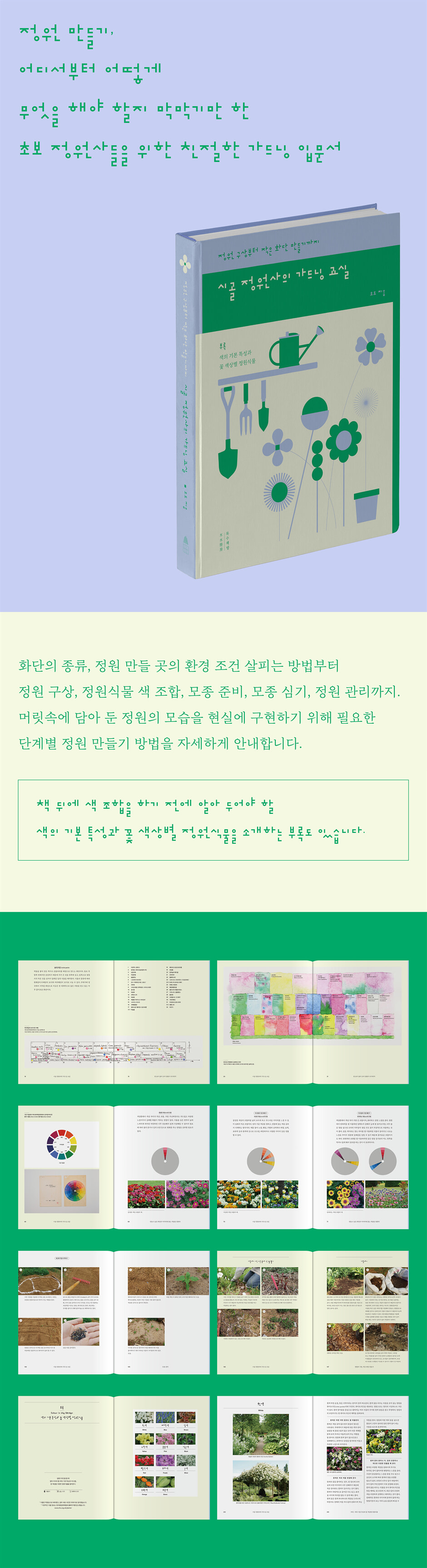
From examining the environmental conditions of the garden site to planning the garden, combining garden plant colors, preparing seedlings, planting seedlings, and garden management, this book will teach you the necessary gardening methods to bring the garden you have in mind to life.
A friendly introduction to gardening from a farming and horticulture instructor that provides step-by-step guidance on the essentials for beginner gardeners just starting out with gardening.
From examining the environmental conditions of the garden site to planning the garden, combining garden plant colors, preparing seedlings, planting seedlings, and garden management, this book will teach you the necessary gardening methods to bring the garden you have in mind to life.
- You can preview some of the book's contents.
Preview
index
Introduction
Chapter 1: From One Flower to Another, a Garden Comes Together
- What kind of flower bed do you want to create?
Bed | Border Garden | Wall Garden | Rock Garden | Bulb Garden | Container Garden | Herb Garden | Vegetable Garden | Pond Garden | Grass Garden | Forest Garden
Chapter 2: Examining the environmental conditions of the garden site
- What is the environment where the plants will grow?
Find out what the weather is like | Determine on-site how much sunlight will be coming in during the day | Check the soil conditions | Draw up a plan of how you will use the space | Think about when you want your flowers to bloom the most beautifully during the year | Budget how much maintenance time and money you will need
Chapter 3: Choose a color that matches the image of the flower bed you want to create.
- Let's dress the garden in harmonious colors.
The temptation of color | Colors in a garden that move the heart | Color combinations in a garden created with plants | Basic pattern of color combination 1 - Combination of the same color (monochromatic) | Basic pattern of color combination 2 - Combination of similar colors (analogous colors) | Basic pattern of color combination 3 - Combination of opposite colors (complementary colors) | Basic pattern of color combination 4 - Combination of various colors (multicolor) | Quantitative harmony | Design how to plant after thinking of a color image | Determine the ratio of annual and perennial plants | Arrange or plant together according to the height of the plants | Observe inflorescences and flower buds | Observe how a single plant grows | Examples of plant combinations
Chapter 4: Preparing Seedlings
- Let's prepare seedlings to plant in the garden.
Sowing seeds | Sowing seeds in potting soil | Sowing seeds in trays | Sowing seeds in pots | Sowing seeds in cutting boxes | Sowing seeds directly in the flower bed | Sowing seeds in spring | Sowing seeds in fall | Dividing the clump | Using a shovel | Using a fork | Using a knife | Using your hands | Transplanting seedlings | Taking cuttings
Chapter 5: Garden Basics: Creating a Small Flower Bed
- Once the seedlings are ready, let's make a flower bed ourselves.
Spring flower bed fertilization and planting | Pruning withered branches | Measuring the area for the flower bed | Drawing a planting plan (spring/summer flower bed) | Dividing the area after fertilizing and turning | Planting seedlings | Garden maintenance such as weeding and pruning | Weeding | Picking withered flowers | Pruning | Receiving seeds | Making a mini flower bed using pots | Replacing plants for the fall flower bed | Planting bulbs for next year's spring garden | Bulbs planted in fall to enjoy spring flowers | Bulbs planted in spring to enjoy summer/fall flowers | Dressing plants that are sensitive to cold | Enjoying the snowy winter garden and looking forward to next year
Appendix - Basic Color Characteristics and Garden Plants by Flower Color
White | Yellow | Red | Orange | Blue | Pink | Purple | Green | Brown | Black | Silver
Chapter 1: From One Flower to Another, a Garden Comes Together
- What kind of flower bed do you want to create?
Bed | Border Garden | Wall Garden | Rock Garden | Bulb Garden | Container Garden | Herb Garden | Vegetable Garden | Pond Garden | Grass Garden | Forest Garden
Chapter 2: Examining the environmental conditions of the garden site
- What is the environment where the plants will grow?
Find out what the weather is like | Determine on-site how much sunlight will be coming in during the day | Check the soil conditions | Draw up a plan of how you will use the space | Think about when you want your flowers to bloom the most beautifully during the year | Budget how much maintenance time and money you will need
Chapter 3: Choose a color that matches the image of the flower bed you want to create.
- Let's dress the garden in harmonious colors.
The temptation of color | Colors in a garden that move the heart | Color combinations in a garden created with plants | Basic pattern of color combination 1 - Combination of the same color (monochromatic) | Basic pattern of color combination 2 - Combination of similar colors (analogous colors) | Basic pattern of color combination 3 - Combination of opposite colors (complementary colors) | Basic pattern of color combination 4 - Combination of various colors (multicolor) | Quantitative harmony | Design how to plant after thinking of a color image | Determine the ratio of annual and perennial plants | Arrange or plant together according to the height of the plants | Observe inflorescences and flower buds | Observe how a single plant grows | Examples of plant combinations
Chapter 4: Preparing Seedlings
- Let's prepare seedlings to plant in the garden.
Sowing seeds | Sowing seeds in potting soil | Sowing seeds in trays | Sowing seeds in pots | Sowing seeds in cutting boxes | Sowing seeds directly in the flower bed | Sowing seeds in spring | Sowing seeds in fall | Dividing the clump | Using a shovel | Using a fork | Using a knife | Using your hands | Transplanting seedlings | Taking cuttings
Chapter 5: Garden Basics: Creating a Small Flower Bed
- Once the seedlings are ready, let's make a flower bed ourselves.
Spring flower bed fertilization and planting | Pruning withered branches | Measuring the area for the flower bed | Drawing a planting plan (spring/summer flower bed) | Dividing the area after fertilizing and turning | Planting seedlings | Garden maintenance such as weeding and pruning | Weeding | Picking withered flowers | Pruning | Receiving seeds | Making a mini flower bed using pots | Replacing plants for the fall flower bed | Planting bulbs for next year's spring garden | Bulbs planted in fall to enjoy spring flowers | Bulbs planted in spring to enjoy summer/fall flowers | Dressing plants that are sensitive to cold | Enjoying the snowy winter garden and looking forward to next year
Appendix - Basic Color Characteristics and Garden Plants by Flower Color
White | Yellow | Red | Orange | Blue | Pink | Purple | Green | Brown | Black | Silver
Detailed image
Into the book
Observe what flower seeds look like, sow the seeds, nurture them, design them to match the colors, plant them in the garden, and when the flowers wither, receive seeds again.
I think that as all of these processes are connected to the body, you naturally become a gardener.
Once you master the basics, each gardener's own unique garden will be created naturally.
I think that anyone who wants to grow plants, plant trees, and create a garden already has a garden inside of them.
Although it is lacking, I hope that this book will be of some help in taking that first step and will help to soothe my embarrassed heart.
Once you know the climate of your area, the next thing to do is figure out how much sunlight your garden will receive.
In other words, we need to know how much shade is cast.
A method I've learned through extensive experience is to go to the flowerbed several times a day and observe when the sun comes in and when it doesn't.
…If the place where you are going to create a flower bed is close to your house, you need to carefully check whether there is any shade from buildings, walls, fences, or neighboring buildings.
Detailed and meticulous observation is essential.
Masato is the soil between the topsoil and rock layers that are created when a mountain is cut. It has little nutrients and organic matter, so drainage is poor.
To improve this, first of all, you need to make a good drainage ditch, and then regularly add organic matter such as leaf mold to the soil to help it gradually change.
It is good to put it in twice a year.
When planting in spring and fall, when digging the ground to plant the plants, if you allow them to sink into the ground on their own, you can reduce the number of times you turn the shovel over them.
It is also effective to add compost at this time.
This process is absolutely necessary even for regular soil, not just Masato.
The beauty of a garden is first expressed by the variety of colors of the plants, so the combination of colors is very important.
The colors of the flowers and leaves change every day as the sun moves, and the colors of the garden also change with the seasons.
Light determines the colors we see.
The color of the flowers of garden plants plays the biggest role in catching the attention and catching the footsteps of those visiting the garden.
Since color is made up of hue (the pure color of each color, such as red and yellow), value (the degree of brightness or darkness of the color), and saturation (the degree of vividness or dullness of the color), when choosing plants to plant in the garden, we try to combine colors while taking these aspects into consideration.
Once the planting design and planting plan have been established, the only thing left to do is to find seedlings of the plants you want to plant.
There is one way to propagate by purchasing or receiving seeds and sowing them, and another way is to propagate them by dividing the clump when the roots remain underground like perennials and sprout again in the spring.
There is also a method of propagation called 'cuttings', where a part of a plant's root, stem, or leaf is cut and placed in the soil, and when roots grow, it is transplanted and grown into a single plant, which is then transplanted to a flower bed.
You can prepare seedlings by choosing one of these three methods that is easiest for you to use depending on the situation.
White can neutralize a variety of colors, but when used in large quantities it can create a feeling of expansion.
You may feel like your eyes are being distracted, so you may need to adjust the amount of white depending on the size of the space.
White looks more refined when supported by green trees or leaves as a background color.
When creating a white garden by gathering plants that bloom white flowers, it is a good idea to select and arrange them in a variety of flower shapes and heights, or leaf shapes and colors.
It can be a way to please the viewer's eyes without being buried in the overall white image.
Another charm of white is that the feeling of the garden changes depending on the color combination that goes with it.
When white and pink meet, a fairytale-like atmosphere is created, when white and blue meet, a cool feeling is created, and when white and red meet, a modern image is created.
I think that as all of these processes are connected to the body, you naturally become a gardener.
Once you master the basics, each gardener's own unique garden will be created naturally.
I think that anyone who wants to grow plants, plant trees, and create a garden already has a garden inside of them.
Although it is lacking, I hope that this book will be of some help in taking that first step and will help to soothe my embarrassed heart.
Once you know the climate of your area, the next thing to do is figure out how much sunlight your garden will receive.
In other words, we need to know how much shade is cast.
A method I've learned through extensive experience is to go to the flowerbed several times a day and observe when the sun comes in and when it doesn't.
…If the place where you are going to create a flower bed is close to your house, you need to carefully check whether there is any shade from buildings, walls, fences, or neighboring buildings.
Detailed and meticulous observation is essential.
Masato is the soil between the topsoil and rock layers that are created when a mountain is cut. It has little nutrients and organic matter, so drainage is poor.
To improve this, first of all, you need to make a good drainage ditch, and then regularly add organic matter such as leaf mold to the soil to help it gradually change.
It is good to put it in twice a year.
When planting in spring and fall, when digging the ground to plant the plants, if you allow them to sink into the ground on their own, you can reduce the number of times you turn the shovel over them.
It is also effective to add compost at this time.
This process is absolutely necessary even for regular soil, not just Masato.
The beauty of a garden is first expressed by the variety of colors of the plants, so the combination of colors is very important.
The colors of the flowers and leaves change every day as the sun moves, and the colors of the garden also change with the seasons.
Light determines the colors we see.
The color of the flowers of garden plants plays the biggest role in catching the attention and catching the footsteps of those visiting the garden.
Since color is made up of hue (the pure color of each color, such as red and yellow), value (the degree of brightness or darkness of the color), and saturation (the degree of vividness or dullness of the color), when choosing plants to plant in the garden, we try to combine colors while taking these aspects into consideration.
Once the planting design and planting plan have been established, the only thing left to do is to find seedlings of the plants you want to plant.
There is one way to propagate by purchasing or receiving seeds and sowing them, and another way is to propagate them by dividing the clump when the roots remain underground like perennials and sprout again in the spring.
There is also a method of propagation called 'cuttings', where a part of a plant's root, stem, or leaf is cut and placed in the soil, and when roots grow, it is transplanted and grown into a single plant, which is then transplanted to a flower bed.
You can prepare seedlings by choosing one of these three methods that is easiest for you to use depending on the situation.
White can neutralize a variety of colors, but when used in large quantities it can create a feeling of expansion.
You may feel like your eyes are being distracted, so you may need to adjust the amount of white depending on the size of the space.
White looks more refined when supported by green trees or leaves as a background color.
When creating a white garden by gathering plants that bloom white flowers, it is a good idea to select and arrange them in a variety of flower shapes and heights, or leaf shapes and colors.
It can be a way to please the viewer's eyes without being buried in the overall white image.
Another charm of white is that the feeling of the garden changes depending on the color combination that goes with it.
When white and pink meet, a fairytale-like atmosphere is created, when white and blue meet, a cool feeling is created, and when white and red meet, a modern image is created.
--- From the text
Publisher's Review
Gardening, if you don't know where to start
The number of people who want to be close to nature, grow plants, and maintain gardens has increased significantly.
We often dream of creating our own garden, always looking at the beautiful, colorful flowers and vibrant green leaves, but when it comes to actually getting started, we often find ourselves at a loss as to where and how to begin.
Interest in gardening is growing and information about it is overflowing, but finding a good introductory book for beginner gardeners is not easy.
This book is an introductory guide to gardening, written by an author who teaches farming and horticulture at the Pulmu Agricultural High School. It is designed for anyone who wants to create a garden and grow plants, and it provides step-by-step instructions on how to create and maintain a garden so that anyone can easily follow along.
Things to check before creating a garden
The first part of the book is devoted to introducing the types of flower beds.
This is because anyone who wants to create a garden must know exactly what kind of flower bed they want to create.
From border gardens to forest gardens, readers can easily understand the various types of flower beds through the author's drawings and photographs.
Before starting to create a full-fledged garden, it is essential to carefully examine the environmental conditions of the garden site.
You can't grow any plant properly if you don't understand the environment in which it will grow.
The author's detailed list of things a gardener must check, including the weather, sunlight, soil condition, space usage plan, flowering period of plants to be planted, management time, and budget, will be of great help to those who are just starting out in gardening.
If you want to dress your garden in beautiful colors
The next step is to decide on a 'color' that matches the image of the flower bed you want to create.
To create the beautiful garden I want, the colors of the flowers and leaves of garden plants must be harmoniously combined.
In addition to understanding the basic patterns of color combinations, this step also requires understanding individual plants: how tall they will grow, what shape and order their flowers will bloom in, how they will grow overall, and how they should be combined with other plants.
The author lists 'observation' as a virtue that a good gardener must have.
Because how well you know your plants can make a huge difference in the quality of your garden.
The final appendix of the book details the basic characteristics of color that you need to know to create harmonious and beautiful garden plant color combinations, as well as a variety of garden plants by flower color.
From seedling preparation to daily care
A garden isn't created simply by planting beautiful flowering plants.
Behind the beautiful garden lies the daily labor of a gardener who must move tirelessly according to the flow of the seasons.
One of the most important tasks for a gardener is preparing seedlings for planting in the garden.
The book provides step-by-step photos explaining the basics of seedling preparation that gardeners must know, including sowing seeds, dividing clumps, transplanting seedlings, and taking cuttings.
Once the seedling preparations are complete, you move on to the step of creating the flower bed.
You can also learn in detail essential gardening tips such as fertilizing and planting seedlings in spring flower beds, weeding, pruning, picking withered flowers, and collecting seeds, as well as how to plant bulbs.
It starts with a small flower bed
People who start gardening tend to imagine a big and beautiful garden from the start, but the reality is not so easy.
Even for professional gardeners, creating a garden is never easy.
Even if the scale is small, there are many things to think about and prepare for.
So, the author emphasizes that beginner gardeners should not be too greedy and just start with the mindset of 'buying plants I like one by one and planting them where I want to plant them', and as they carefully observe how the plants grow and understand the lives of various plants, the garden will gradually take shape as they grow 10 or 20 species.
For Gardner, there are no better teachers than observation and experience.
As daily gardening activities become ingrained in your body, you become a gardener.
The beginning of a garden that reflects your own tastes and personality begins with mastering the 'basics'.
This book will be a good guide to help beginner gardeners get started smoothly.
The number of people who want to be close to nature, grow plants, and maintain gardens has increased significantly.
We often dream of creating our own garden, always looking at the beautiful, colorful flowers and vibrant green leaves, but when it comes to actually getting started, we often find ourselves at a loss as to where and how to begin.
Interest in gardening is growing and information about it is overflowing, but finding a good introductory book for beginner gardeners is not easy.
This book is an introductory guide to gardening, written by an author who teaches farming and horticulture at the Pulmu Agricultural High School. It is designed for anyone who wants to create a garden and grow plants, and it provides step-by-step instructions on how to create and maintain a garden so that anyone can easily follow along.
Things to check before creating a garden
The first part of the book is devoted to introducing the types of flower beds.
This is because anyone who wants to create a garden must know exactly what kind of flower bed they want to create.
From border gardens to forest gardens, readers can easily understand the various types of flower beds through the author's drawings and photographs.
Before starting to create a full-fledged garden, it is essential to carefully examine the environmental conditions of the garden site.
You can't grow any plant properly if you don't understand the environment in which it will grow.
The author's detailed list of things a gardener must check, including the weather, sunlight, soil condition, space usage plan, flowering period of plants to be planted, management time, and budget, will be of great help to those who are just starting out in gardening.
If you want to dress your garden in beautiful colors
The next step is to decide on a 'color' that matches the image of the flower bed you want to create.
To create the beautiful garden I want, the colors of the flowers and leaves of garden plants must be harmoniously combined.
In addition to understanding the basic patterns of color combinations, this step also requires understanding individual plants: how tall they will grow, what shape and order their flowers will bloom in, how they will grow overall, and how they should be combined with other plants.
The author lists 'observation' as a virtue that a good gardener must have.
Because how well you know your plants can make a huge difference in the quality of your garden.
The final appendix of the book details the basic characteristics of color that you need to know to create harmonious and beautiful garden plant color combinations, as well as a variety of garden plants by flower color.
From seedling preparation to daily care
A garden isn't created simply by planting beautiful flowering plants.
Behind the beautiful garden lies the daily labor of a gardener who must move tirelessly according to the flow of the seasons.
One of the most important tasks for a gardener is preparing seedlings for planting in the garden.
The book provides step-by-step photos explaining the basics of seedling preparation that gardeners must know, including sowing seeds, dividing clumps, transplanting seedlings, and taking cuttings.
Once the seedling preparations are complete, you move on to the step of creating the flower bed.
You can also learn in detail essential gardening tips such as fertilizing and planting seedlings in spring flower beds, weeding, pruning, picking withered flowers, and collecting seeds, as well as how to plant bulbs.
It starts with a small flower bed
People who start gardening tend to imagine a big and beautiful garden from the start, but the reality is not so easy.
Even for professional gardeners, creating a garden is never easy.
Even if the scale is small, there are many things to think about and prepare for.
So, the author emphasizes that beginner gardeners should not be too greedy and just start with the mindset of 'buying plants I like one by one and planting them where I want to plant them', and as they carefully observe how the plants grow and understand the lives of various plants, the garden will gradually take shape as they grow 10 or 20 species.
For Gardner, there are no better teachers than observation and experience.
As daily gardening activities become ingrained in your body, you become a gardener.
The beginning of a garden that reflects your own tastes and personality begins with mastering the 'basics'.
This book will be a good guide to help beginner gardeners get started smoothly.
GOODS SPECIFICS
- Date of issue: June 25, 2025
- Format: Hardcover book binding method guide
- Page count, weight, size: 360 pages | 930g | 180*233*24mm
- ISBN13: 9791188806683
- ISBN10: 1188806688
You may also like
카테고리
korean


korean

![GQ KOREA Mark (Monthly): December [2025]](http://librairie.coreenne.fr/cdn/shop/files/8ef265dbbfbf186523ed75ba7319009d.jpg?v=1765340328&width=3840)


