

What Can Fashion Do?
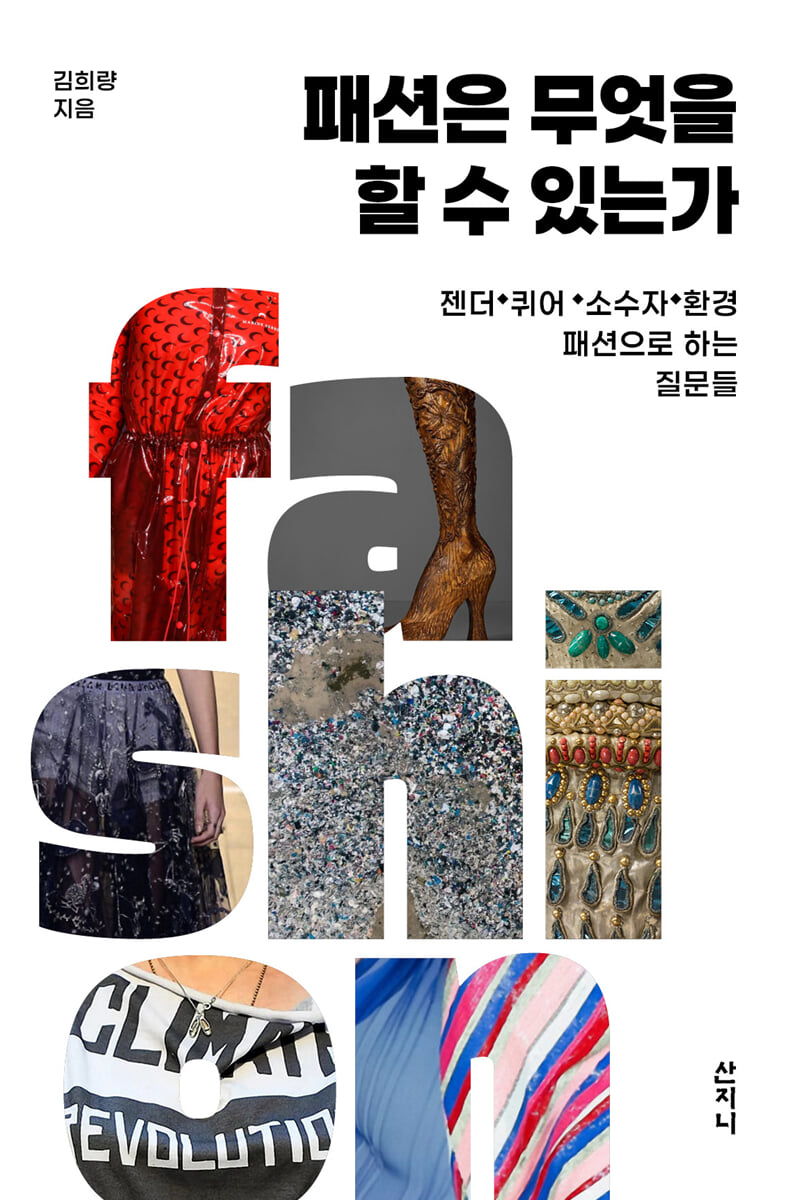 |
Description
Book Introduction
Where does fashion stand in an age of diversity and climate crisis?
About the values that fashion pursues today and the possibilities it will unfold in the future.
A meaningful conversation that starts with fashion
Every day we get dressed, do our hair, and choose accessories.
Fashion is used to match the season, trends, and sometimes to express one's own individuality.
Fashion means trend, but it is not just trend.
Fashion is a political act, a tangled web of our mindsets, zeitgeist, and norms. It's also a massive industry spanning social, economic, and ethical spheres.
"What Can Fashion Do?" analyzes and looks at "fashion," a familiar and accessible concept to many people, from a social perspective.
Through this book, the author hopes to provide a starting point for various social conversations using fashion as an opportunity.
I believed that with fashion that easily catches people's attention, heavy stories dealing with social issues could reach more people.
This book looks at the world through fashion and poses various questions, including race, body type, age, disability, women, queerness, cultural diversity, the environment, and capitalism.
Can't older people be fashion leaders? Can people with disabilities fully enjoy fashion? Can women's and men's clothing be distinguished? Can recycled clothing solve the plastic problem? This book illuminates the dark side of fashion while exploring the possibilities for change.
We consider what choices are needed for fashion to move in a better direction, and how fashion-loving consumers, designers, and brands can contribute to that change.
About the values that fashion pursues today and the possibilities it will unfold in the future.
A meaningful conversation that starts with fashion
Every day we get dressed, do our hair, and choose accessories.
Fashion is used to match the season, trends, and sometimes to express one's own individuality.
Fashion means trend, but it is not just trend.
Fashion is a political act, a tangled web of our mindsets, zeitgeist, and norms. It's also a massive industry spanning social, economic, and ethical spheres.
"What Can Fashion Do?" analyzes and looks at "fashion," a familiar and accessible concept to many people, from a social perspective.
Through this book, the author hopes to provide a starting point for various social conversations using fashion as an opportunity.
I believed that with fashion that easily catches people's attention, heavy stories dealing with social issues could reach more people.
This book looks at the world through fashion and poses various questions, including race, body type, age, disability, women, queerness, cultural diversity, the environment, and capitalism.
Can't older people be fashion leaders? Can people with disabilities fully enjoy fashion? Can women's and men's clothing be distinguished? Can recycled clothing solve the plastic problem? This book illuminates the dark side of fashion while exploring the possibilities for change.
We consider what choices are needed for fashion to move in a better direction, and how fashion-loving consumers, designers, and brands can contribute to that change.
- You can preview some of the book's contents.
Preview
index
prolog
Chapter 1.
In an age of diversity, the questions fashion poses
Fashion and Race
Are people of color beautiful? / Is the rise of black people a sign of diversity? / How does the fashion industry sustain itself?
· Fashion and body type
Is the body positivity movement truly positive? / What kind of person is a slim person?
Fashion and Age
Can't Old People Be Fashionable? / How Do Senior Models Emerge? / Are Old People Other?
· Fashion and Disability
Can people with disabilities enjoy clothing and fashion? / Can the 'abnormal' be beautiful? / Where do the boundaries of humanity lie?
· Fashion and Women
What is femininity? / How is female sexuality expressed? / What does pink mean to women? / Is female vulnerability only vulnerable? / Does the traditional attire of women of color signify regression?
· Fashion and Queer
Can womenswear and menswear be distinguished? / Is gender insurmountable? / Why are so many famous fashion designers gay? / Does queer aesthetics express or diminish queerness?
· Fashion and cultural diversity
Who decides fashion? / Should we be grateful to Chanel? / Is the value of artisans fairly recognized? / Should traditions be preserved? / What do we learn in fashion school?
Chapter 2.
Fashion's Questions in the Age of Sustainability
· Excess of fashion
Is it possible to dispose of inventory? / How effective is upcycling? / Can recycled clothing solve the plastic problem?
· Human-centeredness in fashion
Disappearing forests and trees: a story unrelated to fashion? / Is it enough to not use animal fur? / Do humans dominate non-humans?
Imperialism and Colonialism in Fashion
What do garment worker wage increases mean? / Where does clothing waste end up? / Greenhouse gas emissions: Do the numbers tell the truth?
Fashion, Business, and Capitalism
Are Fashion Brands Ethical? / Is Transparency in the Fashion Industry Transparent? / Can Sustainability Be Scored? / Who Should Take Action?
Chapter 3.
What can fashion do?
· The Everydayness of Fashion: Encouraging Light Participation
· Flexibility in Fashion: An Alternative to the Concept of Diversity
· The Popularity of Fashion: A Conversation with Everyone
Epilogue
References
Chapter 1.
In an age of diversity, the questions fashion poses
Fashion and Race
Are people of color beautiful? / Is the rise of black people a sign of diversity? / How does the fashion industry sustain itself?
· Fashion and body type
Is the body positivity movement truly positive? / What kind of person is a slim person?
Fashion and Age
Can't Old People Be Fashionable? / How Do Senior Models Emerge? / Are Old People Other?
· Fashion and Disability
Can people with disabilities enjoy clothing and fashion? / Can the 'abnormal' be beautiful? / Where do the boundaries of humanity lie?
· Fashion and Women
What is femininity? / How is female sexuality expressed? / What does pink mean to women? / Is female vulnerability only vulnerable? / Does the traditional attire of women of color signify regression?
· Fashion and Queer
Can womenswear and menswear be distinguished? / Is gender insurmountable? / Why are so many famous fashion designers gay? / Does queer aesthetics express or diminish queerness?
· Fashion and cultural diversity
Who decides fashion? / Should we be grateful to Chanel? / Is the value of artisans fairly recognized? / Should traditions be preserved? / What do we learn in fashion school?
Chapter 2.
Fashion's Questions in the Age of Sustainability
· Excess of fashion
Is it possible to dispose of inventory? / How effective is upcycling? / Can recycled clothing solve the plastic problem?
· Human-centeredness in fashion
Disappearing forests and trees: a story unrelated to fashion? / Is it enough to not use animal fur? / Do humans dominate non-humans?
Imperialism and Colonialism in Fashion
What do garment worker wage increases mean? / Where does clothing waste end up? / Greenhouse gas emissions: Do the numbers tell the truth?
Fashion, Business, and Capitalism
Are Fashion Brands Ethical? / Is Transparency in the Fashion Industry Transparent? / Can Sustainability Be Scored? / Who Should Take Action?
Chapter 3.
What can fashion do?
· The Everydayness of Fashion: Encouraging Light Participation
· Flexibility in Fashion: An Alternative to the Concept of Diversity
· The Popularity of Fashion: A Conversation with Everyone
Epilogue
References
Into the book
I've always wanted to bring up socially important topics, but the image fashion has has of itself doesn't help.
Can fashion truly spark meaningful conversations? Should I pursue other studies? I've had many concerns and still have many unresolved questions, but fashion's lighthearted image has been both a limitation and a useful tool.
If we turn the light-heartedness around, there is no field as familiar and accessible to as many people as fashion.
At the same time, fashion is a highly political socio-cultural phenomenon that reflects the human body and desires, as well as the class and power of society.
In other words, fashion has the potential to spark and expand important discourse.
--- p.7
There are usually two or three plus-size models appearing on a brand's runway.
The sight of two or three plus-size models walking among dozens of extremely skinny models highlights the minority nature of plus-size models.
Rather, looking at a large number of thin models makes us realize that the aesthetic standards for thinness are rigid.
Moreover, rather than showing a diverse spectrum of body sizes and shapes, the coexistence of only extremes is pathological rather than diverse.
--- p.31
Dior's perspective in the New Look is somewhat uncomfortable.
The reason is, first of all, that Dior did not consider women's comfort.
The slender waist and voluminous skirt, once again emphasized, caused great inconvenience in daily life.
The collar was prone to sagging, so care had to be taken, and the skirt used 12 meters of fabric to express fullness.
For Dior, women's clothing was nothing more than a decorative element with no function.
--- p.69
Queer symbols are everywhere these days, but the rainbow's strong symbolism makes it vulnerable to commercial exploitation.
There have been instances where the rainbow was touted, but genuine respect and support for queer people was excluded.
Some companies have used rainbows as a marketing strategy to attract consumers or to promote a progressive or ethical corporate image.
This gave rise to the term 'rainbow-washing'.
--- p.111
Excess is the official law of how the fashion industry secures capital.
The more clothing products are produced and consumed, the more the fashion industry grows.
The desire to capitalize on that demand, combined with the desire to follow trends, has led to an overproduction of fashion products.
You may have seen photos on the news of piles of clothing waste.
The problem of clothing waste, which is produced at the rate of several tons per second, can be explained by excessive production and consumption.
--- p.155
The workers who make garments are often immigrants, people of color, or poor.
Since the advent of outsourcing, labor has become internationally divided, but that division has not been equal.
Countries that were once colonies, such as those in Asia, Africa, and Latin America, were also subject to exploitation in terms of labor.
Goods made with cheap labor here were sold at high prices in Western countries, and the surplus profits went to Western companies.
--- p.192
Can we really expect morality from corporations? Is it naive to talk about morality and ethics? Morality and ethics cannot be excluded from corporate activities.
It may be a value used for corporate image, but it can also be a standard that defines the scope of corporate behavior.
The reason labor issues in fashion companies are so critical is because of their unethical nature.
--- p.211
Vivienne Westwood knew.
That using fashion is effective in raising topics and creating rifts.
Already at the forefront of the punk movement in the 1970s, the brand experienced a process in which its message of resistance influenced the times and disrupted the rigid hierarchy of luxury fashion.
So he used every medium he had to shout about climate change.
Can fashion truly spark meaningful conversations? Should I pursue other studies? I've had many concerns and still have many unresolved questions, but fashion's lighthearted image has been both a limitation and a useful tool.
If we turn the light-heartedness around, there is no field as familiar and accessible to as many people as fashion.
At the same time, fashion is a highly political socio-cultural phenomenon that reflects the human body and desires, as well as the class and power of society.
In other words, fashion has the potential to spark and expand important discourse.
--- p.7
There are usually two or three plus-size models appearing on a brand's runway.
The sight of two or three plus-size models walking among dozens of extremely skinny models highlights the minority nature of plus-size models.
Rather, looking at a large number of thin models makes us realize that the aesthetic standards for thinness are rigid.
Moreover, rather than showing a diverse spectrum of body sizes and shapes, the coexistence of only extremes is pathological rather than diverse.
--- p.31
Dior's perspective in the New Look is somewhat uncomfortable.
The reason is, first of all, that Dior did not consider women's comfort.
The slender waist and voluminous skirt, once again emphasized, caused great inconvenience in daily life.
The collar was prone to sagging, so care had to be taken, and the skirt used 12 meters of fabric to express fullness.
For Dior, women's clothing was nothing more than a decorative element with no function.
--- p.69
Queer symbols are everywhere these days, but the rainbow's strong symbolism makes it vulnerable to commercial exploitation.
There have been instances where the rainbow was touted, but genuine respect and support for queer people was excluded.
Some companies have used rainbows as a marketing strategy to attract consumers or to promote a progressive or ethical corporate image.
This gave rise to the term 'rainbow-washing'.
--- p.111
Excess is the official law of how the fashion industry secures capital.
The more clothing products are produced and consumed, the more the fashion industry grows.
The desire to capitalize on that demand, combined with the desire to follow trends, has led to an overproduction of fashion products.
You may have seen photos on the news of piles of clothing waste.
The problem of clothing waste, which is produced at the rate of several tons per second, can be explained by excessive production and consumption.
--- p.155
The workers who make garments are often immigrants, people of color, or poor.
Since the advent of outsourcing, labor has become internationally divided, but that division has not been equal.
Countries that were once colonies, such as those in Asia, Africa, and Latin America, were also subject to exploitation in terms of labor.
Goods made with cheap labor here were sold at high prices in Western countries, and the surplus profits went to Western companies.
--- p.192
Can we really expect morality from corporations? Is it naive to talk about morality and ethics? Morality and ethics cannot be excluded from corporate activities.
It may be a value used for corporate image, but it can also be a standard that defines the scope of corporate behavior.
The reason labor issues in fashion companies are so critical is because of their unethical nature.
--- p.211
Vivienne Westwood knew.
That using fashion is effective in raising topics and creating rifts.
Already at the forefront of the punk movement in the 1970s, the brand experienced a process in which its message of resistance influenced the times and disrupted the rigid hierarchy of luxury fashion.
So he used every medium he had to shout about climate change.
--- p.242
Publisher's Review
▶ In this age of diversity, is fashion enjoyed by everyone?
Fashion is inextricably linked to ‘beauty.’
And those aesthetic standards have reflected the ideals that society pursues.
Being superior in various aspects such as class, capital, race, age, gender, disability, and body size was soon considered 'beautiful'.
In other words, those marginalized in society have long been neglected in the fashion industry.
However, in today's society, voices for diversity are growing louder, and attempts to reflect this are also increasing.
So how is fashion responding to these changes?
To answer this question, the author examines trends related to diversity across the fashion industry.
For example, the chapter “Fashion and Race” critically examines how the fashion industry treats people of color.
Even when black or Asian people appear in fashion magazines or images, their appearances often fall closer to white aesthetic standards, and many domestic brands still prefer white models.
This reveals that society has uncritically embodied white-centric beauty standards.
It also points out that simply having a small number of models of color on the runway is not enough to achieve “political correctness.”
This is an approach that reduces racial issues to a mere issue of visibility, rather than examining them in the context of structural inequality.
The author calls for genuine reflection and action in the fashion world.
▶ In the age of climate crisis, what impact is fashion having on the environment?
Sustainability is one of today's most important social challenges, and fashion must respond to this topic.
Behind the glamorous appearance of fashion, there are deeply rooted problems of labor exploitation, environmental destruction, and overconsumption.
Especially since the advent of fast fashion, clothes are produced and consumed faster and faster, and are discarded just as quickly.
A production structure that relies on cheap labor threatens the lives of workers in developing countries, and the torrent of clothing waste places a serious burden on the ecosystem.
The author views this reality not as a simple environmental problem, but as a problem of social structure.
The destructive nature of the fashion system is seen as being based on the structural foundations of excess, anthropocentrism, imperialism and colonialism, and capitalism.
For example, the author draws attention to 'upcycling', an alternative to sustainability that many fashion brands are attempting.
Upcycling is a way to give new design and value to waste and give it new life as a product, but the author asks.
Can upcycling truly be a viable alternative? Because upcycling is a time-consuming, handcrafted process, it has limited potential to fundamentally disrupt the current fashion industry structure, which relies on mass disposal and a race to the bottom.
Of course, it makes sense to extend the life of items and delay consumption, but that alone is not enough.
It is also important that companies not be allowed to escape responsibility simply because they have created a few “sustainable products.”
The author emphasizes that a true transformation of the fashion industry requires efforts to change its very structure.
▶ Can fashion change the world?
Today, we often feel a deep sense of helplessness in the face of a society that seems to be slow to change and a climate crisis that is becoming increasingly serious.
Many people are falling into depression and helplessness in the face of this reality.
But in times like these, rather than perceiving the problem as too big and heavy, why not try to approach it lightly?
Because when many small, everyday practices come together, the possibility of unexpected change can open up.
An example is 'fashion activism', which uses fashion as part of a social movement.
Fashion activism also includes a lifestyle movement that involves shopping less, trying to keep clothes in your closet longer, trying second-hand shopping, and doing your own repairs.
This movement allows even those who consider themselves distant from politics or social movements to participate naturally.
The everyday nature of fashion provides an opportunity for anyone to start without a high barrier, helping them take the first step toward change even in times of helplessness.
The author hopes that fashion can start from such 'minimal practices' and open the door to greater change.
It doesn't have to be grand.
Our daily lives and interests can soon become the beginning of change.
Fashion is inextricably linked to ‘beauty.’
And those aesthetic standards have reflected the ideals that society pursues.
Being superior in various aspects such as class, capital, race, age, gender, disability, and body size was soon considered 'beautiful'.
In other words, those marginalized in society have long been neglected in the fashion industry.
However, in today's society, voices for diversity are growing louder, and attempts to reflect this are also increasing.
So how is fashion responding to these changes?
To answer this question, the author examines trends related to diversity across the fashion industry.
For example, the chapter “Fashion and Race” critically examines how the fashion industry treats people of color.
Even when black or Asian people appear in fashion magazines or images, their appearances often fall closer to white aesthetic standards, and many domestic brands still prefer white models.
This reveals that society has uncritically embodied white-centric beauty standards.
It also points out that simply having a small number of models of color on the runway is not enough to achieve “political correctness.”
This is an approach that reduces racial issues to a mere issue of visibility, rather than examining them in the context of structural inequality.
The author calls for genuine reflection and action in the fashion world.
▶ In the age of climate crisis, what impact is fashion having on the environment?
Sustainability is one of today's most important social challenges, and fashion must respond to this topic.
Behind the glamorous appearance of fashion, there are deeply rooted problems of labor exploitation, environmental destruction, and overconsumption.
Especially since the advent of fast fashion, clothes are produced and consumed faster and faster, and are discarded just as quickly.
A production structure that relies on cheap labor threatens the lives of workers in developing countries, and the torrent of clothing waste places a serious burden on the ecosystem.
The author views this reality not as a simple environmental problem, but as a problem of social structure.
The destructive nature of the fashion system is seen as being based on the structural foundations of excess, anthropocentrism, imperialism and colonialism, and capitalism.
For example, the author draws attention to 'upcycling', an alternative to sustainability that many fashion brands are attempting.
Upcycling is a way to give new design and value to waste and give it new life as a product, but the author asks.
Can upcycling truly be a viable alternative? Because upcycling is a time-consuming, handcrafted process, it has limited potential to fundamentally disrupt the current fashion industry structure, which relies on mass disposal and a race to the bottom.
Of course, it makes sense to extend the life of items and delay consumption, but that alone is not enough.
It is also important that companies not be allowed to escape responsibility simply because they have created a few “sustainable products.”
The author emphasizes that a true transformation of the fashion industry requires efforts to change its very structure.
▶ Can fashion change the world?
Today, we often feel a deep sense of helplessness in the face of a society that seems to be slow to change and a climate crisis that is becoming increasingly serious.
Many people are falling into depression and helplessness in the face of this reality.
But in times like these, rather than perceiving the problem as too big and heavy, why not try to approach it lightly?
Because when many small, everyday practices come together, the possibility of unexpected change can open up.
An example is 'fashion activism', which uses fashion as part of a social movement.
Fashion activism also includes a lifestyle movement that involves shopping less, trying to keep clothes in your closet longer, trying second-hand shopping, and doing your own repairs.
This movement allows even those who consider themselves distant from politics or social movements to participate naturally.
The everyday nature of fashion provides an opportunity for anyone to start without a high barrier, helping them take the first step toward change even in times of helplessness.
The author hopes that fashion can start from such 'minimal practices' and open the door to greater change.
It doesn't have to be grand.
Our daily lives and interests can soon become the beginning of change.
GOODS SPECIFICS
- Date of issue: May 26, 2025
- Page count, weight, size: 272 pages | 145*220*18mm
- ISBN13: 9791168614611
You may also like
카테고리
korean


korean

![ELLE 엘르 스페셜 에디션 A형 : 12월 [2025]](http://librairie.coreenne.fr/cdn/shop/files/b8e27a3de6c9538896439686c6b0e8fb.jpg?v=1766436872&width=3840)


