

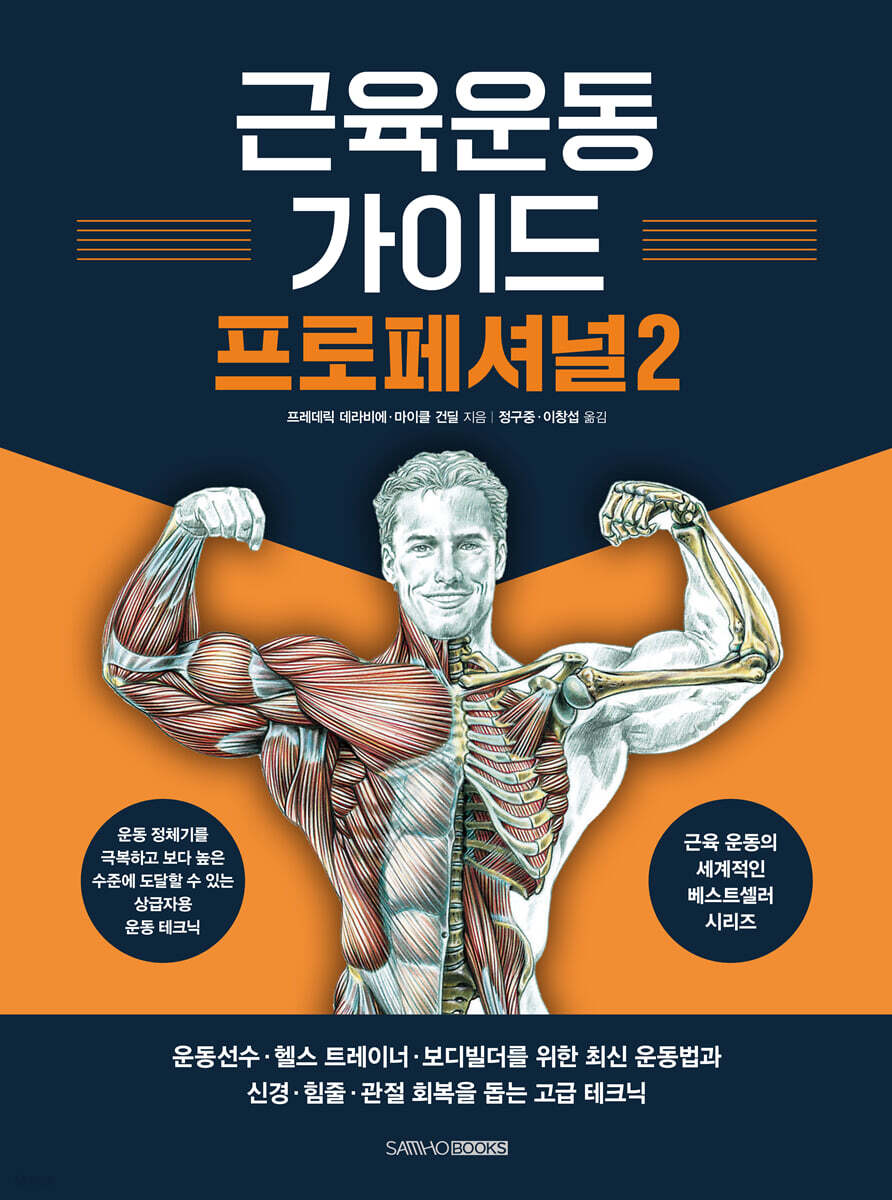
Muscle Training Guide Professional 2
 |
Description
Book Introduction
The world's best-selling muscle workout, translated into over 25 languages worldwide.
More advanced professional muscle training in the "New Muscle Training Guide"
Advanced exercise methods to overcome exercise plateaus and continue growth
Advanced techniques to help restore nerves, tendons, and joints
The international bestseller on exercise anatomy, "Muscle Exercise Guide," translated into over 25 languages worldwide.
The recently published "Muscle Exercise Guide Professional 2" reveals advanced exercise methods for advanced athletes to overcome exercise plateaus and continue growth, as well as advanced techniques to aid in the recovery of nerves, tendons, and joints.
The author of this book, Delavier, had a problem he couldn't overcome during his athletic career: his upper body would lean too far forward when squatting.
His trainers instructed him to sit up straighter, but changing his posture proved easier said than done.
Delavie used his knowledge of anatomy to analyze why his upper body naturally leans forward.
And then, looking at a human skeletal model, I realized that there are people in the world for whom it is mechanically impossible to squat with their upper body upright.
Therefore, this book first covers human anatomy in more depth so that you can create a training program that is well suited to your body type.
In the early stages of a workout, when your muscles are still largely undeveloped, you can build strength and muscle quickly, but once you've reached your muscles' maximum potential, it becomes increasingly difficult to build strength and muscle.
In such cases, to maximize your physical potential, you must make the most of your physiological characteristics that you may not have known about until now.
If anatomy and morphology are not properly understood at this time, growth will inevitably be slow and pain will occur.
"Muscle Exercise Guide Professional 2" introduces muscle recruitment methods, interactions, and various exercise methods with 146 anatomical illustrations and 195 photographs that cannot be found anywhere else.
Break through plateaus with unique workouts designed to help advanced athletes reach new heights. Prevent injuries and relieve muscle fatigue with advanced techniques rooted in proven sports science that promote nerve, tendon, and joint recovery.
More advanced professional muscle training in the "New Muscle Training Guide"
Advanced exercise methods to overcome exercise plateaus and continue growth
Advanced techniques to help restore nerves, tendons, and joints
The international bestseller on exercise anatomy, "Muscle Exercise Guide," translated into over 25 languages worldwide.
The recently published "Muscle Exercise Guide Professional 2" reveals advanced exercise methods for advanced athletes to overcome exercise plateaus and continue growth, as well as advanced techniques to aid in the recovery of nerves, tendons, and joints.
The author of this book, Delavier, had a problem he couldn't overcome during his athletic career: his upper body would lean too far forward when squatting.
His trainers instructed him to sit up straighter, but changing his posture proved easier said than done.
Delavie used his knowledge of anatomy to analyze why his upper body naturally leans forward.
And then, looking at a human skeletal model, I realized that there are people in the world for whom it is mechanically impossible to squat with their upper body upright.
Therefore, this book first covers human anatomy in more depth so that you can create a training program that is well suited to your body type.
In the early stages of a workout, when your muscles are still largely undeveloped, you can build strength and muscle quickly, but once you've reached your muscles' maximum potential, it becomes increasingly difficult to build strength and muscle.
In such cases, to maximize your physical potential, you must make the most of your physiological characteristics that you may not have known about until now.
If anatomy and morphology are not properly understood at this time, growth will inevitably be slow and pain will occur.
"Muscle Exercise Guide Professional 2" introduces muscle recruitment methods, interactions, and various exercise methods with 146 anatomical illustrations and 195 photographs that cannot be found anywhere else.
Break through plateaus with unique workouts designed to help advanced athletes reach new heights. Prevent injuries and relieve muscle fatigue with advanced techniques rooted in proven sports science that promote nerve, tendon, and joint recovery.
- You can preview some of the book's contents.
Preview
index
Introduction
Part Ⅰ: A Deeper Understanding of Advanced Anatomy and Morphology
01 Analyse your body anatomically and morphologically.
□ 12 Worst Squat Postures
□ 12 Commonly Misunderstood Concepts in Anatomy and Morphology
□ There is no such thing as a miracle exercise that is perfect for everyone 13
Are the body proportions depicted in Da Vinci's "Human Proportions" true? 14
□ Some Simple Principles of Body Proportions 16
□ Relationship between arm length and movement 16
□ Long upper body and short upper body 24
□ Abdominal muscle to rib cage ratio 25
□ How does the difference in pelvic width affect the thighs? 29
□ Shape and muscle development of the thighs 33
□ Paradox of Upper and Lower Body Muscle Development 35
□ 36 Genetic Secrets Hidden in the Calves
□ Conclusion: How to Find the Training Method That's Right for You 36
□ Morphology can be used to predict the future 38
02 Understanding the pathology associated with muscle movement can help you protect your body.
□ Success is important, but it should not come at any price. 40
□ Be smarter when you exercise 40
03 Learn how to warm up systematically
□ Let's start with a full body warm-up 42
□ Detailed warm-up for injury-prone areas 42
□ Warm-up 43 to completely loosen up the muscles you will be exercising that day
04 Hormonal changes and joint hypermobility
□ Function of relaxin 44
□ Another cause of joint hypermobility: fatigue 46
□ Weather Forecast and Joint Pain 46
□ How to Manage Temporary Joint Hypermobility and Weather-Sensitive Joints 47
□ What should I do if my joint hypermobility doesn't improve? 47
05 How to prevent overuse injuries by alternating between exercises
06 Can athletes avoid Wolff's Law?
07 What is the optimal range of motion to maximize growth without injury?
□ Is it a partial repetition or a full repetition? 51
□ Advantages of full range of motion and disadvantages of partial repetitions 51
□ Disadvantages of full range of motion and advantages of partial repetitions 51
□ Conclusion: Not all exercises require the full range of motion 55
Part 2 Training and Recovery Techniques
01 Techniques for Advanced Exercisers
□ Stimulate the muscles as if performing precise surgery 58
□ The muscle recruitment area varies depending on the contraction method 59
□ Techniques for adjusting rest time between sets 60
□ How to Integrate the Zendrasik Manual into Exercise 63
□ Center of gravity changes depending on weight 65
□ Muscle redistribution theory that helps muscle growth 68
02 Cutting-edge muscle training methods
□ Electrical Muscle Stimulation Therapy 69
□ Is blood flow restriction training effective? 72
□ Tremor and Vibration Exercise Technique 76
03 Secrets of Recovery
□ A more precise definition of overtraining 78
□ Different recovery speeds for each person 78
□ Double impact 79
□ Nervous system damage after exercise 80
□ How to promote nerve recovery 82
□ Let's better understand pain and suffering 84
□ Let's restore tendons and joints 88
□ Take supplements that are tailored to your goals to achieve a complete recovery 91
Part 3 Muscle Exercises for Advanced Players
01 Let's make our shoulders bigger and protect them.
94 Pathological Problems of the Shoulder
Q Problems encountered when growing shoulders 104
EX Shoulder Exercise 106
Shoulder Rotation 106 with Bands
Jammer Press 109
Cheat One-Arm Lateral Raise with Dumbbells 112
02 Let's target the complex back muscles.
Anatomical and morphological features of the back 116
Pathological Problems Related to Back Muscles 119
Q Problems with Building Muscles 124
EX etc. Exercise 126
Weightlifting Snatch 126
Deadlift 129 for the latissimus dorsi
Reverse Hyperextension 133
Derabie Shrug 136
03 Let's build up our chest muscles
Why do pectoral muscles develop so unevenly? 138
Anatomical Analysis of the Pectoralis Major 139
How to Spot a Good Training Tool 142
EX Chest Workout 150
Isolation Shrugs for Upper Pecs (Gundils Shrugs) 150
Floor press 153
04 Let's develop biceps, triceps, and forearms.
Q Problems encountered when growing biceps? ~? 157
Q Problems encountered when growing triceps? ~? 160
EX Biceps, Triceps, and Forearm Workout 164
Finger Extension 164
Power Biceps Curl 168 with Low Pulley
Power Triceps Extension with High Pulley 172
05 Let's strengthen the core
Q Core strength issues? ~? 176
Q Fat Loss Problem 178
Q Water retention problem in the abdominal muscles 180
Q Problems due to lack of muscular endurance 180
EX Core Exercise 182
182 Planks and Variations to Improve Core Strength
Standing Power Crunches with Resistance Bands 186
06 Let's fill in the muscles in the thighs
Biomechanical characteristics of the thigh 190
How to Spot a Good Training Tool 192
Morphological features of the thigh 195
Q Problems encountered when developing quadriceps femoris ? ~ ? 198
EX Quadriceps Exercise 202
Belt Squat 202
Squats with a machine 206
Vertical leg press 208
07 Let's develop the hamstrings that have lagged in growth.
Anatomical and morphological features of the hamstrings 210
Q Problems encountered when developing hamstrings 213
Q Problems that arise when the hamstrings are mobilized in different areas 214
EX Hamstring Exercise 216
Glutham Raise 216
Hip Extension 218
08 Fill in the adductor and sartorius muscles
Anatomical and morphological features of the adductor muscles 222
224 Bonggonggeun, an essential muscle for athletes
EX Adductor and Sartorius Exercise 226
226 Thigh Adduction Exercises Using a Machine
Seated Serratus Anterior Muscle Exercise 229
09 Let's solve the imbalanced development of calf muscles.
Physiological characteristics of the calf 232
EX Calf Exercise 233
Belt Squat Calf Raise 233
Part 4: Advanced Workout Program
01 Warm-up Program for Advanced Players
□ Basic Warm-up 239
□ Complete warm-up 240
02 Advanced program to develop underdeveloped areas
□ Let's grow arms that have lagged in growth 242
□ Let's develop the upper pectoral muscles that have lagged in growth 244
□ Let's grow the deltoid muscles after growth has lagged behind 246
□ Let's build up the back muscles that have lagged in growth 248
□ Let's grow the thighs that have lagged in growth 250
Reference 252
Part Ⅰ: A Deeper Understanding of Advanced Anatomy and Morphology
01 Analyse your body anatomically and morphologically.
□ 12 Worst Squat Postures
□ 12 Commonly Misunderstood Concepts in Anatomy and Morphology
□ There is no such thing as a miracle exercise that is perfect for everyone 13
Are the body proportions depicted in Da Vinci's "Human Proportions" true? 14
□ Some Simple Principles of Body Proportions 16
□ Relationship between arm length and movement 16
□ Long upper body and short upper body 24
□ Abdominal muscle to rib cage ratio 25
□ How does the difference in pelvic width affect the thighs? 29
□ Shape and muscle development of the thighs 33
□ Paradox of Upper and Lower Body Muscle Development 35
□ 36 Genetic Secrets Hidden in the Calves
□ Conclusion: How to Find the Training Method That's Right for You 36
□ Morphology can be used to predict the future 38
02 Understanding the pathology associated with muscle movement can help you protect your body.
□ Success is important, but it should not come at any price. 40
□ Be smarter when you exercise 40
03 Learn how to warm up systematically
□ Let's start with a full body warm-up 42
□ Detailed warm-up for injury-prone areas 42
□ Warm-up 43 to completely loosen up the muscles you will be exercising that day
04 Hormonal changes and joint hypermobility
□ Function of relaxin 44
□ Another cause of joint hypermobility: fatigue 46
□ Weather Forecast and Joint Pain 46
□ How to Manage Temporary Joint Hypermobility and Weather-Sensitive Joints 47
□ What should I do if my joint hypermobility doesn't improve? 47
05 How to prevent overuse injuries by alternating between exercises
06 Can athletes avoid Wolff's Law?
07 What is the optimal range of motion to maximize growth without injury?
□ Is it a partial repetition or a full repetition? 51
□ Advantages of full range of motion and disadvantages of partial repetitions 51
□ Disadvantages of full range of motion and advantages of partial repetitions 51
□ Conclusion: Not all exercises require the full range of motion 55
Part 2 Training and Recovery Techniques
01 Techniques for Advanced Exercisers
□ Stimulate the muscles as if performing precise surgery 58
□ The muscle recruitment area varies depending on the contraction method 59
□ Techniques for adjusting rest time between sets 60
□ How to Integrate the Zendrasik Manual into Exercise 63
□ Center of gravity changes depending on weight 65
□ Muscle redistribution theory that helps muscle growth 68
02 Cutting-edge muscle training methods
□ Electrical Muscle Stimulation Therapy 69
□ Is blood flow restriction training effective? 72
□ Tremor and Vibration Exercise Technique 76
03 Secrets of Recovery
□ A more precise definition of overtraining 78
□ Different recovery speeds for each person 78
□ Double impact 79
□ Nervous system damage after exercise 80
□ How to promote nerve recovery 82
□ Let's better understand pain and suffering 84
□ Let's restore tendons and joints 88
□ Take supplements that are tailored to your goals to achieve a complete recovery 91
Part 3 Muscle Exercises for Advanced Players
01 Let's make our shoulders bigger and protect them.
94 Pathological Problems of the Shoulder
Q Problems encountered when growing shoulders 104
EX Shoulder Exercise 106
Shoulder Rotation 106 with Bands
Jammer Press 109
Cheat One-Arm Lateral Raise with Dumbbells 112
02 Let's target the complex back muscles.
Anatomical and morphological features of the back 116
Pathological Problems Related to Back Muscles 119
Q Problems with Building Muscles 124
EX etc. Exercise 126
Weightlifting Snatch 126
Deadlift 129 for the latissimus dorsi
Reverse Hyperextension 133
Derabie Shrug 136
03 Let's build up our chest muscles
Why do pectoral muscles develop so unevenly? 138
Anatomical Analysis of the Pectoralis Major 139
How to Spot a Good Training Tool 142
EX Chest Workout 150
Isolation Shrugs for Upper Pecs (Gundils Shrugs) 150
Floor press 153
04 Let's develop biceps, triceps, and forearms.
Q Problems encountered when growing biceps? ~? 157
Q Problems encountered when growing triceps? ~? 160
EX Biceps, Triceps, and Forearm Workout 164
Finger Extension 164
Power Biceps Curl 168 with Low Pulley
Power Triceps Extension with High Pulley 172
05 Let's strengthen the core
Q Core strength issues? ~? 176
Q Fat Loss Problem 178
Q Water retention problem in the abdominal muscles 180
Q Problems due to lack of muscular endurance 180
EX Core Exercise 182
182 Planks and Variations to Improve Core Strength
Standing Power Crunches with Resistance Bands 186
06 Let's fill in the muscles in the thighs
Biomechanical characteristics of the thigh 190
How to Spot a Good Training Tool 192
Morphological features of the thigh 195
Q Problems encountered when developing quadriceps femoris ? ~ ? 198
EX Quadriceps Exercise 202
Belt Squat 202
Squats with a machine 206
Vertical leg press 208
07 Let's develop the hamstrings that have lagged in growth.
Anatomical and morphological features of the hamstrings 210
Q Problems encountered when developing hamstrings 213
Q Problems that arise when the hamstrings are mobilized in different areas 214
EX Hamstring Exercise 216
Glutham Raise 216
Hip Extension 218
08 Fill in the adductor and sartorius muscles
Anatomical and morphological features of the adductor muscles 222
224 Bonggonggeun, an essential muscle for athletes
EX Adductor and Sartorius Exercise 226
226 Thigh Adduction Exercises Using a Machine
Seated Serratus Anterior Muscle Exercise 229
09 Let's solve the imbalanced development of calf muscles.
Physiological characteristics of the calf 232
EX Calf Exercise 233
Belt Squat Calf Raise 233
Part 4: Advanced Workout Program
01 Warm-up Program for Advanced Players
□ Basic Warm-up 239
□ Complete warm-up 240
02 Advanced program to develop underdeveloped areas
□ Let's grow arms that have lagged in growth 242
□ Let's develop the upper pectoral muscles that have lagged in growth 244
□ Let's grow the deltoid muscles after growth has lagged behind 246
□ Let's build up the back muscles that have lagged in growth 248
□ Let's grow the thighs that have lagged in growth 250
Reference 252
Detailed image

GOODS SPECIFICS
- Date of issue: December 30, 2024
- Page count, weight, size: 260 pages | 804g | 188*257*15mm
- ISBN13: 9791198727862
- ISBN10: 1198727861
You may also like
카테고리
korean


korean

![GQ KOREA Mark (Monthly): December [2025]](http://librairie.coreenne.fr/cdn/shop/files/8ef265dbbfbf186523ed75ba7319009d.jpg?v=1765340328&width=3840)


