

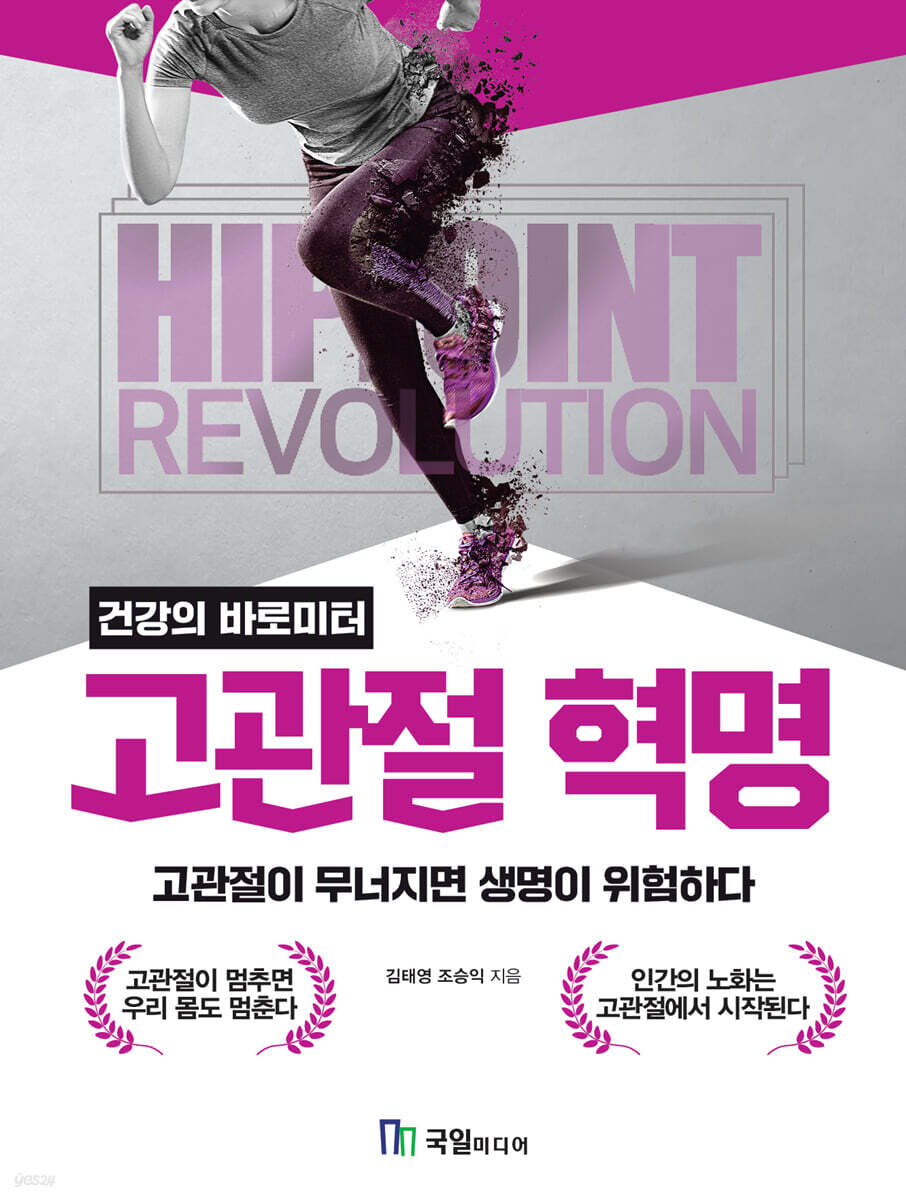
Hip Revolution: The Barometer of Health
 |
Description
Book Introduction
“Protecting my hip joints protects my body and health!”
The hip joint plays the biggest role in our daily lives, such as walking, sitting, and lying down.
The hip joint is the joint that connects the pelvis and the thighbone (femur), and is the center of the body and the center of health.
If your hip joints are strong and straight, you can live a long, healthy life.
Although other joints can still function to some extent even when problems arise, if there is a problem with the hip joint, it is extremely difficult to move, and in severe cases, you may have to lie down.
If older people are bedridden for a long time, various complications or problems may arise, and in severe cases, it may even lead to death.
Hip joint related diseases are something that can never be taken lightly.
"Hip Revolution" contains detailed information on how to keep the hip joint, which is involved in all human movements, healthy and exercises to help with recovery after treatment.
We also included a QR code so that anyone can easily follow the exercise.
"The Hip Revolution" is a must-read guide to maintaining hip health, sharing the know-how accumulated over the past decade of treating countless patients and explaining exercises and preventative measures for hip health.
The hip joint plays the biggest role in our daily lives, such as walking, sitting, and lying down.
The hip joint is the joint that connects the pelvis and the thighbone (femur), and is the center of the body and the center of health.
If your hip joints are strong and straight, you can live a long, healthy life.
Although other joints can still function to some extent even when problems arise, if there is a problem with the hip joint, it is extremely difficult to move, and in severe cases, you may have to lie down.
If older people are bedridden for a long time, various complications or problems may arise, and in severe cases, it may even lead to death.
Hip joint related diseases are something that can never be taken lightly.
"Hip Revolution" contains detailed information on how to keep the hip joint, which is involved in all human movements, healthy and exercises to help with recovery after treatment.
We also included a QR code so that anyone can easily follow the exercise.
"The Hip Revolution" is a must-read guide to maintaining hip health, sharing the know-how accumulated over the past decade of treating countless patients and explaining exercises and preventative measures for hip health.
- You can preview some of the book's contents.
Preview
index
Prologue: When the hip joint collapses, the whole body collapses.
Part 1: Hip Joints: A Barometer of Health
Chapter 1 Why is the hip joint important?
Joints involved in all human movements
Hip joints that are prone to strain due to their wide range of motion
Human aging begins in the hip joints.
When our hip joints stop, our bodies stop too.
If your hip joint is out of alignment, your whole body will be out of alignment.
TIP Joint Flexibility: A Barometer of Physical Age
TIP Joint Flexibility Test for Joint Health
Chapter 2 Various diseases that occur in the hip joint
If you have these symptoms, you have a hip problem.
Self-diagnosis of hip abnormalities
TIP: How to Distinguish Between Hip Pain and Back Pain
Various diseases that occur in the hip joint
Chapter 3 Secondary Diseases Caused by Hip Joint Problems
If you break your hip, 50% of people will die within a year.
TIP: Preventing Osteoporosis to Prevent Hip Fractures
If your hip joints are not straight, your spine will also be crooked.
Hip abnormalities that also affect the knee joint
The main culprit of chronic fatigue is the hip joint
TIP: The Patient in My Heart: A 70-Year-Old Patient Who Limped Severely Walks Normally
99% of pain in the second half is due to hip problems.
Chapter 1: The cause of the pain problem lies in the hip joint.
What is pain?
Pain occurs when the hip joint is out of balance.
Most pain can be eliminated by simply taking good care of your hip joints.
Why doesn't the pain go away even after treatment?
How to delay the onset of pain?
Chapter 2: Specific Causes of Hip Pain
acute hip pain
Pain due to chronic hip arthritis
Damage to muscles and blood vessels can also cause hip pain.
Hip pain due to movement outside of the range of motion
Chapter 3: Understanding Hip Joint Treatment
Diagnosis is important in hip joint treatment.
Should I have surgery? Or maybe I don't?
Misconceptions and Truths About Hip Replacement Surgery
TIP: The Patient in My Heart: A 50-Year-Old Patient with Both Hip Joints Went Out of the Hospital
Part 3: Exercises and Lifestyle Habits to Relieve Hip Pain
Chapter 1: Exercises to Strengthen and Flex Your Hip Joints - Walking
Why is walking important for your hip joints?
Walk a little faster
Walk with good posture
Water, should I drink it before walking or after walking?
Many questions about walking
Chapter 2: Exercises to Strengthen and Flexibly Your Hip Joints - Stretching
Why is stretching important for your hip joints?
What are the benefits of having strong and flexible hip joints?
Hip Stretches for the 100-Year-Old Era
Chapter 3: Exercises to Strengthen and Flex the Hip Joints - Strength Training
Why is strength training important for the hip joint?
TIP Simple Sarcopenia Test
Lifestyle habits to prevent sarcopenia
Hip Strengthening Exercises for the 100-Year-Old Era
TIP The Patient in My Heart: A Twenty-Three-Year-Old Man with Leukemia
Chapter 4: Healthy Lifestyle Habits for Strong Hip Joints
Get a good night's sleep to reduce hip pain
Avoid crossing your legs, which can cause your shoulder joints to twist
Avoid carrying a bag on only one shoulder, which causes you to walk with a misaligned hip.
Avoid wearing high heels, which tilt your pelvis and damage your spine.
Good Eating Habits for Strong Hips
Avoid movements that injure the hip joint
TIP The Truth About Joint Supplements
Chapter 5 Post-Hip Surgery Care and Rehabilitation Exercises
Postoperative care and rehabilitation exercises after hip joint fusion surgery (metal fixation)
Post-operative care and exercise after hip replacement surgery
Part 1: Hip Joints: A Barometer of Health
Chapter 1 Why is the hip joint important?
Joints involved in all human movements
Hip joints that are prone to strain due to their wide range of motion
Human aging begins in the hip joints.
When our hip joints stop, our bodies stop too.
If your hip joint is out of alignment, your whole body will be out of alignment.
TIP Joint Flexibility: A Barometer of Physical Age
TIP Joint Flexibility Test for Joint Health
Chapter 2 Various diseases that occur in the hip joint
If you have these symptoms, you have a hip problem.
Self-diagnosis of hip abnormalities
TIP: How to Distinguish Between Hip Pain and Back Pain
Various diseases that occur in the hip joint
Chapter 3 Secondary Diseases Caused by Hip Joint Problems
If you break your hip, 50% of people will die within a year.
TIP: Preventing Osteoporosis to Prevent Hip Fractures
If your hip joints are not straight, your spine will also be crooked.
Hip abnormalities that also affect the knee joint
The main culprit of chronic fatigue is the hip joint
TIP: The Patient in My Heart: A 70-Year-Old Patient Who Limped Severely Walks Normally
99% of pain in the second half is due to hip problems.
Chapter 1: The cause of the pain problem lies in the hip joint.
What is pain?
Pain occurs when the hip joint is out of balance.
Most pain can be eliminated by simply taking good care of your hip joints.
Why doesn't the pain go away even after treatment?
How to delay the onset of pain?
Chapter 2: Specific Causes of Hip Pain
acute hip pain
Pain due to chronic hip arthritis
Damage to muscles and blood vessels can also cause hip pain.
Hip pain due to movement outside of the range of motion
Chapter 3: Understanding Hip Joint Treatment
Diagnosis is important in hip joint treatment.
Should I have surgery? Or maybe I don't?
Misconceptions and Truths About Hip Replacement Surgery
TIP: The Patient in My Heart: A 50-Year-Old Patient with Both Hip Joints Went Out of the Hospital
Part 3: Exercises and Lifestyle Habits to Relieve Hip Pain
Chapter 1: Exercises to Strengthen and Flex Your Hip Joints - Walking
Why is walking important for your hip joints?
Walk a little faster
Walk with good posture
Water, should I drink it before walking or after walking?
Many questions about walking
Chapter 2: Exercises to Strengthen and Flexibly Your Hip Joints - Stretching
Why is stretching important for your hip joints?
What are the benefits of having strong and flexible hip joints?
Hip Stretches for the 100-Year-Old Era
Chapter 3: Exercises to Strengthen and Flex the Hip Joints - Strength Training
Why is strength training important for the hip joint?
TIP Simple Sarcopenia Test
Lifestyle habits to prevent sarcopenia
Hip Strengthening Exercises for the 100-Year-Old Era
TIP The Patient in My Heart: A Twenty-Three-Year-Old Man with Leukemia
Chapter 4: Healthy Lifestyle Habits for Strong Hip Joints
Get a good night's sleep to reduce hip pain
Avoid crossing your legs, which can cause your shoulder joints to twist
Avoid carrying a bag on only one shoulder, which causes you to walk with a misaligned hip.
Avoid wearing high heels, which tilt your pelvis and damage your spine.
Good Eating Habits for Strong Hips
Avoid movements that injure the hip joint
TIP The Truth About Joint Supplements
Chapter 5 Post-Hip Surgery Care and Rehabilitation Exercises
Postoperative care and rehabilitation exercises after hip joint fusion surgery (metal fixation)
Post-operative care and exercise after hip replacement surgery
Detailed image

Into the book
There's a reason the hip joint is large, strong, and well-protected.
This is because it is a joint that is directly involved in the basic human abilities of standing, walking, sitting, bending, and maintaining body balance.
In a word, the hip joint is involved in all human movements.
Therefore, if there is a problem with the hip joint, basic movements are limited.
This means that the quality of life will decline sharply.
The hip joint is well designed to resist damage, as befits its importance, but once damaged, it is also prone to repeated damage.
Also, the pain, discomfort, and aftereffects that a person experiences when injured are much more severe than those experienced in other joints.
It also takes a lot of time to recover.
In this sense, the hip joint is a body part that needs to be protected and managed much better than other joints.
--- From "Part 1: The Barometer of Health: The Hip Joint"
A healthy person keeps moving.
Each time, the body's center of gravity changes constantly.
However, the reason you can continue the desired movement without falling is because your hip joints maintain balance with strong force.
Of course, the brain is responsible for maintaining balance, but it is the body that receives commands from the brain and actually keeps the body in balance, and the hip joint is at the center of this.
People are basically most stable when they stand on two feet.
This is when the body is least strained.
But let's say you lift one foot off the ground to move forward.
At that time, the human body becomes momentarily unbalanced and unstable.
But the reason he doesn't fall is because of his strong hip joints.
This is because the hip joint exerts tremendous strength to maintain the body's balance.
The hip joint experiences a pressure of three to four times its body weight with each step taken.
That pressure can be said to be the force exerted to momentarily support the body's weight on one foot and maintain the body's balance.
But what happens if the hip joint isn't strong enough to perform this function properly? Weight is shifted to the relatively stronger hip joint, causing the entire skeleton to become distorted.
This could be said to be the moment when pain is conceived.
--- From "99% of pain in the second half is due to hip joint problems"
In fact, people diagnosed with sarcopenia are 2.5 times more likely to fall than those who are not.
Because the muscle strength is lacking, the strength to hold the hip joint is weak, and as a result, the risk of falling under the same conditions increases.
Research has also shown that older adults diagnosed with sarcopenia have a mortality rate more than three times higher than those who are not diagnosed with sarcopenia.
This means that muscle loss threatens overall health.
When you exercise, microscopic tears occur in the muscle fibers that make up your muscles.
At this time, satellite cells in the surrounding area gather to the damaged area.
Satellite cells are a type of regenerative cell that operates within muscle cells and play a role in healing damaged muscles.
Satellite cells that gather at the damaged muscle area begin to heal the muscle.
The material used at this time is protein.
Satellite cells and proteins accumulate on the damaged cell, repeating the process of proliferation.
As a result, damaged muscles heal, and as protein builds up, the muscles gradually become thicker and stronger.
There is a saying that 'the thicker your thighs, the healthier you will live for a long time.'
Developing thigh muscles means that these muscles strengthen the hip joint, ultimately improving its function.
In fact, the thigh muscles perform the central function of supporting and maintaining the body's balance.
Therefore, this saying can be said to mean the same thing as 'people with strong hip joints are healthy and live long lives.'
This is because it is a joint that is directly involved in the basic human abilities of standing, walking, sitting, bending, and maintaining body balance.
In a word, the hip joint is involved in all human movements.
Therefore, if there is a problem with the hip joint, basic movements are limited.
This means that the quality of life will decline sharply.
The hip joint is well designed to resist damage, as befits its importance, but once damaged, it is also prone to repeated damage.
Also, the pain, discomfort, and aftereffects that a person experiences when injured are much more severe than those experienced in other joints.
It also takes a lot of time to recover.
In this sense, the hip joint is a body part that needs to be protected and managed much better than other joints.
--- From "Part 1: The Barometer of Health: The Hip Joint"
A healthy person keeps moving.
Each time, the body's center of gravity changes constantly.
However, the reason you can continue the desired movement without falling is because your hip joints maintain balance with strong force.
Of course, the brain is responsible for maintaining balance, but it is the body that receives commands from the brain and actually keeps the body in balance, and the hip joint is at the center of this.
People are basically most stable when they stand on two feet.
This is when the body is least strained.
But let's say you lift one foot off the ground to move forward.
At that time, the human body becomes momentarily unbalanced and unstable.
But the reason he doesn't fall is because of his strong hip joints.
This is because the hip joint exerts tremendous strength to maintain the body's balance.
The hip joint experiences a pressure of three to four times its body weight with each step taken.
That pressure can be said to be the force exerted to momentarily support the body's weight on one foot and maintain the body's balance.
But what happens if the hip joint isn't strong enough to perform this function properly? Weight is shifted to the relatively stronger hip joint, causing the entire skeleton to become distorted.
This could be said to be the moment when pain is conceived.
--- From "99% of pain in the second half is due to hip joint problems"
In fact, people diagnosed with sarcopenia are 2.5 times more likely to fall than those who are not.
Because the muscle strength is lacking, the strength to hold the hip joint is weak, and as a result, the risk of falling under the same conditions increases.
Research has also shown that older adults diagnosed with sarcopenia have a mortality rate more than three times higher than those who are not diagnosed with sarcopenia.
This means that muscle loss threatens overall health.
When you exercise, microscopic tears occur in the muscle fibers that make up your muscles.
At this time, satellite cells in the surrounding area gather to the damaged area.
Satellite cells are a type of regenerative cell that operates within muscle cells and play a role in healing damaged muscles.
Satellite cells that gather at the damaged muscle area begin to heal the muscle.
The material used at this time is protein.
Satellite cells and proteins accumulate on the damaged cell, repeating the process of proliferation.
As a result, damaged muscles heal, and as protein builds up, the muscles gradually become thicker and stronger.
There is a saying that 'the thicker your thighs, the healthier you will live for a long time.'
Developing thigh muscles means that these muscles strengthen the hip joint, ultimately improving its function.
In fact, the thigh muscles perform the central function of supporting and maintaining the body's balance.
Therefore, this saying can be said to mean the same thing as 'people with strong hip joints are healthy and live long lives.'
--- From “Part 3: Exercises and Lifestyle Habits to Alleviate Hip Pain”
Publisher's Review
A collapsed hip joint can be life-threatening.
A project to correct the hip joint, the center and cornerstone of the body.
How to live a healthy life like a young man for a hundred years by protecting your hip joints with a straight and strong posture.
The pressure on the hip joint is much stronger than we think.
The hip joint experiences pressure equivalent to three to four times your body weight with each step you take.
When a person weighing 60 kg takes one step, the force applied to the hip joint is 180 to 240 kg.
When you run, a force more than 10 times your body weight is applied to your hip joint.
Even simply walking like this requires the hip joint to withstand tremendous force.
Despite this, the importance of the hip joint is not usually well recognized.
Also, even if you have hip joint discomfort, you may overlook getting treatment or miss the treatment period due to a misdiagnosis, which can easily develop into a serious illness and seriously affect your quality of life, so it is most important to get regular checkups and maintain good posture.
Part 1 explains why the hip joint is important and introduces symptoms, treatments, and exercises related to hip joint disease.
In Part 2, we will discuss the causes and treatments for hip pain, as well as the misconceptions and truths about hip surgery.
Part 3 explains walking, stretching, strength training, rehabilitation exercises, and proper lifestyle habits for hip joint health.
This is a must-read for readers who want to keep their hip joints healthy and strong, prevent disease and aging, and enjoy good health until they are 100 years old.
A project to correct the hip joint, the center and cornerstone of the body.
How to live a healthy life like a young man for a hundred years by protecting your hip joints with a straight and strong posture.
The pressure on the hip joint is much stronger than we think.
The hip joint experiences pressure equivalent to three to four times your body weight with each step you take.
When a person weighing 60 kg takes one step, the force applied to the hip joint is 180 to 240 kg.
When you run, a force more than 10 times your body weight is applied to your hip joint.
Even simply walking like this requires the hip joint to withstand tremendous force.
Despite this, the importance of the hip joint is not usually well recognized.
Also, even if you have hip joint discomfort, you may overlook getting treatment or miss the treatment period due to a misdiagnosis, which can easily develop into a serious illness and seriously affect your quality of life, so it is most important to get regular checkups and maintain good posture.
Part 1 explains why the hip joint is important and introduces symptoms, treatments, and exercises related to hip joint disease.
In Part 2, we will discuss the causes and treatments for hip pain, as well as the misconceptions and truths about hip surgery.
Part 3 explains walking, stretching, strength training, rehabilitation exercises, and proper lifestyle habits for hip joint health.
This is a must-read for readers who want to keep their hip joints healthy and strong, prevent disease and aging, and enjoy good health until they are 100 years old.
GOODS SPECIFICS
- Date of issue: June 20, 2024
- Page count, weight, size: 324 pages | 170*225*30mm
- ISBN13: 9788974259167
- ISBN10: 8974259168
You may also like
카테고리
korean


korean

![GQ KOREA Mark (Monthly): December [2025]](http://librairie.coreenne.fr/cdn/shop/files/8ef265dbbfbf186523ed75ba7319009d.jpg?v=1765340328&width=3840)


