

Tinnitus Oriental Medicine
 |
Description
Book Introduction
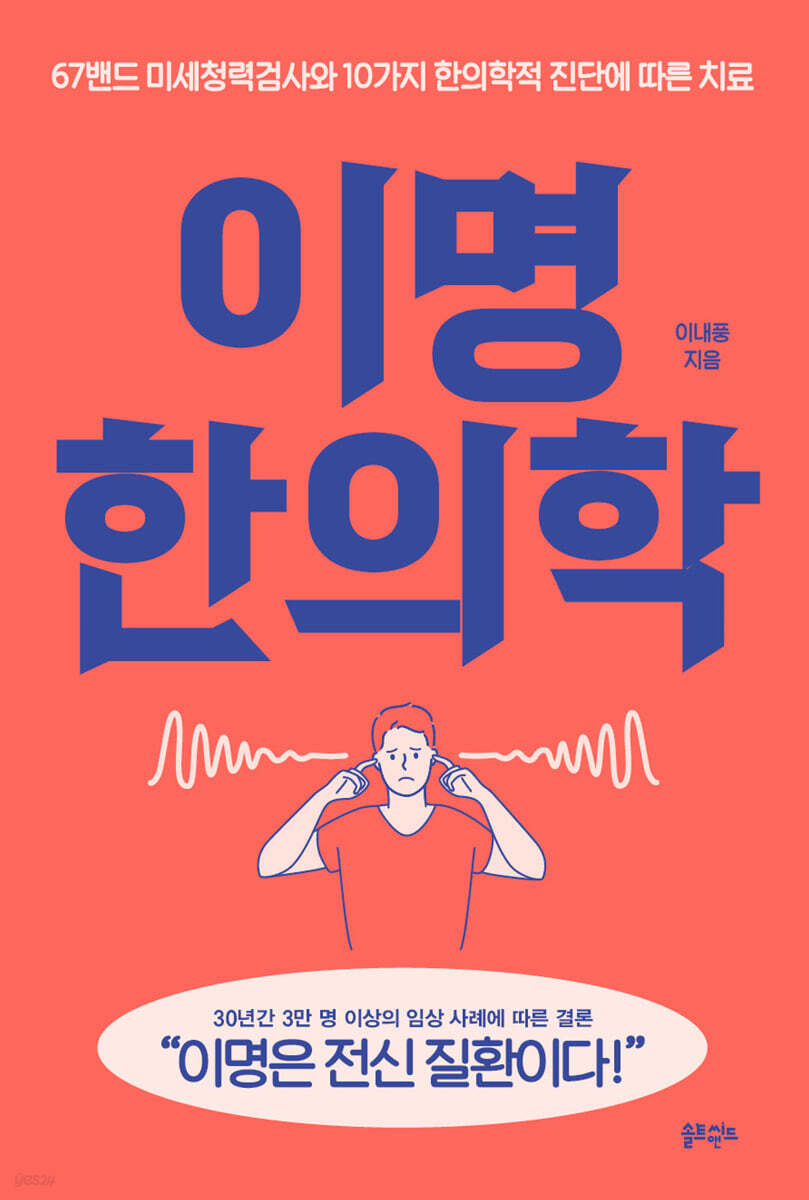
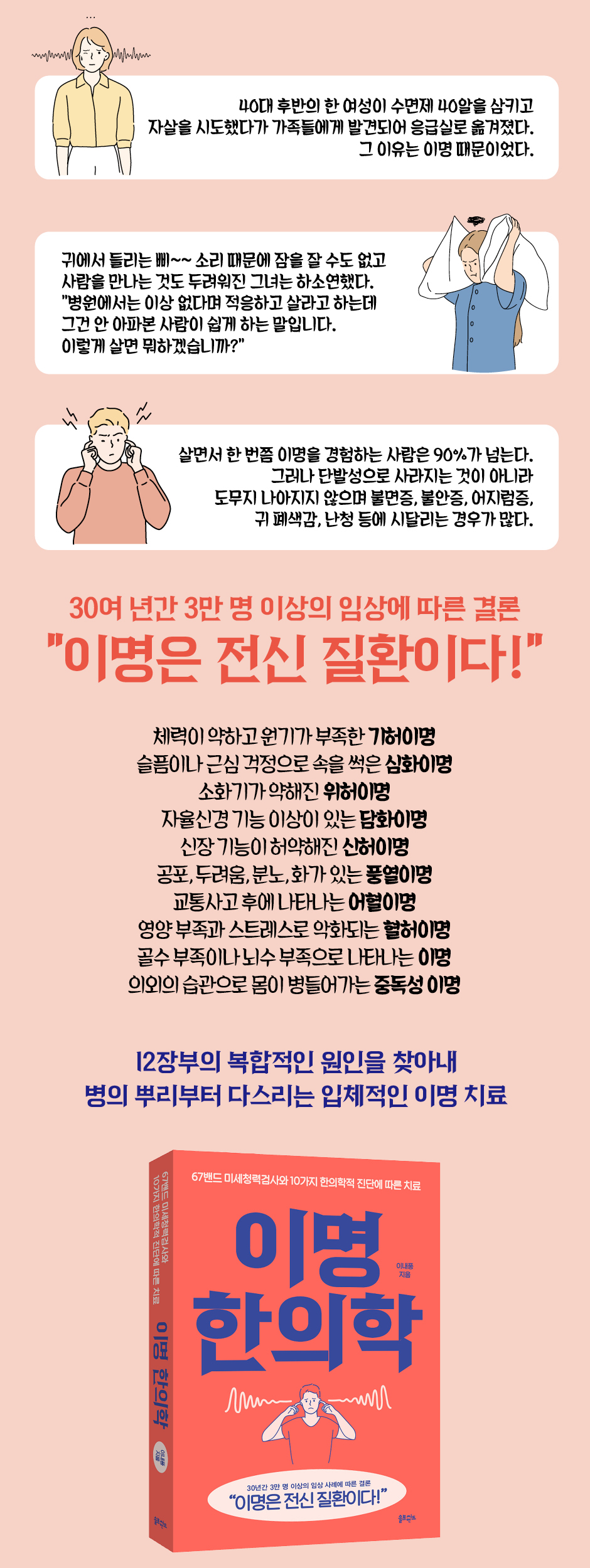
“After 30 years of clinical practice, tinnitus is a systemic disease!”
Tinnitus is a common symptom, with over 90% of people experiencing it at least once in their lives.
However, it is not a one-time thing that appears and disappears for a short time, but is often so severe that it causes sleeplessness and anxiety every day.
Tinnitus tends to be considered a symptom rather than a disease, so patients go to the hospital and are told, “There is nothing wrong with your hearing.”
Many people become desperate when they hear, “Tinnitus can’t be cured, so just adapt and live with it.”
This is because the 6-band hearing test method that began 50 years ago failed to properly detect hearing abnormalities.
The authors have been studying tinnitus as a systemic disease rather than an ear disease and have been researching treatments, and have identified the cause of tinnitus through 67-band or 134-band microaudiometry, infrared thermography, and pulse diagnosis.
Based on clinical experience with over 30,000 patients over 30 years, we have developed a comprehensive treatment program that includes herbal medicine, acupuncture, herbal medicine acupuncture, TSC-style sound rehabilitation training, Chuna therapy, and brain wave training.
This book aims to help tinnitus patients who are struggling with treatment understand their illness and change their lifestyle habits.
Tinnitus is a common symptom, with over 90% of people experiencing it at least once in their lives.
However, it is not a one-time thing that appears and disappears for a short time, but is often so severe that it causes sleeplessness and anxiety every day.
Tinnitus tends to be considered a symptom rather than a disease, so patients go to the hospital and are told, “There is nothing wrong with your hearing.”
Many people become desperate when they hear, “Tinnitus can’t be cured, so just adapt and live with it.”
This is because the 6-band hearing test method that began 50 years ago failed to properly detect hearing abnormalities.
The authors have been studying tinnitus as a systemic disease rather than an ear disease and have been researching treatments, and have identified the cause of tinnitus through 67-band or 134-band microaudiometry, infrared thermography, and pulse diagnosis.
Based on clinical experience with over 30,000 patients over 30 years, we have developed a comprehensive treatment program that includes herbal medicine, acupuncture, herbal medicine acupuncture, TSC-style sound rehabilitation training, Chuna therapy, and brain wave training.
This book aims to help tinnitus patients who are struggling with treatment understand their illness and change their lifestyle habits.
- You can preview some of the book's contents.
Preview
index
Prologue: A Record of Tinnitus Treatment Seen in Over 30,000 Patients Over 30 Years
Chapter 1: “I’m so sick of tinnitus I want to die.”
“I heard a squeaking noise while taking care of my grandchild.”|“I developed tinnitus after a conflict with a coworker.”|“I have a white coating on my tongue and I can hear cicadas in my ears.”|“I have tinnitus along with menopausal symptoms.”|“Can tinnitus be caused by using earphones for a long time?”|“I got a bruise on an iron pole and now I have tinnitus.”|“My ears feel stuffy and blocked, but is it my brain that’s causing it?”|“I suffered from insomnia and then got tinnitus while on parental leave.”|“I got tinnitus after getting a massage, and they said it was heavy metal contamination.”|“I got tinnitus after dental treatment.”
Chapter 2 Functional Problems of the Ear That Cause Tinnitus
Physical, emotional, and constitutional characteristics of tinnitus patients | Problems in the hearing pathway | Damage to hair cells leads to tinnitus | The auditory nerve connects hair cells to the brain | Hearing gradually recovers with sound rehabilitation training | Reactive oxygen species destroy hair cells | Factors that interfere with the blood supply to the cochlea | Psychological factors that follow tinnitus patients
Chapter 3: 10 Causes of Tinnitus from a Traditional Korean Medicine Perspective
Qi deficiency tinnitus, weak physical strength and lack of vitality|Simhwa tinnitus, feeling distressed by sadness or worry|Stomach deficiency tinnitus, weak digestive system|Bile fire tinnitus, autonomic nervous system dysfunction|Kidney deficiency tinnitus, weak kidney function|Wind-heat tinnitus, fear, dread, anger, and rage|Blood stasis tinnitus, can appear after a traffic accident|Blood deficiency tinnitus, worsened by malnutrition and stress|Tinnitus can be caused by bone marrow and brain water deficiency|Toxic tinnitus, unexpected habits make the body sick
Chapter 4: Curing Tinnitus by Restoring Hair Cells and the Body
From ear diseases to systemic diseases|Tinnitus is particularly effective for herbal medicine|When the heart and kidneys are in harmony, the ears are comfortable|Acupuncture helps the functions of the 12 organs and the circulation of energy|Tinnitus disappears when tense muscles are relaxed|Pharmacopuncture maximizes the effects of acupuncture and herbal medicine|Chuna therapy corrects the structure and regulates blood flow|Tinnitus disappears only when brain waves are stabilized
Chapter 5 Lifestyle Habits to Escape Tinnitus Symptoms
You can learn about a patient's psychology by looking at the pulse. If the intestines are happy, the brain and ears will also like it. What you must eat and what you don't have to eat. Minerals are necessary in small quantities, but without them, you become ill. Small habits that overcome insomnia and find a rhythm in your life. A life that relieves stress and gives you a break.
References
Chapter 1: “I’m so sick of tinnitus I want to die.”
“I heard a squeaking noise while taking care of my grandchild.”|“I developed tinnitus after a conflict with a coworker.”|“I have a white coating on my tongue and I can hear cicadas in my ears.”|“I have tinnitus along with menopausal symptoms.”|“Can tinnitus be caused by using earphones for a long time?”|“I got a bruise on an iron pole and now I have tinnitus.”|“My ears feel stuffy and blocked, but is it my brain that’s causing it?”|“I suffered from insomnia and then got tinnitus while on parental leave.”|“I got tinnitus after getting a massage, and they said it was heavy metal contamination.”|“I got tinnitus after dental treatment.”
Chapter 2 Functional Problems of the Ear That Cause Tinnitus
Physical, emotional, and constitutional characteristics of tinnitus patients | Problems in the hearing pathway | Damage to hair cells leads to tinnitus | The auditory nerve connects hair cells to the brain | Hearing gradually recovers with sound rehabilitation training | Reactive oxygen species destroy hair cells | Factors that interfere with the blood supply to the cochlea | Psychological factors that follow tinnitus patients
Chapter 3: 10 Causes of Tinnitus from a Traditional Korean Medicine Perspective
Qi deficiency tinnitus, weak physical strength and lack of vitality|Simhwa tinnitus, feeling distressed by sadness or worry|Stomach deficiency tinnitus, weak digestive system|Bile fire tinnitus, autonomic nervous system dysfunction|Kidney deficiency tinnitus, weak kidney function|Wind-heat tinnitus, fear, dread, anger, and rage|Blood stasis tinnitus, can appear after a traffic accident|Blood deficiency tinnitus, worsened by malnutrition and stress|Tinnitus can be caused by bone marrow and brain water deficiency|Toxic tinnitus, unexpected habits make the body sick
Chapter 4: Curing Tinnitus by Restoring Hair Cells and the Body
From ear diseases to systemic diseases|Tinnitus is particularly effective for herbal medicine|When the heart and kidneys are in harmony, the ears are comfortable|Acupuncture helps the functions of the 12 organs and the circulation of energy|Tinnitus disappears when tense muscles are relaxed|Pharmacopuncture maximizes the effects of acupuncture and herbal medicine|Chuna therapy corrects the structure and regulates blood flow|Tinnitus disappears only when brain waves are stabilized
Chapter 5 Lifestyle Habits to Escape Tinnitus Symptoms
You can learn about a patient's psychology by looking at the pulse. If the intestines are happy, the brain and ears will also like it. What you must eat and what you don't have to eat. Minerals are necessary in small quantities, but without them, you become ill. Small habits that overcome insomnia and find a rhythm in your life. A life that relieves stress and gives you a break.
References
Detailed image
Into the book
A woman in her late 20s, an office worker, came to the hospital looking quite tired.
After consulting with him, I found out that he was working in an accounting office and had been very busy with year-end tax settlement work when he started experiencing tinnitus in both ears.
He said that he was suffering a lot because of a conflict with a senior colleague he was working with, and that he had a friction sound in his jaw joints on both sides when chewing food.
I went to many hospitals due to temporomandibular joint disorder, and after I started hearing tinnitus, I lost 3kg.
She had been anxious for a long time, but when the tinnitus came, her insomnia got worse, and her warm hands and feet became cold.
(syncopation)
If you continue to work overtime while having problems with your diet, you may develop kidney failure, which is a condition in which the kidneys' energy level drops sharply.
Since each cause must be addressed individually, treatment takes a long time in cases where the causes of tinnitus are complex.
The reason why tinnitus seems to get better at first but then gets worse again while being treated is because you are focusing on only one cause.
In this patient's case, there were also problems with aggravation due to stress that made his head feel like it was going to explode, qi deficiency due to overwork, and kidney deficiency.
After two months of treatment, the tinnitus subsided because various three-dimensional treatments were administered for three causes.
--- p.22~25, from “I developed tinnitus after a conflict with a colleague”
Hair cells are motor cells and generate electricity through physical vibrations, so treatment with physical stimulation may be more effective than treatment with drugs.
Oral or injected medications cannot target only damaged hair cells, but sound rehabilitation training that stimulates specific frequencies with an acoustic stimulator can precisely target the location of damaged cells by dividing the cochlea into 0.2 mm units.
Therefore, it is possible to improve hearing while simultaneously protecting hearing and delaying hearing loss.
--- p.86, from “Why Tinnitus Sounds Are All Different”
If your home is not properly ventilated and you don't clean it regularly, causing trash to pile up, it will smell and attract bugs.
Likewise, when there is a lot of waste in the body, various symptoms such as skin allergies, tinnitus, nausea, and dizziness appear.
The accumulation of waste products can be caused by factors such as uncontrolled eating habits, lack of exercise, and poor blood circulation due to imbalance in the autonomic nervous system.
Patients with bilingual tinnitus also show abnormal signals in autonomic nervous system tests and electroencephalogram tests.
--- p.160, from “Conversational tinnitus, autonomic nervous system dysfunction”
Generally speaking, deficiency is when the body's energy or the function of the 12 organs has declined, while excess is when calming, stability, and relaxation are needed, or when toxins or waste products that need to be eliminated have accumulated in the body.
In cases of empirical treatment, herbal medicine is effective in relieving blood stasis, treating wind-heat, and treating phlegm and other symptoms, depending on the cause.
However, in cases of deficiency due to decreased function of the 12 organs, herbal medicine treatment is actually the most effective treatment compared to any other treatment.
Of course, other treatments can also help restore the function of the 12 organs, but the most effective method is to directly supply the necessary energy from outside through herbal medicine prescriptions.
--- p.222, from “There are tinnitus cases for which herbal medicine is particularly effective”
I took a pulse on a female patient and her heartbeat was very low.
“The patient’s heart sank.
“Who died?” he asked.
When a person experiences a sudden drop in heartbeat, it means that they have gone through a difficult time. In the case of women, the most common clinical cases are the death of a child or the death of their mother.
The death of a child can also be felt as a sharp pain in the heart.
The patient confessed that he had seen his younger brother, in his early 50s, commit suicide a few weeks earlier, saying it was strange.
It's a truly horrific experience if you imagine it.
If something like that happens, even people who have had intermittent tinnitus will experience a rapid worsening.
At that rate, you won't be able to sleep.
After consulting with him, I found out that he was working in an accounting office and had been very busy with year-end tax settlement work when he started experiencing tinnitus in both ears.
He said that he was suffering a lot because of a conflict with a senior colleague he was working with, and that he had a friction sound in his jaw joints on both sides when chewing food.
I went to many hospitals due to temporomandibular joint disorder, and after I started hearing tinnitus, I lost 3kg.
She had been anxious for a long time, but when the tinnitus came, her insomnia got worse, and her warm hands and feet became cold.
(syncopation)
If you continue to work overtime while having problems with your diet, you may develop kidney failure, which is a condition in which the kidneys' energy level drops sharply.
Since each cause must be addressed individually, treatment takes a long time in cases where the causes of tinnitus are complex.
The reason why tinnitus seems to get better at first but then gets worse again while being treated is because you are focusing on only one cause.
In this patient's case, there were also problems with aggravation due to stress that made his head feel like it was going to explode, qi deficiency due to overwork, and kidney deficiency.
After two months of treatment, the tinnitus subsided because various three-dimensional treatments were administered for three causes.
--- p.22~25, from “I developed tinnitus after a conflict with a colleague”
Hair cells are motor cells and generate electricity through physical vibrations, so treatment with physical stimulation may be more effective than treatment with drugs.
Oral or injected medications cannot target only damaged hair cells, but sound rehabilitation training that stimulates specific frequencies with an acoustic stimulator can precisely target the location of damaged cells by dividing the cochlea into 0.2 mm units.
Therefore, it is possible to improve hearing while simultaneously protecting hearing and delaying hearing loss.
--- p.86, from “Why Tinnitus Sounds Are All Different”
If your home is not properly ventilated and you don't clean it regularly, causing trash to pile up, it will smell and attract bugs.
Likewise, when there is a lot of waste in the body, various symptoms such as skin allergies, tinnitus, nausea, and dizziness appear.
The accumulation of waste products can be caused by factors such as uncontrolled eating habits, lack of exercise, and poor blood circulation due to imbalance in the autonomic nervous system.
Patients with bilingual tinnitus also show abnormal signals in autonomic nervous system tests and electroencephalogram tests.
--- p.160, from “Conversational tinnitus, autonomic nervous system dysfunction”
Generally speaking, deficiency is when the body's energy or the function of the 12 organs has declined, while excess is when calming, stability, and relaxation are needed, or when toxins or waste products that need to be eliminated have accumulated in the body.
In cases of empirical treatment, herbal medicine is effective in relieving blood stasis, treating wind-heat, and treating phlegm and other symptoms, depending on the cause.
However, in cases of deficiency due to decreased function of the 12 organs, herbal medicine treatment is actually the most effective treatment compared to any other treatment.
Of course, other treatments can also help restore the function of the 12 organs, but the most effective method is to directly supply the necessary energy from outside through herbal medicine prescriptions.
--- p.222, from “There are tinnitus cases for which herbal medicine is particularly effective”
I took a pulse on a female patient and her heartbeat was very low.
“The patient’s heart sank.
“Who died?” he asked.
When a person experiences a sudden drop in heartbeat, it means that they have gone through a difficult time. In the case of women, the most common clinical cases are the death of a child or the death of their mother.
The death of a child can also be felt as a sharp pain in the heart.
The patient confessed that he had seen his younger brother, in his early 50s, commit suicide a few weeks earlier, saying it was strange.
It's a truly horrific experience if you imagine it.
If something like that happens, even people who have had intermittent tinnitus will experience a rapid worsening.
At that rate, you won't be able to sleep.
--- p.274, from “Patients do not open up about their emotional wounds first”
Publisher's Review
“The hearing test results say there is nothing wrong, but why do I hear tinnitus?”
67-band audiometry, thermal imaging, pulse diagnosis… a definitive diagnosis of the cause.
"Can tinnitus really be cured? In other places, tinnitus is said to be an incurable disease, and if you can cure it, you'll be awarded a Nobel Prize.
“Teacher, do you have any tips?” “It’s not like it hurts, it’s a pain I feel alone, and I can’t show it to anyone, and if I don’t stop like this, I feel like I’m going to go crazy.” “What’s the point of living like this?
“I just want to stop living.”
These reactions are the complaints that the authors of the new book, “Tinnitus Oriental Medicine,” have often heard from patients in the field.
The author, Lee Nae-pung, is a national network of Korean medicine doctors who provide hearing restoration systems to patients who suffer from tinnitus and hearing loss to the point of being unable to carry out their daily lives and even attempting suicide.
There are over 17 university hospitals that patients most frequently mention as places they came from, and if you include ENT clinics and oriental medicine clinics across the country, the number increases even more.
Looking at it, we can see that it was difficult to find a satisfactory treatment method in either Oriental or Western medicine.
Patients go to the hospital and say, “There’s nothing wrong.
It is common to hear things like, “It’s not a fatal illness, so forget about it and live your life while enjoying a hobby.”
However, patients often complain of pain so severe that they feel like poking their ears with an awl.
Some people ask, "If this tinnitus doesn't stop, how am I going to live? Am I going to go deaf?" This question is filled with psychological anxiety, worry, fear, and depression.
This can cause insomnia, but conversely, living in a sleep-deprived state can cause tinnitus or make it worse.
After meeting tinnitus patients for over 30 years and accumulating data, the author has compiled statistics on the causes of tinnitus and the various symptoms that come with it, and has concluded that different treatments depending on the various causes are reasonable treatments.
Patients often said, “I had a hearing test at another hospital and there was nothing wrong,” and the reason was because of the limitations of the existing 6-band hearing test.
“Awaken your hair cells and auditory brain and restore your 12 organs.”
Functional ear treatment and systemic disease care based on 10 Oriental medical diagnoses
The traditional 6-band pure tone audiometry test used so far is like testing only the 'C' key, skipping one octave at a time, like a piano keyboard.
This has been used as a kind of world standard designed to help veterans suffering from hearing loss after World War II, but because it is not as detailed as the frequency range that actually causes tinnitus, patients have been told that “the test results show no hearing problems.”
Therefore, in this book, the authors present clinical cases in which functional problems of the ear were diagnosed by performing a 67-band microaudiometry test that breaks down the frequency range in more detail.
Among tinnitus patients, there were many who felt like giving up on themselves after living with the disease for 10 or 20 years without treatment.
Because I don't receive proper guidance on treatment, I often feel conflicted when someone says this and I wonder if that is right, and when that person says that and I wonder if that is right.
In Western medicine, tinnitus has been considered a symptom rather than a disease, which may have contributed to patients not receiving proper treatment.
However, tinnitus is often not treatable when viewed solely as an ENT disease.
From a traditional Korean medical perspective, it is reasonable to view it as a result of a systemic disease.
After 30 years of research, the author was able to diagnose the condition of the 12 organs through pulse examination and body temperature diagnosis and develop six systems to treat tinnitus.
We provide a variety of three-dimensional treatments depending on the cause, including acupuncture, moxibustion, herbal medicine, brain wave training, Chuna therapy, and TSC-style sound rehabilitation training (not the method of listening to white noise louder than tinnitus).
The author classified over 30,000 tinnitus patients he had treated and found that there were approximately 37 types. In 『Tinnitus Oriental Medicine』, the author introduces the 10 most frequent causes from Oriental medicine.
This can be broadly categorized into two categories: one is deficiency syndrome caused by weakened functions of the body and organs, such as qi deficiency, stomach deficiency, kidney deficiency, blood deficiency, and bone marrow or brain marrow deficiency.
Another symptom is a condition that requires calming, stability, and relaxation, or that has accumulated toxins or waste products in the body that need to be eliminated, such as deep-seated fever, phlegm, blood stasis, wind-heat, and toxic tinnitus.
However, the authors say that in clinical settings, tinnitus patients do not have just one cause, but rather two or three overlapping causes, so a more three-dimensional treatment is necessary.
“Tinnitus is an environmental disease!”
Noise, overeating, overdrinking, heavy metals, tension, and stress… Lifestyle habits that avoid worsening symptoms
In clinical practice, the most common causes of tinnitus and hearing loss are first, stress, second, noise, and third, overwork.
The same goes for the worsening factors of tinnitus.
There are people who say they started hearing ringing in their ears after working overtime for a week, people in their 60s who started hearing ringing in their ears after exercising too hard, people who started hearing ringing in their ears after trying to lose weight and avoiding meat, and many patients who started hearing ringing after using earphones for a long time, being exposed to loudspeakers at church, and noise at construction sites.
People who binge eat or starve themselves when stressed, or who have a habit of eating quickly or eating a lot late at night are also often found among tinnitus patients.
One of the author's diagnostic methods introduced in the book is pulse diagnosis, which is a full-body examination in Oriental medicine to find problems in the 12 organs: the lungs, large intestine, spleen, stomach, pericardium, triple burner (the ideal qi organ), heart, small intestine, liver, gallbladder, kidney, and bladder (the ideal blood organ).
In the past, doctors of Oriental medicine diagnosed patients by feeling the pulse on the wrist, but now, pulse waves are output using a pulse tester, a machine that digitizes the 27 pulses that can appear in a living person.
By looking at this pulse, patients can also visually see the state of their 12 organs.
The results of this pulse test can reveal not only physical problems such as an empty kidney due to excessive energy use, or a liver and gallbladder that has melted due to lack of sleep, but also psychological problems such as a burning chest due to anger, or a state of shock or surprise.
It is said that many patients leave crying or shedding tears when their psychological state is analyzed during a medical consultation.
This book also recommends lifestyle habits that can help you avoid stress that can harm your auditory brain.
Even if you take good medicine, it is easy to relapse if your lifestyle habits do not change.
If stress is a situation that causes illness, it is better to avoid it rather than overcome it.
It is recommended to look back on eating habits that are lacking in essential nutrients and overeating, which causes waste to accumulate in the body, and to find ways to relax when resting.
Tinnitus patients who have experienced systemic disease care
Two months ago, I heard the sound of a rice cooker escaping from my right ear.
“I went to an ENT clinic and got tested. They said I only have a little hearing loss and that if it gets worse, they should try a hearing aid.
I was prescribed nutritional supplements and blood circulation medication for a year, but it didn't work and I started to feel a tingling sensation all over my head.
It was only when I came to Nae-pung that I realized that my energy was low.
I was taking care of my 3 and 7 year old grandchildren and it was so hard that I was exhausted and overworked.
“After three months of acupuncture, herbal medicine, and sound rehabilitation training, my daily life became easier.”
_ 65-year-old woman (patient with Qi deficiency tinnitus)
The most painful thing was the feeling of occlusion.
“I had tinnitus, but what was more painful was that my ears were itchy and felt stuffy, like they were blocked with cotton.
I went to the hospital and got tested, but they said there was no such thing as Eustachian tube stenosis, so I was at a loss and in pain.
I was so anxious when I was told that I would not receive any special treatment even though there were no abnormal findings.
After getting a pulse test and counseling at Inaepoong, I realized that the stress, fatigue, and insomnia I had been experiencing at home had had an impact.
I didn't say anything because I thought it was unrelated, but I ended up telling him that I had surgery for a brain hemorrhage seven years ago."
_ 57-year-old woman (wind-heat tinnitus patient)
I've been hearing tinnitus since I had the implant surgery.
“For the past four months, I have been hearing a sound of water and rain leaking from my left ear.
I started getting implants one by one a year ago, and that's when I started hearing tinnitus.
I went to a university hospital and had an MRI scan because they suspected a brain tumor, but there was nothing wrong.
I went to the hospital because I was feeling depressed, and they said I had bone marrow and brain marrow deficiency.
I heard that the sympathetic nerves are also overactive and the kidneys, heart, and stomach are also weakened.
“I used to have symptoms like frequent urination, tremors in my hands and feet, dizziness, and cold sweats, and now I think I know why.”
_ A man in his mid-40s (patient with brain and bone marrow deficiency)
My hearing test results show no abnormalities, but why do I still hear tinnitus?
“I walk for three hours every day, and I put on earphones to study English while I’m at it.
A month later, I developed hearing loss and tinnitus in both my left and right ears, and I also have headaches and dizziness.
I went to a university hospital for various tests and took steroids for 10 days, and things got better, but when I reduced the medication, things got worse again.
Still sensitive to sharp sounds.
The 6-band hearing test at the university hospital did not find any abnormalities, but the cause was traced through a 134-band micro-audiometry test at Innaepung.
“I am recovering quickly now.”
_ Male in his 30s (patient with tinnitus)
67-band audiometry, thermal imaging, pulse diagnosis… a definitive diagnosis of the cause.
"Can tinnitus really be cured? In other places, tinnitus is said to be an incurable disease, and if you can cure it, you'll be awarded a Nobel Prize.
“Teacher, do you have any tips?” “It’s not like it hurts, it’s a pain I feel alone, and I can’t show it to anyone, and if I don’t stop like this, I feel like I’m going to go crazy.” “What’s the point of living like this?
“I just want to stop living.”
These reactions are the complaints that the authors of the new book, “Tinnitus Oriental Medicine,” have often heard from patients in the field.
The author, Lee Nae-pung, is a national network of Korean medicine doctors who provide hearing restoration systems to patients who suffer from tinnitus and hearing loss to the point of being unable to carry out their daily lives and even attempting suicide.
There are over 17 university hospitals that patients most frequently mention as places they came from, and if you include ENT clinics and oriental medicine clinics across the country, the number increases even more.
Looking at it, we can see that it was difficult to find a satisfactory treatment method in either Oriental or Western medicine.
Patients go to the hospital and say, “There’s nothing wrong.
It is common to hear things like, “It’s not a fatal illness, so forget about it and live your life while enjoying a hobby.”
However, patients often complain of pain so severe that they feel like poking their ears with an awl.
Some people ask, "If this tinnitus doesn't stop, how am I going to live? Am I going to go deaf?" This question is filled with psychological anxiety, worry, fear, and depression.
This can cause insomnia, but conversely, living in a sleep-deprived state can cause tinnitus or make it worse.
After meeting tinnitus patients for over 30 years and accumulating data, the author has compiled statistics on the causes of tinnitus and the various symptoms that come with it, and has concluded that different treatments depending on the various causes are reasonable treatments.
Patients often said, “I had a hearing test at another hospital and there was nothing wrong,” and the reason was because of the limitations of the existing 6-band hearing test.
“Awaken your hair cells and auditory brain and restore your 12 organs.”
Functional ear treatment and systemic disease care based on 10 Oriental medical diagnoses
The traditional 6-band pure tone audiometry test used so far is like testing only the 'C' key, skipping one octave at a time, like a piano keyboard.
This has been used as a kind of world standard designed to help veterans suffering from hearing loss after World War II, but because it is not as detailed as the frequency range that actually causes tinnitus, patients have been told that “the test results show no hearing problems.”
Therefore, in this book, the authors present clinical cases in which functional problems of the ear were diagnosed by performing a 67-band microaudiometry test that breaks down the frequency range in more detail.
Among tinnitus patients, there were many who felt like giving up on themselves after living with the disease for 10 or 20 years without treatment.
Because I don't receive proper guidance on treatment, I often feel conflicted when someone says this and I wonder if that is right, and when that person says that and I wonder if that is right.
In Western medicine, tinnitus has been considered a symptom rather than a disease, which may have contributed to patients not receiving proper treatment.
However, tinnitus is often not treatable when viewed solely as an ENT disease.
From a traditional Korean medical perspective, it is reasonable to view it as a result of a systemic disease.
After 30 years of research, the author was able to diagnose the condition of the 12 organs through pulse examination and body temperature diagnosis and develop six systems to treat tinnitus.
We provide a variety of three-dimensional treatments depending on the cause, including acupuncture, moxibustion, herbal medicine, brain wave training, Chuna therapy, and TSC-style sound rehabilitation training (not the method of listening to white noise louder than tinnitus).
The author classified over 30,000 tinnitus patients he had treated and found that there were approximately 37 types. In 『Tinnitus Oriental Medicine』, the author introduces the 10 most frequent causes from Oriental medicine.
This can be broadly categorized into two categories: one is deficiency syndrome caused by weakened functions of the body and organs, such as qi deficiency, stomach deficiency, kidney deficiency, blood deficiency, and bone marrow or brain marrow deficiency.
Another symptom is a condition that requires calming, stability, and relaxation, or that has accumulated toxins or waste products in the body that need to be eliminated, such as deep-seated fever, phlegm, blood stasis, wind-heat, and toxic tinnitus.
However, the authors say that in clinical settings, tinnitus patients do not have just one cause, but rather two or three overlapping causes, so a more three-dimensional treatment is necessary.
“Tinnitus is an environmental disease!”
Noise, overeating, overdrinking, heavy metals, tension, and stress… Lifestyle habits that avoid worsening symptoms
In clinical practice, the most common causes of tinnitus and hearing loss are first, stress, second, noise, and third, overwork.
The same goes for the worsening factors of tinnitus.
There are people who say they started hearing ringing in their ears after working overtime for a week, people in their 60s who started hearing ringing in their ears after exercising too hard, people who started hearing ringing in their ears after trying to lose weight and avoiding meat, and many patients who started hearing ringing after using earphones for a long time, being exposed to loudspeakers at church, and noise at construction sites.
People who binge eat or starve themselves when stressed, or who have a habit of eating quickly or eating a lot late at night are also often found among tinnitus patients.
One of the author's diagnostic methods introduced in the book is pulse diagnosis, which is a full-body examination in Oriental medicine to find problems in the 12 organs: the lungs, large intestine, spleen, stomach, pericardium, triple burner (the ideal qi organ), heart, small intestine, liver, gallbladder, kidney, and bladder (the ideal blood organ).
In the past, doctors of Oriental medicine diagnosed patients by feeling the pulse on the wrist, but now, pulse waves are output using a pulse tester, a machine that digitizes the 27 pulses that can appear in a living person.
By looking at this pulse, patients can also visually see the state of their 12 organs.
The results of this pulse test can reveal not only physical problems such as an empty kidney due to excessive energy use, or a liver and gallbladder that has melted due to lack of sleep, but also psychological problems such as a burning chest due to anger, or a state of shock or surprise.
It is said that many patients leave crying or shedding tears when their psychological state is analyzed during a medical consultation.
This book also recommends lifestyle habits that can help you avoid stress that can harm your auditory brain.
Even if you take good medicine, it is easy to relapse if your lifestyle habits do not change.
If stress is a situation that causes illness, it is better to avoid it rather than overcome it.
It is recommended to look back on eating habits that are lacking in essential nutrients and overeating, which causes waste to accumulate in the body, and to find ways to relax when resting.
Tinnitus patients who have experienced systemic disease care
Two months ago, I heard the sound of a rice cooker escaping from my right ear.
“I went to an ENT clinic and got tested. They said I only have a little hearing loss and that if it gets worse, they should try a hearing aid.
I was prescribed nutritional supplements and blood circulation medication for a year, but it didn't work and I started to feel a tingling sensation all over my head.
It was only when I came to Nae-pung that I realized that my energy was low.
I was taking care of my 3 and 7 year old grandchildren and it was so hard that I was exhausted and overworked.
“After three months of acupuncture, herbal medicine, and sound rehabilitation training, my daily life became easier.”
_ 65-year-old woman (patient with Qi deficiency tinnitus)
The most painful thing was the feeling of occlusion.
“I had tinnitus, but what was more painful was that my ears were itchy and felt stuffy, like they were blocked with cotton.
I went to the hospital and got tested, but they said there was no such thing as Eustachian tube stenosis, so I was at a loss and in pain.
I was so anxious when I was told that I would not receive any special treatment even though there were no abnormal findings.
After getting a pulse test and counseling at Inaepoong, I realized that the stress, fatigue, and insomnia I had been experiencing at home had had an impact.
I didn't say anything because I thought it was unrelated, but I ended up telling him that I had surgery for a brain hemorrhage seven years ago."
_ 57-year-old woman (wind-heat tinnitus patient)
I've been hearing tinnitus since I had the implant surgery.
“For the past four months, I have been hearing a sound of water and rain leaking from my left ear.
I started getting implants one by one a year ago, and that's when I started hearing tinnitus.
I went to a university hospital and had an MRI scan because they suspected a brain tumor, but there was nothing wrong.
I went to the hospital because I was feeling depressed, and they said I had bone marrow and brain marrow deficiency.
I heard that the sympathetic nerves are also overactive and the kidneys, heart, and stomach are also weakened.
“I used to have symptoms like frequent urination, tremors in my hands and feet, dizziness, and cold sweats, and now I think I know why.”
_ A man in his mid-40s (patient with brain and bone marrow deficiency)
My hearing test results show no abnormalities, but why do I still hear tinnitus?
“I walk for three hours every day, and I put on earphones to study English while I’m at it.
A month later, I developed hearing loss and tinnitus in both my left and right ears, and I also have headaches and dizziness.
I went to a university hospital for various tests and took steroids for 10 days, and things got better, but when I reduced the medication, things got worse again.
Still sensitive to sharp sounds.
The 6-band hearing test at the university hospital did not find any abnormalities, but the cause was traced through a 134-band micro-audiometry test at Innaepung.
“I am recovering quickly now.”
_ Male in his 30s (patient with tinnitus)
GOODS SPECIFICS
- Publication date: December 30, 2022
- Page count, weight, size: 312 pages | 540g | 153*224*18mm
- ISBN13: 9791188947102
- ISBN10: 1188947109
You may also like
카테고리
korean


korean

![ELLE 엘르 스페셜 에디션 A형 : 12월 [2025]](http://librairie.coreenne.fr/cdn/shop/files/b8e27a3de6c9538896439686c6b0e8fb.jpg?v=1766436872&width=3840)


