

The Truth About Salt and Its Health Benefits
 |
Description
Book Introduction
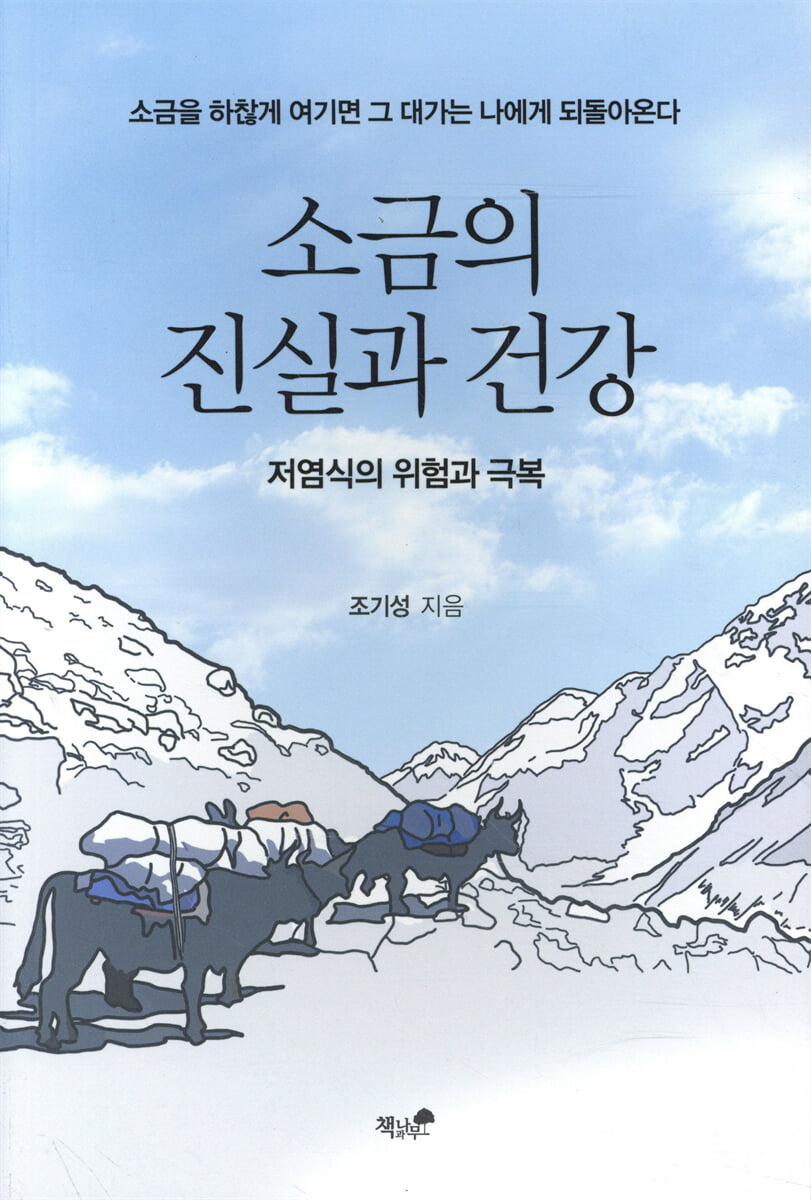
"The Truth and Health of Salt," which reveals the circulation of salt in our bodies and the principles of health.
Experimentally demonstrating healthy salt intake, challenging the indiscriminate use of low-salt diets.
The author first began researching salt in the early 1990s, and has published "The Truth and Health of Salt" as the culmination of over 30 years of research on human health and the globalization of domestically produced sea salt and bamboo salt.
By exploring the principles of circulation in the universe, the Earth, and our bodies, combining science, medicine, literature, history, and Eastern philosophy such as the Five Elements, the book proves the relationship between salt and health, such as the effects of salt on blood pressure and kidneys, through test analysis and animal experiments, and reveals the harmful effects of a low-salt diet based on fragmentary facts, and suggests ways to overcome them.
This book analyzes seawater and various salts from around the world, and contains animal experiments on the effects of refined salt, sea salt, and bamboo salt, which are pure salts, on our body. It also contains results that show that if you consume mineral-rich sea salt and bamboo salt as your body desires, the blood's homeostasis of 0.9% salt content and slightly alkaline pH 7.4 are maintained, which does not affect your kidneys or blood pressure, and your immunity is improved, so you can overcome viral diseases such as the flu and coronavirus, or chronic diseases caused by a low-salt diet, and live a long and healthy life. It also explains the principles of how salt and the minerals contained in salt play a role in each organ of the human body from various perspectives such as medical science, cosmology, and the Five Elements, and even includes personal experiences of people recovering their health by consuming salt, covering the truth about salt that goes beyond theory.
Experimentally demonstrating healthy salt intake, challenging the indiscriminate use of low-salt diets.
The author first began researching salt in the early 1990s, and has published "The Truth and Health of Salt" as the culmination of over 30 years of research on human health and the globalization of domestically produced sea salt and bamboo salt.
By exploring the principles of circulation in the universe, the Earth, and our bodies, combining science, medicine, literature, history, and Eastern philosophy such as the Five Elements, the book proves the relationship between salt and health, such as the effects of salt on blood pressure and kidneys, through test analysis and animal experiments, and reveals the harmful effects of a low-salt diet based on fragmentary facts, and suggests ways to overcome them.
This book analyzes seawater and various salts from around the world, and contains animal experiments on the effects of refined salt, sea salt, and bamboo salt, which are pure salts, on our body. It also contains results that show that if you consume mineral-rich sea salt and bamboo salt as your body desires, the blood's homeostasis of 0.9% salt content and slightly alkaline pH 7.4 are maintained, which does not affect your kidneys or blood pressure, and your immunity is improved, so you can overcome viral diseases such as the flu and coronavirus, or chronic diseases caused by a low-salt diet, and live a long and healthy life. It also explains the principles of how salt and the minerals contained in salt play a role in each organ of the human body from various perspectives such as medical science, cosmology, and the Five Elements, and even includes personal experiences of people recovering their health by consuming salt, covering the truth about salt that goes beyond theory.
- You can preview some of the book's contents.
Preview
index
preface
Note
Chapter 1: The Sea is the Home of Life
Section 1: 20 Elements Our Body Needs
1. Sunlight
2. Air
3. Water
4. Salt
5. Birth environment and constitution
Section 2: Two Scientists Who Unraveled the Fundamentals of Life
1. Conditions for the beating of a frog's heart
2. Discovery of osmotic pressure - elucidation of the basic physiological functions of plant and animal cells
3. The significance of the discovery of the frog heartbeat and osmotic pressure: the importance of minerals and seawater.
Section 3: The mountains and fields must be beautiful, and the rivers and seawater must be rich in minerals.
1. Baekdu Mountain Heaven and Earth and the lower reaches of the Yalu River
2. The source of the Han River and the North Han River, South Han River, and Ganghwa Bay
3. West Coast and South Coast
4. Why Korean southwestern coastal croaker is so delicious
- Fish also vary depending on the sea water.
Section 4 Minerals in Major Seawaters of the World
1. The sea is the home of mankind - seawater and blood
2. The West Sea of Korea and the Balhae Bay of China
3. Atlantic Ocean, Indian Ocean, Pacific Ocean
1) Sea waters of Guérande, France
2) Minerals from the seawater and salt lakes of Istanbul, Turkey
3) Chennai sea water in the Bay of Bengal, India
4) Changes in seawater and salt in Wako, Japan
5) Seawater in Melbourne, Australia
6) Seawater in Seattle, USA
Chapter 2: Natural Salts of the World that Accompany Humanity
Section 1 What is natural salt?
1. The world's five major civilization cradles and salt
2. Conditions for human survival
Section 2: Sea Salt - Resembling Seawater, Yet Different as Siblings
1. History of sea salt
2. Guérande tidal flat salt from France
3. Chennai sea salt from the Bay of Bengal, India
4. Natural salt from the Indian Arabian coast and Gandhi's Salt March
5. China's Bohai Bay tidal flat salt
6. Shinan Tidal Flat Salt in Korea
7. Ingredients and Management of Major Tidal Flat Sea Salts from Around the World
8. World's Largest Sea Salt
Section 3: Self-salt, Toxin, and Jeong-salt
1. Self-salting
2. Soil inflammation
3. Jeongyeom
Section 4: Lake Salt
1. What is a salt lake?
2. The Dead Sea and Bolivia's Uyuni Salt Flats
3. Tuz Salt Lake in Türkiye
Section 5: Rock Salt 134
1. Formation and characteristics of rock salt
2. Rock salt of the European continent
3. Rock salt from the Himalayas
Section 6: Changes in the Total Salt 141
Chapter 3: The Great Waves in the Salt Market and the Spread of White Salt
Section 1: The Great Wave of Change in the Salt Market 144
1. Shift in salt leadership
2. The first wave of changes in the salt market
3. The second wave of changes in the salt market
Section 2 Whitening of Edible Salt 154
1. White pure salt is the main ingredient
2. Efforts to restore minerals
1) Tidal flat salt
2) Bamboo salt
3) Instantaneous crystallization at room temperature
Section 3 Standards and Minerals of Edible Salt
1. Standards for edible salt in major countries
2. Salt specifications and minerals
Chapter 4: Controversy and Institutionalization of Low-Salt Diets
Section 1: The Beginning of the Salt Controversy
1. Salt with history
2. Salt intake before the salt debate
Section 2: The Flow of the Salt Debate - The Emergence of Low-Salt Diets
1. Controversy over salt and its effects on the human body
2. The spark of low-salt diet
3. The Birth and Controversy of Ambar and Bochar's Salt-Blood Pressure Hypothesis
4. Kempner's Rice Diet
5. Louis Dahl's salt-blood pressure experiment
Section 3: Institutionalization of low-salt diets and social movements
1. US dietary goals that incorporate low-salt diets
2. Social movement and establishment of low-salt diet
3. Intersalt's research and reports in the American Medical Journal
4. Changes in salt intake guidelines and recommendations
5. Unbreakable White Salt - The aftershocks continue.
Chapter 5: The Truth About Salt - Animal Testing Related to Salt and Blood Pressure
Section 1: Experimental content that sparked the low-salt diet
1. The salt-blood pressure hypothesis: the beginning of a low-salt diet
2. Problems with the salt-blood pressure hypothesis
Section 2: Experiments on Blood Pressure and Kidney Health by Type of Salt
1. Preprocessing of the experiment
2. Experimental Results 1- Changes in feed and water intake and blood pressure
3. Experimental Results 2- Kidney Degeneration
Section 3: The Significance of Salt-Blood Pressure Animal Experiments
1. Salt concentration and feed and water intake
2. Changes in blood pressure according to salt type and concentration
3. The effect of minerals on blood pressure
Chapter 6 Salt, Minerals, and the Function of the Human Body
Section 1 Acid-alkali concentrations in seawater and the human body
1. Human evolution and changes in blood salinity
2. 40% of salt is in the blood, 60% in the digestive system.
Section 2: The Role of Salt in the Major Organs of the Human Body
1. Blood
2. Intracellular and extracellular fluid (plasma)
3. Closure
4. Kidney
5. Dehydration, heat-related illness, and hyponatremia
6. Pregnancy, childbirth, and fetal development
7. Soy sauce
8. Camouflage
9. Small intestine (duodenum)
10. Small intestine and large intestine
11. Hormones and neurotransmitters
12. Brain
13. Heart (heart pain)
Section 3: Salt from the perspective of yin and yang and the five elements
1. Background and concept of the birth of the yin-yang theory
2. The mutual generation and conflict of the five elements
3. The human body and the five elements of yin and yang
4. The rise and fall of the five elements
5. Harmony and Balance - Within 10% of Yin and Yang
Section 4: The Function of Minerals in the Human Body
1. Major and trace minerals
2. The function of minerals in the human body
Chapter 7: In Search of the Secret of Bamboo Salt
Section 1 Raw materials and production of bamboo salt
1. Raw materials for bamboo salt
2. Manufacturing bamboo salt
Section 2 Components of bamboo salt
1. Bamboo salt melted at high temperatures more than nine times
2.2, 3 times high temperature melted bamboo salt
3. Characteristics of white bamboo salt and purple bamboo salt
Section 3: The Secret of Bamboo Salt
1. Changes in mineral content
2. Principle and temperature of baking nine times (9 times)
3. Bamboo salt used as medicine
Section 4: Animal testing on the efficacy of bamboo salt
1. Experimental purpose and preprocessing
2. Experimental results
3. Bamboo salt's ability to remove heavy metals from the body
Chapter 8: Uses and Experiences of Salt
Section 1: Experience using salt in everyday life
1. Cavity prevention and gum health
2. Runny nose and watery eyes due to allergies and colds
3. Chronic inflammatory skin disease
4. Escape from gluttony and obesity
5. There is a salt shaker on the table.
6. Salt, alcohol, coffee, and caffeinated beverages
7. Ankle cramps (muscle pain)
8. Salt intake, constipation, and stool condition
Section 2: Salt-related experiences with suffering
1. Acute enteritis due to low-salt dehydration in Myanmar
2. Black garlic in bamboo salt to restore energy
3. Bamboo salt and coronavirus-19
4. Pain from low-salt diet, such as small intestinal necrosis
5. Transmission routes of diseases related to low-salt diets
Chapter 9: Changes in the Earth's Environment and Salt Policy
Section 1 Changes in the Earth's Environment
1. The creation and destruction of the Earth
2. Changes in the global environment due to global warming
Section 2 Changes in Salt Policy
1. China's salt policy
2. Salt policy before the Republic of Korea
Section 3: South Korea's Salt Policy after Liberation
1. Implementation of the 5-Year Plan for Anti-Inflammatory Diseases
2. Abolition of the salt monopoly and enactment of the Salt Management Act - Privatization
3. Salt import liberalization and structural adjustment
4. Changes in salt demand
5. Sea salt and bamboo salt are Korea's heritage - salt policy direction
References
Note
Chapter 1: The Sea is the Home of Life
Section 1: 20 Elements Our Body Needs
1. Sunlight
2. Air
3. Water
4. Salt
5. Birth environment and constitution
Section 2: Two Scientists Who Unraveled the Fundamentals of Life
1. Conditions for the beating of a frog's heart
2. Discovery of osmotic pressure - elucidation of the basic physiological functions of plant and animal cells
3. The significance of the discovery of the frog heartbeat and osmotic pressure: the importance of minerals and seawater.
Section 3: The mountains and fields must be beautiful, and the rivers and seawater must be rich in minerals.
1. Baekdu Mountain Heaven and Earth and the lower reaches of the Yalu River
2. The source of the Han River and the North Han River, South Han River, and Ganghwa Bay
3. West Coast and South Coast
4. Why Korean southwestern coastal croaker is so delicious
- Fish also vary depending on the sea water.
Section 4 Minerals in Major Seawaters of the World
1. The sea is the home of mankind - seawater and blood
2. The West Sea of Korea and the Balhae Bay of China
3. Atlantic Ocean, Indian Ocean, Pacific Ocean
1) Sea waters of Guérande, France
2) Minerals from the seawater and salt lakes of Istanbul, Turkey
3) Chennai sea water in the Bay of Bengal, India
4) Changes in seawater and salt in Wako, Japan
5) Seawater in Melbourne, Australia
6) Seawater in Seattle, USA
Chapter 2: Natural Salts of the World that Accompany Humanity
Section 1 What is natural salt?
1. The world's five major civilization cradles and salt
2. Conditions for human survival
Section 2: Sea Salt - Resembling Seawater, Yet Different as Siblings
1. History of sea salt
2. Guérande tidal flat salt from France
3. Chennai sea salt from the Bay of Bengal, India
4. Natural salt from the Indian Arabian coast and Gandhi's Salt March
5. China's Bohai Bay tidal flat salt
6. Shinan Tidal Flat Salt in Korea
7. Ingredients and Management of Major Tidal Flat Sea Salts from Around the World
8. World's Largest Sea Salt
Section 3: Self-salt, Toxin, and Jeong-salt
1. Self-salting
2. Soil inflammation
3. Jeongyeom
Section 4: Lake Salt
1. What is a salt lake?
2. The Dead Sea and Bolivia's Uyuni Salt Flats
3. Tuz Salt Lake in Türkiye
Section 5: Rock Salt 134
1. Formation and characteristics of rock salt
2. Rock salt of the European continent
3. Rock salt from the Himalayas
Section 6: Changes in the Total Salt 141
Chapter 3: The Great Waves in the Salt Market and the Spread of White Salt
Section 1: The Great Wave of Change in the Salt Market 144
1. Shift in salt leadership
2. The first wave of changes in the salt market
3. The second wave of changes in the salt market
Section 2 Whitening of Edible Salt 154
1. White pure salt is the main ingredient
2. Efforts to restore minerals
1) Tidal flat salt
2) Bamboo salt
3) Instantaneous crystallization at room temperature
Section 3 Standards and Minerals of Edible Salt
1. Standards for edible salt in major countries
2. Salt specifications and minerals
Chapter 4: Controversy and Institutionalization of Low-Salt Diets
Section 1: The Beginning of the Salt Controversy
1. Salt with history
2. Salt intake before the salt debate
Section 2: The Flow of the Salt Debate - The Emergence of Low-Salt Diets
1. Controversy over salt and its effects on the human body
2. The spark of low-salt diet
3. The Birth and Controversy of Ambar and Bochar's Salt-Blood Pressure Hypothesis
4. Kempner's Rice Diet
5. Louis Dahl's salt-blood pressure experiment
Section 3: Institutionalization of low-salt diets and social movements
1. US dietary goals that incorporate low-salt diets
2. Social movement and establishment of low-salt diet
3. Intersalt's research and reports in the American Medical Journal
4. Changes in salt intake guidelines and recommendations
5. Unbreakable White Salt - The aftershocks continue.
Chapter 5: The Truth About Salt - Animal Testing Related to Salt and Blood Pressure
Section 1: Experimental content that sparked the low-salt diet
1. The salt-blood pressure hypothesis: the beginning of a low-salt diet
2. Problems with the salt-blood pressure hypothesis
Section 2: Experiments on Blood Pressure and Kidney Health by Type of Salt
1. Preprocessing of the experiment
2. Experimental Results 1- Changes in feed and water intake and blood pressure
3. Experimental Results 2- Kidney Degeneration
Section 3: The Significance of Salt-Blood Pressure Animal Experiments
1. Salt concentration and feed and water intake
2. Changes in blood pressure according to salt type and concentration
3. The effect of minerals on blood pressure
Chapter 6 Salt, Minerals, and the Function of the Human Body
Section 1 Acid-alkali concentrations in seawater and the human body
1. Human evolution and changes in blood salinity
2. 40% of salt is in the blood, 60% in the digestive system.
Section 2: The Role of Salt in the Major Organs of the Human Body
1. Blood
2. Intracellular and extracellular fluid (plasma)
3. Closure
4. Kidney
5. Dehydration, heat-related illness, and hyponatremia
6. Pregnancy, childbirth, and fetal development
7. Soy sauce
8. Camouflage
9. Small intestine (duodenum)
10. Small intestine and large intestine
11. Hormones and neurotransmitters
12. Brain
13. Heart (heart pain)
Section 3: Salt from the perspective of yin and yang and the five elements
1. Background and concept of the birth of the yin-yang theory
2. The mutual generation and conflict of the five elements
3. The human body and the five elements of yin and yang
4. The rise and fall of the five elements
5. Harmony and Balance - Within 10% of Yin and Yang
Section 4: The Function of Minerals in the Human Body
1. Major and trace minerals
2. The function of minerals in the human body
Chapter 7: In Search of the Secret of Bamboo Salt
Section 1 Raw materials and production of bamboo salt
1. Raw materials for bamboo salt
2. Manufacturing bamboo salt
Section 2 Components of bamboo salt
1. Bamboo salt melted at high temperatures more than nine times
2.2, 3 times high temperature melted bamboo salt
3. Characteristics of white bamboo salt and purple bamboo salt
Section 3: The Secret of Bamboo Salt
1. Changes in mineral content
2. Principle and temperature of baking nine times (9 times)
3. Bamboo salt used as medicine
Section 4: Animal testing on the efficacy of bamboo salt
1. Experimental purpose and preprocessing
2. Experimental results
3. Bamboo salt's ability to remove heavy metals from the body
Chapter 8: Uses and Experiences of Salt
Section 1: Experience using salt in everyday life
1. Cavity prevention and gum health
2. Runny nose and watery eyes due to allergies and colds
3. Chronic inflammatory skin disease
4. Escape from gluttony and obesity
5. There is a salt shaker on the table.
6. Salt, alcohol, coffee, and caffeinated beverages
7. Ankle cramps (muscle pain)
8. Salt intake, constipation, and stool condition
Section 2: Salt-related experiences with suffering
1. Acute enteritis due to low-salt dehydration in Myanmar
2. Black garlic in bamboo salt to restore energy
3. Bamboo salt and coronavirus-19
4. Pain from low-salt diet, such as small intestinal necrosis
5. Transmission routes of diseases related to low-salt diets
Chapter 9: Changes in the Earth's Environment and Salt Policy
Section 1 Changes in the Earth's Environment
1. The creation and destruction of the Earth
2. Changes in the global environment due to global warming
Section 2 Changes in Salt Policy
1. China's salt policy
2. Salt policy before the Republic of Korea
Section 3: South Korea's Salt Policy after Liberation
1. Implementation of the 5-Year Plan for Anti-Inflammatory Diseases
2. Abolition of the salt monopoly and enactment of the Salt Management Act - Privatization
3. Salt import liberalization and structural adjustment
4. Changes in salt demand
5. Sea salt and bamboo salt are Korea's heritage - salt policy direction
References
Into the book
Of the 70% to 80% of water on the Earth's surface, about 97% is salt water, and just as countless living things were born, humans also started from the sea and came up onto land.
This is proven by the body's salt content of 0.9% and slightly alkaline pH of 7.4.
Although there is a difference in salinity because humans left the sea long ago, the proportion of minerals in seawater and the proportion of minerals in our blood are similar.
According to this natural law, we can infer that tidal flat sea salt is the most suitable for providing the saltiness and minerals our body needs.
--- p.24
Sea salt, obtained by evaporating seawater in the sun, is a type of simple processed salt that does not require any minerals or labor. It is not as old as you might think that tidal flat sea salt has been used in our lives.
In France, around 700 AD, the production of sea salt by boiling seawater in coastal salt pans gradually declined, and sea salt, simply made by evaporating it in the sun, began in 684 AD in the area near Guérande.
Also, although it is not the current solar salt production method, there is a record of solar salt being produced in 814 at a saltworks in the Comacchio region of northern Italy, bordering the Adriatic Sea.
Sea salt began to be used in earnest after the Middle Ages.
--- p.70
Just as the minerals contained in seawater vary depending on the sea, the minerals contained in tidal flat sea salt also vary depending on the seawater and salt production method.
The Bay of Bohai and the Bay of Bengal have high salinity (over 90%) but low in major minerals, while Shinan in Korea and Guérande in France have slightly lower salinity but high in major minerals.
Trace minerals are highest in Guérande, followed by the Bay of Bengal and Bohai Bay, and lowest in Sinan.
However, as shown in Table 2-5, Guérande, Bay of Bengal, and Bohai Bay have a large imbalance between trace minerals due to the abundance of certain trace minerals.
Considering this imbalance, Shinan is the most balanced.
Specifically, the compound of major components such as calcium, magnesium, potassium, chlorine, and sulfate ions is 3.77% in Shinan, which is 1.5 times higher than Guérande and 2 to 3 times higher than the Bay of Bengal and Bohai Bay.
Shinan and Guerande have low salinity at 88%, but the remaining 12% is water, minerals, and insoluble matter.
--- p.116
There are also experimental results showing that animals and humans experience decreased vitality and sexual desire when their bodies lack salt.
Salt energizes animals and makes them want to mate.
Even in laboratory mice, lack of salt causes reproductive failures, such as difficulty conceiving.
It is known that women who have a low salt content in their body due to kidney problems have a low pregnancy and birth rate, and salt content affects not only pregnancy but also the development of the baby.
A woman's vagina is acidic and a man's semen is alkaline. When alkaline male semen enters the acidic female vagina, it is neutralized, creating an environment conducive to sperm activity and making it easier for sperm to find the egg.
However, if a woman or man has a strong or weak acidity or alkaline environment and the acid-alkali balance in the woman's vagina is not neutralized, it becomes an environment where sperm have difficulty moving, like trying to find an egg in a snowstorm, and pregnancy does not occur.
--- p.287
If we look at the function and effect of bamboo salt and tidal flat sea salt in excreting heavy metals accumulated in the body,
- Rats that consumed sea salt experienced hair loss in more areas than rats that consumed refined salt, but after consuming sea salt, the hair loss condition recovered slightly more than rats that consumed refined salt.
This shows that the minerals in sea salt combine with cadmium (Cd) in the rat's body and some of it is excreted from the body, resulting in some recovery from hair loss.
- The mice that consumed bamboo salt recovered from hair loss much faster and almost completely recovered than the mice that consumed sea salt or refined salt.
The minerals in bamboo salt combined with the cadmium (Cd) accumulated in the rat's body and were excreted, returning it to almost normal.
It has been proven that minerals such as sulfur (sulfur S) in bamboo salt bind to cadmium accumulated in the body and help expel it from the body.
--- p.393
There is a growing trend worldwide to consume refined salt separately from the minerals necessary for the human body, as if taking medicine.
Accordingly, the human body's immunity will gradually decline, while the number of heat-related patients will increase due to global warming, and viruses more powerful than the coronavirus will appear frequently.
In the future, Korean tidal flat sea salt and bamboo salt will become a health tonic and one of the food vaccines that can improve the human body's immunity.
This is because tidal flat sea salt and bamboo salt contain a rich and balanced amount of minerals that our body needs.
For this reason, the government must strive to develop and distribute sea salt and bamboo salt as food vaccines.
This is proven by the body's salt content of 0.9% and slightly alkaline pH of 7.4.
Although there is a difference in salinity because humans left the sea long ago, the proportion of minerals in seawater and the proportion of minerals in our blood are similar.
According to this natural law, we can infer that tidal flat sea salt is the most suitable for providing the saltiness and minerals our body needs.
--- p.24
Sea salt, obtained by evaporating seawater in the sun, is a type of simple processed salt that does not require any minerals or labor. It is not as old as you might think that tidal flat sea salt has been used in our lives.
In France, around 700 AD, the production of sea salt by boiling seawater in coastal salt pans gradually declined, and sea salt, simply made by evaporating it in the sun, began in 684 AD in the area near Guérande.
Also, although it is not the current solar salt production method, there is a record of solar salt being produced in 814 at a saltworks in the Comacchio region of northern Italy, bordering the Adriatic Sea.
Sea salt began to be used in earnest after the Middle Ages.
--- p.70
Just as the minerals contained in seawater vary depending on the sea, the minerals contained in tidal flat sea salt also vary depending on the seawater and salt production method.
The Bay of Bohai and the Bay of Bengal have high salinity (over 90%) but low in major minerals, while Shinan in Korea and Guérande in France have slightly lower salinity but high in major minerals.
Trace minerals are highest in Guérande, followed by the Bay of Bengal and Bohai Bay, and lowest in Sinan.
However, as shown in Table 2-5, Guérande, Bay of Bengal, and Bohai Bay have a large imbalance between trace minerals due to the abundance of certain trace minerals.
Considering this imbalance, Shinan is the most balanced.
Specifically, the compound of major components such as calcium, magnesium, potassium, chlorine, and sulfate ions is 3.77% in Shinan, which is 1.5 times higher than Guérande and 2 to 3 times higher than the Bay of Bengal and Bohai Bay.
Shinan and Guerande have low salinity at 88%, but the remaining 12% is water, minerals, and insoluble matter.
--- p.116
There are also experimental results showing that animals and humans experience decreased vitality and sexual desire when their bodies lack salt.
Salt energizes animals and makes them want to mate.
Even in laboratory mice, lack of salt causes reproductive failures, such as difficulty conceiving.
It is known that women who have a low salt content in their body due to kidney problems have a low pregnancy and birth rate, and salt content affects not only pregnancy but also the development of the baby.
A woman's vagina is acidic and a man's semen is alkaline. When alkaline male semen enters the acidic female vagina, it is neutralized, creating an environment conducive to sperm activity and making it easier for sperm to find the egg.
However, if a woman or man has a strong or weak acidity or alkaline environment and the acid-alkali balance in the woman's vagina is not neutralized, it becomes an environment where sperm have difficulty moving, like trying to find an egg in a snowstorm, and pregnancy does not occur.
--- p.287
If we look at the function and effect of bamboo salt and tidal flat sea salt in excreting heavy metals accumulated in the body,
- Rats that consumed sea salt experienced hair loss in more areas than rats that consumed refined salt, but after consuming sea salt, the hair loss condition recovered slightly more than rats that consumed refined salt.
This shows that the minerals in sea salt combine with cadmium (Cd) in the rat's body and some of it is excreted from the body, resulting in some recovery from hair loss.
- The mice that consumed bamboo salt recovered from hair loss much faster and almost completely recovered than the mice that consumed sea salt or refined salt.
The minerals in bamboo salt combined with the cadmium (Cd) accumulated in the rat's body and were excreted, returning it to almost normal.
It has been proven that minerals such as sulfur (sulfur S) in bamboo salt bind to cadmium accumulated in the body and help expel it from the body.
--- p.393
There is a growing trend worldwide to consume refined salt separately from the minerals necessary for the human body, as if taking medicine.
Accordingly, the human body's immunity will gradually decline, while the number of heat-related patients will increase due to global warming, and viruses more powerful than the coronavirus will appear frequently.
In the future, Korean tidal flat sea salt and bamboo salt will become a health tonic and one of the food vaccines that can improve the human body's immunity.
This is because tidal flat sea salt and bamboo salt contain a rich and balanced amount of minerals that our body needs.
For this reason, the government must strive to develop and distribute sea salt and bamboo salt as food vaccines.
--- p.489
Publisher's Review
Is salt the main culprit behind high blood pressure? It's not.
Is this the key to longevity? Yes.
Not all salt is created equal.
Eat mineral-rich sea salt and bamboo salt as your body desires to live a long and healthy life.
"The Truth and Health of Salt" contains everything the author has discovered about salt and health through over 30 years of research.
Natural salt, which had been used to flavor food, became mass-produced as cheap refined salt after the Industrial Revolution, and was consumed without distinction between industrial and food use, which led to the problem of salt raising blood pressure.
As mineral-rich natural salt is replaced with refined salt, it contributes to raising blood pressure and is recognized as the basis for a low-salt diet.
The author established a scientific theory through multifaceted research and experiments on the efficacy of refined salt, sea salt, and bamboo salt to correct the indiscriminate low-salt diet that has continued for over 100 years.
In addition, he gathered research results from science, medicine, history, Eastern philosophy, and experience and proved the truth about salt and its relationship to health in one book.
Chapter 1 analyzed minerals in river water and sea water.
To elucidate the relationship between the minerals contained in seawater and sea salt, we compared and analyzed seawater from various regions around the world and discovered the reasons why Korean seawater and tidal flats are superior.
Chapter 2 introduces the world's natural salt production sites and analyzes their components.
We hope to continue this tradition to future generations by introducing in detail the types of natural salt, such as sea salt, sea salt, earth salt, refined salt, lake salt, and rock salt, as well as the now-obsolete manufacturing and harvesting methods.
Chapter 3: As the salt market shifted due to economic and industrial development, refined salt, which is pure salt, was mass-produced, natural salt disappeared, and the salt standards of each country became centered on pure salt.
In addition, this process depicts the revival of natural salt, which was in danger of extinction.
Chapter 4 covers the birth of the salt-blood pressure hypothesis and the globalization of low-salt diets as a result of the expansion of pure salt.
Chapter 5 reveals the relationship between refined salt, sea salt, bamboo salt, bamboo salt, blood pressure, and kidney lesions through animal experiments using the same method used to prove the salt-blood pressure hypothesis in the early 1900s.
Chapter 6 explains, through science, medicine, and Eastern philosophy, how salt and the minerals in it circulate throughout the body's major organs.
In particular, it added a multi-faceted research aspect, such as the role of the fetus and salt, and salt from the perspective of yin-yang and the five elements.
Chapter 7 reveals the secrets of Korea's bamboo salt, the only one of its kind in the world.
It contains information on the manufacturing method of bamboo salt, changes in mineral content depending on the number of times it is roasted, and animal experiments that prove the efficacy of bamboo salt in excreting heavy metals from the body, including hair loss and recovery due to heavy metals.
Chapter 8 contains the use of salt in everyday life and the author's experience of losing and recovering his health through salt.
Chapter 9 proposes a salt policy that will expand the global use of Korean bamboo salt and sea salt to prepare for the growing importance of natural salt due to global warming and to protect human health.
The author, through a study encompassing science, health and medicine, literature, history, and Eastern philosophy, hopes to uncover the truth about salt and free humanity from the harmful effects of a low-salt diet.
Additionally, it is proposed to develop a food vaccine that enhances immunity against diseases such as influenza and coronavirus by consuming sea salt and bamboo salt as the body desires.
Is this the key to longevity? Yes.
Not all salt is created equal.
Eat mineral-rich sea salt and bamboo salt as your body desires to live a long and healthy life.
"The Truth and Health of Salt" contains everything the author has discovered about salt and health through over 30 years of research.
Natural salt, which had been used to flavor food, became mass-produced as cheap refined salt after the Industrial Revolution, and was consumed without distinction between industrial and food use, which led to the problem of salt raising blood pressure.
As mineral-rich natural salt is replaced with refined salt, it contributes to raising blood pressure and is recognized as the basis for a low-salt diet.
The author established a scientific theory through multifaceted research and experiments on the efficacy of refined salt, sea salt, and bamboo salt to correct the indiscriminate low-salt diet that has continued for over 100 years.
In addition, he gathered research results from science, medicine, history, Eastern philosophy, and experience and proved the truth about salt and its relationship to health in one book.
Chapter 1 analyzed minerals in river water and sea water.
To elucidate the relationship between the minerals contained in seawater and sea salt, we compared and analyzed seawater from various regions around the world and discovered the reasons why Korean seawater and tidal flats are superior.
Chapter 2 introduces the world's natural salt production sites and analyzes their components.
We hope to continue this tradition to future generations by introducing in detail the types of natural salt, such as sea salt, sea salt, earth salt, refined salt, lake salt, and rock salt, as well as the now-obsolete manufacturing and harvesting methods.
Chapter 3: As the salt market shifted due to economic and industrial development, refined salt, which is pure salt, was mass-produced, natural salt disappeared, and the salt standards of each country became centered on pure salt.
In addition, this process depicts the revival of natural salt, which was in danger of extinction.
Chapter 4 covers the birth of the salt-blood pressure hypothesis and the globalization of low-salt diets as a result of the expansion of pure salt.
Chapter 5 reveals the relationship between refined salt, sea salt, bamboo salt, bamboo salt, blood pressure, and kidney lesions through animal experiments using the same method used to prove the salt-blood pressure hypothesis in the early 1900s.
Chapter 6 explains, through science, medicine, and Eastern philosophy, how salt and the minerals in it circulate throughout the body's major organs.
In particular, it added a multi-faceted research aspect, such as the role of the fetus and salt, and salt from the perspective of yin-yang and the five elements.
Chapter 7 reveals the secrets of Korea's bamboo salt, the only one of its kind in the world.
It contains information on the manufacturing method of bamboo salt, changes in mineral content depending on the number of times it is roasted, and animal experiments that prove the efficacy of bamboo salt in excreting heavy metals from the body, including hair loss and recovery due to heavy metals.
Chapter 8 contains the use of salt in everyday life and the author's experience of losing and recovering his health through salt.
Chapter 9 proposes a salt policy that will expand the global use of Korean bamboo salt and sea salt to prepare for the growing importance of natural salt due to global warming and to protect human health.
The author, through a study encompassing science, health and medicine, literature, history, and Eastern philosophy, hopes to uncover the truth about salt and free humanity from the harmful effects of a low-salt diet.
Additionally, it is proposed to develop a food vaccine that enhances immunity against diseases such as influenza and coronavirus by consuming sea salt and bamboo salt as the body desires.
GOODS SPECIFICS
- Date of issue: October 1, 2022
- Page count, weight, size: 495 pages | 788g | 152*225*32mm
- ISBN13: 9791167521880
- ISBN10: 1167521889
You may also like
카테고리
korean


korean

![GQ KOREA Mark (Monthly): December [2025]](http://librairie.coreenne.fr/cdn/shop/files/8ef265dbbfbf186523ed75ba7319009d.jpg?v=1765340328&width=3840)


