

Soft Chinese character vocabulary
 |
Description
Book Introduction
A shortcut to learning Chinese characters, reading, and writing, as fun as a skit.
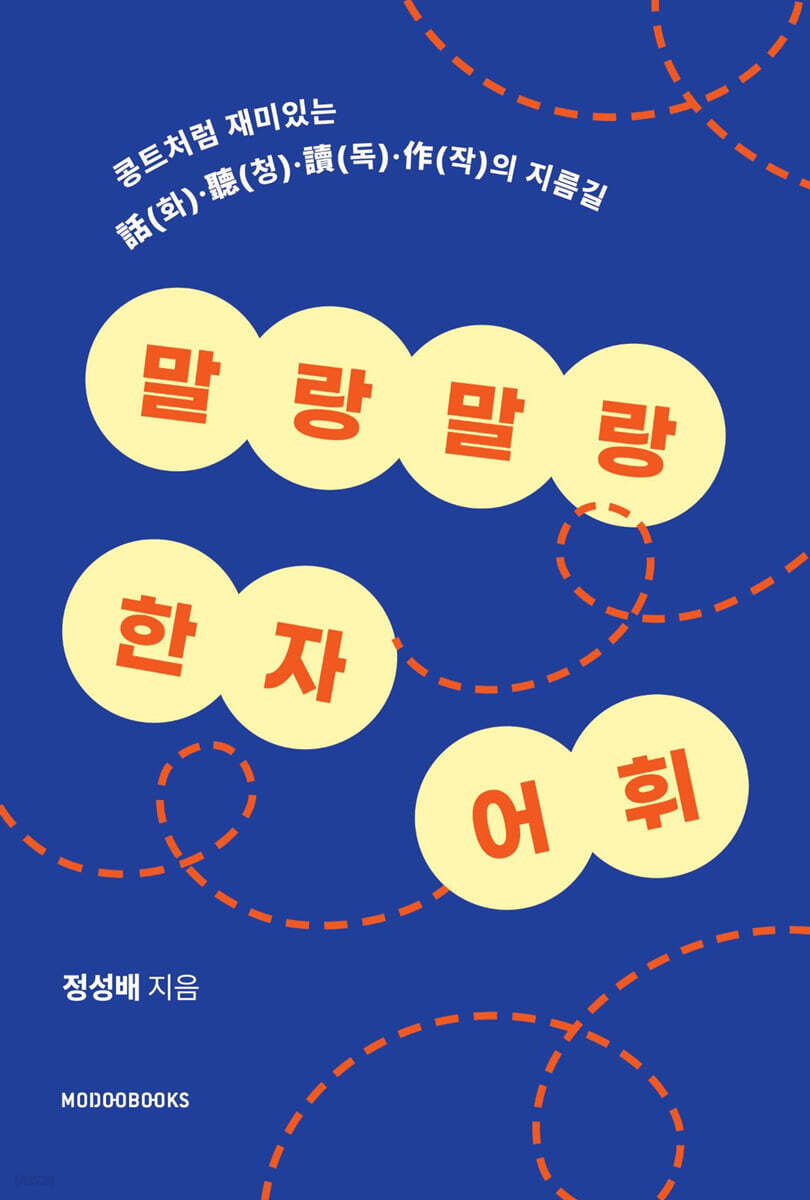
『Soft Chinese Character Vocabulary』 is a book that advocates learning and using Chinese characters in a soft way.
As you can guess from the word 'MalangMalang', it is not a book that tries to teach Chinese characters like a textbook or teaching material, but rather a book that brings together world history from the East and the West, past and present, like a skit, so that you can read it smoothly and enjoyably and it will stay in your head.
If you pick any of the 110 titles and read them without any particular order, you will find yourself curious about the next story, just like the Yukjeon novels that sold like hotcakes in the late Joseon Dynasty. The reason it is such an enjoyable read is, without a doubt, thanks to the author's extensive knowledge.
Why did they put the subtitle 'as funny as a skit' on the book cover?
Another advantage of 『Soft Chinese Character Vocabulary』 can be summarized as ‘a shortcut to speaking, listening, reading, and writing.’
Speaking, Listening, Reading, and Writing, which are made up of language and should be the goals of language, can only be solved smoothly by using the key called Chinese characters.
『Soft Chinese Character Vocabulary』 is a book that advocates learning and using Chinese characters in a soft way.
As you can guess from the word 'MalangMalang', it is not a book that tries to teach Chinese characters like a textbook or teaching material, but rather a book that brings together world history from the East and the West, past and present, like a skit, so that you can read it smoothly and enjoyably and it will stay in your head.
If you pick any of the 110 titles and read them without any particular order, you will find yourself curious about the next story, just like the Yukjeon novels that sold like hotcakes in the late Joseon Dynasty. The reason it is such an enjoyable read is, without a doubt, thanks to the author's extensive knowledge.
Why did they put the subtitle 'as funny as a skit' on the book cover?
Another advantage of 『Soft Chinese Character Vocabulary』 can be summarized as ‘a shortcut to speaking, listening, reading, and writing.’
Speaking, Listening, Reading, and Writing, which are made up of language and should be the goals of language, can only be solved smoothly by using the key called Chinese characters.
index
Recommendation/ Chinese Character Vocabulary Essential for AI Communication_Professor Park Chang-hee, Seoul National University Hospital
Preface/A Prescription for Global Literacy_Author: Jeong Seong-bae
Introduction
Chapter 1 - & 日 & 平
Addition/ Subtraction/ Overlook/ Overwhelming/ Failure/ Confusion/ Cynicism/ Perspective/ Dispersion/ Happiness/ Cause and effect/ Gratitude/ Refrain/ Consideration/ Crisis/ Browsing/ Crowd wisdom/ Typical/ Key/ Decline/傍證 (proof) / 施惠 (charity) / 濫用 (abuse) / 延長 (extension) / 補完 (complement) / 端初 (start) / 裏面 (backside) / 哀歡 (joy and sorrow) / 卓見 (view)
Chapter 2 Politics & Economy & Society
Sophistry / Politics / Launch / Travel abroad / Monopoly / Waste / Appraisal / Cabinet reshuffle / Revolution / Outlook / Supply and demand / Compromise / Subscription / Regulation / Deviation / White paper / Tacit agreement / Breach of trust / Rejection / Ruling and opposition parties / Bandwagoning / Existence and abolition / Delivery / Appeal / Profit / Solidarity / Good and evil / Donation / Extravagance / Settlement / Concentration / Austerity / Strategy / Bail / Employment / Exchange rate / Reservation / Debt / Economy
Chapter 3 Literature & Medicine & Body
Strong/Renewed/Fantastic achievement/Idol/Crossing/Preference/Floating/Healthy legs/Prologue/Taboo/Aptitude/Etiquette/Acceptance/Entertainment/Food/Movie/Singing/Lighting
Chapter 4 Medicine & Medicine & Medicine
Hypothesis / Defect / Probability / Examination / Gust / Experiment / Symptom / Mass production / Room temperature / Dimension / Observation / Semiconductor / Inference / Deviation / Sublimation / Blueprint / Charge / Immunity / Latent / Self-inflicted blood loss/reaction/transfusion/isolation
Appendix 300 Chinese Character Idioms
Preface/A Prescription for Global Literacy_Author: Jeong Seong-bae
Introduction
Chapter 1 - & 日 & 平
Addition/ Subtraction/ Overlook/ Overwhelming/ Failure/ Confusion/ Cynicism/ Perspective/ Dispersion/ Happiness/ Cause and effect/ Gratitude/ Refrain/ Consideration/ Crisis/ Browsing/ Crowd wisdom/ Typical/ Key/ Decline/傍證 (proof) / 施惠 (charity) / 濫用 (abuse) / 延長 (extension) / 補完 (complement) / 端初 (start) / 裏面 (backside) / 哀歡 (joy and sorrow) / 卓見 (view)
Chapter 2 Politics & Economy & Society
Sophistry / Politics / Launch / Travel abroad / Monopoly / Waste / Appraisal / Cabinet reshuffle / Revolution / Outlook / Supply and demand / Compromise / Subscription / Regulation / Deviation / White paper / Tacit agreement / Breach of trust / Rejection / Ruling and opposition parties / Bandwagoning / Existence and abolition / Delivery / Appeal / Profit / Solidarity / Good and evil / Donation / Extravagance / Settlement / Concentration / Austerity / Strategy / Bail / Employment / Exchange rate / Reservation / Debt / Economy
Chapter 3 Literature & Medicine & Body
Strong/Renewed/Fantastic achievement/Idol/Crossing/Preference/Floating/Healthy legs/Prologue/Taboo/Aptitude/Etiquette/Acceptance/Entertainment/Food/Movie/Singing/Lighting
Chapter 4 Medicine & Medicine & Medicine
Hypothesis / Defect / Probability / Examination / Gust / Experiment / Symptom / Mass production / Room temperature / Dimension / Observation / Semiconductor / Inference / Deviation / Sublimation / Blueprint / Charge / Immunity / Latent / Self-inflicted blood loss/reaction/transfusion/isolation
Appendix 300 Chinese Character Idioms
Publisher's Review
Raising issues about lame Chinese character education and Chinese character life
Is there anything more ambiguous in our language life than Hanja (漢字)? First, the Ministry of Education's educational policy went back and forth about whether we should learn Hanja or not, and then they said we only needed to learn 1,800 characters, saying they were practical Hanja. Now, as if they don't want to take responsibility, everyone consistently feigns ignorance, and it's hard to find anyone who even mentions Hanja (漢字) whether they go to Cheongnyangni or Maljukgeori.
But what is the reality? Aren't there countless words that become easier to understand if you know Hanja? English, German, French, Chinese, Japanese, and countless other languages from across the globe are rushing into the global arena, and artificial intelligence (AI), the darling of the technological and data revolutions, is clamoring to cohabitate with us. Yet, our attitude toward Hanja seems as unwavering as ironclad.
It has become common knowledge that it is difficult to overcome the global wave with only Korean-language nationalism, so now is the time to at least unlock Chinese characters and find their use.
Even if we look at the records of our people's history and language life, it goes without saying that unlocking Chinese characters and finding their uses is not an act of showing humanity, but rather a path to finding one's place.
Is it a paradox or a strength to say that the excellence of Hangul can be maximized only by properly utilizing Chinese characters?
Hanja: Essential for AI Communication_Professor Park Chang-hee of Seoul National University Hospital [Recommendation]
Today, we often see expressions like “a profound apology” or “clearly woven” being debated because their true meaning is not properly understood.
I think this is because the frequency of use of existing Chinese characters has decreased due to the proliferation of Internet and social media language, especially among young people.
This phenomenon may be natural, as language 'changes', but the importance of Chinese characters is still constantly emphasized in printed media such as mass media and academic books.
This is because Chinese characters not only contain the thoughts and wisdom of our ancestors, but also serve as a very useful tool for carefully expressing the writer's thoughts and intentions.
Moreover, for modern people living in the AI era, Chinese character vocabulary skills will serve as an indispensable energy source for smooth communication with AI.
This book divides 110 Chinese character vocabulary words into four areas, evenly distributing them, and explains the meaning and use of each word in an interesting way, like an essay.
We will explain the background and principles of how each Chinese character was created, step by step, so that it is easily understood and remembered.
In the process, you will learn about Chinese characters you were not familiar with, and you will learn various Chinese character vocabulary with different meanings of those characters in an easy, 'soft' way, as the title of the book suggests.
It even presents homonymous Chinese characters here and there, allowing you to experience a new taste of Chinese character vocabulary.
Just as basic physical strength is paramount to athletes, I have no doubt that the Chinese character vocabulary acquired in this way will maximize the learning ability of middle and high school students, and will also serve as a solid foundation for successful work for those preparing for employment or working on important projects.
This book perfectly captures the wisdom that Professor Jeong Seong-bae, who has taught me this wisdom since I was a student, has consistently emphasized for nearly 20 years.
The teachings I received as a student still remain in my heart and have solidified my career, and reading this book reminded me of that wisdom.
This book may not show you shortcuts or bypasses, but it will serve as a beacon that will show you the path to a long and steady path.
[Preface] A Prescription for Global Literacy
Just because elementary school students read out loud words like "silent agreement," "convenience," and "bondage" (bondage), it's hard to assume they truly understand their meaning. Adults, not just children, face similar challenges.
The so-called 'boring apology' and 'blessed with good fortune' that were once all over the media are prime examples. The misunderstanding of 'simsim (甚深)', which means '(the heart) is very deep and earnest', as meaning 'boring and dull because there is nothing to do', and the misunderstanding of 'muun (武運)', which means 'the luck of winning and losing a fight', as meaning 'unless', which is a combination of 'mu (無)', meaning 'no', and 'un (運)', meaning 'luck', cannot be solely attributed to the ignorance and irresponsibility of netizens.
I wrote this book after thinking about how to help them overcome their fear of Chinese characters.
Even if the text is written in Korean, if your knowledge of Chinese characters or Chinese-character words is shallow, your understanding will be lower.
As the saying goes these days, literacy is weak.
I know that in English there are two words for sweat: 'sweat' and 'perspiration'.
Genius is one percent inspiration and ninety-nine percent perspiration.
This is a sentence that the inventor Edison is said to have said.
If you use 'sweat' instead of 'perspiration' in this sentence, it would sound very awkward.
I won't go into a long explanation to explain why.
Just as we cannot use 'blood' instead of 'blood' in the Korean proverb 'Blood is thicker than water', the ability to use words in the right place is very important.
It is even more difficult to use Chinese characters such as ‘救濟(rescue)’, ‘救援(rescue)’, and ‘救助(structure)’ accurately and appropriately.
Also, in example sentences such as 'My hobby is appreciating movies', 'We read books and each expressed our impressions', and 'You shouldn't get lost in your feelings just because the leaves are falling', there aren't many people who know and use the exact meaning of 'appreciation'.
Of course, if the previously mentioned "I offer my sincere apologies" had been rephrased as "I offer my sincere apologies," there might not have been any problem.
However, when I try to change 'un' into an easier word, I feel confused and worried.
After all, can't a reader demand that an author (writer) or a speaker demand that a listener express themselves in a way that suits their vocabulary? And the ability to use Chinese characters, like a perfectly fitting suit, for situations difficult to express in native Korean, isn't something that can be acquired overnight.
If so, the solution or prescription may be surprisingly close at hand.
I've heard that washing your hands is the best way to prevent colds, and that we need a guide to improving literacy.
So I wrote this book.
This book uses 110 Chinese character words as titles and first looks at the structure of the Chinese characters used in each Chinese character word and their various meanings.
Next, I will try to explain the meaning and usage of various Chinese character words created by combining each Chinese character.
In addition, we will expand your vocabulary by covering synonyms or antonyms of the words covered in the text.
For example, we can see that 'to add' is reproduced in an expanded form as 'to add, to add, to add, to increase, to multiply', and 'to reduce' is reproduced in an expanded form as 'to reduce, to reduce, to reduce, to drastically reduce, to feel'.
And, considering that readers may be unfamiliar with Chinese characters and Chinese words, we also adopted a storytelling style that makes it read like a skit.
So, in the article about ‘sublimation’, I also included a story about Vincent van Gogh’s painting ‘Self-Portrait with Cut-off Ear’.
Meanwhile, I hope you will understand the author's intention to enhance the knowledge of Chinese characters by including short original Chinese texts to quench the intellectual thirst of sophisticated readers.
The age of knowledge and information is now over.
When it comes to vast knowledge and information, nothing can match AI.
Instead, we need communication technologies that leverage the power of AI to find information tailored to an individual's intentions.
In other words, the more vocabulary you have in your head, the more you can select and accept the overflowing information and accurately convey to AI the information requirements that you want to know.
It is only half true that Chinese character vocabulary is now the most effective means of raising academic grades in schools.
When you graduate from school and enter society, if you can't understand what others are saying, you'll end up wasting money and time.
In this respect, this book will be positioned as an effective tool for improving literacy in the AI era.
I would like to express my gratitude to those who have helped me publish this book.
First and foremost, I would like to bow my head and express my sincere gratitude to CEO Lee Jae-wook, who encouraged me to write a book and transformed my humble manuscript into a truly remarkable book.
In the face of difficult publishing conditions in many ways, it is entirely thanks to this CEO that this book has thrived in the Forest of Conception and has come out into the world.
I would also like to express my deepest gratitude to Professor Shim Woo-young of the Chinese Language Department at Sangmyung University, a friend from middle and high school who lent me the "Comprehensive Dictionary of Jeongjung Forms and Phonetics," which is difficult to find in Korea, for over two years.
This book has been a huge help in opening my eyes and giving me a fresh perspective whenever I feel doubtful or stuck while writing.
I would also like to express my gratitude to Professor Park Chang-hee of Seoul National University Hospital, who wrote a recommendation for this book after a three-year relationship with me as a teacher and disciple.
If I may add my personal thoughts, I would like to express my gratitude to my wife, Ms. Kim Young-sun, who silently stood by my side and offered encouragement and advice.
Above all, I would like to express my sincere gratitude to the readers who have shared in the author's valuable relationship with me through this book.
Thank you very much.
I've been preparing for a long time, but it's very lacking in both content and format.
We will listen carefully to our readers' criticisms and actively reflect them when the revised edition is published.
Surviving the heatwave of early summer 2025__Author
Is there anything more ambiguous in our language life than Hanja (漢字)? First, the Ministry of Education's educational policy went back and forth about whether we should learn Hanja or not, and then they said we only needed to learn 1,800 characters, saying they were practical Hanja. Now, as if they don't want to take responsibility, everyone consistently feigns ignorance, and it's hard to find anyone who even mentions Hanja (漢字) whether they go to Cheongnyangni or Maljukgeori.
But what is the reality? Aren't there countless words that become easier to understand if you know Hanja? English, German, French, Chinese, Japanese, and countless other languages from across the globe are rushing into the global arena, and artificial intelligence (AI), the darling of the technological and data revolutions, is clamoring to cohabitate with us. Yet, our attitude toward Hanja seems as unwavering as ironclad.
It has become common knowledge that it is difficult to overcome the global wave with only Korean-language nationalism, so now is the time to at least unlock Chinese characters and find their use.
Even if we look at the records of our people's history and language life, it goes without saying that unlocking Chinese characters and finding their uses is not an act of showing humanity, but rather a path to finding one's place.
Is it a paradox or a strength to say that the excellence of Hangul can be maximized only by properly utilizing Chinese characters?
Hanja: Essential for AI Communication_Professor Park Chang-hee of Seoul National University Hospital [Recommendation]
Today, we often see expressions like “a profound apology” or “clearly woven” being debated because their true meaning is not properly understood.
I think this is because the frequency of use of existing Chinese characters has decreased due to the proliferation of Internet and social media language, especially among young people.
This phenomenon may be natural, as language 'changes', but the importance of Chinese characters is still constantly emphasized in printed media such as mass media and academic books.
This is because Chinese characters not only contain the thoughts and wisdom of our ancestors, but also serve as a very useful tool for carefully expressing the writer's thoughts and intentions.
Moreover, for modern people living in the AI era, Chinese character vocabulary skills will serve as an indispensable energy source for smooth communication with AI.
This book divides 110 Chinese character vocabulary words into four areas, evenly distributing them, and explains the meaning and use of each word in an interesting way, like an essay.
We will explain the background and principles of how each Chinese character was created, step by step, so that it is easily understood and remembered.
In the process, you will learn about Chinese characters you were not familiar with, and you will learn various Chinese character vocabulary with different meanings of those characters in an easy, 'soft' way, as the title of the book suggests.
It even presents homonymous Chinese characters here and there, allowing you to experience a new taste of Chinese character vocabulary.
Just as basic physical strength is paramount to athletes, I have no doubt that the Chinese character vocabulary acquired in this way will maximize the learning ability of middle and high school students, and will also serve as a solid foundation for successful work for those preparing for employment or working on important projects.
This book perfectly captures the wisdom that Professor Jeong Seong-bae, who has taught me this wisdom since I was a student, has consistently emphasized for nearly 20 years.
The teachings I received as a student still remain in my heart and have solidified my career, and reading this book reminded me of that wisdom.
This book may not show you shortcuts or bypasses, but it will serve as a beacon that will show you the path to a long and steady path.
[Preface] A Prescription for Global Literacy
Just because elementary school students read out loud words like "silent agreement," "convenience," and "bondage" (bondage), it's hard to assume they truly understand their meaning. Adults, not just children, face similar challenges.
The so-called 'boring apology' and 'blessed with good fortune' that were once all over the media are prime examples. The misunderstanding of 'simsim (甚深)', which means '(the heart) is very deep and earnest', as meaning 'boring and dull because there is nothing to do', and the misunderstanding of 'muun (武運)', which means 'the luck of winning and losing a fight', as meaning 'unless', which is a combination of 'mu (無)', meaning 'no', and 'un (運)', meaning 'luck', cannot be solely attributed to the ignorance and irresponsibility of netizens.
I wrote this book after thinking about how to help them overcome their fear of Chinese characters.
Even if the text is written in Korean, if your knowledge of Chinese characters or Chinese-character words is shallow, your understanding will be lower.
As the saying goes these days, literacy is weak.
I know that in English there are two words for sweat: 'sweat' and 'perspiration'.
Genius is one percent inspiration and ninety-nine percent perspiration.
This is a sentence that the inventor Edison is said to have said.
If you use 'sweat' instead of 'perspiration' in this sentence, it would sound very awkward.
I won't go into a long explanation to explain why.
Just as we cannot use 'blood' instead of 'blood' in the Korean proverb 'Blood is thicker than water', the ability to use words in the right place is very important.
It is even more difficult to use Chinese characters such as ‘救濟(rescue)’, ‘救援(rescue)’, and ‘救助(structure)’ accurately and appropriately.
Also, in example sentences such as 'My hobby is appreciating movies', 'We read books and each expressed our impressions', and 'You shouldn't get lost in your feelings just because the leaves are falling', there aren't many people who know and use the exact meaning of 'appreciation'.
Of course, if the previously mentioned "I offer my sincere apologies" had been rephrased as "I offer my sincere apologies," there might not have been any problem.
However, when I try to change 'un' into an easier word, I feel confused and worried.
After all, can't a reader demand that an author (writer) or a speaker demand that a listener express themselves in a way that suits their vocabulary? And the ability to use Chinese characters, like a perfectly fitting suit, for situations difficult to express in native Korean, isn't something that can be acquired overnight.
If so, the solution or prescription may be surprisingly close at hand.
I've heard that washing your hands is the best way to prevent colds, and that we need a guide to improving literacy.
So I wrote this book.
This book uses 110 Chinese character words as titles and first looks at the structure of the Chinese characters used in each Chinese character word and their various meanings.
Next, I will try to explain the meaning and usage of various Chinese character words created by combining each Chinese character.
In addition, we will expand your vocabulary by covering synonyms or antonyms of the words covered in the text.
For example, we can see that 'to add' is reproduced in an expanded form as 'to add, to add, to add, to increase, to multiply', and 'to reduce' is reproduced in an expanded form as 'to reduce, to reduce, to reduce, to drastically reduce, to feel'.
And, considering that readers may be unfamiliar with Chinese characters and Chinese words, we also adopted a storytelling style that makes it read like a skit.
So, in the article about ‘sublimation’, I also included a story about Vincent van Gogh’s painting ‘Self-Portrait with Cut-off Ear’.
Meanwhile, I hope you will understand the author's intention to enhance the knowledge of Chinese characters by including short original Chinese texts to quench the intellectual thirst of sophisticated readers.
The age of knowledge and information is now over.
When it comes to vast knowledge and information, nothing can match AI.
Instead, we need communication technologies that leverage the power of AI to find information tailored to an individual's intentions.
In other words, the more vocabulary you have in your head, the more you can select and accept the overflowing information and accurately convey to AI the information requirements that you want to know.
It is only half true that Chinese character vocabulary is now the most effective means of raising academic grades in schools.
When you graduate from school and enter society, if you can't understand what others are saying, you'll end up wasting money and time.
In this respect, this book will be positioned as an effective tool for improving literacy in the AI era.
I would like to express my gratitude to those who have helped me publish this book.
First and foremost, I would like to bow my head and express my sincere gratitude to CEO Lee Jae-wook, who encouraged me to write a book and transformed my humble manuscript into a truly remarkable book.
In the face of difficult publishing conditions in many ways, it is entirely thanks to this CEO that this book has thrived in the Forest of Conception and has come out into the world.
I would also like to express my deepest gratitude to Professor Shim Woo-young of the Chinese Language Department at Sangmyung University, a friend from middle and high school who lent me the "Comprehensive Dictionary of Jeongjung Forms and Phonetics," which is difficult to find in Korea, for over two years.
This book has been a huge help in opening my eyes and giving me a fresh perspective whenever I feel doubtful or stuck while writing.
I would also like to express my gratitude to Professor Park Chang-hee of Seoul National University Hospital, who wrote a recommendation for this book after a three-year relationship with me as a teacher and disciple.
If I may add my personal thoughts, I would like to express my gratitude to my wife, Ms. Kim Young-sun, who silently stood by my side and offered encouragement and advice.
Above all, I would like to express my sincere gratitude to the readers who have shared in the author's valuable relationship with me through this book.
Thank you very much.
I've been preparing for a long time, but it's very lacking in both content and format.
We will listen carefully to our readers' criticisms and actively reflect them when the revised edition is published.
Surviving the heatwave of early summer 2025__Author
GOODS SPECIFICS
- Date of issue: August 25, 2025
- Page count, weight, size: 382 pages | 152*225mm
- ISBN13: 9791189203603
- ISBN10: 118920360X
You may also like
카테고리
korean


korean

![GQ KOREA Mark (Monthly): December [2025]](http://librairie.coreenne.fr/cdn/shop/files/8ef265dbbfbf186523ed75ba7319009d.jpg?v=1765340328&width=3840)


