

Japanese self-study vocabulary list
 |
Description
Book Introduction
There is no royal road to learning Japanese.
The most important thing is a strong will and effort to conquer Japanese.
As with studying other foreign languages, learning Japanese in particular is a battle with words.
It is very important to develop the habit of patiently making many words your own.
When I was studying in Japan, I wrote down many words in a notebook, read them repeatedly, spoke them, and communicated with locals, gradually accumulating them in my head.
Then, I started thinking, 'Can't we make this kind of repetitive language learning a little more fun?'
Then, I drew pictures for the words in the vocabulary book, and for words that I had trouble memorizing, I wrote down the pronunciation of the words along with the pictures and pasted them in the most visible place in the dormitory to help me learn the words.
It stayed in my head much longer than simply learning it in writing.
It is already known through numerous research studies that memorizing words by visualizing them is much more effective than simply memorizing them through text.
Some studies show that learning a foreign language through pictures is ten times more effective than learning it through text alone.
Even though it wasn't a professional survey, it actually had a big impact on me.
A vocabulary list with pictures is much less boring and more fun than a vocabulary list with just words.
So, I wrote several books on learning Japanese through images, and I was very satisfied when many people around me told me that they found them easy and fun to learn.
As I said before, learning Japanese is about making it your own through repetition.
So it requires a lot of patience.
I sincerely hope that many readers who need to learn Japanese will find their own way to learn, tirelessly and enjoyably, with this book.
Our neighboring country, Japan, is a very close country where we can complete business and return in a day, and it is also a country with which we have very active economic and cultural exchanges.
Given these circumstances, it is inevitable that the number of people who need Japanese, directly or indirectly, will increase.
This book will help not only young readers who have been interested in vocabulary for a long time, but also middle-aged and older readers learn vocabulary more easily and enjoyably.
The most important thing is a strong will and effort to conquer Japanese.
As with studying other foreign languages, learning Japanese in particular is a battle with words.
It is very important to develop the habit of patiently making many words your own.
When I was studying in Japan, I wrote down many words in a notebook, read them repeatedly, spoke them, and communicated with locals, gradually accumulating them in my head.
Then, I started thinking, 'Can't we make this kind of repetitive language learning a little more fun?'
Then, I drew pictures for the words in the vocabulary book, and for words that I had trouble memorizing, I wrote down the pronunciation of the words along with the pictures and pasted them in the most visible place in the dormitory to help me learn the words.
It stayed in my head much longer than simply learning it in writing.
It is already known through numerous research studies that memorizing words by visualizing them is much more effective than simply memorizing them through text.
Some studies show that learning a foreign language through pictures is ten times more effective than learning it through text alone.
Even though it wasn't a professional survey, it actually had a big impact on me.
A vocabulary list with pictures is much less boring and more fun than a vocabulary list with just words.
So, I wrote several books on learning Japanese through images, and I was very satisfied when many people around me told me that they found them easy and fun to learn.
As I said before, learning Japanese is about making it your own through repetition.
So it requires a lot of patience.
I sincerely hope that many readers who need to learn Japanese will find their own way to learn, tirelessly and enjoyably, with this book.
Our neighboring country, Japan, is a very close country where we can complete business and return in a day, and it is also a country with which we have very active economic and cultural exchanges.
Given these circumstances, it is inevitable that the number of people who need Japanese, directly or indirectly, will increase.
This book will help not only young readers who have been interested in vocabulary for a long time, but also middle-aged and older readers learn vocabulary more easily and enjoyably.
- You can preview some of the book's contents.
Preview
index
Introduction: Basic Conversational Expressions
Part 1 Everyday Words
Chapter 01.
Personal introduction
Unit 01 Gender, Age, and Age
Unit 02 Family
Unit 03 Life
Unit 04 Occupations
Unit 05 Constellations
Unit 06 Blood Type
Unit 07 Zodiac
Unit 08 Personality
Unit 09 Religion
Chapter 02.
body
Unit 01 Body Names
Unit 02 Disease Name
Unit 03 Abbreviations
Unit 04 Physiological Phenomena
Chapter 03.
Expression of emotions and behaviors
Unit 01 Emotions
Unit 02 Praise
Unit 03 Behavior
Unit 04 Greetings
Unit 05 Congratulations
Chapter 04.
education
Unit 01 School
Unit 02 School Facilities
Unit 03 Subjects
Unit 04 School Supplies
Unit 05 Signs
Unit 06 Shapes
Unit 07 Numbers
Unit 08 Investigation
Chapter 05.
Season/Month/Day
Unit 01 Seasons
Unit 02 Days of the Week
Unit 03 Month
Unit 04 Day
Unit 05 Time
Chapter 06.
Nature and Space
Unit 01 Weather Expressions
Unit 02 Weather Related
Unit 03 Space Environment and Pollution
Unit 04 Flora and Fauna
Chapter 07.
Housing related
Unit 01 Types of Houses
Unit 02 House Accessories
Unit 03 Living Room Items
Unit 04 Bedroom Supplies
Unit 05 Kitchen
Unit 06 Kitchenware
Unit 07 Bathroom Supplies
Chapter 08.
food
Unit 01 Fruit
Unit 02 Vegetables, Root Plants
Unit 03 Seafood, Seaweed
Unit 04 Meat
Unit 05 Beverages
Unit 06 Processed Foods and Cooking Ingredients
Unit 07 Representative Korean and Japanese Cuisine
Unit 08 Cooking Methods
Unit 09 Fast Food Restaurant
Unit 10 Mainstream
Unit 11 Taste Expressions
Chapter 09.
shopping
Unit 01 Shopping Items
Unit 02 Color
Unit 03 Purchasing Expressions
Chapter 10.
city
Unit 01 Natural Objects
Unit 02 Urban Architecture
Chapter 11.
Sports, Leisure
Unit 01 Exercise
Unit 02 Entertainment, Hobbies
Unit 03 Musical Instruments
Unit 04 Leisure
Unit 05 Movies
Part 2 Travel Vocabulary
Chapter 01.
At the airport
Unit 01 Airport
Unit 02 Boarding the Plane
Unit 03 In-flight service
Chapter 02.
Immigration inspection
Unit 01 Purpose of Entry
Unit 02 Residence
Chapter 03.
lodging
Unit 01 Reservation
Unit 02 Hotel
Unit 03 Types of Accommodation
Unit 04 Room Service
Chapter 04.
traffic
Unit 01 Vehicles
Unit 02 Car Names / Bicycle Names
Unit 03 Traffic Signs
Unit 04 Direction
Unit 05 Street Scene
Chapter 05.
sightseeing
Unit 01 Japan's representative tourist destinations
Unit 02 Things to See in Japan (Arts, Performances, and Festivals)
Unit 03 Country Names
Unit 04 World Cities
Part 3 Business Words
Chapter 01.
economy
Chapter 02.
company
Unit 01 Rank, Status
Unit 02 Department
Unit 03 Work Facilities and Office Supplies
Unit 04 Labor
Chapter 03.
Securities, insurance
Chapter 04.
trade
Chapter 05.
bank
Compact vocabulary list
Part 01.
Everyday Words
Part 02.
Travel Words
Part 03.
Business Words
Part 1 Everyday Words
Chapter 01.
Personal introduction
Unit 01 Gender, Age, and Age
Unit 02 Family
Unit 03 Life
Unit 04 Occupations
Unit 05 Constellations
Unit 06 Blood Type
Unit 07 Zodiac
Unit 08 Personality
Unit 09 Religion
Chapter 02.
body
Unit 01 Body Names
Unit 02 Disease Name
Unit 03 Abbreviations
Unit 04 Physiological Phenomena
Chapter 03.
Expression of emotions and behaviors
Unit 01 Emotions
Unit 02 Praise
Unit 03 Behavior
Unit 04 Greetings
Unit 05 Congratulations
Chapter 04.
education
Unit 01 School
Unit 02 School Facilities
Unit 03 Subjects
Unit 04 School Supplies
Unit 05 Signs
Unit 06 Shapes
Unit 07 Numbers
Unit 08 Investigation
Chapter 05.
Season/Month/Day
Unit 01 Seasons
Unit 02 Days of the Week
Unit 03 Month
Unit 04 Day
Unit 05 Time
Chapter 06.
Nature and Space
Unit 01 Weather Expressions
Unit 02 Weather Related
Unit 03 Space Environment and Pollution
Unit 04 Flora and Fauna
Chapter 07.
Housing related
Unit 01 Types of Houses
Unit 02 House Accessories
Unit 03 Living Room Items
Unit 04 Bedroom Supplies
Unit 05 Kitchen
Unit 06 Kitchenware
Unit 07 Bathroom Supplies
Chapter 08.
food
Unit 01 Fruit
Unit 02 Vegetables, Root Plants
Unit 03 Seafood, Seaweed
Unit 04 Meat
Unit 05 Beverages
Unit 06 Processed Foods and Cooking Ingredients
Unit 07 Representative Korean and Japanese Cuisine
Unit 08 Cooking Methods
Unit 09 Fast Food Restaurant
Unit 10 Mainstream
Unit 11 Taste Expressions
Chapter 09.
shopping
Unit 01 Shopping Items
Unit 02 Color
Unit 03 Purchasing Expressions
Chapter 10.
city
Unit 01 Natural Objects
Unit 02 Urban Architecture
Chapter 11.
Sports, Leisure
Unit 01 Exercise
Unit 02 Entertainment, Hobbies
Unit 03 Musical Instruments
Unit 04 Leisure
Unit 05 Movies
Part 2 Travel Vocabulary
Chapter 01.
At the airport
Unit 01 Airport
Unit 02 Boarding the Plane
Unit 03 In-flight service
Chapter 02.
Immigration inspection
Unit 01 Purpose of Entry
Unit 02 Residence
Chapter 03.
lodging
Unit 01 Reservation
Unit 02 Hotel
Unit 03 Types of Accommodation
Unit 04 Room Service
Chapter 04.
traffic
Unit 01 Vehicles
Unit 02 Car Names / Bicycle Names
Unit 03 Traffic Signs
Unit 04 Direction
Unit 05 Street Scene
Chapter 05.
sightseeing
Unit 01 Japan's representative tourist destinations
Unit 02 Things to See in Japan (Arts, Performances, and Festivals)
Unit 03 Country Names
Unit 04 World Cities
Part 3 Business Words
Chapter 01.
economy
Chapter 02.
company
Unit 01 Rank, Status
Unit 02 Department
Unit 03 Work Facilities and Office Supplies
Unit 04 Labor
Chapter 03.
Securities, insurance
Chapter 04.
trade
Chapter 05.
bank
Compact vocabulary list
Part 01.
Everyday Words
Part 02.
Travel Words
Part 03.
Business Words
Detailed image

Publisher's Review
The foundation of all language learning is vocabulary.
To be able to speak and read, you need to know words.
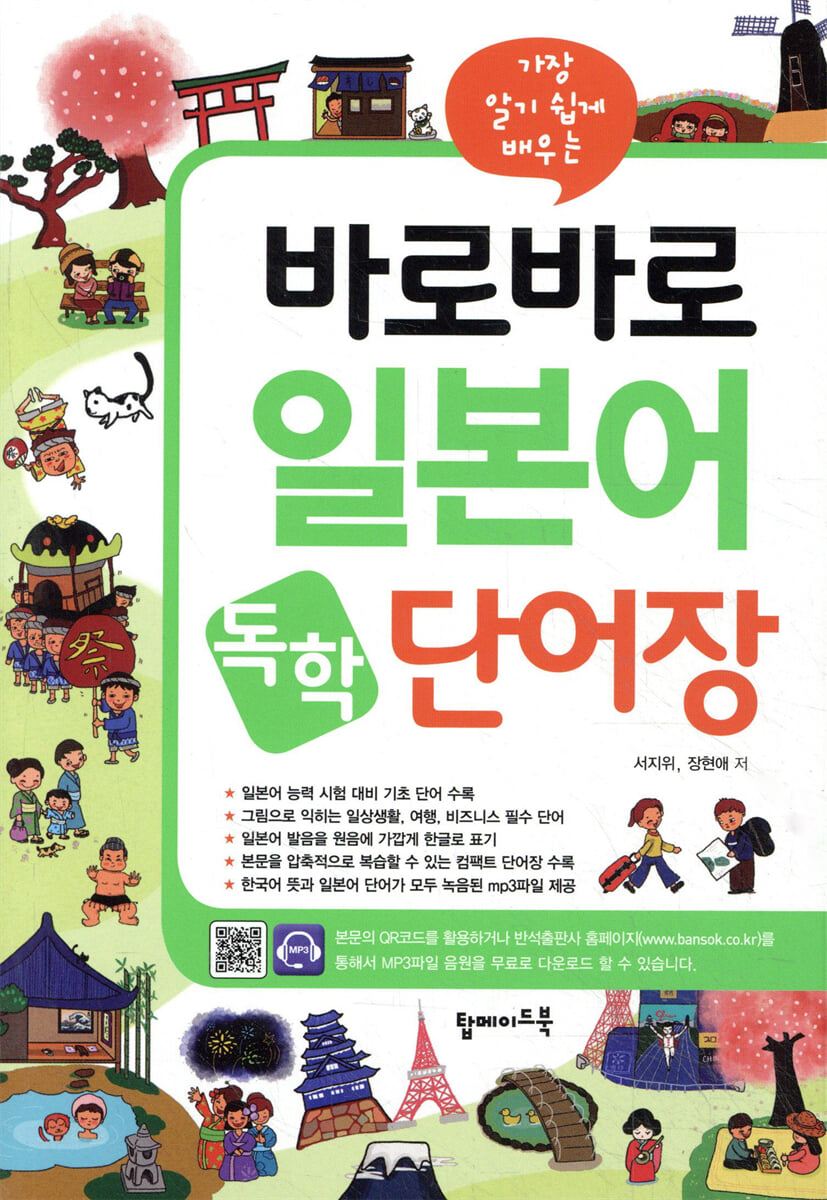
This book categorizes words by topic, such as daily life, travel, and business, so you can easily find and study the words you need.
In addition, rather than simply listing words, images are placed next to the words to make studying words more effective and enjoyable.
It also includes words related to the main words, along with conversational expressions that can be used in real life using these words.
In addition, the Japanese pronunciation is written in Korean as close to the original sound as possible so that even beginners can easily follow along and learn, and an mp3 file containing the native speaker's accurate pronunciation is provided free of charge on the Banseok Publishing website (www.bansok.co.kr).
This audio source also includes the Korean meaning, so it is great for studying vocabulary while listening to the audio source.
Part 1 Everyday Words
We have compiled words that we commonly use in our daily lives, from expressions about personal details such as gender, family relationships, and occupation to expressions about food, clothing, shelter, and leisure activities.
Part 2 Travel Vocabulary
The words are organized step by step according to the order of the trip, and major tourist attractions in Japan are also included.
Part 3 Business Words
Contains specialized terms from business fields such as economics and securities.
Compact vocabulary list
The words included in the text are listed again with only their Korean meanings, Japanese, and Korean pronunciations.
Let's review the words we learned in a fun way with pictures in a compact vocabulary list.
To be able to speak and read, you need to know words.
This book categorizes words by topic, such as daily life, travel, and business, so you can easily find and study the words you need.
In addition, rather than simply listing words, images are placed next to the words to make studying words more effective and enjoyable.
It also includes words related to the main words, along with conversational expressions that can be used in real life using these words.
In addition, the Japanese pronunciation is written in Korean as close to the original sound as possible so that even beginners can easily follow along and learn, and an mp3 file containing the native speaker's accurate pronunciation is provided free of charge on the Banseok Publishing website (www.bansok.co.kr).
This audio source also includes the Korean meaning, so it is great for studying vocabulary while listening to the audio source.
Part 1 Everyday Words
We have compiled words that we commonly use in our daily lives, from expressions about personal details such as gender, family relationships, and occupation to expressions about food, clothing, shelter, and leisure activities.
Part 2 Travel Vocabulary
The words are organized step by step according to the order of the trip, and major tourist attractions in Japan are also included.
Part 3 Business Words
Contains specialized terms from business fields such as economics and securities.
Compact vocabulary list
The words included in the text are listed again with only their Korean meanings, Japanese, and Korean pronunciations.
Let's review the words we learned in a fun way with pictures in a compact vocabulary list.
GOODS SPECIFICS
- Date of issue: April 20, 2017
- Page count, weight, size: 308 pages | 407g | 128*188*18mm
- ISBN13: 9788971728369
- ISBN10: 8971728361
You may also like
카테고리
korean


korean

![ELLE 엘르 스페셜 에디션 A형 : 12월 [2025]](http://librairie.coreenne.fr/cdn/shop/files/b8e27a3de6c9538896439686c6b0e8fb.jpg?v=1766436872&width=3840)


