

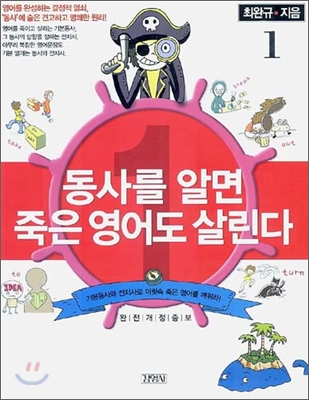
Knowing Verbs Revives Dead English 1
 |
Description
Book Introduction
A completely revised edition of the popular bestseller that has been recommended by word of mouth for 10 years.
Explains the solid and clear principles behind 'verbs', the crucial key to mastering English.
Explains the solid and clear principles behind 'verbs', the crucial key to mastering English.
- You can preview some of the book's contents.
Preview
index
1.
Looking into the minds of natives
2.
Drawing Prepositions and Basic Verbs
3.
The meeting of basic verbs and prepositions - follower verbs
4.
Let Your Imagination Run Free - An Expansion of the Basic Drawing
Finishing this book: Trying out other basic verbs
Looking into the minds of natives
2.
Drawing Prepositions and Basic Verbs
3.
The meeting of basic verbs and prepositions - follower verbs
4.
Let Your Imagination Run Free - An Expansion of the Basic Drawing
Finishing this book: Trying out other basic verbs
Publisher's Review
Our endless English memorization, false or forced
Especially when it comes to English words, memory is highly volatile.
Trusting this memory, I repeat the process of memorizing and reciting 00 words a day.
This is not the end.
Also memorize various sentence formulas that combine those words.
When there are formulas, it seems simple, and it makes me feel good when these formulas roll off my tongue.
Is this really the end? No.
Up to this point, it is the so-called 'school English', 'exam English' before TOEIC came into being.
As everyone knows, the story behind this is the beginning of a much more difficult and painful period of wandering in English study.
When you go to college or society, there are no formulas.
I don't even remember.
So let's start over again.
Memorizing words, memorizing formulas... But! Just because you remember those formulas, does that mean the sentences you put together using them will just pop out at the right moment? If you believed that and memorized them, you either weren't truly committed to the significant investment of time and money in studying English, or you've been fooling yourself.
Unless you are an intelligent robot, asking someone to speak in real time by fitting words into a memorized formula is not only an unreasonable request, but also the most unreasonable act.
Practical ways to study English
Well, then, I can't help but wonder what the natural way to solve it would be.
As the theory goes that one must learn a language in that country, let's leave flying to the local area to learn it out of the question.
Also, let's exclude situations where you can expose yourself to an ideal English-speaking environment, similar to or even better than the local environment, by hiring a native-speaking teacher even in Korea.
How do most native Koreans, who have nowhere else to turn in this country but schools, academies, and textbooks, learn naturally and without memorization? If you put yourself in their shoes, the answer is simple.
Let's say you have an American friend who wants to speak Korean well enough to communicate in Korean.
Would you throw him a daily copy of the OO Ilbo and urge him to read it? Would you tell him to take the Korean Language Proficiency Test? Or would you throw him a Korean vocabulary book and tell him to memorize it? A true friend would tell him against it.
First, I would say that you should learn simple and frequently used everyday vocabulary one by one by watching songs or dramas, listening to the pronunciation, and imitating it.
If you think about it carefully, the number of vocabulary words we use in our daily lives is not that many.
But even this is difficult for foreigners to understand and use.
Let's find a starting point here.
The first and second installments are about studying from a simple, realistic starting point that anyone can think of and put into practice.
A quick look at the basic verbs and prepositions that native speakers use but Koreans ignore.
It is said that in the United States, regardless of academic background, the number of words people use in their daily lives is around 700.
This means that anyone who received English education in middle and high school in Korea does not need to memorize more words to communicate in English.
So why can't I speak? When I see Koreans speaking English, their weakest point is verbs.
The verb stops speaking after the subject.
I can't think of an English verb that directly corresponds to the Korean word.
So, we repeat the absurd trial and error of 'the conclusion is vocabulary' again.
Unless it's technical, most of what we want to say can be accomplished with basic verbs.
If you randomly pick an American movie and listen to it, most of the verbs that appear fall into this category.
Also, prepositions, which are as important as verbs, are not even looked at.
Prepositions are like a compass to native speakers, determining the direction of a verb.
It tells us where the movement starts (from), where it is going and where it stops (to), why it is moving (for), where the movement takes place (on, in, under, up, down, over, above, etc.), and also explains how the pieces in the whole picture relate to each other (Neo in the room, out of the room, on the roof).
However, verbs and prepositions are inseparable.
Silver is trying to show these most important links of language by drawing them as close as possible to the picture that native speakers have in their heads.
Will knowing verbs bring dead English back to life?
This book is not just another English dictionary; it is a book to help you understand the principle that "knowing verbs can revive even dead English."
The reason I wrote the second installment was not simply to increase the number of verbs and satisfy readers' desire to fill the number.
The focus is on developing application skills by applying the principles learned in Volume 1 to real-world situations in various ways.
“I can’t make the outrageous promise that two books on verbs will instantly improve your English skills.
But I can promise you this much.
Once you've learned one basic verb, be sure to cast your fishing line into the English lake.
Watch movies with English subtitles instead of Korean subtitles, and read novels that are appropriate for your level.
“Within a few movies or a novel, the things you have studied will surely pop up like a mole,” the author says.
If you consistently experience these heart-warming moments, it no longer matters how many verbs you learn.
The long-standing concern of 'How should I study English?' will also be resolved on its own.
The principles and application methods for dealing with basic verbs in Volumes 1 and 2 are equally applicable to vocabulary of other parts of speech, and furthermore, they are the basic attitude for approaching English.
Part 2, how is it different?
Part 2 contains a variety of practical examples to help you practice using the various pictures of verbs as much as possible.
At first glance, these examples may seem more difficult than the first one, but they are actually sentences you frequently encounter in various English media.
Rather than just providing examples to explain the picture, I chose examples that can be practiced as if in real life through context.
If you only encounter short and easy dictionary-style examples, you are likely to become frustrated in real life.
These are examples that anyone who has read Volume 1 can easily digest.
Also, to allow readers to practice expanding the picture on their own, we avoided overly 'friendly' explanations or explanations that overlap with the first part, and instead increased the number of examples.
That is, the explanation of the example mainly serves as a guide to expand the picture.
Let's get into the habit of looking up and learning unfamiliar words and expressions that are not in the explanation.
If you only study with overly friendly textbooks that explain every word or expression, your self-sufficiency will inevitably decline.
Especially when it comes to English words, memory is highly volatile.
Trusting this memory, I repeat the process of memorizing and reciting 00 words a day.
This is not the end.
Also memorize various sentence formulas that combine those words.
When there are formulas, it seems simple, and it makes me feel good when these formulas roll off my tongue.
Is this really the end? No.
Up to this point, it is the so-called 'school English', 'exam English' before TOEIC came into being.
As everyone knows, the story behind this is the beginning of a much more difficult and painful period of wandering in English study.
When you go to college or society, there are no formulas.
I don't even remember.
So let's start over again.
Memorizing words, memorizing formulas... But! Just because you remember those formulas, does that mean the sentences you put together using them will just pop out at the right moment? If you believed that and memorized them, you either weren't truly committed to the significant investment of time and money in studying English, or you've been fooling yourself.
Unless you are an intelligent robot, asking someone to speak in real time by fitting words into a memorized formula is not only an unreasonable request, but also the most unreasonable act.
Practical ways to study English
Well, then, I can't help but wonder what the natural way to solve it would be.
As the theory goes that one must learn a language in that country, let's leave flying to the local area to learn it out of the question.
Also, let's exclude situations where you can expose yourself to an ideal English-speaking environment, similar to or even better than the local environment, by hiring a native-speaking teacher even in Korea.
How do most native Koreans, who have nowhere else to turn in this country but schools, academies, and textbooks, learn naturally and without memorization? If you put yourself in their shoes, the answer is simple.
Let's say you have an American friend who wants to speak Korean well enough to communicate in Korean.
Would you throw him a daily copy of the OO Ilbo and urge him to read it? Would you tell him to take the Korean Language Proficiency Test? Or would you throw him a Korean vocabulary book and tell him to memorize it? A true friend would tell him against it.
First, I would say that you should learn simple and frequently used everyday vocabulary one by one by watching songs or dramas, listening to the pronunciation, and imitating it.
If you think about it carefully, the number of vocabulary words we use in our daily lives is not that many.
But even this is difficult for foreigners to understand and use.
Let's find a starting point here.
The first and second installments are about studying from a simple, realistic starting point that anyone can think of and put into practice.
A quick look at the basic verbs and prepositions that native speakers use but Koreans ignore.
It is said that in the United States, regardless of academic background, the number of words people use in their daily lives is around 700.
This means that anyone who received English education in middle and high school in Korea does not need to memorize more words to communicate in English.
So why can't I speak? When I see Koreans speaking English, their weakest point is verbs.
The verb stops speaking after the subject.
I can't think of an English verb that directly corresponds to the Korean word.
So, we repeat the absurd trial and error of 'the conclusion is vocabulary' again.
Unless it's technical, most of what we want to say can be accomplished with basic verbs.
If you randomly pick an American movie and listen to it, most of the verbs that appear fall into this category.
Also, prepositions, which are as important as verbs, are not even looked at.
Prepositions are like a compass to native speakers, determining the direction of a verb.
It tells us where the movement starts (from), where it is going and where it stops (to), why it is moving (for), where the movement takes place (on, in, under, up, down, over, above, etc.), and also explains how the pieces in the whole picture relate to each other (Neo in the room, out of the room, on the roof).
However, verbs and prepositions are inseparable.
Silver is trying to show these most important links of language by drawing them as close as possible to the picture that native speakers have in their heads.
Will knowing verbs bring dead English back to life?
This book is not just another English dictionary; it is a book to help you understand the principle that "knowing verbs can revive even dead English."
The reason I wrote the second installment was not simply to increase the number of verbs and satisfy readers' desire to fill the number.
The focus is on developing application skills by applying the principles learned in Volume 1 to real-world situations in various ways.
“I can’t make the outrageous promise that two books on verbs will instantly improve your English skills.
But I can promise you this much.
Once you've learned one basic verb, be sure to cast your fishing line into the English lake.
Watch movies with English subtitles instead of Korean subtitles, and read novels that are appropriate for your level.
“Within a few movies or a novel, the things you have studied will surely pop up like a mole,” the author says.
If you consistently experience these heart-warming moments, it no longer matters how many verbs you learn.
The long-standing concern of 'How should I study English?' will also be resolved on its own.
The principles and application methods for dealing with basic verbs in Volumes 1 and 2 are equally applicable to vocabulary of other parts of speech, and furthermore, they are the basic attitude for approaching English.
Part 2, how is it different?
Part 2 contains a variety of practical examples to help you practice using the various pictures of verbs as much as possible.
At first glance, these examples may seem more difficult than the first one, but they are actually sentences you frequently encounter in various English media.
Rather than just providing examples to explain the picture, I chose examples that can be practiced as if in real life through context.
If you only encounter short and easy dictionary-style examples, you are likely to become frustrated in real life.
These are examples that anyone who has read Volume 1 can easily digest.
Also, to allow readers to practice expanding the picture on their own, we avoided overly 'friendly' explanations or explanations that overlap with the first part, and instead increased the number of examples.
That is, the explanation of the example mainly serves as a guide to expand the picture.
Let's get into the habit of looking up and learning unfamiliar words and expressions that are not in the explanation.
If you only study with overly friendly textbooks that explain every word or expression, your self-sufficiency will inevitably decline.
GOODS SPECIFICS
- Date of issue: August 14, 2006
- Page count, weight, size: 539 pages | 936g | 165*210*35mm
- ISBN13: 9788934922896
- ISBN10: 8934922893
You may also like
카테고리
korean


korean

![ELLE 엘르 스페셜 에디션 A형 : 12월 [2025]](http://librairie.coreenne.fr/cdn/shop/files/b8e27a3de6c9538896439686c6b0e8fb.jpg?v=1766436872&width=3840)


