

Shizu's Japanese Hiragana Katakana Writing Notes
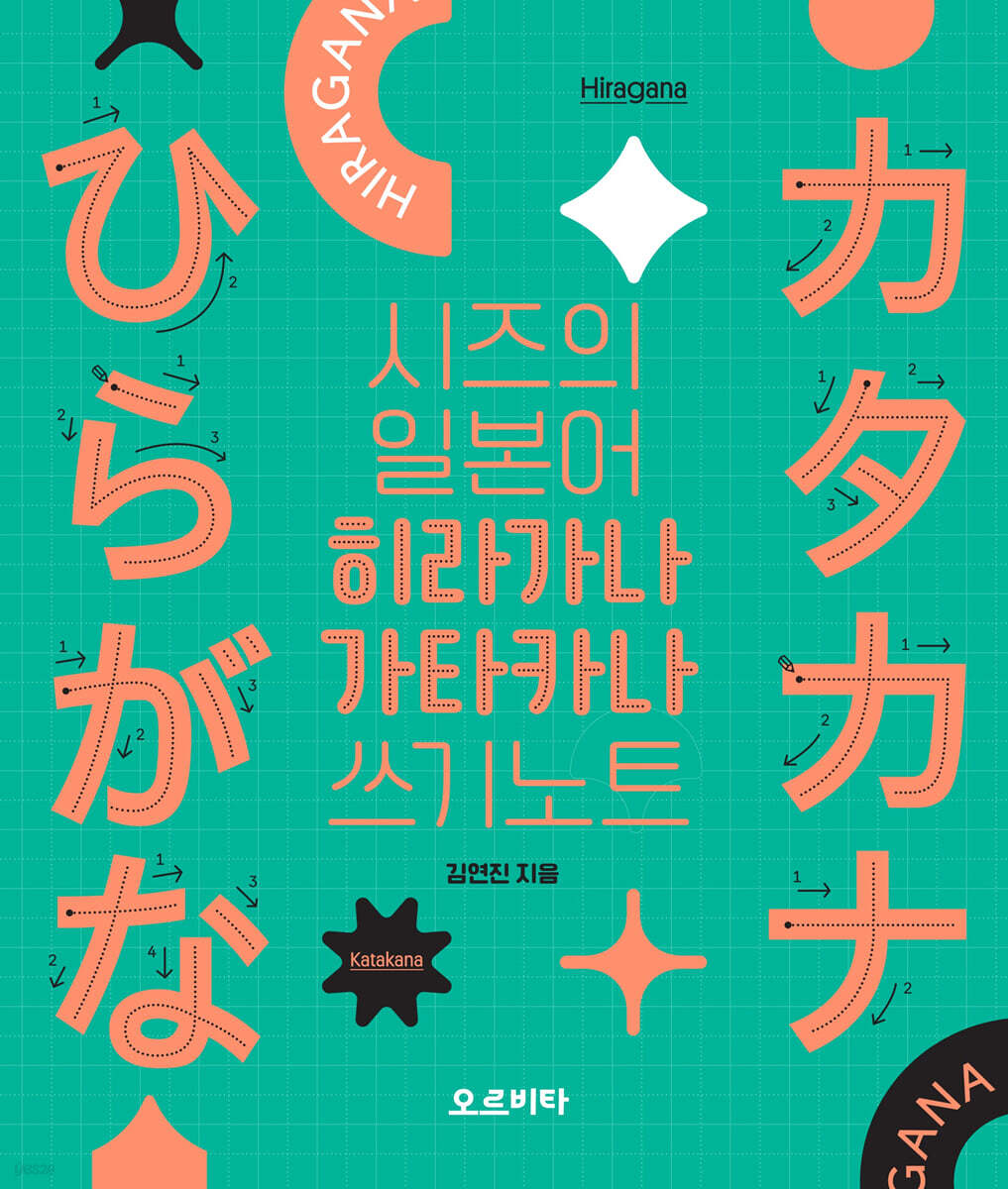 |
Description
Book Introduction
Shizu is back with a Japanese Hiragana Katakana writing notebook!
You have to use Japanese a lot and learn it to become immersed in the Japanese characters.
There is a Korean proverb that says, “Habits formed at age three last until eighty.” There is a similar saying in Japanese that says, “Your personality as a child does not change as you get older.”
To write correctly and beautifully in Japanese, you must learn and write hiragana and katakana correctly from the beginning.
In Korean, one character called 'Hangeul' is used, but in Japanese, three characters are used.
Also, unlike Hangul, which creates a single letter by combining 'consonants' and 'vowels', each Japanese letter has a single sound.
If you memorize the pronunciation of each letter accurately and learn just a few pronunciation rules, you can read Japanese sentences without difficulty.
Until you have completely memorized hiragana and katakana, I recommend keeping the 50-syllable chart close by and studying by looking up unfamiliar characters.
You have to use Japanese a lot and learn it to become immersed in the Japanese characters.
There is a Korean proverb that says, “Habits formed at age three last until eighty.” There is a similar saying in Japanese that says, “Your personality as a child does not change as you get older.”
To write correctly and beautifully in Japanese, you must learn and write hiragana and katakana correctly from the beginning.
In Korean, one character called 'Hangeul' is used, but in Japanese, three characters are used.
Also, unlike Hangul, which creates a single letter by combining 'consonants' and 'vowels', each Japanese letter has a single sound.
If you memorize the pronunciation of each letter accurately and learn just a few pronunciation rules, you can read Japanese sentences without difficulty.
Until you have completely memorized hiragana and katakana, I recommend keeping the 50-syllable chart close by and studying by looking up unfamiliar characters.
- You can preview some of the book's contents.
Preview
index
Japanese characters
Hiragana and Katakana
chinese character
Fifty Sounds
Hiragana 50-syllable chart
Katakana fifty-sound chart
Hiragana
Listening
pronunciation
tactile sound
voicing
semivoiced sound
Yoyum
long
Katakana
Various pronunciation notations of foreign words
Confusing letters! How to distinguish them
Hiragana and Katakana
chinese character
Fifty Sounds
Hiragana 50-syllable chart
Katakana fifty-sound chart
Hiragana
Listening
pronunciation
tactile sound
voicing
semivoiced sound
Yoyum
long
Katakana
Various pronunciation notations of foreign words
Confusing letters! How to distinguish them
Detailed image
.jpg)
Publisher's Review
'Hiragana' is the most basic Japanese character and is characterized by its round shape.
Since it is the most frequently used character, I recommend that you memorize it sufficiently before starting to study Japanese.
'Katakana' is a character with a more straight and angular shape compared to hiragana.
It is mainly used to write foreign words, and words that you want to emphasize are also written in 'katakana'.
You can think of hiragana and katakana as feeling like English lowercase and uppercase letters.
There are two types of letters with the same pronunciation.
Compared to hiragana, katakana is not used very often, so there is no need to memorize it perfectly from the beginning.
It's okay to memorize it slowly as you begin to seriously study Japanese.
*Free download of 'Shizu's Handwriting' Hiragana Katakana GoodNotes (PDF) for lots of practice
Since it is the most frequently used character, I recommend that you memorize it sufficiently before starting to study Japanese.
'Katakana' is a character with a more straight and angular shape compared to hiragana.
It is mainly used to write foreign words, and words that you want to emphasize are also written in 'katakana'.
You can think of hiragana and katakana as feeling like English lowercase and uppercase letters.
There are two types of letters with the same pronunciation.
Compared to hiragana, katakana is not used very often, so there is no need to memorize it perfectly from the beginning.
It's okay to memorize it slowly as you begin to seriously study Japanese.
*Free download of 'Shizu's Handwriting' Hiragana Katakana GoodNotes (PDF) for lots of practice
GOODS SPECIFICS
- Date of issue: August 27, 2024
- Page count, weight, size: 202 pages | 152*255*20mm
- ISBN13: 9791197433061
- ISBN10: 1197433066
You may also like
카테고리
korean


korean

![GQ KOREA Mark (Monthly): December [2025]](http://librairie.coreenne.fr/cdn/shop/files/8ef265dbbfbf186523ed75ba7319009d.jpg?v=1765340328&width=3840)


