

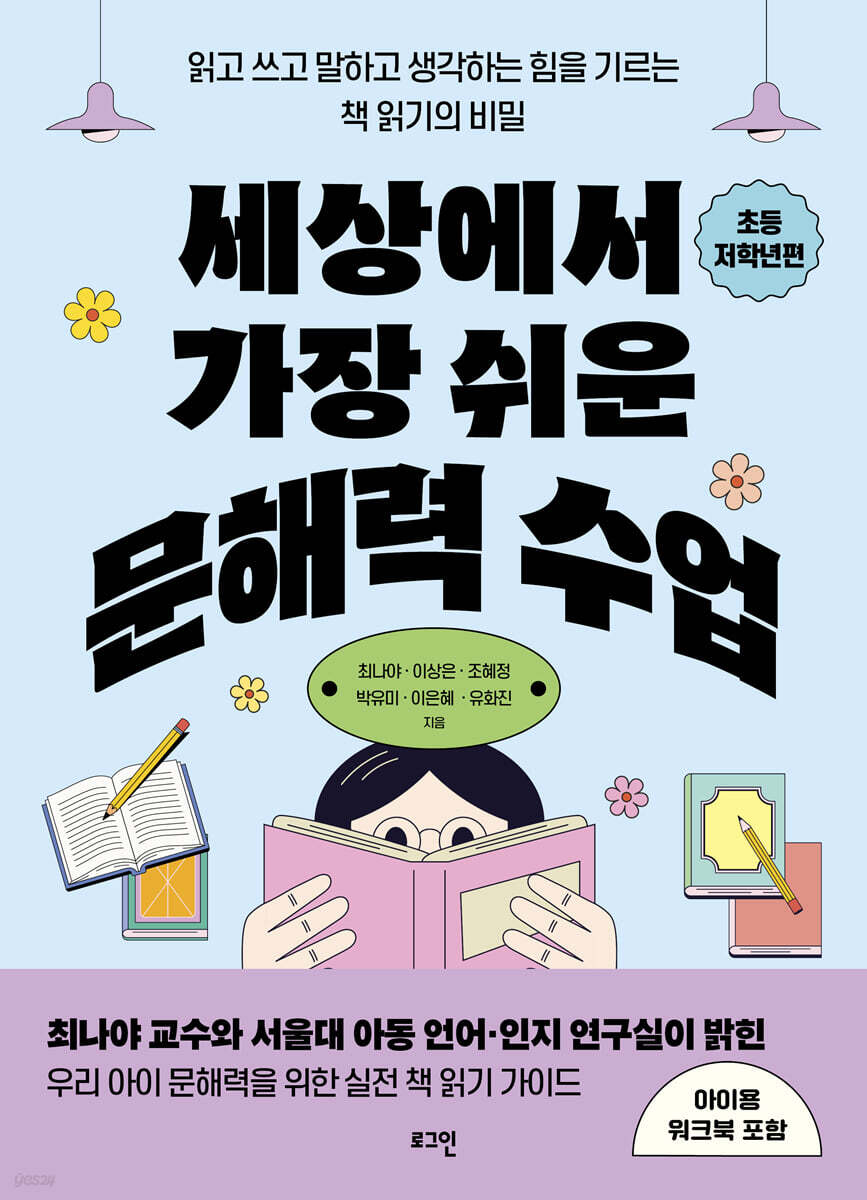
The World's Easiest Literacy Lesson: Early Elementary
 |
Description
Book Introduction
“Your child is reading, but are you worried about whether he or she is understanding the content?”
Everything Seoul National University Researchers Say About Your Child's Lifelong Literacy
The early elementary school years are not simply a time to learn letters and practice reading.
This period is an important stage for expanding understanding and expressive skills.
Therefore, if you worry and nag your child when he or she shows less interest in books and only focus on getting him or her to read a lot, you will not be able to develop deep literacy skills.
This book, the second in the "The World's Easiest Literacy Lessons" series, teaches parents of children in the lower grades of elementary school who have begun reading books that are more than just play and are connected to their studies, "how to read properly."
This book contains 10 must-read books for each grade from 1st to 3rd grade, carefully selected by the Children's Language and Cognition Lab at Seoul National University. It also includes 3 literacy activities and 1 extension activity for children so that they can systematically and step by step improve their literacy skills at home.
This book contains everything parents want to know about literacy, including how to help their children read, what questions to ask them, and what activities to do together after reading.
Everything Seoul National University Researchers Say About Your Child's Lifelong Literacy
The early elementary school years are not simply a time to learn letters and practice reading.
This period is an important stage for expanding understanding and expressive skills.
Therefore, if you worry and nag your child when he or she shows less interest in books and only focus on getting him or her to read a lot, you will not be able to develop deep literacy skills.
This book, the second in the "The World's Easiest Literacy Lessons" series, teaches parents of children in the lower grades of elementary school who have begun reading books that are more than just play and are connected to their studies, "how to read properly."
This book contains 10 must-read books for each grade from 1st to 3rd grade, carefully selected by the Children's Language and Cognition Lab at Seoul National University. It also includes 3 literacy activities and 1 extension activity for children so that they can systematically and step by step improve their literacy skills at home.
This book contains everything parents want to know about literacy, including how to help their children read, what questions to ask them, and what activities to do together after reading.
- You can preview some of the book's contents.
Preview
index
preface
How to use the book
Structure of this book
Chapter 1: Literacy Activities for First Graders
Me and school
What if that were the case?
The cat that brings happiness
It's fall, let's make kimchi
Seven comrades in the lady's room
Three words of miracles
white bear
White bear with 100 spots
101 Ways to Use Books
The Meow and the Sea Monster
Chapter 2 Literacy Activities for Second Graders
Arnold Lovell's Fables
I wonder where my friend lives
Slow and slow store
Chopsticks master
Midas' Chocolate
Picking my own superpower
Snail's Castle
The elephant of my life
Thin bowl
Willy's Pocket
Chapter 3 Literacy Activities for Third Graders
Fly, squeak squeak!
The boy who corrects the weather
Sand Dune Road
Dad's Bad Memories
How do we achieve democracy?
Hedgehog Kid
Parrot Green
Children's play The Stone-Eating Boy
The nerd who made the graph
Just one word in art history
How to use the book
Structure of this book
Chapter 1: Literacy Activities for First Graders
Me and school
What if that were the case?
The cat that brings happiness
It's fall, let's make kimchi
Seven comrades in the lady's room
Three words of miracles
white bear
White bear with 100 spots
101 Ways to Use Books
The Meow and the Sea Monster
Chapter 2 Literacy Activities for Second Graders
Arnold Lovell's Fables
I wonder where my friend lives
Slow and slow store
Chopsticks master
Midas' Chocolate
Picking my own superpower
Snail's Castle
The elephant of my life
Thin bowl
Willy's Pocket
Chapter 3 Literacy Activities for Third Graders
Fly, squeak squeak!
The boy who corrects the weather
Sand Dune Road
Dad's Bad Memories
How do we achieve democracy?
Hedgehog Kid
Parrot Green
Children's play The Stone-Eating Boy
The nerd who made the graph
Just one word in art history
Detailed image

Publisher's Review
Literacy that can lay the foundation for a child's lifelong Korean language skills.
You can raise them easily and enjoyably at home!
This book guides children entering elementary school on how to become familiar with books.
As you follow the parenting guidelines provided in the book, engage in conversations with your child, and complete the workbook together, your child will discover the joy of reading on his or her own.
Furthermore, it helps children learn about different perspectives on the world through books and grow into children who can confidently express their thoughts.
■ Main structure and features of the book ■
1.
30 books and parenting guides selected by Seoul National University researchers
It teaches children entering elementary school how to become familiar with books by reading, thinking, asking questions, and expressing themselves.
2.
A children's workbook with 120 literacy activities
Each book includes a workbook with three literacy activities and one extension activity so that children can try them out themselves.
3.
Literacy education by grade level
It systematically and step by step develops children's thinking and literacy skills by utilizing 10 books that should be read at each grade level from 1st to 3rd grade.
4.
5 recommended books by topic
I suggest that you naturally expand from one book to a broader reading experience.
You can raise them easily and enjoyably at home!
This book guides children entering elementary school on how to become familiar with books.
As you follow the parenting guidelines provided in the book, engage in conversations with your child, and complete the workbook together, your child will discover the joy of reading on his or her own.
Furthermore, it helps children learn about different perspectives on the world through books and grow into children who can confidently express their thoughts.
■ Main structure and features of the book ■
1.
30 books and parenting guides selected by Seoul National University researchers
It teaches children entering elementary school how to become familiar with books by reading, thinking, asking questions, and expressing themselves.
2.
A children's workbook with 120 literacy activities
Each book includes a workbook with three literacy activities and one extension activity so that children can try them out themselves.
3.
Literacy education by grade level
It systematically and step by step develops children's thinking and literacy skills by utilizing 10 books that should be read at each grade level from 1st to 3rd grade.
4.
5 recommended books by topic
I suggest that you naturally expand from one book to a broader reading experience.
GOODS SPECIFICS
- Date of issue: October 1, 2025
- Page count, weight, size: 248 pages | 534g | 186*258*15mm
- ISBN13: 9791169513760
- ISBN10: 116951376X
You may also like
카테고리
korean


korean

![ELLE 엘르 스페셜 에디션 A형 : 12월 [2025]](http://librairie.coreenne.fr/cdn/shop/files/b8e27a3de6c9538896439686c6b0e8fb.jpg?v=1766436872&width=3840)


