

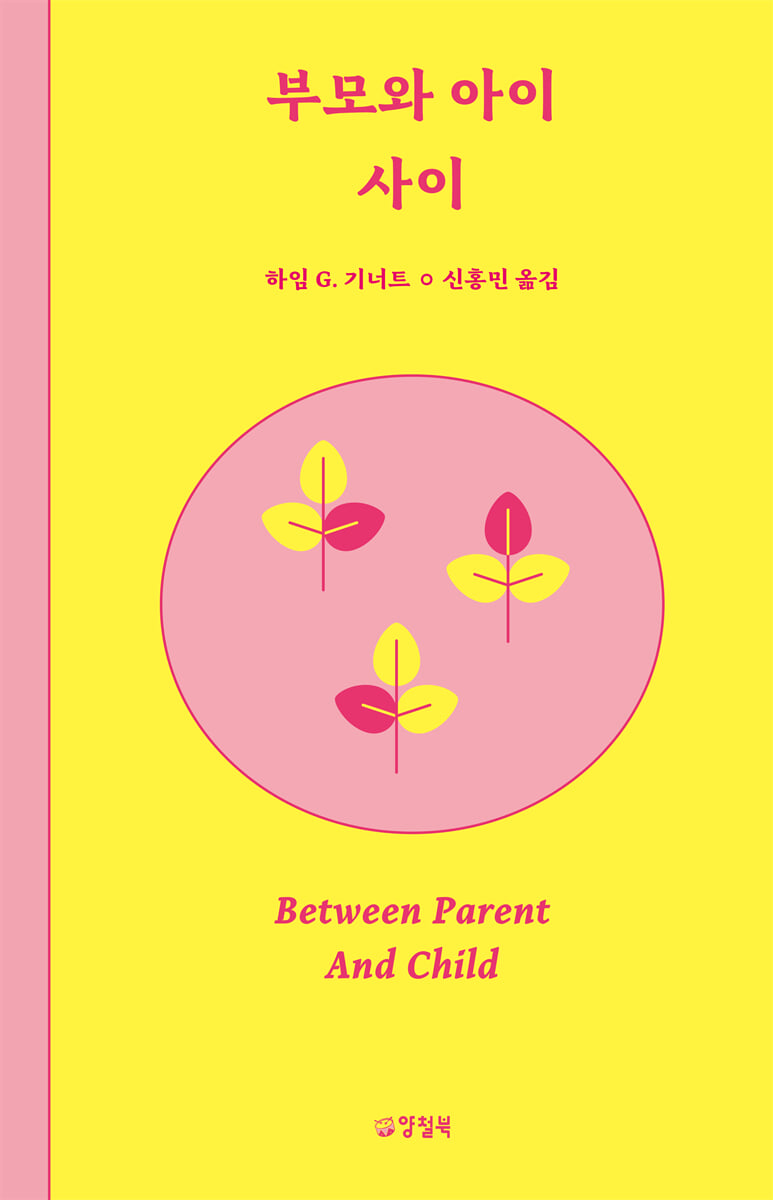
Between parents and children
 |
Description
Book Introduction
The first thing you have to do when you become a parent
A shining classic in child education
No parent wakes up in the morning determined to make their child's day miserable.
But no matter how good your intentions are, the unwanted war will break out again.
Why is this so? No matter how much concern you have, if it's conveyed to your child as a scolding, no matter how much love you have, if it's conveyed as nagging, peace is shattered, and small beginnings turn into a chaotic mess.
So often words, expressions, and actions cause delivery accidents.
It's not because we lack love, it's because we don't know it properly.
For the hearts of parents and children to connect and connect, the skills of communication and empathy are necessary.
The purpose of this book is to provide an answer to this question.
A shining classic in child education
No parent wakes up in the morning determined to make their child's day miserable.
But no matter how good your intentions are, the unwanted war will break out again.
Why is this so? No matter how much concern you have, if it's conveyed to your child as a scolding, no matter how much love you have, if it's conveyed as nagging, peace is shattered, and small beginnings turn into a chaotic mess.
So often words, expressions, and actions cause delivery accidents.
It's not because we lack love, it's because we don't know it properly.
For the hearts of parents and children to connect and connect, the skills of communication and empathy are necessary.
The purpose of this book is to provide an answer to this question.
index
prolog
1 Talk to your child
2 The Power of Words: A Great Way to Encourage and Lead
3 Parents Who Spoil Their Children: Parental Mistakes
4. Responsibility: First, teach valuable behavior.
5 Discipline: An Effective Alternative to Punishment
6 Crucial Moments: How to Deal with Them: A Child's Day
7 Jealousy: A Child's Tragedy
8 Child Anxiety: Calming Your Child's Mind
9. Achievement and Humanity: A Sensitive and Important Topic
10 Summary: Raising Children Properly
Epilogue
1 Talk to your child
2 The Power of Words: A Great Way to Encourage and Lead
3 Parents Who Spoil Their Children: Parental Mistakes
4. Responsibility: First, teach valuable behavior.
5 Discipline: An Effective Alternative to Punishment
6 Crucial Moments: How to Deal with Them: A Child's Day
7 Jealousy: A Child's Tragedy
8 Child Anxiety: Calming Your Child's Mind
9. Achievement and Humanity: A Sensitive and Important Topic
10 Summary: Raising Children Properly
Epilogue
Into the book
We want to believe that only mentally ill parents harm their children.
Unfortunately, even loving, well-intentioned parents often blame, shame, scold, ridicule, threaten, bribe, brand, punish, preach, and admonish their children.
Why is this? It's because most parents are unaware of the destructive power of words.
Parents are unknowingly saying things they heard from their own parents in the past.
He was saying things he had never intended to say, in a tone of voice he did not like.
--- p.5~6
Parents often get frustrated when talking to their children because they don't know how to start the conversation.
Let's look at the next story.
“Where have you been?”
“It’s outside.”
“What did you do?”
“I didn’t do anything.”
Sometimes, it's hard to believe how frustrating these conversations can be for parents trying to interact with their children in a normal way.
--- p.24
If you listen closely to the conversations between parents and children, you will notice that there is a huge gap in the words they exchange.
Their conversation sounds like two separate monologues.
One person scolds and instructs, while another denies and makes excuses.
--- p.25
Not only parents, but children also have not learned how to share their emotions.
Often times, we don't even know what or how we are feeling.
It's unfortunate.
--- p.31
What does it mean to conceal and embellish emotions like this? It means that there is something true, unadorned or hidden.
Therefore, education about emotions can help children realize what they are feeling.
--- p.45
Directly praising personality is like direct sunlight, irritating and dazzling to the eyes.
If you were to tell someone right in front of you that you are wonderful, angelic, generous, or humble, they would be embarrassed.
And I'll try to deny it a little by saying, 'That's not necessarily true.'
--- p.55
We are taught not to show our emotions.
So, I am most proud of the times when I barely reacted even in the midst of very intense emotional turmoil.
Some call it patience.
But what children should learn from their parents, and be grateful for, is how to act in accordance with their emotions.
Children want to hear expressions from their parents that reflect their true feelings.
--- p.70~71
The extent to which a child understands and follows with his or her heart determines the degree to which he or she accepts what we want to teach.
Values are not something that can be taught simply by teaching them.
Values are ingrained in us and become a part of our bodies as we compete and identify with those we love and respect.
--- p.118
“You must have had a hard day today.”
“I guess someone has been treating you badly.”
Questions presuppose curiosity, but statements of fact convey empathy.
Just because a parent expresses empathy, it doesn't mean that a child's gloomy mood will immediately change.
Still, the child will absorb all the loving feelings contained in the words of the parents who show that they understand him.
--- p.122
Children whose parents do not consider their feelings and thoughts may conclude that their thoughts are foolish or unworthy of attention, and that they are incapable of loving or being loved.
When parents listen to their children and acknowledge their strong emotions rather than dismiss them, children feel that their opinions and feelings are respected and, in turn, they perceive this respect as respect for themselves.
Feeling respected like that builds a child's self-esteem.
When children feel valued, they are better able to cope with the world around them, full of events and people.
--- p.126
How can we prevent children from feeling unnecessary guilt? When dealing with a child who has misbehaved, parents should approach it as a skilled mechanic would a broken car.
The mechanic does not embarrass the car owner.
It just points out where and how to repair it.
He doesn't blame the car for the noise, rattles, and squeaks.
Rather, the condition of the car is determined by such sounds.
In other words, we investigate what caused the car to break down.
A child who knows deep down that he can express his thoughts freely without risking losing his parents' love and acceptance finds great comfort in that.
--- p.241
Children don't just grow up.
Growing up, we constantly experience confusing thoughts and emotions, such as doubt, guilt, and especially anxiety.
The child is afraid of being abandoned by his parents.
They suffer from marital conflicts, and they are worried and confused when they see each other dying and dying again.
Parents can't eliminate all of their children's anxieties, but they can help them cope better.
All you have to do is understand your child's worries and prepare them mentally for confusing and frightening events.
Unfortunately, even loving, well-intentioned parents often blame, shame, scold, ridicule, threaten, bribe, brand, punish, preach, and admonish their children.
Why is this? It's because most parents are unaware of the destructive power of words.
Parents are unknowingly saying things they heard from their own parents in the past.
He was saying things he had never intended to say, in a tone of voice he did not like.
--- p.5~6
Parents often get frustrated when talking to their children because they don't know how to start the conversation.
Let's look at the next story.
“Where have you been?”
“It’s outside.”
“What did you do?”
“I didn’t do anything.”
Sometimes, it's hard to believe how frustrating these conversations can be for parents trying to interact with their children in a normal way.
--- p.24
If you listen closely to the conversations between parents and children, you will notice that there is a huge gap in the words they exchange.
Their conversation sounds like two separate monologues.
One person scolds and instructs, while another denies and makes excuses.
--- p.25
Not only parents, but children also have not learned how to share their emotions.
Often times, we don't even know what or how we are feeling.
It's unfortunate.
--- p.31
What does it mean to conceal and embellish emotions like this? It means that there is something true, unadorned or hidden.
Therefore, education about emotions can help children realize what they are feeling.
--- p.45
Directly praising personality is like direct sunlight, irritating and dazzling to the eyes.
If you were to tell someone right in front of you that you are wonderful, angelic, generous, or humble, they would be embarrassed.
And I'll try to deny it a little by saying, 'That's not necessarily true.'
--- p.55
We are taught not to show our emotions.
So, I am most proud of the times when I barely reacted even in the midst of very intense emotional turmoil.
Some call it patience.
But what children should learn from their parents, and be grateful for, is how to act in accordance with their emotions.
Children want to hear expressions from their parents that reflect their true feelings.
--- p.70~71
The extent to which a child understands and follows with his or her heart determines the degree to which he or she accepts what we want to teach.
Values are not something that can be taught simply by teaching them.
Values are ingrained in us and become a part of our bodies as we compete and identify with those we love and respect.
--- p.118
“You must have had a hard day today.”
“I guess someone has been treating you badly.”
Questions presuppose curiosity, but statements of fact convey empathy.
Just because a parent expresses empathy, it doesn't mean that a child's gloomy mood will immediately change.
Still, the child will absorb all the loving feelings contained in the words of the parents who show that they understand him.
--- p.122
Children whose parents do not consider their feelings and thoughts may conclude that their thoughts are foolish or unworthy of attention, and that they are incapable of loving or being loved.
When parents listen to their children and acknowledge their strong emotions rather than dismiss them, children feel that their opinions and feelings are respected and, in turn, they perceive this respect as respect for themselves.
Feeling respected like that builds a child's self-esteem.
When children feel valued, they are better able to cope with the world around them, full of events and people.
--- p.126
How can we prevent children from feeling unnecessary guilt? When dealing with a child who has misbehaved, parents should approach it as a skilled mechanic would a broken car.
The mechanic does not embarrass the car owner.
It just points out where and how to repair it.
He doesn't blame the car for the noise, rattles, and squeaks.
Rather, the condition of the car is determined by such sounds.
In other words, we investigate what caused the car to break down.
A child who knows deep down that he can express his thoughts freely without risking losing his parents' love and acceptance finds great comfort in that.
--- p.241
Children don't just grow up.
Growing up, we constantly experience confusing thoughts and emotions, such as doubt, guilt, and especially anxiety.
The child is afraid of being abandoned by his parents.
They suffer from marital conflicts, and they are worried and confused when they see each other dying and dying again.
Parents can't eliminate all of their children's anxieties, but they can help them cope better.
All you have to do is understand your child's worries and prepare them mentally for confusing and frightening events.
--- p.249
Publisher's Review
An educational masterpiece that has been in the hands of parents around the world since its first publication in 1965.
“This book was a beacon of light for me when I was a first-time mother and was lost and confused.
“If my daughter later remembers me as a warm mother, I think it will be thanks to this book.” - Reader’s Comment
Isn't a farmer foolish who sows seeds in winter and hopes for sprouts to sprout? A parent who expects their words to lead to growth while their child's heart is frozen is hardly wise.
Just as a farmer waits for spring, parents must wait for their children's emotions.
Emotions are our inherited heritage.
Fish swim, birds fly, and humans feel emotions.
Sometimes I feel happy, and other times I feel unhappy.
It is quite natural and normal to feel emotions such as anger, rage, fear, sadness, joy, greed, guilt, distress, and contempt at times.
We cannot control the occurrence of these feelings.
But we can choose when and how we express it.
We are taught not to show our emotions.
So, I am most proud of the times when I barely reacted even in the midst of very intense emotional turmoil.
Some call it patience.
But what children should learn from their parents, and be grateful for, is how to act in accordance with their emotions.
Children want to hear expressions from their parents that reflect their true feelings.
The moment a child receives emotional empathy, he or she feels loved.
Because at that moment, the parents' words are seen as a message of love, not as language of criticism or instruction.
Where should we start to improve our communication with our children? It starts with recognizing their emotions, not criticizing their behavior.
Examining your child's emotions is completely different from trying to please them or cater to their mood.
Rather, it is about not letting words dominate your emotions or letting emotions dominate your situation.
Emotions are clearly something that happens in each person's body and mind, and all words in the world must pass through this emotional realm to reach the child, so let's acknowledge and respect them as they are.
The child will feel that his or her feelings are accepted and that he or she is valued and respected.
Only then will the seeds of words sown by parents sprout into the warm growth of the child.
The book is filled with very specific and diverse wisdom, such as how to get your child to follow rules without feeling humiliated, how to criticize without hurting their self-esteem, how to express anger without hurting them, and how to treat your child so that he or she builds self-confidence.
It vividly and deeply conveys the simple truth of how parents and children, and people, should connect and form relationships with each other through specific examples.
“This book was a beacon of light for me when I was a first-time mother and was lost and confused.
“If my daughter later remembers me as a warm mother, I think it will be thanks to this book.” - Reader’s Comment
Isn't a farmer foolish who sows seeds in winter and hopes for sprouts to sprout? A parent who expects their words to lead to growth while their child's heart is frozen is hardly wise.
Just as a farmer waits for spring, parents must wait for their children's emotions.
Emotions are our inherited heritage.
Fish swim, birds fly, and humans feel emotions.
Sometimes I feel happy, and other times I feel unhappy.
It is quite natural and normal to feel emotions such as anger, rage, fear, sadness, joy, greed, guilt, distress, and contempt at times.
We cannot control the occurrence of these feelings.
But we can choose when and how we express it.
We are taught not to show our emotions.
So, I am most proud of the times when I barely reacted even in the midst of very intense emotional turmoil.
Some call it patience.
But what children should learn from their parents, and be grateful for, is how to act in accordance with their emotions.
Children want to hear expressions from their parents that reflect their true feelings.
The moment a child receives emotional empathy, he or she feels loved.
Because at that moment, the parents' words are seen as a message of love, not as language of criticism or instruction.
Where should we start to improve our communication with our children? It starts with recognizing their emotions, not criticizing their behavior.
Examining your child's emotions is completely different from trying to please them or cater to their mood.
Rather, it is about not letting words dominate your emotions or letting emotions dominate your situation.
Emotions are clearly something that happens in each person's body and mind, and all words in the world must pass through this emotional realm to reach the child, so let's acknowledge and respect them as they are.
The child will feel that his or her feelings are accepted and that he or she is valued and respected.
Only then will the seeds of words sown by parents sprout into the warm growth of the child.
The book is filled with very specific and diverse wisdom, such as how to get your child to follow rules without feeling humiliated, how to criticize without hurting their self-esteem, how to express anger without hurting them, and how to treat your child so that he or she builds self-confidence.
It vividly and deeply conveys the simple truth of how parents and children, and people, should connect and form relationships with each other through specific examples.
GOODS SPECIFICS
- Date of issue: April 1, 2025
- Page count, weight, size: 292 pages | 388g | 138*214*10mm
- ISBN13: 9788963724454
You may also like
카테고리
korean


korean

![GQ KOREA Mark (Monthly): December [2025]](http://librairie.coreenne.fr/cdn/shop/files/8ef265dbbfbf186523ed75ba7319009d.jpg?v=1765340328&width=3840)


