

The Power of a Jewish Mother
 |
Description
Book Introduction
A typical 'Asian mother' who is unconditionally devoted to her children
After moving to Israel and being reborn as a ‘Jewish mother’
A vivid story of raising three children into world-class tycoons.
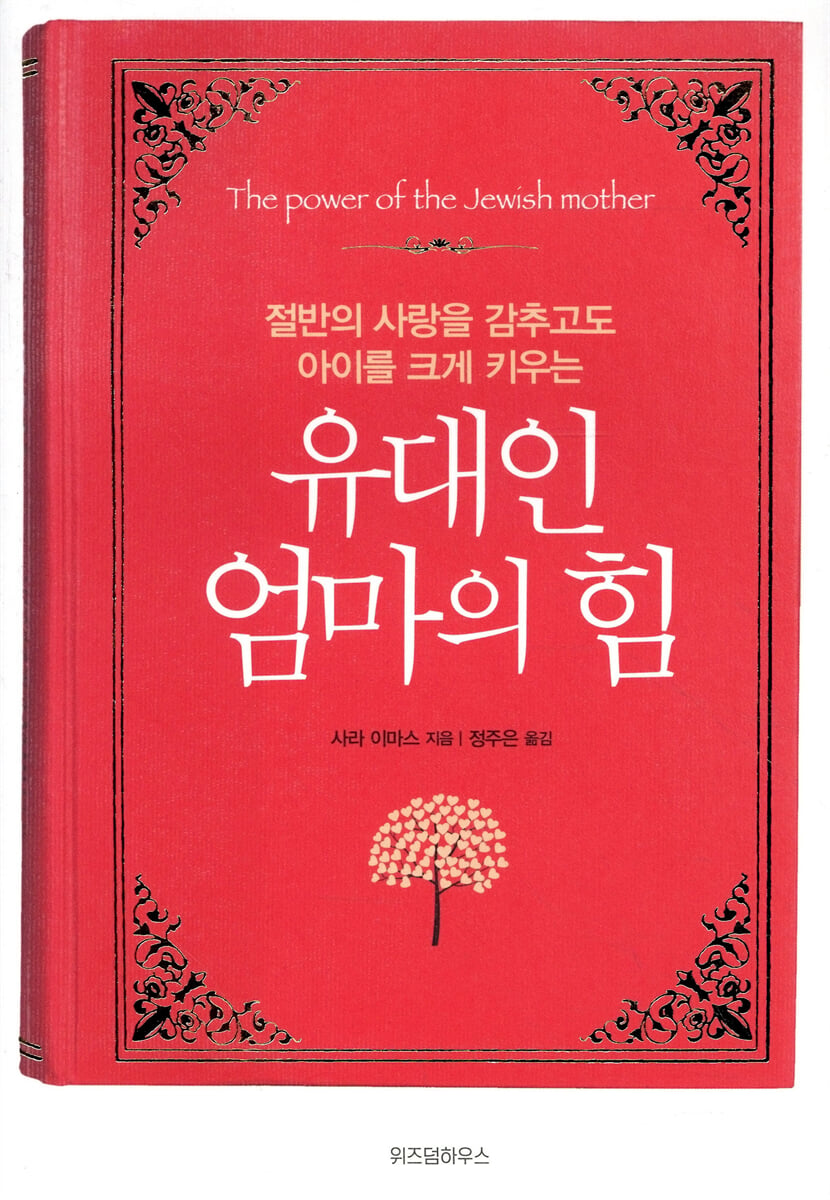
"The Power of a Jewish Mother Who Raised Her Children While Hiding Half of Her Love" is the result of the author, who is Jewish and also an Asian who was born and raised in China, personally raising three children while embracing and practicing Jewish education from a different perspective than before.
In the book, she points out the educational mistakes and misunderstandings that Asian parents like herself make as if they were natural, and presents Jewish educational methods as solutions and alternatives.
The author's honest account of his day-to-day experience of overcoming countless mistakes and trials to wisely raise his children is a profound insight and moving experience, extending beyond the Jewish educational method.
After moving to Israel and being reborn as a ‘Jewish mother’
A vivid story of raising three children into world-class tycoons.
"The Power of a Jewish Mother Who Raised Her Children While Hiding Half of Her Love" is the result of the author, who is Jewish and also an Asian who was born and raised in China, personally raising three children while embracing and practicing Jewish education from a different perspective than before.
In the book, she points out the educational mistakes and misunderstandings that Asian parents like herself make as if they were natural, and presents Jewish educational methods as solutions and alternatives.
The author's honest account of his day-to-day experience of overcoming countless mistakes and trials to wisely raise his children is a profound insight and moving experience, extending beyond the Jewish educational method.
- You can preview some of the book's contents.
Preview
index
★ Prologue: A Typical Chinese Mom Decides to Become a Jewish Mom
01 The great Jewish mantra to start the day, “Everything will be alright!”
The optimism of parents who nurture their homes and raise their children
Boldly ending an unhappy marriage | Everything will be alright! | What children really need isn't material things, but an optimistic home atmosphere.
02 Don't spread such education in Israel!
The first step toward fostering children's vitality: the household chore rotation system.
A Typical Chinese Mother's Wrong Way of Loving Her Children | Housework is the Best Education for Children
* List of chores based on the child's age
03 Jewish parents create unnecessary trials for their children.
Frustration training that increases the 'adversity index'
The Inside Story of Parents Who Deliberately "Bully" Their Children | Teaching Children to Tear Down Is Just as Important as Teaching Children to Build Up | Avoiding Adversity Is Avoiding Life Itself | Frustration Education: Building Children's Willpower
* Test your child's willpower
04 The Wisdom of Jewish Parents Who Leave Their Children One Step Ahead
Social skills training should begin first at home.
Why You Should Deliberately Interact with Strangers | Happiness and Success Begin with Relationships | Parents Are the Best Coaches and Mentors to Develop Social Skills
05 Jewish parents drop honey on the book
How to awaken interest and desire for knowledge
The joy of questioning fosters the power of thought | Why Jewish parents devote special attention to language education | Non-interfering parents create self-directed children
06 Those who do not work shall not eat!
It teaches that the true value of life lies in labor.
Why Rich Kids Work Part-Time | The Day They First Sold Spring Rolls | Teaching the Value of Labor and Fair Pay | Children Who Understand the Meaning of Sweat Grow Up Well
07 How to Get Out of the Good Mom Complex
'Negligent Parenting': Giving Your Child Self-Reliance
When to let go of your child | Wise parents give their children minimal help | Jewish parents give their children the gift of independence.
08 Excessive satisfaction is invisible domestic violence.
Jewish Delayed Gratification Training to Prepare for the Harshness of Social Life
Excessive abundance is toxic to children | Avoiding the "harm" disguised as "love" | The surprising power of "Parents' Day"
09 Sometimes an 'operational retreat' is necessary.
Jewish democratic, interactive education
The Family Meeting: The Foundation of Democratic Family Education | The Wise Authority of Parents: Taking One Step Back to Take Two Steps Forward | Allowing Children to Make Their Own Decisions and Be Willing to Fail | The "Sweetest Time" in the World
10 Knowledge is meaningless if you can't survive.
Survival education starting in kindergarten
How to Avoid Being a Book-Carrying Donkey | Lessons My Youngest Daughter Learned in the Military | The Hidden Secrets of Parents Who Pretend They Have It But Don't
11 Economic education starts from infancy
Developing the potential to become wealthy within every child
Jewish economic power is a product of home education | Children receive a month's salary as allowance | The true "wealth" that parents must pass on to their children
* Economic education for Jewish children
12 Until the rules become a habit
How to teach norms without nagging or getting angry
How a Reckless Child Grew to Become a Master in Just One Year | Can You Teach Rules Without Hurting Their Feelings? | 'Tough Love': The Difference Between Freedom and Indulgence
13 Children who plan and carry out household chores
The best place to develop a child's management skills is at home.
Kids Plan Vacations and Invest in Stocks | Gain Cost Management Skills by Selling Spring Rolls | The Magic Number 86400: The Key to Success | The Secret to Becoming a CEO Without a Business Degree
14 How do Jewish children set their course in life?
Career education that helps you find something you can focus on rather than money.
A father who insists on discouraging his son from going to medical school | What you love, what you excel at, what you can immerse yourself in | Parents who guide you on the right path vs. Parents who become obstacles
15 Parental love aimed at separation
It starts from the womb and burns like a bonfire.
Hidden love is deeper | Excessive love weakens children | Worry about only knowing how to love and not knowing how to teach | Womb love and bonfire love
★ Epilogue Three Keys Given by Children
01 The great Jewish mantra to start the day, “Everything will be alright!”
The optimism of parents who nurture their homes and raise their children
Boldly ending an unhappy marriage | Everything will be alright! | What children really need isn't material things, but an optimistic home atmosphere.
02 Don't spread such education in Israel!
The first step toward fostering children's vitality: the household chore rotation system.
A Typical Chinese Mother's Wrong Way of Loving Her Children | Housework is the Best Education for Children
* List of chores based on the child's age
03 Jewish parents create unnecessary trials for their children.
Frustration training that increases the 'adversity index'
The Inside Story of Parents Who Deliberately "Bully" Their Children | Teaching Children to Tear Down Is Just as Important as Teaching Children to Build Up | Avoiding Adversity Is Avoiding Life Itself | Frustration Education: Building Children's Willpower
* Test your child's willpower
04 The Wisdom of Jewish Parents Who Leave Their Children One Step Ahead
Social skills training should begin first at home.
Why You Should Deliberately Interact with Strangers | Happiness and Success Begin with Relationships | Parents Are the Best Coaches and Mentors to Develop Social Skills
05 Jewish parents drop honey on the book
How to awaken interest and desire for knowledge
The joy of questioning fosters the power of thought | Why Jewish parents devote special attention to language education | Non-interfering parents create self-directed children
06 Those who do not work shall not eat!
It teaches that the true value of life lies in labor.
Why Rich Kids Work Part-Time | The Day They First Sold Spring Rolls | Teaching the Value of Labor and Fair Pay | Children Who Understand the Meaning of Sweat Grow Up Well
07 How to Get Out of the Good Mom Complex
'Negligent Parenting': Giving Your Child Self-Reliance
When to let go of your child | Wise parents give their children minimal help | Jewish parents give their children the gift of independence.
08 Excessive satisfaction is invisible domestic violence.
Jewish Delayed Gratification Training to Prepare for the Harshness of Social Life
Excessive abundance is toxic to children | Avoiding the "harm" disguised as "love" | The surprising power of "Parents' Day"
09 Sometimes an 'operational retreat' is necessary.
Jewish democratic, interactive education
The Family Meeting: The Foundation of Democratic Family Education | The Wise Authority of Parents: Taking One Step Back to Take Two Steps Forward | Allowing Children to Make Their Own Decisions and Be Willing to Fail | The "Sweetest Time" in the World
10 Knowledge is meaningless if you can't survive.
Survival education starting in kindergarten
How to Avoid Being a Book-Carrying Donkey | Lessons My Youngest Daughter Learned in the Military | The Hidden Secrets of Parents Who Pretend They Have It But Don't
11 Economic education starts from infancy
Developing the potential to become wealthy within every child
Jewish economic power is a product of home education | Children receive a month's salary as allowance | The true "wealth" that parents must pass on to their children
* Economic education for Jewish children
12 Until the rules become a habit
How to teach norms without nagging or getting angry
How a Reckless Child Grew to Become a Master in Just One Year | Can You Teach Rules Without Hurting Their Feelings? | 'Tough Love': The Difference Between Freedom and Indulgence
13 Children who plan and carry out household chores
The best place to develop a child's management skills is at home.
Kids Plan Vacations and Invest in Stocks | Gain Cost Management Skills by Selling Spring Rolls | The Magic Number 86400: The Key to Success | The Secret to Becoming a CEO Without a Business Degree
14 How do Jewish children set their course in life?
Career education that helps you find something you can focus on rather than money.
A father who insists on discouraging his son from going to medical school | What you love, what you excel at, what you can immerse yourself in | Parents who guide you on the right path vs. Parents who become obstacles
15 Parental love aimed at separation
It starts from the womb and burns like a bonfire.
Hidden love is deeper | Excessive love weakens children | Worry about only knowing how to love and not knowing how to teach | Womb love and bonfire love
★ Epilogue Three Keys Given by Children
Into the book
“The goal of life is to live each day happily and joyfully.”
It is an old Jewish teaching to spend each day happily and joyfully.
However, the 'day' that the Jews are talking about here is different from the general concept.
Normally, a day means the time from morning to evening, but Jews consider the day to be the opposite, beginning at sunset.
Because I think it's much better to start dark and end bright than to start bright and end dark.
---p.27, from “What children really need is not material things, but an optimistic home atmosphere.”
There is one very interesting way that Israeli parents raise their children.
It is ‘deliberately creating something that does not exist.’
What on earth is this? It's 'adversity.'
Jewish parents deliberately create adversity and trials for their children to strengthen their will and wisdom.
---p.48, from “The Inside Story of Parents Who Deliberately ‘Bully’ Their Children”
Jewish parents leave their children before the child decides to leave them.
This encourages the child to go out into the world on his own, shake off his shyness, meet strangers, and experience a more beautiful world.
It is this kind of education and atmosphere at home that has a greater influence on a child's growth than school education.
---pp.88-89, from “Parents are the best coaches and mentors to foster social skills”
Jews consider studying to be the 'joy of life'.
So, from an early age, we try to instill in children an interest in books and knowledge.
Parents stimulate their children's curiosity by preparing a variety of books and placing them in front of them when their children are only one or two years old.
At this point, Jewish mothers show another resourcefulness.
Drop a drop or two of sweet honey on the book and let the child lick it.
A method used to encourage interest in books by instilling the perception that 'reading is sweet'.
am.
It also means that 'books contain knowledge that can help you overcome difficult situations in life, making life sweeter.'
---p.105, from “Parents who don’t interfere create children who study on their own.”
Jewish parents educate their children with a long-term perspective.
Just because you set up a stall and do business now, I don't think you'll be doing it the same way 10 years from now.
This is because children who have worked from a young age are more likely to find and achieve their life goals early on.
Therefore, even the smallest task today is a huge step toward the future.
---p.124, from “A child who knows the meaning of sweat grows up properly”
I have seen many cases where tigers were born and raised as dogs.
It is heartbreaking to see children who cannot even find food because their parents pull out their teeth and claws because it is dangerous.
It is the parent's role to teach them how to use it safely.
Parents cannot protect their children from all the storms that lie ahead.
Only by allowing children to navigate the waves of life on their own can they continue sailing steadfastly no matter what storms may come their way.
---p.133, from “Wise Parents Give Their Children the Minimal Help”
The goal of Jewish parents' education is to foster in their children an enterprising spirit so that they can live independently.
The most representative method among them is ‘neglectful parenting.’
Many parents take for granted the 24/7 dedication to their children.
And conversely, if you neglect your child even a little, you feel guilty and think you are being negligent.
However, the Jews taught us a shift in thinking that children can grow up independently only if their parents are appropriately negligent.
Thanks to that, I was able to break free from the obsession that I had to dedicate my body and soul to my children.
---p.138, from “Jewish Parents Give Their Children the Gift of Independence”
Jewish parents believe that the way to truly love a child is to 'moderately dissatisfy' his or her unreasonable demands.
Unconditionally granting a child's wishes without considering right or wrong is a 'harm' disguised as 'love'.
There is a saying that Jewish parents always say.
“I would rather raise them roughly than ‘oversatisfy’ them.”
---p.152, from “To avoid ‘harm’ disguised as ‘love’”
Jewish parents believe that all children have the potential to become wealthy.
And I think that whether a child becomes wealthy or not depends on how the parents educate their children.
Therefore, all education focuses on developing the child's latent skills and talents.
It's about igniting deep-seated abilities in your child to help them live happier lives.
---pp.196-197, from “Jewish Economic Power is the Result of Family Education”
Parents need to properly coordinate when to 'hold' and when to 'let go'.
'Catching' means asking a child about the difficulty of a task beforehand and then providing appropriate guidance accordingly.
On the other hand, 'letting go' means leaving the child to figure out things on his own.
It is an old Jewish teaching to spend each day happily and joyfully.
However, the 'day' that the Jews are talking about here is different from the general concept.
Normally, a day means the time from morning to evening, but Jews consider the day to be the opposite, beginning at sunset.
Because I think it's much better to start dark and end bright than to start bright and end dark.
---p.27, from “What children really need is not material things, but an optimistic home atmosphere.”
There is one very interesting way that Israeli parents raise their children.
It is ‘deliberately creating something that does not exist.’
What on earth is this? It's 'adversity.'
Jewish parents deliberately create adversity and trials for their children to strengthen their will and wisdom.
---p.48, from “The Inside Story of Parents Who Deliberately ‘Bully’ Their Children”
Jewish parents leave their children before the child decides to leave them.
This encourages the child to go out into the world on his own, shake off his shyness, meet strangers, and experience a more beautiful world.
It is this kind of education and atmosphere at home that has a greater influence on a child's growth than school education.
---pp.88-89, from “Parents are the best coaches and mentors to foster social skills”
Jews consider studying to be the 'joy of life'.
So, from an early age, we try to instill in children an interest in books and knowledge.
Parents stimulate their children's curiosity by preparing a variety of books and placing them in front of them when their children are only one or two years old.
At this point, Jewish mothers show another resourcefulness.
Drop a drop or two of sweet honey on the book and let the child lick it.
A method used to encourage interest in books by instilling the perception that 'reading is sweet'.
am.
It also means that 'books contain knowledge that can help you overcome difficult situations in life, making life sweeter.'
---p.105, from “Parents who don’t interfere create children who study on their own.”
Jewish parents educate their children with a long-term perspective.
Just because you set up a stall and do business now, I don't think you'll be doing it the same way 10 years from now.
This is because children who have worked from a young age are more likely to find and achieve their life goals early on.
Therefore, even the smallest task today is a huge step toward the future.
---p.124, from “A child who knows the meaning of sweat grows up properly”
I have seen many cases where tigers were born and raised as dogs.
It is heartbreaking to see children who cannot even find food because their parents pull out their teeth and claws because it is dangerous.
It is the parent's role to teach them how to use it safely.
Parents cannot protect their children from all the storms that lie ahead.
Only by allowing children to navigate the waves of life on their own can they continue sailing steadfastly no matter what storms may come their way.
---p.133, from “Wise Parents Give Their Children the Minimal Help”
The goal of Jewish parents' education is to foster in their children an enterprising spirit so that they can live independently.
The most representative method among them is ‘neglectful parenting.’
Many parents take for granted the 24/7 dedication to their children.
And conversely, if you neglect your child even a little, you feel guilty and think you are being negligent.
However, the Jews taught us a shift in thinking that children can grow up independently only if their parents are appropriately negligent.
Thanks to that, I was able to break free from the obsession that I had to dedicate my body and soul to my children.
---p.138, from “Jewish Parents Give Their Children the Gift of Independence”
Jewish parents believe that the way to truly love a child is to 'moderately dissatisfy' his or her unreasonable demands.
Unconditionally granting a child's wishes without considering right or wrong is a 'harm' disguised as 'love'.
There is a saying that Jewish parents always say.
“I would rather raise them roughly than ‘oversatisfy’ them.”
---p.152, from “To avoid ‘harm’ disguised as ‘love’”
Jewish parents believe that all children have the potential to become wealthy.
And I think that whether a child becomes wealthy or not depends on how the parents educate their children.
Therefore, all education focuses on developing the child's latent skills and talents.
It's about igniting deep-seated abilities in your child to help them live happier lives.
---pp.196-197, from “Jewish Economic Power is the Result of Family Education”
Parents need to properly coordinate when to 'hold' and when to 'let go'.
'Catching' means asking a child about the difficulty of a task beforehand and then providing appropriate guidance accordingly.
On the other hand, 'letting go' means leaving the child to figure out things on his own.
---p.242, from
Publisher's Review
A typical 'Asian mother' who is unconditionally devoted to her children
After moving to Israel and being reborn as a ‘Jewish mother’
A vivid story of raising three children into world-class tycoons.
“Worry about only knowing how to love and not how to teach.”
Should I raise my child to be good at studying, or should I raise him to be a proactive person in life?
Every parent pours money, time, and even their entire life into their children.
Yet, there are countless children who become adults and either idle away in idleness or, in extreme cases, rely on their elderly parents.
Not only is the child unable to achieve the success that his parents dreamed of since birth, he is unable to stand properly in the world as an independent human being.
That is how you grow up to be a smart-aleck, a fool who only thinks about himself.
Parents love their children with all their hearts and without reservation, so why on earth is that?
The author of this book, Sara Imas, says that all of this stems from the attitude of parents who only know how to love their children but do not know how to teach them.
"The Power of a Jewish Mother Who Raised Her Children While Hiding Half of Her Love" (written by Sarah Imas, published by Yedam Friend) is the result of the author, who is Jewish and also Asian and was born and raised in China, personally raising three children while accepting and practicing Jewish education from a different perspective than before.
In the book, she points out the educational mistakes and misunderstandings that Asian parents like herself make as if they were natural, and presents Jewish educational methods as solutions and alternatives.
The author's honest account of his day-to-day experience of overcoming countless mistakes and trials to wisely raise his children is a profound insight and moving experience, extending beyond the Jewish educational method.
“A child cannot be raised well with love alone!”
The Secret of Jewish Education: Turning Even Failure and Frustration into Opportunities
The author of this book, Sarah Imas, was born in Shanghai, China, to a Jewish immigrant family and was an ordinary mother of two sons and one daughter.
After divorcing her husband and raising three children alone, her life changed dramatically when Israel, her home country, appealed to Jews living abroad to "come home."
She boldly decided to leave behind her comfortable life in Shanghai and immigrate with her children to Israel, where the sounds of war were ringing.
I wanted to raise my children to be excellent, as if they were living in a place that was a center of Jewish education, producing world-class talents such as renowned scholars and CEOs of strong companies.
But life in Israel was not easy.
They had to fight a war because they couldn't communicate well, they were poor economically, and their children were immature.
It was a difficult situation for anyone to see, but the more it became difficult, the more Sarah's dream of helping her children succeed grew.
As a mother, she took care of all the housework and made a living by selling spring rolls.
She was such a passionate mother that she took time out of work to deliver lunch boxes to school.
She thought she was doing pretty well as a mother, but her Jewish neighbors thought differently.
They threw out barbed remarks like, “Don’t spread wrong home education in Israel,” and “You can love your children as much as you want, but parents can’t raise them in their place.”
Although it was painful, Sarah began to reflect on herself and her surroundings from then on.
It was a moment of transformation from a typical 'Asian mother' to a 'Jewish mother.'
Instead of doing everything for the children, I decided to trust them.
Instead of assuming that the kids couldn't do it, I decided to watch them do it.
Thanks to this, Sarah's children grew up to be world-class tycoons in both body and mind.
In particular, the two sons, who were successful in business, became millionaires at an early age and gave their mother a mansion and a car.
In today's world of kangaroos and helicopter parents, Sarah is busier than ever.
Because I want to tell all the parents in the world my story of raising a child while hiding half of my love.
Even now, she is working to spread awareness about what true love is for children and how to help them live happy lives.
“Jewish Education: Can We Really Practice It?”
A book for Korean parents seeking a clear path amidst the flood of Jewish education laws.
Since some time ago, interest in Jewish education has been growing day by day in our country.
I am envious of the Jews who have traveled the world and held important positions despite their small population, and at the same time, I am curious about what motivated them to do so.
Since then, numerous books have been published on Jewish education, but most of them only convey theory, and it is difficult to find practical applications.
In that respect, this book has a deeper meaning.
This is because it honestly and frankly portrays the story of an Asian mother's Jewish education.
The author's journey of breaking free from the stereotypical Asian mother and raising three children through Jewish education will resonate deeply with Korean readers, who are like second and third Sarahs.
If you love her, raise her like a Jewish mother!
10 Ways to Raise Your Child to Become More Self-Reliant: A Jewish Mother's Guide
1 Housework is the best study for children.
Entrust your child with household chores from an early age and develop responsibility and management skills.
2. Teaching children to fall down is just as important as teaching them to stand up.
Instead of just praising your children, let them experience frustration on purpose to build their willpower.
3. Happiness and success begin with human relationships.
Start social skills training at home and teach your child how to communicate wisely.
4 Drop honey on the book
Instead of telling you to study, it awakens the sweetness of knowledge.
5 Even if you love your child, give them the bare minimum of help.
Strengthen your child's independence by boldly letting go of their hand and practicing negligent parenting.
6. Don't scold someone if they fail at something they decided on their own.
It provides a foundation for learning how to take responsibility for and cope with one's own decisions.
7 Developing the potential to become wealthy within every child
Start financial education from infancy to help children understand the value of money early on.
8 Excessive satisfaction is an invisible form of domestic violence.
Always be careful, as excessive abundance is toxic to children.
9. Career education is provided starting from home.
Through sufficient conversation with your child, you can help them find something they can focus on rather than money.
10 Hidden love is deeper
Overflowing love makes a child weak, so they deliberately hide their love.
After moving to Israel and being reborn as a ‘Jewish mother’
A vivid story of raising three children into world-class tycoons.
“Worry about only knowing how to love and not how to teach.”
Should I raise my child to be good at studying, or should I raise him to be a proactive person in life?
Every parent pours money, time, and even their entire life into their children.
Yet, there are countless children who become adults and either idle away in idleness or, in extreme cases, rely on their elderly parents.
Not only is the child unable to achieve the success that his parents dreamed of since birth, he is unable to stand properly in the world as an independent human being.
That is how you grow up to be a smart-aleck, a fool who only thinks about himself.
Parents love their children with all their hearts and without reservation, so why on earth is that?
The author of this book, Sara Imas, says that all of this stems from the attitude of parents who only know how to love their children but do not know how to teach them.
"The Power of a Jewish Mother Who Raised Her Children While Hiding Half of Her Love" (written by Sarah Imas, published by Yedam Friend) is the result of the author, who is Jewish and also Asian and was born and raised in China, personally raising three children while accepting and practicing Jewish education from a different perspective than before.
In the book, she points out the educational mistakes and misunderstandings that Asian parents like herself make as if they were natural, and presents Jewish educational methods as solutions and alternatives.
The author's honest account of his day-to-day experience of overcoming countless mistakes and trials to wisely raise his children is a profound insight and moving experience, extending beyond the Jewish educational method.
“A child cannot be raised well with love alone!”
The Secret of Jewish Education: Turning Even Failure and Frustration into Opportunities
The author of this book, Sarah Imas, was born in Shanghai, China, to a Jewish immigrant family and was an ordinary mother of two sons and one daughter.
After divorcing her husband and raising three children alone, her life changed dramatically when Israel, her home country, appealed to Jews living abroad to "come home."
She boldly decided to leave behind her comfortable life in Shanghai and immigrate with her children to Israel, where the sounds of war were ringing.
I wanted to raise my children to be excellent, as if they were living in a place that was a center of Jewish education, producing world-class talents such as renowned scholars and CEOs of strong companies.
But life in Israel was not easy.
They had to fight a war because they couldn't communicate well, they were poor economically, and their children were immature.
It was a difficult situation for anyone to see, but the more it became difficult, the more Sarah's dream of helping her children succeed grew.
As a mother, she took care of all the housework and made a living by selling spring rolls.
She was such a passionate mother that she took time out of work to deliver lunch boxes to school.
She thought she was doing pretty well as a mother, but her Jewish neighbors thought differently.
They threw out barbed remarks like, “Don’t spread wrong home education in Israel,” and “You can love your children as much as you want, but parents can’t raise them in their place.”
Although it was painful, Sarah began to reflect on herself and her surroundings from then on.
It was a moment of transformation from a typical 'Asian mother' to a 'Jewish mother.'
Instead of doing everything for the children, I decided to trust them.
Instead of assuming that the kids couldn't do it, I decided to watch them do it.
Thanks to this, Sarah's children grew up to be world-class tycoons in both body and mind.
In particular, the two sons, who were successful in business, became millionaires at an early age and gave their mother a mansion and a car.
In today's world of kangaroos and helicopter parents, Sarah is busier than ever.
Because I want to tell all the parents in the world my story of raising a child while hiding half of my love.
Even now, she is working to spread awareness about what true love is for children and how to help them live happy lives.
“Jewish Education: Can We Really Practice It?”
A book for Korean parents seeking a clear path amidst the flood of Jewish education laws.
Since some time ago, interest in Jewish education has been growing day by day in our country.
I am envious of the Jews who have traveled the world and held important positions despite their small population, and at the same time, I am curious about what motivated them to do so.
Since then, numerous books have been published on Jewish education, but most of them only convey theory, and it is difficult to find practical applications.
In that respect, this book has a deeper meaning.
This is because it honestly and frankly portrays the story of an Asian mother's Jewish education.
The author's journey of breaking free from the stereotypical Asian mother and raising three children through Jewish education will resonate deeply with Korean readers, who are like second and third Sarahs.
If you love her, raise her like a Jewish mother!
10 Ways to Raise Your Child to Become More Self-Reliant: A Jewish Mother's Guide
1 Housework is the best study for children.
Entrust your child with household chores from an early age and develop responsibility and management skills.
2. Teaching children to fall down is just as important as teaching them to stand up.
Instead of just praising your children, let them experience frustration on purpose to build their willpower.
3. Happiness and success begin with human relationships.
Start social skills training at home and teach your child how to communicate wisely.
4 Drop honey on the book
Instead of telling you to study, it awakens the sweetness of knowledge.
5 Even if you love your child, give them the bare minimum of help.
Strengthen your child's independence by boldly letting go of their hand and practicing negligent parenting.
6. Don't scold someone if they fail at something they decided on their own.
It provides a foundation for learning how to take responsibility for and cope with one's own decisions.
7 Developing the potential to become wealthy within every child
Start financial education from infancy to help children understand the value of money early on.
8 Excessive satisfaction is an invisible form of domestic violence.
Always be careful, as excessive abundance is toxic to children.
9. Career education is provided starting from home.
Through sufficient conversation with your child, you can help them find something they can focus on rather than money.
10 Hidden love is deeper
Overflowing love makes a child weak, so they deliberately hide their love.
GOODS SPECIFICS
- Date of publication: October 13, 2014
- Page count, weight, size: 280 pages | 462g | 145*210*16mm
- ISBN13: 9788991731912
- ISBN10: 8991731910
You may also like
카테고리
korean


korean

![GQ KOREA Mark (Monthly): December [2025]](http://librairie.coreenne.fr/cdn/shop/files/8ef265dbbfbf186523ed75ba7319009d.jpg?v=1765340328&width=3840)


