

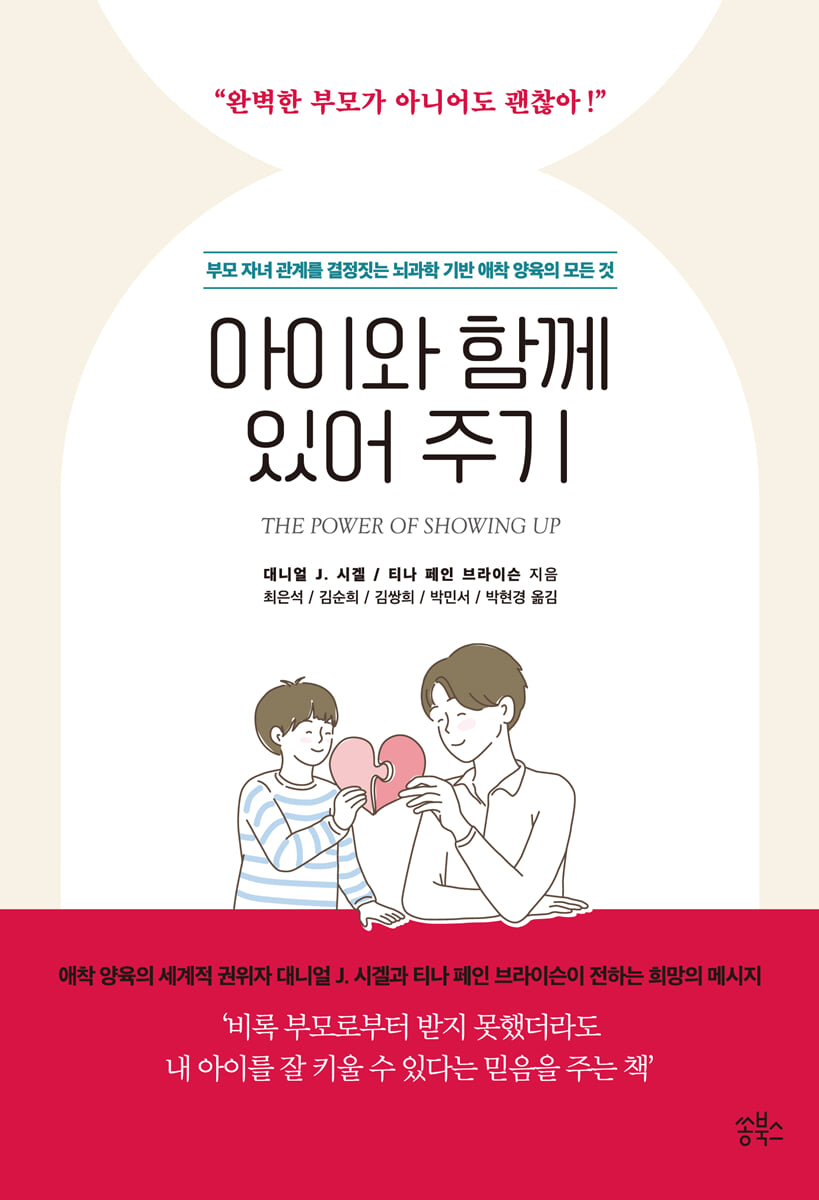
Stay with your child
 |
Description
Book Introduction
A powerful message from the latest child development research.
Rather than thinking about 'what skills and abilities should I develop in my child?', think about 'how should I approach my relationship with my child?'
Many parents raising children worry and feel pressured to do better and be better as parents.
Sometimes I regret and reflect on the mistakes I made with my children and the opportunities I missed with them.
If at this time you discover that you are exhibiting avoidant, ambivalent, or disorganized attachment traits, you may feel frustrated and blame yourself for the fate of repeating the same pattern.
It is true that the way my parents raised me has had a significant impact on how I see the world and how I raise my children.
However, a book has been published that is becoming a hot topic, saying that even if you did not receive proper parenting from your parents, you can avoid passing it on to your children.
Daniel J., a world-renowned authority on attachment research,
Siegel (Daniel J.
The Power of Showing Up, co-authored by Dr. Siegel, MD, and Tina Payne Bryson, Ph.D. (Published by Songbooks, 2nd edition, 360 pages, price: 19,000 won)
Based on the latest brain and neuroscience research, the authors help parents understand themselves and reflect on their past attachment history.
By learning how to build secure relationships with ourselves, anyone can develop "acquired secure attachment" and develop the strength and wisdom to raise their children into secure adults.
From the perspective of 'adult re-parenting', it means that you can raise yourself again and give to yourself and your child what you did not receive from your parents.
The fact that we can move beyond the wounds of the past and gain the strength and wisdom to properly raise ourselves and our children delivers a message of hope to many parents.
Rather than thinking about 'what skills and abilities should I develop in my child?', think about 'how should I approach my relationship with my child?'
Many parents raising children worry and feel pressured to do better and be better as parents.
Sometimes I regret and reflect on the mistakes I made with my children and the opportunities I missed with them.
If at this time you discover that you are exhibiting avoidant, ambivalent, or disorganized attachment traits, you may feel frustrated and blame yourself for the fate of repeating the same pattern.
It is true that the way my parents raised me has had a significant impact on how I see the world and how I raise my children.
However, a book has been published that is becoming a hot topic, saying that even if you did not receive proper parenting from your parents, you can avoid passing it on to your children.
Daniel J., a world-renowned authority on attachment research,
Siegel (Daniel J.
The Power of Showing Up, co-authored by Dr. Siegel, MD, and Tina Payne Bryson, Ph.D. (Published by Songbooks, 2nd edition, 360 pages, price: 19,000 won)
Based on the latest brain and neuroscience research, the authors help parents understand themselves and reflect on their past attachment history.
By learning how to build secure relationships with ourselves, anyone can develop "acquired secure attachment" and develop the strength and wisdom to raise their children into secure adults.
From the perspective of 'adult re-parenting', it means that you can raise yourself again and give to yourself and your child what you did not receive from your parents.
The fact that we can move beyond the wounds of the past and gain the strength and wisdom to properly raise ourselves and our children delivers a message of hope to many parents.
- You can preview some of the book's contents.
Preview
index
Entering.
For all the 'imperfect parents' caring for their children 006
Chapter 1.
What does it mean to be with a child right now?
The Secret to Happier, More Accomplished Children 019/ When Parents See Their Children's Hearts 024/ Being There When Our Children Need Us 029/ Nothing Is More Important Than This 032/ Even If You Didn't Receive It From Your Parents 039
Chapter 2.
Why Some Parents Can't Do It - The A to Z of Attachment Parenting
How to Be the Parent You Want to Be 051/ A Child's Heart Grows Through Bonding 055/ Attachment Parenting and the 'Strange Situation' Experiment 060/ Self-Directed, Autonomous Adult 068/ Avoidant and Dismissive Attachment 072/ Ambivalent and Preoccupied Attachment 085/ Disorganized Attachment That Makes Parents a Fear 093/ Understanding Our Life Stories 108/ It's Not Your Fault 116
Chapter 3.
Safety - Help your child feel safe
If your spouse has a problem with his or her parenting style 129/ Children reaching inner well-being 135/ Protecting from abuse or neglect 140/ Fear of parents becoming a danger 149/ Other parental behaviors 154/ All children are different 158/ Safety strategies 1.
Do No Harm 165/ Safety Strategy 2.
Apologize if necessary, and laugh together! 169/ Safety Strategy 3.
You are that safe harbor 174
Chapter 4.
Attention - To make your child feel cared for
It's Not About Being a Perfect Parent 185/ The Foundations of a Healthy Relationship 191/ What Happens Then? 198/ Your Child Is Watching You 205/ If You Give 'Shame' Instead of 'Attention' 210/ Attention Strategy 1.
Distinguish between what you can't do and what you won't do 217/ Attention Strategy 2.
Create time and space to understand your child 227
Chapter 5.
Calm - To understand and regulate your emotions
“It’ll be okay, I’ll always be there for you.” 239/ If you want to raise a child who can control his or her emotions 247/ Calming and the Green Zone 253/ Detect, understand, and respond 261/ About the misconception of permissive parenting 266/ Calming Strategy 1.
Developing Self-Soothing Tools 272/ Calming Strategies 2.
Provide PEACE 283
Chapter 6.
Stability - Collect all three S's
Parents and Children, Both Lose 301/ The Fourth and Ultimate S, Stability 306/ Stability Base: Safe Haven and Launch Pad 315/ “Are You Asking Me to Accept My Children’s Whining?” 320/ Positive Stress, Tolerable Stress, and Toxic Stress 326/ Stability Strategy 1.
Invest in Relationship Trust Deposits 331/ Stability Strategy 2.
Teach MindSight Techniques 340
Coming out.
The Past is Not Fate 351
Translator's note.
The Gift of Being the Parent You Want to Be 356
For all the 'imperfect parents' caring for their children 006
Chapter 1.
What does it mean to be with a child right now?
The Secret to Happier, More Accomplished Children 019/ When Parents See Their Children's Hearts 024/ Being There When Our Children Need Us 029/ Nothing Is More Important Than This 032/ Even If You Didn't Receive It From Your Parents 039
Chapter 2.
Why Some Parents Can't Do It - The A to Z of Attachment Parenting
How to Be the Parent You Want to Be 051/ A Child's Heart Grows Through Bonding 055/ Attachment Parenting and the 'Strange Situation' Experiment 060/ Self-Directed, Autonomous Adult 068/ Avoidant and Dismissive Attachment 072/ Ambivalent and Preoccupied Attachment 085/ Disorganized Attachment That Makes Parents a Fear 093/ Understanding Our Life Stories 108/ It's Not Your Fault 116
Chapter 3.
Safety - Help your child feel safe
If your spouse has a problem with his or her parenting style 129/ Children reaching inner well-being 135/ Protecting from abuse or neglect 140/ Fear of parents becoming a danger 149/ Other parental behaviors 154/ All children are different 158/ Safety strategies 1.
Do No Harm 165/ Safety Strategy 2.
Apologize if necessary, and laugh together! 169/ Safety Strategy 3.
You are that safe harbor 174
Chapter 4.
Attention - To make your child feel cared for
It's Not About Being a Perfect Parent 185/ The Foundations of a Healthy Relationship 191/ What Happens Then? 198/ Your Child Is Watching You 205/ If You Give 'Shame' Instead of 'Attention' 210/ Attention Strategy 1.
Distinguish between what you can't do and what you won't do 217/ Attention Strategy 2.
Create time and space to understand your child 227
Chapter 5.
Calm - To understand and regulate your emotions
“It’ll be okay, I’ll always be there for you.” 239/ If you want to raise a child who can control his or her emotions 247/ Calming and the Green Zone 253/ Detect, understand, and respond 261/ About the misconception of permissive parenting 266/ Calming Strategy 1.
Developing Self-Soothing Tools 272/ Calming Strategies 2.
Provide PEACE 283
Chapter 6.
Stability - Collect all three S's
Parents and Children, Both Lose 301/ The Fourth and Ultimate S, Stability 306/ Stability Base: Safe Haven and Launch Pad 315/ “Are You Asking Me to Accept My Children’s Whining?” 320/ Positive Stress, Tolerable Stress, and Toxic Stress 326/ Stability Strategy 1.
Invest in Relationship Trust Deposits 331/ Stability Strategy 2.
Teach MindSight Techniques 340
Coming out.
The Past is Not Fate 351
Translator's note.
The Gift of Being the Parent You Want to Be 356
Detailed image

Into the book
Note that parents are not saying that they themselves must have been well-raised in order to provide a secure attachment to their child.
Science delivers a powerful message about this: not despair, but hope.
The point is that even if we didn't receive a secure attachment from our caregivers, if we reflect on and understand our own attachment history, we can provide it to our children.
This is very exciting news that research has revealed!
--- p.40
One of the most reliable predictors of whether caregivers provide secure attachment is whether they practice what we call "parental presence."
Parents who are 'present' reflect on and understand their past and attachment history.
Even if the past was difficult, understanding that life will allow you to have an open and accepting perception of existence that will allow you to be with your child with certainty.
--- p.52
Even if you didn't have the best parenting (due to absent or inadequate parents, abuse, or other reasons), your attachment strategy isn't over.
The past is not destiny.
Just because your parents weren't there for you, were there only occasionally, or acted in a scary or harmful way, doesn't mean you can't be there for your child in a healthy and constructive way.
--- p.54
We are all born with an instinct for connection.
When this connection is firmly established, the brain can develop optimally.
When a child has a secure attachment to their primary caregiver, these predictable and therefore reliable experiences reduce stress and develop self-confidence and ultimately independence.
Children thrive as they learn to manage their emotions and behaviors.
--- p.57
A baby who is "securely attached," meaning that his or her relationship with his or her parents is secure, will clearly look for his or her mother when she leaves the room, actively approach her when she returns, and then quickly calm down and return to play.
--- p.61
As you might guess, observational studies of avoidantly attached babies show that parents appear to be indifferent or insensitive to their babies' signals and needs.
Parents meet their babies' physical needs and provide toys and activities, but ignore their emotional needs.
As a result, the baby learns techniques to minimize his outwardly expressed need for attachment, even when he is experiencing internal physiological pain.
--- p.63
The second group of babies with insecure attachment falls into what is called ambivalent attachment.
Parents here show neither consistent nurturing nor attunement to their babies, but they are also inconsistently indifferent and insensitive.
Instead, what characterizes this baby's early life is the contradictory behavior of the parents.
This baby's parents are sometimes attuned, sensitive, and responsive, and sometimes not.
As a result, this baby has great anxiety and ambivalence about trusting parents in attachment relationships.
--- p.64
The most painful pattern of insecure attachment is disorganized attachment.
The baby has difficulty deciding how to react when the mother returns to the room, resulting in disorganized, disoriented, or confused behavior.
The baby may appear frightened, then approach the mother, then back away, then fall helplessly to the floor, crying, and then freeze.
The baby may cling to the mother and try to avoid her at the same time.
--- p.65
Researchers were intrigued to discover that despite all the influences and experiences in a baby's life, most babies remain in the same attachment pattern (secure, insecure-avoidant, insecure-ambivalent, or insecure-disorganized) as they grow into adults.
--- p.66
Babies with stable relationship patterns try to meet their connections sensitively and repair them when they inevitably break down.
His needs are accepted, understood, and responded to.
His parents are there for him.
--- p.69
Isn't it remarkable that thanks to a secure attachment history, we can navigate life much more smoothly, overcome many challenges and disappointments, and grow into adults who embrace and enjoy beautiful moments? Adults who grow up this way value interpersonal relationships, communicate effectively, empathize with others, and are often independent and self-sufficient.
They are resilient in the face of stress, able to regulate their emotions and bodies, and demonstrate insight into their own minds and behaviors.
As a result, they are willing to be there for their baby when he or she needs it.
--- p.70
Babies with avoidant attachment typically grow into adults who are disconnected from others and their own inner world, developing a rejecting attachment pattern that avoids emotions.
It's just the way we learned to survive.
This strategy may partially minimize attachment by causing neurological regression to the left hemisphere, which handles logic and language.
--- p.85
Babies with ambivalent attachments grow into adults with a lot of confusion, anxiety, and instability.
If avoidant attachment is like living in an emotionally dry desert, then those with ambivalent attachment typically respond to life as an emotional flood.
--- p.85~86
Babies with ambivalent attachment patterns develop a pattern in adults called "preoccupied attachment," which is characterized by a chaotic and highly emotionally intense way of connecting in close relationships.
Adults with a dismissive attachment pattern typically give up the importance of the past in addition to their own and other people's feelings, whereas adults with a preoccupied attachment pattern do the opposite.
They become fixated or preoccupied with the past and obsessed with relationships and emotions.
His relational life is therefore characterized by intense emotional turmoil and severe anxiety.
--- p.89
Adults who grew up with fearful parents and now have disorganized attachment patterns have no organized strategies for coping with the world.
They are in a state where they cannot respond rationally and effectively.
--- p.94
Parents who display signs of disorganized attachment often oscillate between confusion and rigidity and have serious problems when it comes to regulating others, their child's behavior, and their emotions.
For these adults, when a threat or loss occurs, everything goes back to a blank slate.
His reactions can be completely confusing and sometimes dangerous.
They may suddenly become enraged or threatening and may attack you verbally or physically.
They may get lost in fear.
--- p.97
When parents' confusing and unresolved behaviors are carried out in a frightening manner, the baby is unable to come up with any adaptive responses that make sense.
Because parents' behavior is scary and lacks structure or order, there is no logical strategy or way to deal with it.
If there is no solution, you will just be scared.
The result is a continuous dissociative experience of the mind in everyday consciousness.
This makes it difficult to regulate emotions, interact with others, deal with frustration, and sometimes even simply navigate life in a consistent manner.
For this reason, the attachment pattern described above is called 'disorganized attachment'.
--- p.100
Parents who are emotionally sensitive and responsive generally raise resilient and emotionally healthy children.
And those babies usually grow up to be happy adults who are well-adjusted and able to strengthen relationships that support each other.
--- p.108
Everyone wants to help their baby grow up sensitive, well-coordinated, and securely attached.
What should we do if we discover ourselves exhibiting traits of avoidant, ambivalent, or disorganized attachment? Are we destined to repeat the same patterns? The encouraging message from attachment science is that "absolutely not."
People often believe that early attachment experiences are important and unchangeable.
It's very important, but it can definitely be changed.
This is where 'acquired secure attachment' comes into play.
You can achieve secure attachment by learning how to form stable relationships.
Yes, that's right.
The way your parents raised you has a significant impact on how you see the world and how you raise your own children.
But what's more important is how you 'understood your childhood experiences.'
--- p.108~109
How your mind forms memories that describe who you are now.
We can't change the past, but we can change how we understand it.
If you can see your own life story in the eyes of your parents and understand why they behaved the way they did, you can gain insight into how your childhood experiences shaped your development and continue to influence your current relationships, including how you raise your children.
This is how you achieve secure attachment.
--- p.110
When you cultivate the courage to look back on your past and the ability to reflect, and tell your story in a clear and consistent way that neither runs from nor dwells on it, you can begin to heal the wounds of your past.
By doing so, we can rewire the brain, allowing our babies to better form secure attachments with us.
That strong relationship will be a source of resilience throughout their lives.
--- p.115
Babies who experience entirely new ways of connecting with their caregivers may experience changes in their attachment patterns.
The same goes for adults.
For people with insecure attachment, spending their lives with a securely attached partner as adults can help them move toward a freer and more connected pattern of relating to others.
We can always change! Secure attachment is something we can acquire and learn.
--- p.118
“My father really disappointed me as a father, but I can understand why.
My father never received emotional skills or recourse from his parents.
So it's natural that I didn't know how to be with you in a deeper and more meaningful way.
It was painful for me and I felt very lonely.
And I want to make sure that my child has a close, connected relationship with me that makes him or her feel comfortable coming to me.
“Even if a child’s mind is a little different from my mind when I was a child, I want to know that mind.”
--- p.121
No matter what your upbringing was like or what happened in your past, you can be the loving, sensitive parent you want to be.
You can be a parent who is there for your child and raises them to be happy, successful, and fully themselves.
--- p.124
Depending on how well or poorly you are at 'being with' your child, various results can appear.
When children know we are there for them, they enjoy a sense of security and trust that reduces stress and creates the conditions for inner stability.
This is precisely how providing safety takes you directly towards a sense of well-being.
--- p.139
The same goes for children.
In some situations, you can overcome major challenges, but in other cases, you can barely handle even minor obstacles.
When situations demand more than a child's capabilities, the child may become detached, misadapt, or act in the wrong way.
And when a child's capabilities exceed the demands of the situation, he or she will do better.
So, distinguish between safety and rescue.
Find safe ways to allow your child to grapple with challenges and even experience failure.
--- p.164
After you make a mistake, remind yourself what is most important (your relationship with your child) and work together to fix it.
Apologize if necessary.
Laugh together.
The sooner your child knows that things are back to normal between you two, the sooner your relationship can grow closer and deeper again.
And your child will feel safer sooner as he or she learns that strong emotions won't destroy the relationship in the long run.
--- p.173
You are your child's safe harbor.
Sometimes parents cause their children to feel fearful and confused through their own suffering, but you can teach your child to navigate these storms through open communication, emotional intimacy, and reflective dialogue.
When a ship is battered by a storm at sea, it seeks a safe harbor to return to for repairs, restocking with food and water, and preparing for its next voyage.
--- p.175
When your child achieves something, is successful, or simply feels happy, it's not just about celebrating, but also about connecting with them in a follow-through way using the "triangle of connection" and being there for them when they're hurting.
That is, it is ‘being together’ as a spiritual being.
--- p.186
One of the worst ways is to ignore a child's feelings.
It is when a child falls and cries, “Don’t cry.
It means saying, “Aren’t you hurt?”
--- p.203
When we dismiss, trivialize, criticize, or shame our children's feelings, we prevent them from showing us who they really are.
--- p.212
It means being willing to look beyond your initial assumptions and interpretations about what's happening to your child.
It means adopting an attitude of curiosity rather than immediate judgment.
This curiosity is the key.
Curiosity is one of the most important tools a parent can utilize.
--- p.218
Remember, truly caring about your child means being aware of their situation and what's going on in their mind.
Silence is okay too.
Just being there, breathing together, can bring intimacy and connection.
There is no need to feel pressured to force a conversation.
--- p.231
You can give your child consistent messages of support, such as:
'If you find yourself in a situation where you feel overwhelmed and out of control, I will help you.
And I will calm you down with you.
You may not get what you want right now, but that's okay.
'I'll be here for you.' Calming comes from connection.
And connection comes from our presence.
That's how we stay together to calm down.
--- p.246
The old adage that children need limits is absolutely true.
A world without rules and limits is a world of frightening chaos.
Children need to know what is expected of them.
He must know what he can and cannot do.
This helps him feel the world is predictable and safe.
--- p.267
It is the right thing to do in terms of being there for the child and providing love and comfort.
What you can offer your child is your PEACE.
That is, presence, engagement, affection, calm, and empathy.
--- p.284
Be there for your child when he or she is hurting.
Stay with me.
Be present and be.
We've talked about this concept throughout the book.
There is never a time when our help is more important than when a child is suffering in any way and needs our help.
Presence refers to a state of openness to awareness, a receptive way of being that invites connection.
We do not judge children with this mindset, but instead see them as they truly are as clearly as we can.
--- p.285
Being with your child means being there for him.
And maybe especially, even when he's at his worst.
That's when your child needs you the most.
So take time to reflect on yourself as you develop a more coherent story about how you were raised.
You can learn new, helpful, and internal strategies to calm your inner pain state.
Rewrite a coherent story about who you are and how your relationships have shaped you.
In the process, you can gain and learn a secure attachment to your life.
Moreover, by learning new and useful inner and interpersonal calming techniques, you will gain emotional calm as well as clarity of understanding within yourself and in your connections with others.
As a result, you will be able to give your child PEACE.
Your child will grow into an adolescent and adult who knows what it feels like to be nurtured and cared for.
And he will learn how to provide that kind of care for himself and those he loves.
--- p.296~297
It provided three S's.
The child felt safe, cared for, and ultimately calmed down.
By providing these three, the father provided his son with the fourth and ultimate S: stability.
--- p.306
Children who trust that their caregivers will be there for them time and time again develop the independence and resilience to have the self-confidence to step outside their comfort zone.
A child will explore more courageously and venture further than other children who do not receive that kind of attention and care.
--- p.321
The past is not destiny.
What research powerfully reveals is that if we take the time to understand how our past shaped our development, regardless of what happened to us, we can free ourselves to become the people and parents we want to be.
This science of attachment is incredibly hopeful.
We have proven time and time again that we can provide secure attachments to our children, no matter how we were raised.
Science delivers a powerful message about this: not despair, but hope.
The point is that even if we didn't receive a secure attachment from our caregivers, if we reflect on and understand our own attachment history, we can provide it to our children.
This is very exciting news that research has revealed!
--- p.40
One of the most reliable predictors of whether caregivers provide secure attachment is whether they practice what we call "parental presence."
Parents who are 'present' reflect on and understand their past and attachment history.
Even if the past was difficult, understanding that life will allow you to have an open and accepting perception of existence that will allow you to be with your child with certainty.
--- p.52
Even if you didn't have the best parenting (due to absent or inadequate parents, abuse, or other reasons), your attachment strategy isn't over.
The past is not destiny.
Just because your parents weren't there for you, were there only occasionally, or acted in a scary or harmful way, doesn't mean you can't be there for your child in a healthy and constructive way.
--- p.54
We are all born with an instinct for connection.
When this connection is firmly established, the brain can develop optimally.
When a child has a secure attachment to their primary caregiver, these predictable and therefore reliable experiences reduce stress and develop self-confidence and ultimately independence.
Children thrive as they learn to manage their emotions and behaviors.
--- p.57
A baby who is "securely attached," meaning that his or her relationship with his or her parents is secure, will clearly look for his or her mother when she leaves the room, actively approach her when she returns, and then quickly calm down and return to play.
--- p.61
As you might guess, observational studies of avoidantly attached babies show that parents appear to be indifferent or insensitive to their babies' signals and needs.
Parents meet their babies' physical needs and provide toys and activities, but ignore their emotional needs.
As a result, the baby learns techniques to minimize his outwardly expressed need for attachment, even when he is experiencing internal physiological pain.
--- p.63
The second group of babies with insecure attachment falls into what is called ambivalent attachment.
Parents here show neither consistent nurturing nor attunement to their babies, but they are also inconsistently indifferent and insensitive.
Instead, what characterizes this baby's early life is the contradictory behavior of the parents.
This baby's parents are sometimes attuned, sensitive, and responsive, and sometimes not.
As a result, this baby has great anxiety and ambivalence about trusting parents in attachment relationships.
--- p.64
The most painful pattern of insecure attachment is disorganized attachment.
The baby has difficulty deciding how to react when the mother returns to the room, resulting in disorganized, disoriented, or confused behavior.
The baby may appear frightened, then approach the mother, then back away, then fall helplessly to the floor, crying, and then freeze.
The baby may cling to the mother and try to avoid her at the same time.
--- p.65
Researchers were intrigued to discover that despite all the influences and experiences in a baby's life, most babies remain in the same attachment pattern (secure, insecure-avoidant, insecure-ambivalent, or insecure-disorganized) as they grow into adults.
--- p.66
Babies with stable relationship patterns try to meet their connections sensitively and repair them when they inevitably break down.
His needs are accepted, understood, and responded to.
His parents are there for him.
--- p.69
Isn't it remarkable that thanks to a secure attachment history, we can navigate life much more smoothly, overcome many challenges and disappointments, and grow into adults who embrace and enjoy beautiful moments? Adults who grow up this way value interpersonal relationships, communicate effectively, empathize with others, and are often independent and self-sufficient.
They are resilient in the face of stress, able to regulate their emotions and bodies, and demonstrate insight into their own minds and behaviors.
As a result, they are willing to be there for their baby when he or she needs it.
--- p.70
Babies with avoidant attachment typically grow into adults who are disconnected from others and their own inner world, developing a rejecting attachment pattern that avoids emotions.
It's just the way we learned to survive.
This strategy may partially minimize attachment by causing neurological regression to the left hemisphere, which handles logic and language.
--- p.85
Babies with ambivalent attachments grow into adults with a lot of confusion, anxiety, and instability.
If avoidant attachment is like living in an emotionally dry desert, then those with ambivalent attachment typically respond to life as an emotional flood.
--- p.85~86
Babies with ambivalent attachment patterns develop a pattern in adults called "preoccupied attachment," which is characterized by a chaotic and highly emotionally intense way of connecting in close relationships.
Adults with a dismissive attachment pattern typically give up the importance of the past in addition to their own and other people's feelings, whereas adults with a preoccupied attachment pattern do the opposite.
They become fixated or preoccupied with the past and obsessed with relationships and emotions.
His relational life is therefore characterized by intense emotional turmoil and severe anxiety.
--- p.89
Adults who grew up with fearful parents and now have disorganized attachment patterns have no organized strategies for coping with the world.
They are in a state where they cannot respond rationally and effectively.
--- p.94
Parents who display signs of disorganized attachment often oscillate between confusion and rigidity and have serious problems when it comes to regulating others, their child's behavior, and their emotions.
For these adults, when a threat or loss occurs, everything goes back to a blank slate.
His reactions can be completely confusing and sometimes dangerous.
They may suddenly become enraged or threatening and may attack you verbally or physically.
They may get lost in fear.
--- p.97
When parents' confusing and unresolved behaviors are carried out in a frightening manner, the baby is unable to come up with any adaptive responses that make sense.
Because parents' behavior is scary and lacks structure or order, there is no logical strategy or way to deal with it.
If there is no solution, you will just be scared.
The result is a continuous dissociative experience of the mind in everyday consciousness.
This makes it difficult to regulate emotions, interact with others, deal with frustration, and sometimes even simply navigate life in a consistent manner.
For this reason, the attachment pattern described above is called 'disorganized attachment'.
--- p.100
Parents who are emotionally sensitive and responsive generally raise resilient and emotionally healthy children.
And those babies usually grow up to be happy adults who are well-adjusted and able to strengthen relationships that support each other.
--- p.108
Everyone wants to help their baby grow up sensitive, well-coordinated, and securely attached.
What should we do if we discover ourselves exhibiting traits of avoidant, ambivalent, or disorganized attachment? Are we destined to repeat the same patterns? The encouraging message from attachment science is that "absolutely not."
People often believe that early attachment experiences are important and unchangeable.
It's very important, but it can definitely be changed.
This is where 'acquired secure attachment' comes into play.
You can achieve secure attachment by learning how to form stable relationships.
Yes, that's right.
The way your parents raised you has a significant impact on how you see the world and how you raise your own children.
But what's more important is how you 'understood your childhood experiences.'
--- p.108~109
How your mind forms memories that describe who you are now.
We can't change the past, but we can change how we understand it.
If you can see your own life story in the eyes of your parents and understand why they behaved the way they did, you can gain insight into how your childhood experiences shaped your development and continue to influence your current relationships, including how you raise your children.
This is how you achieve secure attachment.
--- p.110
When you cultivate the courage to look back on your past and the ability to reflect, and tell your story in a clear and consistent way that neither runs from nor dwells on it, you can begin to heal the wounds of your past.
By doing so, we can rewire the brain, allowing our babies to better form secure attachments with us.
That strong relationship will be a source of resilience throughout their lives.
--- p.115
Babies who experience entirely new ways of connecting with their caregivers may experience changes in their attachment patterns.
The same goes for adults.
For people with insecure attachment, spending their lives with a securely attached partner as adults can help them move toward a freer and more connected pattern of relating to others.
We can always change! Secure attachment is something we can acquire and learn.
--- p.118
“My father really disappointed me as a father, but I can understand why.
My father never received emotional skills or recourse from his parents.
So it's natural that I didn't know how to be with you in a deeper and more meaningful way.
It was painful for me and I felt very lonely.
And I want to make sure that my child has a close, connected relationship with me that makes him or her feel comfortable coming to me.
“Even if a child’s mind is a little different from my mind when I was a child, I want to know that mind.”
--- p.121
No matter what your upbringing was like or what happened in your past, you can be the loving, sensitive parent you want to be.
You can be a parent who is there for your child and raises them to be happy, successful, and fully themselves.
--- p.124
Depending on how well or poorly you are at 'being with' your child, various results can appear.
When children know we are there for them, they enjoy a sense of security and trust that reduces stress and creates the conditions for inner stability.
This is precisely how providing safety takes you directly towards a sense of well-being.
--- p.139
The same goes for children.
In some situations, you can overcome major challenges, but in other cases, you can barely handle even minor obstacles.
When situations demand more than a child's capabilities, the child may become detached, misadapt, or act in the wrong way.
And when a child's capabilities exceed the demands of the situation, he or she will do better.
So, distinguish between safety and rescue.
Find safe ways to allow your child to grapple with challenges and even experience failure.
--- p.164
After you make a mistake, remind yourself what is most important (your relationship with your child) and work together to fix it.
Apologize if necessary.
Laugh together.
The sooner your child knows that things are back to normal between you two, the sooner your relationship can grow closer and deeper again.
And your child will feel safer sooner as he or she learns that strong emotions won't destroy the relationship in the long run.
--- p.173
You are your child's safe harbor.
Sometimes parents cause their children to feel fearful and confused through their own suffering, but you can teach your child to navigate these storms through open communication, emotional intimacy, and reflective dialogue.
When a ship is battered by a storm at sea, it seeks a safe harbor to return to for repairs, restocking with food and water, and preparing for its next voyage.
--- p.175
When your child achieves something, is successful, or simply feels happy, it's not just about celebrating, but also about connecting with them in a follow-through way using the "triangle of connection" and being there for them when they're hurting.
That is, it is ‘being together’ as a spiritual being.
--- p.186
One of the worst ways is to ignore a child's feelings.
It is when a child falls and cries, “Don’t cry.
It means saying, “Aren’t you hurt?”
--- p.203
When we dismiss, trivialize, criticize, or shame our children's feelings, we prevent them from showing us who they really are.
--- p.212
It means being willing to look beyond your initial assumptions and interpretations about what's happening to your child.
It means adopting an attitude of curiosity rather than immediate judgment.
This curiosity is the key.
Curiosity is one of the most important tools a parent can utilize.
--- p.218
Remember, truly caring about your child means being aware of their situation and what's going on in their mind.
Silence is okay too.
Just being there, breathing together, can bring intimacy and connection.
There is no need to feel pressured to force a conversation.
--- p.231
You can give your child consistent messages of support, such as:
'If you find yourself in a situation where you feel overwhelmed and out of control, I will help you.
And I will calm you down with you.
You may not get what you want right now, but that's okay.
'I'll be here for you.' Calming comes from connection.
And connection comes from our presence.
That's how we stay together to calm down.
--- p.246
The old adage that children need limits is absolutely true.
A world without rules and limits is a world of frightening chaos.
Children need to know what is expected of them.
He must know what he can and cannot do.
This helps him feel the world is predictable and safe.
--- p.267
It is the right thing to do in terms of being there for the child and providing love and comfort.
What you can offer your child is your PEACE.
That is, presence, engagement, affection, calm, and empathy.
--- p.284
Be there for your child when he or she is hurting.
Stay with me.
Be present and be.
We've talked about this concept throughout the book.
There is never a time when our help is more important than when a child is suffering in any way and needs our help.
Presence refers to a state of openness to awareness, a receptive way of being that invites connection.
We do not judge children with this mindset, but instead see them as they truly are as clearly as we can.
--- p.285
Being with your child means being there for him.
And maybe especially, even when he's at his worst.
That's when your child needs you the most.
So take time to reflect on yourself as you develop a more coherent story about how you were raised.
You can learn new, helpful, and internal strategies to calm your inner pain state.
Rewrite a coherent story about who you are and how your relationships have shaped you.
In the process, you can gain and learn a secure attachment to your life.
Moreover, by learning new and useful inner and interpersonal calming techniques, you will gain emotional calm as well as clarity of understanding within yourself and in your connections with others.
As a result, you will be able to give your child PEACE.
Your child will grow into an adolescent and adult who knows what it feels like to be nurtured and cared for.
And he will learn how to provide that kind of care for himself and those he loves.
--- p.296~297
It provided three S's.
The child felt safe, cared for, and ultimately calmed down.
By providing these three, the father provided his son with the fourth and ultimate S: stability.
--- p.306
Children who trust that their caregivers will be there for them time and time again develop the independence and resilience to have the self-confidence to step outside their comfort zone.
A child will explore more courageously and venture further than other children who do not receive that kind of attention and care.
--- p.321
The past is not destiny.
What research powerfully reveals is that if we take the time to understand how our past shaped our development, regardless of what happened to us, we can free ourselves to become the people and parents we want to be.
This science of attachment is incredibly hopeful.
We have proven time and time again that we can provide secure attachments to our children, no matter how we were raised.
--- p.254
Publisher's Review
What is the most important thing a parent can do?
What's the most important thing parents can do to help their children feel comfortable and successful in this world? The focus of this question isn't on "what skills and abilities should we develop in our children?" but rather "how should we approach our relationship with them?"
The authors' answer to this question is simple.
But it's never easy.
The message is, 'Be with us.'
Being present means that parents focus their entire being on the child.
The moment you are with your child, you must be mentally and emotionally present for them.
There is no time other than 'this moment'.
As parents, we have a responsibility to learn how to empower ourselves and be present with our children to foster resilience and strength.
This does not mean that you have to be with your child all the time and in all the physical environment.
At the very least, it means that the child must believe that 'if I want, my parents can be there to help me whenever I want.'
Sometimes, even when parents make mistakes, they can apologize right away.
So, it is this power of ‘presence’ that allows children to have a cheerful and strong mind.
Many studies on actual parenting show that the most reliable variable for predicting what kind of person a child will become is whether there is even one person who is with the child and helps develop an attachment.
No one can raise a child without making mistakes.
No parent is perfect.
Being there for your child doesn't mean you have to be a perfect parent.
Just let your children know that they can rely on you whenever they need you.
Children feel secure when they trust that you, as their parent, will do everything in your power to keep them safe, that you will do your best to make them feel cared for, and that you will be there to calm them down when things don't go their way.
Our goal as parents is for our children to grow into adults who live rich, meaningful, and connected lives.
The real goal of this statement is to achieve secure attachment.
This is exactly what the child needs.
There is nothing more important to children than this.
Secure attachment increases children's lifelong satisfaction and happiness.
It also optimizes children's identity, quality relationships, academic and career success, and even how their brains develop.
The four S's of 'being together' for children's secure attachment are as follows.
First, safety.
Helping children avoid danger and feel protected.
Children feel safe when they feel protected physically, emotionally, and in their relationships.
The first thing a parent can do is keep their child safe.
Feeling safe is the first step toward secure attachment.
Second, Seen.
Letting your children know that you, as a parent, care and pay attention to them.
It is about focusing parents' attention on what is going on in their children's minds, that is, on everything that is going on behind their actions, including their inner feelings, thoughts, and memories.
Truly seeing a child means paying attention to both their positive and negative emotions.
Third, Soothe.
Let your children know that you will be there for them when they are sick or struggling with problems.
Don't just solve their problems, but be there for them so they can grow and overcome their challenges.
Fourth, Secure.
Based on the three elements above, you can help your children feel secure and at home when they go out into the world.
A child who feels safe can eventually find his or her own way even when lost in complex, dangerous, and seemingly uncontrollable situations.
What a child experiences in relationships literally shapes the physical structure of his brain.
These connections in the brain, one by one, affect the way the mind works.
That is, when parents are consistently 'present' with their children, they come to expect that 'the world is a place where understanding and meaningful interaction are possible,' even when it is full of problems and suffering.
Children will develop secure attachments to their caregivers when they feel safe, cared for, and comforted.
▶ Children with secure attachments…
· High self-esteem
· Happier relationships with parents
· Ability to regulate emotions
· Stronger leadership qualities
· Greater academic achievement
· Greater self-awareness
· Stress coping skills
· Trustworthy and friendly romantic relationships as an adult
· Socialize more actively with kindergarten friends
· Higher empathy
· Closer peer relationships during middle childhood (ages 6-12)
· Increase overall social capacity
· More active social participation during adolescence
· Greater confidence in life
There are several key reasons why secure attachment produces these positive outcomes.
First of all, when you are with your children, they feel safe and secure overall.
Because they have a sense of belonging to the world, they know it's okay even when things don't go their way.
Secure attachment plays a mediating role when children face frustration and challenges.
Secure attachment does not prevent children from experiencing negative situations and emotions.
Children will continue to experience the pain of life, not to mention disappointments, trials, and dissatisfaction.
What's the most important thing parents can do to help their children feel comfortable and successful in this world? The focus of this question isn't on "what skills and abilities should we develop in our children?" but rather "how should we approach our relationship with them?"
The authors' answer to this question is simple.
But it's never easy.
The message is, 'Be with us.'
Being present means that parents focus their entire being on the child.
The moment you are with your child, you must be mentally and emotionally present for them.
There is no time other than 'this moment'.
As parents, we have a responsibility to learn how to empower ourselves and be present with our children to foster resilience and strength.
This does not mean that you have to be with your child all the time and in all the physical environment.
At the very least, it means that the child must believe that 'if I want, my parents can be there to help me whenever I want.'
Sometimes, even when parents make mistakes, they can apologize right away.
So, it is this power of ‘presence’ that allows children to have a cheerful and strong mind.
Many studies on actual parenting show that the most reliable variable for predicting what kind of person a child will become is whether there is even one person who is with the child and helps develop an attachment.
No one can raise a child without making mistakes.
No parent is perfect.
Being there for your child doesn't mean you have to be a perfect parent.
Just let your children know that they can rely on you whenever they need you.
Children feel secure when they trust that you, as their parent, will do everything in your power to keep them safe, that you will do your best to make them feel cared for, and that you will be there to calm them down when things don't go their way.
Our goal as parents is for our children to grow into adults who live rich, meaningful, and connected lives.
The real goal of this statement is to achieve secure attachment.
This is exactly what the child needs.
There is nothing more important to children than this.
Secure attachment increases children's lifelong satisfaction and happiness.
It also optimizes children's identity, quality relationships, academic and career success, and even how their brains develop.
The four S's of 'being together' for children's secure attachment are as follows.
First, safety.
Helping children avoid danger and feel protected.
Children feel safe when they feel protected physically, emotionally, and in their relationships.
The first thing a parent can do is keep their child safe.
Feeling safe is the first step toward secure attachment.
Second, Seen.
Letting your children know that you, as a parent, care and pay attention to them.
It is about focusing parents' attention on what is going on in their children's minds, that is, on everything that is going on behind their actions, including their inner feelings, thoughts, and memories.
Truly seeing a child means paying attention to both their positive and negative emotions.
Third, Soothe.
Let your children know that you will be there for them when they are sick or struggling with problems.
Don't just solve their problems, but be there for them so they can grow and overcome their challenges.
Fourth, Secure.
Based on the three elements above, you can help your children feel secure and at home when they go out into the world.
A child who feels safe can eventually find his or her own way even when lost in complex, dangerous, and seemingly uncontrollable situations.
What a child experiences in relationships literally shapes the physical structure of his brain.
These connections in the brain, one by one, affect the way the mind works.
That is, when parents are consistently 'present' with their children, they come to expect that 'the world is a place where understanding and meaningful interaction are possible,' even when it is full of problems and suffering.
Children will develop secure attachments to their caregivers when they feel safe, cared for, and comforted.
▶ Children with secure attachments…
· High self-esteem
· Happier relationships with parents
· Ability to regulate emotions
· Stronger leadership qualities
· Greater academic achievement
· Greater self-awareness
· Stress coping skills
· Trustworthy and friendly romantic relationships as an adult
· Socialize more actively with kindergarten friends
· Higher empathy
· Closer peer relationships during middle childhood (ages 6-12)
· Increase overall social capacity
· More active social participation during adolescence
· Greater confidence in life
There are several key reasons why secure attachment produces these positive outcomes.
First of all, when you are with your children, they feel safe and secure overall.
Because they have a sense of belonging to the world, they know it's okay even when things don't go their way.
Secure attachment plays a mediating role when children face frustration and challenges.
Secure attachment does not prevent children from experiencing negative situations and emotions.
Children will continue to experience the pain of life, not to mention disappointments, trials, and dissatisfaction.
GOODS SPECIFICS
- Date of issue: July 22, 2024
- Page count, weight, size: 360 pages | 520g | 140*205*30mm
- ISBN13: 9791189183196
- ISBN10: 1189183196
You may also like
카테고리
korean


korean

![GQ KOREA Mark (Monthly): December [2025]](http://librairie.coreenne.fr/cdn/shop/files/8ef265dbbfbf186523ed75ba7319009d.jpg?v=1765340328&width=3840)


