

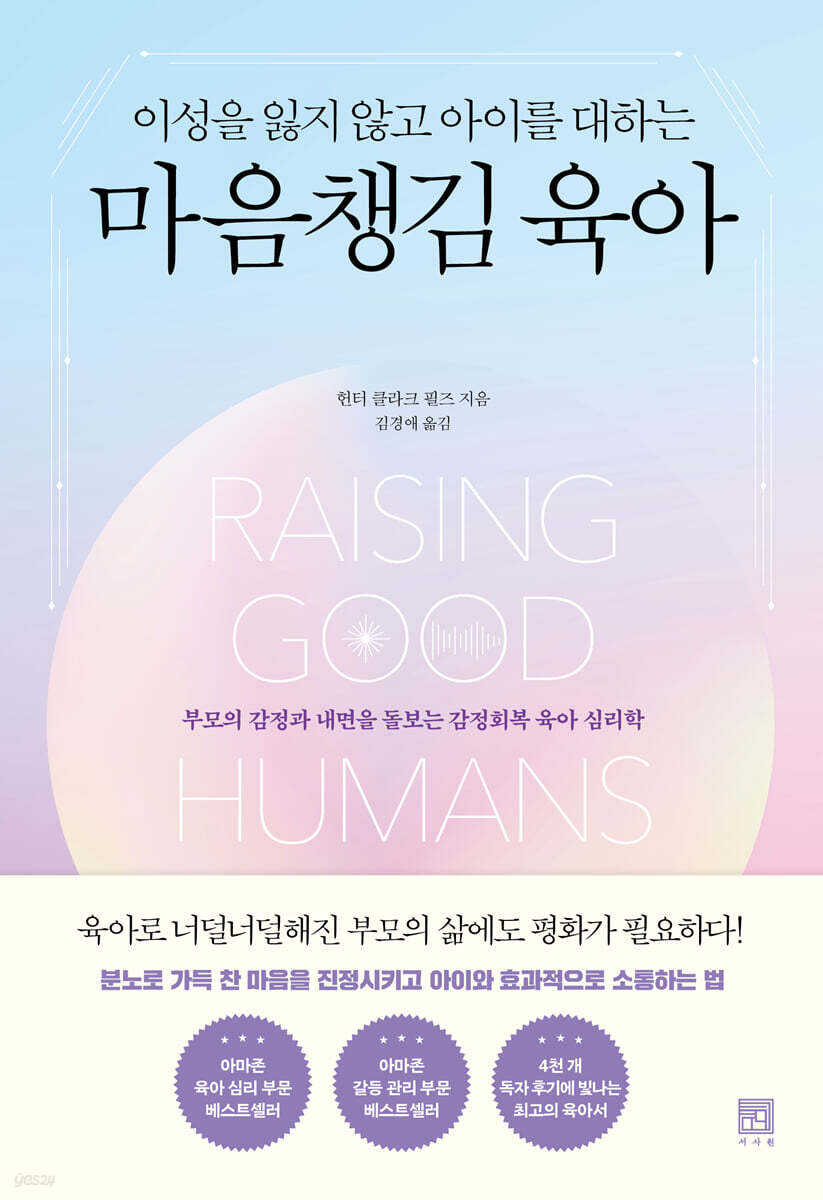
Mindful parenting that treats children without losing your senses
 |
Description
Book Introduction
Amazon's Bestseller in Conflict Management and Parenting Psychology
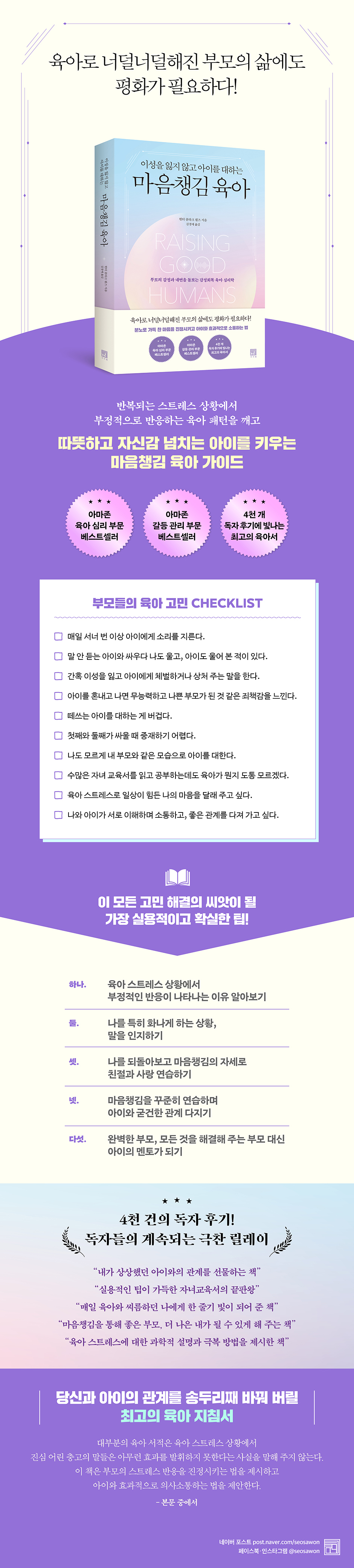
“The ultimate parenting book with 4,000 reader reviews!”
"How to Break the Repeated Negative Patterns of Parenting War and Communicate Effectively with Your Child"
This book is about the author's journey of mindful parenting, which began one day when she was venting her anger on her child and fell to the floor crying.
"Why didn't anyone tell me this was parenting? What the heck went wrong?" This book is filled with mindfulness, empathetic communication, and practical conflict resolution strategies, all learned through personal application by the author who was deeply frustrated.
We live in an age where you can obtain and study parenting information anywhere, as long as you put your mind to it.
Why can't parenting go smoothly, even though we research and study harder than anyone else? It's because our brains react negatively to the repetitive stressful situations we face as parents.
When this kind of negative reaction occurs, no amount of parenting advice can be applied.
The author argues that it is perfectly natural for us to feel angry and unable to make rational decisions in stressful situations that arise during parenting.
Because we cannot choose rational/irrational reactions on our own.
However, it is possible to reduce that 'reactivity', he says.
Through consistent mindfulness, we can break the pattern of negative reactions, and this must come first before we can communicate effectively and build a good relationship with our children.
This book explains why and how parents need to be mindful, and introduces specific ways to communicate well with their children and build good relationships with them through a mindful attitude.
As you turn the pages of the book, you will find yourself looking back at yourself, not your child.
And I will become aware of the inner issues that make me sensitive and will be able to calmly organize my busy and distracting daily life.
Empathizing with the child's thoughts and feelings comes next.
The moment I truly understand my own heart and begin to show myself warm kindness and love, my relationship with my child also improves.
This is the ultimate parenting book that will encourage parents with practical and practical tips, warmly comfort the hearts of parents who are struggling when things don't go their way, and lead to a happy relationship with their children.
“The ultimate parenting book with 4,000 reader reviews!”
"How to Break the Repeated Negative Patterns of Parenting War and Communicate Effectively with Your Child"
This book is about the author's journey of mindful parenting, which began one day when she was venting her anger on her child and fell to the floor crying.
"Why didn't anyone tell me this was parenting? What the heck went wrong?" This book is filled with mindfulness, empathetic communication, and practical conflict resolution strategies, all learned through personal application by the author who was deeply frustrated.
We live in an age where you can obtain and study parenting information anywhere, as long as you put your mind to it.
Why can't parenting go smoothly, even though we research and study harder than anyone else? It's because our brains react negatively to the repetitive stressful situations we face as parents.
When this kind of negative reaction occurs, no amount of parenting advice can be applied.
The author argues that it is perfectly natural for us to feel angry and unable to make rational decisions in stressful situations that arise during parenting.
Because we cannot choose rational/irrational reactions on our own.
However, it is possible to reduce that 'reactivity', he says.
Through consistent mindfulness, we can break the pattern of negative reactions, and this must come first before we can communicate effectively and build a good relationship with our children.
This book explains why and how parents need to be mindful, and introduces specific ways to communicate well with their children and build good relationships with them through a mindful attitude.
As you turn the pages of the book, you will find yourself looking back at yourself, not your child.
And I will become aware of the inner issues that make me sensitive and will be able to calmly organize my busy and distracting daily life.
Empathizing with the child's thoughts and feelings comes next.
The moment I truly understand my own heart and begin to show myself warm kindness and love, my relationship with my child also improves.
This is the ultimate parenting book that will encourage parents with practical and practical tips, warmly comfort the hearts of parents who are struggling when things don't go their way, and lead to a happy relationship with their children.
- You can preview some of the book's contents.
Preview
index
introduction
Entering
PART 1 Breaking the Chain of Reactivity
CHAPTER 1: KEEPING YOUR COOL
1.
automatic response
2.
Mindfulness: The Superpower Parents Need
3.
Reduce automatic reactivity and focus on the present
4.
The Basics of Low-Reactivity Parenting
CHAPTER 2 Eliminating Reactive Irritants
1.
Children bring up their parents' problems
2.
Taming the things that trigger us
3.
How can I yell less?
4.
Addressing what triggers us and focusing more on the present
CHAPTER 3: Practicing Empathy Starting with Me
1.
Our inner voice is important
2.
The healing method called 'self-compassion'
3.
Model kindness and empathy
4.
Don't try too hard
5.
Kindness within me
CHAPTER 4 Empathy: Drawing Warm Relationships Between Children
1.
Habitual response to Kim Jong
2.
Moderate: Thoughtful Acceptance
3.
Helping children overcome difficult emotions
4.
Caring for Difficult Emotions
PART 2: Raising a Gentle and Confident Child
CHAPTER 5 Hearing Help and Healing
1.
Approaching problems with a mindful attitude
2.
The healing power of listening
3.
Things you shouldn't say
4.
How to help
5.
Listening strengthens relationships
CHAPTER 6 Speaking the Right Thing
1.
When there is a problem with the parents
2.
Lovely and effective expression
CHAPTER 7 Solving Problems Carefully
1.
Traditional conflict resolution methods
2.
Conflict resolution through balancing needs
3.
The power of influence
CHAPTER 8: Creating a Peaceful Home
1.
Consciously strengthening connections
2.
Effective Parenting Habits
3.
What You Need to Simplify for a Peaceful Home
4.
Moving to a Thoughtful Life
Acknowledgements
References
Entering
PART 1 Breaking the Chain of Reactivity
CHAPTER 1: KEEPING YOUR COOL
1.
automatic response
2.
Mindfulness: The Superpower Parents Need
3.
Reduce automatic reactivity and focus on the present
4.
The Basics of Low-Reactivity Parenting
CHAPTER 2 Eliminating Reactive Irritants
1.
Children bring up their parents' problems
2.
Taming the things that trigger us
3.
How can I yell less?
4.
Addressing what triggers us and focusing more on the present
CHAPTER 3: Practicing Empathy Starting with Me
1.
Our inner voice is important
2.
The healing method called 'self-compassion'
3.
Model kindness and empathy
4.
Don't try too hard
5.
Kindness within me
CHAPTER 4 Empathy: Drawing Warm Relationships Between Children
1.
Habitual response to Kim Jong
2.
Moderate: Thoughtful Acceptance
3.
Helping children overcome difficult emotions
4.
Caring for Difficult Emotions
PART 2: Raising a Gentle and Confident Child
CHAPTER 5 Hearing Help and Healing
1.
Approaching problems with a mindful attitude
2.
The healing power of listening
3.
Things you shouldn't say
4.
How to help
5.
Listening strengthens relationships
CHAPTER 6 Speaking the Right Thing
1.
When there is a problem with the parents
2.
Lovely and effective expression
CHAPTER 7 Solving Problems Carefully
1.
Traditional conflict resolution methods
2.
Conflict resolution through balancing needs
3.
The power of influence
CHAPTER 8: Creating a Peaceful Home
1.
Consciously strengthening connections
2.
Effective Parenting Habits
3.
What You Need to Simplify for a Peaceful Home
4.
Moving to a Thoughtful Life
Acknowledgements
References
Detailed image
Into the book
Many parents blame their children for the difficulties, anxieties, and frustrations that arise during the parenting process.
They think that if they 'correct' their child, their life will be better.
But instead of placing the blame on the child, parents should view parenting stress and challenges as something to be taught, not as problems to be eliminated.
---p.24
This is why most parenting advice doesn't work.
Parenting experts often don't consider it important to teach children how to manage their stress response.
So when things get tough and we're stressed, it can be difficult to even access our newly acquired parenting skills.
---p.42
If we leave our inner wounds and causes unattended, we will continue to react according to our long-standing habits and pass on our own wounds to our children.
By recognizing our inner wounds, we can resolve them ourselves rather than passing them on to the next generation.
Let us use this opportunity to look into our inner wounds as an opportunity to heal not only our own wounds but also those of future generations.
---p.84
Do you ever think that taking care of yourself is selfish? Many of us have probably been taught or internalized that idea at some point in our lives.
You may have been taught that to be a good person you must be 'altruistic' and put others first, even if it means sacrificing your own happiness.
But being kind to yourself is the foundation for building good relationships with others.
It's not a selfish attitude, it's a wise attitude.
---p.135
We may agree that we don't want to teach our children the suppression we've learned and grown up with, but do we really think it's okay for them to feel anger or sadness? Because we often feel uncomfortable with our children's intense emotions, we instinctively want to immediately "fix" them, distracting them with toys or videos.
Tell your child, “Don’t cry,” and “It’s okay.”
However, if parents practice accepting and embracing their children's strong emotions instead of trying to correct them, their children's behavior will change.
Now, the task becomes for the parents to deal with the discomfort they feel.
Because there is nothing in the child that needs to be changed or corrected.
---p.178
When parents listen to their child's problems with compassion, it doesn't mean they condone the child's choices.
Rather, it is an action that shows that the parent simply accepts the child and the child's feelings (which may not include behavior).
---p.204
Setting healthy boundaries means regulating (rather than suppressing) your child's wild instincts and advising them on how to (ultimately) grow into good adults.
In an effort to avoid traditional threats and punishments, going too far in other directions can lead to failing to set sufficient and strong limits.
When a child is on the borderline, parents should provide gentle and consistent support to help the child not become someone who treats the needs of others carelessly.
They think that if they 'correct' their child, their life will be better.
But instead of placing the blame on the child, parents should view parenting stress and challenges as something to be taught, not as problems to be eliminated.
---p.24
This is why most parenting advice doesn't work.
Parenting experts often don't consider it important to teach children how to manage their stress response.
So when things get tough and we're stressed, it can be difficult to even access our newly acquired parenting skills.
---p.42
If we leave our inner wounds and causes unattended, we will continue to react according to our long-standing habits and pass on our own wounds to our children.
By recognizing our inner wounds, we can resolve them ourselves rather than passing them on to the next generation.
Let us use this opportunity to look into our inner wounds as an opportunity to heal not only our own wounds but also those of future generations.
---p.84
Do you ever think that taking care of yourself is selfish? Many of us have probably been taught or internalized that idea at some point in our lives.
You may have been taught that to be a good person you must be 'altruistic' and put others first, even if it means sacrificing your own happiness.
But being kind to yourself is the foundation for building good relationships with others.
It's not a selfish attitude, it's a wise attitude.
---p.135
We may agree that we don't want to teach our children the suppression we've learned and grown up with, but do we really think it's okay for them to feel anger or sadness? Because we often feel uncomfortable with our children's intense emotions, we instinctively want to immediately "fix" them, distracting them with toys or videos.
Tell your child, “Don’t cry,” and “It’s okay.”
However, if parents practice accepting and embracing their children's strong emotions instead of trying to correct them, their children's behavior will change.
Now, the task becomes for the parents to deal with the discomfort they feel.
Because there is nothing in the child that needs to be changed or corrected.
---p.178
When parents listen to their child's problems with compassion, it doesn't mean they condone the child's choices.
Rather, it is an action that shows that the parent simply accepts the child and the child's feelings (which may not include behavior).
---p.204
Setting healthy boundaries means regulating (rather than suppressing) your child's wild instincts and advising them on how to (ultimately) grow into good adults.
In an effort to avoid traditional threats and punishments, going too far in other directions can lead to failing to set sufficient and strong limits.
When a child is on the borderline, parents should provide gentle and consistent support to help the child not become someone who treats the needs of others carelessly.
---p.313
Publisher's Review
Why do we fight with our children every day?
Mindful parenting: looking after our hearts before losing our minds
No matter how well you prepare yourself, parenting comes with its own set of hardships.
When they were babies, they didn't sleep, when they got older, they didn't eat, and when they started elementary school, they didn't listen to their mothers as if they were frogs, so the house became a battlefield.
If this process is repeated, we lose our reason.
Let's think about it.
If you came home exhausted after a long day at work and found your child throwing a tantrum and leaving the living room in shambles, would you be able to make a calm and rational decision? You'd probably yell, scold your child, and, in a fit of rage, clean up the house.
And when your anger towards your child calms down, you will be overcome with regret and self-reproach for having been a very bad parent.
You can't avoid recurring fights with your child every time.
But what if you could recognize and manage your stress response the moment conflict with your child arises? The author suggests starting by identifying the words or situations in your daily life that particularly cause you distress and what causes them.
And we present practical exercises to help you move beyond being a stressed-out parent to becoming a kind, confident, calm, and considerate parent.
Looking into the minds of parents and recurring problem situations
Practical tips and examples for strengthening your relationship with your child.
The common thread running through the practical tasks introduced by the author is ‘mindfulness.’
Practice mindfulness through meditation and focus on objects or family members that you may have overlooked.
Focusing our minds inwardly, we look closely at our own emotions and practice acknowledging and empathizing with our children's emotions.
The author says that through these practices, we can take care of our hearts and further build strong relationships with our children.
As the author initially did, some readers who open this book may find the practice of mindfulness challenging or question its effectiveness.
But real-life examples of people putting the author's tips into practice and seeing progress in their relationships with their children will dispel any doubts.
Let's slowly turn the pages and make sure to put into practice the practical tasks that appear here and there.
Let's practice saying loving words, words that calm our hearts, and light meditation to calm our minds, and record the process in a diary.
We are human, so even if we practice mindfulness well, one day we might yell at our children again.
That doesn't mean you should be frustrated or give up.
This book constantly encourages us to start again, reminding us that we are getting better and moving forward with each day of constant effort.
There are no perfect parents in this world.
Instead of parents who solve everything, let's become mindfulness mentors.
There is only one reason why we constantly think about what it means to be a better parent and a better parent, even as we spend our daily lives struggling with our children.
To raise them to be wonderful, wonderful, and happy children.
Sometimes this mindset can become overwhelming and parents try to solve all of their child's problems or try to prevent the child from experiencing negative emotions.
When a child playing at the playground tells their child they are upset because they got into a fight with a friend, most parents skip over understanding their child's feelings and instead judge them as right or wrong, minimize their feelings, or try to provide solutions.
It is about not taking the child's feelings seriously and trying to end an unpleasant situation quickly.
The author suggests putting yourself in a similar situation and thinking about how you would feel if your spouse reacted in the same way.
And it reminds us of one thing we have forgotten.
Colorful emotions help us grow, and this is true for children as well.
Parents should not be afraid of their children's negative emotions, nor should they minimize them. Instead, they should be mindful mentors who listen thoughtfully and empathize with them.
This book is the ultimate parenting and self-help book for parents, teaching them how to think deeply about and empathize with the emotions of both parents and children.
Let's practice mindful parenting with this book, becoming a "mentor" to our children instead of being "perfect" parents.
Mindful parenting: looking after our hearts before losing our minds
No matter how well you prepare yourself, parenting comes with its own set of hardships.
When they were babies, they didn't sleep, when they got older, they didn't eat, and when they started elementary school, they didn't listen to their mothers as if they were frogs, so the house became a battlefield.
If this process is repeated, we lose our reason.
Let's think about it.
If you came home exhausted after a long day at work and found your child throwing a tantrum and leaving the living room in shambles, would you be able to make a calm and rational decision? You'd probably yell, scold your child, and, in a fit of rage, clean up the house.
And when your anger towards your child calms down, you will be overcome with regret and self-reproach for having been a very bad parent.
You can't avoid recurring fights with your child every time.
But what if you could recognize and manage your stress response the moment conflict with your child arises? The author suggests starting by identifying the words or situations in your daily life that particularly cause you distress and what causes them.
And we present practical exercises to help you move beyond being a stressed-out parent to becoming a kind, confident, calm, and considerate parent.
Looking into the minds of parents and recurring problem situations
Practical tips and examples for strengthening your relationship with your child.
The common thread running through the practical tasks introduced by the author is ‘mindfulness.’
Practice mindfulness through meditation and focus on objects or family members that you may have overlooked.
Focusing our minds inwardly, we look closely at our own emotions and practice acknowledging and empathizing with our children's emotions.
The author says that through these practices, we can take care of our hearts and further build strong relationships with our children.
As the author initially did, some readers who open this book may find the practice of mindfulness challenging or question its effectiveness.
But real-life examples of people putting the author's tips into practice and seeing progress in their relationships with their children will dispel any doubts.
Let's slowly turn the pages and make sure to put into practice the practical tasks that appear here and there.
Let's practice saying loving words, words that calm our hearts, and light meditation to calm our minds, and record the process in a diary.
We are human, so even if we practice mindfulness well, one day we might yell at our children again.
That doesn't mean you should be frustrated or give up.
This book constantly encourages us to start again, reminding us that we are getting better and moving forward with each day of constant effort.
There are no perfect parents in this world.
Instead of parents who solve everything, let's become mindfulness mentors.
There is only one reason why we constantly think about what it means to be a better parent and a better parent, even as we spend our daily lives struggling with our children.
To raise them to be wonderful, wonderful, and happy children.
Sometimes this mindset can become overwhelming and parents try to solve all of their child's problems or try to prevent the child from experiencing negative emotions.
When a child playing at the playground tells their child they are upset because they got into a fight with a friend, most parents skip over understanding their child's feelings and instead judge them as right or wrong, minimize their feelings, or try to provide solutions.
It is about not taking the child's feelings seriously and trying to end an unpleasant situation quickly.
The author suggests putting yourself in a similar situation and thinking about how you would feel if your spouse reacted in the same way.
And it reminds us of one thing we have forgotten.
Colorful emotions help us grow, and this is true for children as well.
Parents should not be afraid of their children's negative emotions, nor should they minimize them. Instead, they should be mindful mentors who listen thoughtfully and empathize with them.
This book is the ultimate parenting and self-help book for parents, teaching them how to think deeply about and empathize with the emotions of both parents and children.
Let's practice mindful parenting with this book, becoming a "mentor" to our children instead of being "perfect" parents.
GOODS SPECIFICS
- Date of issue: April 17, 2023
- Page count, weight, size: 344 pages | 484g | 144*210*22mm
- ISBN13: 9791168221703
- ISBN10: 1168221706
You may also like
카테고리
korean


korean

![GQ KOREA Mark (Monthly): December [2025]](http://librairie.coreenne.fr/cdn/shop/files/8ef265dbbfbf186523ed75ba7319009d.jpg?v=1765340328&width=3840)


