

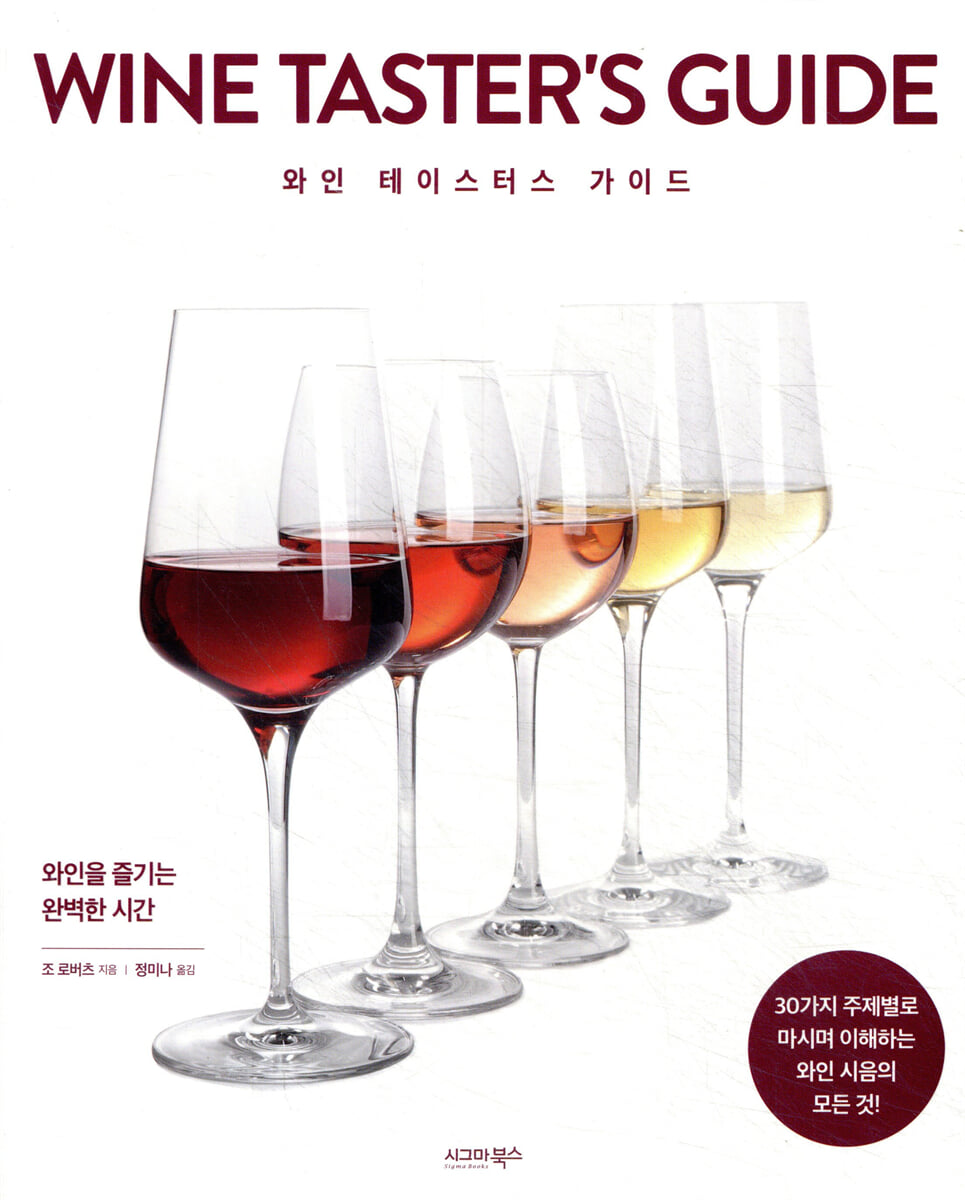
Wine Taster's Guide
 |
Description
Book Introduction
A smart wine guide that gets you acquainted while enjoying it.
Anyone can buy a highly rated wine that has received critical acclaim, but surprisingly few people can taste the wine and tell their own judgment about what it tastes like, why it tastes that way, and why they like it or don't like it.
Let's use this book as a guide to become a true wine enthusiast who knows wine well and enjoys it to his or her liking.
By following these 30 keywords, you will develop an eye for wine and an understanding of it, making it easier to enjoy and taste wine without feeling intimidated in any situation where wine is paired with you.
Anyone can buy a highly rated wine that has received critical acclaim, but surprisingly few people can taste the wine and tell their own judgment about what it tastes like, why it tastes that way, and why they like it or don't like it.
Let's use this book as a guide to become a true wine enthusiast who knows wine well and enjoys it to his or her liking.
By following these 30 keywords, you will develop an eye for wine and an understanding of it, making it easier to enjoy and taste wine without feeling intimidated in any situation where wine is paired with you.
- You can preview some of the book's contents.
Preview
index
Introduction
Structure of this book
About wine tasting
Chapter 1: The Basics of Tasting
Factors that affect the flavor of wine
The Science of Smell
The Science of Odds and Evens
How to taste wine
· Beginner's guide to tasting
Chapter 2 Grape Varieties
grape cultivation
Main varieties
·Gamay, beyond Beaujolais Nouveau
·Beyond Bordeaux: France's Famous Blending Varieties
·The Other Side of Prejudice: Pinot Gris/Pinot Grigio
·The spectrum of Riesling: from dry to sweet
·Rioja Tempranillo grade
Chapter 3 Winemaking and Flavor
Crushing, soaking, pressing
·Rosé with unexpected diversity
Tannin: An introduction to wine structure
fermentation
·The diverse world of sparkling wines
·The Hidden Charm Behind Strength: Fortified Wine
maturation
·Flavored wooden barrels: Oak influence
7 Wines Made to Be Enjoyed When You're Young
Blending
·10 excellent blended wines
Filtration and purification
Final product
·Influence of brewing method
Chapter 4 Major Wine-Producing Regions of the World
Italy
· Tasting Tour: Northern Italy
· Tasting Tour: Southern Italy
france
·Cool regions of France
·Warm regions of France
Spain
USA
·California's benchmark wines
·American wine regions
Argentina
Argentina: The Land of the Sun
Chile
Chile: A colorful wine scene
australia
Australia and New Zealand: A Tasty Experience at the Southernmost Point of the Earth
New Zealand
germany
Germany: A Northern Delicacies
Portugal
·Travel to Portugal
Other notable wine regions
· Tasting exploration into a wider world
Chapter 5: Creating Your Own Tasting Plan
Choosing a topic
·Choosing an affordable wine: under $10
Choosing a wine
·Wines I personally enjoy drinking
Planning a tasting
wine glass
Storing wine
Food and Wine
·A Classic Pairing: Wine and Cheese
·Wine + Food: Complement and Contrast
Acknowledgements
Structure of this book
About wine tasting
Chapter 1: The Basics of Tasting
Factors that affect the flavor of wine
The Science of Smell
The Science of Odds and Evens
How to taste wine
· Beginner's guide to tasting
Chapter 2 Grape Varieties
grape cultivation
Main varieties
·Gamay, beyond Beaujolais Nouveau
·Beyond Bordeaux: France's Famous Blending Varieties
·The Other Side of Prejudice: Pinot Gris/Pinot Grigio
·The spectrum of Riesling: from dry to sweet
·Rioja Tempranillo grade
Chapter 3 Winemaking and Flavor
Crushing, soaking, pressing
·Rosé with unexpected diversity
Tannin: An introduction to wine structure
fermentation
·The diverse world of sparkling wines
·The Hidden Charm Behind Strength: Fortified Wine
maturation
·Flavored wooden barrels: Oak influence
7 Wines Made to Be Enjoyed When You're Young
Blending
·10 excellent blended wines
Filtration and purification
Final product
·Influence of brewing method
Chapter 4 Major Wine-Producing Regions of the World
Italy
· Tasting Tour: Northern Italy
· Tasting Tour: Southern Italy
france
·Cool regions of France
·Warm regions of France
Spain
USA
·California's benchmark wines
·American wine regions
Argentina
Argentina: The Land of the Sun
Chile
Chile: A colorful wine scene
australia
Australia and New Zealand: A Tasty Experience at the Southernmost Point of the Earth
New Zealand
germany
Germany: A Northern Delicacies
Portugal
·Travel to Portugal
Other notable wine regions
· Tasting exploration into a wider world
Chapter 5: Creating Your Own Tasting Plan
Choosing a topic
·Choosing an affordable wine: under $10
Choosing a wine
·Wines I personally enjoy drinking
Planning a tasting
wine glass
Storing wine
Food and Wine
·A Classic Pairing: Wine and Cheese
·Wine + Food: Complement and Contrast
Acknowledgements
Into the book
The appropriate time to smell the wine varies depending on the wine in the glass.
Some wines are not very complex and therefore offer relatively little to appreciate, while others are more 'reserved' and require more time to appreciate.
Some wines almost scream with their flavors, their aromas seeming to jump out of the glass.
Fine wines tend to develop flavors over time as they warm up in the glass, so it's worth taking several sniffs to observe how the aromas develop.
--- p.
27 From “How to Taste Wine”
Tannins are also natural antioxidants.
Therefore, it prevents the wine from oxidizing during bottle aging.
The thicker the grape skins and the longer the maceration time, the higher the tannin content in the red wine.
Some grape varieties, such as Pinot Noir, Gamay, Grenache, and Barbera, are naturally low in tannins.
There are also varieties with truly monstrous tannins, such as Nebbiolo, Petite Sirah, and the aptly named Tannat.
--- p.
81 From "Tannin"
Blending is the art of combining various components, such as grape varieties, vineyards, and the final characteristics of a wine, to create a specific style of flavor, texture, or aroma that would otherwise be impossible to achieve.
Most wines are blended wines.
From Champagne to Bordeaux, Châteauneuf-du-Pape and Port, the world's benchmark wines are all blends.
Even single varietal wines often incorporate small amounts of other varietals or blend the same varietal from different vineyards.
--- p.
97 From "Blending"
All the elements discussed above combined together constitute the so-called 'body' of the wine.
Body is the combination of the texture and weight of the wine in your mouth.
This time, taste and style come first, but in any case, there must be a sense of balance within that style.
In other words, the wine should have a balance where both tannins and alcohol are smooth, but the acidity does not make it feel weak.
Of course, one element may be more prominent than another, but all elements should contribute to the wine's essential purpose: pleasure.
--- p.
104 From "Body"
When it comes to pairing wine with food, acidity—that mouthwatering, lemony, vibrant flavor found in some wines—is our ally.
Grapes that are naturally high in acidity (white grapes like Sauvignon Blanc and Riesling, or red grapes like Barbera, Pinot Noir, and Gamay) pair well with most dishes.
The acidity of wine works on the same principle as sprinkling lemon juice on food.
It makes your mouth water, cuts down on oily tastes, and breaks down fat, protein, and carbohydrates, leaving you feeling refreshed.
Some wines are not very complex and therefore offer relatively little to appreciate, while others are more 'reserved' and require more time to appreciate.
Some wines almost scream with their flavors, their aromas seeming to jump out of the glass.
Fine wines tend to develop flavors over time as they warm up in the glass, so it's worth taking several sniffs to observe how the aromas develop.
--- p.
27 From “How to Taste Wine”
Tannins are also natural antioxidants.
Therefore, it prevents the wine from oxidizing during bottle aging.
The thicker the grape skins and the longer the maceration time, the higher the tannin content in the red wine.
Some grape varieties, such as Pinot Noir, Gamay, Grenache, and Barbera, are naturally low in tannins.
There are also varieties with truly monstrous tannins, such as Nebbiolo, Petite Sirah, and the aptly named Tannat.
--- p.
81 From "Tannin"
Blending is the art of combining various components, such as grape varieties, vineyards, and the final characteristics of a wine, to create a specific style of flavor, texture, or aroma that would otherwise be impossible to achieve.
Most wines are blended wines.
From Champagne to Bordeaux, Châteauneuf-du-Pape and Port, the world's benchmark wines are all blends.
Even single varietal wines often incorporate small amounts of other varietals or blend the same varietal from different vineyards.
--- p.
97 From "Blending"
All the elements discussed above combined together constitute the so-called 'body' of the wine.
Body is the combination of the texture and weight of the wine in your mouth.
This time, taste and style come first, but in any case, there must be a sense of balance within that style.
In other words, the wine should have a balance where both tannins and alcohol are smooth, but the acidity does not make it feel weak.
Of course, one element may be more prominent than another, but all elements should contribute to the wine's essential purpose: pleasure.
--- p.
104 From "Body"
When it comes to pairing wine with food, acidity—that mouthwatering, lemony, vibrant flavor found in some wines—is our ally.
Grapes that are naturally high in acidity (white grapes like Sauvignon Blanc and Riesling, or red grapes like Barbera, Pinot Noir, and Gamay) pair well with most dishes.
The acidity of wine works on the same principle as sprinkling lemon juice on food.
It makes your mouth water, cuts down on oily tastes, and breaks down fat, protein, and carbohydrates, leaving you feeling refreshed.
--- p.
186 From “Food and Wine”
186 From “Food and Wine”
Publisher's Review
Follow the 30 tasting guide
A journey to find the real wine that suits my taste
Wine is a subject so broad and profound that it can be daunting, yet its profound depth and diverse spectrum make it an object of longing that we hope to truly experience someday.
Wine as a subject is so vast that there are no magic shortcuts to quickly becoming familiar with it.
Only by drinking carefully, savoring the wine directly in your mouth, can you truly learn about the wine and your own tastes.
That doesn't mean you have to be a wine expert.
Just become an expert in your own taste.
This book will guide you on the path to becoming a wine lover who has reached a level where you can personally select wines that suit your taste.
First, we explain the tips for appraising wine by looking at the entire process from grapes to the moment it is poured into a glass.
We'll start with the principles of smell and taste, explore how grape varieties influence the texture and flavor of wine, and finally, discover what happens during the magical process of winemaking.
Next, we will take a look at representative wine-producing countries and learn about their traditions, tips for deciphering labels, grapes grown, and why climate and winemaking methods affect the taste of wine.
Finally, it also provides tips for creating your own tasting plan to maximize your learning potential with each sip.
The author has packed this book with practical tips, interesting tidbits, and insights he has learned firsthand from over a decade of traveling the world of wine, to help readers more easily approach wine.
Since this book focuses on wine tasting, the core of each chapter is 30 tasting guides directly related to the topic.
The fastest and most appropriate way to increase your tasting IQ is through direct experience with your tongue.
Each tasting is organized by theme to explore how grape variety, growing region, and winemaking style affect the flavor of the wine, with an average of 4-6 wines selected and tasted in the order listed.
If you follow the tasting guide's instructions and savor the wine carefully while tasting slowly, you will soon become a wine enthusiast who truly enjoys wine.
A journey to find the real wine that suits my taste
Wine is a subject so broad and profound that it can be daunting, yet its profound depth and diverse spectrum make it an object of longing that we hope to truly experience someday.
Wine as a subject is so vast that there are no magic shortcuts to quickly becoming familiar with it.
Only by drinking carefully, savoring the wine directly in your mouth, can you truly learn about the wine and your own tastes.
That doesn't mean you have to be a wine expert.
Just become an expert in your own taste.
This book will guide you on the path to becoming a wine lover who has reached a level where you can personally select wines that suit your taste.
First, we explain the tips for appraising wine by looking at the entire process from grapes to the moment it is poured into a glass.
We'll start with the principles of smell and taste, explore how grape varieties influence the texture and flavor of wine, and finally, discover what happens during the magical process of winemaking.
Next, we will take a look at representative wine-producing countries and learn about their traditions, tips for deciphering labels, grapes grown, and why climate and winemaking methods affect the taste of wine.
Finally, it also provides tips for creating your own tasting plan to maximize your learning potential with each sip.
The author has packed this book with practical tips, interesting tidbits, and insights he has learned firsthand from over a decade of traveling the world of wine, to help readers more easily approach wine.
Since this book focuses on wine tasting, the core of each chapter is 30 tasting guides directly related to the topic.
The fastest and most appropriate way to increase your tasting IQ is through direct experience with your tongue.
Each tasting is organized by theme to explore how grape variety, growing region, and winemaking style affect the flavor of the wine, with an average of 4-6 wines selected and tasted in the order listed.
If you follow the tasting guide's instructions and savor the wine carefully while tasting slowly, you will soon become a wine enthusiast who truly enjoys wine.
GOODS SPECIFICS
- Publication date: June 15, 2022
- Page count, weight, size: 194 pages | 566g | 190*235*15mm
- ISBN13: 9791168620452
- ISBN10: 1168620457
You may also like
카테고리
korean


korean

![GQ KOREA Mark (Monthly): December [2025]](http://librairie.coreenne.fr/cdn/shop/files/8ef265dbbfbf186523ed75ba7319009d.jpg?v=1765340328&width=3840)


