

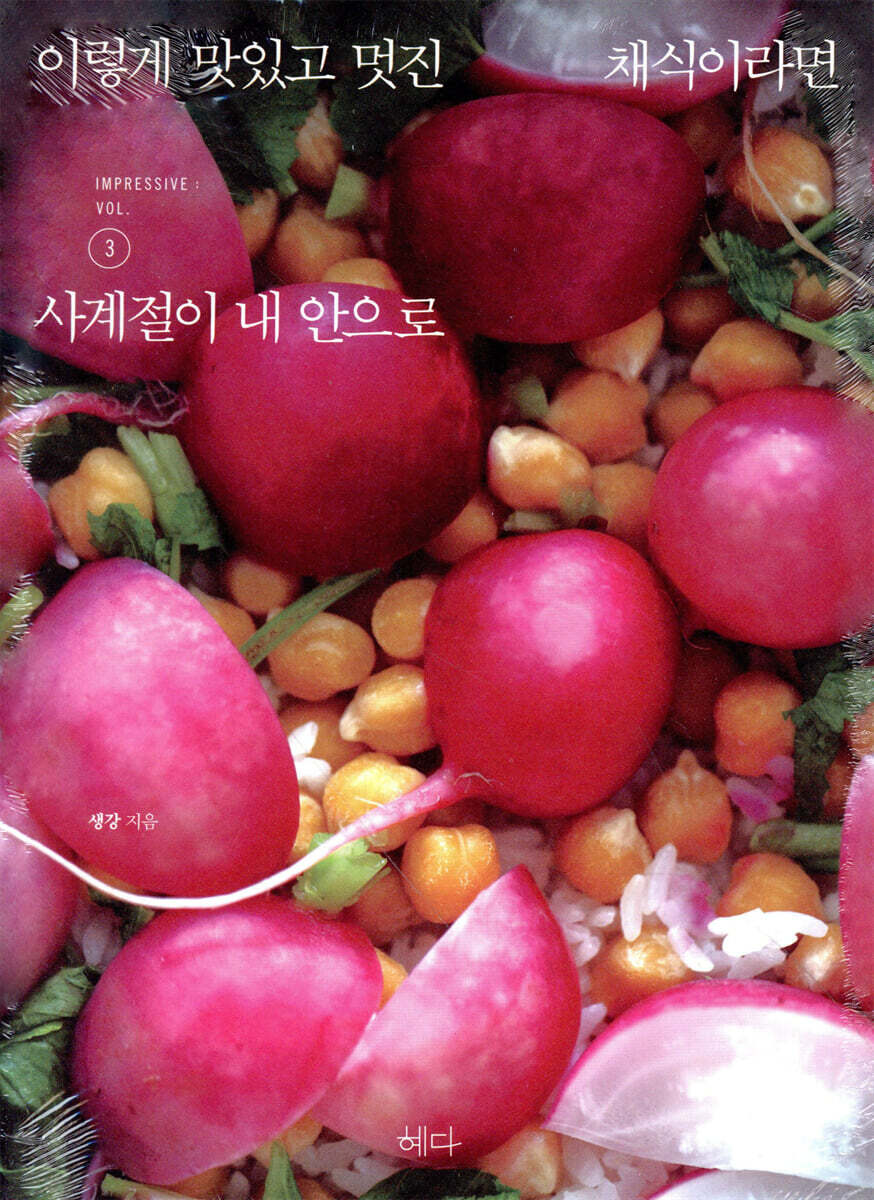
If this is such a delicious and wonderful vegetarian dish, 3
 |
Description
Book Introduction
How to use the time given to us well without wasting it
The table facing us is filled with seasonal, vegetarian food.
I hope that the four seasons will last forever on my daily table.
A mild and comfortable vegetable-based diet that will make you smile
Ginger, a vegetarian cook who has been consistently loved for her unique style and outstanding sense as a cookbook, has released her third book in four years, "Vegetarianism: This Delicious and Wonderful."
Following Volume 1, ‘The Green Table Inside Me’ and Volume 2, ‘Diet Inside Me’, the concept of Volume 3 is ‘The Four Seasons Inside Me’.
We take them for granted and forget them, but the author weaves together the 'beauty of the seasons' that are deeply ingrained in our daily lives and the 'taste of the seasons' that we are so familiar with that we never felt them as special or new, with his own delicate and creative recipes, helping us to enjoy each season of spring, summer, fall, and winter without missing a single moment.
Each book features new dishes made with ingredients that are rarely encountered and therefore refreshing, but this book in particular is particularly eye-catching with old-fashioned dishes made with common ingredients that we ate a lot as children and that we remember fondly, as well as country dishes that our mothers or grandmothers thought were rustic and unsophisticated, reinterpreted with sophisticated flavors.
You can fully feel the author's passion for vegetarian cooking, which he has honed tirelessly for the past four years.
The table facing us is filled with seasonal, vegetarian food.
I hope that the four seasons will last forever on my daily table.
A mild and comfortable vegetable-based diet that will make you smile
Ginger, a vegetarian cook who has been consistently loved for her unique style and outstanding sense as a cookbook, has released her third book in four years, "Vegetarianism: This Delicious and Wonderful."
Following Volume 1, ‘The Green Table Inside Me’ and Volume 2, ‘Diet Inside Me’, the concept of Volume 3 is ‘The Four Seasons Inside Me’.
We take them for granted and forget them, but the author weaves together the 'beauty of the seasons' that are deeply ingrained in our daily lives and the 'taste of the seasons' that we are so familiar with that we never felt them as special or new, with his own delicate and creative recipes, helping us to enjoy each season of spring, summer, fall, and winter without missing a single moment.
Each book features new dishes made with ingredients that are rarely encountered and therefore refreshing, but this book in particular is particularly eye-catching with old-fashioned dishes made with common ingredients that we ate a lot as children and that we remember fondly, as well as country dishes that our mothers or grandmothers thought were rustic and unsophisticated, reinterpreted with sophisticated flavors.
You can fully feel the author's passion for vegetarian cooking, which he has honed tirelessly for the past four years.
- You can preview some of the book's contents.
Preview
index
[PROLOUGE]
For our four sustainable seasons
The Basics of Vegetable Cooking
[BASIC]
026 Making Chaesu
030 Cooking rice in a pot
032 Cooking Brown Rice
034 Prepare rice flour (wet)
036 Prepare soybean powder
038 Prepare sesame seeds and a sesame mortar
spring
[SPRING]
050 Cold Radish Soup
054 Plum Blossom Toast
058 Country-style mugwort hair removal
062 Mugwort Pancakes Filled with the Scent of Spring
066 Japanese-style Mugwort Flower Miso
070 Korean-style mugwort flower soybean paste
074 Water parsley and rapeseed rice
078 Minari Rice Pancake
082 Spring Vegetable Orange Soybean Paste Salad
086 Minari Jeon
090 Azalea Bamboo Shoot Rice Balls
094 Clear mugwort soup with flower seeds
098 Radish Rice in a Pot
102 Dallae Cheese Dip
106 Dallaebrie Cheese Egg Roll
110 Tomato and Sweet Potato Marinade
114 Fresh green onion and seaweed salad
118 Gold damcho flower hair
122 Rice cooked in a pot with wild radish
128 Burdock Frittata
132 Pea Hummus
136 Bracken Tomato Salad Made with Pickled Bracken
140 Bracken (Gobi) Pasta
144 Two Ways to Enjoy Asparagus with Orange Miso Dressing
150 bamboo shoots
154 Stir-fried Bamboo Shoots with Butter
158 Crispy Spring Vegetable Yakisoba
162 Zephyr Leaf Rice Cake
166 Country-style Garlic Chives Salad
170 Spring Fruit Natto Salad
176 Green Onion Gratin
[SPRING CADENZA]
180 Handling the burdock
182 Handling Bracken
184 Handling Gobi
186 Handling Bamboo Shoots
188 Using Zephyr
190 Using Leather Herb
192 Enjoy Spring Flowers & Spring Vegetable Tempura
194 Enjoying Spring Vegetable Hand-Made Kimbap
summer
[SUMMER]
206 Avocado Cold Tofu
210 Stir-fried Summer Potato and Perilla Leaves
214 Pumpkin Doenjang Jjigae for Midsummer Bibimbap
218 Cherry Radicchio Salad
222 Corn Pasta
228 Corn Soup
232 Fried Summer Pickled Vegetables
236 Stir-fried Green Beans
240 Potato Green Bean Salad
244 Stir-fried Tomato and Okra
248 Soft tofu and Japanese vegetable salsa
254 Cucumber Salad
258 Clear Cucumber Salad
262 Savory Chive Stew
266 Watermelon and Grilled Cheese Salad
270 Peach Black Noodles
276 Okra and Yuzu Miso
280 Cucumber Melon Balls
284 Smoked Eggplant Salad
288 Indonesian Summer Salad
294 Tomato Tagliatelle
298 Tomato Haejangmyeon
302 Tomato Dacos
306 Peach Cheese Sandwich
310 Glutinous Rice Eggplant Mango Sweet and Sour
316 Broccolini and Walnut Mayo
320 Perilla Leaf Pasta
324 Zucchini Pasta
328 Roasted Carrots and Apricot Sauce
332 Two Ways to Enjoy Passion Fruit in a Salad
[SUMMER CADENZA]
338 Enjoying Peach and Bean Soup
340 How to Eat Corn Deliciously
342 Making Umeboshi
autumn
[AUTUMN]
354 Sweet Pumpkin Pancake
358 Pumpkin Flower Rice
364 Tofu Balls and Chrysanthemum Sauce
370 Boiled Kelp and Mushrooms
374 Flower Mushroom Apple Salad
378 Stir-fried Cucumber and Mushrooms
382 Grandma's Stir-fried Burdock
386 Night Soup
390 Egg Sandwich
394 Arugula and Grilled Cheese Salad
400 soy milk risotto
404 Mushroom Soybean Pasta
410 Mushroom Rice in a Pot
414 Toran Perilla Seed Rice Cake Soup
418 Mugwort, Radish, and Mustard Salad
422 Orange Tempeh
428 Truffle Potato Ongsimi
434 Peanut and Pumpkin Cheese Grilled
438 Assorted Vegetable Stir-fry and Tofu Wrap
442 Young Chili Pepper Salad
[AUTUMN CADENZA]
446 Making Zephyr Powder
448 Using Sancho
450 Making Omija Cheong and Omija Wine
Enjoy 452 Assorted Mushroom Shabu Shabu
winter
[WINTER]
464 Glutinous Rice Pancake
468 Green Onion and Kimchi Omelette
472 Braised Tofu
476 Old support
480 Sweet Potato Rice
484 Braised Chickpeas
488 Citrus and Coriander Salad
492 Kumquat Salsa
496 Balsamic Onion Bruschetta
500 Broccoli Panini
504 Apple Blueberry Pizza
508 Panel Celery Salad
512 Roasted Beet Salad
516 Ragu without Meat
520 Indian Spinach Curry
526 Cabbage Pasta
530 Pumpkin Soup
536 Braised Pork Belly Kimbap
542 Vegetable Dumplings
548 Olive Oil Chocolate Cake
[WINTER CADENZA]
552 Making Yuzukosho
554 Enjoying Winter Snacks
556 Enjoying Muknamul in the Midwinter
558 Enjoy grilled vegetables and raclette
563 [EPILOGUE]
For our four sustainable seasons
The Basics of Vegetable Cooking
[BASIC]
026 Making Chaesu
030 Cooking rice in a pot
032 Cooking Brown Rice
034 Prepare rice flour (wet)
036 Prepare soybean powder
038 Prepare sesame seeds and a sesame mortar
spring
[SPRING]
050 Cold Radish Soup
054 Plum Blossom Toast
058 Country-style mugwort hair removal
062 Mugwort Pancakes Filled with the Scent of Spring
066 Japanese-style Mugwort Flower Miso
070 Korean-style mugwort flower soybean paste
074 Water parsley and rapeseed rice
078 Minari Rice Pancake
082 Spring Vegetable Orange Soybean Paste Salad
086 Minari Jeon
090 Azalea Bamboo Shoot Rice Balls
094 Clear mugwort soup with flower seeds
098 Radish Rice in a Pot
102 Dallae Cheese Dip
106 Dallaebrie Cheese Egg Roll
110 Tomato and Sweet Potato Marinade
114 Fresh green onion and seaweed salad
118 Gold damcho flower hair
122 Rice cooked in a pot with wild radish
128 Burdock Frittata
132 Pea Hummus
136 Bracken Tomato Salad Made with Pickled Bracken
140 Bracken (Gobi) Pasta
144 Two Ways to Enjoy Asparagus with Orange Miso Dressing
150 bamboo shoots
154 Stir-fried Bamboo Shoots with Butter
158 Crispy Spring Vegetable Yakisoba
162 Zephyr Leaf Rice Cake
166 Country-style Garlic Chives Salad
170 Spring Fruit Natto Salad
176 Green Onion Gratin
[SPRING CADENZA]
180 Handling the burdock
182 Handling Bracken
184 Handling Gobi
186 Handling Bamboo Shoots
188 Using Zephyr
190 Using Leather Herb
192 Enjoy Spring Flowers & Spring Vegetable Tempura
194 Enjoying Spring Vegetable Hand-Made Kimbap
summer
[SUMMER]
206 Avocado Cold Tofu
210 Stir-fried Summer Potato and Perilla Leaves
214 Pumpkin Doenjang Jjigae for Midsummer Bibimbap
218 Cherry Radicchio Salad
222 Corn Pasta
228 Corn Soup
232 Fried Summer Pickled Vegetables
236 Stir-fried Green Beans
240 Potato Green Bean Salad
244 Stir-fried Tomato and Okra
248 Soft tofu and Japanese vegetable salsa
254 Cucumber Salad
258 Clear Cucumber Salad
262 Savory Chive Stew
266 Watermelon and Grilled Cheese Salad
270 Peach Black Noodles
276 Okra and Yuzu Miso
280 Cucumber Melon Balls
284 Smoked Eggplant Salad
288 Indonesian Summer Salad
294 Tomato Tagliatelle
298 Tomato Haejangmyeon
302 Tomato Dacos
306 Peach Cheese Sandwich
310 Glutinous Rice Eggplant Mango Sweet and Sour
316 Broccolini and Walnut Mayo
320 Perilla Leaf Pasta
324 Zucchini Pasta
328 Roasted Carrots and Apricot Sauce
332 Two Ways to Enjoy Passion Fruit in a Salad
[SUMMER CADENZA]
338 Enjoying Peach and Bean Soup
340 How to Eat Corn Deliciously
342 Making Umeboshi
autumn
[AUTUMN]
354 Sweet Pumpkin Pancake
358 Pumpkin Flower Rice
364 Tofu Balls and Chrysanthemum Sauce
370 Boiled Kelp and Mushrooms
374 Flower Mushroom Apple Salad
378 Stir-fried Cucumber and Mushrooms
382 Grandma's Stir-fried Burdock
386 Night Soup
390 Egg Sandwich
394 Arugula and Grilled Cheese Salad
400 soy milk risotto
404 Mushroom Soybean Pasta
410 Mushroom Rice in a Pot
414 Toran Perilla Seed Rice Cake Soup
418 Mugwort, Radish, and Mustard Salad
422 Orange Tempeh
428 Truffle Potato Ongsimi
434 Peanut and Pumpkin Cheese Grilled
438 Assorted Vegetable Stir-fry and Tofu Wrap
442 Young Chili Pepper Salad
[AUTUMN CADENZA]
446 Making Zephyr Powder
448 Using Sancho
450 Making Omija Cheong and Omija Wine
Enjoy 452 Assorted Mushroom Shabu Shabu
winter
[WINTER]
464 Glutinous Rice Pancake
468 Green Onion and Kimchi Omelette
472 Braised Tofu
476 Old support
480 Sweet Potato Rice
484 Braised Chickpeas
488 Citrus and Coriander Salad
492 Kumquat Salsa
496 Balsamic Onion Bruschetta
500 Broccoli Panini
504 Apple Blueberry Pizza
508 Panel Celery Salad
512 Roasted Beet Salad
516 Ragu without Meat
520 Indian Spinach Curry
526 Cabbage Pasta
530 Pumpkin Soup
536 Braised Pork Belly Kimbap
542 Vegetable Dumplings
548 Olive Oil Chocolate Cake
[WINTER CADENZA]
552 Making Yuzukosho
554 Enjoying Winter Snacks
556 Enjoying Muknamul in the Midwinter
558 Enjoy grilled vegetables and raclette
563 [EPILOGUE]
Detailed image

Into the book
Living abroad, I really missed Korea whenever I thought of our 'seasonal fruits and vegetables'.
In particular, I was thinking a lot about autumn persimmons, fragrant pine mushrooms, sweet autumn radishes, and crunchy winter cabbage.
All the places I've stayed in were hot countries, and my friends there all had a romantic notion of snowy winters and were unfamiliar with the term "seasonal vegetables."
Whenever I felt such cultural differences, I felt grateful to have been born in this country with its distinct four seasons.
We just took it for granted, but there are various vegetables that ripen according to the climate of each season, and even the same vegetables taste different in each season, so perhaps we have a more delicate palate and diverse food culture than other peoples.
Spring: I am a chef who handles vegetables.
For me, spring is the busiest and hectic season of the year.
From planting seeds for the vegetables in the garden, to mugwort and fragrant spring flowers, to tender tree sprouts like mulberry leaves, wild radish shoots, and aralia, to shoots that grow with the strength of the earth like bamboo shoots and bracken, and even to sea vegetables like seaweed and kelp.
For those who are trying to take health supplements on purpose, the health supplement I recommend is this ‘spring vegetable.’
If you just eat the wild greens and flowers that appear in the order that nature tells you, a season will pass by in a flash.
So spring is always a season of joy and regret.
Summer: Summer vegetables grow quickly as soon as you wake up, but when the rainy season comes, the garden is in trouble.
Tomatoes tend to burst, cucumbers have no flavor and are just watery, and depending on whether it's been dry or rainy, pumpkins can have plump bellies but skinny waists that look like they're being squeezed.
… Nevertheless, I love the ever-changing vegetable garden of summer.
Perhaps because I have a quick temper, every time I feel the vibrant vitality of the branches growing dramatically after the rain, my attitude towards handling each fruit and vegetable changes.
Autumn: The sun and wind are nice in autumn.
It is also great for harvesting late summer garden vegetables such as eggplant, pumpkin, and gourd that are growing quickly and drying them in the autumn sun.
Storing winter food is part of the autumn preparations, so we need to be more diligent to make the most of the shorter days.
It may seem like the end of the harvest season, but it is also a season of new beginnings.
Winter: I feel the cold easily, so I always found winter difficult and hated it.
Even though I was wearing a coat, I was shivering, and I didn't like the feeling of my body constantly curling up.
But then I suddenly think about this.
If every day were a warm spring day, I wonder if we could cherish that spring.
After a long winter, when spring arrives with a ray of sunshine and a breath of warm air, I sometimes wonder if I've become a little more mature.
These days, people say they don't feel winter as much as they used to, but in the flow of nature, winter is still a season of harsh pause.
Winter radish is sweet because its flavor and nutrients are concentrated in its roots, and spring radish has a nice leaf fragrance.
The time when the frozen ground thaws and spring quietly approaches is when the root vegetables are at their most delicious, and that time lasts for exactly one to ten days.
It was when my mother was diligently digging up radish.
My spring begins with the savory and sweet taste of early spring onions.
Cold noodle soup is bound to be special.
Sometimes, I cook the broth by thinly slicing the radish and making it taste like a side dish.
--- p.50 From “Cold Noodle Soup”
Spring greens have a wonderful flavor whether eaten raw or lightly blanched, but their flavor becomes even more distinct when coated with a white coating such as rice flour or wheat flour.
I am always amazed at the wisdom of adults, wondering how they came up with this method, and every time I taste the freshness of the season they perfected, I am amazed at their wisdom.
A representative example is ‘Ssukbeomuri’.
--- p.58 From “Country-style Mugwort Hair Brushing”
If you've seen the movie 'Little Forest', you'll remember the mugwort soybean paste.
When I saw that movie, I thought, 'They eat mugwort flowers in Korea too.'
I knew that it was not a common food and that only temple kitchens or cooking teachers knew about it.
If you tell that story to the elders in the countryside, they will say, “You eat mugwort?”
--- p.66 From “Japanese-style Mugwort Miso”
When I see young green onions that are soft and not spicy, my heart flutters and I quickly grab them.
I think of the pretty appearance when sliced thinly, and also the simple and neat pickled vegetables.
It's delicious no matter what you do with it, but I like to eat it raw.
The point is that it is seasoned with seaweed and is crispy without any moisture, which adds to the savory flavor.
This goes really well with thickly sliced avocado.
--- p.114 From “Seasoned Green Onion and Kimchi”
Do you love asparagus? It's crunchy and tender, delicious raw or cooked, making it a staple in spring.
The best way to eat asparagus, I know, is to lightly cook it and dip it in a delicious sauce.
--- p.144 From “Two Ways to Enjoy Asparagus with Orange Miso Dressing”
The Jangtteok I remember is a meal-like snack or side dish that my grandmother used to serve to people working in the fields in the countryside, along with refreshing makgeolli.
But in my childhood memories, the jangtteok I ate back then was so salty that it made me frown.
When I ate that tteok again as an adult, I realized there was a reason for it.
--- p.162 From “Zephyr Leaf Rice Cake”
When we think of mom's side dishes, there are foods that come to mind for everyone.
I think of red potato stir-fry, seaweed salad, stir-fried anchovies with honey, and this soybean powder-steamed garlic chive salad.
Steaming vegetables mixed with soybean powder is a dish that even moms will remember for a long time.
--- p.166 From “Country-style Garlic Chive Salad”
“What is the name of this delicious vegetable?” That’s what my mom said when she first tasted broccolini.
After that, he kept asking for my name, so I said, “Baby broccoli.” Every time he eats broccoli, he always says, “I like that little broccoli.”
--- p.316 From “Broccolini and Walnut Mayo”
Sometimes, my mom goes out of her way to try my grandmother's cooking.
Just like the taste of my mother's food that I like, my mother must have a taste that she wants to remember.
On days when she suddenly makes and leaves a bowl of marinated seaweed, braised red potatoes, or this stir-fried burdock root in my studio, even without my mom saying anything, I can guess that day is a day when I miss you too.
When I was young, I liked the shiny and pretty soy sauce braised dishes, so I would often complain when I saw my mom's cooking, which was full of red pepper powder seasoning.
But I think it was only when I became an adult that I was able to enjoy that unique, red-fried flavor.
Now, I think the most refined vegetable flavor is the rustic, country flavor I remember.
--- p.382 From “Grandma’s Stir-fried Burdock”
I don't like fake flavors that imitate the real thing.
But I really recommend this vegetable risotto.
We replaced milk and cheese with soy milk and vegetables, and preserved the texture of brown rice.
I was wondering if there was a more convenient way to enjoy truffle oil in everyday meals, and I ended up making this dish using vegetables, brown rice, and pouched soy milk that I had left over in the fridge while traveling.
--- p.400 From “Duyuhyun Mirisoto”
Stir-fried vegetables are a common dinner side dish in the fall.
On days when I make this dish, I eat tofu wraps with thin tofu wraps or podubu wraps instead of rice.
It's also served with a cold beer.
Since I stir-fry it often, I make various variations by changing the seasoning, such as spicy seasoning with red pepper powder, sweet bulgogi seasoning, and clean salt seasoning.
--- p.438 From “Stir-fried Assorted Vegetables and Tofu Wraps”
This salad, which I have often made on days when pomegranates are available, shined even brighter one winter in Jeju.
Food that was eaten as everyday food became a wonderful seasonal dish when combined with Jeju's seasonal fruits and native coriander.
Everyone who has tried this dish leaves a comment saying, "A rediscovery of the master."
--- p.488 From “Citrus and Coriander Salad”
Winter cabbage is sweet and delicious no matter how you eat it, but it's incredibly delicious when combined with butter.
Of course, you can make it when it's not cabbage season, but since it's a relatively high-calorie pasta, it's a warm dish that will give you energy in the winter.
--- p.526 From “Cabbage Pasta”
It happened a long time ago, but I still remember it vividly.
I went to the studio early at dawn and was cleaning in the back when I smelled something delicious.
I was sniffing around, wondering where someone was making delicious kimchi stew at such an early hour, and it turned out that the smell was coming from the exhaust fan in my studio.
I thought, 'No way,' and went into the studio, opened the lid of the pot, and it smelled like pumpkin soup.
I quickly put it in a bowl, toasted a slice of bread, and ate it while putting it on the bread.
Eating a bowl of pumpkin soup with turmeric and ginger will make your body feel warm and invigorated.
--- p.530 From "Pumpkin Soup"
When I was little, I ate kimbap with braised pork belly at the Busan market with my mom.
I guess the taste of that gochujang was quite appealing even to a little kid's palate.
After that, I asked my mom several times to put dried pollack in our kimbap, but sadly, my mom never listened to my daughter's desperate request.
Even as an adult, perhaps because of memories from my childhood, whenever I see well-dried persimmons, I think about making kimbap.
--- p.536 From “Braised Parkgoji Kimbap”
Whenever I make dumplings, I think of a monk who said, “I make dumplings to eat, but I put in a lot of things I like.”
Actually, I didn't really like dumplings, but after becoming a vegetarian, I started to enjoy them.
We make vegetable dumplings with fragrant spring vegetables, fresh summer vegetables, and different types of dumplings for each season, but the best of all are winter dumplings.
In particular, I was thinking a lot about autumn persimmons, fragrant pine mushrooms, sweet autumn radishes, and crunchy winter cabbage.
All the places I've stayed in were hot countries, and my friends there all had a romantic notion of snowy winters and were unfamiliar with the term "seasonal vegetables."
Whenever I felt such cultural differences, I felt grateful to have been born in this country with its distinct four seasons.
We just took it for granted, but there are various vegetables that ripen according to the climate of each season, and even the same vegetables taste different in each season, so perhaps we have a more delicate palate and diverse food culture than other peoples.
Spring: I am a chef who handles vegetables.
For me, spring is the busiest and hectic season of the year.
From planting seeds for the vegetables in the garden, to mugwort and fragrant spring flowers, to tender tree sprouts like mulberry leaves, wild radish shoots, and aralia, to shoots that grow with the strength of the earth like bamboo shoots and bracken, and even to sea vegetables like seaweed and kelp.
For those who are trying to take health supplements on purpose, the health supplement I recommend is this ‘spring vegetable.’
If you just eat the wild greens and flowers that appear in the order that nature tells you, a season will pass by in a flash.
So spring is always a season of joy and regret.
Summer: Summer vegetables grow quickly as soon as you wake up, but when the rainy season comes, the garden is in trouble.
Tomatoes tend to burst, cucumbers have no flavor and are just watery, and depending on whether it's been dry or rainy, pumpkins can have plump bellies but skinny waists that look like they're being squeezed.
… Nevertheless, I love the ever-changing vegetable garden of summer.
Perhaps because I have a quick temper, every time I feel the vibrant vitality of the branches growing dramatically after the rain, my attitude towards handling each fruit and vegetable changes.
Autumn: The sun and wind are nice in autumn.
It is also great for harvesting late summer garden vegetables such as eggplant, pumpkin, and gourd that are growing quickly and drying them in the autumn sun.
Storing winter food is part of the autumn preparations, so we need to be more diligent to make the most of the shorter days.
It may seem like the end of the harvest season, but it is also a season of new beginnings.
Winter: I feel the cold easily, so I always found winter difficult and hated it.
Even though I was wearing a coat, I was shivering, and I didn't like the feeling of my body constantly curling up.
But then I suddenly think about this.
If every day were a warm spring day, I wonder if we could cherish that spring.
After a long winter, when spring arrives with a ray of sunshine and a breath of warm air, I sometimes wonder if I've become a little more mature.
These days, people say they don't feel winter as much as they used to, but in the flow of nature, winter is still a season of harsh pause.
Winter radish is sweet because its flavor and nutrients are concentrated in its roots, and spring radish has a nice leaf fragrance.
The time when the frozen ground thaws and spring quietly approaches is when the root vegetables are at their most delicious, and that time lasts for exactly one to ten days.
It was when my mother was diligently digging up radish.
My spring begins with the savory and sweet taste of early spring onions.
Cold noodle soup is bound to be special.
Sometimes, I cook the broth by thinly slicing the radish and making it taste like a side dish.
--- p.50 From “Cold Noodle Soup”
Spring greens have a wonderful flavor whether eaten raw or lightly blanched, but their flavor becomes even more distinct when coated with a white coating such as rice flour or wheat flour.
I am always amazed at the wisdom of adults, wondering how they came up with this method, and every time I taste the freshness of the season they perfected, I am amazed at their wisdom.
A representative example is ‘Ssukbeomuri’.
--- p.58 From “Country-style Mugwort Hair Brushing”
If you've seen the movie 'Little Forest', you'll remember the mugwort soybean paste.
When I saw that movie, I thought, 'They eat mugwort flowers in Korea too.'
I knew that it was not a common food and that only temple kitchens or cooking teachers knew about it.
If you tell that story to the elders in the countryside, they will say, “You eat mugwort?”
--- p.66 From “Japanese-style Mugwort Miso”
When I see young green onions that are soft and not spicy, my heart flutters and I quickly grab them.
I think of the pretty appearance when sliced thinly, and also the simple and neat pickled vegetables.
It's delicious no matter what you do with it, but I like to eat it raw.
The point is that it is seasoned with seaweed and is crispy without any moisture, which adds to the savory flavor.
This goes really well with thickly sliced avocado.
--- p.114 From “Seasoned Green Onion and Kimchi”
Do you love asparagus? It's crunchy and tender, delicious raw or cooked, making it a staple in spring.
The best way to eat asparagus, I know, is to lightly cook it and dip it in a delicious sauce.
--- p.144 From “Two Ways to Enjoy Asparagus with Orange Miso Dressing”
The Jangtteok I remember is a meal-like snack or side dish that my grandmother used to serve to people working in the fields in the countryside, along with refreshing makgeolli.
But in my childhood memories, the jangtteok I ate back then was so salty that it made me frown.
When I ate that tteok again as an adult, I realized there was a reason for it.
--- p.162 From “Zephyr Leaf Rice Cake”
When we think of mom's side dishes, there are foods that come to mind for everyone.
I think of red potato stir-fry, seaweed salad, stir-fried anchovies with honey, and this soybean powder-steamed garlic chive salad.
Steaming vegetables mixed with soybean powder is a dish that even moms will remember for a long time.
--- p.166 From “Country-style Garlic Chive Salad”
“What is the name of this delicious vegetable?” That’s what my mom said when she first tasted broccolini.
After that, he kept asking for my name, so I said, “Baby broccoli.” Every time he eats broccoli, he always says, “I like that little broccoli.”
--- p.316 From “Broccolini and Walnut Mayo”
Sometimes, my mom goes out of her way to try my grandmother's cooking.
Just like the taste of my mother's food that I like, my mother must have a taste that she wants to remember.
On days when she suddenly makes and leaves a bowl of marinated seaweed, braised red potatoes, or this stir-fried burdock root in my studio, even without my mom saying anything, I can guess that day is a day when I miss you too.
When I was young, I liked the shiny and pretty soy sauce braised dishes, so I would often complain when I saw my mom's cooking, which was full of red pepper powder seasoning.
But I think it was only when I became an adult that I was able to enjoy that unique, red-fried flavor.
Now, I think the most refined vegetable flavor is the rustic, country flavor I remember.
--- p.382 From “Grandma’s Stir-fried Burdock”
I don't like fake flavors that imitate the real thing.
But I really recommend this vegetable risotto.
We replaced milk and cheese with soy milk and vegetables, and preserved the texture of brown rice.
I was wondering if there was a more convenient way to enjoy truffle oil in everyday meals, and I ended up making this dish using vegetables, brown rice, and pouched soy milk that I had left over in the fridge while traveling.
--- p.400 From “Duyuhyun Mirisoto”
Stir-fried vegetables are a common dinner side dish in the fall.
On days when I make this dish, I eat tofu wraps with thin tofu wraps or podubu wraps instead of rice.
It's also served with a cold beer.
Since I stir-fry it often, I make various variations by changing the seasoning, such as spicy seasoning with red pepper powder, sweet bulgogi seasoning, and clean salt seasoning.
--- p.438 From “Stir-fried Assorted Vegetables and Tofu Wraps”
This salad, which I have often made on days when pomegranates are available, shined even brighter one winter in Jeju.
Food that was eaten as everyday food became a wonderful seasonal dish when combined with Jeju's seasonal fruits and native coriander.
Everyone who has tried this dish leaves a comment saying, "A rediscovery of the master."
--- p.488 From “Citrus and Coriander Salad”
Winter cabbage is sweet and delicious no matter how you eat it, but it's incredibly delicious when combined with butter.
Of course, you can make it when it's not cabbage season, but since it's a relatively high-calorie pasta, it's a warm dish that will give you energy in the winter.
--- p.526 From “Cabbage Pasta”
It happened a long time ago, but I still remember it vividly.
I went to the studio early at dawn and was cleaning in the back when I smelled something delicious.
I was sniffing around, wondering where someone was making delicious kimchi stew at such an early hour, and it turned out that the smell was coming from the exhaust fan in my studio.
I thought, 'No way,' and went into the studio, opened the lid of the pot, and it smelled like pumpkin soup.
I quickly put it in a bowl, toasted a slice of bread, and ate it while putting it on the bread.
Eating a bowl of pumpkin soup with turmeric and ginger will make your body feel warm and invigorated.
--- p.530 From "Pumpkin Soup"
When I was little, I ate kimbap with braised pork belly at the Busan market with my mom.
I guess the taste of that gochujang was quite appealing even to a little kid's palate.
After that, I asked my mom several times to put dried pollack in our kimbap, but sadly, my mom never listened to my daughter's desperate request.
Even as an adult, perhaps because of memories from my childhood, whenever I see well-dried persimmons, I think about making kimbap.
--- p.536 From “Braised Parkgoji Kimbap”
Whenever I make dumplings, I think of a monk who said, “I make dumplings to eat, but I put in a lot of things I like.”
Actually, I didn't really like dumplings, but after becoming a vegetarian, I started to enjoy them.
We make vegetable dumplings with fragrant spring vegetables, fresh summer vegetables, and different types of dumplings for each season, but the best of all are winter dumplings.
--- p.542 From "Vegetable Dumplings"
Publisher's Review
A food artist's ode to vegetarianism, with a sincere love for nature.
With 101 recipes, this book offers a wider selection of ingredients than any other cookbook ever published, and its colorful flavors have the power to make you fall in love with vegetarian food.
By allowing people to see, feel, and enjoy the variety, deliciousness, and allure of vegetable dishes, it dispels the misconceptions about vegetarianism, such as the idea that vegetarians are "picky people" or "people who live in discomfort," and that vegetable dishes are "dishes with limited choices."
The taste and style of seasonal ingredients that make you want to make it right away
Azaleas, rape blossoms, acacia flowers, and pumpkin flowers, which bloom and fall with each season and are enjoyed only with the eyes, become beautiful and delicious in this book.
The native foods that I often ate as a child and thought were rustic and unsophisticated are presented in this book with a sophisticated taste that is in no way inferior to the trendy foods that are popular today.
Tempeh, okra, radishes, fennel, and other unfamiliar Western ingredients and spices are introduced without resistance, making you want to try making them right away.
A balanced blend of Korean and Western cuisine allows you to fully enjoy the taste of vegetarian food any time of the year.
A cookbook with a different depth and humanistic sensibility
This book is not just about providing recipes.
The author hopes to share with readers the detailed sensibilities of taste experienced and felt until the completion of a single recipe, as well as the time and effort put into awakening, gathering, and organizing the senses of the tongue. This book fully captures this invisible heart through words and photos, making it a book that offers the joy of reading beyond the pleasure of looking at beautiful food.
The stunning design, which is just as good as that of Volumes 1 and 2, is another great pleasure that makes this book a must-read.
This is a book that elicits cheers the moment you see it, a book you want to steadily collect, and a cookbook worthy of being called a cookbook that makes you look forward to the next issue.
The easiest way to make good use of the time given to us
We always think about how to live well.
Although the right answer doesn't always come to me, I often find myself vaguely thinking, 'We need to make good use of the time given to us.'
What could be easier to do than filling your dining table with seasonal, plant-based dishes to ensure you don't miss out on that time?
This book will be a very attractive and useful practical guide for those who want to join in that small practice.
With 101 recipes, this book offers a wider selection of ingredients than any other cookbook ever published, and its colorful flavors have the power to make you fall in love with vegetarian food.
By allowing people to see, feel, and enjoy the variety, deliciousness, and allure of vegetable dishes, it dispels the misconceptions about vegetarianism, such as the idea that vegetarians are "picky people" or "people who live in discomfort," and that vegetable dishes are "dishes with limited choices."
The taste and style of seasonal ingredients that make you want to make it right away
Azaleas, rape blossoms, acacia flowers, and pumpkin flowers, which bloom and fall with each season and are enjoyed only with the eyes, become beautiful and delicious in this book.
The native foods that I often ate as a child and thought were rustic and unsophisticated are presented in this book with a sophisticated taste that is in no way inferior to the trendy foods that are popular today.
Tempeh, okra, radishes, fennel, and other unfamiliar Western ingredients and spices are introduced without resistance, making you want to try making them right away.
A balanced blend of Korean and Western cuisine allows you to fully enjoy the taste of vegetarian food any time of the year.
A cookbook with a different depth and humanistic sensibility
This book is not just about providing recipes.
The author hopes to share with readers the detailed sensibilities of taste experienced and felt until the completion of a single recipe, as well as the time and effort put into awakening, gathering, and organizing the senses of the tongue. This book fully captures this invisible heart through words and photos, making it a book that offers the joy of reading beyond the pleasure of looking at beautiful food.
The stunning design, which is just as good as that of Volumes 1 and 2, is another great pleasure that makes this book a must-read.
This is a book that elicits cheers the moment you see it, a book you want to steadily collect, and a cookbook worthy of being called a cookbook that makes you look forward to the next issue.
The easiest way to make good use of the time given to us
We always think about how to live well.
Although the right answer doesn't always come to me, I often find myself vaguely thinking, 'We need to make good use of the time given to us.'
What could be easier to do than filling your dining table with seasonal, plant-based dishes to ensure you don't miss out on that time?
This book will be a very attractive and useful practical guide for those who want to join in that small practice.
GOODS SPECIFICS
- Publication date: October 30, 2021
- Page count, weight, size: 564 pages | 856g | 153*210*30mm
- ISBN13: 9791191183092
- ISBN10: 1191183092
You may also like
카테고리
korean


korean

![GQ KOREA Mark (Monthly): December [2025]](http://librairie.coreenne.fr/cdn/shop/files/8ef265dbbfbf186523ed75ba7319009d.jpg?v=1765340328&width=3840)


