

Kids, let's go play with the eco-environment!
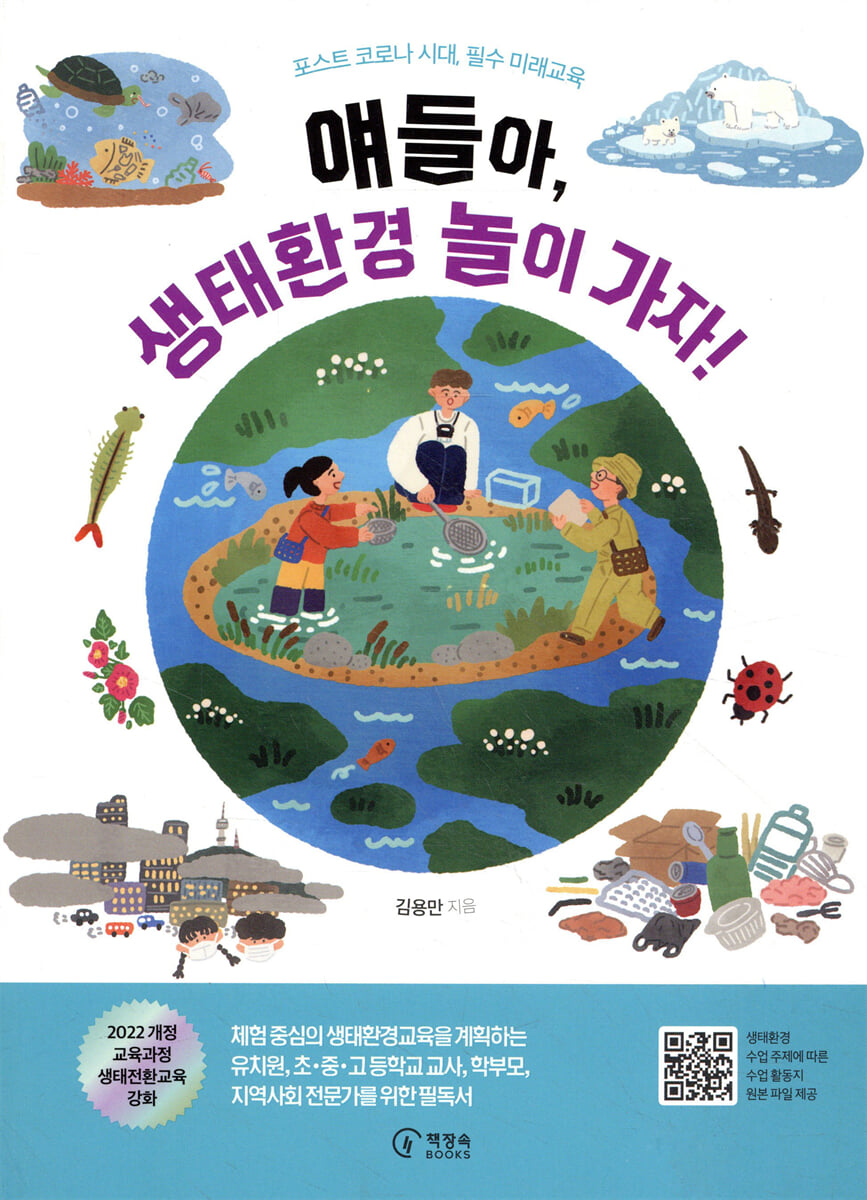 |
Description
Book Introduction
Now, in the post-corona era,
Ecological education is an essential future education that must be implemented immediately!
For many years, the author has been practicing 'living' ecological education with children, where they can see, hear, touch, and feel the environment by walking around mountains, fields, and schools with them.
This book contains a variety of vivid and realistic ecological experiences he conducted with his students.
The ecological education presented in the book starts in the classroom (reading ecological books, natural dyeing, creating ecological software, staging plays with ecological themes, etc.), expands to school (observing school plants, growing rice in box fields, utilizing school gardens, etc.), outside of school (going on ecological explorations to mountains, fields, rivers, wetlands, and rice fields), eco-life (reducing plastic waste, disposable products, and fine dust, etc.), and finally, vividly captures the entire process of becoming an ecological guardian and reaching out into the world through experiential activities (making ecological poetry collections, picture books, and comic books).
This book covers everything from planning ecological education that can be integrated into the curriculum to specific activity guides. All courses are comprised of vivid experiential activities for students.
This will be of great help in many ways to parents, teachers, and experts who want to practice ecological education.
In particular, the original files of lesson activity sheets for ecological environment classes provided via QR codes will provide the author's know-how to easily practice the 'experience-centered' classes he has been researching for many years.
This book also provides a look at blended lesson designs and activities for ecological education applicable to educational environments that have changed due to the COVID-19 pandemic.
The author predicts that the impact that ecological education will have on our future will be greater than we can imagine.
I am confident that children who receive ecological education will be able to create a healthy future by considering the coexistence of nature and humanity, and I hope that this book will serve as a foundation for that future.
Ecological education is an essential future education that must be implemented immediately!
For many years, the author has been practicing 'living' ecological education with children, where they can see, hear, touch, and feel the environment by walking around mountains, fields, and schools with them.
This book contains a variety of vivid and realistic ecological experiences he conducted with his students.
The ecological education presented in the book starts in the classroom (reading ecological books, natural dyeing, creating ecological software, staging plays with ecological themes, etc.), expands to school (observing school plants, growing rice in box fields, utilizing school gardens, etc.), outside of school (going on ecological explorations to mountains, fields, rivers, wetlands, and rice fields), eco-life (reducing plastic waste, disposable products, and fine dust, etc.), and finally, vividly captures the entire process of becoming an ecological guardian and reaching out into the world through experiential activities (making ecological poetry collections, picture books, and comic books).
This book covers everything from planning ecological education that can be integrated into the curriculum to specific activity guides. All courses are comprised of vivid experiential activities for students.
This will be of great help in many ways to parents, teachers, and experts who want to practice ecological education.
In particular, the original files of lesson activity sheets for ecological environment classes provided via QR codes will provide the author's know-how to easily practice the 'experience-centered' classes he has been researching for many years.
This book also provides a look at blended lesson designs and activities for ecological education applicable to educational environments that have changed due to the COVID-19 pandemic.
The author predicts that the impact that ecological education will have on our future will be greater than we can imagine.
I am confident that children who receive ecological education will be able to create a healthy future by considering the coexistence of nature and humanity, and I hope that this book will serve as a foundation for that future.
- You can preview some of the book's contents.
Preview
index
Introduction
About ecological environmental education
What is ecological environmental education?
The Ecological Environment as Seen Through Children's Eyes
Planning annual ecological environmental education activities
Recommendation
PART 1.
Ecological environment encountered in the classroom
1.
Reading an ecological storybook
Understanding the importance of reading through reading books
Reading Activity for the Whole Book of "The Blue Lion Wanini"
The Cat Who Taught a Seagull to Fly: A Full-Book Reading Activity
2.
Read the whole book and discuss it
Are zoo animals happy?
Discussion Class Activity - Is a Safari Tour Necessary?
3.
Try playing with the ecological environment
Play class activities
4.
Play an ecological board game
The educational significance of board games
Ecological board game activities
5.
Bringing nature's colors to life with natural dyes
The educational significance of natural dyeing classes
Natural Dyeing Class Activities
6.
Creating ecological software
Can ecological education be achieved through software?
Ecological activities through software
7.
Dressing up a winter tree
The educational effects of knitting activities
Knitting activities
8.
Watch an eco-friendly movie
Ecology class activities in movies
9.
Decorating a play with an ecological theme
Ecological theater activities
10.
Create a reading play on the topic of the ecological environment
Ecological environment reading play activity
PART 2.
Ecological environment encountered at school
1.
Would you like to prepare for an ecological exploration?
What is a collaborative project class?
Collaborative Project Class Activities
2.
What kind of plants live in the school?
School plant observation activities
3.
Will rice grow well in the school box fields?
Growing rice in box fields
Rice growing activities in box fields
4.
How to maintain a school garden?
Want to get support for your school garden?
School garden activities
PART 3.
Ecological environment outside of school
1.
Go on an ecological exploration to the mountains (forests) or fields!
How many mountains are there in our country?
Mountain (forest) or field ecological exploration activities
2.
Go on an ecological exploration to a river or wetland!
Where are the ecological exploration programs conducted?
River and wetland ecological exploration activities
3.
Go on an ecological exploration to the fields!
Are there rice paddies in the heart of Seoul?
Rice field ecological exploration activities
PART 4.
Practicing an eco-friendly lifestyle that protects the environment
1.
Our Story on Plastic Use
The Light and Dark of Plastic Use
The Plastic Revenge
Plastic environmental issues activities
Reducing Plastic Waste: Amazing Recyclables from PET Bottles
Making Air Purifying Flower Pots Using Plastic Bottles
2.
Our Story on Disposable Products
The temptation of disposable products
Disposable items, don't just use them!
Activity A to reduce the use of disposable products
Various efforts to reduce disposable products
Activity B to reduce disposable product use
3.
Our Story About Fine Dust
Fine dust, what's the problem?
How can we prevent fine dust?
Activities to reduce fine dust
4.
Our Story on Climate Change (Abnormal Climate)
Climate change: How will it affect our lives?
Climate Change: How to Educate?
Climate change activities
PART 5.
Become an environmental guardian and go out into the world!
1.
Let's become a poet who talks about the ecological environment.
The educational significance of publishing an anthology of ecological poetry
Ecological Poetry Collection Creation Activity
2.
Let's write a children's book that talks about the ecological environment.
The educational significance of publishing an ecological fairy tale collection
Ecological environment storybook making activity
3.
Let's draw a cartoon that talks about the ecological environment!
The educational significance of publishing an ecological comic book collection
Ecological Comic Book Making Activity
Appendix_ Presentation of Guidance Directions for Ecological and Environmental Education
1.
Ecological education using blended learning
What is a blended class?
What is Padlet?
What is Google Jamboard?
2.
Ecological environmental education that can be linked to the curriculum
Ecological and environmental career education plan linked to the first-year curriculum
2. Example of establishing an annual activity plan through curriculum analysis
3 List of 'Excellent Environmental Books' Selected by the Ministry of Environment in 2020
4 Discussion classes that can be linked to the curriculum
5 Natural dyeing classes that can be taught in conjunction with the curriculum
6 Software Ecological Education that Can Be Linked to the Curriculum
7 Knitting classes that can be integrated into the curriculum
8 Drama classes that can be taught in conjunction with the curriculum
9 Sample Project Plans for Teachers and Students
10 Plant observations that can be linked to the curriculum
11. Observation of the box theory that can be linked to the curriculum
12. Garden observations that can be linked to the curriculum
13 Forest or field ecological exploration activities that can be linked to the curriculum
14 Reference Books for Developing Forest Experience Programs
15 River and wetland ecological exploration activities that can be linked to the curriculum
16. Rice field ecological exploration activities that can be linked to the curriculum
17 Global environmental issues that can be linked to the curriculum
18 Ways to Use Plastic Bottles in Your Curriculum
19 How to Use Disposable Items That Can Be Linked to the Curriculum
20 Fine dust that can be linked to the curriculum
Climate change can be taught in conjunction with the 21st curriculum.
22 Publishing an anthology of ecological poetry that can be integrated into the curriculum
23 Publishing an ecological picture book that can be integrated into the curriculum
Publishing an ecological comic book that can be integrated into the 24-year curriculum.
3.
Q&A on ecological activities
References
About ecological environmental education
What is ecological environmental education?
The Ecological Environment as Seen Through Children's Eyes
Planning annual ecological environmental education activities
Recommendation
PART 1.
Ecological environment encountered in the classroom
1.
Reading an ecological storybook
Understanding the importance of reading through reading books
Reading Activity for the Whole Book of "The Blue Lion Wanini"
The Cat Who Taught a Seagull to Fly: A Full-Book Reading Activity
2.
Read the whole book and discuss it
Are zoo animals happy?
Discussion Class Activity - Is a Safari Tour Necessary?
3.
Try playing with the ecological environment
Play class activities
4.
Play an ecological board game
The educational significance of board games
Ecological board game activities
5.
Bringing nature's colors to life with natural dyes
The educational significance of natural dyeing classes
Natural Dyeing Class Activities
6.
Creating ecological software
Can ecological education be achieved through software?
Ecological activities through software
7.
Dressing up a winter tree
The educational effects of knitting activities
Knitting activities
8.
Watch an eco-friendly movie
Ecology class activities in movies
9.
Decorating a play with an ecological theme
Ecological theater activities
10.
Create a reading play on the topic of the ecological environment
Ecological environment reading play activity
PART 2.
Ecological environment encountered at school
1.
Would you like to prepare for an ecological exploration?
What is a collaborative project class?
Collaborative Project Class Activities
2.
What kind of plants live in the school?
School plant observation activities
3.
Will rice grow well in the school box fields?
Growing rice in box fields
Rice growing activities in box fields
4.
How to maintain a school garden?
Want to get support for your school garden?
School garden activities
PART 3.
Ecological environment outside of school
1.
Go on an ecological exploration to the mountains (forests) or fields!
How many mountains are there in our country?
Mountain (forest) or field ecological exploration activities
2.
Go on an ecological exploration to a river or wetland!
Where are the ecological exploration programs conducted?
River and wetland ecological exploration activities
3.
Go on an ecological exploration to the fields!
Are there rice paddies in the heart of Seoul?
Rice field ecological exploration activities
PART 4.
Practicing an eco-friendly lifestyle that protects the environment
1.
Our Story on Plastic Use
The Light and Dark of Plastic Use
The Plastic Revenge
Plastic environmental issues activities
Reducing Plastic Waste: Amazing Recyclables from PET Bottles
Making Air Purifying Flower Pots Using Plastic Bottles
2.
Our Story on Disposable Products
The temptation of disposable products
Disposable items, don't just use them!
Activity A to reduce the use of disposable products
Various efforts to reduce disposable products
Activity B to reduce disposable product use
3.
Our Story About Fine Dust
Fine dust, what's the problem?
How can we prevent fine dust?
Activities to reduce fine dust
4.
Our Story on Climate Change (Abnormal Climate)
Climate change: How will it affect our lives?
Climate Change: How to Educate?
Climate change activities
PART 5.
Become an environmental guardian and go out into the world!
1.
Let's become a poet who talks about the ecological environment.
The educational significance of publishing an anthology of ecological poetry
Ecological Poetry Collection Creation Activity
2.
Let's write a children's book that talks about the ecological environment.
The educational significance of publishing an ecological fairy tale collection
Ecological environment storybook making activity
3.
Let's draw a cartoon that talks about the ecological environment!
The educational significance of publishing an ecological comic book collection
Ecological Comic Book Making Activity
Appendix_ Presentation of Guidance Directions for Ecological and Environmental Education
1.
Ecological education using blended learning
What is a blended class?
What is Padlet?
What is Google Jamboard?
2.
Ecological environmental education that can be linked to the curriculum
Ecological and environmental career education plan linked to the first-year curriculum
2. Example of establishing an annual activity plan through curriculum analysis
3 List of 'Excellent Environmental Books' Selected by the Ministry of Environment in 2020
4 Discussion classes that can be linked to the curriculum
5 Natural dyeing classes that can be taught in conjunction with the curriculum
6 Software Ecological Education that Can Be Linked to the Curriculum
7 Knitting classes that can be integrated into the curriculum
8 Drama classes that can be taught in conjunction with the curriculum
9 Sample Project Plans for Teachers and Students
10 Plant observations that can be linked to the curriculum
11. Observation of the box theory that can be linked to the curriculum
12. Garden observations that can be linked to the curriculum
13 Forest or field ecological exploration activities that can be linked to the curriculum
14 Reference Books for Developing Forest Experience Programs
15 River and wetland ecological exploration activities that can be linked to the curriculum
16. Rice field ecological exploration activities that can be linked to the curriculum
17 Global environmental issues that can be linked to the curriculum
18 Ways to Use Plastic Bottles in Your Curriculum
19 How to Use Disposable Items That Can Be Linked to the Curriculum
20 Fine dust that can be linked to the curriculum
Climate change can be taught in conjunction with the 21st curriculum.
22 Publishing an anthology of ecological poetry that can be integrated into the curriculum
23 Publishing an ecological picture book that can be integrated into the curriculum
Publishing an ecological comic book that can be integrated into the 24-year curriculum.
3.
Q&A on ecological activities
References
Detailed image
.jpg)
Into the book
We must save the Earth.
We must save the Earth's environment.
To achieve this, restoring the ecosystem is of utmost importance.
To this end, everyone on Earth, from individuals to nations, feels the urgent need for ecological education.
It is important to find education that allows humans and nature to coexist and interact with each other.
We believe that when today's students, who have received this education, become adults and leaders of the future society, they will be able to present a practical solution for coexistence between nature and humanity, not just words.
--- p.10
What kinds of ecological activities can we do with students, both inside and outside the classroom? It might seem vague, but there are actually far more than we realize.
Ecological play can be done using various teaching aids in the classroom, or teachers can create and run play by reorganizing the curriculum.
--- p.48
By using natural dyeing, students can discover aesthetic value from the colors of nature and develop a sensibility friendly to nature.
Additionally, students can develop the ability to express their own feelings and thoughts creatively and independently, and realize the value of an ecological environment where nature and humans can coexist.
--- p.67
Students can easily learn block-based coding software such as Scratch or Entry, which they learned in home economics or computer classes at school, and use them for ecological education.
Coding ecological stories with software can be another enjoyable experience for students.
--- p.75
How can we use environmental films (animations) to teach ecological education? First, students can experience the ecological environment through play activities inside or outside the classroom.
Before doing this activity, you could design the lesson by showing a portion of the film as an introduction to spark interest and help students naturally connect it to what they will be learning today.
--- p.92
Students who are going through difficult times due to COVID-19 are working hard to grow crops in the school garden, wearing masks and holding hoes.
Through healthy physical labor, students will experience the value and reward of labor. By working with their friends and teachers to cultivate the school garden, they will develop social skills and grow into individuals who know how to find their role as members of the community.
We expect that students who participate in the school garden as a playground and garden education will grow into a generation that can find the most reasonable point of mutual coexistence through communication between humans and nature.
--- p.133
Forest experiences are activities that involve direct contact with nature, helping students develop their whole lives.
By exploring natural objects in nature with friends, you can develop a positive sense of community by recognizing yourself and communicating with others in a considerate manner.
We also believe that forest experiences will help establish the components of forests and the desirable relationship between nature and humans.
--- p.150
“Today, we will go to the Han River to explore the Gangseo Ecological Wetland.” Before I could finish speaking, the students, their eyes sparkling brightly, looked up and cheered in unison, “Wow!”
The Gangseo Ecological Wetland, which is located along the Han River and within walking distance of the school, is a treasure trove of biological resources.
---p.156
As the number of deliveries increases due to COVID-19, the demand for plastics increases, and the cost of disposing of the overflowing plastic is also considerable.
The problem of waste disposal resulting from humanity's excessive use of plastic is emerging as another environmental issue.
--- p.183
Are wet wipes really necessary in classrooms? Are there any alternatives? Back when wet wipes weren't available, hand rags were used in classrooms.
If I spilled water or liquid during art class or other classes, I immediately got a rag and wiped it up.
How much disposable waste is generated from disposable items like paper cups, chopsticks, spoons, and wet wipes? According to the Ministry of Environment's 2019 National Waste Statistics Survey, each person generates 929.90 grams of household waste per day.
--- p.190
The average temperature of the Earth is about 15℃.
In the past it was much higher or lower than this.
There are natural fluctuations in climate.
But scientists say temperatures are rising faster than ever before.
This rise in the Earth's average temperature is related to the greenhouse effect.
--- p.218
The purpose of the Ecological Environment Poetry Collection Publishing activity is to have students express in their own words what they have learned and felt through various ecological environment project activities, thereby conveying a message of ecological environment protection to readers.
We must save the Earth's environment.
To achieve this, restoring the ecosystem is of utmost importance.
To this end, everyone on Earth, from individuals to nations, feels the urgent need for ecological education.
It is important to find education that allows humans and nature to coexist and interact with each other.
We believe that when today's students, who have received this education, become adults and leaders of the future society, they will be able to present a practical solution for coexistence between nature and humanity, not just words.
--- p.10
What kinds of ecological activities can we do with students, both inside and outside the classroom? It might seem vague, but there are actually far more than we realize.
Ecological play can be done using various teaching aids in the classroom, or teachers can create and run play by reorganizing the curriculum.
--- p.48
By using natural dyeing, students can discover aesthetic value from the colors of nature and develop a sensibility friendly to nature.
Additionally, students can develop the ability to express their own feelings and thoughts creatively and independently, and realize the value of an ecological environment where nature and humans can coexist.
--- p.67
Students can easily learn block-based coding software such as Scratch or Entry, which they learned in home economics or computer classes at school, and use them for ecological education.
Coding ecological stories with software can be another enjoyable experience for students.
--- p.75
How can we use environmental films (animations) to teach ecological education? First, students can experience the ecological environment through play activities inside or outside the classroom.
Before doing this activity, you could design the lesson by showing a portion of the film as an introduction to spark interest and help students naturally connect it to what they will be learning today.
--- p.92
Students who are going through difficult times due to COVID-19 are working hard to grow crops in the school garden, wearing masks and holding hoes.
Through healthy physical labor, students will experience the value and reward of labor. By working with their friends and teachers to cultivate the school garden, they will develop social skills and grow into individuals who know how to find their role as members of the community.
We expect that students who participate in the school garden as a playground and garden education will grow into a generation that can find the most reasonable point of mutual coexistence through communication between humans and nature.
--- p.133
Forest experiences are activities that involve direct contact with nature, helping students develop their whole lives.
By exploring natural objects in nature with friends, you can develop a positive sense of community by recognizing yourself and communicating with others in a considerate manner.
We also believe that forest experiences will help establish the components of forests and the desirable relationship between nature and humans.
--- p.150
“Today, we will go to the Han River to explore the Gangseo Ecological Wetland.” Before I could finish speaking, the students, their eyes sparkling brightly, looked up and cheered in unison, “Wow!”
The Gangseo Ecological Wetland, which is located along the Han River and within walking distance of the school, is a treasure trove of biological resources.
---p.156
As the number of deliveries increases due to COVID-19, the demand for plastics increases, and the cost of disposing of the overflowing plastic is also considerable.
The problem of waste disposal resulting from humanity's excessive use of plastic is emerging as another environmental issue.
--- p.183
Are wet wipes really necessary in classrooms? Are there any alternatives? Back when wet wipes weren't available, hand rags were used in classrooms.
If I spilled water or liquid during art class or other classes, I immediately got a rag and wiped it up.
How much disposable waste is generated from disposable items like paper cups, chopsticks, spoons, and wet wipes? According to the Ministry of Environment's 2019 National Waste Statistics Survey, each person generates 929.90 grams of household waste per day.
--- p.190
The average temperature of the Earth is about 15℃.
In the past it was much higher or lower than this.
There are natural fluctuations in climate.
But scientists say temperatures are rising faster than ever before.
This rise in the Earth's average temperature is related to the greenhouse effect.
--- p.218
The purpose of the Ecological Environment Poetry Collection Publishing activity is to have students express in their own words what they have learned and felt through various ecological environment project activities, thereby conveying a message of ecological environment protection to readers.
--- p.230
Publisher's Review
We already feel every day that the Earth is suffering from climate change and fine dust caused by global warming.
Moreover, what about our lives now, transformed by COVID-19? Protecting the environment can no longer be a priority.
It is not an option for humans to coexist with the Earth and achieve sustainable development; it is the only way for us to survive.
The author found hope for a healthy future where humans and the Earth coexist in ecological environmental education.
This is because, through my long teaching career, I have confirmed that students who have experienced ecological education through their five senses find solutions for practicing coexistence between nature and humans.
Ecological education is an education that seeks to move away from human-centered thinking and pursues a comprehensive change in thinking and behavior to achieve coexistence and sustainability between humans and nature.
This book asks the question, "What can we do for the ecological environment?" and suggests solutions.
Through the vivid ecological activity sheets and works of students included in the book, we can feel the warm hearts of children who love nature.
Furthermore, we can infer how much of an impact ecological environmental activities felt through experiential activities with the five senses will have on children's future.
Now we have no more time to delay.
We all need to be concerned about the planet's environmental problems and take action to find proactive solutions.
Ecological environmental education is one of them.
Moreover, what about our lives now, transformed by COVID-19? Protecting the environment can no longer be a priority.
It is not an option for humans to coexist with the Earth and achieve sustainable development; it is the only way for us to survive.
The author found hope for a healthy future where humans and the Earth coexist in ecological environmental education.
This is because, through my long teaching career, I have confirmed that students who have experienced ecological education through their five senses find solutions for practicing coexistence between nature and humans.
Ecological education is an education that seeks to move away from human-centered thinking and pursues a comprehensive change in thinking and behavior to achieve coexistence and sustainability between humans and nature.
This book asks the question, "What can we do for the ecological environment?" and suggests solutions.
Through the vivid ecological activity sheets and works of students included in the book, we can feel the warm hearts of children who love nature.
Furthermore, we can infer how much of an impact ecological environmental activities felt through experiential activities with the five senses will have on children's future.
Now we have no more time to delay.
We all need to be concerned about the planet's environmental problems and take action to find proactive solutions.
Ecological environmental education is one of them.
GOODS SPECIFICS
- Publication date: September 15, 2021
- Page count, weight, size: 320 pages | 654g | 170*230*30mm
- ISBN13: 9791191836028
- ISBN10: 1191836029
You may also like
카테고리
korean


korean

![GQ KOREA Mark (Monthly): December [2025]](http://librairie.coreenne.fr/cdn/shop/files/8ef265dbbfbf186523ed75ba7319009d.jpg?v=1765340328&width=3840)


