

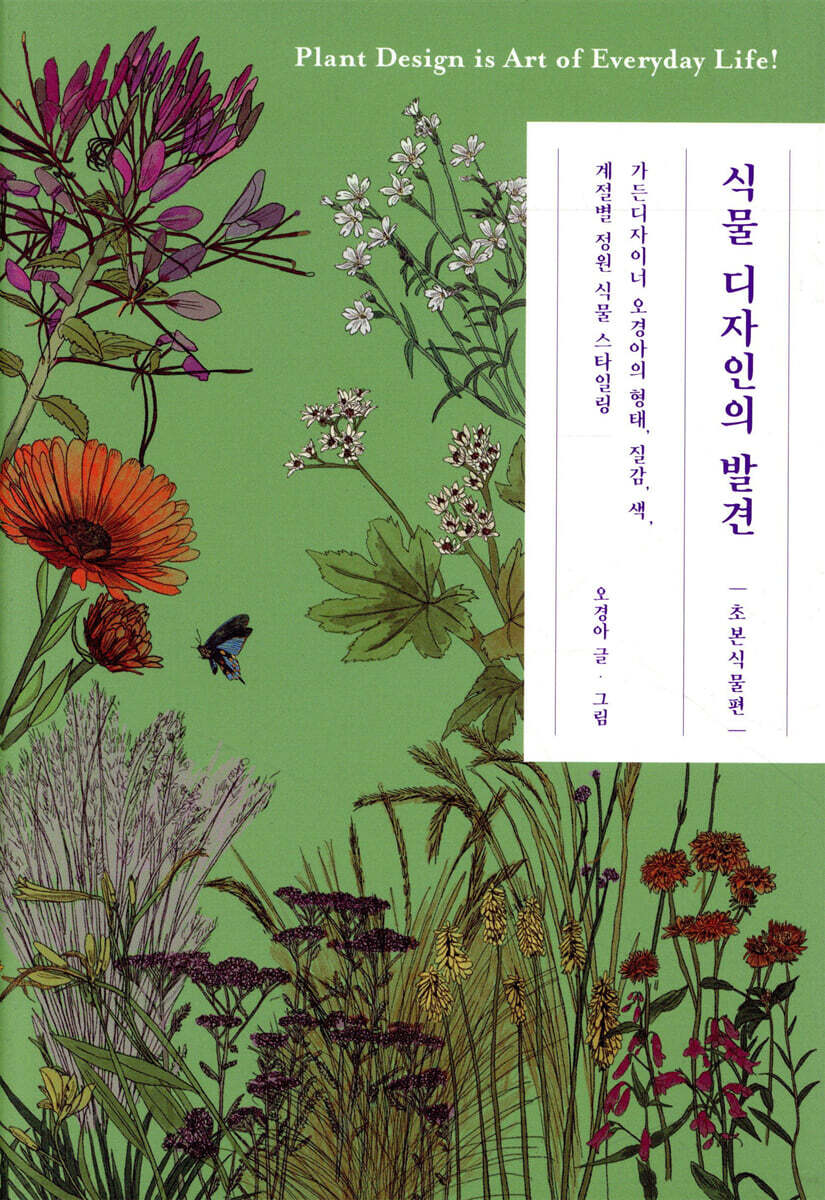
The Discovery of Plant Design
 |
Description
Book Introduction
- A word from MD
- Discover the garden of your dreams! "A garden isn't a place to collect plants, but rather a place to create beauty through them!" The world of plant design is introduced by Oh Kyung-ah, author of "Discovering the Garden" and "Twelve Months of a Gardener," and garden designer.
From revisiting plants through a designer's eyes to finding your own plant design style with 108 herbaceous plants - Home Living MD Kim Hyun-joo
The latest work by author Oh Kyung-ah, who created 『The Discovery of the Garden』 and 『Twelve Months of a Gardener』!
The world of 'plant design' guided by garden designer Oh Kyung-ah!
Learn four-season plant styling with 108 herbaceous plants!
A book that "becomes" a garden when held! Discover the garden of your dreams!
If you're unsure of which plants to combine for a beautiful look, or if you're feeling lost about what to plant in your garden, check out garden designer Oh Kyung-ah's "Discovering Plant Design: Herbaceous Plants"! This book, with its easy-to-understand text and colorful illustrations, explains how to mix and match plants and how to organize them based on color, shape, texture, and season. It goes beyond individual plants and allows you to rediscover and appreciate the beauty of their entire composition.
Just like an artist paints a picture, you can create an entire flower bed and add plants of matching colors and textures to make your garden even more beautiful and unique!
Oh Kyung-ah, the garden designer who wrote and illustrated this book, is a best-selling author in the gardening field with works such as “Discovery of the Garden” and “Twelve Months of a Gardener.” She also created a buzz by appearing on KBS programs such as “Documentary On” “Three Women’s Garden,” “Morning Yard” “Discovery of the Garden” Thursday special lecture, and “People and People” “Spring Comes to My Wife’s Garden.”
After studying landscape architecture at the University of Essex in England for seven years and working as an intern gardener at the Royal Botanic Gardens, Kew Gardens, one of the world's best botanical gardens, she returned to Korea and founded the garden design company Oh Gardens, where she is actively working as a garden designer. Through 'Oh Kyung-ah's Garden School' in Sokcho, she offers various courses that allow both experts and the general public to learn gardening and garden design in an easy-to-understand manner.
This book, "Discovering Plant Design: Herbaceous Plants," took several years to write.
The author discarded the manuscript he had written four years ago and reorganized it, completing the first draft in just one year. He also devoted great care to the illustrations so that readers could intuitively understand the plant designs just by looking at them.
Above all, the author has worked hard to compose the book so that anyone, even non-experts, who is interested in plants and wants to learn about gardening and garden design, can use and try plant design more easily.
Simply following the plant designs the author introduces in the text will be of great help.
“This book devotes a lot of time to learning the names of cultivated plants, their characteristics, their preferred environments, and their design appeal.
Because this study holds the key to plant design.
As the author, I hope that this book will be helpful to gardeners who want to create more beautiful gardens.
After all, there is nothing that purifies our eyes and hearts as much as something beautiful and pretty.” - From the author’s words
The world of 'plant design' guided by garden designer Oh Kyung-ah!
Learn four-season plant styling with 108 herbaceous plants!
A book that "becomes" a garden when held! Discover the garden of your dreams!
If you're unsure of which plants to combine for a beautiful look, or if you're feeling lost about what to plant in your garden, check out garden designer Oh Kyung-ah's "Discovering Plant Design: Herbaceous Plants"! This book, with its easy-to-understand text and colorful illustrations, explains how to mix and match plants and how to organize them based on color, shape, texture, and season. It goes beyond individual plants and allows you to rediscover and appreciate the beauty of their entire composition.
Just like an artist paints a picture, you can create an entire flower bed and add plants of matching colors and textures to make your garden even more beautiful and unique!
Oh Kyung-ah, the garden designer who wrote and illustrated this book, is a best-selling author in the gardening field with works such as “Discovery of the Garden” and “Twelve Months of a Gardener.” She also created a buzz by appearing on KBS programs such as “Documentary On” “Three Women’s Garden,” “Morning Yard” “Discovery of the Garden” Thursday special lecture, and “People and People” “Spring Comes to My Wife’s Garden.”
After studying landscape architecture at the University of Essex in England for seven years and working as an intern gardener at the Royal Botanic Gardens, Kew Gardens, one of the world's best botanical gardens, she returned to Korea and founded the garden design company Oh Gardens, where she is actively working as a garden designer. Through 'Oh Kyung-ah's Garden School' in Sokcho, she offers various courses that allow both experts and the general public to learn gardening and garden design in an easy-to-understand manner.
This book, "Discovering Plant Design: Herbaceous Plants," took several years to write.
The author discarded the manuscript he had written four years ago and reorganized it, completing the first draft in just one year. He also devoted great care to the illustrations so that readers could intuitively understand the plant designs just by looking at them.
Above all, the author has worked hard to compose the book so that anyone, even non-experts, who is interested in plants and wants to learn about gardening and garden design, can use and try plant design more easily.
Simply following the plant designs the author introduces in the text will be of great help.
“This book devotes a lot of time to learning the names of cultivated plants, their characteristics, their preferred environments, and their design appeal.
Because this study holds the key to plant design.
As the author, I hope that this book will be helpful to gardeners who want to create more beautiful gardens.
After all, there is nothing that purifies our eyes and hearts as much as something beautiful and pretty.” - From the author’s words
- You can preview some of the book's contents.
Preview
index
Introduction
1.
A garden is not just a plant collection exhibition - Planting Design Art
2.
Revisiting Plants Through a Designer's Eyes - Plant Characters
3.
Plant Combination Principles: Habitat
4.
Plant Combination Principles: Season
5.
Finding Your Own Plant Design Style - Plant Combination Principles: Styles
6.
Plant design is possible through the scientific study of each herbaceous plant - Plant Identification
supplement.
Browse Garden Plants
1.
A garden is not just a plant collection exhibition - Planting Design Art
2.
Revisiting Plants Through a Designer's Eyes - Plant Characters
3.
Plant Combination Principles: Habitat
4.
Plant Combination Principles: Season
5.
Finding Your Own Plant Design Style - Plant Combination Principles: Styles
6.
Plant design is possible through the scientific study of each herbaceous plant - Plant Identification
supplement.
Browse Garden Plants
Detailed image
.jpg)
Into the book
“Of course, reading and studying this book won’t immediately teach you how to use plant design.
You may still be at a loss as to what plants to plant in your garden, but if you think about the overall combination of plants, beyond individual plants, when choosing plants at the plant market, and how they would look good together, you will finally have a concept of plant design.
Above all, I hope this book will be helpful to gardeners who want to create a more beautiful garden.
After all, nothing purifies our eyes and hearts as much as something beautiful and pretty.”
“The phrase ‘designing plants’ itself is actually very ambiguous.
The etymology of design is that it means 'to reveal a sign', but it may not make sense for us to artificially set up and present a concept to a plant, which is a living organism.
But in principle, a garden is an extremely artificial space created by humans.
Although it is impossible in nature, it is also possible for plants native to the Southern and Northern Hemispheres to coexist right next to each other thanks to human intervention.
Artificial spaces inevitably reveal human artistry, and in garden design, the area where this artistry is most evident is 'plant design'.
So, what principles and methods can lead to mastery in plant design? As with all art, plant design requires careful study, examining and learning from others' findings to discover your own preferences and artistic flair.
“Designing plants, that is, creating a flower bed using the colors, shapes, and textures of the flowers, leaves, and stems that the plants produce, is not as easy as it sounds.
The fundamental reason is that plants are living organisms, and their growth changes from moment to moment, and plants also bloom and leave leaves according to their own set life cycle.
In addition, numerous herbaceous plants have unique leaf, flower, and stem shapes, and the bigger problem is that even cultivated plants have memories of their native habitats, so they have different environmental vulnerabilities and preferences, such as liking or disliking water, being weak to cold, and being weak to rain.
In conclusion, to complete a proper plant design, you must be well aware of the characteristics of each plant, be able to guess whether they can be planted together, and what effect the combination will have.
In this book, I have tried to explain these points through pictures to make them easier to understand.”
You may still be at a loss as to what plants to plant in your garden, but if you think about the overall combination of plants, beyond individual plants, when choosing plants at the plant market, and how they would look good together, you will finally have a concept of plant design.
Above all, I hope this book will be helpful to gardeners who want to create a more beautiful garden.
After all, nothing purifies our eyes and hearts as much as something beautiful and pretty.”
“The phrase ‘designing plants’ itself is actually very ambiguous.
The etymology of design is that it means 'to reveal a sign', but it may not make sense for us to artificially set up and present a concept to a plant, which is a living organism.
But in principle, a garden is an extremely artificial space created by humans.
Although it is impossible in nature, it is also possible for plants native to the Southern and Northern Hemispheres to coexist right next to each other thanks to human intervention.
Artificial spaces inevitably reveal human artistry, and in garden design, the area where this artistry is most evident is 'plant design'.
So, what principles and methods can lead to mastery in plant design? As with all art, plant design requires careful study, examining and learning from others' findings to discover your own preferences and artistic flair.
“Designing plants, that is, creating a flower bed using the colors, shapes, and textures of the flowers, leaves, and stems that the plants produce, is not as easy as it sounds.
The fundamental reason is that plants are living organisms, and their growth changes from moment to moment, and plants also bloom and leave leaves according to their own set life cycle.
In addition, numerous herbaceous plants have unique leaf, flower, and stem shapes, and the bigger problem is that even cultivated plants have memories of their native habitats, so they have different environmental vulnerabilities and preferences, such as liking or disliking water, being weak to cold, and being weak to rain.
In conclusion, to complete a proper plant design, you must be well aware of the characteristics of each plant, be able to guess whether they can be planted together, and what effect the combination will have.
In this book, I have tried to explain these points through pictures to make them easier to understand.”
--- From the text
Publisher's Review
Plant Design is Art of Everyday Life!
“A garden is not a place to collect plants,
“It is a place where beauty is created using plants!”
From looking at plants again through the eyes of a designer,
Find your own plant design style!
The text, consisting of six chapters, explains intuitively what plant design is, how plant design is done, and what is most important in plant design.
In particular, the author emphasizes that plant design is possible through the scientific study of each herbaceous plant, and says that he devoted himself to memorizing the names of cultivated plants, studying their characteristics, preferred environments, and design appeal, using the format of a 'plant dictionary'.
The 108 garden plants (cultivated herbaceous plants) included in the text are those that the author, as a garden designer, has personally used in his own garden in Sokcho and at project sites across the country.
This is a selection of plants that can be used in our country's gardens. If you look at them carefully and study them one by one, you will be able to discover your own unique direction for plant design.
Chapter 1.
A garden is not just a plant collection exhibition - Planting Design Art
Botanical gardens and arboretums are representative spaces where plants are collected and exhibited.
Because research and conservation of plants are necessary.
Each person's purpose for creating and maintaining a garden may be different.
However, if the purpose of a garden is not research and preservation, but to make our homes more beautiful, it must go beyond simply collecting plants.
Because planting plants itself is an expression of art.
In other words, which plants to plant, with what theme, and how to combine them are very important axes of gardening art.
It might be a good idea to understand this as a concept called ‘plant design.’
Chapter 2.
Revisiting Plants Through a Designer's Eyes - Plant Characters
Why do we love plants? Because we perceive a special beauty in their flowers, leaves, and forms.
But if we have so far viewed this beauty as an individual thing, we must now look at it again from the perspective of combination, considering the effect that certain plants produce when used together.
To do this, you need to know the characteristics of each plant's shape, color, and texture, and use them to find the feeling you get when combining them.
For example, we coordinate our clothes when we wear them.
Top, bottom, shoes, the bag you're holding, and even your hairstyle.
While each beautiful element is important, it's more important how well it all fits together as a whole.
The composition of the plants is also very similar.
Finding out how to combine, adjust, and blend the individual beautiful elements of a plant to create beauty is the most important element of plant design.
To do this well, you first need to practice differentiating plants by their shape, texture, color, and other dimensions, rather than just looking at them in terms of rarity or specific parts.
Chapter 3.
Plant Combination Principles: Habitat
The most important thing to consider when combining plants is their habitat.
Each plant has its own environment in which it originally grew.
It could be a sun-drenched desert, or a shallow, rippling stream.
Also, depending on the concentration of waste in the soil, the acid and alkali concentrations may change, causing certain plants to weaken.
Although cultivated plants were created by humans for horticultural purposes, they nevertheless have distinct genetic limitations that favor the native habitat conditions of their parent plants.
If you plant perennial plants that can survive year after year, these habitat conditions become even more important.
So, plant design that plants with similar habitats together and planted together has recently been receiving a lot of attention.
The biggest advantage of plant design that is tied to a native habitat is that it looks as if the plants grew naturally, and because the horticultural management method is the same, it is a little easier to manage the plants.
?
Chapter 4.
Plant Combination Principles: Season
All trees and grasses bloom and bear seeds and fruit.
However, the timing is different for each plant.
Some plants bloom in early spring, before the leaves appear, and others bloom in spring, summer, and even late fall and early winter.
The reason why plants bloom at different times is because of competition for moisture.
To make themselves more visible or to gain exclusive rights to insects and animals that pollinate them.
The problem is that if you design without properly understanding the growth cycle of these plants, no matter how well you design the shape, color, and texture of the plants, you may end up with failures such as the flowers not blooming at the same time.
Therefore, before designing plants, it is necessary to first understand the seasonal characteristics of plants, such as when they produce leaves, flowers, and seeds.
Therefore, at least divide the flower beds by season into spring, summer, late summer, and early fall, and then organize the plant combinations by theme within these to create the same landscape you imagined in your mind in your garden.
Chapter 5.
Finding Your Own Plant Design Style - Plant Combination Principles: Styles
There is no set right answer or method for design.
Just as a painter creates a composition on a canvas in his own way and expresses artistry with lines and colors, it is good to think of plant design as performing the same artistic act with plants in a flower bed.
Therefore, it is a good idea to decide on your own composition method and color combinations that you particularly like.
Of course, to become more professional in plant design, various studies, experiences, and practices are required.
The best way is to first draw the plants in a sketchbook or similar and try out combinations to get a feel for the combination.
Let's examine how the shapes of the plants match each other, and practice how different colors combine when they meet by selecting colors by variety.
In particular, a good way to combine colors is to create your own palette of colors and try out the combinations in various ways.
Chapter 6.
Plant design is possible through the scientific study of each herbaceous plant - Plant Identification
Whether from an aesthetic or organic perspective, plant design requires a scientific study of the individual plants themselves.
This study is called 'Plant Identification'.
After understanding the ecological information of the plant, such as its habitat, growth cycle, flowering period, growth rate, leaf characteristics, and height, you can find a group of plants that can be combined with each other, and then combine these groups of plants again with special shapes, colors, and styles to create the 'art of plant design' using plants.
“A garden is not a place to collect plants,
“It is a place where beauty is created using plants!”
From looking at plants again through the eyes of a designer,
Find your own plant design style!
The text, consisting of six chapters, explains intuitively what plant design is, how plant design is done, and what is most important in plant design.
In particular, the author emphasizes that plant design is possible through the scientific study of each herbaceous plant, and says that he devoted himself to memorizing the names of cultivated plants, studying their characteristics, preferred environments, and design appeal, using the format of a 'plant dictionary'.
The 108 garden plants (cultivated herbaceous plants) included in the text are those that the author, as a garden designer, has personally used in his own garden in Sokcho and at project sites across the country.
This is a selection of plants that can be used in our country's gardens. If you look at them carefully and study them one by one, you will be able to discover your own unique direction for plant design.
Chapter 1.
A garden is not just a plant collection exhibition - Planting Design Art
Botanical gardens and arboretums are representative spaces where plants are collected and exhibited.
Because research and conservation of plants are necessary.
Each person's purpose for creating and maintaining a garden may be different.
However, if the purpose of a garden is not research and preservation, but to make our homes more beautiful, it must go beyond simply collecting plants.
Because planting plants itself is an expression of art.
In other words, which plants to plant, with what theme, and how to combine them are very important axes of gardening art.
It might be a good idea to understand this as a concept called ‘plant design.’
Chapter 2.
Revisiting Plants Through a Designer's Eyes - Plant Characters
Why do we love plants? Because we perceive a special beauty in their flowers, leaves, and forms.
But if we have so far viewed this beauty as an individual thing, we must now look at it again from the perspective of combination, considering the effect that certain plants produce when used together.
To do this, you need to know the characteristics of each plant's shape, color, and texture, and use them to find the feeling you get when combining them.
For example, we coordinate our clothes when we wear them.
Top, bottom, shoes, the bag you're holding, and even your hairstyle.
While each beautiful element is important, it's more important how well it all fits together as a whole.
The composition of the plants is also very similar.
Finding out how to combine, adjust, and blend the individual beautiful elements of a plant to create beauty is the most important element of plant design.
To do this well, you first need to practice differentiating plants by their shape, texture, color, and other dimensions, rather than just looking at them in terms of rarity or specific parts.
Chapter 3.
Plant Combination Principles: Habitat
The most important thing to consider when combining plants is their habitat.
Each plant has its own environment in which it originally grew.
It could be a sun-drenched desert, or a shallow, rippling stream.
Also, depending on the concentration of waste in the soil, the acid and alkali concentrations may change, causing certain plants to weaken.
Although cultivated plants were created by humans for horticultural purposes, they nevertheless have distinct genetic limitations that favor the native habitat conditions of their parent plants.
If you plant perennial plants that can survive year after year, these habitat conditions become even more important.
So, plant design that plants with similar habitats together and planted together has recently been receiving a lot of attention.
The biggest advantage of plant design that is tied to a native habitat is that it looks as if the plants grew naturally, and because the horticultural management method is the same, it is a little easier to manage the plants.
?
Chapter 4.
Plant Combination Principles: Season
All trees and grasses bloom and bear seeds and fruit.
However, the timing is different for each plant.
Some plants bloom in early spring, before the leaves appear, and others bloom in spring, summer, and even late fall and early winter.
The reason why plants bloom at different times is because of competition for moisture.
To make themselves more visible or to gain exclusive rights to insects and animals that pollinate them.
The problem is that if you design without properly understanding the growth cycle of these plants, no matter how well you design the shape, color, and texture of the plants, you may end up with failures such as the flowers not blooming at the same time.
Therefore, before designing plants, it is necessary to first understand the seasonal characteristics of plants, such as when they produce leaves, flowers, and seeds.
Therefore, at least divide the flower beds by season into spring, summer, late summer, and early fall, and then organize the plant combinations by theme within these to create the same landscape you imagined in your mind in your garden.
Chapter 5.
Finding Your Own Plant Design Style - Plant Combination Principles: Styles
There is no set right answer or method for design.
Just as a painter creates a composition on a canvas in his own way and expresses artistry with lines and colors, it is good to think of plant design as performing the same artistic act with plants in a flower bed.
Therefore, it is a good idea to decide on your own composition method and color combinations that you particularly like.
Of course, to become more professional in plant design, various studies, experiences, and practices are required.
The best way is to first draw the plants in a sketchbook or similar and try out combinations to get a feel for the combination.
Let's examine how the shapes of the plants match each other, and practice how different colors combine when they meet by selecting colors by variety.
In particular, a good way to combine colors is to create your own palette of colors and try out the combinations in various ways.
Chapter 6.
Plant design is possible through the scientific study of each herbaceous plant - Plant Identification
Whether from an aesthetic or organic perspective, plant design requires a scientific study of the individual plants themselves.
This study is called 'Plant Identification'.
After understanding the ecological information of the plant, such as its habitat, growth cycle, flowering period, growth rate, leaf characteristics, and height, you can find a group of plants that can be combined with each other, and then combine these groups of plants again with special shapes, colors, and styles to create the 'art of plant design' using plants.
GOODS SPECIFICS
- Publication date: August 13, 2021
- Format: Hardcover book binding method guide
- Page count, weight, size: 344 pages | 686g | 135*200*30mm
- ISBN13: 9788958207207
- ISBN10: 8958207205
You may also like
카테고리
korean


korean

![GQ KOREA Mark (Monthly): December [2025]](http://librairie.coreenne.fr/cdn/shop/files/8ef265dbbfbf186523ed75ba7319009d.jpg?v=1765340328&width=3840)


