

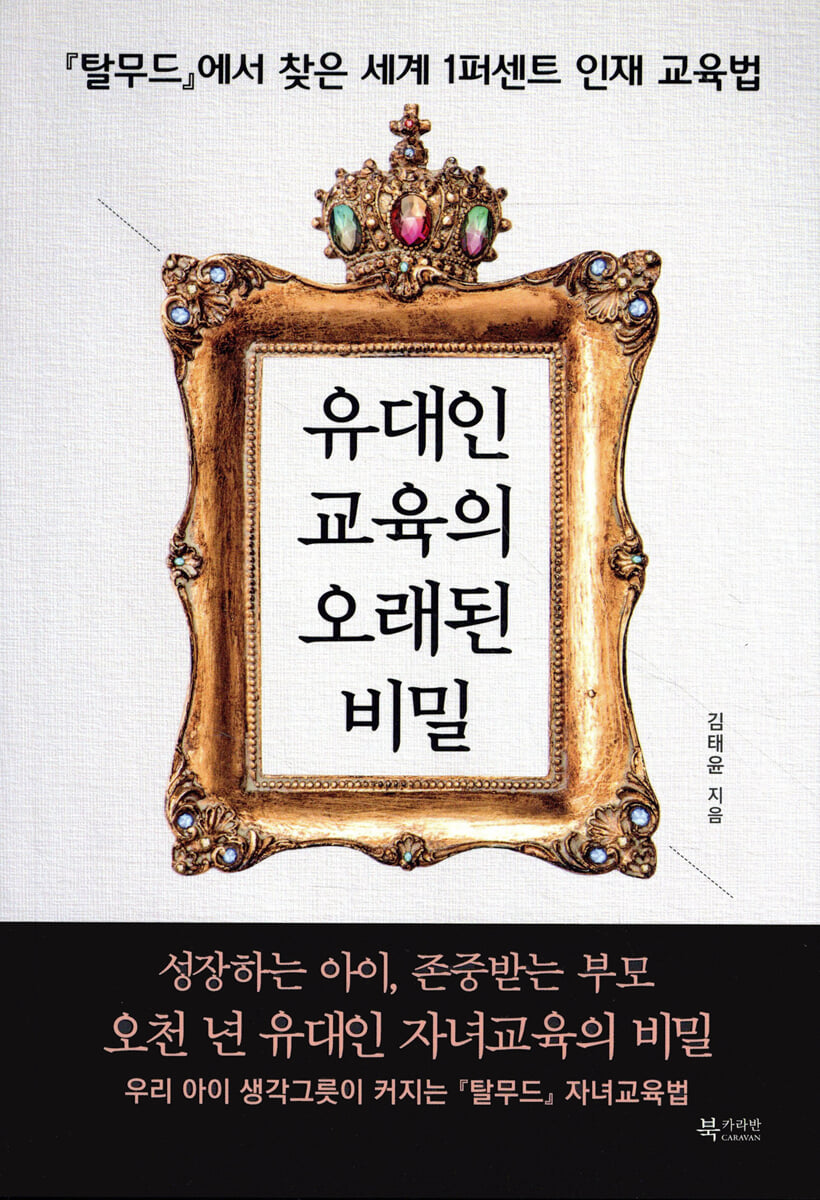
The Old Secret of Jewish Education
 |
Description
Book Introduction
This book presents Jewish education, which has been passed down for five thousand years, as an alternative to the current state of education in Korea that focuses on entrance exams.
There are about 15 million Jews, less than half of our country's population.
Yet, they have won the most Nobel Prizes of all time, dominate the global financial world, and form a power elite around the world, exerting considerable influence behind the scenes.
The essence of this Jewish education is religious education formed from childhood based on the Talmud and the Torah.
And this Jewish religious education is centered around the home.
The greatest strength of Jewish education is that it teaches children with love, based on conversation and discussion-based "chavruta."
The author argues that we should change the educational reality in our country by introducing Jewish education into homes and schools.
There are about 15 million Jews, less than half of our country's population.
Yet, they have won the most Nobel Prizes of all time, dominate the global financial world, and form a power elite around the world, exerting considerable influence behind the scenes.
The essence of this Jewish education is religious education formed from childhood based on the Talmud and the Torah.
And this Jewish religious education is centered around the home.
The greatest strength of Jewish education is that it teaches children with love, based on conversation and discussion-based "chavruta."
The author argues that we should change the educational reality in our country by introducing Jewish education into homes and schools.
- You can preview some of the book's contents.
Preview
index
Prologue: What South Korea's education system needs today is a Jewish-style child education system.
Part 1: Is it okay to educate my child like this?
Chapter 1: Korean Parents Torn Between Public and Private Education
The children's bodies and minds began to hurt more and more.
School and Society Without Questions
The reality of a 44 percent dropout rate among Korean international students from Ivy League schools.
Chapter 2: Is there no alternative?
Jewish holistic education: cultivating creativity and character.
Why Jews Now in the Age of the Fourth Industrial Revolution?
A nation that makes up 0.2% of the world's population and wins 30% of Nobel Prizes
We wrestle with books, but Jews wrestle with people.
Part 2: The Talmud Teaching Method for Expanding the Mind
Chapter 1: Family Philosophy
"Our Child's First School Home," written as "family" and read as "love."
Maintain authority but abandon authoritarianism.
The lowest divorce rate in the world
“Everything will be alright~”
Sabbath and Jewish Identity
Parents are mirrors of their children.
A magical time of self-growth
The most intelligent Jewish conversation is humor.
Praise makes our children dance
Chapter 2: Child Education
Children are a gift from God.
Jewish children don't go through puberty?
The first rival siblings
Don't choose your child's college or company.
Don't skip breakfast
The sooner economic education begins, the better.
Expose to a multilingual environment
Chapter 3: Creativity Education
Before teaching your child, first remove the towel from his or her eyes.
“What do you think?”
It teaches us not to be "better than others," but to be "different from others."
Jews don't memorize multiplication tables
The world is changed by adventurers, not model students.
Chapter 4: Character Education
It teaches us how to live as 'we' rather than 'I'.
We are all brothers
Punish with your right hand, but hug with your left.
Honesty is the best character.
The poor in spirit have no children.
Raise your child with patience and a long-term perspective.
Excessive satisfaction is invisible domestic violence.
Never speak ill of your friends under any circumstances.
All men are equal under heaven.
Chapter 5_Havruta
From 'Period Education' to 'Question Mark Education'
It makes me build my thoughts on top of other people's thoughts.
Change your perspective
If you can't say it, you don't know.
Havruta is the recognition of a child
The easiest picture book of the rabbit and the turtle, Havruta
Conflict Havruta Negotiation with Children
Epilogue_Are you a parent? Are you a parent?
References
Part 1: Is it okay to educate my child like this?
Chapter 1: Korean Parents Torn Between Public and Private Education
The children's bodies and minds began to hurt more and more.
School and Society Without Questions
The reality of a 44 percent dropout rate among Korean international students from Ivy League schools.
Chapter 2: Is there no alternative?
Jewish holistic education: cultivating creativity and character.
Why Jews Now in the Age of the Fourth Industrial Revolution?
A nation that makes up 0.2% of the world's population and wins 30% of Nobel Prizes
We wrestle with books, but Jews wrestle with people.
Part 2: The Talmud Teaching Method for Expanding the Mind
Chapter 1: Family Philosophy
"Our Child's First School Home," written as "family" and read as "love."
Maintain authority but abandon authoritarianism.
The lowest divorce rate in the world
“Everything will be alright~”
Sabbath and Jewish Identity
Parents are mirrors of their children.
A magical time of self-growth
The most intelligent Jewish conversation is humor.
Praise makes our children dance
Chapter 2: Child Education
Children are a gift from God.
Jewish children don't go through puberty?
The first rival siblings
Don't choose your child's college or company.
Don't skip breakfast
The sooner economic education begins, the better.
Expose to a multilingual environment
Chapter 3: Creativity Education
Before teaching your child, first remove the towel from his or her eyes.
“What do you think?”
It teaches us not to be "better than others," but to be "different from others."
Jews don't memorize multiplication tables
The world is changed by adventurers, not model students.
Chapter 4: Character Education
It teaches us how to live as 'we' rather than 'I'.
We are all brothers
Punish with your right hand, but hug with your left.
Honesty is the best character.
The poor in spirit have no children.
Raise your child with patience and a long-term perspective.
Excessive satisfaction is invisible domestic violence.
Never speak ill of your friends under any circumstances.
All men are equal under heaven.
Chapter 5_Havruta
From 'Period Education' to 'Question Mark Education'
It makes me build my thoughts on top of other people's thoughts.
Change your perspective
If you can't say it, you don't know.
Havruta is the recognition of a child
The easiest picture book of the rabbit and the turtle, Havruta
Conflict Havruta Negotiation with Children
Epilogue_Are you a parent? Are you a parent?
References
Detailed image
Into the book
In our country, the competition for college entrance is so fierce that the brain is overworked in a short period of time.
It is not easy for people to maintain constant mental tension.
A sprint without rest in between cannot last long.
This is why students who were at a high level until high school suddenly collapse when they enter college.
Studying must be thought of as a marathon.
We must be considerate of children so that they can progress at their own pace without overdoing it, respecting individual differences, differences between subjects, and differences between periods.
Jewish students' international academic achievement and Olympiad scores are lower than those of students from Asian countries such as Korea, Singapore, China, and Vietnam.
However, academic achievements at universities and graduate schools are different.
After graduating from college, your research achievements will shine even more.
There is not a single Korean Nobel Prize winner in science or medicine.
But Jews account for about a third of Nobel Prize winners in this field.
The reason is that I think of studying as a lifelong study and I don't speed up.
For Jews, learning is life itself.
Because I think of studying not just as something you do at school, but as a friend that will stay with you for the rest of your life.
--- p.37
Here it is necessary to define Jewish identity.
There are two basic definitions of a Jew.
First, it values matrilineal bloodline.
In other words, if the mother is Jewish, the child is considered Jewish even if the father is not Jewish.
Actor Harrison Ford is one such example.
Second, if you believe in Judaism, you are recognized as a Jew.
Even if you believe in another religion, if you convert to Judaism, you are considered a Jew.
Actresses Elizabeth Taylor and Marilyn Monroe fall into this category.
Like actress Gwyneth Paltrow, if only the father is Jewish, they are conditionally recognized as Jewish.
In this case, being a Jewish believer is also a prerequisite.
If there is a controversy, the final decision is made by a Jewish priest, a 'Rabbi'.
In conclusion, Jewish identity is religion, not bloodline.
Therefore, it can be said that there is no pure Jewish people today.
--- p.48~49
Jews make up only 0.2 percent of the world's population.
However, it accounts for about 20 to 30 percent of all Nobel Prize winners.
The current population of Israel is approximately 8.3 million.
The remaining Jews are scattered throughout the world, many of them in the Americas.
Worldwide, there are only about 15 million people classified as Jewish, or about 0.2 percent of the world's population of 7.5 billion.
However, to get the percentage of Jewish Nobel laureates in history, you need to multiply that by roughly 110.
From 1901 to the present, a total of 200 laureates have been Jewish, including 53 in medicine, 53 in physics, 36 in chemistry, 31 in economics, 15 in literature, and 5 in peace.
There are many Jewish professors and students at prestigious American universities.
About 40 percent of professors at prestigious American universities, about 30 percent of graduate students at Harvard and Wharton Schools, and about 25 percent of graduate students at Ivy League schools are Jewish.
In conclusion, students at prestigious American universities learn from Jewish professors, interact with Jewish students, and naturally become familiar with Jewish culture.
Jewish-owned global corporations account for 41.5 percent of executive positions at the world's top 500 companies.
Eighty percent of the world's top 100 companies have R&D labs in Israel.
Jewish capital, including the Rothschilds, JP Morgan, ExxonMobil, Rockefeller, Citigroup, and Royal Dutch Shell (owned by the Rothschild family), dominated the global financial world.
--- p.50~51
Humor is closely related to creative thinking skills.
So, the richer or higher up the hierarchy, the more important humor Jews consider.
I think humor is one of the most powerful forces humans have.
Nothing requires as much imagination and quick wit as real humor.
The essence of humor is to read someone else's emotions and thoughts in an instant and then make them submit by throwing a joke that fits their feelings.
Humor requires associative thinking, quick wit, and quick thinking.
This is also the reason why many comedians who make a living through humor are Jewish.
More than 80 percent of American comedians are Jewish.
It is not easy for people to maintain constant mental tension.
A sprint without rest in between cannot last long.
This is why students who were at a high level until high school suddenly collapse when they enter college.
Studying must be thought of as a marathon.
We must be considerate of children so that they can progress at their own pace without overdoing it, respecting individual differences, differences between subjects, and differences between periods.
Jewish students' international academic achievement and Olympiad scores are lower than those of students from Asian countries such as Korea, Singapore, China, and Vietnam.
However, academic achievements at universities and graduate schools are different.
After graduating from college, your research achievements will shine even more.
There is not a single Korean Nobel Prize winner in science or medicine.
But Jews account for about a third of Nobel Prize winners in this field.
The reason is that I think of studying as a lifelong study and I don't speed up.
For Jews, learning is life itself.
Because I think of studying not just as something you do at school, but as a friend that will stay with you for the rest of your life.
--- p.37
Here it is necessary to define Jewish identity.
There are two basic definitions of a Jew.
First, it values matrilineal bloodline.
In other words, if the mother is Jewish, the child is considered Jewish even if the father is not Jewish.
Actor Harrison Ford is one such example.
Second, if you believe in Judaism, you are recognized as a Jew.
Even if you believe in another religion, if you convert to Judaism, you are considered a Jew.
Actresses Elizabeth Taylor and Marilyn Monroe fall into this category.
Like actress Gwyneth Paltrow, if only the father is Jewish, they are conditionally recognized as Jewish.
In this case, being a Jewish believer is also a prerequisite.
If there is a controversy, the final decision is made by a Jewish priest, a 'Rabbi'.
In conclusion, Jewish identity is religion, not bloodline.
Therefore, it can be said that there is no pure Jewish people today.
--- p.48~49
Jews make up only 0.2 percent of the world's population.
However, it accounts for about 20 to 30 percent of all Nobel Prize winners.
The current population of Israel is approximately 8.3 million.
The remaining Jews are scattered throughout the world, many of them in the Americas.
Worldwide, there are only about 15 million people classified as Jewish, or about 0.2 percent of the world's population of 7.5 billion.
However, to get the percentage of Jewish Nobel laureates in history, you need to multiply that by roughly 110.
From 1901 to the present, a total of 200 laureates have been Jewish, including 53 in medicine, 53 in physics, 36 in chemistry, 31 in economics, 15 in literature, and 5 in peace.
There are many Jewish professors and students at prestigious American universities.
About 40 percent of professors at prestigious American universities, about 30 percent of graduate students at Harvard and Wharton Schools, and about 25 percent of graduate students at Ivy League schools are Jewish.
In conclusion, students at prestigious American universities learn from Jewish professors, interact with Jewish students, and naturally become familiar with Jewish culture.
Jewish-owned global corporations account for 41.5 percent of executive positions at the world's top 500 companies.
Eighty percent of the world's top 100 companies have R&D labs in Israel.
Jewish capital, including the Rothschilds, JP Morgan, ExxonMobil, Rockefeller, Citigroup, and Royal Dutch Shell (owned by the Rothschild family), dominated the global financial world.
--- p.50~51
Humor is closely related to creative thinking skills.
So, the richer or higher up the hierarchy, the more important humor Jews consider.
I think humor is one of the most powerful forces humans have.
Nothing requires as much imagination and quick wit as real humor.
The essence of humor is to read someone else's emotions and thoughts in an instant and then make them submit by throwing a joke that fits their feelings.
Humor requires associative thinking, quick wit, and quick thinking.
This is also the reason why many comedians who make a living through humor are Jewish.
More than 80 percent of American comedians are Jewish.
--- p.117
Publisher's Review
The reality of education centered on entrance exams, where grades are the key to happiness
What Koreans and Jews have in common is a high level of enthusiasm for education.
However, there are many differences between Jewish education and our country's education.
Jews teach their children to enjoy learning, but the problem with our country is that we teach them to become bored with studying from a young age.
The lack of question-based education and the craze for early childhood education have given rise to child psychiatry.
In the academy district of Daechi, Gangnam, which is known as an education special zone, there is nothing that money cannot buy, and there is practically nothing that cannot be found in the form of content that can make money.
The recent increase in youth suicide rates also reflects this problem.
In the educational reality of our country, there are no parents, only parents.
As the parent of a daughter in her first year of middle school, the author wrote this book with the intention of resolving the problems of the current educational reality that are no different from the past.
In the author's struggle between parents, we can see the majority of parents in our country.
The author, reflecting on himself as a parent and caregiver, majored in education at Seoul National University and worked for 10 years at the Korea Foundation for the Advancement of Science and Creativity, a quasi-governmental organization under the Ministry of Education, sought to solve the problems of the Korean educational landscape.
The ultimate in holistic education: Finding the answer in Jewish education.
The author has been working in the education field for over 20 years.
What I realized then was that at the end of the creative talent spectrum, the 'Jews' were positioned as 'role models' and 'Bibles' of education.
However, the reality is that the Jewish education system is not widely applied in Korea.
Moreover, many existing books on Judaism are full of praise and do not fit the Korean educational sensibility.
The author acknowledges the educational reality of South Korea, but has tried to apply the necessary aspects of Jewish education to real life.
The most important thing is that for Jews, 'the home is the first school' and 'parents are the best teachers'.
They respect their elders and others, and rather than demanding a single answer, they believe that “100 Jews have 100 answers.”
Above all, home education is the starting point that connects to school education and, further, to social education.
Learn creativity from Jews who don't memorize their multiplication tables.
Jews do not memorize the multiplication table, but rather are taught the principles that lead to the multiplication table over many years.
For example, if we were to solve a problem of finding the area of a square that is 9 centimeters wide and 6 centimeters long, in our country we would use the multiplication table, '6954', to find the answer right away.
However, Jews place nine stones in six rows and count them one by one.
Also, measure 9 centimeters and 6 centimeters with a ruler, then divide with a knife and count them one by one.
Each person has a different way of solving this.
The Jewish way of education is to let the child find the answer for himself.
And this method has become commonplace.
What's more important here is that each person presents the method they found, and the person listening to the presentation also comes up with their own method.
If there are 20 students, each student creatively comes up with a way to find the area and shares 20 ideas through a presentation.
So, a variety of creative and individual solutions can emerge.
Without comparing even between brothers
Raising children to be “different from others” rather than “better than others”
Jewish education that fosters individuality
When raising siblings, Jews also believe in the adage, “Don’t compare your children’s brains, but compare their personalities.”
A characteristic of Jewish education is that it encourages friendly competition to help each student develop his or her talents and individuality.
I think it is important to respect a child's individuality as much as possible and let it shine even brighter.
Individuality is your own unique appearance that is different from others.
This educational method that respects individuality is the most important characteristic of Jewish education.
“What do you think?”
Developing your thinking capacity through questions
The core of Jewish education lies in 'Havruta'
'Havruta' is a Jewish conversation method that involves asking questions to elicit thoughts.
To have a Havruta, there must be a good relationship between parents and children, and between teachers and students.
Also, Havruta is a conversational method that acknowledges the child.
Among the Jewish 'Havruta', there is a conversation method called REACH.
The process of Rich Conversation is “Reflect → Encourage → Accept → Choices and Changes → Hold and Hug.”
Asking thought-provoking questions while looking at the cover of a picture book is an example of 'Havruta' using books.
The Havruta suggested by the author in this book is a new method that cannot be found in other books and can be used in school education and at home.
Introducing 'Havruta', which teaches students how to think through questions, into schools and homes will provide an alternative to entrance exam-oriented education.
There are countless examples of these Havrutas in the Talmud, which has been around for five thousand years.
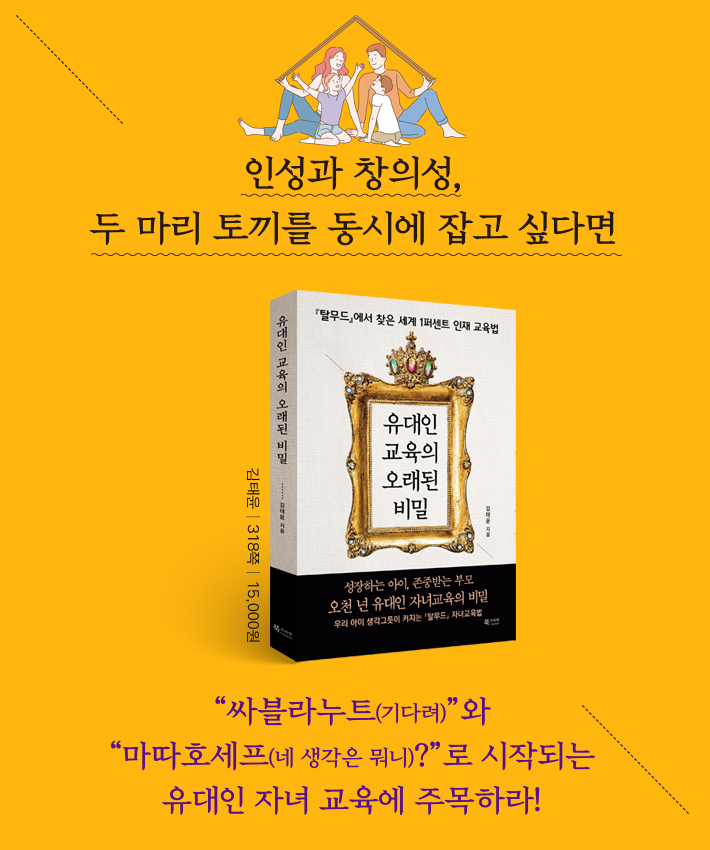
“What do you think?” (Mata Hoseph), this one question is the core of Havruta.
The author proposes solving the problems of our country's education by developing students' thinking skills through the Havruta of the Talmud.
What Koreans and Jews have in common is a high level of enthusiasm for education.
However, there are many differences between Jewish education and our country's education.
Jews teach their children to enjoy learning, but the problem with our country is that we teach them to become bored with studying from a young age.
The lack of question-based education and the craze for early childhood education have given rise to child psychiatry.
In the academy district of Daechi, Gangnam, which is known as an education special zone, there is nothing that money cannot buy, and there is practically nothing that cannot be found in the form of content that can make money.
The recent increase in youth suicide rates also reflects this problem.
In the educational reality of our country, there are no parents, only parents.
As the parent of a daughter in her first year of middle school, the author wrote this book with the intention of resolving the problems of the current educational reality that are no different from the past.
In the author's struggle between parents, we can see the majority of parents in our country.
The author, reflecting on himself as a parent and caregiver, majored in education at Seoul National University and worked for 10 years at the Korea Foundation for the Advancement of Science and Creativity, a quasi-governmental organization under the Ministry of Education, sought to solve the problems of the Korean educational landscape.
The ultimate in holistic education: Finding the answer in Jewish education.
The author has been working in the education field for over 20 years.
What I realized then was that at the end of the creative talent spectrum, the 'Jews' were positioned as 'role models' and 'Bibles' of education.
However, the reality is that the Jewish education system is not widely applied in Korea.
Moreover, many existing books on Judaism are full of praise and do not fit the Korean educational sensibility.
The author acknowledges the educational reality of South Korea, but has tried to apply the necessary aspects of Jewish education to real life.
The most important thing is that for Jews, 'the home is the first school' and 'parents are the best teachers'.
They respect their elders and others, and rather than demanding a single answer, they believe that “100 Jews have 100 answers.”
Above all, home education is the starting point that connects to school education and, further, to social education.
Learn creativity from Jews who don't memorize their multiplication tables.
Jews do not memorize the multiplication table, but rather are taught the principles that lead to the multiplication table over many years.
For example, if we were to solve a problem of finding the area of a square that is 9 centimeters wide and 6 centimeters long, in our country we would use the multiplication table, '6954', to find the answer right away.
However, Jews place nine stones in six rows and count them one by one.
Also, measure 9 centimeters and 6 centimeters with a ruler, then divide with a knife and count them one by one.
Each person has a different way of solving this.
The Jewish way of education is to let the child find the answer for himself.
And this method has become commonplace.
What's more important here is that each person presents the method they found, and the person listening to the presentation also comes up with their own method.
If there are 20 students, each student creatively comes up with a way to find the area and shares 20 ideas through a presentation.
So, a variety of creative and individual solutions can emerge.
Without comparing even between brothers
Raising children to be “different from others” rather than “better than others”
Jewish education that fosters individuality
When raising siblings, Jews also believe in the adage, “Don’t compare your children’s brains, but compare their personalities.”
A characteristic of Jewish education is that it encourages friendly competition to help each student develop his or her talents and individuality.
I think it is important to respect a child's individuality as much as possible and let it shine even brighter.
Individuality is your own unique appearance that is different from others.
This educational method that respects individuality is the most important characteristic of Jewish education.
“What do you think?”
Developing your thinking capacity through questions
The core of Jewish education lies in 'Havruta'
'Havruta' is a Jewish conversation method that involves asking questions to elicit thoughts.
To have a Havruta, there must be a good relationship between parents and children, and between teachers and students.
Also, Havruta is a conversational method that acknowledges the child.
Among the Jewish 'Havruta', there is a conversation method called REACH.
The process of Rich Conversation is “Reflect → Encourage → Accept → Choices and Changes → Hold and Hug.”
Asking thought-provoking questions while looking at the cover of a picture book is an example of 'Havruta' using books.
The Havruta suggested by the author in this book is a new method that cannot be found in other books and can be used in school education and at home.
Introducing 'Havruta', which teaches students how to think through questions, into schools and homes will provide an alternative to entrance exam-oriented education.
There are countless examples of these Havrutas in the Talmud, which has been around for five thousand years.
“What do you think?” (Mata Hoseph), this one question is the core of Havruta.
The author proposes solving the problems of our country's education by developing students' thinking skills through the Havruta of the Talmud.
GOODS SPECIFICS
- Date of publication: August 20, 2020
- Page count, weight, size: 318 pages | 426g | 145*210*16mm
- ISBN13: 9791160050905
- ISBN10: 1160050902
You may also like
카테고리
korean


korean

![GQ KOREA Mark (Monthly): December [2025]](http://librairie.coreenne.fr/cdn/shop/files/8ef265dbbfbf186523ed75ba7319009d.jpg?v=1765340328&width=3840)


