

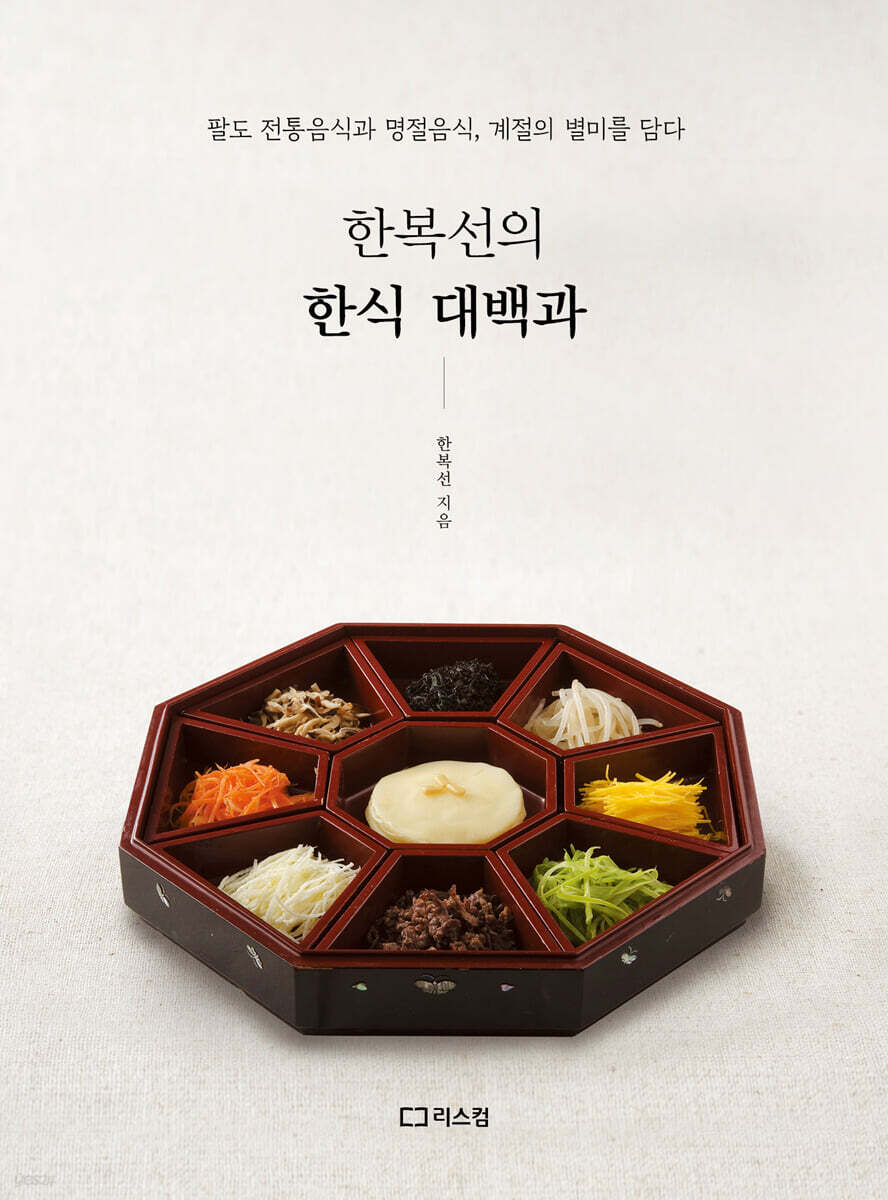
Hanbokseon's Encyclopedia of Korean Food
 |
Description
Book Introduction
Everything about Korean food, from everyday dishes to royal, regional, and seasonal dishes.
A bowl of rice, a bowl of soup, a plate of vegetables.
A simple yet warm meal has always been a part of Korean life.
〈Encyclopedia of Korean Cuisine〉 is a textbook on daily cooking, focusing on home-cooked meals, containing over 300 recipes ranging from everyday dishes such as soups, stews, vegetables, and side dishes, to the refined cuisine of royal courts, regional dishes from all eight provinces, holiday and seasonal foods, kimchi and pickled vegetables for all four seasons, rice cakes, Korean sweets, and traditional drinks.
This book, which respects tradition while also making it easy to follow in today's kitchens, revives the sincerity put into a warm meal and the cultural value of Korean food.
A bowl of rice, a bowl of soup, a plate of vegetables.
A simple yet warm meal has always been a part of Korean life.
〈Encyclopedia of Korean Cuisine〉 is a textbook on daily cooking, focusing on home-cooked meals, containing over 300 recipes ranging from everyday dishes such as soups, stews, vegetables, and side dishes, to the refined cuisine of royal courts, regional dishes from all eight provinces, holiday and seasonal foods, kimchi and pickled vegetables for all four seasons, rice cakes, Korean sweets, and traditional drinks.
This book, which respects tradition while also making it easy to follow in today's kitchens, revives the sincerity put into a warm meal and the cultural value of Korean food.
- You can preview some of the book's contents.
Preview
index
Theory Page
Master the basics
Learn Korean cooking terms easily
The seasoning formula that brings out the flavor of food
The secret to making delicious soups and stews
Mother's cooking, making soybean paste
Knowing our food
Side dishes and preserved foods prepared according to the season
Celebrate special days with a plan
Holiday and seasonal foods enjoyed twelve months a year
Basic theory of preparing a ancestral rite table at a glance
Royal cuisine, a delicacy for special occasions
Healthy ingredients that can be used as medicine
Local specialties from each region across the country
Making kimchi, a basic side dish for 365 days a year
Basic side dishes made with seasonal ingredients: Jangajji and pickles
Preserved foods made from fruits, fruit juice and fruit wine
Chapter 1 | Everyday Food
Cabbage soup
Spinach and Clam Soup
Sagolwoogeojitguk
Hwangtae Haejangguk
seaweed soup
Beef radish soup
galbitang
Seolleongtang
Squid radish soup
Bean sprout soup
Cucumber soup, seaweed soup, bean sprout soup
Dalrae Doenjang Jjigae
Cheonggukjang stew
Soft tofu stew
Doenjangjjigae
Pork and potato stew
Tofu and Gochujang Stew
soy sauce marinated crab
Stir-fried crab
Stir-fried cockles
fermented skate
Steamed pollack
Grilled dried pollack
braised mackerel
Stir-fried octopus
Bulgogi
Pork Bulgogi with Gochujang
Jangjorim
Steamed eggs
Three-color vegetables (spinach, bracken, and bellflower)
Perilla leaf
Eggplant greens
Stir-fried zucchini and shrimp paste
Stir-fried cucumbers
Bean sprout salad
Stir-fried hosta
Three-color radish salad
Seaweed and cucumber salad
Dorajioi raw vegetables
Cucumber salad
Grilled deodeok
Cold soybean paste and cold chili pepper paste salad
Stir-fried chili peppers
Anchovy and chili pepper stew
Stir-fried sweet potato stems
Stir-fried seaweed stems
Stewed potatoes
Braised tofu
Bean-based rice
Stir-fried garlic shrimp
Chapter 2 | Delicacies
galbijjim
Pork Bossam
Spicy braised chicken
chop suey
Spicy seafood stew
Gamjatang
Al-tang
noodle stew
Tofu kimchi
Stir-fried octopus
Turnip and barley bibimbap
radish cold noodles
Kimchi Onmyeon
Kimchi Bibim Guksu
Chicken Kalguksu
Auksujebi
3 kinds of eggplant pancake
Seafood pancake
Zucchini and chive pancakes
Perilla leaf pancake
Kimchi stew
Chapter 3 | Holiday and Seasonal Food
tteokguk
Rice cake mountain
Steamed rice cakes
Royal Tteokbokki
Songpyeon
Toran soup
Samgyetang galbi
Sambae Saengchae (raw vegetables with water)
Pear red chili pepper
Old vegetables (dried radish greens, wild chive greens, pumpkin greens)
Five-grain rice
Abbreviated form
Number of pieces
Samseokjeon (meat pancake, fish pancake, zucchini pancake)
Dongji Red Bean Porridge
Red bean porridge
Samtang (meat soup, beef soup, fish soup)
Three types of trespass (fish trespass, land trespass, and seal trespass)
Sirutteok
Knotted collar
Kelp and perilla leaf stir-fry
Kim and potato dumplings
Mugwort and bean powder soup
Songhwa smuggling
Chapter 4 | Royal Cuisine
phrase board
Hwayangjeok
Chain
mustard greens
Steamed shrimp
Tangpyeongchae
Tofu line
Oisun
cabbage line
Bamboo shoot salad
Bamboo shoot stew
Seopsansam
Fallen porridge
Grilled clams
Shrimp pancake
Mussel soup
Tricolor dried pollack roe
No armor and
With cucumber captain
Minari River Society
Musongsongi (steamed radish kimchi)
Elementary school soup
Fish soup
Aetang
Eomandu
Tofu stew
Shinseonro
Myeongran tofu stew
Oyster tofu stew
Pickled soybean paste
Cucumber emotion
Gold companion
Oldongmyeon
Nanmyeon
Gyu-a-sang
Royal Yuja Hwachae
Seo Yeo-hyang-byeong
Ma-jjim
Chapter 5 | Healthy Food
Samgyetang
Grilled eel
Yukgaejang
Bulnakjeongol
Steamed abalone
abalone porridge
Pine nut porridge
bean porridge
Black sesame porridge
mung bean porridge
Majuk
Oyster pancake
Steamed croaker
Kongguksu
Umu Naengmyeon
Perilla leaf seaweed soup
Stir-fried sesame seeds and sesame seeds
Wild radish sashimi and bamboo shoot sashimi
Dureupjeok
Sancho pickles
Bamboo shoot pickles
Saengmaeksan
Mugwort tea
cinnamon tea
Jehotang
Chapter 6 | Local Food
Buckwheat pancakes (rice cakes)
seafood platter
Rice cake soup with radish
Raw rice cake soup
Potato dumplings
Buckwheat porridge
Red bean noodles
Cut the knife
Buckwheat jelly rice
No rice
Kimchi rice
Bean sprout soup with rice
Ongsimi seaweed soup
Hoe Naengmyeon
Pyongyang Naengmyeon
Onban
Onmyeon
Steamed monkfish
Flounder meal
soybean pancake
Pumpkin porridge
Pumpkin porridge
Beef and cabbage stew
Potato pancakes
Shiitake mushroom pancake and bracken pancake
Cabbage and invincible
Waxless jersey
Tofu and radish salad
Chapter 7 | Kimchi and Pickled Vegetables
Whole cabbage kimchi
Baek kimchi
Bachelor Kimchi
Kakdugi
Cucumber Sobagi
Green pepper pickle
Turnip water kimchi
Sedum water kimchi
green onion kimchi
Chive kimchi
Fresh kimchi
Jang kimchi
Mixed rice
cabbage kimchi
Owl
bellflower root kimchi
Perilla leaf kimchi
Eggplant kimchi
Pickled cabbage kimchi
Pickled cabbage
pickled lettuce
Pickled wild chives
Pickled mushrooms
Pickled green peppers
Pickled plums
Doraji pickled vegetables
Chapter 8 | Rice Cakes, Korean Sweets, and Beverages
Yuja terminal
Shin and Byeong
Pumpkin rice cake
lettuce rice cake
Three-color rice cake
Ssukguri terminal
Increased volume
Mugwort rice cake
Tea ceremony (bean tea ceremony, black sesame tea ceremony, pine flower tea ceremony)
Gaeseong Pharmacy
Doraji and Sansajeon
Sesame seed bottle (wheat wrap)
Gaeseongjuak
raw eggs
poverty disease
Azalea pancake
Correction and
dried persimmon wrap
Sikhye
Barley Sudan
Bae Sook
Azalea flower salad
Tangerine flower salad
Watermelon hwachae
plum extract
Master the basics
Learn Korean cooking terms easily
The seasoning formula that brings out the flavor of food
The secret to making delicious soups and stews
Mother's cooking, making soybean paste
Knowing our food
Side dishes and preserved foods prepared according to the season
Celebrate special days with a plan
Holiday and seasonal foods enjoyed twelve months a year
Basic theory of preparing a ancestral rite table at a glance
Royal cuisine, a delicacy for special occasions
Healthy ingredients that can be used as medicine
Local specialties from each region across the country
Making kimchi, a basic side dish for 365 days a year
Basic side dishes made with seasonal ingredients: Jangajji and pickles
Preserved foods made from fruits, fruit juice and fruit wine
Chapter 1 | Everyday Food
Cabbage soup
Spinach and Clam Soup
Sagolwoogeojitguk
Hwangtae Haejangguk
seaweed soup
Beef radish soup
galbitang
Seolleongtang
Squid radish soup
Bean sprout soup
Cucumber soup, seaweed soup, bean sprout soup
Dalrae Doenjang Jjigae
Cheonggukjang stew
Soft tofu stew
Doenjangjjigae
Pork and potato stew
Tofu and Gochujang Stew
soy sauce marinated crab
Stir-fried crab
Stir-fried cockles
fermented skate
Steamed pollack
Grilled dried pollack
braised mackerel
Stir-fried octopus
Bulgogi
Pork Bulgogi with Gochujang
Jangjorim
Steamed eggs
Three-color vegetables (spinach, bracken, and bellflower)
Perilla leaf
Eggplant greens
Stir-fried zucchini and shrimp paste
Stir-fried cucumbers
Bean sprout salad
Stir-fried hosta
Three-color radish salad
Seaweed and cucumber salad
Dorajioi raw vegetables
Cucumber salad
Grilled deodeok
Cold soybean paste and cold chili pepper paste salad
Stir-fried chili peppers
Anchovy and chili pepper stew
Stir-fried sweet potato stems
Stir-fried seaweed stems
Stewed potatoes
Braised tofu
Bean-based rice
Stir-fried garlic shrimp
Chapter 2 | Delicacies
galbijjim
Pork Bossam
Spicy braised chicken
chop suey
Spicy seafood stew
Gamjatang
Al-tang
noodle stew
Tofu kimchi
Stir-fried octopus
Turnip and barley bibimbap
radish cold noodles
Kimchi Onmyeon
Kimchi Bibim Guksu
Chicken Kalguksu
Auksujebi
3 kinds of eggplant pancake
Seafood pancake
Zucchini and chive pancakes
Perilla leaf pancake
Kimchi stew
Chapter 3 | Holiday and Seasonal Food
tteokguk
Rice cake mountain
Steamed rice cakes
Royal Tteokbokki
Songpyeon
Toran soup
Samgyetang galbi
Sambae Saengchae (raw vegetables with water)
Pear red chili pepper
Old vegetables (dried radish greens, wild chive greens, pumpkin greens)
Five-grain rice
Abbreviated form
Number of pieces
Samseokjeon (meat pancake, fish pancake, zucchini pancake)
Dongji Red Bean Porridge
Red bean porridge
Samtang (meat soup, beef soup, fish soup)
Three types of trespass (fish trespass, land trespass, and seal trespass)
Sirutteok
Knotted collar
Kelp and perilla leaf stir-fry
Kim and potato dumplings
Mugwort and bean powder soup
Songhwa smuggling
Chapter 4 | Royal Cuisine
phrase board
Hwayangjeok
Chain
mustard greens
Steamed shrimp
Tangpyeongchae
Tofu line
Oisun
cabbage line
Bamboo shoot salad
Bamboo shoot stew
Seopsansam
Fallen porridge
Grilled clams
Shrimp pancake
Mussel soup
Tricolor dried pollack roe
No armor and
With cucumber captain
Minari River Society
Musongsongi (steamed radish kimchi)
Elementary school soup
Fish soup
Aetang
Eomandu
Tofu stew
Shinseonro
Myeongran tofu stew
Oyster tofu stew
Pickled soybean paste
Cucumber emotion
Gold companion
Oldongmyeon
Nanmyeon
Gyu-a-sang
Royal Yuja Hwachae
Seo Yeo-hyang-byeong
Ma-jjim
Chapter 5 | Healthy Food
Samgyetang
Grilled eel
Yukgaejang
Bulnakjeongol
Steamed abalone
abalone porridge
Pine nut porridge
bean porridge
Black sesame porridge
mung bean porridge
Majuk
Oyster pancake
Steamed croaker
Kongguksu
Umu Naengmyeon
Perilla leaf seaweed soup
Stir-fried sesame seeds and sesame seeds
Wild radish sashimi and bamboo shoot sashimi
Dureupjeok
Sancho pickles
Bamboo shoot pickles
Saengmaeksan
Mugwort tea
cinnamon tea
Jehotang
Chapter 6 | Local Food
Buckwheat pancakes (rice cakes)
seafood platter
Rice cake soup with radish
Raw rice cake soup
Potato dumplings
Buckwheat porridge
Red bean noodles
Cut the knife
Buckwheat jelly rice
No rice
Kimchi rice
Bean sprout soup with rice
Ongsimi seaweed soup
Hoe Naengmyeon
Pyongyang Naengmyeon
Onban
Onmyeon
Steamed monkfish
Flounder meal
soybean pancake
Pumpkin porridge
Pumpkin porridge
Beef and cabbage stew
Potato pancakes
Shiitake mushroom pancake and bracken pancake
Cabbage and invincible
Waxless jersey
Tofu and radish salad
Chapter 7 | Kimchi and Pickled Vegetables
Whole cabbage kimchi
Baek kimchi
Bachelor Kimchi
Kakdugi
Cucumber Sobagi
Green pepper pickle
Turnip water kimchi
Sedum water kimchi
green onion kimchi
Chive kimchi
Fresh kimchi
Jang kimchi
Mixed rice
cabbage kimchi
Owl
bellflower root kimchi
Perilla leaf kimchi
Eggplant kimchi
Pickled cabbage kimchi
Pickled cabbage
pickled lettuce
Pickled wild chives
Pickled mushrooms
Pickled green peppers
Pickled plums
Doraji pickled vegetables
Chapter 8 | Rice Cakes, Korean Sweets, and Beverages
Yuja terminal
Shin and Byeong
Pumpkin rice cake
lettuce rice cake
Three-color rice cake
Ssukguri terminal
Increased volume
Mugwort rice cake
Tea ceremony (bean tea ceremony, black sesame tea ceremony, pine flower tea ceremony)
Gaeseong Pharmacy
Doraji and Sansajeon
Sesame seed bottle (wheat wrap)
Gaeseongjuak
raw eggs
poverty disease
Azalea pancake
Correction and
dried persimmon wrap
Sikhye
Barley Sudan
Bae Sook
Azalea flower salad
Tangerine flower salad
Watermelon hwachae
plum extract
Detailed image

Into the book
Our happy food served with sincerity
I am grateful and happy to be back with you again, following “Mom’s Table” and “Cooking Encyclopedia 338.”
I have organized traditional Korean food and prepared another ‘Mom’s Table’.
A lot of time has passed since I started studying cooking.
As various foreign food ingredients are introduced and cultures are exchanged, I can feel firsthand that food is also changing in various forms.
In particular, I wanted to find the identity of Korean food among the quick and easy instant, fusion, and foreign foods.
For this reason, I have been working hard for a long time to compile a book titled 'Our Food, Korean Food' that is both faithful to the basics and practical.
It is with that heart that I publish this book.
I hope this book will serve as a good textbook for learning the basics of our cuisine.
We also look forward to its role as cultural content that promotes our country's food culture in the global market.
I believe that good food is food made with love and sincerity.
Food is connected to people's emotions.
Just thinking about warm rice, hot soup, savory soybean paste stew, spicy kimchi, and other delicious foods makes my mouth water.
Because there are savory soy sauce, soybean paste, red pepper paste, and salted seafood.
After eating it, I feel comfortable and want to eat it again.
This is why fermented foods that require time and care are never left out.
Korean food culture was most developed in the royal court, and today it has established itself as a high-class food served to honored guests.
Following royal cuisine, the cuisine of prestigious families has also been passed down through generations, forming the mainstream of traditional Korean cuisine.
In addition, each region has its own unique local cuisine using local specialties.
Our country is surrounded by the sea on three sides, so it is rich in seafood such as various fish, shellfish, and seaweed.
Additionally, due to the geographical influence of the area stretching from north to south and the distinct climate changes of spring, summer, fall, and winter, the types of agricultural products harvested are diverse.
Another characteristic of Korean cuisine is that it uses a variety of vegetables, not only those grown at home, but also wild vegetables and wild herbs that grow wild in the mountains and fields, depending on the season.
Even for the same type of vegetable, there are many different ways to use it, such as pickling it raw, blanching it in water or stir-frying it to make side dishes, or fermenting it with salt and red pepper powder to make kimchi.
Meats mainly used are beef, pork, and chicken, and many dishes are cooked by boiling or steaming rather than grilling or frying.
The diet varies depending on the season, and out-of-season ingredients are scientifically stored to ensure balanced nutrition all year round.
Kimchi, made by seasoning and fermenting cabbage and radish harvested in the fall, is a representative preserved food.
In addition, soybeans are fermented to make soy sauce, doenjang, and gochujang, which serve as the most important sauces in Korean food.
This book carefully covers a wide variety of Korean foods, divided into chapters: everyday foods like soups, stews, and side dishes; delicacies for special occasions; holiday and seasonal foods; healthy foods that are beneficial to the body; royal cuisine; local foods from each region; kimchi and pickled vegetables; rice cakes, Korean sweets, and drinks.
In addition, we hope that it will serve as a solid textbook for those learning to cook for the first time by including basic theories such as ‘Cooking Basics’, ‘Seasoning Formula’, and ‘Making Soy Sauce’, and that it will serve as a reference book that those who have enjoyed Korean food for a long time will want to refer to again.
There are people around me who have looked at my cookbook until it's worn out.
My job is to share our country's traditional food with my mother's cooking, so I hope that you all will cook and share a lot of our food together.
I believe that good food is ultimately a warm meal prepared with sincerity.
A home-cooked meal filled with love can comfort and strengthen a person's heart.
We hope that 『Korean Food Encyclopedia』 will stay with you in your kitchen for a long time, helping you enjoy and share Korean food more.
thank you
I am grateful and happy to be back with you again, following “Mom’s Table” and “Cooking Encyclopedia 338.”
I have organized traditional Korean food and prepared another ‘Mom’s Table’.
A lot of time has passed since I started studying cooking.
As various foreign food ingredients are introduced and cultures are exchanged, I can feel firsthand that food is also changing in various forms.
In particular, I wanted to find the identity of Korean food among the quick and easy instant, fusion, and foreign foods.
For this reason, I have been working hard for a long time to compile a book titled 'Our Food, Korean Food' that is both faithful to the basics and practical.
It is with that heart that I publish this book.
I hope this book will serve as a good textbook for learning the basics of our cuisine.
We also look forward to its role as cultural content that promotes our country's food culture in the global market.
I believe that good food is food made with love and sincerity.
Food is connected to people's emotions.
Just thinking about warm rice, hot soup, savory soybean paste stew, spicy kimchi, and other delicious foods makes my mouth water.
Because there are savory soy sauce, soybean paste, red pepper paste, and salted seafood.
After eating it, I feel comfortable and want to eat it again.
This is why fermented foods that require time and care are never left out.
Korean food culture was most developed in the royal court, and today it has established itself as a high-class food served to honored guests.
Following royal cuisine, the cuisine of prestigious families has also been passed down through generations, forming the mainstream of traditional Korean cuisine.
In addition, each region has its own unique local cuisine using local specialties.
Our country is surrounded by the sea on three sides, so it is rich in seafood such as various fish, shellfish, and seaweed.
Additionally, due to the geographical influence of the area stretching from north to south and the distinct climate changes of spring, summer, fall, and winter, the types of agricultural products harvested are diverse.
Another characteristic of Korean cuisine is that it uses a variety of vegetables, not only those grown at home, but also wild vegetables and wild herbs that grow wild in the mountains and fields, depending on the season.
Even for the same type of vegetable, there are many different ways to use it, such as pickling it raw, blanching it in water or stir-frying it to make side dishes, or fermenting it with salt and red pepper powder to make kimchi.
Meats mainly used are beef, pork, and chicken, and many dishes are cooked by boiling or steaming rather than grilling or frying.
The diet varies depending on the season, and out-of-season ingredients are scientifically stored to ensure balanced nutrition all year round.
Kimchi, made by seasoning and fermenting cabbage and radish harvested in the fall, is a representative preserved food.
In addition, soybeans are fermented to make soy sauce, doenjang, and gochujang, which serve as the most important sauces in Korean food.
This book carefully covers a wide variety of Korean foods, divided into chapters: everyday foods like soups, stews, and side dishes; delicacies for special occasions; holiday and seasonal foods; healthy foods that are beneficial to the body; royal cuisine; local foods from each region; kimchi and pickled vegetables; rice cakes, Korean sweets, and drinks.
In addition, we hope that it will serve as a solid textbook for those learning to cook for the first time by including basic theories such as ‘Cooking Basics’, ‘Seasoning Formula’, and ‘Making Soy Sauce’, and that it will serve as a reference book that those who have enjoyed Korean food for a long time will want to refer to again.
There are people around me who have looked at my cookbook until it's worn out.
My job is to share our country's traditional food with my mother's cooking, so I hope that you all will cook and share a lot of our food together.
I believe that good food is ultimately a warm meal prepared with sincerity.
A home-cooked meal filled with love can comfort and strengthen a person's heart.
We hope that 『Korean Food Encyclopedia』 will stay with you in your kitchen for a long time, helping you enjoy and share Korean food more.
thank you
--- From the author's preface
Publisher's Review
From the basics to the application, the essence of practical Korean cooking.
Doenjang jjigae, seaweed soup, bean sprout soup, bulgogi, bossam, vegetable salad, stir-fried anchovies.
The menu of home-cooked meals we eat every day may not be fancy, but it has supported our daily lives.
The greatest strength of the 『Encyclopedia of Korean Food』 lies in its faithful portrayal of everyday meals.
The cooking terms, seasoning formulas, broth flavoring, and basic theories on making soy sauce at the beginning of the book serve as a solid guide for those learning to cook for the first time, and allow those with more experience to reaffirm their traditional roots.
Everyday food is not just food to fill your stomach.
The rice cake soup and porridge eaten on a sick day, the bowl of soup made before an exam, the meal prepared for a child who came home late are filled with love and memories.
This book brings back those memories and reminds us of the power of home cooking.
Guest tables and holiday/seasonal food with added class and style
If home cooking is the center of life, serving guests has another meaning.
Foods such as Gujeolpan, Tangpyeongchae, and Sinseonro, which have been passed down from the royal court, show the tradition of formal table settings.
Royal cuisine is not simply a sumptuous feast, but an art form that combines taste, nutrition, color, and aesthetic beauty.
『Encyclopedia of Korean Food』 explains these foods so that they can be applied in today's kitchens.
It contains wisdom that can be referenced when welcoming guests, on special days, or when you want to put a little more effort into it.
The food of the royal court and the common people has its own history and aesthetics.
Rather than leaving it as an unfamiliar tradition, the author revived it as a living recipe that can be easily digested even in modern homes.
The strength of this book lies in its revival of seasonal foods according to holidays and seasons.
Tteokguk for Seollal, five-grain rice for Daeboreum, songpyeon for Chuseok, red bean porridge for Dongji… 『Encyclopedia of Korean Food』 not only provides recipes for each holiday food, but also explains 'why we eat this food on this day.'
It also includes the basic theory of preparing a ancestral rite table, so it is not just about cooking, but also about rituals and the spirit of the community.
By following this book and making food, you will not only learn how to make food taste good, but also learn the wisdom of life that flows with time.
The taste of home, the heartwarming local cuisine from all eight provinces of the country.
Everyone has a taste of home in their heart.
Gangwon-do's Gamjaongsimi, Pyeongyang Naengmyeon from Pyeongan-do, Jeonju's Bibimbap, and Jeolla-do's Hong-eo Samhap.
These foods are not just delicacies; they are a cultural language that embodies the nature and lives of the people of the region.
"Encyclopedia of Korean Cuisine" encompasses representative dishes from all eight provinces, allowing readers to relive the flavors of their hometown at home.
This chapter goes beyond simply providing recipes; it conveys the diversity and richness of Korean food, as well as the significance of its regional character.
Kimchi, pickled vegetables, rice cakes, and drinks, the symbols of Korean cuisine
A Korean meal is not complete without kimchi.
Seasonal kimchi such as cabbage kimchi, bachelor kimchi, cubed radish kimchi, cucumber sobagi, and mul kimchi, and preserved foods such as pine mushroom pickles and green chili pepper pickles are the essence of fermentation culture.
Moreover, traditional desserts and drinks such as rice cakes, hangwa, hwachae, and sikhye were not just simple desserts, but a way of life that allowed people to enjoy style and elegance.
『Korean Food Encyclopedia』 covers everything from the basics to the finishing touches, presenting a complete structure that encompasses everything from a single meal to an entire lifestyle.
The true value of the 『Encyclopedia of Korean Food』 lies in the fact that it contains all of this in one volume.
From home cooking to guest tables, holidays and seasonal events, royal courts and local regions, kimchi and fermentation, rice cakes and desserts, it covers the past and present of Korean food, as well as lifestyle and rituals.
Author Han Bok-seon is an authority who comes from a family renowned for royal cuisine and has been researching and practicing for over 40 years.
This book is a record of his experiences and the memories he brought to life at his fingertips, and it is a textbook on home cooking that can be referenced for generations to come, as well as a cultural asset of Korean food history.
│Features of this book
Korean table settings that connect tradition and modernity
It contains everything about Korean food, from modern everyday foods such as soups, stews, and side dishes, to dishes from banquets and royal cuisine, seasonal foods, and even Korean desserts such as kimchi, pickled vegetables, sikhye, and sujeonggwa.
From tonight's dinner menu to special occasions, there's a wide range of menu options, making it easy to choose based on the difficulty and time required.
Over 300 recipes with background and theory
It introduces the cultural context of ceremonial rites, seasonal customs, royal table settings, and local cuisine, and explains how traditional recipes can be easily applied and reproduced at home.
For each dish, it provides detailed information on the basics, such as the ratio of seasoning, secrets to making soups and stews, and principles of pickling and storing the sauce.
Easy-to-follow step-by-step instructions and tips
The method of making it so that even beginners can make it without fail is well organized in order, and the method of preparing the ingredients, the strength of the fire, the degree of cooking, and the cooking time are explained in detail.
In addition to basic instructions, each recipe includes detailed cooking tips to help you with any questions or precautions you may have while cooking.
Know-how based on extensive research and field experience
As a holder of the National Intangible Cultural Property 'Joseon Dynasty Royal Cuisine', the know-how based on long-term research and field experience is reflected throughout the recipe.
It is characterized by maintaining the traditional formality while being explained in a way that modern people can easily understand.
The only book that truly explains Korean food culture.
By combining home-cooked meals, guest meals, holidays, local specialties, kimchi, rice cakes, and drinks into one volume, it encompasses the entirety of Korean food, while also explaining seasonal customs, table settings, regional characteristics, and seasonality through the theme of cooking, so that it can be used to accurately inform and learn about Korean food.
Doenjang jjigae, seaweed soup, bean sprout soup, bulgogi, bossam, vegetable salad, stir-fried anchovies.
The menu of home-cooked meals we eat every day may not be fancy, but it has supported our daily lives.
The greatest strength of the 『Encyclopedia of Korean Food』 lies in its faithful portrayal of everyday meals.
The cooking terms, seasoning formulas, broth flavoring, and basic theories on making soy sauce at the beginning of the book serve as a solid guide for those learning to cook for the first time, and allow those with more experience to reaffirm their traditional roots.
Everyday food is not just food to fill your stomach.
The rice cake soup and porridge eaten on a sick day, the bowl of soup made before an exam, the meal prepared for a child who came home late are filled with love and memories.
This book brings back those memories and reminds us of the power of home cooking.
Guest tables and holiday/seasonal food with added class and style
If home cooking is the center of life, serving guests has another meaning.
Foods such as Gujeolpan, Tangpyeongchae, and Sinseonro, which have been passed down from the royal court, show the tradition of formal table settings.
Royal cuisine is not simply a sumptuous feast, but an art form that combines taste, nutrition, color, and aesthetic beauty.
『Encyclopedia of Korean Food』 explains these foods so that they can be applied in today's kitchens.
It contains wisdom that can be referenced when welcoming guests, on special days, or when you want to put a little more effort into it.
The food of the royal court and the common people has its own history and aesthetics.
Rather than leaving it as an unfamiliar tradition, the author revived it as a living recipe that can be easily digested even in modern homes.
The strength of this book lies in its revival of seasonal foods according to holidays and seasons.
Tteokguk for Seollal, five-grain rice for Daeboreum, songpyeon for Chuseok, red bean porridge for Dongji… 『Encyclopedia of Korean Food』 not only provides recipes for each holiday food, but also explains 'why we eat this food on this day.'
It also includes the basic theory of preparing a ancestral rite table, so it is not just about cooking, but also about rituals and the spirit of the community.
By following this book and making food, you will not only learn how to make food taste good, but also learn the wisdom of life that flows with time.
The taste of home, the heartwarming local cuisine from all eight provinces of the country.
Everyone has a taste of home in their heart.
Gangwon-do's Gamjaongsimi, Pyeongyang Naengmyeon from Pyeongan-do, Jeonju's Bibimbap, and Jeolla-do's Hong-eo Samhap.
These foods are not just delicacies; they are a cultural language that embodies the nature and lives of the people of the region.
"Encyclopedia of Korean Cuisine" encompasses representative dishes from all eight provinces, allowing readers to relive the flavors of their hometown at home.
This chapter goes beyond simply providing recipes; it conveys the diversity and richness of Korean food, as well as the significance of its regional character.
Kimchi, pickled vegetables, rice cakes, and drinks, the symbols of Korean cuisine
A Korean meal is not complete without kimchi.
Seasonal kimchi such as cabbage kimchi, bachelor kimchi, cubed radish kimchi, cucumber sobagi, and mul kimchi, and preserved foods such as pine mushroom pickles and green chili pepper pickles are the essence of fermentation culture.
Moreover, traditional desserts and drinks such as rice cakes, hangwa, hwachae, and sikhye were not just simple desserts, but a way of life that allowed people to enjoy style and elegance.
『Korean Food Encyclopedia』 covers everything from the basics to the finishing touches, presenting a complete structure that encompasses everything from a single meal to an entire lifestyle.
The true value of the 『Encyclopedia of Korean Food』 lies in the fact that it contains all of this in one volume.
From home cooking to guest tables, holidays and seasonal events, royal courts and local regions, kimchi and fermentation, rice cakes and desserts, it covers the past and present of Korean food, as well as lifestyle and rituals.
Author Han Bok-seon is an authority who comes from a family renowned for royal cuisine and has been researching and practicing for over 40 years.
This book is a record of his experiences and the memories he brought to life at his fingertips, and it is a textbook on home cooking that can be referenced for generations to come, as well as a cultural asset of Korean food history.
│Features of this book
Korean table settings that connect tradition and modernity
It contains everything about Korean food, from modern everyday foods such as soups, stews, and side dishes, to dishes from banquets and royal cuisine, seasonal foods, and even Korean desserts such as kimchi, pickled vegetables, sikhye, and sujeonggwa.
From tonight's dinner menu to special occasions, there's a wide range of menu options, making it easy to choose based on the difficulty and time required.
Over 300 recipes with background and theory
It introduces the cultural context of ceremonial rites, seasonal customs, royal table settings, and local cuisine, and explains how traditional recipes can be easily applied and reproduced at home.
For each dish, it provides detailed information on the basics, such as the ratio of seasoning, secrets to making soups and stews, and principles of pickling and storing the sauce.
Easy-to-follow step-by-step instructions and tips
The method of making it so that even beginners can make it without fail is well organized in order, and the method of preparing the ingredients, the strength of the fire, the degree of cooking, and the cooking time are explained in detail.
In addition to basic instructions, each recipe includes detailed cooking tips to help you with any questions or precautions you may have while cooking.
Know-how based on extensive research and field experience
As a holder of the National Intangible Cultural Property 'Joseon Dynasty Royal Cuisine', the know-how based on long-term research and field experience is reflected throughout the recipe.
It is characterized by maintaining the traditional formality while being explained in a way that modern people can easily understand.
The only book that truly explains Korean food culture.
By combining home-cooked meals, guest meals, holidays, local specialties, kimchi, rice cakes, and drinks into one volume, it encompasses the entirety of Korean food, while also explaining seasonal customs, table settings, regional characteristics, and seasonality through the theme of cooking, so that it can be used to accurately inform and learn about Korean food.
GOODS SPECIFICS
- Date of issue: September 2, 2025
- Page count, weight, size: 344 pages | 188*245*30mm
- ISBN13: 9791156163039
- ISBN10: 115616303X
You may also like
카테고리
korean


korean

![GQ KOREA Mark (Monthly): December [2025]](http://librairie.coreenne.fr/cdn/shop/files/8ef265dbbfbf186523ed75ba7319009d.jpg?v=1765340328&width=3840)


