

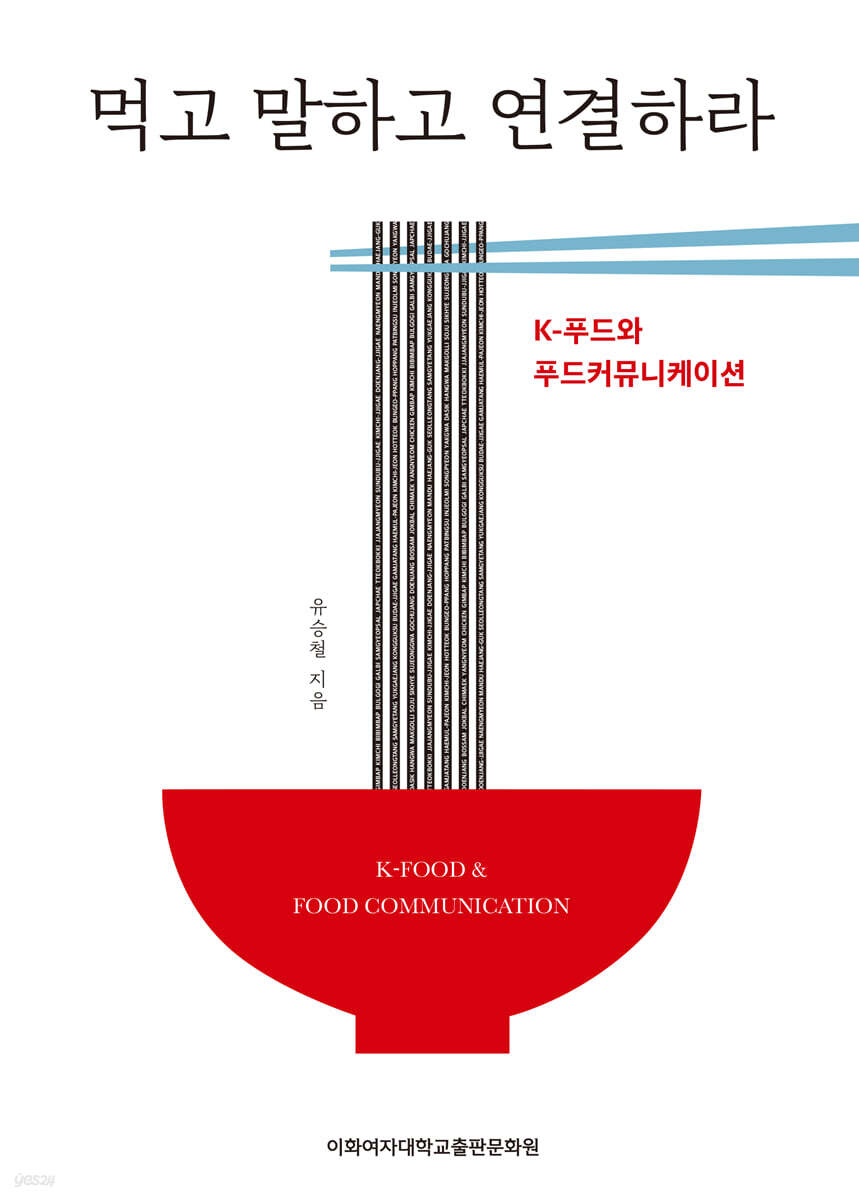
Eat, Talk, Connect
 |
Description
Book Introduction
In the age of food tech, adding warmth to technology through stories!
The power of food communication that captures your taste buds and hearts!
The way we experience and relate to food is fundamentally changing.
With social media dominating our daily lives, food has become a content we consume and share through our smartphones before ever tasting it. Recipes trending on social media constantly populate supermarket shelves, and "mukbang" (eating shows) and "gourmet" content fill YouTube, Instagram, and TikTok. Food is no longer a means of survival.
Food has become “a symbol expressing identity, a medium for forming social relationships, and a powerful force that creates culture and moves the economy.”
Today, our dining table landscape is also changing into something completely different from the past.
Cutting-edge technologies related to the food industry, known as 'FoodTech,' are evolving, bringing our dining tables into the world of data and artificial intelligence.
As a result, we have entered an era where AI recommends customized menus that take into account an individual's health and preferences, where vegetables grown on smart farms and meat grown from cells in a laboratory are delivered, and where robot chefs cook them according to precise recipes.
We are still 'eating', but now the way we do it has changed revolutionaryly.
"Eat, Talk, Connect" is a book that keenly captures this moment of transition through a humanistic perspective.
The author breaks away from a fragmented approach that solely follows industry trends. Based on his experience of observing and researching across academia and the field for over 20 years, he expands the concept of food beyond simply being a "delicious meal" to a discourse that connects technology and humanity, industry and the public, and unfolds the world of food communication surrounding the food industry and food culture.
The power of food communication that captures your taste buds and hearts!
The way we experience and relate to food is fundamentally changing.
With social media dominating our daily lives, food has become a content we consume and share through our smartphones before ever tasting it. Recipes trending on social media constantly populate supermarket shelves, and "mukbang" (eating shows) and "gourmet" content fill YouTube, Instagram, and TikTok. Food is no longer a means of survival.
Food has become “a symbol expressing identity, a medium for forming social relationships, and a powerful force that creates culture and moves the economy.”
Today, our dining table landscape is also changing into something completely different from the past.
Cutting-edge technologies related to the food industry, known as 'FoodTech,' are evolving, bringing our dining tables into the world of data and artificial intelligence.
As a result, we have entered an era where AI recommends customized menus that take into account an individual's health and preferences, where vegetables grown on smart farms and meat grown from cells in a laboratory are delivered, and where robot chefs cook them according to precise recipes.
We are still 'eating', but now the way we do it has changed revolutionaryly.
"Eat, Talk, Connect" is a book that keenly captures this moment of transition through a humanistic perspective.
The author breaks away from a fragmented approach that solely follows industry trends. Based on his experience of observing and researching across academia and the field for over 20 years, he expands the concept of food beyond simply being a "delicious meal" to a discourse that connects technology and humanity, industry and the public, and unfolds the world of food communication surrounding the food industry and food culture.
index
Opening remarks: The table of the future: where technology and story meet.
Chapter 1.
Food Tech and Humans: How the Table Became a Machine
Breakfast, prepared by a robot
Algorithm-prepared meals: Do you eat or are you fed?
The refrigerator chooses the dinner menu for you
Will food tech liberate humanity?
Chapter 2.
From Steam Engines to Robot Chefs: A Chronicle of Food Tech
The discovery of fire, the first dining table
How the Industrial Revolution Mechanized Eating
The Time Revolution Created by the Refrigerator and the "Ice Chest"
The desire for speed sparked by microwaves
Kitchen Algorithms and Food Communication
Chapter 3.
Food Communication and Food Tech
What is food communication?
Is a recipe a memory or data?
Meatless Burgers: Unlocking the Potential of Juicy Gastronomy
Can we love food made by non-human beings?
Chapter 4.
Food Mediatization: How Food Became Social Content
An era where you taste with your eyes first
Taste scenarios designed by YouTube
Who are you eating for?: Between mukbang and eating alone
A restaurant turned content studio: Food Space Communication
Content Chefs and Fandoms
Chapter 5.
How do brands drive the food industry?
The Birth of Food Branding
Even Kimbap Needs a Philosophy: Brand Identity and Image
Food Marketing Between "Delicious" and "Stylish": Brand Positioning
Invest in "Feeling" Over "Taste": The Importance of Emotional Branding
Restaurants Worth the Name: The Science and Art of Food Brand Naming
Staying on the Edge: Food Branding and Risk Communication
Chapter 6.
Consumer Insights from Food Advertising
The Psychology of Food Advertising: A Visual Taste
How does food evoke memories?
Storytelling Comes Before Taste: Food Marketing
Chapter 7.
How K-Food Conquered the World
Ramen as Content, Kimbap as Drama: Hallyu and Food Communication
Why K-Food Tastes Better Abroad: The Paradox of Localization and Branding
For galbijjim to beat Starbucks: It's not Korean food, it's "Korean Wave food."
Chapter 8.
A region is reborn through food
Why are Korean locals always treated as side dishes?
A Bowl of Noodles Revitalizes a City: Food Economy and the Rebirth of Local Communities
A rural marketplace that becomes content: Food festivals aren't just about eating.
The Future on the Table: A World of Connected Flavors
Americas
References
Explanation of related terms
Search
Chapter 1.
Food Tech and Humans: How the Table Became a Machine
Breakfast, prepared by a robot
Algorithm-prepared meals: Do you eat or are you fed?
The refrigerator chooses the dinner menu for you
Will food tech liberate humanity?
Chapter 2.
From Steam Engines to Robot Chefs: A Chronicle of Food Tech
The discovery of fire, the first dining table
How the Industrial Revolution Mechanized Eating
The Time Revolution Created by the Refrigerator and the "Ice Chest"
The desire for speed sparked by microwaves
Kitchen Algorithms and Food Communication
Chapter 3.
Food Communication and Food Tech
What is food communication?
Is a recipe a memory or data?
Meatless Burgers: Unlocking the Potential of Juicy Gastronomy
Can we love food made by non-human beings?
Chapter 4.
Food Mediatization: How Food Became Social Content
An era where you taste with your eyes first
Taste scenarios designed by YouTube
Who are you eating for?: Between mukbang and eating alone
A restaurant turned content studio: Food Space Communication
Content Chefs and Fandoms
Chapter 5.
How do brands drive the food industry?
The Birth of Food Branding
Even Kimbap Needs a Philosophy: Brand Identity and Image
Food Marketing Between "Delicious" and "Stylish": Brand Positioning
Invest in "Feeling" Over "Taste": The Importance of Emotional Branding
Restaurants Worth the Name: The Science and Art of Food Brand Naming
Staying on the Edge: Food Branding and Risk Communication
Chapter 6.
Consumer Insights from Food Advertising
The Psychology of Food Advertising: A Visual Taste
How does food evoke memories?
Storytelling Comes Before Taste: Food Marketing
Chapter 7.
How K-Food Conquered the World
Ramen as Content, Kimbap as Drama: Hallyu and Food Communication
Why K-Food Tastes Better Abroad: The Paradox of Localization and Branding
For galbijjim to beat Starbucks: It's not Korean food, it's "Korean Wave food."
Chapter 8.
A region is reborn through food
Why are Korean locals always treated as side dishes?
A Bowl of Noodles Revitalizes a City: Food Economy and the Rebirth of Local Communities
A rural marketplace that becomes content: Food festivals aren't just about eating.
The Future on the Table: A World of Connected Flavors
Americas
References
Explanation of related terms
Search
Detailed image

Publisher's Review
“The table is the media!”
The landscape of food culture has become even richer through the convergence of food, technology, and media!
To gain a perspective on this remarkable wave of technological innovation, this book first examines the concept and scope of food tech.
From the discovery of fire, the origin of cooking and a catalyst for human evolution, to the inventions of the Industrial Revolution that revolutionized the kitchen, to smart kitchens that provide data-driven services, the author offers a fascinating account of the evolution of food tech and the transformation of food culture.
Along with this, it emphasizes the reality that no matter how sophisticated and advanced a technology becomes, if it fails to capture people's hearts, it will eventually be ignored by the market, and suggests 'storytelling' as the answer to this.
The author says, “Food is ultimately something people eat, remember, and talk about,” and “the competitiveness of a food brand is determined not by the sophistication of its technology, but by the density of its emotions.”
Amidst the proliferation of food content, food communication has a huge impact on what kind of food we desire and choose.
This book points out that what consumers want is not simple convenience or product information, but rather "my own experience, my own story," and explains the importance of a food communication strategy centered on storytelling that conveys the value and philosophy of a food brand and designs a sensory narrative, using various examples.
Furthermore, with the development of digital technology and the rise of media platforms, we deeply analyze the phenomenon of 'food mediatization', where food goes beyond mere edible food and becomes media content.
This book examines how our perceptions, behaviors, and social interactions related to food are being reshaped by media logic, and systematically covers the principles of food branding, sensory marketing that delves into consumer psychology, content naming, spatial design, crisis response, and even linkages with local festivals, broadening our understanding across the entire spectrum of food communication.
“It’s no longer ‘Korean food’ but ‘Korean Wave food’!”
An actionable strategy to lead the future of K-food.
Another strength of this book is that its discourse on food branding and communication does not remain abstract, but rather presents concrete methods along with real-life examples of success and failure.
In particular, chapters 7 and 8, which deal with the globalization strategy of K-food and the process of rural markets being transformed into splendid 'food festivals' such as the 'Food Loconomy' and the Gimcheon Gimbap Festival, and consumed as media content, are worth noting.
From the trinity strategy of menu, space, and content, to the methodology of combining local festivals and tourism, and even a campaign guide, the book contains tools that can be immediately applied in the field. It serves as a guide for local governments and public institutions to brand local food resources, and for tourism and urban regeneration sites to establish plans to strengthen local storytelling and encourage repeat visits.
'K-food' is no longer simply a synonym for Korean cuisine; it is an identity, a cultural language reaching out to the world, and a 'brand' that can emotionally connect with global consumers.
The author says, “What K-food needs to grow into a truly global brand is not new technology or flashy advertising,” but “the power to breathe human warmth into technology and the ability to reach consumers’ hearts with stories.”
This book explores how K-food can shape the future of brands through differentiated storytelling and communication strategies, offering readers the key to unlocking the next chapter of K-food's global leadership.
This book, which serves as a window into the colorful world of communication surrounding food, will provide an opportunity to consider the stories and meanings contained in the food on our tables and how it connects us to the world.
The landscape of food culture has become even richer through the convergence of food, technology, and media!
To gain a perspective on this remarkable wave of technological innovation, this book first examines the concept and scope of food tech.
From the discovery of fire, the origin of cooking and a catalyst for human evolution, to the inventions of the Industrial Revolution that revolutionized the kitchen, to smart kitchens that provide data-driven services, the author offers a fascinating account of the evolution of food tech and the transformation of food culture.
Along with this, it emphasizes the reality that no matter how sophisticated and advanced a technology becomes, if it fails to capture people's hearts, it will eventually be ignored by the market, and suggests 'storytelling' as the answer to this.
The author says, “Food is ultimately something people eat, remember, and talk about,” and “the competitiveness of a food brand is determined not by the sophistication of its technology, but by the density of its emotions.”
Amidst the proliferation of food content, food communication has a huge impact on what kind of food we desire and choose.
This book points out that what consumers want is not simple convenience or product information, but rather "my own experience, my own story," and explains the importance of a food communication strategy centered on storytelling that conveys the value and philosophy of a food brand and designs a sensory narrative, using various examples.
Furthermore, with the development of digital technology and the rise of media platforms, we deeply analyze the phenomenon of 'food mediatization', where food goes beyond mere edible food and becomes media content.
This book examines how our perceptions, behaviors, and social interactions related to food are being reshaped by media logic, and systematically covers the principles of food branding, sensory marketing that delves into consumer psychology, content naming, spatial design, crisis response, and even linkages with local festivals, broadening our understanding across the entire spectrum of food communication.
“It’s no longer ‘Korean food’ but ‘Korean Wave food’!”
An actionable strategy to lead the future of K-food.
Another strength of this book is that its discourse on food branding and communication does not remain abstract, but rather presents concrete methods along with real-life examples of success and failure.
In particular, chapters 7 and 8, which deal with the globalization strategy of K-food and the process of rural markets being transformed into splendid 'food festivals' such as the 'Food Loconomy' and the Gimcheon Gimbap Festival, and consumed as media content, are worth noting.
From the trinity strategy of menu, space, and content, to the methodology of combining local festivals and tourism, and even a campaign guide, the book contains tools that can be immediately applied in the field. It serves as a guide for local governments and public institutions to brand local food resources, and for tourism and urban regeneration sites to establish plans to strengthen local storytelling and encourage repeat visits.
'K-food' is no longer simply a synonym for Korean cuisine; it is an identity, a cultural language reaching out to the world, and a 'brand' that can emotionally connect with global consumers.
The author says, “What K-food needs to grow into a truly global brand is not new technology or flashy advertising,” but “the power to breathe human warmth into technology and the ability to reach consumers’ hearts with stories.”
This book explores how K-food can shape the future of brands through differentiated storytelling and communication strategies, offering readers the key to unlocking the next chapter of K-food's global leadership.
This book, which serves as a window into the colorful world of communication surrounding food, will provide an opportunity to consider the stories and meanings contained in the food on our tables and how it connects us to the world.
GOODS SPECIFICS
- Date of issue: September 5, 2025
- Page count, weight, size: 352 pages | 150*210*17mm
- ISBN13: 9791158905538
- ISBN10: 115890553X
You may also like
카테고리
korean


korean

![GQ KOREA Mark (Monthly): December [2025]](http://librairie.coreenne.fr/cdn/shop/files/8ef265dbbfbf186523ed75ba7319009d.jpg?v=1765340328&width=3840)


