

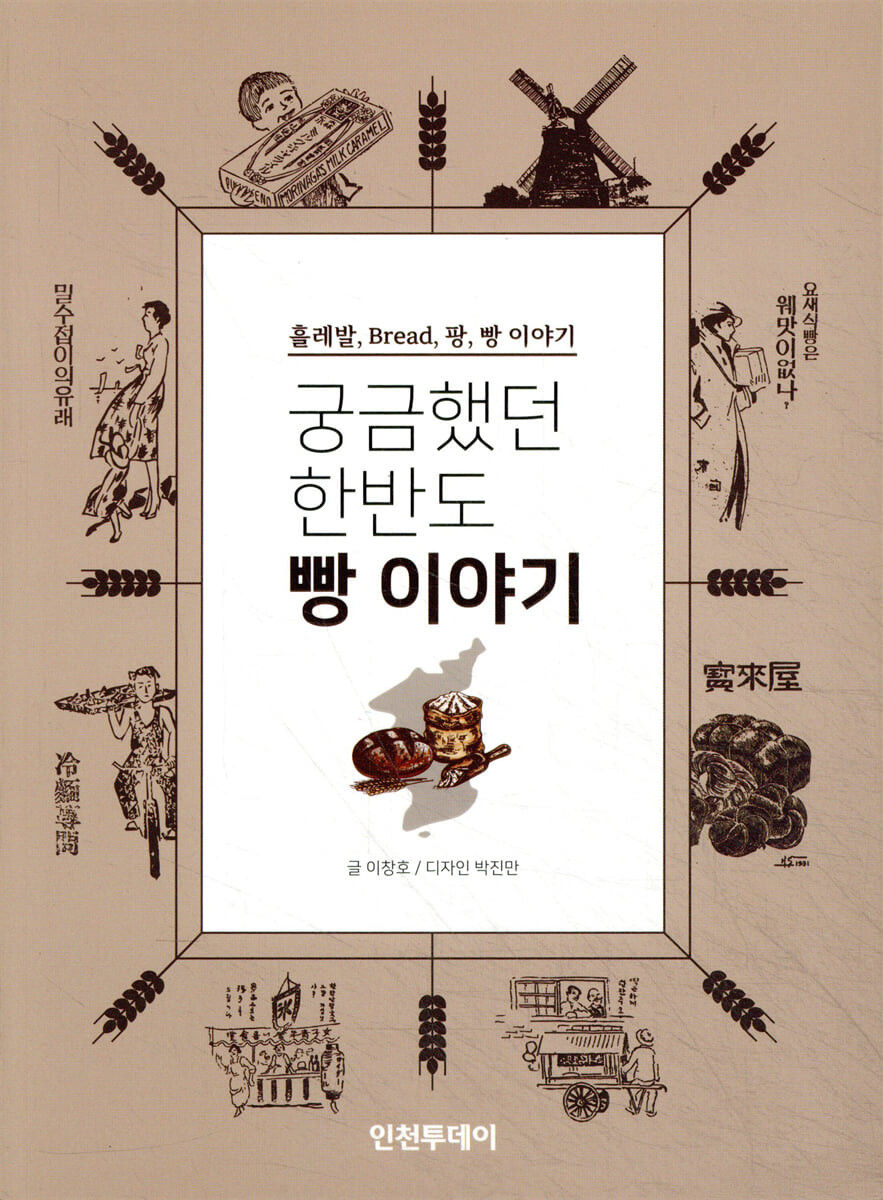
The Curious Story of Korean Peninsula Bread
 |
Description
Book Introduction
As large bakery cafes proliferate throughout South Korea and rice consumption declines, bread, a wheat flour-based food, is increasingly emerging as a staple food.
Author Lee Chang-ho explains the process by which bread was introduced to Joseon in the mid-1800s and became a familiar food, as well as the background to how bread, a central part of Western food culture, quickly became established in Korea and Japan, which were rice-based cultures.
In particular, it goes beyond the common view that bread was first encountered in the wave of modernization that began with the opening of Incheon Port during the Enlightenment Period, and describes the content based on clear evidence and data.
The supporting materials in newspapers and magazines at the time were difficult for modern people to access because they contained many terms and Chinese characters from before the standard language was established, but it is easy to understand if you look at the materials while reading a book.
Jinman Park, who was in charge of digital design, spent a lot of time editing the book to make it clean so that readers can see the information at a glance.
Even if a baking student wanted to try baking with a recipe from 100 years ago, there would be a lot of information they didn't know, such as the weight units and ingredients from that time, and the printed materials would be very difficult to read.
This very problem was solved through collaboration between the author and the design team.
This book will be very useful to readers interested in bread, as well as students of baking and culinary arts.
Author Lee Chang-ho explains the process by which bread was introduced to Joseon in the mid-1800s and became a familiar food, as well as the background to how bread, a central part of Western food culture, quickly became established in Korea and Japan, which were rice-based cultures.
In particular, it goes beyond the common view that bread was first encountered in the wave of modernization that began with the opening of Incheon Port during the Enlightenment Period, and describes the content based on clear evidence and data.
The supporting materials in newspapers and magazines at the time were difficult for modern people to access because they contained many terms and Chinese characters from before the standard language was established, but it is easy to understand if you look at the materials while reading a book.
Jinman Park, who was in charge of digital design, spent a lot of time editing the book to make it clean so that readers can see the information at a glance.
Even if a baking student wanted to try baking with a recipe from 100 years ago, there would be a lot of information they didn't know, such as the weight units and ingredients from that time, and the printed materials would be very difficult to read.
This very problem was solved through collaboration between the author and the design team.
This book will be very useful to readers interested in bread, as well as students of baking and culinary arts.
index
Entering and exploring the history of bread on the Korean Peninsula
1.
200 years ago, the Western food culture of bread was introduced to the Korean Peninsula.
2.
The first commercial bakery on the Korean Peninsula
3.
Popularization of Korean bread
4.
The development of Western bread and bread on the Korean Peninsula
5.
The development of the Japanese baking industry
6.
From coarse whole wheat bread to soft white bread
7.
Development and characteristics of confectioneries in each major city
1) Department stores, etc., where the wind of modernization blew first in 'Gyeongseong'
2) Busan, where the proportion of Japanese people was very high
3) Pyongyang, the central city of the North Korean region
4) Daegu, the center of new culture and confectionery industries in the Gyeongbuk region
5) Gunsan, a port city with a large Japanese population
6) Incheon, where the Wolmido Tourist Complex was created
7) Hamheung, famous for its apple jelly
8) Haeju, the center of maritime trade before the separation of North and South Korea
9) Daejeon, where confectioneries developed around the train station.
8.
Breads from 100 years ago
1) Castella, a better taste and texture than high-end dog cakes
2) 'Russian bread' made with non-rye wheat flour and sugar added
3) Hardtack for the general public, intended to establish a Japanese wartime system
4) Brown rice bread, which is considered expensive due to its small size
5) The history of 'Hoppang', a national snack comparable to hotteok
6) 'Patriotic Bread' made with mixed grains as part of the rice-cutting movement
7) 'Railroad Bread' sold at railway-operated hotels and train restaurants
8) Steamed buns made with mixed grains and topped with pumpkin, fruit, etc.
9) 'Sulbbang' made by fermenting and steaming the rice cakes
9.
Other foods that filled my hungry stomach
10.
bread oven
11.
The Meiji Confectionery Store that Changed the Paradigm of Bakery Sales
12.
Cafe status and classification by characteristics
13.
A cafe of 'modern' and 'decadent'
14.
Growth of the bread industry
1) Milling industry
2) Sugar industry
3) Bread, sugar, and artificial sweeteners
4) Food hygiene and street vendors
References
1.
200 years ago, the Western food culture of bread was introduced to the Korean Peninsula.
2.
The first commercial bakery on the Korean Peninsula
3.
Popularization of Korean bread
4.
The development of Western bread and bread on the Korean Peninsula
5.
The development of the Japanese baking industry
6.
From coarse whole wheat bread to soft white bread
7.
Development and characteristics of confectioneries in each major city
1) Department stores, etc., where the wind of modernization blew first in 'Gyeongseong'
2) Busan, where the proportion of Japanese people was very high
3) Pyongyang, the central city of the North Korean region
4) Daegu, the center of new culture and confectionery industries in the Gyeongbuk region
5) Gunsan, a port city with a large Japanese population
6) Incheon, where the Wolmido Tourist Complex was created
7) Hamheung, famous for its apple jelly
8) Haeju, the center of maritime trade before the separation of North and South Korea
9) Daejeon, where confectioneries developed around the train station.
8.
Breads from 100 years ago
1) Castella, a better taste and texture than high-end dog cakes
2) 'Russian bread' made with non-rye wheat flour and sugar added
3) Hardtack for the general public, intended to establish a Japanese wartime system
4) Brown rice bread, which is considered expensive due to its small size
5) The history of 'Hoppang', a national snack comparable to hotteok
6) 'Patriotic Bread' made with mixed grains as part of the rice-cutting movement
7) 'Railroad Bread' sold at railway-operated hotels and train restaurants
8) Steamed buns made with mixed grains and topped with pumpkin, fruit, etc.
9) 'Sulbbang' made by fermenting and steaming the rice cakes
9.
Other foods that filled my hungry stomach
10.
bread oven
11.
The Meiji Confectionery Store that Changed the Paradigm of Bakery Sales
12.
Cafe status and classification by characteristics
13.
A cafe of 'modern' and 'decadent'
14.
Growth of the bread industry
1) Milling industry
2) Sugar industry
3) Bread, sugar, and artificial sweeteners
4) Food hygiene and street vendors
References
Into the book
Since Catholicism in the late Joseon Dynasty had many believers and priests who did not fear martyrdom even under severe oppression, it is possible that wine and bread were secretly produced within the Catholic community on the Korean Peninsula.
This means that there may have been a long history of secretly making bread for religious purposes by small groups, including both nobles and commoners.
After the late Joseon Dynasty and the arrival of the Korean Empire, even though the market had expanded and there was no need for secret bread, it was difficult to immediately produce bread with a good taste and marketability that could compete with rice cakes from a commercial perspective.
Basically, in a rice culture that used a stove, there was no way a bread oven would be in the kitchen, and there was no reason to want to eat bread unless it was for religious reasons.
--- p.26
As civil society developed after the Middle Ages, there was a poem written by an old German saying, "Where the city council is full of bakers, the people will soon be in trouble," and a Danish proverb says, "Where the mayor is a baker, the bread is always small."
Against this backdrop, during famines in the Middle Ages, people would raid bakeries and kill bakers, believing that the cause of the famine was the evil deeds of the miller and baker.
--- p.38
Traditionally, European millers were treated as thieves because building large watermills and windmills was a high-tech skill, and peasants were at a disadvantage.
However, Korean farmers, who only obtain grains of rice or barley without a milling process like flour, are able to do this by hand using small watermills or mortars in their villages, which is different from Europe.
The hostility towards European millers can be replaced on the Korean peninsula by hostility towards landlords and barons.
The result shows that there is no difference in the lives of Western and Eastern farmers.
--- p.39
Looking at the application for establishment of Gyeongseong Confectionery Association and advertisements for confectionery stores in Busan, confectionery stores existed before 1910, and by the 1910s, business was so active that confectionery stores in Busan were advertising together.
At that time, there was also a flour mill in Busan that specialized in supplying confectionery ingredients.
In particular, the Busan confectionery store advertisement is significant in that it shows the various characteristics of early confectionery sellers.
--- p.67~68
Looking at the 1948 Peace Daily, several confectioneries in Daejeon were advertising side by side.
In addition to the places shown in the photo, there are also advertisements for Kim Jong-cheol Confectionery and Kang Gwang-sik Confectionery.
The story of Seongsimdang, which started small by selling steamed buns in the midst of fierce competition where confectioneries developed around Daejeon Station 100 years ago and advertised in newspapers as well as through bicycle delivery, is astonishing, and its twists and turns and growth story, from its rise to national fame beyond Daejeon, are truly remarkable.
This means that there may have been a long history of secretly making bread for religious purposes by small groups, including both nobles and commoners.
After the late Joseon Dynasty and the arrival of the Korean Empire, even though the market had expanded and there was no need for secret bread, it was difficult to immediately produce bread with a good taste and marketability that could compete with rice cakes from a commercial perspective.
Basically, in a rice culture that used a stove, there was no way a bread oven would be in the kitchen, and there was no reason to want to eat bread unless it was for religious reasons.
--- p.26
As civil society developed after the Middle Ages, there was a poem written by an old German saying, "Where the city council is full of bakers, the people will soon be in trouble," and a Danish proverb says, "Where the mayor is a baker, the bread is always small."
Against this backdrop, during famines in the Middle Ages, people would raid bakeries and kill bakers, believing that the cause of the famine was the evil deeds of the miller and baker.
--- p.38
Traditionally, European millers were treated as thieves because building large watermills and windmills was a high-tech skill, and peasants were at a disadvantage.
However, Korean farmers, who only obtain grains of rice or barley without a milling process like flour, are able to do this by hand using small watermills or mortars in their villages, which is different from Europe.
The hostility towards European millers can be replaced on the Korean peninsula by hostility towards landlords and barons.
The result shows that there is no difference in the lives of Western and Eastern farmers.
--- p.39
Looking at the application for establishment of Gyeongseong Confectionery Association and advertisements for confectionery stores in Busan, confectionery stores existed before 1910, and by the 1910s, business was so active that confectionery stores in Busan were advertising together.
At that time, there was also a flour mill in Busan that specialized in supplying confectionery ingredients.
In particular, the Busan confectionery store advertisement is significant in that it shows the various characteristics of early confectionery sellers.
--- p.67~68
Looking at the 1948 Peace Daily, several confectioneries in Daejeon were advertising side by side.
In addition to the places shown in the photo, there are also advertisements for Kim Jong-cheol Confectionery and Kang Gwang-sik Confectionery.
The story of Seongsimdang, which started small by selling steamed buns in the midst of fierce competition where confectioneries developed around Daejeon Station 100 years ago and advertised in newspapers as well as through bicycle delivery, is astonishing, and its twists and turns and growth story, from its rise to national fame beyond Daejeon, are truly remarkable.
--- p.105
Publisher's Review
Until now, the food culture related to the domestic baking industry and other areas has not been systematically organized beyond the occasional mention of Western history, etc., requiring time to infer the historical context and seek opinions from those around us.
In particular, the burden of writing in a state of lack of self-confidence strongly demanded the need for double-checking.
Even if the information was recorded in newspaper articles or magazines at the time, it was essential to check for possible errors and whether administrative execution had changed.
-From the preface
If we finish our morning meal by toasting bread with cheese and ham and enjoying a cup of coffee, we won't even see a shadow of the traditional food we are familiar with.
Does that mean there was no history behind the introduction and establishment of bread in Korea? Naturally, there would have been competition with traditional Korean rice cakes, and localization processes would have occurred, transforming it from the bread originally consumed by Westerners.
In the process of transitioning from the wheat-based food we eat today, bread, to the staple food, rice, we need to examine our food culture from various perspectives, including the health of modern people and future generations.
Bread has been closely related to Western food culture for over 5,000 years.
However, for us, the time for verification is short, so it is difficult to see it as embodied in the body.
The author seems to have hypothesized that by understanding the process by which bread was introduced and established on the Korean Peninsula and the differences between it and Western bread, we can provide guidance for the bread we eat now and in the future.
The book explains the trends in the bread industry and various types of bread in major cities in North and South Korea during the Japanese colonial period, while also helping readers understand through research on essential related fields such as flour milling and sugar manufacturing.
In particular, the burden of writing in a state of lack of self-confidence strongly demanded the need for double-checking.
Even if the information was recorded in newspaper articles or magazines at the time, it was essential to check for possible errors and whether administrative execution had changed.
-From the preface
If we finish our morning meal by toasting bread with cheese and ham and enjoying a cup of coffee, we won't even see a shadow of the traditional food we are familiar with.
Does that mean there was no history behind the introduction and establishment of bread in Korea? Naturally, there would have been competition with traditional Korean rice cakes, and localization processes would have occurred, transforming it from the bread originally consumed by Westerners.
In the process of transitioning from the wheat-based food we eat today, bread, to the staple food, rice, we need to examine our food culture from various perspectives, including the health of modern people and future generations.
Bread has been closely related to Western food culture for over 5,000 years.
However, for us, the time for verification is short, so it is difficult to see it as embodied in the body.
The author seems to have hypothesized that by understanding the process by which bread was introduced and established on the Korean Peninsula and the differences between it and Western bread, we can provide guidance for the bread we eat now and in the future.
The book explains the trends in the bread industry and various types of bread in major cities in North and South Korea during the Japanese colonial period, while also helping readers understand through research on essential related fields such as flour milling and sugar manufacturing.
GOODS SPECIFICS
- Date of issue: June 10, 2025
- Page count, weight, size: 224 pages | 340g | 152*210*18mm
- ISBN13: 9791198927125
- ISBN10: 1198927127
You may also like
카테고리
korean


korean

![GQ KOREA Mark (Monthly): December [2025]](http://librairie.coreenne.fr/cdn/shop/files/8ef265dbbfbf186523ed75ba7319009d.jpg?v=1765340328&width=3840)


