

child's self-esteem
 |
Description
Book Introduction
“Only the correct understanding and practice of self-esteem
“Raise your child to grow, be happy, and be successful on his own.”
Loved by 210,000 readers for 15 years
Books included in elementary, middle, and high school textbooks
Just as classic books are consistently loved across numerous fields, parenting also offers useful knowledge that transcends time and generation.
《Children's Self-Esteem》 is like that.
Self-esteem, or self-respect, is the feeling that one is a valuable being worthy of being loved and a capable person capable of achieving something.
A child with high self-esteem believes, “I am a very valuable person.
I have many weaknesses, but I have many more strengths, so no matter what difficulties I face, I will not give up and will challenge myself.
If I don't give up on the challenge, I'm sure there will be good results.
You can say, “I really like myself for trying so hard even though I failed.”
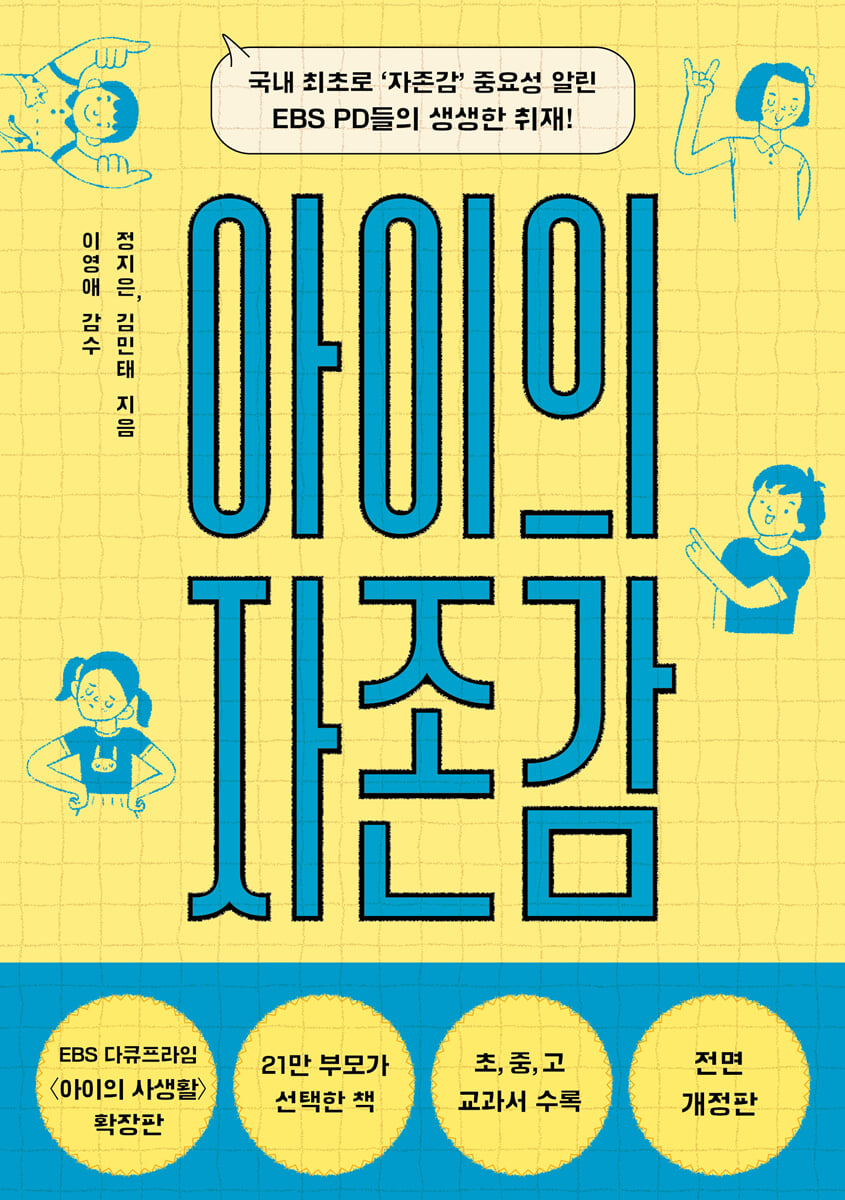
"A Child's Self-Esteem" is an expanded version of the EBS Prime documentary "A Child's Private Life," and is the first book to introduce the paradigm of "a child's self-esteem" to child education in Korea, and is a bestseller.
Since its publication in 2011, it has been chosen by 210,000 readers as the bible of parenting books over the past 15 years, and the fact that it has been included in textbooks, guidebooks, and supplementary teaching materials for elementary, middle, and high schools proves this.
“Raise your child to grow, be happy, and be successful on his own.”
Loved by 210,000 readers for 15 years
Books included in elementary, middle, and high school textbooks
Just as classic books are consistently loved across numerous fields, parenting also offers useful knowledge that transcends time and generation.
《Children's Self-Esteem》 is like that.
Self-esteem, or self-respect, is the feeling that one is a valuable being worthy of being loved and a capable person capable of achieving something.
A child with high self-esteem believes, “I am a very valuable person.
I have many weaknesses, but I have many more strengths, so no matter what difficulties I face, I will not give up and will challenge myself.
If I don't give up on the challenge, I'm sure there will be good results.
You can say, “I really like myself for trying so hard even though I failed.”
"A Child's Self-Esteem" is an expanded version of the EBS Prime documentary "A Child's Private Life," and is the first book to introduce the paradigm of "a child's self-esteem" to child education in Korea, and is a bestseller.
Since its publication in 2011, it has been chosen by 210,000 readers as the bible of parenting books over the past 15 years, and the fact that it has been included in textbooks, guidebooks, and supplementary teaching materials for elementary, middle, and high schools proves this.
- You can preview some of the book's contents.
Preview
index
Revised Edition Author's Note: The Best Gift Parents Can Give Their Children: Self-Esteem - 4
Recommended Reading: There's Hope When You Look Into a Child's Heart - 8
Beginning the Book: The Decisive Power to Change a Child's Destiny - 12
STEP 1.
Think about the most precious thing in your child's life
The Most Precious Thing in a Child's Life -22
Ten Questions to Check Your Self-Esteem - 26
The Tragic Death of Robot Genius - 28
Academic Stress Leads to Depression - 35
Problem behavior is a child's signal for help - 44
Keys to Raising Your Child into a Happy Adult - 52
A Child's Self-Esteem: A Changeable Thing - 56
The Difference Between Pride and Self-Esteem - 60
Autonomy to be Recognized, Rules to be Strict - 63
How to Objectively Assess Your Child's Self-Esteem - 67
How to Scold Your Child Without Damaging Their Self-Esteem - 71
Game Addiction and Communication Disruption - 74
How to Know if Your Child is Addicted to Gaming - 80
When You Need Expert Advice - 82
Case: A child accustomed to losing to friends - 85
Case: A child who constantly asks and relies on his parents - 89
Case: A Child Steals Other People's Things - 94
STEP 2.
Understanding Happiness for Growing Children
100 Conditions for Happiness for Growing Children
The process of developing a child's self-concept - 107
Parents' Words That Bring Happiness to Their Children - 110
Five Skills for Listening to Your Child's Heart - 112
The Key to Communication: Positivity and Empathy - 114
The foundation of self-esteem is attachment to parents-119
Self-Checkup for Becoming an Empathetic Parent - 124
The Art of Empathizing with Children - 126
Child Competence: A Key Point to Remember - 135
How to Boost Self-Esteem in Introverted Children - 137
How to Build Confidence in an Introverted Child - 141
How to Restore Self-Esteem in Children with Regressive Behavior - 143
Case Study: A Child Who Lies Out of Fear - 145
Case Study: The Kid Who Would Do Bad Things to Win - 150
Case: A child who slurs or stutters his speech - 154
STEP 3.
Acknowledging that your child is the leader of his or her own life
A child is an independent person-160
The Potential for Parents to Believe in Their Children - 165
Finding Your Child's Strengths Through Psychological Theory - 171
A variety of experiences that foster initiative - 174
The Feeling of Failure That Self-Esteem Remembers - 179
Creativity: The Beginning of New Possibilities - 185
How to Boost Your Child's Self-Esteem and Creativity - 190
Even introverts can become good leaders - 193
Parenting Styles That Influence Your Child's Leadership - 196
Some Ways to Develop Leadership in Your Child - 199
Leadership in Children: Parental Listening and Empathy - 201
Leadership Skills Children Should Demonstrate at School - 208
The Misconception That Leaders Are Always First - 213
Habits of Leading Your Own Daily Life - 221
Leadership Through Problem-Solving Abilities - 223
Essentials of a Successful Leader - 229
Parents' Positivity to Soothe Their Children's Anxiety - 233
Parenting Principles Learned from the Parents of Successful People - 239
Case Study: A Child Who Gives Up Easily on Simple Problems - 244
Case Study: I'm the Best! The Boy Who Fucks Superiority-248
Case Study: Child Trying to Solve a Problem by Throwing a Squad - 252
STEP 4.
Caring for parents' self-esteem
Parental Self-Esteem and Its Impact on Children - 258
Parents are the best life models - 262
Parental Failures That Should Not Be Applied to Children - 266
Parenting Styles Passed Down - 271
A Child's Self-Esteem Changes with Their Parents - 274
Ten Parenting Principles for Parents with Low Self-Esteem - 278
Nine Principles for Boosting Parental Self-Esteem - 283
A harmonious family boosts a child's self-esteem - 291
Conversation Styles to Avoid Between Couples - 294
Why Parental Self-Esteem Matters More - 298
Six Types of Parents Based on Parenting Styles - 304
The Difference Between Parents with High and Low Self-Esteem - 307
Parenting Tips That Protect Both Parents and Children's Self-Esteem - 309
Case: A Child with a Distant Relationship with Parents - 311
Case: A child who is passive and always yields in everything - 315
Case: Child becomes more mischievous after seeing younger sibling - 319
Recommended Reading: There's Hope When You Look Into a Child's Heart - 8
Beginning the Book: The Decisive Power to Change a Child's Destiny - 12
STEP 1.
Think about the most precious thing in your child's life
The Most Precious Thing in a Child's Life -22
Ten Questions to Check Your Self-Esteem - 26
The Tragic Death of Robot Genius - 28
Academic Stress Leads to Depression - 35
Problem behavior is a child's signal for help - 44
Keys to Raising Your Child into a Happy Adult - 52
A Child's Self-Esteem: A Changeable Thing - 56
The Difference Between Pride and Self-Esteem - 60
Autonomy to be Recognized, Rules to be Strict - 63
How to Objectively Assess Your Child's Self-Esteem - 67
How to Scold Your Child Without Damaging Their Self-Esteem - 71
Game Addiction and Communication Disruption - 74
How to Know if Your Child is Addicted to Gaming - 80
When You Need Expert Advice - 82
Case: A child accustomed to losing to friends - 85
Case: A child who constantly asks and relies on his parents - 89
Case: A Child Steals Other People's Things - 94
STEP 2.
Understanding Happiness for Growing Children
100 Conditions for Happiness for Growing Children
The process of developing a child's self-concept - 107
Parents' Words That Bring Happiness to Their Children - 110
Five Skills for Listening to Your Child's Heart - 112
The Key to Communication: Positivity and Empathy - 114
The foundation of self-esteem is attachment to parents-119
Self-Checkup for Becoming an Empathetic Parent - 124
The Art of Empathizing with Children - 126
Child Competence: A Key Point to Remember - 135
How to Boost Self-Esteem in Introverted Children - 137
How to Build Confidence in an Introverted Child - 141
How to Restore Self-Esteem in Children with Regressive Behavior - 143
Case Study: A Child Who Lies Out of Fear - 145
Case Study: The Kid Who Would Do Bad Things to Win - 150
Case: A child who slurs or stutters his speech - 154
STEP 3.
Acknowledging that your child is the leader of his or her own life
A child is an independent person-160
The Potential for Parents to Believe in Their Children - 165
Finding Your Child's Strengths Through Psychological Theory - 171
A variety of experiences that foster initiative - 174
The Feeling of Failure That Self-Esteem Remembers - 179
Creativity: The Beginning of New Possibilities - 185
How to Boost Your Child's Self-Esteem and Creativity - 190
Even introverts can become good leaders - 193
Parenting Styles That Influence Your Child's Leadership - 196
Some Ways to Develop Leadership in Your Child - 199
Leadership in Children: Parental Listening and Empathy - 201
Leadership Skills Children Should Demonstrate at School - 208
The Misconception That Leaders Are Always First - 213
Habits of Leading Your Own Daily Life - 221
Leadership Through Problem-Solving Abilities - 223
Essentials of a Successful Leader - 229
Parents' Positivity to Soothe Their Children's Anxiety - 233
Parenting Principles Learned from the Parents of Successful People - 239
Case Study: A Child Who Gives Up Easily on Simple Problems - 244
Case Study: I'm the Best! The Boy Who Fucks Superiority-248
Case Study: Child Trying to Solve a Problem by Throwing a Squad - 252
STEP 4.
Caring for parents' self-esteem
Parental Self-Esteem and Its Impact on Children - 258
Parents are the best life models - 262
Parental Failures That Should Not Be Applied to Children - 266
Parenting Styles Passed Down - 271
A Child's Self-Esteem Changes with Their Parents - 274
Ten Parenting Principles for Parents with Low Self-Esteem - 278
Nine Principles for Boosting Parental Self-Esteem - 283
A harmonious family boosts a child's self-esteem - 291
Conversation Styles to Avoid Between Couples - 294
Why Parental Self-Esteem Matters More - 298
Six Types of Parents Based on Parenting Styles - 304
The Difference Between Parents with High and Low Self-Esteem - 307
Parenting Tips That Protect Both Parents and Children's Self-Esteem - 309
Case: A Child with a Distant Relationship with Parents - 311
Case: A child who is passive and always yields in everything - 315
Case: Child becomes more mischievous after seeing younger sibling - 319
Detailed image
.jpg)
Into the book
In this revised edition, we've added and re-edited the critical advice from experts that we missed during the writing process, valuable insights gleaned from observing children, and moments of empathy shared through interviews with parents, all in keeping with the times.
--- From the “Author’s Note on the Revised Edition”
The problem with educational methods such as the 4-year-old exam, the 7-year-old exam, and elite classes is that these educational methods only work for a small number of children, and have negative consequences for the majority of children.
However, parents who are obsessed with supporting their children and making them successful only see the few successful children more than the many struggling children.
And the few are swept away by the success of others.
As parents, we move around like migratory birds, following the educational methods that are popular at the time, without any principles or convictions about raising our children.
But at some point, the child begins to fall behind the parents' expectations.
The child rebels.
There are also deviations.
The child's brain may become overheated and unable to accept any more knowledge, or they may refuse parental intervention, saying they do not want to do anything, or they may become addicted to computer games, seeking solace and pleasure from them.
Some students suffer from depression or even explode with anger due to the stress of studying.
--- From "The Most Precious Thing in a Child's Life"
While producing the EBS documentary prime, “Children’s Private Lives,” we met many children and their parents.
And we interviewed experts from various fields.
Behind the countless questions I asked them was the premise, “What is the most important thing in my child’s life?”
--- From "The Most Precious Thing in a Child's Life"
Children with high self-esteem have high self-acceptance, so they are less emotionally upset and hurt when others criticize or ignore them.
For those children, 'Just as I am good at some things and not good at others, there may be people who like me and people who dislike me.
That doesn't mean I'm bad or insignificant.
This is because the basic emotion that 'I am a person worth loving and a precious person' is at the core.
--- From "The Regrettable Death of Robot Genius"
Children with low self-esteem use a variety of signals to let their parents know about their situation.
The problem behaviors that your child exhibits are signs that his or her self-esteem is currently in crisis.
Parents must properly recognize and respond to these signals in order to properly develop their children's self-esteem.
--- From the “Author’s Note on the Revised Edition”
The problem with educational methods such as the 4-year-old exam, the 7-year-old exam, and elite classes is that these educational methods only work for a small number of children, and have negative consequences for the majority of children.
However, parents who are obsessed with supporting their children and making them successful only see the few successful children more than the many struggling children.
And the few are swept away by the success of others.
As parents, we move around like migratory birds, following the educational methods that are popular at the time, without any principles or convictions about raising our children.
But at some point, the child begins to fall behind the parents' expectations.
The child rebels.
There are also deviations.
The child's brain may become overheated and unable to accept any more knowledge, or they may refuse parental intervention, saying they do not want to do anything, or they may become addicted to computer games, seeking solace and pleasure from them.
Some students suffer from depression or even explode with anger due to the stress of studying.
--- From "The Most Precious Thing in a Child's Life"
While producing the EBS documentary prime, “Children’s Private Lives,” we met many children and their parents.
And we interviewed experts from various fields.
Behind the countless questions I asked them was the premise, “What is the most important thing in my child’s life?”
--- From "The Most Precious Thing in a Child's Life"
Children with high self-esteem have high self-acceptance, so they are less emotionally upset and hurt when others criticize or ignore them.
For those children, 'Just as I am good at some things and not good at others, there may be people who like me and people who dislike me.
That doesn't mean I'm bad or insignificant.
This is because the basic emotion that 'I am a person worth loving and a precious person' is at the core.
--- From "The Regrettable Death of Robot Genius"
Children with low self-esteem use a variety of signals to let their parents know about their situation.
The problem behaviors that your child exhibits are signs that his or her self-esteem is currently in crisis.
Parents must properly recognize and respond to these signals in order to properly develop their children's self-esteem.
--- From "Problem Behavior is a Child's Signal for Help"
Publisher's Review
Changing the paradigm of children's education
Vivid reporting and experiments by EBS documentary producers
And advice from over 70 experts
The basis for the long-standing love of "Children's Self-Esteem" is the passionate and vivid reporting of two EBS PDs who met with 4,200 children and 70 experts over 10 years and conducted 500 experiments.
This book, a condensed collection of living knowledge from countless lives of pediatric and adolescent psychiatrists, psychologists, counselors, teachers, education experts, and families with children, aims to help "build a foundation that helps children grow, be happy, and succeed on their own."
The two authors share with readers stories of children and adolescents who have shocked and saddened society, heartwarming stories that have brought happiness to the world, and the concerns of families they encountered while preparing documentaries and books, all connected to the theories, advice, and practical methods of experts.
Readers who have heard of the importance of self-esteem in raising children but are concerned about how to specifically address it and whether it's too late will gain sound knowledge about children's self-esteem and advice on parenting direction through this book.
The era of emotional parenting created by Geumjok,
A new book for parents who have lost their authority
Many parents hope that building self-esteem will help their children improve their learning ability and lead to social success.
But self-esteem has power beyond just improving learning ability.
Developing proper self-esteem not only fosters a positive body image and self-image in children, enhances empathy, and increases achievement, ultimately leading to success, but also serves as the foundation for growing into a truly happy person.
《Children's Self-Esteem》, which emphasizes this, is imbued with the sense of responsibility and mission of the two authors, Ji-eun Jeong and producer Min-tae Kim.
After the book became a bestseller, the two authors observed how not only parenting but society as a whole responded to the topic of "self-esteem."
Before this book came out, the core keyword for children's education was focused on 'education for entrance to prestigious universities.'
However, after broadcasting and books became known to the world, the flow of children's education changed.
'Self-esteem' has even appeared in entertainment programs and in moments when celebrities tell their autobiographical stories.
The two people, who saw the concept appear in a gag show, confirmed that the keyword the world wanted was 'self-esteem'.
But this trend also had its drawbacks.
The parenting style that emphasizes self-esteem has begun to be misconstrued as reading the child's emotions and unconditionally accepting them.
As the book approaches its 15th anniversary, the authors, witnessing the emergence of countless "golden children" in the world, feel a sense of responsibility and want to once again correct the concept of proper self-esteem.
The revised edition of “Children’s Self-Esteem” was created with this background in mind.
Developing self-esteem in children and parents
Knowledge and Wisdom 4 Stages
The revised edition of "Children's Self-Esteem" collects new parenting cases related to self-esteem and organizes expert advice to convey correct knowledge and concepts about self-esteem parenting.
〈STEP 1.
In “Thinking about the most important thing in a child’s life,” it is discussed that academics are not the only important thing in a child’s life, and it is emphasized that a child’s self-esteem can change at any time depending on the efforts of the parents.
By analyzing statistics from numerous public institutions, advice from experts, and social issues, we emphasize guidelines that can be applied immediately at home.
〈STEP 2.
“Understanding Happiness for Growing Children” provides knowledge and wisdom focused on the happiness of our children.
It emphasizes the process of child ego development, the brain characteristics of growing children and adolescents, and the power of communication, and shows that family attachment strengthens the child's mental muscles.
〈STEP 3.
In “Acknowledging that children are the leaders of their own lives,” it is emphasized that it is the child, not the parents, who leads the child’s life to growth, happiness, and success.
It also contains methods for individuals to pursue common goals with members of their organizations, lead them on the right path, and furthermore, acknowledge the existence of those with different goals and intentions from their own, treat them fairly, and become true leaders in their own lives and society.
Last chapter 〈STEP4.
In “Caring for Parents’ Self-Esteem,” we analyze how parents’ childhood upbringing experiences have a significant impact on their child-rearing style, and suggest ways to improve by examining parents’ past and present to prevent incorrect parenting styles from being passed down.
At the end of each chapter, three more specific examples are included.
Through 12 stories, readers reflect on their own parenting styles and learn practical ways to boost their children's self-esteem.
Vivid reporting and experiments by EBS documentary producers
And advice from over 70 experts
The basis for the long-standing love of "Children's Self-Esteem" is the passionate and vivid reporting of two EBS PDs who met with 4,200 children and 70 experts over 10 years and conducted 500 experiments.
This book, a condensed collection of living knowledge from countless lives of pediatric and adolescent psychiatrists, psychologists, counselors, teachers, education experts, and families with children, aims to help "build a foundation that helps children grow, be happy, and succeed on their own."
The two authors share with readers stories of children and adolescents who have shocked and saddened society, heartwarming stories that have brought happiness to the world, and the concerns of families they encountered while preparing documentaries and books, all connected to the theories, advice, and practical methods of experts.
Readers who have heard of the importance of self-esteem in raising children but are concerned about how to specifically address it and whether it's too late will gain sound knowledge about children's self-esteem and advice on parenting direction through this book.
The era of emotional parenting created by Geumjok,
A new book for parents who have lost their authority
Many parents hope that building self-esteem will help their children improve their learning ability and lead to social success.
But self-esteem has power beyond just improving learning ability.
Developing proper self-esteem not only fosters a positive body image and self-image in children, enhances empathy, and increases achievement, ultimately leading to success, but also serves as the foundation for growing into a truly happy person.
《Children's Self-Esteem》, which emphasizes this, is imbued with the sense of responsibility and mission of the two authors, Ji-eun Jeong and producer Min-tae Kim.
After the book became a bestseller, the two authors observed how not only parenting but society as a whole responded to the topic of "self-esteem."
Before this book came out, the core keyword for children's education was focused on 'education for entrance to prestigious universities.'
However, after broadcasting and books became known to the world, the flow of children's education changed.
'Self-esteem' has even appeared in entertainment programs and in moments when celebrities tell their autobiographical stories.
The two people, who saw the concept appear in a gag show, confirmed that the keyword the world wanted was 'self-esteem'.
But this trend also had its drawbacks.
The parenting style that emphasizes self-esteem has begun to be misconstrued as reading the child's emotions and unconditionally accepting them.
As the book approaches its 15th anniversary, the authors, witnessing the emergence of countless "golden children" in the world, feel a sense of responsibility and want to once again correct the concept of proper self-esteem.
The revised edition of “Children’s Self-Esteem” was created with this background in mind.
Developing self-esteem in children and parents
Knowledge and Wisdom 4 Stages
The revised edition of "Children's Self-Esteem" collects new parenting cases related to self-esteem and organizes expert advice to convey correct knowledge and concepts about self-esteem parenting.
〈STEP 1.
In “Thinking about the most important thing in a child’s life,” it is discussed that academics are not the only important thing in a child’s life, and it is emphasized that a child’s self-esteem can change at any time depending on the efforts of the parents.
By analyzing statistics from numerous public institutions, advice from experts, and social issues, we emphasize guidelines that can be applied immediately at home.
〈STEP 2.
“Understanding Happiness for Growing Children” provides knowledge and wisdom focused on the happiness of our children.
It emphasizes the process of child ego development, the brain characteristics of growing children and adolescents, and the power of communication, and shows that family attachment strengthens the child's mental muscles.
〈STEP 3.
In “Acknowledging that children are the leaders of their own lives,” it is emphasized that it is the child, not the parents, who leads the child’s life to growth, happiness, and success.
It also contains methods for individuals to pursue common goals with members of their organizations, lead them on the right path, and furthermore, acknowledge the existence of those with different goals and intentions from their own, treat them fairly, and become true leaders in their own lives and society.
Last chapter 〈STEP4.
In “Caring for Parents’ Self-Esteem,” we analyze how parents’ childhood upbringing experiences have a significant impact on their child-rearing style, and suggest ways to improve by examining parents’ past and present to prevent incorrect parenting styles from being passed down.
At the end of each chapter, three more specific examples are included.
Through 12 stories, readers reflect on their own parenting styles and learn practical ways to boost their children's self-esteem.
GOODS SPECIFICS
- Date of issue: June 10, 2025
- Page count, weight, size: 324 pages | 438g | 174*230*17mm
- ISBN13: 9791171258291
- ISBN10: 1171258291
You may also like
카테고리
korean


korean

![GQ KOREA Mark (Monthly): December [2025]](http://librairie.coreenne.fr/cdn/shop/files/8ef265dbbfbf186523ed75ba7319009d.jpg?v=1765340328&width=3840)


