

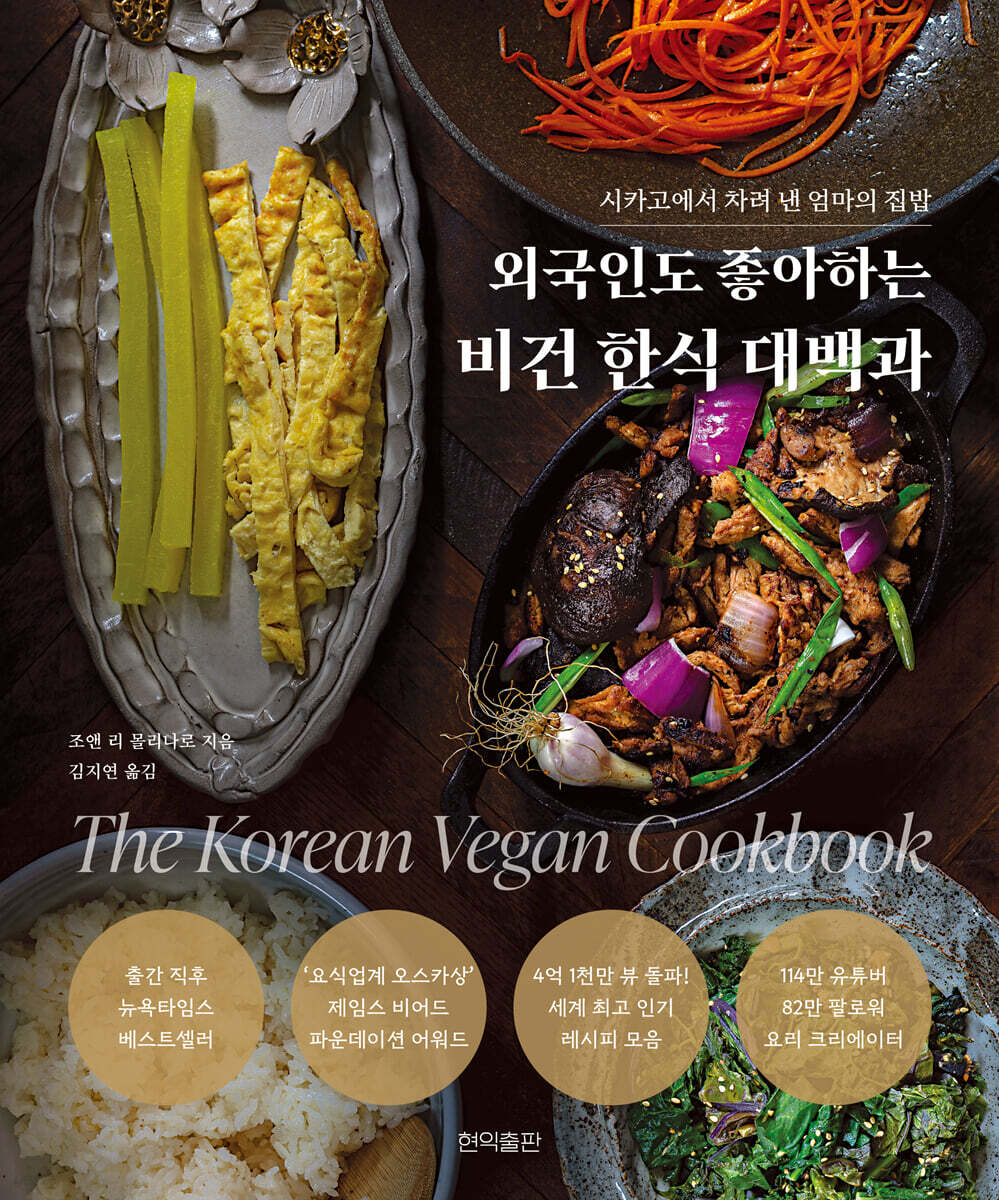
An Encyclopedia of Vegan Korean Food Loved by Foreigners
 |
Description
Book Introduction
Selected as one of the New York Times' best cookbooks!
The very book that started the K-food craze around the world!
The Vegan Korean Food Encyclopedia that Made the Korean-American Author a Star Chef
The story of vegan Korean cuisine by Joanne Lee Molinaro, a James Beard Award winner known as the Oscars of the restaurant industry, a food creator with over 2 million followers, and a Korean-American lawyer named Lee Sun-young.
This cookbook was selected as a New York Times bestseller and became the global bible of 'vegan Korean cuisine.'
Recreate your mom's cooking memories by reinterpreting familiar Korean dishes in a vegan version.
Her recipes boast a taste that everyone around the world can enjoy.
It covers everything from basic ingredients and sauces commonly used in vegan Korean cuisine to side dishes, kimchi and vegetables, stews and soups, noodles and pasta, street food, one-pot meals, and Korean baking.
With creatively varied recipes, the film unfolds a panoramic view of the struggles of immigrant identity and the joys and sorrows of family.
Another reason the recipes in this book are so beloved is the authenticity contained in each dish.
Reading her story, we come to realize that our entire lives are contained within food.
Naturally, you will think of loved ones who shared joys and sorrows over food at the table.
The Jajangmyeon I ate with my family on my birthday at an old Chinese restaurant, the kimchi that contains everything from my father's time to my grandmother's, the chocolate and sweet potatoes that saved my mother's life during difficult times, the moment I stopped eating meat and became a vegetarian.
Just as diverse ingredients blend to create a single dish, the author, with his diverse experiences and identities, richly portrays the experiences of Korean immigrants through cooking.
It shows how deeply the food we eat and grow up with shapes our identity.
The very book that started the K-food craze around the world!
The Vegan Korean Food Encyclopedia that Made the Korean-American Author a Star Chef
The story of vegan Korean cuisine by Joanne Lee Molinaro, a James Beard Award winner known as the Oscars of the restaurant industry, a food creator with over 2 million followers, and a Korean-American lawyer named Lee Sun-young.
This cookbook was selected as a New York Times bestseller and became the global bible of 'vegan Korean cuisine.'
Recreate your mom's cooking memories by reinterpreting familiar Korean dishes in a vegan version.
Her recipes boast a taste that everyone around the world can enjoy.
It covers everything from basic ingredients and sauces commonly used in vegan Korean cuisine to side dishes, kimchi and vegetables, stews and soups, noodles and pasta, street food, one-pot meals, and Korean baking.
With creatively varied recipes, the film unfolds a panoramic view of the struggles of immigrant identity and the joys and sorrows of family.
Another reason the recipes in this book are so beloved is the authenticity contained in each dish.
Reading her story, we come to realize that our entire lives are contained within food.
Naturally, you will think of loved ones who shared joys and sorrows over food at the table.
The Jajangmyeon I ate with my family on my birthday at an old Chinese restaurant, the kimchi that contains everything from my father's time to my grandmother's, the chocolate and sweet potatoes that saved my mother's life during difficult times, the moment I stopped eating meat and became a vegetarian.
Just as diverse ingredients blend to create a single dish, the author, with his diverse experiences and identities, richly portrays the experiences of Korean immigrants through cooking.
It shows how deeply the food we eat and grow up with shapes our identity.
- You can preview some of the book's contents.
Preview
index
Joys and sorrows on the table
Veganism in Korea
Vegan meets Korean, Pantry
1.
Korean cuisine starting with veganism, basic ingredients and sauces
Mushrooms again
rice
Chaesu
barbecue sauce
fish sauce
Spicy soy sauce dressing
Spicy Gochujang Dressing
barley tea
2.
Bread baked with the flavor of Korea
Stone pot bread
Perilla leaf focaccia
Red bean bread
Bagel sprinkled with seaweed and sesame seeds
Milk bread
3.
Orchestra on the table, side dishes
Bindaetteok
Kale Salad
Roasted Miso Onion
Pumpkin pancake
Stewed deer antler mushrooms
Stir-fried bean sprouts and glass noodles
Acorn Jelly with Blackberry Dressing
Egg roll
Tofu pancake
Perilla leaf pancake
Stewed potatoes
4.
Korean salads, kimchi, and vegetables
cucumber kimchi
cabbage kimchi
Pickled vegetables
Water kimchi
Bachelor Kimchi
Kale Ramen Salad
Pickled perilla leaves
Brussels sprout salad
Pear Coleslaw
Potato Salad with Leek Aioli
5.
A warm comfort at the end of the day, stew and soup
Yukgaejang
Tteokmanduguk
soybean paste soup
soy bean paste soup
kimchi soup
Soft tofu stew
Gamjatang
seaweed soup
Potato soup
6.
Easy and delicious, quick and easy noodles and pasta dishes
Jjajangmyeon
Kalguksu
Naengmyeon
chop suey
Kimchi noodles
Angry Penne Pasta
Sujebi
Bean sprout ramen
Arabiata Tteokbokki
7.
Small memories, street food
kimbap
Egg roll
Tofu kimchi
Soupli (rice ball)
Bean Bulgogi Wasabi Cheese Sandwich
BBQ Black Bean Burger
toast
Cheese Hotteok
Hotteok
Curry Tteok-kkochi
8.
Korean style and taste, one bowl of cuisine
Soybean Bulgogi
Mushroom Ribs
Kkanpunggi
Kkanpung tofu
Shiitake Mushroom Sweet and Sour Pork
Bibimbap
dumpling
Tofu stew
Kimchi fried rice
mushroom porridge
Lasagna with Gochujang Sauce
Omelet rice
Braised tofu
Mapo tofu
Creamy Mushroom Casserole
9.
A sweet harmony of unfamiliar ingredients, dessert
Chocolate Sweet Potato Cake
Chocolate Persimmon Cupcakes
Pecan Red Bean Pie
Jujube ginger tea
Donuts
Perfect fit
Lemon and Coriander Blueberry Muffins
Sweet Maple Corn Tea
Chocolate Chip Red Bean Cookies
Chocolate-covered shortbread sticks
eclair cake
Red Bean Marble Cake
Cardamom Lemon Madeleines
coffee cake
Gochujang Persimmon Cake
Following my mother's memories, to Korea
Acknowledgements
Veganism in Korea
Vegan meets Korean, Pantry
1.
Korean cuisine starting with veganism, basic ingredients and sauces
Mushrooms again
rice
Chaesu
barbecue sauce
fish sauce
Spicy soy sauce dressing
Spicy Gochujang Dressing
barley tea
2.
Bread baked with the flavor of Korea
Stone pot bread
Perilla leaf focaccia
Red bean bread
Bagel sprinkled with seaweed and sesame seeds
Milk bread
3.
Orchestra on the table, side dishes
Bindaetteok
Kale Salad
Roasted Miso Onion
Pumpkin pancake
Stewed deer antler mushrooms
Stir-fried bean sprouts and glass noodles
Acorn Jelly with Blackberry Dressing
Egg roll
Tofu pancake
Perilla leaf pancake
Stewed potatoes
4.
Korean salads, kimchi, and vegetables
cucumber kimchi
cabbage kimchi
Pickled vegetables
Water kimchi
Bachelor Kimchi
Kale Ramen Salad
Pickled perilla leaves
Brussels sprout salad
Pear Coleslaw
Potato Salad with Leek Aioli
5.
A warm comfort at the end of the day, stew and soup
Yukgaejang
Tteokmanduguk
soybean paste soup
soy bean paste soup
kimchi soup
Soft tofu stew
Gamjatang
seaweed soup
Potato soup
6.
Easy and delicious, quick and easy noodles and pasta dishes
Jjajangmyeon
Kalguksu
Naengmyeon
chop suey
Kimchi noodles
Angry Penne Pasta
Sujebi
Bean sprout ramen
Arabiata Tteokbokki
7.
Small memories, street food
kimbap
Egg roll
Tofu kimchi
Soupli (rice ball)
Bean Bulgogi Wasabi Cheese Sandwich
BBQ Black Bean Burger
toast
Cheese Hotteok
Hotteok
Curry Tteok-kkochi
8.
Korean style and taste, one bowl of cuisine
Soybean Bulgogi
Mushroom Ribs
Kkanpunggi
Kkanpung tofu
Shiitake Mushroom Sweet and Sour Pork
Bibimbap
dumpling
Tofu stew
Kimchi fried rice
mushroom porridge
Lasagna with Gochujang Sauce
Omelet rice
Braised tofu
Mapo tofu
Creamy Mushroom Casserole
9.
A sweet harmony of unfamiliar ingredients, dessert
Chocolate Sweet Potato Cake
Chocolate Persimmon Cupcakes
Pecan Red Bean Pie
Jujube ginger tea
Donuts
Perfect fit
Lemon and Coriander Blueberry Muffins
Sweet Maple Corn Tea
Chocolate Chip Red Bean Cookies
Chocolate-covered shortbread sticks
eclair cake
Red Bean Marble Cake
Cardamom Lemon Madeleines
coffee cake
Gochujang Persimmon Cake
Following my mother's memories, to Korea
Acknowledgements
Detailed image

Into the book
We usually had dinner together unless something special came up.
For a long time, all the joys and sorrows of our family flowed around the dinner table.
(Omitted) Sometimes, we shared happy and joyful moments, but also sad and difficult moments at this table.
---From "Joys and Sorrows on the Table"
A stone pot is also called an earthenware pot.
It is a small pot that can usually hold 2-4 servings of rice, stew, etc. It is made of lead or porcelain and keeps food warm for a long time.
You can make bread easily and simply using this stone pot.
---From "Stone Pot Bread"
Even now, the soup my mother makes is a panacea that cures all ailments.
As a nurse, this is how a mother expresses her affection and care instead of using the awkward word 'love'.
---From "The Best Food That Sustained Mom's Life"
As I trembled in fear on my way to the hospital, I remembered all the times my father had needed me.
(Omitted) A few days later, while recovering in the intensive care unit from sepsis, my father was diagnosed with prostate cancer.
That day I stopped eating meat.
---From "Moments When I Understood Dad"
Luckily, my mom's barbecue sauce had a deep, rich flavor that allowed me to preserve the memories of family barbecues even when I grilled vegetables.
What I've learned from cooking is that food is not only about the ingredients themselves, but how it feels and is remembered is even more important.
---From "Mushroom Ribs"
In fact, this recipe sauce does not use tomato paste, but rather uses gochujang to add a special flavor and spiciness.
When making the mushroom filling for lasagna, I also use a little barbecue sauce.
These little differences add a unique flavor.
For a long time, all the joys and sorrows of our family flowed around the dinner table.
(Omitted) Sometimes, we shared happy and joyful moments, but also sad and difficult moments at this table.
---From "Joys and Sorrows on the Table"
A stone pot is also called an earthenware pot.
It is a small pot that can usually hold 2-4 servings of rice, stew, etc. It is made of lead or porcelain and keeps food warm for a long time.
You can make bread easily and simply using this stone pot.
---From "Stone Pot Bread"
Even now, the soup my mother makes is a panacea that cures all ailments.
As a nurse, this is how a mother expresses her affection and care instead of using the awkward word 'love'.
---From "The Best Food That Sustained Mom's Life"
As I trembled in fear on my way to the hospital, I remembered all the times my father had needed me.
(Omitted) A few days later, while recovering in the intensive care unit from sepsis, my father was diagnosed with prostate cancer.
That day I stopped eating meat.
---From "Moments When I Understood Dad"
Luckily, my mom's barbecue sauce had a deep, rich flavor that allowed me to preserve the memories of family barbecues even when I grilled vegetables.
What I've learned from cooking is that food is not only about the ingredients themselves, but how it feels and is remembered is even more important.
---From "Mushroom Ribs"
In fact, this recipe sauce does not use tomato paste, but rather uses gochujang to add a special flavor and spiciness.
When making the mushroom filling for lasagna, I also use a little barbecue sauce.
These little differences add a unique flavor.
---From "Lasagna with Gochujang Sauce"
Publisher's Review
Real Mom's Cooking Recreated by the World's Most Popular Vegan Korean Cuisine Expert
Immigrants' struggles with identity and the joys and sorrows of life are expressed through cooking.
Joanne is a Korean-American lawyer born and raised in Chicago and a food creator who develops and introduces unique vegan Korean recipes.
When I was young, there was soybean paste stew and side dishes of vegetables on the table, but I wanted to eat spaghetti.
As an immigrant who constantly struggles with her identity, the author reminisces about her mother's cooking and recreates Korean food in a vegan version.
After my father was diagnosed with cancer, I began to think deeply about the link between meat consumption and cancer, and I became a vegetarian in 2016.
During this process, I started introducing vegan Korean recipes with my own ingredients and techniques through the 'The Korean Vegan' project.
Beyond simply cooking, he shared stories of his family's history, the joys and sorrows of life, and his love for his parents, deeply touching many people.
The book became a New York Times bestseller immediately after its publication and is considered the most popular Korean cookbook in the world.
Since then, it has been featured in various famous culinary media outlets and has even won the James Beard Award, known as the Oscar of the culinary industry.
Over 3,000 Amazon reviews! Over 410 million YouTube views! Nearly 2 million followers!
Vegan Korean cuisine, a global phenomenon, is the true bible of K-food.
Now, Korean food is establishing itself as a universal yet unique food culture that can be found anywhere in the world.
What foreigners want from Korean food is not just Jjapaguri and Dalgona, but also stories about Korea and Korean culture.
This 'Korean food' meets the trendy 'vegan' lifestyle that takes both health and the environment into consideration.
You might think that Korean food is difficult to be vegetarian because it is represented by bulgogi, kimchi, and jeotgal, but in fact, Korean food is good for vegans.
Cooking methods that utilize microorganisms such as fermentation, a culture of side dishes using vegetables, and minimal use of fire show that Korean food can be at the forefront of vegan culture.
For vegan readers who find it difficult to choose from outside environments, such as restaurants that do not yet have vegan options, this book guides them to easily and enjoyably prepare vegan Korean food.
The secret to vegan Korean cuisine that has captivated the taste buds of countless foreigners!
Korean sentiment and healthy taste in one dish
The author, who grew up eating Korean food with his parents and grandmother but struggled with his identity as an immigrant, developed his own 'vegan Korean food' recipes by adding vegan details to Korean food from the perspective of a Korean-American.
The recipe, which has already been verified by countless people around the world with videos that have garnered a whopping 410 million views, covers not only side dishes but also Korean baking.
If you're looking for uncommon vegan Korean recipes or are curious about Korean food interpreted from a foreign perspective but still delicious, you'll find the answer in this book.
Also, with the K-food craze sweeping the globe, it is recommended for foreigners who are interested in Korean food and want to try it, or for Korean readers who want to introduce Korean food to foreigners.
It will be the bible of 'vegan Korean food' that covers everything from the basics to applications.
It also includes chef tips to help you choose and use vegan and Korean ingredients that may be unfamiliar to you.
Veganism through Korean cuisine: A new food lifestyle
92 Unique Vegan Korean Dishes Not Found in Existing Cookbooks
A comprehensive collection of vegan recipes, from side dishes, kimchi, stews, and even Korean baking!
Chapter 1 introduces the basic ingredients and sauces needed to make vegan Korean food.
Once you make it, you can use it in many different dishes.
Chapter 2 reinterprets baking using Korean tools and ingredients such as stone pots and perilla leaves.
You won't find this in any traditional baking book.
Chapter 3 introduces side dishes, a unique characteristic of Korean cuisine.
In Korean cuisine, it is rare to have only one side dish.
This represents the affection of the person who served the food.
It creates an orchestral harmony with ingredients from all four seasons.
Chapter 4 deals with kimchi and vegetables.
It explains in detail the principles of pickling, seasoning, fermentation, and even how to bottle kimchi, and teaches anyone how to make kimchi, which even Koreans find difficult.
Chapter 5 introduces stews and soups.
It explains the difference between stew and soup, which may be unfamiliar to foreigners, and is designed to help them complete a meal with rice and side dishes.
Chapter 6 introduces noodles and pasta.
It contains lovely recipes, such as reinterpreting spicy pasta as tteokbokki.
Chapter 7 presents vegan versions of Korean street food such as hotteok, toast, and sandwiches.
You can experience small memories anew.
Chapter 8 introduces a one-bowl dish that captures the style and taste of Korea.
If you serve it in a pretty bowl, people will be amazed.
The final nine chapters present new vegan baking possibilities with unique Korean desserts made with persimmons, sweet potatoes, red beans, and gochujang.
Immigrants' struggles with identity and the joys and sorrows of life are expressed through cooking.
Joanne is a Korean-American lawyer born and raised in Chicago and a food creator who develops and introduces unique vegan Korean recipes.
When I was young, there was soybean paste stew and side dishes of vegetables on the table, but I wanted to eat spaghetti.
As an immigrant who constantly struggles with her identity, the author reminisces about her mother's cooking and recreates Korean food in a vegan version.
After my father was diagnosed with cancer, I began to think deeply about the link between meat consumption and cancer, and I became a vegetarian in 2016.
During this process, I started introducing vegan Korean recipes with my own ingredients and techniques through the 'The Korean Vegan' project.
Beyond simply cooking, he shared stories of his family's history, the joys and sorrows of life, and his love for his parents, deeply touching many people.
The book became a New York Times bestseller immediately after its publication and is considered the most popular Korean cookbook in the world.
Since then, it has been featured in various famous culinary media outlets and has even won the James Beard Award, known as the Oscar of the culinary industry.
Over 3,000 Amazon reviews! Over 410 million YouTube views! Nearly 2 million followers!
Vegan Korean cuisine, a global phenomenon, is the true bible of K-food.
Now, Korean food is establishing itself as a universal yet unique food culture that can be found anywhere in the world.
What foreigners want from Korean food is not just Jjapaguri and Dalgona, but also stories about Korea and Korean culture.
This 'Korean food' meets the trendy 'vegan' lifestyle that takes both health and the environment into consideration.
You might think that Korean food is difficult to be vegetarian because it is represented by bulgogi, kimchi, and jeotgal, but in fact, Korean food is good for vegans.
Cooking methods that utilize microorganisms such as fermentation, a culture of side dishes using vegetables, and minimal use of fire show that Korean food can be at the forefront of vegan culture.
For vegan readers who find it difficult to choose from outside environments, such as restaurants that do not yet have vegan options, this book guides them to easily and enjoyably prepare vegan Korean food.
The secret to vegan Korean cuisine that has captivated the taste buds of countless foreigners!
Korean sentiment and healthy taste in one dish
The author, who grew up eating Korean food with his parents and grandmother but struggled with his identity as an immigrant, developed his own 'vegan Korean food' recipes by adding vegan details to Korean food from the perspective of a Korean-American.
The recipe, which has already been verified by countless people around the world with videos that have garnered a whopping 410 million views, covers not only side dishes but also Korean baking.
If you're looking for uncommon vegan Korean recipes or are curious about Korean food interpreted from a foreign perspective but still delicious, you'll find the answer in this book.
Also, with the K-food craze sweeping the globe, it is recommended for foreigners who are interested in Korean food and want to try it, or for Korean readers who want to introduce Korean food to foreigners.
It will be the bible of 'vegan Korean food' that covers everything from the basics to applications.
It also includes chef tips to help you choose and use vegan and Korean ingredients that may be unfamiliar to you.
Veganism through Korean cuisine: A new food lifestyle
92 Unique Vegan Korean Dishes Not Found in Existing Cookbooks
A comprehensive collection of vegan recipes, from side dishes, kimchi, stews, and even Korean baking!
Chapter 1 introduces the basic ingredients and sauces needed to make vegan Korean food.
Once you make it, you can use it in many different dishes.
Chapter 2 reinterprets baking using Korean tools and ingredients such as stone pots and perilla leaves.
You won't find this in any traditional baking book.
Chapter 3 introduces side dishes, a unique characteristic of Korean cuisine.
In Korean cuisine, it is rare to have only one side dish.
This represents the affection of the person who served the food.
It creates an orchestral harmony with ingredients from all four seasons.
Chapter 4 deals with kimchi and vegetables.
It explains in detail the principles of pickling, seasoning, fermentation, and even how to bottle kimchi, and teaches anyone how to make kimchi, which even Koreans find difficult.
Chapter 5 introduces stews and soups.
It explains the difference between stew and soup, which may be unfamiliar to foreigners, and is designed to help them complete a meal with rice and side dishes.
Chapter 6 introduces noodles and pasta.
It contains lovely recipes, such as reinterpreting spicy pasta as tteokbokki.
Chapter 7 presents vegan versions of Korean street food such as hotteok, toast, and sandwiches.
You can experience small memories anew.
Chapter 8 introduces a one-bowl dish that captures the style and taste of Korea.
If you serve it in a pretty bowl, people will be amazed.
The final nine chapters present new vegan baking possibilities with unique Korean desserts made with persimmons, sweet potatoes, red beans, and gochujang.
GOODS SPECIFICS
- Date of issue: February 7, 2025
- Page count, weight, size: 332 pages | 200*240*30mm
- ISBN13: 9791193217955
- ISBN10: 1193217954
You may also like
카테고리
korean


korean

![GQ KOREA Mark (Monthly): December [2025]](http://librairie.coreenne.fr/cdn/shop/files/8ef265dbbfbf186523ed75ba7319009d.jpg?v=1765340328&width=3840)


