

Alternative Education Around the World
 |
Description
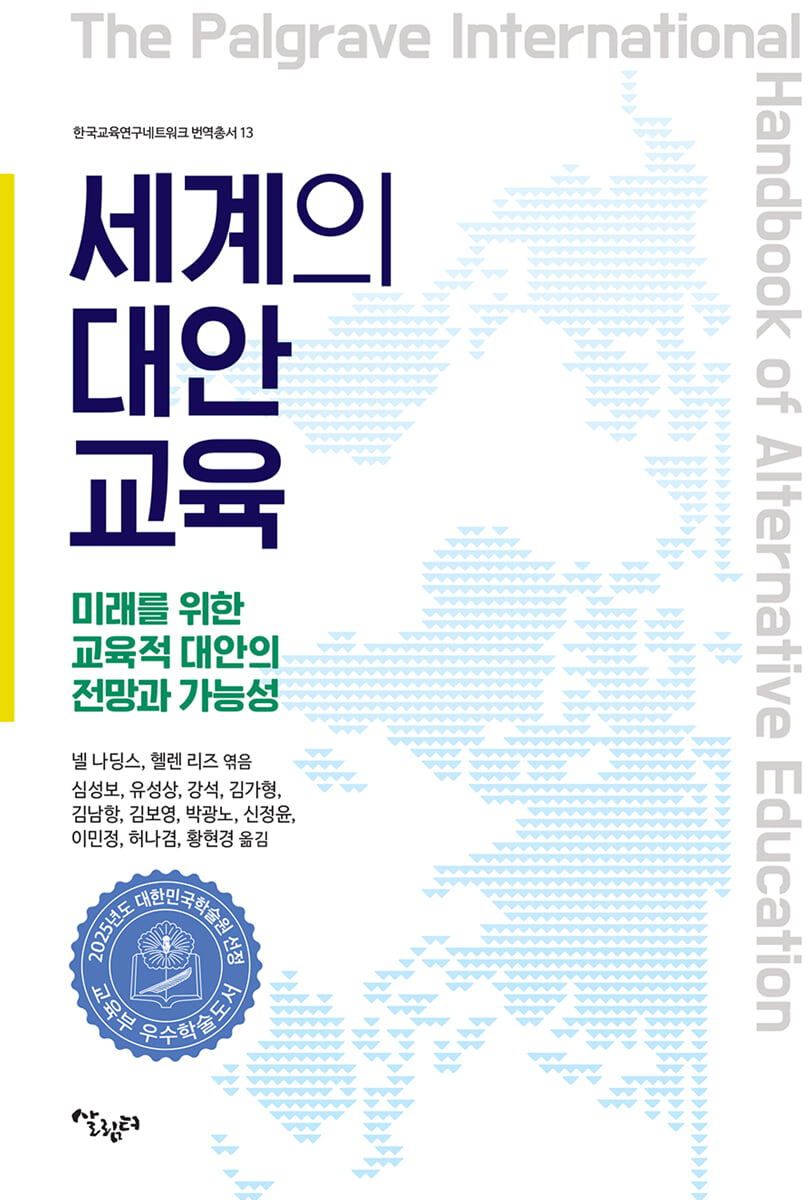
Book Introduction
Stories of "different" education from educators around the world
An intellectual invitation leading you to an educational alternative!
Where can we find vision for our future education? What "different" forms of education are being envisioned, implemented, and practiced in countries around the world? Authors Nell Noddings, Helen Lees, and others, who have worked as education scholars and field experts in teaching and learning in over 30 countries, explore global education and propose educational alternatives that transcend both institutional and institutional boundaries.
An intellectual invitation leading you to an educational alternative!
Where can we find vision for our future education? What "different" forms of education are being envisioned, implemented, and practiced in countries around the world? Authors Nell Noddings, Helen Lees, and others, who have worked as education scholars and field experts in teaching and learning in over 30 countries, explore global education and propose educational alternatives that transcend both institutional and institutional boundaries.
- You can preview some of the book's contents.
Preview
index
Translator's Preface / Think Differently, Act Differently, Practice Differently
Chapter 1: Introduction - Nell Noddings and Helen Leeds
Part 1: Alternative Education: Thinking Differently
Chapter 2: The Mind of an Educator: The Pygmalion Effect Debate - Chris de Meyer
Chapter 3: An Ordinary Day: My Summerhill Life - Philipp Klaus
Chapter 4: The Pedagogy of Nature: How Children Learn - Peter Gray
Chapter 5: Creating Space for Openness, Hope, and Newness - Kerry Facer
Chapter 6: The Promise and Perils of Neuroscience for Alternative Education - Clarence Zoldersma
Chapter 7: Women's Traditional Concerns - Nell Noddings
Chapter 8: Psychoanalysis and the Challenge of Educational Illusion - Roger Willoughby and Hibren Demir Atai
Chapter 9: Agenda and Authority in Engineering, Potential, and Cultural Curriculum - Harriet Pattison and Alan Thomas
Chapter 10: The Potential and Contingency of Education - Nick Fame
Chapter 11: Educational Reciprocity - Helen Reese
Part 2: Alternative Education: Implementing It Differently
Chapter 12: Homeschooling: Practice, Purpose, and Possibility - Robert Kunzman
Chapter 13: School Ethics for Teacher Trainees: Innovative Education in South Africa - Karin Muris
Chapter 14: Brazil's Innovative Education Movement: The Holistic Education Experience - Helena Singer
Chapter 15: Learning from the Edge of Chaos: Self-Organizing Systems in Education - Sugata Mitra, Suneeta Kulkarni, and James Stanfield
Chapter 16: Children's Dream Parks and Free Spaces En: Japan's Care Communities - Yoshiyuki Nagata
Chapter 17: Teacher Education: Generators of Change vs. Mechanisms for Educational Conformity - Ian Mentor
Chapter 18: Philosophizing with Children: Imaginative and Democratic Practices - Joanna Haines
Chapter 19 Forest School: A Model for Holistic Learning Outdoors - Sarah Knight
Chapter 20: Creating Space for Autonomy: Danish Schools and Learning - Max Hope and Catherine Montgomery
Part 3: Alternative Education: Practicing It Differently
Chapter 21: Exploration and Reflection: Listening to Chinese Students' Voices - Kan Wei
Chapter 22: Islamic Education in Iran - Khosro Bagheri Noaparast
Chapter 23: Are Low-Tuition Private Schools in Developing Countries Really an 'Alternative'? - Clive Harbour
Chapter 24: The Humanistic School of Israel - Nimrod Aloni
Chapter 25: Geography of Trust: The Politics of Resistance for Alternative Education - John Smith
Chapter 26: Alternatives to School Sex Education - Michael Rice
Chapter 27: Critical Animal Pedagogy: Relearning Our Relationships with Other Animals - Karin Gunnarsson Dinker and Helena Pedersen
Chapter 28: Solitude and Spirituality: Alternative Education in Britain - Julian Stern
Chapter 29: From Alternative Projects to Professional Pedagogy: German Kinderladen - Robert Ham
Chapter 30: Attachment Awareness Schools: An Alternative to Behavioral Education - Richard Parker, Janet Rose, and Louise Gilbert
Chapter 1: Introduction - Nell Noddings and Helen Leeds
Part 1: Alternative Education: Thinking Differently
Chapter 2: The Mind of an Educator: The Pygmalion Effect Debate - Chris de Meyer
Chapter 3: An Ordinary Day: My Summerhill Life - Philipp Klaus
Chapter 4: The Pedagogy of Nature: How Children Learn - Peter Gray
Chapter 5: Creating Space for Openness, Hope, and Newness - Kerry Facer
Chapter 6: The Promise and Perils of Neuroscience for Alternative Education - Clarence Zoldersma
Chapter 7: Women's Traditional Concerns - Nell Noddings
Chapter 8: Psychoanalysis and the Challenge of Educational Illusion - Roger Willoughby and Hibren Demir Atai
Chapter 9: Agenda and Authority in Engineering, Potential, and Cultural Curriculum - Harriet Pattison and Alan Thomas
Chapter 10: The Potential and Contingency of Education - Nick Fame
Chapter 11: Educational Reciprocity - Helen Reese
Part 2: Alternative Education: Implementing It Differently
Chapter 12: Homeschooling: Practice, Purpose, and Possibility - Robert Kunzman
Chapter 13: School Ethics for Teacher Trainees: Innovative Education in South Africa - Karin Muris
Chapter 14: Brazil's Innovative Education Movement: The Holistic Education Experience - Helena Singer
Chapter 15: Learning from the Edge of Chaos: Self-Organizing Systems in Education - Sugata Mitra, Suneeta Kulkarni, and James Stanfield
Chapter 16: Children's Dream Parks and Free Spaces En: Japan's Care Communities - Yoshiyuki Nagata
Chapter 17: Teacher Education: Generators of Change vs. Mechanisms for Educational Conformity - Ian Mentor
Chapter 18: Philosophizing with Children: Imaginative and Democratic Practices - Joanna Haines
Chapter 19 Forest School: A Model for Holistic Learning Outdoors - Sarah Knight
Chapter 20: Creating Space for Autonomy: Danish Schools and Learning - Max Hope and Catherine Montgomery
Part 3: Alternative Education: Practicing It Differently
Chapter 21: Exploration and Reflection: Listening to Chinese Students' Voices - Kan Wei
Chapter 22: Islamic Education in Iran - Khosro Bagheri Noaparast
Chapter 23: Are Low-Tuition Private Schools in Developing Countries Really an 'Alternative'? - Clive Harbour
Chapter 24: The Humanistic School of Israel - Nimrod Aloni
Chapter 25: Geography of Trust: The Politics of Resistance for Alternative Education - John Smith
Chapter 26: Alternatives to School Sex Education - Michael Rice
Chapter 27: Critical Animal Pedagogy: Relearning Our Relationships with Other Animals - Karin Gunnarsson Dinker and Helena Pedersen
Chapter 28: Solitude and Spirituality: Alternative Education in Britain - Julian Stern
Chapter 29: From Alternative Projects to Professional Pedagogy: German Kinderladen - Robert Ham
Chapter 30: Attachment Awareness Schools: An Alternative to Behavioral Education - Richard Parker, Janet Rose, and Louise Gilbert
Publisher's Review
Explore different perspectives and possibilities
Nell Noddings, a world-renowned educational philosopher who edited this book, said that the strength of Alternative Education Around the World is that it “provides a way to explore the various perspectives and possibilities inherent in the idea of educational alternatives.”
“When seeking alternative forms of education, we must pay attention to the relationship between teachers and students, both inside and outside of schooling, and how it can be developed and maintained.
Several authors also remind us that teachers should be encouraged to make professional choices.
There is no best choice for curriculum, and there is no best teaching method.
Yet, many of the alternative practices being forced upon us today place increasing emphasis on standardization of content, best practices, scaling, and standardized testing. Therefore, the authors offer useful suggestions for alternative education, focusing not only on choice and relationships, but also on collegiality, continuity, responsible experimentation, ecology, and interdisciplinary work.
-Nell Noddings
“I think this is a courageous book,” says editor Helen Lees, who is keeping a close eye on the path the authors are taking.
“This book will essentially be a book of the free realm.
We will not be obsessed with methods that require us to show, discuss, reflect, prove, verify, support, or make ourselves understood.
“There is less of a desire to ‘teach’ didactically, but instead a desire to ‘know’ what is presented in terms of teaching and learning methods… In each chapter, this collection of voices serves as an intellectual invitation to alternative education.” -Helen Rees
Think differently, act differently, and practice differently
The concrete form of alternative education is realized as a precursor to action and practice, through thinking differently, actually implementing differently, and practicing differently.
Part 1, 'Alternative Education, Thinking Differently', shows understanding the mind of an educator through brain science, poetic interpretation and autobiographical observation of school life by a Summerhill career teacher, natural education of those who do not send their children to school, developing critical capacity for the future through current pedagogy, sensing the dangers of neuroscience in mindfulness, establishing a peaceful family order as the basic foundation of world order, attempting a psychoanalytic interpretation of unconscious fantasy, autonomous challenge to cultural curriculum, possibility of biopolitics through ontology of thought, and pursuit of reciprocity in school education based on consent.
Part 2, 'Alternative Education, Implementing It Differently', examines the possibilities of alternative education through homeschooling, the formation of school ethics through the autonomy of teaching students, the innovative education movement through holistic education, overcoming children's confusion by introducing the concept of a self-organized learning environment, activities of the EN care community, a free space for out-of-school youth, activities of a professional learning community through raising voices in teacher education, democratic practice activities through a children's philosophy community, holistic learning activities through forest schools, and the creation of autonomous learning spaces for the development of freedom.
Part 3, 'Alternative Education, Practicing Differently', covers changes in the curriculum through research on student voices, strengthening student agency through asymmetrical/democratic interactions, establishing an alternative and autonomous foundation through low-cost private schools in developing countries, forming the foundation for a peaceful life through humanistic schools, restoring trust through everyday resistance in street politics, activities with sex education materials outside of school as an alternative to school sex education, critical animal pedagogy to relearn the relationship between humans and animals, building a caring community school based on the experience of solitude and spirituality, an anti-authoritarian counter-movement through the practical experiences of alternative school teachers, and understanding children's complex behavior through attachment-aware schools.
In search of educational alternatives
The translators of this book explore the ideas of authors actively conducting research in various countries around the world, and are willing to work with them to find educational alternatives.
We anticipate that this book will serve as a compass for exploring alternatives for educators of various backgrounds seeking to practice alternative education, and will be a truly unique educational resource.
The path these authors have taken is changing our perception of education.
By showing us in an exciting way what they are doing, where they are going, and what path they are taking, the authors lead us to walk the alternative path they have found.
The diverse ideas, actions, and practical examples of alternative education will serve as a refreshing stimulus for those pursuing innovative and alternative education.
(From the Translator's Preface)
Nell Noddings, a world-renowned educational philosopher who edited this book, said that the strength of Alternative Education Around the World is that it “provides a way to explore the various perspectives and possibilities inherent in the idea of educational alternatives.”
“When seeking alternative forms of education, we must pay attention to the relationship between teachers and students, both inside and outside of schooling, and how it can be developed and maintained.
Several authors also remind us that teachers should be encouraged to make professional choices.
There is no best choice for curriculum, and there is no best teaching method.
Yet, many of the alternative practices being forced upon us today place increasing emphasis on standardization of content, best practices, scaling, and standardized testing. Therefore, the authors offer useful suggestions for alternative education, focusing not only on choice and relationships, but also on collegiality, continuity, responsible experimentation, ecology, and interdisciplinary work.
-Nell Noddings
“I think this is a courageous book,” says editor Helen Lees, who is keeping a close eye on the path the authors are taking.
“This book will essentially be a book of the free realm.
We will not be obsessed with methods that require us to show, discuss, reflect, prove, verify, support, or make ourselves understood.
“There is less of a desire to ‘teach’ didactically, but instead a desire to ‘know’ what is presented in terms of teaching and learning methods… In each chapter, this collection of voices serves as an intellectual invitation to alternative education.” -Helen Rees
Think differently, act differently, and practice differently
The concrete form of alternative education is realized as a precursor to action and practice, through thinking differently, actually implementing differently, and practicing differently.
Part 1, 'Alternative Education, Thinking Differently', shows understanding the mind of an educator through brain science, poetic interpretation and autobiographical observation of school life by a Summerhill career teacher, natural education of those who do not send their children to school, developing critical capacity for the future through current pedagogy, sensing the dangers of neuroscience in mindfulness, establishing a peaceful family order as the basic foundation of world order, attempting a psychoanalytic interpretation of unconscious fantasy, autonomous challenge to cultural curriculum, possibility of biopolitics through ontology of thought, and pursuit of reciprocity in school education based on consent.
Part 2, 'Alternative Education, Implementing It Differently', examines the possibilities of alternative education through homeschooling, the formation of school ethics through the autonomy of teaching students, the innovative education movement through holistic education, overcoming children's confusion by introducing the concept of a self-organized learning environment, activities of the EN care community, a free space for out-of-school youth, activities of a professional learning community through raising voices in teacher education, democratic practice activities through a children's philosophy community, holistic learning activities through forest schools, and the creation of autonomous learning spaces for the development of freedom.
Part 3, 'Alternative Education, Practicing Differently', covers changes in the curriculum through research on student voices, strengthening student agency through asymmetrical/democratic interactions, establishing an alternative and autonomous foundation through low-cost private schools in developing countries, forming the foundation for a peaceful life through humanistic schools, restoring trust through everyday resistance in street politics, activities with sex education materials outside of school as an alternative to school sex education, critical animal pedagogy to relearn the relationship between humans and animals, building a caring community school based on the experience of solitude and spirituality, an anti-authoritarian counter-movement through the practical experiences of alternative school teachers, and understanding children's complex behavior through attachment-aware schools.
In search of educational alternatives
The translators of this book explore the ideas of authors actively conducting research in various countries around the world, and are willing to work with them to find educational alternatives.
We anticipate that this book will serve as a compass for exploring alternatives for educators of various backgrounds seeking to practice alternative education, and will be a truly unique educational resource.
The path these authors have taken is changing our perception of education.
By showing us in an exciting way what they are doing, where they are going, and what path they are taking, the authors lead us to walk the alternative path they have found.
The diverse ideas, actions, and practical examples of alternative education will serve as a refreshing stimulus for those pursuing innovative and alternative education.
(From the Translator's Preface)
GOODS SPECIFICS
- Date of issue: December 12, 2024
- Page count, weight, size: 652 pages | 153*224*35mm
- ISBN13: 9791159303050
- ISBN10: 1159303053
You may also like
카테고리
korean


korean

![GQ KOREA Mark (Monthly): December [2025]](http://librairie.coreenne.fr/cdn/shop/files/8ef265dbbfbf186523ed75ba7319009d.jpg?v=1765340328&width=3840)


