

Suicide Research
 |
Description
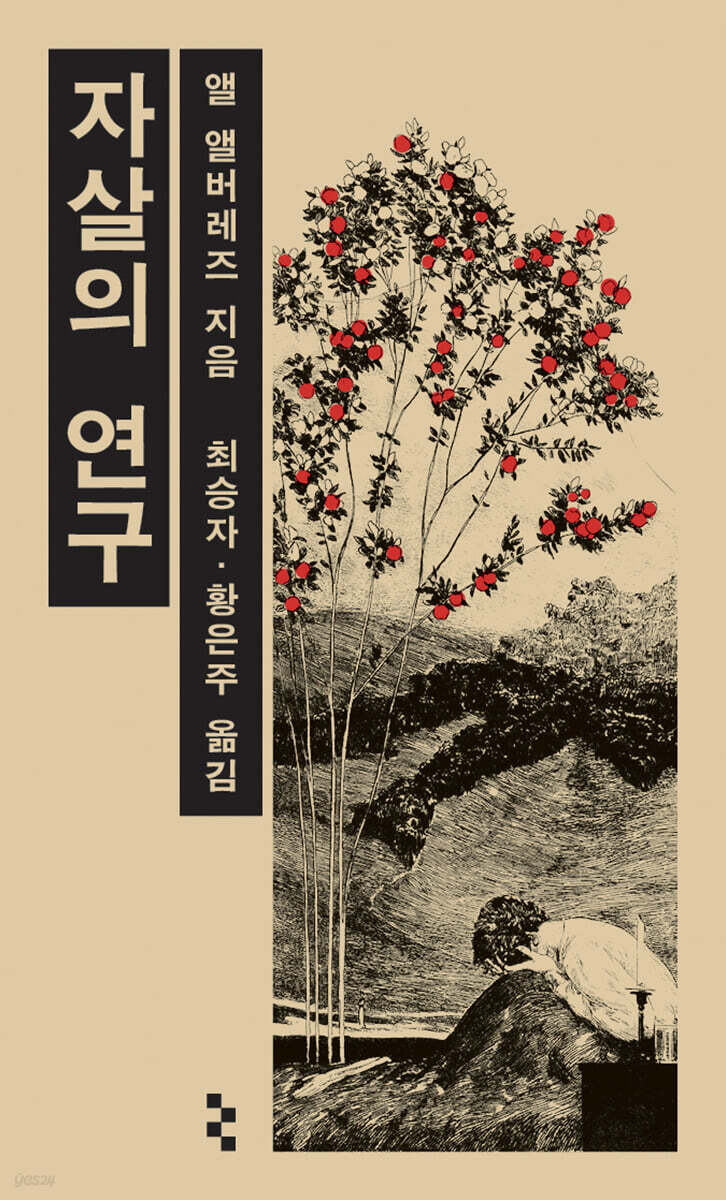
Book Introduction
Reflections on Death and Art, translated by poet Choi Seung-ja
A steady seller loved in Korea for over 40 years
The first complete translation in Korea with additions to previously missing translations
What book on suicide has garnered the most consistent attention in Korea?
The next book that can be mentioned after Émile Durkheim's 『Suicide』, a classic in this field, is 『Studies in Suicide』 by Al Alvarez.
This book became a steady seller in 1982 when the edition translated by poet Choi Seung-ja gained considerable popularity, and has continued to sell for nearly 40 years since then, establishing itself as a timeless classic among Korean readers.
The new 『A Study of Suicide』 published by Amsilmunko is a comprehensive revision based on the original translation by Choi Seung-ja, and is the first official complete translation in Korea that includes additional translations of content omitted from the previous edition.
The added volume amounts to approximately 50 pages based on the original book.
A steady seller loved in Korea for over 40 years
The first complete translation in Korea with additions to previously missing translations
What book on suicide has garnered the most consistent attention in Korea?
The next book that can be mentioned after Émile Durkheim's 『Suicide』, a classic in this field, is 『Studies in Suicide』 by Al Alvarez.
This book became a steady seller in 1982 when the edition translated by poet Choi Seung-ja gained considerable popularity, and has continued to sell for nearly 40 years since then, establishing itself as a timeless classic among Korean readers.
The new 『A Study of Suicide』 published by Amsilmunko is a comprehensive revision based on the original translation by Choi Seung-ja, and is the first official complete translation in Korea that includes additional translations of content omitted from the previous edition.
The added volume amounts to approximately 50 pages based on the original book.
- You can preview some of the book's contents.
Preview
index
preface
Chapter 1 Prologue: Sylvia Plath
Chapter 2: Historical Background of Suicide
Chapter 3: Suicide, the Closed World
Chapter 4: Suicide and Literature
Chapter 5: Epilogue/Liberation
Original note
Chapter 1 Prologue: Sylvia Plath
Chapter 2: Historical Background of Suicide
Chapter 3: Suicide, the Closed World
Chapter 4: Suicide and Literature
Chapter 5: Epilogue/Liberation
Original note
Detailed image

Into the book
When I was a student, I had a physics teacher who was unusually kind and informal, but who constantly talked about suicide in a joking manner.
He was a small man with a broad, ruddy face, a large head covered with curly gray hair, and a perpetually worried smile.
Unlike most of his fellow teachers, he said he had been top of his class at Cambridge University.
One day, after a class, he said in a casual tone that anyone who was about to behead someone should always be careful to put their own head in the bag first, or else there would be terrible chaos.
At those words, all the children laughed.
Soon the bell rang, signaling 1 o'clock, and all the boys went out in groups to eat lunch.
The physics teacher rode his bike straight home, put his head in a sack, and decapitated himself.
There was no great confusion.
I was very impressed at that time.
--- p.9~10
Disaster, when it finally strikes, is never as severe as anticipated.
She too was able to write with the same sense of relief, and even her writing speed increased, as if to foreshadow the horrors to come.
She realized that in some ways this fear was what she had been waiting for all her life, and that now that it had arrived, she had to harness it.
“The passion for destruction is also the passion for creation,” said Mikhail Bakunin.
That was true for Sylvia too.
She transformed the feeling of anger and pain into a kind of celebration.
--- p.59
An artist's creative act does not necessarily help him recover.
In other words, just because an artist expresses his or her fantasy does not mean that he or she is automatically freed from that fantasy.
According to a certain peculiar logic inherent in the act of creation, the methodology of 'borrowing form to express' may be a device that helps artists, rather than escaping from the materials they have drawn from the abyss, get closer to them.
--- p.80
Suicide may be a declaration of bankruptcy in a life filled with failures.
But on the other hand, it can be said that it is the history of a life that ends with that one decision and, through the ultimateity of that decision, escapes at least from complete failure.
Some minimal freedom, the freedom to die in the way and at the time of one's choosing, is what saves life from the wreckage of all those fates one never wanted.
Perhaps that is why totalitarian states feel 'victimized' when their dissidents commit suicide.
--- p.157
Society is something that improves, albeit painfully and very slowly.
In other words, society continues to grow essentially independent of humanity.
Professor Stern gets to the heart of the matter:
“At some stage in his evolution, man must have discovered that he could kill not only beasts and fellow humans, but also himself.
From then on, we can assume that human life became something entirely different.” Ultimately, it seems to me that even the most sophisticated and plausible sociological theories short-circuit with this simple insight:
The insight is that suicide, like sex, is a human trait that even a perfect society can never erase.
--- p.169
Mandelstam was arrested again and died in a forced labor camp near Siberia.
However, he opposed his wife's suggestion to commit suicide until the very last moment.
His wife later said:
“Every time I brought up the topic of suicide, he would say this.
Why are you in such a hurry?
The end is the same everywhere, and here it is coming upon us in a hurry.' Death, therefore, seemed more real than life, and more concise.
(...) When we are confronted with some terrible horror in this world, or when problems that seem utterly insurmountable weigh us down with particularly strong pressure, then the essential nature of life, the ordinary problems, always recede into the background.
"How can we hold such awe in the power of nature and the eternal laws of existence when the realistic fears of the world are so acutely felt in our daily lives? It may seem like a strange conclusion, but on the other hand, such worldly fears seem to bring a certain richness to our lives."
He was a small man with a broad, ruddy face, a large head covered with curly gray hair, and a perpetually worried smile.
Unlike most of his fellow teachers, he said he had been top of his class at Cambridge University.
One day, after a class, he said in a casual tone that anyone who was about to behead someone should always be careful to put their own head in the bag first, or else there would be terrible chaos.
At those words, all the children laughed.
Soon the bell rang, signaling 1 o'clock, and all the boys went out in groups to eat lunch.
The physics teacher rode his bike straight home, put his head in a sack, and decapitated himself.
There was no great confusion.
I was very impressed at that time.
--- p.9~10
Disaster, when it finally strikes, is never as severe as anticipated.
She too was able to write with the same sense of relief, and even her writing speed increased, as if to foreshadow the horrors to come.
She realized that in some ways this fear was what she had been waiting for all her life, and that now that it had arrived, she had to harness it.
“The passion for destruction is also the passion for creation,” said Mikhail Bakunin.
That was true for Sylvia too.
She transformed the feeling of anger and pain into a kind of celebration.
--- p.59
An artist's creative act does not necessarily help him recover.
In other words, just because an artist expresses his or her fantasy does not mean that he or she is automatically freed from that fantasy.
According to a certain peculiar logic inherent in the act of creation, the methodology of 'borrowing form to express' may be a device that helps artists, rather than escaping from the materials they have drawn from the abyss, get closer to them.
--- p.80
Suicide may be a declaration of bankruptcy in a life filled with failures.
But on the other hand, it can be said that it is the history of a life that ends with that one decision and, through the ultimateity of that decision, escapes at least from complete failure.
Some minimal freedom, the freedom to die in the way and at the time of one's choosing, is what saves life from the wreckage of all those fates one never wanted.
Perhaps that is why totalitarian states feel 'victimized' when their dissidents commit suicide.
--- p.157
Society is something that improves, albeit painfully and very slowly.
In other words, society continues to grow essentially independent of humanity.
Professor Stern gets to the heart of the matter:
“At some stage in his evolution, man must have discovered that he could kill not only beasts and fellow humans, but also himself.
From then on, we can assume that human life became something entirely different.” Ultimately, it seems to me that even the most sophisticated and plausible sociological theories short-circuit with this simple insight:
The insight is that suicide, like sex, is a human trait that even a perfect society can never erase.
--- p.169
Mandelstam was arrested again and died in a forced labor camp near Siberia.
However, he opposed his wife's suggestion to commit suicide until the very last moment.
His wife later said:
“Every time I brought up the topic of suicide, he would say this.
Why are you in such a hurry?
The end is the same everywhere, and here it is coming upon us in a hurry.' Death, therefore, seemed more real than life, and more concise.
(...) When we are confronted with some terrible horror in this world, or when problems that seem utterly insurmountable weigh us down with particularly strong pressure, then the essential nature of life, the ordinary problems, always recede into the background.
"How can we hold such awe in the power of nature and the eternal laws of existence when the realistic fears of the world are so acutely felt in our daily lives? It may seem like a strange conclusion, but on the other hand, such worldly fears seem to bring a certain richness to our lives."
--- p.225
Publisher's Review
How has this book been loved for over 40 years?
The reason it's difficult to find consistently read books on suicide is, above all, because social science theories change rapidly.
Books that deal with outdated theories are often considered outdated.
But why has this book, which focuses on Freudian psychology—perhaps the most outdated of trends—remained so beloved for decades? Perhaps it's because Alvarez has gone beyond simply introducing (and implicitly endorsing) a specific theory by referencing sociology and psychology.
Alvarez's emphasis on Freud is not because he seems most right.
Rather, it is because Freud was a psychologist who suffered many theoretical frustrations.
Freud's view of reality, cultivated in the bustling city of Vienna, gradually crumbled during the World War, and he had to redesign a theory suited to the collapsed world.
Alvarez took note of this attitude.
While psychologists after Freud generally believed in their own theories and tried to solidify them, Freud was ultimately unsure (or failed) of his theoretical achievements, and thus believed that the act of putting the human mind into a social theory was ultimately impossible.
A community of shared destiny: suicide and creation
In this way, Alvarez does not view suicide as a concept subject to social pressure.
The concept of suicide as a victim was one he found difficult to accept.
In the art world where Alvarez, a literary critic and writer, was active, the more energetic a person was, the more likely he or she was to attempt suicide, suggesting that suicide was sometimes an active and positive choice.
In other words, for Alvarez, suicide was one of many sparks of inner human energy.
Retracing the suicide of his real-life colleague and friend, Sylvia Plath, he makes the bold claim that Plath may not have actually tried to die at the time of her final suicide attempt.
At that time, Plath tried to elevate herself to a new level by experiencing a virtual death.
According to Alvarez, Plas would not have died if not for a few misfortunes.
The irony of avoiding death with a surprising probability when you actually tried to die, and then reaching death with an equally low probability when you actually tried not to die.
Plath's life depicts the intertwining of human life and art as a shared destiny against this ironic fate (or, as the book's original title suggests, "Savage God").
At this point, choosing death becomes an act of expressing one's inner self, much like creation, and thus suicide is elevated to one of the means of opposing the world.
As 『Studies in Suicide』 unfolds this argument, it displays a passion that seems to combine Albert Camus's 『The Myth of Sisyphus』 and Jean Améry's 『Free Death』.
What matters is the human attitude toward the world and the energy to put that attitude into action.
It is a question of what pattern he will take out later.
Risking one's life to face the world
In this way, Alvarez uniquely blends sociology, psychology, and creative writing to create his own unique perspective.
And then we introduce artists who confront the world in their own way.
While many of them are linked to suicide, Alvarez reminds us that not all suicides are the result of defeat in reality.
Will we live, or will we die, rejecting a life that is like death? How should each human life respond, especially when faced with a modern civilization that is moving toward its own extinction?
Ultimately, you will not find any public-spirited or good content in this book that seeks to solve the social problem of suicide.
This book, which examines the extent to which humans can engage with the world through their own lives, will only rekindle the hearts of lonely readers who have been left with a dying flame.
And this flame will convey a very welcome and precious warmth to readers living in the 21st century, which is colder than ever before.
The reason it's difficult to find consistently read books on suicide is, above all, because social science theories change rapidly.
Books that deal with outdated theories are often considered outdated.
But why has this book, which focuses on Freudian psychology—perhaps the most outdated of trends—remained so beloved for decades? Perhaps it's because Alvarez has gone beyond simply introducing (and implicitly endorsing) a specific theory by referencing sociology and psychology.
Alvarez's emphasis on Freud is not because he seems most right.
Rather, it is because Freud was a psychologist who suffered many theoretical frustrations.
Freud's view of reality, cultivated in the bustling city of Vienna, gradually crumbled during the World War, and he had to redesign a theory suited to the collapsed world.
Alvarez took note of this attitude.
While psychologists after Freud generally believed in their own theories and tried to solidify them, Freud was ultimately unsure (or failed) of his theoretical achievements, and thus believed that the act of putting the human mind into a social theory was ultimately impossible.
A community of shared destiny: suicide and creation
In this way, Alvarez does not view suicide as a concept subject to social pressure.
The concept of suicide as a victim was one he found difficult to accept.
In the art world where Alvarez, a literary critic and writer, was active, the more energetic a person was, the more likely he or she was to attempt suicide, suggesting that suicide was sometimes an active and positive choice.
In other words, for Alvarez, suicide was one of many sparks of inner human energy.
Retracing the suicide of his real-life colleague and friend, Sylvia Plath, he makes the bold claim that Plath may not have actually tried to die at the time of her final suicide attempt.
At that time, Plath tried to elevate herself to a new level by experiencing a virtual death.
According to Alvarez, Plas would not have died if not for a few misfortunes.
The irony of avoiding death with a surprising probability when you actually tried to die, and then reaching death with an equally low probability when you actually tried not to die.
Plath's life depicts the intertwining of human life and art as a shared destiny against this ironic fate (or, as the book's original title suggests, "Savage God").
At this point, choosing death becomes an act of expressing one's inner self, much like creation, and thus suicide is elevated to one of the means of opposing the world.
As 『Studies in Suicide』 unfolds this argument, it displays a passion that seems to combine Albert Camus's 『The Myth of Sisyphus』 and Jean Améry's 『Free Death』.
What matters is the human attitude toward the world and the energy to put that attitude into action.
It is a question of what pattern he will take out later.
Risking one's life to face the world
In this way, Alvarez uniquely blends sociology, psychology, and creative writing to create his own unique perspective.
And then we introduce artists who confront the world in their own way.
While many of them are linked to suicide, Alvarez reminds us that not all suicides are the result of defeat in reality.
Will we live, or will we die, rejecting a life that is like death? How should each human life respond, especially when faced with a modern civilization that is moving toward its own extinction?
Ultimately, you will not find any public-spirited or good content in this book that seeks to solve the social problem of suicide.
This book, which examines the extent to which humans can engage with the world through their own lives, will only rekindle the hearts of lonely readers who have been left with a dying flame.
And this flame will convey a very welcome and precious warmth to readers living in the 21st century, which is colder than ever before.
GOODS SPECIFICS
- Date of issue: March 5, 2025
- Page count, weight, size: 488 pages | 115*190*30mm
- ISBN13: 9788932475394
- ISBN10: 8932475393
You may also like
카테고리
korean


korean

![GQ KOREA Mark (Monthly): December [2025]](http://librairie.coreenne.fr/cdn/shop/files/8ef265dbbfbf186523ed75ba7319009d.jpg?v=1765340328&width=3840)


