

John Rawls's Theory of Justice
 |
Description
Book Introduction
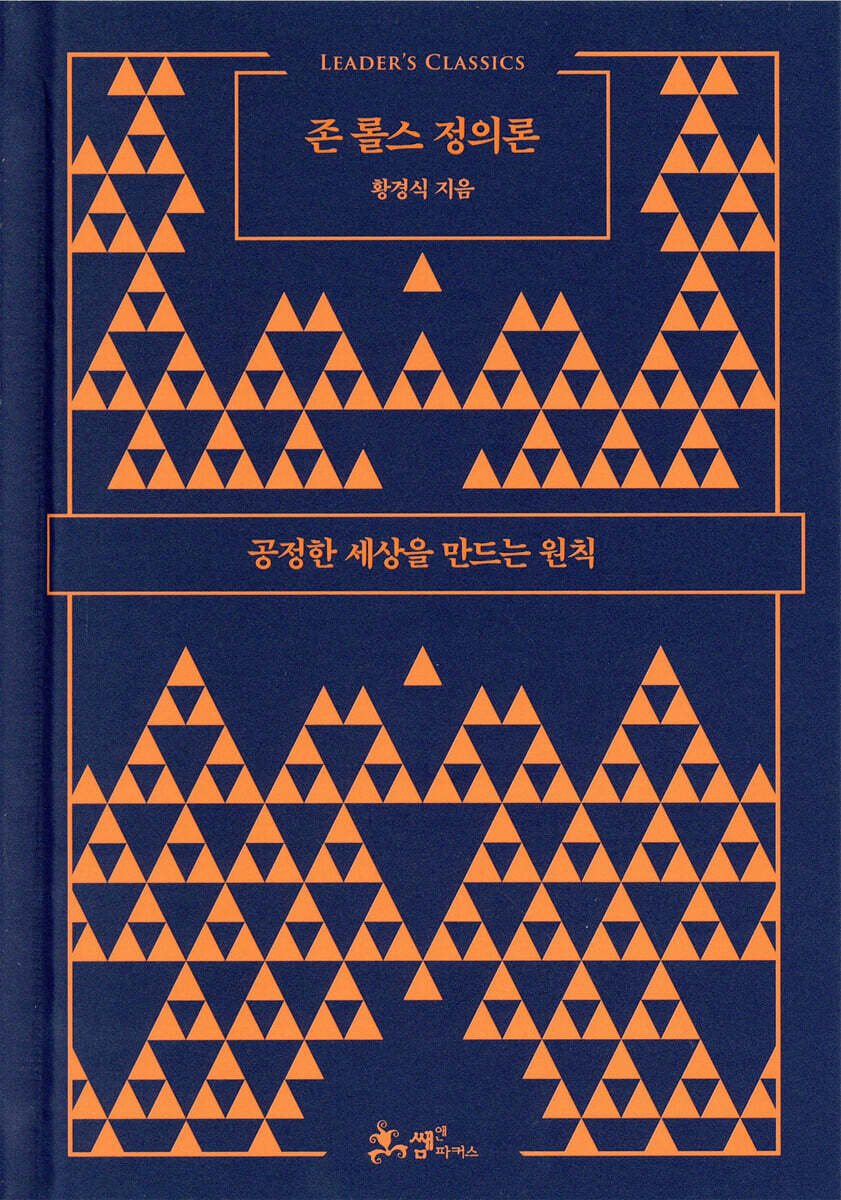
'Leader's Classics' series, "John Rawls's Theory of Justice: Principles for Creating a Fair World."
John Rawls's "A Theory of Justice" was first published in 1971 and has been translated into 26 languages worldwide. It was selected as one of Time magazine's 100 best books of the 20th century.
This book helps readers understand Theory of Justice, which is known to be difficult and tedious regardless of the East or the West, more easily and accurately.
It explains Rawls' core concepts, which consist of 'primary consideration for the least advantaged' and the two principles of 'equal liberty' and 'difference', and presents practical wisdom for creating a 'fair world'.
The 'Reader's Classics' series explores classics that 'everyone knows but has never really read', helping readers gain a broad overview of the vast horizons of great thought.
The "Leader's Classics" series offers wisdom for tomorrow through profound and innovative interpretations by contemporary scholars.
It helps you truly savor the true flavor of classic texts that you might not have even considered reading or that you might not have easily understood even if you did.
John Rawls's "A Theory of Justice" was first published in 1971 and has been translated into 26 languages worldwide. It was selected as one of Time magazine's 100 best books of the 20th century.
This book helps readers understand Theory of Justice, which is known to be difficult and tedious regardless of the East or the West, more easily and accurately.
It explains Rawls' core concepts, which consist of 'primary consideration for the least advantaged' and the two principles of 'equal liberty' and 'difference', and presents practical wisdom for creating a 'fair world'.
The 'Reader's Classics' series explores classics that 'everyone knows but has never really read', helping readers gain a broad overview of the vast horizons of great thought.
The "Leader's Classics" series offers wisdom for tomorrow through profound and innovative interpretations by contemporary scholars.
It helps you truly savor the true flavor of classic texts that you might not have even considered reading or that you might not have easily understood even if you did.
- You can preview some of the book's contents.
Preview
index
preface
Chapter 1 Why should we discuss ‘justice’?
Chapter 2: Consideration for the Least Beneficiaries and a Just Society
Chapter 3 Justice as Fairness and the Two Principles of Justice
Chapter 4: Supplementary Discussion for a Deeper Reading of Theory of Justice
Chapter 5: Reactions to "A Theory of Justice" and the Practice of Justice
Search
Chapter 1 Why should we discuss ‘justice’?
Chapter 2: Consideration for the Least Beneficiaries and a Just Society
Chapter 3 Justice as Fairness and the Two Principles of Justice
Chapter 4: Supplementary Discussion for a Deeper Reading of Theory of Justice
Chapter 5: Reactions to "A Theory of Justice" and the Practice of Justice
Search
Detailed image

Into the book
In a liberal democracy like ours and a society that adheres to pluralism, the key task is to establish a fair and just community where individuals can freely pursue their own values while respecting the fundamental freedoms and rights of others, rather than advocating a moral system that excessively restricts individual freedom.
That is, as Rawls argued in A Theory of Justice, the specific content of justice should be derived as a result of overlapping agreements through free discussion among citizens, under the premise that priority should be given to the 'least advantaged'.
Our society today suffers from various social conflicts.
Not only class conflict but also generational conflict is serious.
Shouldn't the basic criterion for resolving these various conflicts be the principle of social justice?
Furthermore, the issue of justice cannot be avoided for the social balance of a unified Korea that we will one day face.
Indeed, justice is a topic that our time must grapple with and can be said to be the spirit of the times.
--- pp.12-13
Rawls's theory of justice does not seek to eliminate or equalize unequal qualities.
The goal is to organize a system of benefits and burdens so that all members of society, including the least advantaged, benefit.
More importantly, then, rather than changing how we exercise our circumstances in dealing with the contingencies of natural endowments and social status, we change the moral basis on which we claim the benefits that flow from those endowments.
So we no longer monopolize the qualities we possess or the benefits we derive from them, but rather regard the distribution of natural talents as a common asset and participate in the benefits that flow from such distribution, regardless of the outcome.
In this way, while acknowledging the randomness of luck, we assert that we are the managers or stewards of the talents we have been given rather than the owners of them.
Those who are naturally more fortunate benefit from their good fortune only if they improve the situation of the less fortunate (by bearing the burden of education, helping those who are less fortunate, etc.).
--- pp.65-66
What good is a theory of justice, no matter how coherent and elegant?
If we lack the will and capacity to realize and implement justice, it is nothing more than a pie in the sky.
Scholars are working hard to justify 'justice,' but in reality, what is more important after the theory is presented is the work of motivation that can train the will to put it into practice and develop capabilities.
I believe that the reason I have been unable to escape the sense of practical helplessness while delving into Theory of Justice over the past several decades is because of my lack of will and capacity to put it into practice.
Therefore, 《Theory of Justice》 must be supplemented by virtue ethics aimed at practice.
Even if you understand and know what justice is, it is of no use if it is not internalized, embodied, and put into practice.
The will to practice and the ability to execute are never developed overnight.
If you don't practice what you've learned and make it a habit in your daily life, you'll never be able to gain the motivation to put it into practice.
I believe that the real problem with the Sewol ferry disaster, which shocked and saddened the entire nation, lies not in politics but in ethics.
This is because I believe that the Sewol captain's helplessness and helplessness are long-standing evils that we all share.
--- pp.139-140
We generally think that love and justice are very different.
Because if the path of love is very emotional, the path of justice is very rational.
Moreover, if love is not dividing what is mine from that of another, but giving even what is mine to another, then justice means dividing what is mine from that of another strictly and returning exactly what is mine to that other.
However, as we come to a deeper understanding of love and justice, it seems that this distinction or barrier between them may collapse at some point.
If we look deeply into the roots of love and justice, we begin to see that these two are somehow connected.
If we sympathize with Rawls's "A Theory of Justice," we realize that justice is not about thoroughly dividing what belongs to us and what belongs to others, each of us taking care of what belongs to us with a knife, but rather about putting aside our own natural and social fortunes and confirming that we belong together in a community of shared destiny.
In doing so, we come to feel that the fortunate are willing to consider the fate of even the most unlucky of those born.
Therefore, Rawls himself wants to develop the meaning implicit in his theory of justice through fraternity rather than freedom and equality, which are relatively more discussed values of the French Revolution.
This ultimately means that the core of justice is rooted in humanity and love for humanity.
That is, as Rawls argued in A Theory of Justice, the specific content of justice should be derived as a result of overlapping agreements through free discussion among citizens, under the premise that priority should be given to the 'least advantaged'.
Our society today suffers from various social conflicts.
Not only class conflict but also generational conflict is serious.
Shouldn't the basic criterion for resolving these various conflicts be the principle of social justice?
Furthermore, the issue of justice cannot be avoided for the social balance of a unified Korea that we will one day face.
Indeed, justice is a topic that our time must grapple with and can be said to be the spirit of the times.
--- pp.12-13
Rawls's theory of justice does not seek to eliminate or equalize unequal qualities.
The goal is to organize a system of benefits and burdens so that all members of society, including the least advantaged, benefit.
More importantly, then, rather than changing how we exercise our circumstances in dealing with the contingencies of natural endowments and social status, we change the moral basis on which we claim the benefits that flow from those endowments.
So we no longer monopolize the qualities we possess or the benefits we derive from them, but rather regard the distribution of natural talents as a common asset and participate in the benefits that flow from such distribution, regardless of the outcome.
In this way, while acknowledging the randomness of luck, we assert that we are the managers or stewards of the talents we have been given rather than the owners of them.
Those who are naturally more fortunate benefit from their good fortune only if they improve the situation of the less fortunate (by bearing the burden of education, helping those who are less fortunate, etc.).
--- pp.65-66
What good is a theory of justice, no matter how coherent and elegant?
If we lack the will and capacity to realize and implement justice, it is nothing more than a pie in the sky.
Scholars are working hard to justify 'justice,' but in reality, what is more important after the theory is presented is the work of motivation that can train the will to put it into practice and develop capabilities.
I believe that the reason I have been unable to escape the sense of practical helplessness while delving into Theory of Justice over the past several decades is because of my lack of will and capacity to put it into practice.
Therefore, 《Theory of Justice》 must be supplemented by virtue ethics aimed at practice.
Even if you understand and know what justice is, it is of no use if it is not internalized, embodied, and put into practice.
The will to practice and the ability to execute are never developed overnight.
If you don't practice what you've learned and make it a habit in your daily life, you'll never be able to gain the motivation to put it into practice.
I believe that the real problem with the Sewol ferry disaster, which shocked and saddened the entire nation, lies not in politics but in ethics.
This is because I believe that the Sewol captain's helplessness and helplessness are long-standing evils that we all share.
--- pp.139-140
We generally think that love and justice are very different.
Because if the path of love is very emotional, the path of justice is very rational.
Moreover, if love is not dividing what is mine from that of another, but giving even what is mine to another, then justice means dividing what is mine from that of another strictly and returning exactly what is mine to that other.
However, as we come to a deeper understanding of love and justice, it seems that this distinction or barrier between them may collapse at some point.
If we look deeply into the roots of love and justice, we begin to see that these two are somehow connected.
If we sympathize with Rawls's "A Theory of Justice," we realize that justice is not about thoroughly dividing what belongs to us and what belongs to others, each of us taking care of what belongs to us with a knife, but rather about putting aside our own natural and social fortunes and confirming that we belong together in a community of shared destiny.
In doing so, we come to feel that the fortunate are willing to consider the fate of even the most unlucky of those born.
Therefore, Rawls himself wants to develop the meaning implicit in his theory of justice through fraternity rather than freedom and equality, which are relatively more discussed values of the French Revolution.
This ultimately means that the core of justice is rooted in humanity and love for humanity.
--- pp.141-142
Publisher's Review
With the two principles of ‘equal freedom’ and ‘differentiation’
A 20th-century masterpiece that laid the foundation for social justice!
John Rawls, A Theory of Justice
“Justice that forces sacrifice on the part of a few cannot be tolerated.”
Rawls' practical wisdom for overcoming the limits of inequality!
[Reader's Classic] John Rawls's A Theory of Justice: Principles for Creating a Fair World
“If truth is the first virtue of an ideological system, then justice is the first virtue of a social system.” John Rawls’s “A Theory of Justice,” first published in 1971 and translated into 26 languages worldwide, was named one of Time magazine’s 100 best books of the 20th century.
John Rawls, who taught philosophy at Harvard University, is famous as a "single-subject philosopher" who delved into the problem of justice for decades.
After the publication of A Theory of Justice, British philosopher Stuart Hampshire called it “the most important and significant contribution to moral philosophy since the World War II,” and The New York Times praised the book’s implications, saying it “will change the very way we live.”
Yet, Rawls's A Theory of Justice remains a classic notorious for being difficult to understand for many scholars and beginners alike, and even in the United States, it is known for being a tedious read.
The 'Reader's Classic' series, 'John Rawls's A Theory of Justice: Principles for Building a Fair World', helps readers understand 'Theory of Justice', which is 'notoriously difficult and boring', more easily and accurately (the author of this book, Hwang Gyeong-sik, translated the first edition of 'Theory of Justice' in 1977, and after receiving direct instruction from John Rawls at Harvard University from 1980 to 1981, has long theoretically explored the problem of justice and put it into practice in reality).
There are two ways to approach Theory of Justice:
The first is an intuitive understanding that appeals to common sense.
The fundamentals of the Theory of Justice can be intuitively understood through methods of fairly distributing or repaying social assets and liabilities, and neutralizing natural and social luck.
The second is the argumentative approach, which connects the various intuitions presented in the previous intuitive approach to form arguments, and then connects those arguments to form an overall system and theory.
In this process, the essence and core of the Theory of Justice, which can be said to be 'priority consideration for the least advantaged', and the concept of justice consisting of the two principles of 'equal freedom' and 'differentiation', are revealed.
In other words, this is the image of a just society that Rolls envisioned.
Spoon theory, barrier society...
A society suffering from inequality and discrimination
Finding Practical Wisdom for a Just World in "Justice"
A few years ago, when Michael Sandel's "Justice: What's the Right Thing to Do?" was a national craze, many people questioned "justice in a society without justice."
Although much time has passed since then, the majority of citizens still feel the numerous inequalities and 'absence of justice' in various parts of South Korea and in their individual lives.
The conflict between classes and generations symbolized by the "spoon theory," the debate over the welfare state where liberalism and egalitarianism are sharply opposed, the "tilted playing field" where fair competition is impossible from the start, and the "walled society" where vested interests have built an iron fortress, all attest to the absence of justice.
While the primary goal of this book is to help readers understand Rawls's liberal equality and the core of A Theory of Justice in a simple and clear way, the author notes that A Theory of Justice "must ultimately be implemented, practiced, and realized" in our lives to be meaningful.
“No matter how elegant and coherent a theory may be, it is of no use if it is not put into practice.
Among philosophies, ethics is often called practical philosophy.
Among these, the discussion on justice, which seeks to save reality from injustice and unfairness, is an area in which practical implementation is even more urgent, and in this sense, it can be said to be of the greatest interest to the majority of citizens.” (p. 11)
Therefore, the author believes that 《Justice》 must be supplemented by virtue ethics, institutional reform, humanitarianism, and practical wisdom for practice.
“Scholars are busy justifying ‘justice,’ but in reality, after the theory is presented, what is more important is the work of motivation that can cultivate the will to put it into practice and develop capabilities.” (p. 139)
If you carefully follow the author's faithful commentary and explanation of "A Theory of Justice" and empathize with it, you will feel that "justice is putting aside the natural and social fortunes that each of us is born with and confirming that we belong together in a community of destiny," and that "the fortunate seek to consider the fate of even the most unlucky of those born." (p. 142) This ultimately means that the core of justice is connected to humanity and its roots.
As Rawls puts it, this book will help us get closer to the principles of a just world, based on “the thoughts and feelings that rational people can choose in the world.”
*
“How will we lead the world?”
“How can we understand humanity and preserve our humanity?”
Wisdom for Tomorrow from Great Classics
Leader's Classics series
The answer, which contained excellent insight, survived the test of time.
Immortal books that explore human life and change the world.
In modern times we call it a 'classic'.
Our task is not to cover all the classics.
It is about selecting the classics that you absolutely must know to cultivate the wisdom to see the world and solve given tasks, and then absorbing their nutrients as much as possible.
There are three main reasons why this series is called Leader's Classics.
First, the classics included in this series are at the top of the list of essential classics that leaders of nations, corporations, and organizations large and small must know.
Second, because the wisdom of the classics will motivate modern leaders to foster and practice the spirit of noblesse oblige, which states that “wealth, power, and fame must be accompanied by social responsibility.”
The third and final reason is that this series, which concisely captures the essence of the great classics, will be an excellent introduction to 'reading the classics' for 'busy' modern people who want to live as 'leaders and masters of their own lives.'
The 'Reader's Classics' series explores classics that 'everyone knows but has never really read', helping readers gain a broad overview of the vast horizons of great thought.
The "Leader's Classics" series offers wisdom for tomorrow through profound and innovative interpretations by contemporary scholars.
It will help you truly savor the true flavor of classic texts that you might not have even considered reading or that you might not have easily understood even if you did.
※ Reader's Classics will continue to introduce works such as "The Wealth of Nations" (Adam Smith), "Justice" (John Rawls), "Government" (John Locke), "Politics" (Aristotle), and "The Prince" (Machiavelli), and with the participation of leading domestic scholars, it aims to establish itself as a reliable series that can always be read by those who wish to "enter the door of the classics."
A 20th-century masterpiece that laid the foundation for social justice!
John Rawls, A Theory of Justice
“Justice that forces sacrifice on the part of a few cannot be tolerated.”
Rawls' practical wisdom for overcoming the limits of inequality!
[Reader's Classic] John Rawls's A Theory of Justice: Principles for Creating a Fair World
“If truth is the first virtue of an ideological system, then justice is the first virtue of a social system.” John Rawls’s “A Theory of Justice,” first published in 1971 and translated into 26 languages worldwide, was named one of Time magazine’s 100 best books of the 20th century.
John Rawls, who taught philosophy at Harvard University, is famous as a "single-subject philosopher" who delved into the problem of justice for decades.
After the publication of A Theory of Justice, British philosopher Stuart Hampshire called it “the most important and significant contribution to moral philosophy since the World War II,” and The New York Times praised the book’s implications, saying it “will change the very way we live.”
Yet, Rawls's A Theory of Justice remains a classic notorious for being difficult to understand for many scholars and beginners alike, and even in the United States, it is known for being a tedious read.
The 'Reader's Classic' series, 'John Rawls's A Theory of Justice: Principles for Building a Fair World', helps readers understand 'Theory of Justice', which is 'notoriously difficult and boring', more easily and accurately (the author of this book, Hwang Gyeong-sik, translated the first edition of 'Theory of Justice' in 1977, and after receiving direct instruction from John Rawls at Harvard University from 1980 to 1981, has long theoretically explored the problem of justice and put it into practice in reality).
There are two ways to approach Theory of Justice:
The first is an intuitive understanding that appeals to common sense.
The fundamentals of the Theory of Justice can be intuitively understood through methods of fairly distributing or repaying social assets and liabilities, and neutralizing natural and social luck.
The second is the argumentative approach, which connects the various intuitions presented in the previous intuitive approach to form arguments, and then connects those arguments to form an overall system and theory.
In this process, the essence and core of the Theory of Justice, which can be said to be 'priority consideration for the least advantaged', and the concept of justice consisting of the two principles of 'equal freedom' and 'differentiation', are revealed.
In other words, this is the image of a just society that Rolls envisioned.
Spoon theory, barrier society...
A society suffering from inequality and discrimination
Finding Practical Wisdom for a Just World in "Justice"
A few years ago, when Michael Sandel's "Justice: What's the Right Thing to Do?" was a national craze, many people questioned "justice in a society without justice."
Although much time has passed since then, the majority of citizens still feel the numerous inequalities and 'absence of justice' in various parts of South Korea and in their individual lives.
The conflict between classes and generations symbolized by the "spoon theory," the debate over the welfare state where liberalism and egalitarianism are sharply opposed, the "tilted playing field" where fair competition is impossible from the start, and the "walled society" where vested interests have built an iron fortress, all attest to the absence of justice.
While the primary goal of this book is to help readers understand Rawls's liberal equality and the core of A Theory of Justice in a simple and clear way, the author notes that A Theory of Justice "must ultimately be implemented, practiced, and realized" in our lives to be meaningful.
“No matter how elegant and coherent a theory may be, it is of no use if it is not put into practice.
Among philosophies, ethics is often called practical philosophy.
Among these, the discussion on justice, which seeks to save reality from injustice and unfairness, is an area in which practical implementation is even more urgent, and in this sense, it can be said to be of the greatest interest to the majority of citizens.” (p. 11)
Therefore, the author believes that 《Justice》 must be supplemented by virtue ethics, institutional reform, humanitarianism, and practical wisdom for practice.
“Scholars are busy justifying ‘justice,’ but in reality, after the theory is presented, what is more important is the work of motivation that can cultivate the will to put it into practice and develop capabilities.” (p. 139)
If you carefully follow the author's faithful commentary and explanation of "A Theory of Justice" and empathize with it, you will feel that "justice is putting aside the natural and social fortunes that each of us is born with and confirming that we belong together in a community of destiny," and that "the fortunate seek to consider the fate of even the most unlucky of those born." (p. 142) This ultimately means that the core of justice is connected to humanity and its roots.
As Rawls puts it, this book will help us get closer to the principles of a just world, based on “the thoughts and feelings that rational people can choose in the world.”
*
“How will we lead the world?”
“How can we understand humanity and preserve our humanity?”
Wisdom for Tomorrow from Great Classics
Leader's Classics series
The answer, which contained excellent insight, survived the test of time.
Immortal books that explore human life and change the world.
In modern times we call it a 'classic'.
Our task is not to cover all the classics.
It is about selecting the classics that you absolutely must know to cultivate the wisdom to see the world and solve given tasks, and then absorbing their nutrients as much as possible.
There are three main reasons why this series is called Leader's Classics.
First, the classics included in this series are at the top of the list of essential classics that leaders of nations, corporations, and organizations large and small must know.
Second, because the wisdom of the classics will motivate modern leaders to foster and practice the spirit of noblesse oblige, which states that “wealth, power, and fame must be accompanied by social responsibility.”
The third and final reason is that this series, which concisely captures the essence of the great classics, will be an excellent introduction to 'reading the classics' for 'busy' modern people who want to live as 'leaders and masters of their own lives.'
The 'Reader's Classics' series explores classics that 'everyone knows but has never really read', helping readers gain a broad overview of the vast horizons of great thought.
The "Leader's Classics" series offers wisdom for tomorrow through profound and innovative interpretations by contemporary scholars.
It will help you truly savor the true flavor of classic texts that you might not have even considered reading or that you might not have easily understood even if you did.
※ Reader's Classics will continue to introduce works such as "The Wealth of Nations" (Adam Smith), "Justice" (John Rawls), "Government" (John Locke), "Politics" (Aristotle), and "The Prince" (Machiavelli), and with the participation of leading domestic scholars, it aims to establish itself as a reliable series that can always be read by those who wish to "enter the door of the classics."
GOODS SPECIFICS
- Date of publication: July 27, 2018
- Format: Hardcover book binding method guide
- Page count, weight, size: 160 pages | 411g | 128*188*14mm
- ISBN13: 9788965706540
- ISBN10: 8965706548
You may also like
카테고리
korean


korean

![GQ KOREA Mark (Monthly): December [2025]](http://librairie.coreenne.fr/cdn/shop/files/8ef265dbbfbf186523ed75ba7319009d.jpg?v=1765340328&width=3840)


