

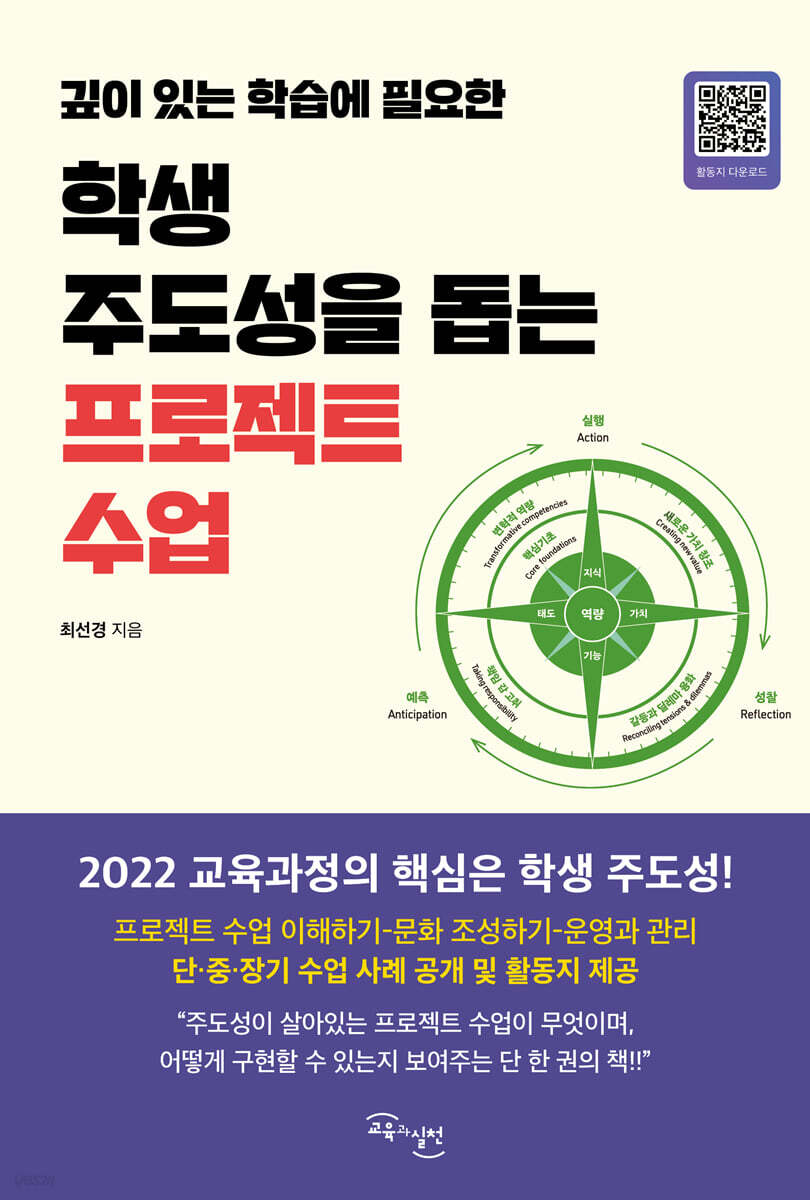
Project classes that encourage student initiative
 |
Description
Book Introduction
The core of the 2022 revised curriculum is student leadership!
Understanding Project Classes - Creating a Culture - Operations and Management
Disclosure of short-, medium-, and long-term class examples and provision of activity sheets
Complete the project-based lessons needed for in-depth learning in one volume.
In line with the 2022 revised curriculum, which prioritizes student initiative, this book begins with the question of why project-based learning is necessary for student initiative.
First, we will discuss the overall understanding and theoretical basis of project classes, and then discuss the definition, goals, history, and elements to help students understand project classes in practice.
Next, we present the theoretical background and basis for creating a classroom culture for actual classes, as well as class design, operation, and management.
Next, we will categorize project classes into short-term (within 5 classes), medium-term (within 8 classes), and long-term (more than 8 classes) and introduce detailed field cases that can be applied directly in actual classes.
For each project-based class conducted in an actual classroom, we introduce class management know-how, various customized learning tools, techniques, and strategies, and provide detailed guidance on how project-based classes are conducted in the field according to key practical elements.
Understanding Project Classes - Creating a Culture - Operations and Management
Disclosure of short-, medium-, and long-term class examples and provision of activity sheets
Complete the project-based lessons needed for in-depth learning in one volume.
In line with the 2022 revised curriculum, which prioritizes student initiative, this book begins with the question of why project-based learning is necessary for student initiative.
First, we will discuss the overall understanding and theoretical basis of project classes, and then discuss the definition, goals, history, and elements to help students understand project classes in practice.
Next, we present the theoretical background and basis for creating a classroom culture for actual classes, as well as class design, operation, and management.
Next, we will categorize project classes into short-term (within 5 classes), medium-term (within 8 classes), and long-term (more than 8 classes) and introduce detailed field cases that can be applied directly in actual classes.
For each project-based class conducted in an actual classroom, we introduce class management know-how, various customized learning tools, techniques, and strategies, and provide detailed guidance on how project-based classes are conducted in the field according to key practical elements.
- You can preview some of the book's contents.
Preview
index
prolog
Chapter 1: Why Project-Based Learning?
1.
What kind of person do you want your students to grow into?
2.
What does it mean to grow into a proactive person?
3.
Project classes that encourage student initiative
4.
Student initiative is influencing
: Let them encounter the real world through project classes.
5.
In-depth learning and project classes
6.
Concept-based inquiry learning and project-based classes
7.
Student leadership goes hand in hand with teacher leadership.
Chapter 2: Understanding Project Classes
1.
Definition and Objectives of Project-Based Learning
2.
History of Project Classes
3.
Project Design Essentials
4.
Misconceptions and Truths About Project-Based Learning
5.
The teacher's role in project classes
Chapter 3: Creating a Project-Based Class Culture that Fosters Initiatives
1.
Developing a Growth Mindset: It's Okay to Fail a Little!
2.
Efforts to create a culture suitable for project-based classes
3.
The project class begins with relationship building.
: Creating a Safe Zone for Conversation (Examples of Icebreaking and Team Building Activities)
4.
How is the group structured?
Chapter 4: Designing Project Lessons
1.
Project Type and Design Phase 3
2.
How do I get project ideas?
3.
Setting up the basic framework for the project
4.
How to create an inquiry question?
5.
Is the class I am taking a project class?
: Project Design Checklist
Chapter 5: Project Class Operation and Management to Support Initiatives
1.
What to focus on at the beginning of the project
: Clarifying students' prior knowledge
2.
Project Operation Strategy 1
: Make the entry event meaningful.
3.
Project Management Strategy 2: Maximize Collaboration
4.
Assessing Student Learning: Formative and Summative Assessment
5.
How do you provide scaffolding and feedback for learning?
6.
Project Class Q&A: Things to Keep in Mind During Class
Chapter 6: Project Class Case Study Disclosure
Short-term project class (within 5 classes)
1.
Making a wallet for your partner
2.
Me too, teacher!
Mid-term project class (within 8 classes)
3.
Making a board game
4.
Love Yourself: Writing BTS' UN Speech
5.
Introducing our culture
Long-term project classes (8 or more classes)
6.
'This is Me' Introducing myself
7.
Creating an Environmental Parody Picture Book
8.
Empathy for the refugee issue and helping refugees
9.
Community services for foreigners
10.
The space we designed
A collection of reviews from teachers who experienced Choi Seon-gyeong's remote training program, "How Far Have You Come with Project Classes?" and field training in project classes.
Chapter 1: Why Project-Based Learning?
1.
What kind of person do you want your students to grow into?
2.
What does it mean to grow into a proactive person?
3.
Project classes that encourage student initiative
4.
Student initiative is influencing
: Let them encounter the real world through project classes.
5.
In-depth learning and project classes
6.
Concept-based inquiry learning and project-based classes
7.
Student leadership goes hand in hand with teacher leadership.
Chapter 2: Understanding Project Classes
1.
Definition and Objectives of Project-Based Learning
2.
History of Project Classes
3.
Project Design Essentials
4.
Misconceptions and Truths About Project-Based Learning
5.
The teacher's role in project classes
Chapter 3: Creating a Project-Based Class Culture that Fosters Initiatives
1.
Developing a Growth Mindset: It's Okay to Fail a Little!
2.
Efforts to create a culture suitable for project-based classes
3.
The project class begins with relationship building.
: Creating a Safe Zone for Conversation (Examples of Icebreaking and Team Building Activities)
4.
How is the group structured?
Chapter 4: Designing Project Lessons
1.
Project Type and Design Phase 3
2.
How do I get project ideas?
3.
Setting up the basic framework for the project
4.
How to create an inquiry question?
5.
Is the class I am taking a project class?
: Project Design Checklist
Chapter 5: Project Class Operation and Management to Support Initiatives
1.
What to focus on at the beginning of the project
: Clarifying students' prior knowledge
2.
Project Operation Strategy 1
: Make the entry event meaningful.
3.
Project Management Strategy 2: Maximize Collaboration
4.
Assessing Student Learning: Formative and Summative Assessment
5.
How do you provide scaffolding and feedback for learning?
6.
Project Class Q&A: Things to Keep in Mind During Class
Chapter 6: Project Class Case Study Disclosure
Short-term project class (within 5 classes)
1.
Making a wallet for your partner
2.
Me too, teacher!
Mid-term project class (within 8 classes)
3.
Making a board game
4.
Love Yourself: Writing BTS' UN Speech
5.
Introducing our culture
Long-term project classes (8 or more classes)
6.
'This is Me' Introducing myself
7.
Creating an Environmental Parody Picture Book
8.
Empathy for the refugee issue and helping refugees
9.
Community services for foreigners
10.
The space we designed
A collection of reviews from teachers who experienced Choi Seon-gyeong's remote training program, "How Far Have You Come with Project Classes?" and field training in project classes.
Into the book
The author cites project-based learning as an effective teaching method for fostering the strength to live.
Even as many new teaching methods emerge in the future, the importance of project-based learning will not change significantly.
Because our life itself is a series of projects.
In the real world, adults wrestle with a variety of "projects," from planning weddings to long-distance road trips.
Children face a variety of projects, such as planning tests or preparing for school events.
In this way, life is a series of projects.
Therefore, it is helpful for everyone to learn how to set goals, develop a complex implementation plan based on those goals, and mobilize the necessary resources to successfully complete a "performance-based evaluation."
--- p.19
Education is not simply about imparting knowledge.
We must help students develop their own capabilities, understand their relationships with the world around them, and contribute to it.
Only by democratically changing school culture can teacher leadership take root and joint leadership between students and teachers be demonstrated.
Mutual leadership between teachers and learners can foster deep learning.
--- p.47
The advantage of project-based learning is that it provides students with a clear expectation that they will apply their knowledge and skills to problems in the transfer phase.
If you understand that this is not about why you are doing it now, but rather a process to produce results, you will become more immersed in the given task.
Even so, completing the result itself is not the goal, but what is important is what students realize and learn in the process.
--- p.70
A growth mindset helps learners believe that high-level learning is possible for everyone.
Studying hard means thinking a lot, and thinking a lot means constantly reflecting and revising your strategies for effective learning.
Students must believe that they are capable of achieving high levels of learning, that it is possible through intentional action, and that it will happen.
Of course, a growth mindset is important in fostering a project-based learning culture.
One way to instill a growth mindset is to have students continually assess their own progress and engage in a process of critique and improvement.
Deepen your learning through opportunities to improve project outcomes.
--- p.79
Students who can think critically, solve problems, work with others, and manage their own learning are better prepared for the challenges they will face in college, the workplace, and as citizens.
Project-based learning provides an opportunity to hone these skills, which students will continue to use long after the project is over.
--- p.116
No matter how great a plan is, a teacher's plan is always subject to revision based on the learner's prior knowledge and what is observed during class.
Students interpret the same experience differently, and their level of understanding is bound to vary.
In a real classroom, each student's prior knowledge and experience are different, so teachers need to prepare for these conditions to lead to learning outcomes.
Teachers must constantly assess their students' levels and find the optimal learning support methods.
The process of assessing a student's current level and adjusting classes is fluid.
Continuous observation and adjustments are required.
We must constantly observe students' levels and achievements and adapt our approaches accordingly.
--- p.139~140
To develop self-management skills, you should help your students use various project management tools, including calendars and project task checklists, so that they can become independent learners who can manage their own work flow while working on projects.
Helping people recover from failure is also an important role of scaffolding.
When students use their abilities to take risks and overcome failure, they learn more than just the content of the course.
When I realize that I am the master of my own project, I finally learn that I am the master of the decisions I make at every crossroads in life, and no one else.
Even as many new teaching methods emerge in the future, the importance of project-based learning will not change significantly.
Because our life itself is a series of projects.
In the real world, adults wrestle with a variety of "projects," from planning weddings to long-distance road trips.
Children face a variety of projects, such as planning tests or preparing for school events.
In this way, life is a series of projects.
Therefore, it is helpful for everyone to learn how to set goals, develop a complex implementation plan based on those goals, and mobilize the necessary resources to successfully complete a "performance-based evaluation."
--- p.19
Education is not simply about imparting knowledge.
We must help students develop their own capabilities, understand their relationships with the world around them, and contribute to it.
Only by democratically changing school culture can teacher leadership take root and joint leadership between students and teachers be demonstrated.
Mutual leadership between teachers and learners can foster deep learning.
--- p.47
The advantage of project-based learning is that it provides students with a clear expectation that they will apply their knowledge and skills to problems in the transfer phase.
If you understand that this is not about why you are doing it now, but rather a process to produce results, you will become more immersed in the given task.
Even so, completing the result itself is not the goal, but what is important is what students realize and learn in the process.
--- p.70
A growth mindset helps learners believe that high-level learning is possible for everyone.
Studying hard means thinking a lot, and thinking a lot means constantly reflecting and revising your strategies for effective learning.
Students must believe that they are capable of achieving high levels of learning, that it is possible through intentional action, and that it will happen.
Of course, a growth mindset is important in fostering a project-based learning culture.
One way to instill a growth mindset is to have students continually assess their own progress and engage in a process of critique and improvement.
Deepen your learning through opportunities to improve project outcomes.
--- p.79
Students who can think critically, solve problems, work with others, and manage their own learning are better prepared for the challenges they will face in college, the workplace, and as citizens.
Project-based learning provides an opportunity to hone these skills, which students will continue to use long after the project is over.
--- p.116
No matter how great a plan is, a teacher's plan is always subject to revision based on the learner's prior knowledge and what is observed during class.
Students interpret the same experience differently, and their level of understanding is bound to vary.
In a real classroom, each student's prior knowledge and experience are different, so teachers need to prepare for these conditions to lead to learning outcomes.
Teachers must constantly assess their students' levels and find the optimal learning support methods.
The process of assessing a student's current level and adjusting classes is fluid.
Continuous observation and adjustments are required.
We must constantly observe students' levels and achievements and adapt our approaches accordingly.
--- p.139~140
To develop self-management skills, you should help your students use various project management tools, including calendars and project task checklists, so that they can become independent learners who can manage their own work flow while working on projects.
Helping people recover from failure is also an important role of scaffolding.
When students use their abilities to take risks and overcome failure, they learn more than just the content of the course.
When I realize that I am the master of my own project, I finally learn that I am the master of the decisions I make at every crossroads in life, and no one else.
--- p.159
Publisher's Review
“Education is not simply teaching facts, but teaching how to think.”
_Socrates
The pace of change is frightening.
The world is changing so rapidly today that it can be called a 'revolution'.
The reality of our education is also changing.
The 2022 revised curriculum focuses on expanding autonomy in curriculum operation, with "student leadership" as a core value.
In this era of rapid change and uncertainty, with artificial intelligence (AI) and open AI like ChatGPT, we've come this far, starting with teachers' concerns about "what and how to teach" to ensure students' proper growth.
After studying for a long time and going through trial and error, the teacher finally concluded that there is no teaching method better than 'project-based learning' that can develop students' knowledge, skills, and life skills. This book is a collection of the teacher's struggles and practical experience.
For in-depth learning that allows you to understand and experience the flow
It looks at project-based learning from a leadership perspective, and meticulously organizes a series of detailed processes that teachers in frontline schools should consider and begin, rather than focusing on theory and results.
In particular, the actual class examples, which take up the most space, explain the roles of teachers and students at each stage of the class so that anyone can easily apply and utilize them according to the situation and topic, and you can even see how students grow through the class.
A teacher changes the world by changing one child.
There is no class that fits perfectly in a space with dozens of students with different looks and thoughts.
Naturally, problems may arise during the course of the class.
What is needed at this time is a change in ‘perspective.’
We must realize that it is not through mistakes or failures that we grow and learn.
We must abandon the idea that perfect preparation leads to a perfect class.
There is no such thing as perfection in the first place.
There are no right answers in class.
If there are thirty students in a classroom, we need to accept that there are at least thirty correct answers.
By sharing my experience, I hope to see an increase in the number of teachers practicing project-based learning, and for a culture of active sharing of their experiences to continue to spread.
_Socrates
The pace of change is frightening.
The world is changing so rapidly today that it can be called a 'revolution'.
The reality of our education is also changing.
The 2022 revised curriculum focuses on expanding autonomy in curriculum operation, with "student leadership" as a core value.
In this era of rapid change and uncertainty, with artificial intelligence (AI) and open AI like ChatGPT, we've come this far, starting with teachers' concerns about "what and how to teach" to ensure students' proper growth.
After studying for a long time and going through trial and error, the teacher finally concluded that there is no teaching method better than 'project-based learning' that can develop students' knowledge, skills, and life skills. This book is a collection of the teacher's struggles and practical experience.
For in-depth learning that allows you to understand and experience the flow
It looks at project-based learning from a leadership perspective, and meticulously organizes a series of detailed processes that teachers in frontline schools should consider and begin, rather than focusing on theory and results.
In particular, the actual class examples, which take up the most space, explain the roles of teachers and students at each stage of the class so that anyone can easily apply and utilize them according to the situation and topic, and you can even see how students grow through the class.
A teacher changes the world by changing one child.
There is no class that fits perfectly in a space with dozens of students with different looks and thoughts.
Naturally, problems may arise during the course of the class.
What is needed at this time is a change in ‘perspective.’
We must realize that it is not through mistakes or failures that we grow and learn.
We must abandon the idea that perfect preparation leads to a perfect class.
There is no such thing as perfection in the first place.
There are no right answers in class.
If there are thirty students in a classroom, we need to accept that there are at least thirty correct answers.
By sharing my experience, I hope to see an increase in the number of teachers practicing project-based learning, and for a culture of active sharing of their experiences to continue to spread.
GOODS SPECIFICS
- Date of issue: October 25, 2024
- Page count, weight, size: 304 pages | 452g | 152*225*20mm
- ISBN13: 9791191724684
- ISBN10: 1191724689
You may also like
카테고리
korean


korean

![GQ KOREA Mark (Monthly): December [2025]](http://librairie.coreenne.fr/cdn/shop/files/8ef265dbbfbf186523ed75ba7319009d.jpg?v=1765340328&width=3840)


