

Capital 1 (Volume 1)
 |
Description
Book Introduction
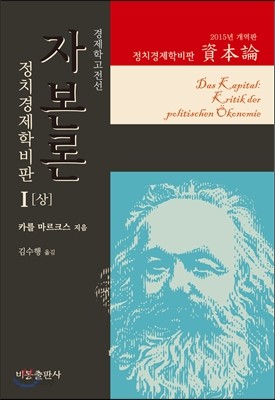
This product is a product made by YES24. (Individual returns are not possible.) [Book] Capital, Vol. 1: A Critique of Political Economy (2015 Revised Edition) The fully revised edition of Marx's 『Capital』 (6 volumes including a special edition) to which the late Professor Kim Su-hang, a leading Korean Marxist economist who passed away suddenly last summer, devoted his heart and soul until the very end has been published. This revised edition is what Professor Kim Su-haeng had planned as his last revision of 『Capital』 and had been preparing since 2013. Not only did he meticulously correct awkward expressions, mistranslations, and typos pointed out in the existing translation, but he also made the greatest effort to change many Chinese and English expressions in the selection and expression of translated terms into easy Korean so that the younger generation could read it with ease. It also reflects the latest achievements in the publication of 『Capital』 in each country. [Book] Capital, Vol. 1 (Part 2): A Critique of Political Economy (2015 Revised Edition) The fully revised edition of Marx's 『Capital』 (6 volumes including a special edition) to which the late Professor Kim Su-hang, a leading Korean Marxist economist who passed away suddenly last summer, devoted his heart and soul until the very end has been published. This revised edition is what Professor Kim Su-haeng had planned as his last revision of 『Capital』 and had been preparing since 2013. Not only did he meticulously correct awkward expressions, mistranslations, and typos pointed out in the existing translation, but he also made the greatest effort to change many Chinese and English expressions in the selection and expression of translated terms into easy Korean so that the younger generation could read it with ease. It also reflects the latest achievements in the publication of 『Capital』 in each country. This revision mainly referenced the latest English edition of Capital, Volumes 35-37 of Marx-Engels Collected Works (MECW) and the Japanese edition of Capital published by Shin Nihon Publishing Co. The English edition reflects the achievements of the publication of the Marx-Engels Collected Works (MEGA; Marx-Engels Gesamtausgabe), and the Japanese edition encompasses not only the original German edition of Capital but also the contributions of the translators and editors of various editions published in various languages to the understanding and revision of the original text. This revised edition incorporates these achievements and reflects them throughout the text and in the translator's notes, aiming to create a translation that is more faithful and accessible than any other previously published version of Capital. By publishing all three volumes of 『Capital』 at once and integrating the bibliography, biographical information, and index of each volume into a separate book, we have made it easier for both general readers and professional researchers to reference and study the book. [Book] Capital 2: A Critique of Political Economy (2015 Revised Edition) The fully revised edition of Marx's 『Capital』 (6 volumes including a special edition) to which the late Professor Kim Su-hang, a leading Korean Marxist economist who passed away suddenly last summer, devoted his heart and soul until the very end has been published. This revised edition is what Professor Kim Su-haeng had planned as his last revision of 『Capital』 and had been preparing since 2013. Not only did he meticulously correct awkward expressions, mistranslations, and typos pointed out in the existing translation, but he also made the greatest effort to change many Chinese and English expressions in the selection and expression of translated terms into easy Korean so that the younger generation could read it with ease. It also reflects the latest achievements in the publication of 『Capital』 in each country. This revision mainly referenced the latest English edition of Capital, Volumes 35-37 of Marx-Engels Collected Works (MECW) and the Japanese edition of Capital published by Shin Nihon Publishing Co. The English edition reflects the achievements of the publication of the Marx-Engels Collected Works (MEGA; Marx-Engels Gesamtausgabe), and the Japanese edition encompasses not only the original German edition of Capital but also the contributions of the translators and editors of various editions published in various languages to the understanding and revision of the original text. This revised edition incorporates these achievements and reflects them throughout the text and in the translator's notes, aiming to create a translation that is more faithful and accessible than any other previously published version of Capital. By publishing all three volumes of 『Capital』 at once and integrating the bibliography, biographical information, and index of each volume into a separate book, we have made it easier for both general readers and professional researchers to reference and study the book. [Book] Capital, Vol. 3: A Critique of Political Economy (2015 Revised Edition) The fully revised edition of Marx's 『Capital』 (6 volumes including a special edition) to which the late Professor Kim Su-hang, a leading Korean Marxist economist who passed away suddenly last summer, devoted his heart and soul until the very end has been published. This revised edition is what Professor Kim Su-haeng had planned as his last revision of 『Capital』 and had been preparing since 2013. Not only did he meticulously correct awkward expressions, mistranslations, and typos pointed out in the existing translation, but he also made the greatest effort to change many Chinese and English expressions in the selection and expression of translated terms into easy Korean so that the younger generation could read it with ease. It also reflects the latest achievements in the publication of 『Capital』 in each country. This revision mainly referenced the latest English edition of Capital, Volumes 35-37 of Marx-Engels Collected Works (MECW) and the Japanese edition of Capital published by Shin Nihon Publishing Co. The English edition reflects the achievements of the publication of the Marx-Engels Collected Works (MEGA; Marx-Engels Gesamtausgabe), and the Japanese edition encompasses not only the original German edition of Capital but also the contributions of the translators and editors of various editions published in various languages to the understanding and revision of the original text. This revised edition incorporates these achievements and reflects them throughout the text and in the translator's notes, aiming to create a translation that is more faithful and accessible than any other previously published version of Capital. By publishing all three volumes of 『Capital』 at once and integrating the bibliography, biographical information, and index of each volume into a separate book, we have made it easier for both general readers and professional researchers to reference and study the book. [Book] Capital, Vol. 3 (Part 2): A Critique of Political Economy (2015 Revised Edition) The fully revised edition of Marx's 『Capital』 (6 volumes including a special edition) to which the late Professor Kim Su-hang, a leading Korean Marxist economist who passed away suddenly last summer, devoted his heart and soul until the very end has been published. This revised edition is what Professor Kim Su-haeng had planned as his last revision of 『Capital』 and had been preparing since 2013. Not only did he meticulously correct awkward expressions, mistranslations, and typos pointed out in the existing translation, but he also made the greatest effort to change many Chinese and English expressions in the selection and expression of translated terms into easy Korean so that the younger generation could read it with ease. It also reflects the latest achievements in the publication of 『Capital』 in each country. This revision mainly referenced the latest English edition of Capital, Volumes 35-37 of Marx-Engels Collected Works (MECW) and the Japanese edition of Capital published by Shin Nihon Publishing Co. The English edition reflects the achievements of the publication of the Marx-Engels Collected Works (MEGA; Marx-Engels Gesamtausgabe), and the Japanese edition encompasses not only the original German edition of Capital but also the contributions of the translators and editors of various editions published in various languages to the understanding and revision of the original text. This revised edition incorporates these achievements and reflects them throughout the text and in the translator's notes, aiming to create a translation that is more faithful and accessible than any other previously published version of Capital. By publishing all three volumes of 『Capital』 at once and integrating the bibliography, biographical information, and index of each volume into a separate book, we have made it easier for both general readers and professional researchers to reference and study the book. [Book] Appendix to Capital: A Critique of Political Economy (2015 Revised Edition) The fully revised edition of Marx's 『Capital』 (6 volumes including a special edition) to which the late Professor Kim Su-hang, a leading Korean Marxist economist who passed away suddenly last summer, devoted his heart and soul until the very end has been published. This revised edition is what Professor Kim Su-haeng had planned as his last revision of 『Capital』 and had been preparing since 2013. Not only did he meticulously correct awkward expressions, mistranslations, and typos pointed out in the existing translation, but he also made the greatest effort to change many Chinese and English expressions in the selection and expression of translated terms into easy Korean so that the younger generation could read it with ease. It also reflects the latest achievements in the publication of 『Capital』 in each country. This revision mainly referenced the latest English edition of Capital, Volumes 35-37 of Marx-Engels Collected Works (MECW) and the Japanese edition of Capital published by Shin Nihon Publishing Co. The English edition reflects the achievements of the publication of the Marx-Engels Collected Works (MEGA; Marx-Engels Gesamtausgabe), and the Japanese edition encompasses not only the original German edition of Capital but also the contributions of the translators and editors of various editions published in various languages to the understanding and revision of the original text. This revised edition incorporates these achievements and reflects them throughout the text and in the translator's notes, aiming to create a translation that is more faithful and accessible than any other previously published version of Capital. By publishing all three volumes of 『Capital』 at once and integrating the bibliography, biographical information, and index of each volume into a separate book, we have made it easier for both general readers and professional researchers to reference and study the book. |
- You can preview some of the book's contents.
Preview
index
Volume I: The Production Process of Capital (Part 1)
[For the 2015 revision]
[For the Second Revision] (2001)
[For the first revision](1991)
[Translator's Note from the Korean First Edition] (1989)
Preface to the first German edition ?1867?
Second German Edition Review ?1873?
Preface to the French edition ?1872?
French version review ?1875?
Preface to the Third German Edition ?1883?
Preface to the English edition ?1886?
Preface to the Fourth German Edition ?1890?
Part 1: Commodities and Money
Chapter 1 Products
Section 1. Two Elements of a Commodity: Use-Value and Value (Substance of Value, Size of Value)
Section 2: The Duality of Labor Embodied in Commodities
Section 3: Value Form or Exchange Value
A.
Simple, individual or accidental value forms? First form?
1.
Two ends of value expression: relative value form and equivalent form
2.
relative value form
(a) Content of relative value form
(b) Quantitative determination of the relative value form
3.
Equivalent form
4.
Simple value form as a whole
B.
A total or developed value form? A second form?
1.
Developed relative value form
2.
Special equivalent form
3.
Defects in the overall or developed value form
C.
General value form? Third form?
1.
The changing nature of value forms
2.
Interdependent development of relative value forms and equivalent forms
3.
The general form of value transitions into the form of money.
D.
Currency form? Fourth form?
Section 4: The Fetishistic Nature of Commodities and Their Secrets
Chapter 2 Exchange Process
Chapter 3 Circulation of Money or Commodities
Section 1. The Scale of Value
Section 2 Means of distribution
(a) Product transformation
(b) circulation of currency
(c) Coin.
symbol of value
Section 3 Currency
(a) Retired currency
(b) Payment method
(c) World Currency
Part 2: The Transformation of Money into Capital
Chapter 4: The General Formula of Capital
Chapter 5: Contradictions in the General Formula of Capital
Chapter 6: Buying and Selling Labor
Part 3: The Production of Absolute Surplus Value
Chapter 7: Labor Process and Value Addition Process
Section 1: The Labor Process? Production of Use Values?
Section 2: Valorisation Process? Production of Surplus Value?
Chapter 8 Constant Capital and Variable Capital
Chapter 9: The Rate of Surplus Value
Section 1. Exploitation of the labor force
Section 2. Representing the components of the value of a product as corresponding parts of the product itself.
Section 3: Senior's 'Last Hour'
Section 4 Surplus Product
Chapter 10: Labor Day
Section 1. Limits of the Working Day
Section 2: Greed for Surplus Labor.
Factory owners and boyars
Section 3: British industrial sector without legal restrictions on exploitation
Section 4 Daytime and nighttime work.
shift system
Section 5: The Struggle for a Standard Working Day: Legislation forcing the extension of the working day from the mid-14th century to the late 17th century
Section 6: The struggle for a standard working day: The law forcibly limits working hours.
British Factory Acts of 1833–1864
Section 7: The Struggle for a Standard Working Day: The Impact of British Factory Laws on Other Countries
Chapter 11: The Rate of Surplus Value and the Quantity of Surplus Value
Part 4: The Production of Relative Surplus Value
Chapter 12: The Concept of Relative Surplus Value
Chapter 13 Collaboration
Chapter 14 Division of Labor and Manufacturing
Section 1: Two Origins of Manufacture
Section 2: The Partial Worker and His Tools
Section 3: Two Basic Forms of Manufacturing: Heterogeneous Manufacturing and Organic Manufacturing
Section 4: Division of Labor in Manufacture and Division of Labor in Society
Section 5: The Capitalist Character of Manufacture
[For the 2015 revision]
[For the Second Revision] (2001)
[For the first revision](1991)
[Translator's Note from the Korean First Edition] (1989)
Preface to the first German edition ?1867?
Second German Edition Review ?1873?
Preface to the French edition ?1872?
French version review ?1875?
Preface to the Third German Edition ?1883?
Preface to the English edition ?1886?
Preface to the Fourth German Edition ?1890?
Part 1: Commodities and Money
Chapter 1 Products
Section 1. Two Elements of a Commodity: Use-Value and Value (Substance of Value, Size of Value)
Section 2: The Duality of Labor Embodied in Commodities
Section 3: Value Form or Exchange Value
A.
Simple, individual or accidental value forms? First form?
1.
Two ends of value expression: relative value form and equivalent form
2.
relative value form
(a) Content of relative value form
(b) Quantitative determination of the relative value form
3.
Equivalent form
4.
Simple value form as a whole
B.
A total or developed value form? A second form?
1.
Developed relative value form
2.
Special equivalent form
3.
Defects in the overall or developed value form
C.
General value form? Third form?
1.
The changing nature of value forms
2.
Interdependent development of relative value forms and equivalent forms
3.
The general form of value transitions into the form of money.
D.
Currency form? Fourth form?
Section 4: The Fetishistic Nature of Commodities and Their Secrets
Chapter 2 Exchange Process
Chapter 3 Circulation of Money or Commodities
Section 1. The Scale of Value
Section 2 Means of distribution
(a) Product transformation
(b) circulation of currency
(c) Coin.
symbol of value
Section 3 Currency
(a) Retired currency
(b) Payment method
(c) World Currency
Part 2: The Transformation of Money into Capital
Chapter 4: The General Formula of Capital
Chapter 5: Contradictions in the General Formula of Capital
Chapter 6: Buying and Selling Labor
Part 3: The Production of Absolute Surplus Value
Chapter 7: Labor Process and Value Addition Process
Section 1: The Labor Process? Production of Use Values?
Section 2: Valorisation Process? Production of Surplus Value?
Chapter 8 Constant Capital and Variable Capital
Chapter 9: The Rate of Surplus Value
Section 1. Exploitation of the labor force
Section 2. Representing the components of the value of a product as corresponding parts of the product itself.
Section 3: Senior's 'Last Hour'
Section 4 Surplus Product
Chapter 10: Labor Day
Section 1. Limits of the Working Day
Section 2: Greed for Surplus Labor.
Factory owners and boyars
Section 3: British industrial sector without legal restrictions on exploitation
Section 4 Daytime and nighttime work.
shift system
Section 5: The Struggle for a Standard Working Day: Legislation forcing the extension of the working day from the mid-14th century to the late 17th century
Section 6: The struggle for a standard working day: The law forcibly limits working hours.
British Factory Acts of 1833–1864
Section 7: The Struggle for a Standard Working Day: The Impact of British Factory Laws on Other Countries
Chapter 11: The Rate of Surplus Value and the Quantity of Surplus Value
Part 4: The Production of Relative Surplus Value
Chapter 12: The Concept of Relative Surplus Value
Chapter 13 Collaboration
Chapter 14 Division of Labor and Manufacturing
Section 1: Two Origins of Manufacture
Section 2: The Partial Worker and His Tools
Section 3: Two Basic Forms of Manufacturing: Heterogeneous Manufacturing and Organic Manufacturing
Section 4: Division of Labor in Manufacture and Division of Labor in Society
Section 5: The Capitalist Character of Manufacture
Publisher's Review
The fully revised edition of Marx's 『Capital』 (6 volumes including a special edition) to which the late Professor Kim Su-hang, a leading Korean Marxist economist who passed away suddenly last summer, devoted his heart and soul until the very end has been published.
This revised edition, which Professor Kim Su-haeng had planned as his final revision of Capital and had been preparing since 2013, has the following characteristics.
First, we meticulously corrected awkward expressions, mistranslations, and typos that had been pointed out in the existing translation, and we also made the greatest effort to change Chinese and English expressions in the selection and expression of translated terms to simpler Korean to make it easier for younger generations to read.
Many parts of the previous translation have been revised, and sentences that were identical in content have been individually edited to make them easier for readers to read.
Furthermore, by actively accepting the opinions and suggestions of his students and disciples during this process, it can be said that Professor Kim Su-hang, who has been researching and teaching on 『Capital』 for decades, has added the contributions of the younger generation to his own research achievements, resulting in a 21st-century version of 『Capital』.
Second, it reflects the latest achievements in the publication of 『Capital』 in each country.
This revision mainly referenced the latest English edition of Capital, Volumes 35-37 of Marx-Engels Collected Works (MECW) and the Japanese edition of Capital published by Shin Nihon Publishing Co. The English edition reflects the achievements of the publication of the Marx-Engels Collected Works (MEGA; Marx-Engels Gesamtausgabe), and the Japanese edition encompasses not only the original German edition of Capital but also the contributions of the translators and editors of various editions published in various languages to the understanding and revision of the original text.
This revised edition incorporates these achievements and reflects them throughout the text and in the translator's notes, aiming to create a translation that is more faithful and accessible than any other previously published version of Capital.
Third, by publishing all three volumes of 『Capital』 at once and integrating the bibliography, biographical information, and index of each volume into a separate book, we have made it easier for both general readers and professional researchers to reference and study the book.
Although Professor Kim Su-hang passed away without seeing the publication of his final work, Capital, we have been given the valuable opportunity to enjoy its fruits.
The latest revised edition of 『Capital』, which contains the theoretical and ideological essence of Marx, who sought to move toward a new society beyond the system of exploitation and oppression through a thorough analysis and critique of capitalism, has been published.
For all those who are disappointed and angry with the reality they face, and for all those who seek to move forward without settling for or compromising with their given circumstances, reading, contemplating, and putting into practice the new 『Capital』 will be a way of repaying the deceased's will and contributions.
This revised edition, which Professor Kim Su-haeng had planned as his final revision of Capital and had been preparing since 2013, has the following characteristics.
First, we meticulously corrected awkward expressions, mistranslations, and typos that had been pointed out in the existing translation, and we also made the greatest effort to change Chinese and English expressions in the selection and expression of translated terms to simpler Korean to make it easier for younger generations to read.
Many parts of the previous translation have been revised, and sentences that were identical in content have been individually edited to make them easier for readers to read.
Furthermore, by actively accepting the opinions and suggestions of his students and disciples during this process, it can be said that Professor Kim Su-hang, who has been researching and teaching on 『Capital』 for decades, has added the contributions of the younger generation to his own research achievements, resulting in a 21st-century version of 『Capital』.
Second, it reflects the latest achievements in the publication of 『Capital』 in each country.
This revision mainly referenced the latest English edition of Capital, Volumes 35-37 of Marx-Engels Collected Works (MECW) and the Japanese edition of Capital published by Shin Nihon Publishing Co. The English edition reflects the achievements of the publication of the Marx-Engels Collected Works (MEGA; Marx-Engels Gesamtausgabe), and the Japanese edition encompasses not only the original German edition of Capital but also the contributions of the translators and editors of various editions published in various languages to the understanding and revision of the original text.
This revised edition incorporates these achievements and reflects them throughout the text and in the translator's notes, aiming to create a translation that is more faithful and accessible than any other previously published version of Capital.
Third, by publishing all three volumes of 『Capital』 at once and integrating the bibliography, biographical information, and index of each volume into a separate book, we have made it easier for both general readers and professional researchers to reference and study the book.
Although Professor Kim Su-hang passed away without seeing the publication of his final work, Capital, we have been given the valuable opportunity to enjoy its fruits.
The latest revised edition of 『Capital』, which contains the theoretical and ideological essence of Marx, who sought to move toward a new society beyond the system of exploitation and oppression through a thorough analysis and critique of capitalism, has been published.
For all those who are disappointed and angry with the reality they face, and for all those who seek to move forward without settling for or compromising with their given circumstances, reading, contemplating, and putting into practice the new 『Capital』 will be a way of repaying the deceased's will and contributions.
GOODS SPECIFICS
- Date of issue: November 20, 2015
- Format: Hardcover book binding method guide
- Page count, weight, size: 532 pages | 906g | 153*224*35mm
- ISBN13: 9788937604324
- ISBN10: 8937604329
You may also like
카테고리
korean


korean

![GQ KOREA Mark (Monthly): December [2025]](http://librairie.coreenne.fr/cdn/shop/files/8ef265dbbfbf186523ed75ba7319009d.jpg?v=1765340328&width=3840)


