

To know war, you must know peace.
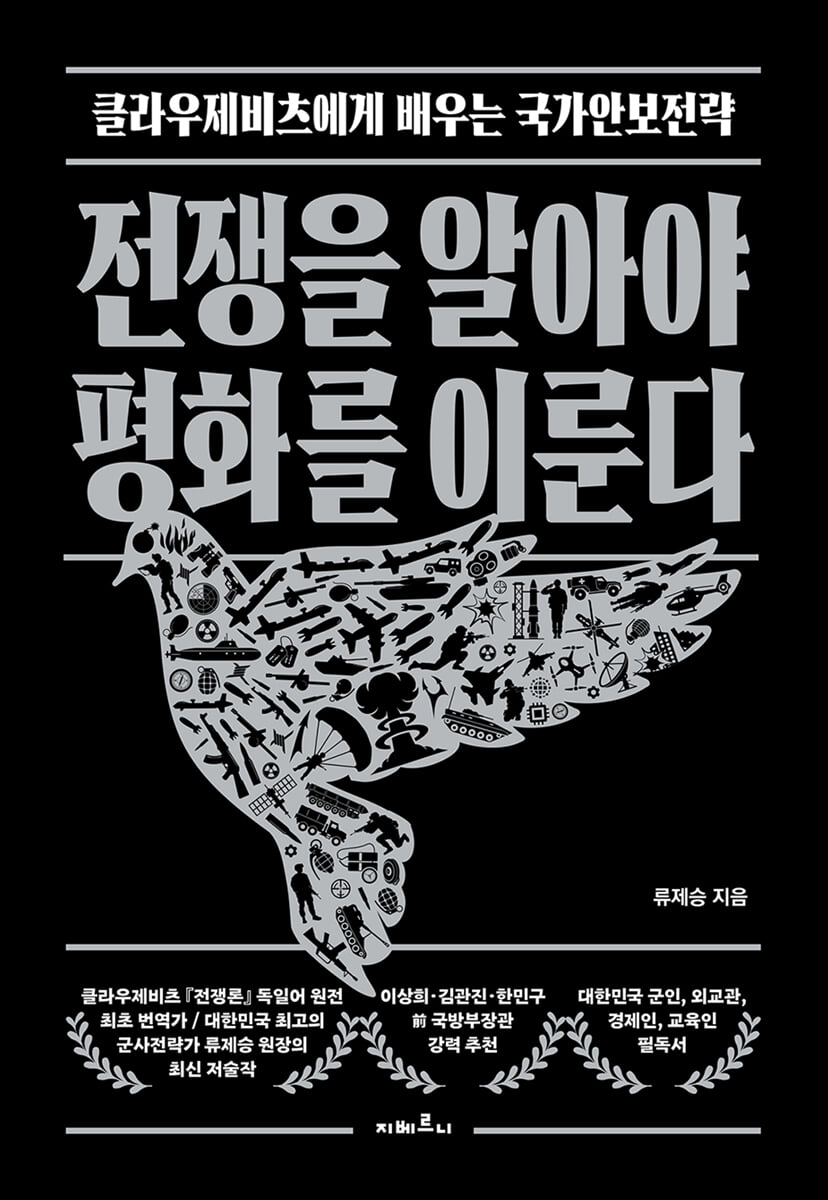 |
Description
Book Introduction
★The first translator of Clausewitz's "On War" from the original German text
★The latest book by Director Ryu Je-seung, South Korea's greatest military strategist!
★Strongly recommended by former Ministers of National Defense Lee Sang-hee, Kim Kwan-jin, and Han Min-koo!
★A must-read for South Korean soldiers, diplomats, businesspeople, and educators.
In the AI era,
The immortal classic on war, On War
Stand on the shoulders of giants and see the future!
“Now is the era of artificial intelligence (AI).”
"Understanding War is the Key to Peace" begins with this sentence. In an era where AI and machine advancements are replacing human judgment, the author points out the decline of human morality and responsibility as a more serious problem than technological advancement. When AI replaces judgment in war, humans could cease to be subjects and become mere tools.
So he says.
“For humans to maintain sustainable authority as operators of AI, they must cultivate rational, emotional, social, and motor intelligence.” This sentence encapsulates the philosophical attitude that humans must maintain in the age of technology.
Based on his lifelong military experience, Ryu Je-seung extends the concept of "professional calling" to military ethics.
An officer's life is a journey of embodying a sense of professional calling and promoting a culture of military professionalism.
For him, the military is not just an organization, but an ethical entity.
He cites Max Weber's political ethics and suggests a balance of conviction and responsibility as a virtue for a leader.
Weber's teaching that "the ethics of conviction and the ethics of responsibility must be dialectically harmonized" remains valid for today's defense leadership.
The core of the book is a reinterpretation of the relationship between war and politics.
It is a self-evident truth that one must know war to see and achieve peace.
He sees war not as mere violence, but as a continuation of human will and politics.
“We can prevent war and maintain peace only by knowing and preparing for the nature of war,” he said, adding that peace is not the absence of war, but rather the product of reason that controls war.
So he warns, “The trend of pursuing only peace and neglecting strategic thinking about war is dangerous.”
It is a sharp criticism of today's discourse on diplomacy and national defense.
This book also presents the spirit that the military of a liberal democratic country must uphold.
A nation worthy of its name and a military worthy of its name must have a culture of military professionalism alive and breathing.
He combines military ethics with constitutional values, demonstrating that civilian control and respect for human rights can coexist with military professionalism.
This idea is a bridge between war and peace, and a fundamental reflection on the reason for the military's existence.
Above all, the true value of this book lies in its modern interpretation of the classic 『On War』.
“On War provides insight into not only the physical phenomena of war but also the spiritual causes and effects inherent within it, through the logic of philosophical thought.” The author says that this classic remains “a classic among classics that leads us to realize the truth of war and grasp the philosophical propositions of military professionalism.”
Ultimately, the message Ryu Je-seung is trying to convey is clear.
War must be avoided, but to avoid it, one must know about it.
The study of war is not a preparation for violence, but a training of reason to control violence.
He writes:
“If you don’t want to go to war, you have to be able to go to war.”
This paradox is the human condition and the ethics of civilization.
“Understanding War is the Key to Peace” is not just a book on military science.
It is a story about human responsibility, the morality of politics, and the restoration of reason as the foundation of peace.
The final sentence, “The essence of truth is freedom,” is the author’s lifelong conclusion and emphasizes that it is a civilizational creed that our time must re-inscribe.
★The latest book by Director Ryu Je-seung, South Korea's greatest military strategist!
★Strongly recommended by former Ministers of National Defense Lee Sang-hee, Kim Kwan-jin, and Han Min-koo!
★A must-read for South Korean soldiers, diplomats, businesspeople, and educators.
In the AI era,
The immortal classic on war, On War
Stand on the shoulders of giants and see the future!
“Now is the era of artificial intelligence (AI).”
"Understanding War is the Key to Peace" begins with this sentence. In an era where AI and machine advancements are replacing human judgment, the author points out the decline of human morality and responsibility as a more serious problem than technological advancement. When AI replaces judgment in war, humans could cease to be subjects and become mere tools.
So he says.
“For humans to maintain sustainable authority as operators of AI, they must cultivate rational, emotional, social, and motor intelligence.” This sentence encapsulates the philosophical attitude that humans must maintain in the age of technology.
Based on his lifelong military experience, Ryu Je-seung extends the concept of "professional calling" to military ethics.
An officer's life is a journey of embodying a sense of professional calling and promoting a culture of military professionalism.
For him, the military is not just an organization, but an ethical entity.
He cites Max Weber's political ethics and suggests a balance of conviction and responsibility as a virtue for a leader.
Weber's teaching that "the ethics of conviction and the ethics of responsibility must be dialectically harmonized" remains valid for today's defense leadership.
The core of the book is a reinterpretation of the relationship between war and politics.
It is a self-evident truth that one must know war to see and achieve peace.
He sees war not as mere violence, but as a continuation of human will and politics.
“We can prevent war and maintain peace only by knowing and preparing for the nature of war,” he said, adding that peace is not the absence of war, but rather the product of reason that controls war.
So he warns, “The trend of pursuing only peace and neglecting strategic thinking about war is dangerous.”
It is a sharp criticism of today's discourse on diplomacy and national defense.
This book also presents the spirit that the military of a liberal democratic country must uphold.
A nation worthy of its name and a military worthy of its name must have a culture of military professionalism alive and breathing.
He combines military ethics with constitutional values, demonstrating that civilian control and respect for human rights can coexist with military professionalism.
This idea is a bridge between war and peace, and a fundamental reflection on the reason for the military's existence.
Above all, the true value of this book lies in its modern interpretation of the classic 『On War』.
“On War provides insight into not only the physical phenomena of war but also the spiritual causes and effects inherent within it, through the logic of philosophical thought.” The author says that this classic remains “a classic among classics that leads us to realize the truth of war and grasp the philosophical propositions of military professionalism.”
Ultimately, the message Ryu Je-seung is trying to convey is clear.
War must be avoided, but to avoid it, one must know about it.
The study of war is not a preparation for violence, but a training of reason to control violence.
He writes:
“If you don’t want to go to war, you have to be able to go to war.”
This paradox is the human condition and the ethics of civilization.
“Understanding War is the Key to Peace” is not just a book on military science.
It is a story about human responsibility, the morality of politics, and the restoration of reason as the foundation of peace.
The final sentence, “The essence of truth is freedom,” is the author’s lifelong conclusion and emphasizes that it is a civilizational creed that our time must re-inscribe.
- You can preview some of the book's contents.
Preview
index
Recommendation 04
Prologue: The Professional's Calling: 10 Secrets to Overcoming Crisis
Part 1: Why Again, the Nature of War? The Foundations of Strategy: A User's Manual for "On War"
Chapter 1: 200 Years of Wisdom: Why I'm Writing "On War"
Chapter 2: Standing on the Shoulders of Giants: Clausewitz's Life and Thought 25
Chapter 3: The Great Blueprint: The Basic Structure and Core Logic of On War 41
Part II: The Essential Structure of War: Why and How Nations Fight
Chapter 4: What is War? Violence that Enforces Will, Interactions That Lead to Extremes 59
Chapter 5 The Functional Relationship between War and Politics_War is a continuation of politics by other means.
75
Chapter 6: The Trinity That Rules War: The Dynamic Interaction of People, Military, and Government 87
Chapter 7: The Logic of Alliances and Collective Security: What Europe's Thousand Years of History Prove 93
Part 3: The Requirements for Victory: A Military Genius and His Army Overcoming Friction and Fog
Chapter 8: The Space of Resistance, the World of Friction: Why Don't Things Go as We Want? 111
Chapter 9: Insight and Determination: The Power to Seek the Light of Truth in the Darkness 117
Chapter 10: The Military's Mental Capacity: The Talent of Commanders, Military Virtues, and National Spirit 127
Part 4: The Strategist's Thinking: Applying War Theory in Practical Action
Chapter 11: The Role and Limits of War Theory: War Theory Doesn't Take You to the Battlefield 135
Chapter 12: What is the Art of War? Military and Diplomatic Strategy: A Two-Person Bicycle 143
Chapter 13: The Wisdom of Mixing for Peace: Victory is the Means, Peace is the End 153
Chapter 14: Reject the Mechanical Production of Creative Planning Operational Plans 157
Part 5: Application of Strategy and Tactics: Focus, Mixing, and Pursuit of Military Decisiveness
Chapter 15: The Dialectics of Defense and Offense: A War That Begins with Defense Ends with Offense 165
Chapter 16: Identifying the Center: Striking the Center is the Root of Victory 171
Chapter 17: The Art of War: Deterrence: Preventing Escalation to Avoid the Threshold of Nuclear War 179
Chapter 18: The Foundation of All Combinations: The Decisive Factor in Achieving Peace through Military Determination 189
Epilogue: The Path to a Strong Military and a Respected Nation 194
Appendix_ On War 210
References 256
Week 258
Prologue: The Professional's Calling: 10 Secrets to Overcoming Crisis
Part 1: Why Again, the Nature of War? The Foundations of Strategy: A User's Manual for "On War"
Chapter 1: 200 Years of Wisdom: Why I'm Writing "On War"
Chapter 2: Standing on the Shoulders of Giants: Clausewitz's Life and Thought 25
Chapter 3: The Great Blueprint: The Basic Structure and Core Logic of On War 41
Part II: The Essential Structure of War: Why and How Nations Fight
Chapter 4: What is War? Violence that Enforces Will, Interactions That Lead to Extremes 59
Chapter 5 The Functional Relationship between War and Politics_War is a continuation of politics by other means.
75
Chapter 6: The Trinity That Rules War: The Dynamic Interaction of People, Military, and Government 87
Chapter 7: The Logic of Alliances and Collective Security: What Europe's Thousand Years of History Prove 93
Part 3: The Requirements for Victory: A Military Genius and His Army Overcoming Friction and Fog
Chapter 8: The Space of Resistance, the World of Friction: Why Don't Things Go as We Want? 111
Chapter 9: Insight and Determination: The Power to Seek the Light of Truth in the Darkness 117
Chapter 10: The Military's Mental Capacity: The Talent of Commanders, Military Virtues, and National Spirit 127
Part 4: The Strategist's Thinking: Applying War Theory in Practical Action
Chapter 11: The Role and Limits of War Theory: War Theory Doesn't Take You to the Battlefield 135
Chapter 12: What is the Art of War? Military and Diplomatic Strategy: A Two-Person Bicycle 143
Chapter 13: The Wisdom of Mixing for Peace: Victory is the Means, Peace is the End 153
Chapter 14: Reject the Mechanical Production of Creative Planning Operational Plans 157
Part 5: Application of Strategy and Tactics: Focus, Mixing, and Pursuit of Military Decisiveness
Chapter 15: The Dialectics of Defense and Offense: A War That Begins with Defense Ends with Offense 165
Chapter 16: Identifying the Center: Striking the Center is the Root of Victory 171
Chapter 17: The Art of War: Deterrence: Preventing Escalation to Avoid the Threshold of Nuclear War 179
Chapter 18: The Foundation of All Combinations: The Decisive Factor in Achieving Peace through Military Determination 189
Epilogue: The Path to a Strong Military and a Respected Nation 194
Appendix_ On War 210
References 256
Week 258
Detailed image
.jpg)
Into the book
"There is a prevailing view that the advancement of AI and machines will lead to astonishing changes in human society, beyond the destructive power of world wars. There is also a heated debate over whether AI is essentially a tool or an agent. In the age of AI, we need to delve deeply into what human path we should choose and how we should shape a machine culture."
--- p.10
“Even though we have entered the AI and digital age, war and peace remain a polarity and a theme that permeates human history.
It is a self-evident truth that one must know war to see and achieve peace.
Only by understanding the nature of war and preparing for it can we prevent war and preserve and create peace.
“The paradox that one must be able to wage war in order to avoid war is a universal truth throughout the East and the West.”
--- p.17
"In a reality where even combining our collective wisdom to manage the highly unpredictable threat of North Korea and the geopolitical risks in East Asia makes it difficult to find an appropriate solution, the dichotomous logic of "I'm a pacifist, you're a warmonger" only further endangers the "unstable peace" on the Korean Peninsula."
--- p.18
“In a military that is worthy of being called a nation, the culture of ‘military professionalism’ must be alive and breathing.
To this end, how should our society and military understand, accept, and practice the principle of ‘military professionalism’?
--- p.18
“Now we need to focus our attention on which propositions in Clausewitz’s ‘On War’ have contemporary significance.
What propositions are the archetypal principles of national policy, military strategy, operational tactics, and tactics that should be applied in current and future wars? And how can these current, valuable propositions and principles be applied to future war deterrence and war-fighting? The process of finding these answers will form the foundation of efforts to establish "military professionalism" in our military and society.
--- p.22
“The battles of Jena and Auerstedt in the autumn of 1806 hold a special significance in the history of Prussia and Germany.
In this decisive battle, the Prussian army suffered a shocking defeat at the hands of the French army led by Napoleon, and lost its national sovereignty.
At that time, Clausewitz was the chief of staff of the infantry battalion commanded by Prince Augustus and fought bravely on the right wing of the Prussian main force, but was defeated by the French army's morale and tactical superiority and was forced to retreat.”
--- p.29~30
“Clausewitz had already addressed important topics included in On War in several papers published during his time as a young officer.
In 1804, he published a paper titled “Strategy is the teaching of the combination of individual battles to achieve the objectives of war; tactics is the teaching of individual battles.”
“The concepts of strategy and tactics he defined at the time are still valid today.”
--- p.44
“The typical state of escalation involves resolute determination and ‘competition in risk-taking’ behavior.
“We and the enemy can pursue escalation by qualitatively deepening the conflict or by quantitatively increasing our own efforts. If the enemy is no longer able to fight, we can stop the process of escalation and ultimately achieve victory.” (p. 67)
Clausewitz asserts that the government's war aims and military operations cannot be achieved without the burning passion and indomitable will of its people.
He then writes that the courage and talent of military commanders determine how effective they are on the battlefield, where probability and chance rule, depending on the characteristics and capabilities of the military leadership and the army.”
--- p.88
“If we cannot properly imagine the reality of future wars, it will be difficult to devise effective countermeasures.
However, we can design what military capabilities to build, how to deploy them, and how to train them, based on our own experience in war and the lessons learned from wars waged by other nations.
However, in the process of preparing for a future war, there are bound to be limitations in perfectly predicting all the factors that will affect the war.”
--- p.113
“Clausewitz defines military strategy as the conduct of battles to achieve the objectives of war.
Therefore, military strategy must assign objectives to the entire military action that are consistent with the purpose of war.
In other words, military strategy sets military objectives in the process of establishing war plans and individual campaign plans, plans overall military actions, and arranges individual battles within a campaign.”
--- p.146
“The proposition that defense is a more powerful form of offense can only be established when both sides are able to maximize the advantages of defense under conditions where they face each other with equal and homogeneous military or combat power.”
--- p.166
“Identify the center.” The center is always where most of the weight is most densely concentrated.
This center provides the most effective target.
Furthermore, the most powerful blow is the one struck at the center of power.”
--- p.171
“Clausewitz’s insight is that by combining a series of clear military principles, one can philosophically design the art of war, formulate a practical theory of war, and devise creative war plans.”
--- p.192~193
“At a time when the era of mercenary warfare was transitioning into an era of national warfare with the rise of Napoleon, Clausewitz recognized that the military expertise of individual officers was a decisive factor in determining the outcome of the entire war and combat operations.”
--- p.194
“If an order violates the human rights of the subject or is given for the private purposes of the commanding officer, the order is invalid and need not be obeyed.”
“In this way, the act of disobeying an order that exceeds the limits of the subordinate’s ability to carry out due to problems with the orderer or the order itself should be protected by law.”
--- p.204
“As discussed so far, to re-establish our ‘military professionalism’ and establish our military’s command philosophy of ‘mission-based command,’ we must first redesign our officer education system and personnel management system.”
--- p.10
“Even though we have entered the AI and digital age, war and peace remain a polarity and a theme that permeates human history.
It is a self-evident truth that one must know war to see and achieve peace.
Only by understanding the nature of war and preparing for it can we prevent war and preserve and create peace.
“The paradox that one must be able to wage war in order to avoid war is a universal truth throughout the East and the West.”
--- p.17
"In a reality where even combining our collective wisdom to manage the highly unpredictable threat of North Korea and the geopolitical risks in East Asia makes it difficult to find an appropriate solution, the dichotomous logic of "I'm a pacifist, you're a warmonger" only further endangers the "unstable peace" on the Korean Peninsula."
--- p.18
“In a military that is worthy of being called a nation, the culture of ‘military professionalism’ must be alive and breathing.
To this end, how should our society and military understand, accept, and practice the principle of ‘military professionalism’?
--- p.18
“Now we need to focus our attention on which propositions in Clausewitz’s ‘On War’ have contemporary significance.
What propositions are the archetypal principles of national policy, military strategy, operational tactics, and tactics that should be applied in current and future wars? And how can these current, valuable propositions and principles be applied to future war deterrence and war-fighting? The process of finding these answers will form the foundation of efforts to establish "military professionalism" in our military and society.
--- p.22
“The battles of Jena and Auerstedt in the autumn of 1806 hold a special significance in the history of Prussia and Germany.
In this decisive battle, the Prussian army suffered a shocking defeat at the hands of the French army led by Napoleon, and lost its national sovereignty.
At that time, Clausewitz was the chief of staff of the infantry battalion commanded by Prince Augustus and fought bravely on the right wing of the Prussian main force, but was defeated by the French army's morale and tactical superiority and was forced to retreat.”
--- p.29~30
“Clausewitz had already addressed important topics included in On War in several papers published during his time as a young officer.
In 1804, he published a paper titled “Strategy is the teaching of the combination of individual battles to achieve the objectives of war; tactics is the teaching of individual battles.”
“The concepts of strategy and tactics he defined at the time are still valid today.”
--- p.44
“The typical state of escalation involves resolute determination and ‘competition in risk-taking’ behavior.
“We and the enemy can pursue escalation by qualitatively deepening the conflict or by quantitatively increasing our own efforts. If the enemy is no longer able to fight, we can stop the process of escalation and ultimately achieve victory.” (p. 67)
Clausewitz asserts that the government's war aims and military operations cannot be achieved without the burning passion and indomitable will of its people.
He then writes that the courage and talent of military commanders determine how effective they are on the battlefield, where probability and chance rule, depending on the characteristics and capabilities of the military leadership and the army.”
--- p.88
“If we cannot properly imagine the reality of future wars, it will be difficult to devise effective countermeasures.
However, we can design what military capabilities to build, how to deploy them, and how to train them, based on our own experience in war and the lessons learned from wars waged by other nations.
However, in the process of preparing for a future war, there are bound to be limitations in perfectly predicting all the factors that will affect the war.”
--- p.113
“Clausewitz defines military strategy as the conduct of battles to achieve the objectives of war.
Therefore, military strategy must assign objectives to the entire military action that are consistent with the purpose of war.
In other words, military strategy sets military objectives in the process of establishing war plans and individual campaign plans, plans overall military actions, and arranges individual battles within a campaign.”
--- p.146
“The proposition that defense is a more powerful form of offense can only be established when both sides are able to maximize the advantages of defense under conditions where they face each other with equal and homogeneous military or combat power.”
--- p.166
“Identify the center.” The center is always where most of the weight is most densely concentrated.
This center provides the most effective target.
Furthermore, the most powerful blow is the one struck at the center of power.”
--- p.171
“Clausewitz’s insight is that by combining a series of clear military principles, one can philosophically design the art of war, formulate a practical theory of war, and devise creative war plans.”
--- p.192~193
“At a time when the era of mercenary warfare was transitioning into an era of national warfare with the rise of Napoleon, Clausewitz recognized that the military expertise of individual officers was a decisive factor in determining the outcome of the entire war and combat operations.”
--- p.194
“If an order violates the human rights of the subject or is given for the private purposes of the commanding officer, the order is invalid and need not be obeyed.”
“In this way, the act of disobeying an order that exceeds the limits of the subordinate’s ability to carry out due to problems with the orderer or the order itself should be protected by law.”
--- p.204
“As discussed so far, to re-establish our ‘military professionalism’ and establish our military’s command philosophy of ‘mission-based command,’ we must first redesign our officer education system and personnel management system.”
--- p.205
Publisher's Review
In an age of steep turbulence,
Why You Should Pay Attention to Clausewitz's "On War"
Military professionalism
Although Clausewitz's "On War" was published over 200 years ago, it is still a classic among classics that leads and stimulates us to understand the truth about war and the philosophical proposition of "military professionalism."
『On War』 is a book on war theory with contemporary significance and has high historical value.
The original propositions established by Clausewitz provide the logical basis necessary to develop solutions by dividing the logic of the complex nature of war and the art of war in the nuclear age in which we live.
『On War』 stands in stark contrast to 『The Art of War』 by Antoine-Henri Jomini, a famous military theorist of the same period, which is evaluated for its theoretical simplicity and clarity, in that it teaches a scientific methodology that uses the logic of philosophical thought to understand not only the physical phenomena of war but also the spiritual causes and effects inherent within it.
Because Clausewitz's 『On War』 is the first book on war theory that applied the methodologies of contemporary philosophy, history, political science, physics, and military science to reveal the structure and nature of war.
Now we need to focus our attention on which propositions in Clausewitz's On War have contemporary significance.
What propositions are the archetypal principles of national policy, military strategy, operational tactics, and tactics that should be applied in current and future wars? And how can these propositions and principles, which possess contemporary value, be applied in the deterrence and conduct of future wars? The process of finding these answers will form the foundation for efforts to establish "military professionalism" in our military and society.
What is 『On War』?
On War, Clausewitz's last work, first saw the light of day in 1832.
Clausewitz devoted his life to studying war while fulfilling his duty to protect national security.
"On War" is a record of his intense life.
On War consists of 125 chapters in 8 parts. Except for the first part, "The Nature of War, Chapter 1: What is War?", which Clausewitz considered to be the only complete work, the other parts and chapters are unfinished works that he revised to further strengthen the logic and expression.
If you savor the meaning of the sentences imbued with the realities of state management and the sense of war that Clausewitz faced in his masterpiece, On War, to which he devoted his entire life, you will more than confirm his military genius.
We will also have the pleasure of learning from Clausewitz the coup d'oeil that will enable us to infer the nature of causality inherent in a series of phenomena that we will observe and experience in future wars.
The core propositions of 『On War』
Reinterpretation from a modern perspective
This book reinterprets the core propositions of Clausewitz's On War from a modern perspective, providing a clear analytical framework for the security dilemmas we face today.
In particular, through the proposition that “war is simply a continuation of politics by other means,” it illuminates the principle of civilian control and the diplomatic and military operation of the ROK-US alliance, and diagnoses the national crisis response capacity through the concept of the “amazing trinity (people-military-government).”
The beauty of this book is that all discussions ultimately converge on the concrete alternatives of 'military professionalism' and 'mission-based command.'
The author cites Clausewitz's insight that "to become a strong nation, one must build a strong army, and the secret of a strong army lies in the judgment of the officer corps," and strongly urges a comprehensive reform of the officer education system and the establishment of a philosophy of "mission-based command" in which officers exercise autonomy within the will of their superiors.
“Protecting the nation from external threats or invasion is the most important national responsibility, and the most important group to fulfill that responsibility is the military, and the officer corps plays a central role in that.
If the system for selecting and managing excellent officers who lead such an important organization by example is poor, wouldn't it be difficult for the soldiers themselves and the public to trust our national defense?" "'Military professionalism' and mission-oriented command are rooted in Clausewitz's theory of military genius and lack of virtue.
If we optimize the officer corps' education and personnel management systems to embody and implement this philosophy and values, we will be able to cultivate an officer corps centered around military geniuses brimming with a strong sense of national identity, exceptional battlefield imagination, and genuine courage, thereby fostering a culture of "military professionalism."
21st Century Survival Strategies from Clausewitz
“Understanding War is the Key to Peace” is the intellectual prescription most urgently needed in South Korea today.
The first translator of the German original of Clausewitz's 『On War』, a former Director of the National Defense Policy Office, and Ambassador to the UAE, his experience in both military and military affairs, policy, and diplomacy, is condensed into this one book.
The author pursues cool-headed strategic realism, not vague pacifism, based on the paradoxical truth that “in order to avoid war, one must be able to wage war.”
The core of this book is redefining strategy in the age of nuclear weapons, AI, and cognitive warfare.
“Military strategy and diplomatic strategy are like a two-person bicycle,” he said, emphasizing the wisdom of combining victory as a means and peace as the end.
In particular, through the proposition that “the art of war is the art of deterrence,” it preaches the importance of sophisticated deterrence management against the North Korean nuclear threat and sharp strategic concepts such as “first use.”
Furthermore, he emphasizes the need for "military genius" equipped with foresight and decisiveness amidst the friction and cognitive fog of the AI era, and strongly calls for "military professionalism" through intellectual armament.
This book, strongly recommended by former Ministers of National Defense Lee Sang-hee, Kim Kwan-jin, and Han Min-koo, is a must-read for all those responsible for national security and all intellectuals who will lead the Republic of Korea to understand the essence of war and gain the wisdom to protect peace. It is a strategic must-read for our times.
This book will elevate the strategic discourse of our society and military.
Why You Should Pay Attention to Clausewitz's "On War"
Military professionalism
Although Clausewitz's "On War" was published over 200 years ago, it is still a classic among classics that leads and stimulates us to understand the truth about war and the philosophical proposition of "military professionalism."
『On War』 is a book on war theory with contemporary significance and has high historical value.
The original propositions established by Clausewitz provide the logical basis necessary to develop solutions by dividing the logic of the complex nature of war and the art of war in the nuclear age in which we live.
『On War』 stands in stark contrast to 『The Art of War』 by Antoine-Henri Jomini, a famous military theorist of the same period, which is evaluated for its theoretical simplicity and clarity, in that it teaches a scientific methodology that uses the logic of philosophical thought to understand not only the physical phenomena of war but also the spiritual causes and effects inherent within it.
Because Clausewitz's 『On War』 is the first book on war theory that applied the methodologies of contemporary philosophy, history, political science, physics, and military science to reveal the structure and nature of war.
Now we need to focus our attention on which propositions in Clausewitz's On War have contemporary significance.
What propositions are the archetypal principles of national policy, military strategy, operational tactics, and tactics that should be applied in current and future wars? And how can these propositions and principles, which possess contemporary value, be applied in the deterrence and conduct of future wars? The process of finding these answers will form the foundation for efforts to establish "military professionalism" in our military and society.
What is 『On War』?
On War, Clausewitz's last work, first saw the light of day in 1832.
Clausewitz devoted his life to studying war while fulfilling his duty to protect national security.
"On War" is a record of his intense life.
On War consists of 125 chapters in 8 parts. Except for the first part, "The Nature of War, Chapter 1: What is War?", which Clausewitz considered to be the only complete work, the other parts and chapters are unfinished works that he revised to further strengthen the logic and expression.
If you savor the meaning of the sentences imbued with the realities of state management and the sense of war that Clausewitz faced in his masterpiece, On War, to which he devoted his entire life, you will more than confirm his military genius.
We will also have the pleasure of learning from Clausewitz the coup d'oeil that will enable us to infer the nature of causality inherent in a series of phenomena that we will observe and experience in future wars.
The core propositions of 『On War』
Reinterpretation from a modern perspective
This book reinterprets the core propositions of Clausewitz's On War from a modern perspective, providing a clear analytical framework for the security dilemmas we face today.
In particular, through the proposition that “war is simply a continuation of politics by other means,” it illuminates the principle of civilian control and the diplomatic and military operation of the ROK-US alliance, and diagnoses the national crisis response capacity through the concept of the “amazing trinity (people-military-government).”
The beauty of this book is that all discussions ultimately converge on the concrete alternatives of 'military professionalism' and 'mission-based command.'
The author cites Clausewitz's insight that "to become a strong nation, one must build a strong army, and the secret of a strong army lies in the judgment of the officer corps," and strongly urges a comprehensive reform of the officer education system and the establishment of a philosophy of "mission-based command" in which officers exercise autonomy within the will of their superiors.
“Protecting the nation from external threats or invasion is the most important national responsibility, and the most important group to fulfill that responsibility is the military, and the officer corps plays a central role in that.
If the system for selecting and managing excellent officers who lead such an important organization by example is poor, wouldn't it be difficult for the soldiers themselves and the public to trust our national defense?" "'Military professionalism' and mission-oriented command are rooted in Clausewitz's theory of military genius and lack of virtue.
If we optimize the officer corps' education and personnel management systems to embody and implement this philosophy and values, we will be able to cultivate an officer corps centered around military geniuses brimming with a strong sense of national identity, exceptional battlefield imagination, and genuine courage, thereby fostering a culture of "military professionalism."
21st Century Survival Strategies from Clausewitz
“Understanding War is the Key to Peace” is the intellectual prescription most urgently needed in South Korea today.
The first translator of the German original of Clausewitz's 『On War』, a former Director of the National Defense Policy Office, and Ambassador to the UAE, his experience in both military and military affairs, policy, and diplomacy, is condensed into this one book.
The author pursues cool-headed strategic realism, not vague pacifism, based on the paradoxical truth that “in order to avoid war, one must be able to wage war.”
The core of this book is redefining strategy in the age of nuclear weapons, AI, and cognitive warfare.
“Military strategy and diplomatic strategy are like a two-person bicycle,” he said, emphasizing the wisdom of combining victory as a means and peace as the end.
In particular, through the proposition that “the art of war is the art of deterrence,” it preaches the importance of sophisticated deterrence management against the North Korean nuclear threat and sharp strategic concepts such as “first use.”
Furthermore, he emphasizes the need for "military genius" equipped with foresight and decisiveness amidst the friction and cognitive fog of the AI era, and strongly calls for "military professionalism" through intellectual armament.
This book, strongly recommended by former Ministers of National Defense Lee Sang-hee, Kim Kwan-jin, and Han Min-koo, is a must-read for all those responsible for national security and all intellectuals who will lead the Republic of Korea to understand the essence of war and gain the wisdom to protect peace. It is a strategic must-read for our times.
This book will elevate the strategic discourse of our society and military.
GOODS SPECIFICS
- Date of issue: November 14, 2025
- Page count, weight, size: 268 pages | 366g | 145*210*17mm
- ISBN13: 9791198773456
- ISBN10: 1198773456
You may also like
카테고리
korean


korean

![GQ KOREA Mark (Monthly): December [2025]](http://librairie.coreenne.fr/cdn/shop/files/8ef265dbbfbf186523ed75ba7319009d.jpg?v=1765340328&width=3840)


