

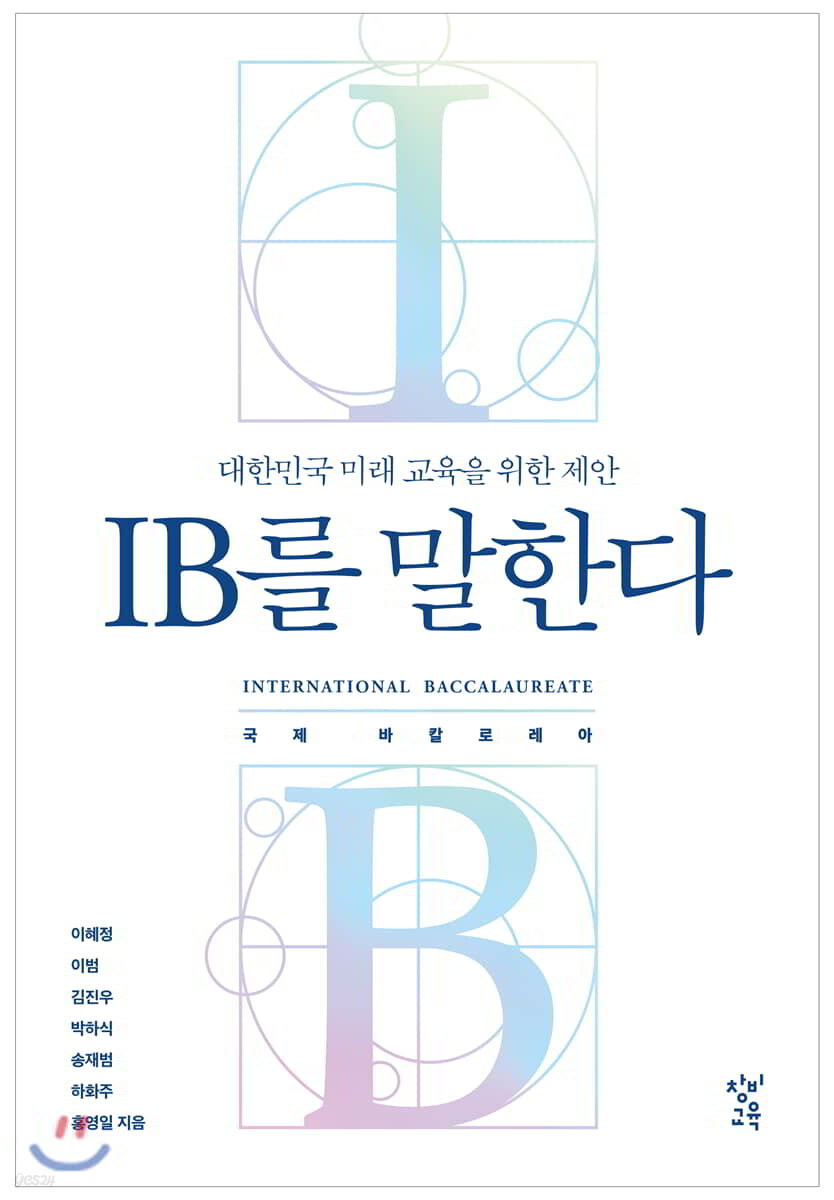
I'm talking about IB
 |
Description
Book Introduction
From education that puts you in to education that takes you out!
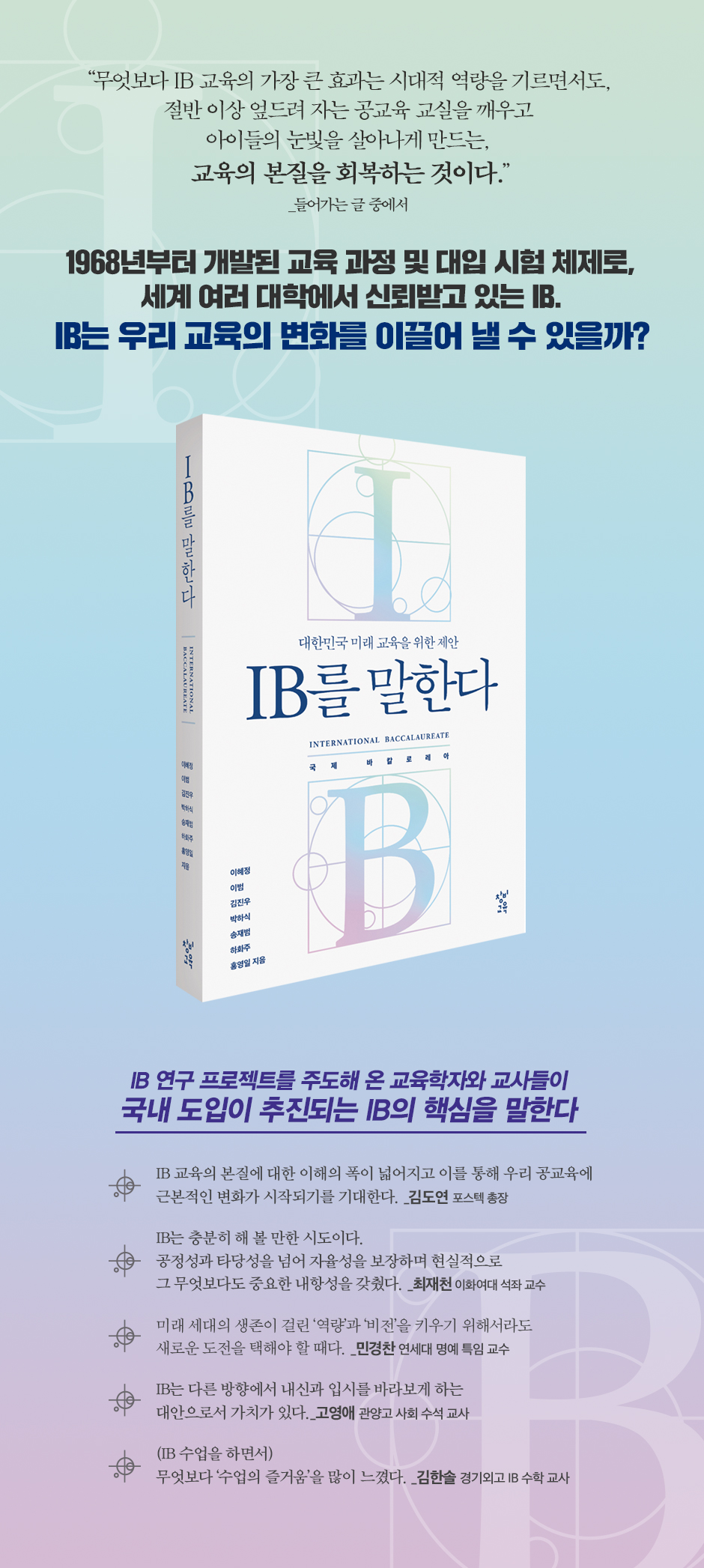
Could the IB be the alternative that drives innovation in our education?
This refers to the core of IB education, which is being promoted for domestic introduction.
IB (International Baccalaureate) is an educational curriculum and university entrance exam developed in Switzerland since 1968.
Originally created by a private non-profit foundation with the aim of providing quality education to children who must live abroad, such as international organization employees or children of diplomats, its educational excellence has become widely known, and the IB program is currently being operated in schools around the world.
Recently, discussions on introducing IB education in Korea are becoming more concrete.
In April 2019, the Jeju and Daegu Offices of Education announced plans to translate the IB into Korean and introduce it into public education in Korea.
Many educators and experts hope that the IB will not only serve as a model school, but also lead to innovation in domestic education.
The goal is to transform our education and assessment system, which currently revolves around multiple-choice and relative assessment, by benchmarking the IB's decades-long expertise in absolute assessment across all subject areas and its fair and just operation. Could the IB become a strategic alternative that will revolutionize our education system? Educators and teachers who introduced the IB to Korea and spearheaded IB research projects delve into the ins and outs of the IB in "Talking About the IB."
Could the IB be the alternative that drives innovation in our education?
This refers to the core of IB education, which is being promoted for domestic introduction.
IB (International Baccalaureate) is an educational curriculum and university entrance exam developed in Switzerland since 1968.
Originally created by a private non-profit foundation with the aim of providing quality education to children who must live abroad, such as international organization employees or children of diplomats, its educational excellence has become widely known, and the IB program is currently being operated in schools around the world.
Recently, discussions on introducing IB education in Korea are becoming more concrete.
In April 2019, the Jeju and Daegu Offices of Education announced plans to translate the IB into Korean and introduce it into public education in Korea.
Many educators and experts hope that the IB will not only serve as a model school, but also lead to innovation in domestic education.
The goal is to transform our education and assessment system, which currently revolves around multiple-choice and relative assessment, by benchmarking the IB's decades-long expertise in absolute assessment across all subject areas and its fair and just operation. Could the IB become a strategic alternative that will revolutionize our education system? Educators and teachers who introduced the IB to Korea and spearheaded IB research projects delve into the ins and outs of the IB in "Talking About the IB."
- You can preview some of the book's contents.
Preview
index
Recommendation
Introduction_To restore the essence of education
Part 1: Educational Evaluation Paradigms Around the World
1 What do each country's college entrance exams measure?
2. Direction of Innovation in Our Education
Part 2: The Current State of Our Education
1. Common belief about entrance exam-oriented education
2. Teachers' right to education must be restored.
3 Fierce competition and private education
Part 3: What is IB?
1. Origin and current status, educational objectives
2 High School Programs
3 Evaluation of High School Programs
4 Middle School Programs
5 Elementary School Programs
Part 4: Planning the Koreanization of the IB
1. Current status of IB introduction in Korea
2 IB students' advancement to domestic universities
3 Comparing IB classes with our classroom classes
4. Will the changing systems work in harmony with IB?
supplement.
Japan's Education Reform: How Did the IB Become an Alternative?
Part 5: Answering the Questions
1. Is the rating system trustworthy?
2 How is it different from our education?
3 Concerns and confusion regarding domestic introduction
People who have experienced Part 6 IB first
1 Cross-experiment between IB students and CSAT students
2 IB Students' Voices
3 Voices of IB Parents
Acknowledgements
References
Introduction_To restore the essence of education
Part 1: Educational Evaluation Paradigms Around the World
1 What do each country's college entrance exams measure?
2. Direction of Innovation in Our Education
Part 2: The Current State of Our Education
1. Common belief about entrance exam-oriented education
2. Teachers' right to education must be restored.
3 Fierce competition and private education
Part 3: What is IB?
1. Origin and current status, educational objectives
2 High School Programs
3 Evaluation of High School Programs
4 Middle School Programs
5 Elementary School Programs
Part 4: Planning the Koreanization of the IB
1. Current status of IB introduction in Korea
2 IB students' advancement to domestic universities
3 Comparing IB classes with our classroom classes
4. Will the changing systems work in harmony with IB?
supplement.
Japan's Education Reform: How Did the IB Become an Alternative?
Part 5: Answering the Questions
1. Is the rating system trustworthy?
2 How is it different from our education?
3 Concerns and confusion regarding domestic introduction
People who have experienced Part 6 IB first
1 Cross-experiment between IB students and CSAT students
2 IB Students' Voices
3 Voices of IB Parents
Acknowledgements
References
Detailed image
Into the book
In Britain and France, grades are not considered in university admissions, and schools proudly focus on entrance exams during the last two years of high school.
However, they provide a much more advanced education than Korea, and the decisive reason is that the entrance exams are essay-based for all subjects and teachers are given a much higher level of autonomy than in Korea.
I do not view entrance exam education negatively because reading books, discussing, and writing are all part of entrance exam preparation education.
--- pp.56~57
The reason why creative education is blocked in private education is because it is evaluated in a way that thoroughly blocks creative education in public education.
Public education maintains the private education ecosystem by adhering to a standardized evaluation system, such as multiple-choice questions, which allows for economies of scale in the operation of private academies.
--- p.65
In Korea, short essays are considered to be a non-curricular activity with a significant influence on private education, and are criticized as being unfair and should be banned by policy.
However, the IB essay does not require writing at a university level.
The significance lies in the fact that it involves actually uncovering a problem and conducting a research process to find an answer.
So, it is written in consultation with a designated instructor within the school, rather than an external expert.
If you do everything outside of school, it won't be recognized.
--- p.95
Existing domestic IB schools, whether international or private, operated in English and charged students with the costs of hiring and training teachers who could teach in English, resulting in high tuition fees.
However, if introduced to public education, there is no need to burden students because teacher salaries and training costs that are already supported by public funds are utilized.
--- p.143
The IB encompasses the core elements of system innovation that go beyond the limits of the innovative school movement: the advancement of teacher authority.
By allowing teachers to create their own achievement and evaluation criteria, giving them the opportunity to write textbooks, and having them evaluate only the classes they have taught, we enable free and creative education.
--- p.150
Rather than measuring memorization ability within a specific period of time, it looks at how much the ability to think for oneself has reached, and not how quickly it was reached, but whether it was reached by the second semester of the third year of high school.
It's about checking whether you've achieved the level of achievement rather than the speed.
So, whether you reach the second or third year of high school, the IB philosophy is to give the same score if you reach the same level by the final score calculation deadline.
--- p.177
The IB ultimately enables the realization of competency education that meets the needs of the times by conducting assessments in a valid and fair manner.
For the past 50 years, its credibility has been proven worldwide, and as a result, prestigious universities around the world recognize the validity and reliability of the IB.
Therefore, it can serve as a strategic alternative as a role model that can solve the problems of the current college entrance exam system, college entrance exam, school grades, and essays.
This is why we are focusing on the IB as a realistic methodology that will lead a revolution in Korean education through 'evaluation.'
--- pp.204~205
It is not intellectually honest to adhere only to established answers.
Simply copying someone else's established answers is intellectually dishonest. The IB isn't a system where grades are based on how well you match a given answer. Rather, it's a system where originality and persuasive ideas lead to higher scores.
--- p.207
For a complete character education to be possible, the evaluation structure itself must be designed so that students experience that different opinions are not wrong but rather opportunities to gain better ideas.
It should be designed to receive high scores only when different opinions are accepted and cooperation is encouraged.
If we emphasize cooperation, diversity, and communication, our education will have a positive impact on students' character.
However, they provide a much more advanced education than Korea, and the decisive reason is that the entrance exams are essay-based for all subjects and teachers are given a much higher level of autonomy than in Korea.
I do not view entrance exam education negatively because reading books, discussing, and writing are all part of entrance exam preparation education.
--- pp.56~57
The reason why creative education is blocked in private education is because it is evaluated in a way that thoroughly blocks creative education in public education.
Public education maintains the private education ecosystem by adhering to a standardized evaluation system, such as multiple-choice questions, which allows for economies of scale in the operation of private academies.
--- p.65
In Korea, short essays are considered to be a non-curricular activity with a significant influence on private education, and are criticized as being unfair and should be banned by policy.
However, the IB essay does not require writing at a university level.
The significance lies in the fact that it involves actually uncovering a problem and conducting a research process to find an answer.
So, it is written in consultation with a designated instructor within the school, rather than an external expert.
If you do everything outside of school, it won't be recognized.
--- p.95
Existing domestic IB schools, whether international or private, operated in English and charged students with the costs of hiring and training teachers who could teach in English, resulting in high tuition fees.
However, if introduced to public education, there is no need to burden students because teacher salaries and training costs that are already supported by public funds are utilized.
--- p.143
The IB encompasses the core elements of system innovation that go beyond the limits of the innovative school movement: the advancement of teacher authority.
By allowing teachers to create their own achievement and evaluation criteria, giving them the opportunity to write textbooks, and having them evaluate only the classes they have taught, we enable free and creative education.
--- p.150
Rather than measuring memorization ability within a specific period of time, it looks at how much the ability to think for oneself has reached, and not how quickly it was reached, but whether it was reached by the second semester of the third year of high school.
It's about checking whether you've achieved the level of achievement rather than the speed.
So, whether you reach the second or third year of high school, the IB philosophy is to give the same score if you reach the same level by the final score calculation deadline.
--- p.177
The IB ultimately enables the realization of competency education that meets the needs of the times by conducting assessments in a valid and fair manner.
For the past 50 years, its credibility has been proven worldwide, and as a result, prestigious universities around the world recognize the validity and reliability of the IB.
Therefore, it can serve as a strategic alternative as a role model that can solve the problems of the current college entrance exam system, college entrance exam, school grades, and essays.
This is why we are focusing on the IB as a realistic methodology that will lead a revolution in Korean education through 'evaluation.'
--- pp.204~205
It is not intellectually honest to adhere only to established answers.
Simply copying someone else's established answers is intellectually dishonest. The IB isn't a system where grades are based on how well you match a given answer. Rather, it's a system where originality and persuasive ideas lead to higher scores.
--- p.207
For a complete character education to be possible, the evaluation structure itself must be designed so that students experience that different opinions are not wrong but rather opportunities to gain better ideas.
It should be designed to receive high scores only when different opinions are accepted and cooperation is encouraged.
If we emphasize cooperation, diversity, and communication, our education will have a positive impact on students' character.
--- pp.220~221
Publisher's Review
What if an IB school were to be added to our public education system?
IB has emerged as a hot issue in the domestic education world.
The IB began to be seriously discussed in our educational community in 2017, with the publication of Lee Hye-jeong, director of the Education and Innovation Research Institute,'s previous work, "Tests in the Republic of Korea."
Since the IB was mentioned in this book, the Seoul, Jeju, South Chungcheong, and Daegu offices of education have conducted IB-related research projects, and some offices of education that have confirmed the potential of the IB have promoted the translation of the IB into Korean and its introduction into public education.
Discussions progressed rapidly, and in April 2019, the Daegu and Jeju Offices of Education officially announced their decision to promote the Koreanization of the IB program through a press conference with the IB headquarters.
If all goes as planned, there will soon be an IB school officially certified by the IB headquarters in the domestic public education system, and IB students will take the IB university entrance exam.
With consistent interest from various education offices and universities, the IB has emerged as a hot topic in the education world, and related discussions and seminars are being held in various places.
What kind of educational system is the IB that has captured the attention of so many educators, teachers, and education authorities? Researchers who have participated in at least one of the various IB research projects to date have gathered to closely analyze the content and characteristics of the IB program, comparing it to our own.
It also includes everything from domestic introduction plans to evaluations from those who have experienced it firsthand, helping you gain an objective understanding of IB.
What are the educational paradigms of each country around the world aiming for?
From objective relative evaluation to descriptive absolute evaluation,
To develop the capabilities needed for future society
Before explaining the IB in detail, the authors first compare and analyze educational assessment paradigms from around the world.
Focusing on university entrance exams from major countries, such as the UK's A-Level, Germany's Abitur, and France's Baccalaureate, we examine what abilities these exams test and assess.
Although each country has slightly different characteristics, there are common elements in the big picture.
The point is that it aims for education that takes things out rather than education that just puts everything in.
All of these tests require students to develop and refine their own thinking, rather than simply memorizing the author's or the textbook's ideas.
So, in all subjects, we have essay-type tests and absolute evaluation.
There is absolutely no multiple choice answer.
This also applies to the IB, which has no nationality. (In the case of American college entrance exams such as AP, SAT, and ACT, many of them are multiple-choice questions, but in the US, too, most internal assessments are comprised of essay-based and performance-based assessments.)
The authors of "Talking About IB" point out that our education system differs from these countries' education paradigms in that it still remains confined to cramming.
And with the current education system, it is difficult to cultivate the skills needed in the era of the Fourth Industrial Revolution, especially the critical thinking, creativity, communication, and collaboration skills that the Organization for Economic Cooperation and Development emphasizes as the skills needed in the 21st century.
Following Part 1, which analyzed college entrance exams in each country, in Part 2, the authors examine the current state of our education system.
This article explores the limitations of the recurring debate over the validity and fairness of the CSAT and school grades, the reality of teachers' limited educational rights, and the causes of fierce competition and excessive private education. It discusses the key challenges our education system must address and the ultimate direction it should take.
And I propose the IB as a strategic alternative that can revolutionize our education. The IB has a system that can be expanded to countries around the world.
Japan, which, like us, has been focusing on multiple-choice questions, has been reforming its education system by translating and introducing the IB program over the past decade.
What makes an IB education different?
Analyze the IB from elementary/middle/high school curriculum to college entrance exams,
Going further and envisioning a Korean-style Baccalaureate
Part 3 delves into the key features of the IB curriculum. Following an introduction to the IB's origins, educational goals, and learner profile, the curriculum for each grade is explained. For the high school curriculum, the characteristics are analyzed, along with past exam questions up to the college entrance exam. Within the IB curriculum, the high school curriculum, particularly its connection to college entrance, requires even more careful consideration.
The authors delve into the IB's grading system, examining how it ensures fairness in grading, even when students are required to take essay-based exams across all subjects, similar to the Korean College Scholastic Ability Test (CSAT).
How far has the IB program progressed in public education? Will it truly be able to successfully establish itself in Korean classrooms? Will it clash with our education system? Part 4 tracks the progress of the IB program in Korea, up to the most recent developments, and examines the changes that could occur if the IB were to be incorporated into our education system.
It broadly explains practical issues students who took the IB college entrance exam, rather than the CSAT, may face immediately, such as how they can advance to domestic universities and whether the IB can effectively integrate with the various educational systems expected to change after 2019.
The situation is positive.
Our universities are already opening their doors to IB students, and there have been a few cases of students who studied the English version of the IB program being admitted.
Furthermore, the direction of change in our education system, such as the high school credit system and absolute evaluation of school grades, is heading in the same direction as the IB education.
The purpose of bringing the IB to Korea is not simply to create more IB schools in the country.
Rather, the ultimate goal is to build a so-called "Korean Baccalaureate" (KB) system, building on the IB's case. The IB already addresses long-standing but unresolved educational issues in our society: a comprehensive strengthening of the curriculum, a free textbook publishing system, absolute grading of school grades, the abolition of multiple-choice questions on the CSAT and the introduction of absolute grading, individual teacher evaluations, English education reform, and "learning-by-doing" education.
We aim to innovate our education by launching and analyzing this model through pilot schools.
Expensive education? Declining academic achievement? Limiting teachers' power to evaluate?
Answering misconceptions and concerns surrounding IB
Sharing the experiences of those who have experienced IB education firsthand.
As discussions about introducing IB in Korea began to take shape, many questions about IB, as well as misunderstandings and concerns, arose.
Part 5 collects and answers various questions raised at past IB-related discussions, seminars, forums, and public hearings. This book offers a comprehensive overview of the concerns of many in the educational field, including whether IB education could potentially diminish students' academic achievement, whether it could neglect Korean history and literature, which are essential for Korean identity education, how much trust universities have in the IB, and whether it could further restrict teachers' educational rights.
In Part 6, we first share the evaluations of those who have experienced IB education.
In Korea, some international schools have introduced the English version of the IB education, and among public schools, only Gyeonggi Foreign Language High School is offering some classes in English version of the IB education.
Students in the IB class at Gyeonggi Foreign Language High School and parents who sent their children to IB schools actively shared their experiences and thoughts through interviews.
Through their vivid stories, we can see how the IB is perceived by actual educational demanders.
IB has emerged as a hot issue in the domestic education world.
The IB began to be seriously discussed in our educational community in 2017, with the publication of Lee Hye-jeong, director of the Education and Innovation Research Institute,'s previous work, "Tests in the Republic of Korea."
Since the IB was mentioned in this book, the Seoul, Jeju, South Chungcheong, and Daegu offices of education have conducted IB-related research projects, and some offices of education that have confirmed the potential of the IB have promoted the translation of the IB into Korean and its introduction into public education.
Discussions progressed rapidly, and in April 2019, the Daegu and Jeju Offices of Education officially announced their decision to promote the Koreanization of the IB program through a press conference with the IB headquarters.
If all goes as planned, there will soon be an IB school officially certified by the IB headquarters in the domestic public education system, and IB students will take the IB university entrance exam.
With consistent interest from various education offices and universities, the IB has emerged as a hot topic in the education world, and related discussions and seminars are being held in various places.
What kind of educational system is the IB that has captured the attention of so many educators, teachers, and education authorities? Researchers who have participated in at least one of the various IB research projects to date have gathered to closely analyze the content and characteristics of the IB program, comparing it to our own.
It also includes everything from domestic introduction plans to evaluations from those who have experienced it firsthand, helping you gain an objective understanding of IB.
What are the educational paradigms of each country around the world aiming for?
From objective relative evaluation to descriptive absolute evaluation,
To develop the capabilities needed for future society
Before explaining the IB in detail, the authors first compare and analyze educational assessment paradigms from around the world.
Focusing on university entrance exams from major countries, such as the UK's A-Level, Germany's Abitur, and France's Baccalaureate, we examine what abilities these exams test and assess.
Although each country has slightly different characteristics, there are common elements in the big picture.
The point is that it aims for education that takes things out rather than education that just puts everything in.
All of these tests require students to develop and refine their own thinking, rather than simply memorizing the author's or the textbook's ideas.
So, in all subjects, we have essay-type tests and absolute evaluation.
There is absolutely no multiple choice answer.
This also applies to the IB, which has no nationality. (In the case of American college entrance exams such as AP, SAT, and ACT, many of them are multiple-choice questions, but in the US, too, most internal assessments are comprised of essay-based and performance-based assessments.)
The authors of "Talking About IB" point out that our education system differs from these countries' education paradigms in that it still remains confined to cramming.
And with the current education system, it is difficult to cultivate the skills needed in the era of the Fourth Industrial Revolution, especially the critical thinking, creativity, communication, and collaboration skills that the Organization for Economic Cooperation and Development emphasizes as the skills needed in the 21st century.
Following Part 1, which analyzed college entrance exams in each country, in Part 2, the authors examine the current state of our education system.
This article explores the limitations of the recurring debate over the validity and fairness of the CSAT and school grades, the reality of teachers' limited educational rights, and the causes of fierce competition and excessive private education. It discusses the key challenges our education system must address and the ultimate direction it should take.
And I propose the IB as a strategic alternative that can revolutionize our education. The IB has a system that can be expanded to countries around the world.
Japan, which, like us, has been focusing on multiple-choice questions, has been reforming its education system by translating and introducing the IB program over the past decade.
What makes an IB education different?
Analyze the IB from elementary/middle/high school curriculum to college entrance exams,
Going further and envisioning a Korean-style Baccalaureate
Part 3 delves into the key features of the IB curriculum. Following an introduction to the IB's origins, educational goals, and learner profile, the curriculum for each grade is explained. For the high school curriculum, the characteristics are analyzed, along with past exam questions up to the college entrance exam. Within the IB curriculum, the high school curriculum, particularly its connection to college entrance, requires even more careful consideration.
The authors delve into the IB's grading system, examining how it ensures fairness in grading, even when students are required to take essay-based exams across all subjects, similar to the Korean College Scholastic Ability Test (CSAT).
How far has the IB program progressed in public education? Will it truly be able to successfully establish itself in Korean classrooms? Will it clash with our education system? Part 4 tracks the progress of the IB program in Korea, up to the most recent developments, and examines the changes that could occur if the IB were to be incorporated into our education system.
It broadly explains practical issues students who took the IB college entrance exam, rather than the CSAT, may face immediately, such as how they can advance to domestic universities and whether the IB can effectively integrate with the various educational systems expected to change after 2019.
The situation is positive.
Our universities are already opening their doors to IB students, and there have been a few cases of students who studied the English version of the IB program being admitted.
Furthermore, the direction of change in our education system, such as the high school credit system and absolute evaluation of school grades, is heading in the same direction as the IB education.
The purpose of bringing the IB to Korea is not simply to create more IB schools in the country.
Rather, the ultimate goal is to build a so-called "Korean Baccalaureate" (KB) system, building on the IB's case. The IB already addresses long-standing but unresolved educational issues in our society: a comprehensive strengthening of the curriculum, a free textbook publishing system, absolute grading of school grades, the abolition of multiple-choice questions on the CSAT and the introduction of absolute grading, individual teacher evaluations, English education reform, and "learning-by-doing" education.
We aim to innovate our education by launching and analyzing this model through pilot schools.
Expensive education? Declining academic achievement? Limiting teachers' power to evaluate?
Answering misconceptions and concerns surrounding IB
Sharing the experiences of those who have experienced IB education firsthand.
As discussions about introducing IB in Korea began to take shape, many questions about IB, as well as misunderstandings and concerns, arose.
Part 5 collects and answers various questions raised at past IB-related discussions, seminars, forums, and public hearings. This book offers a comprehensive overview of the concerns of many in the educational field, including whether IB education could potentially diminish students' academic achievement, whether it could neglect Korean history and literature, which are essential for Korean identity education, how much trust universities have in the IB, and whether it could further restrict teachers' educational rights.
In Part 6, we first share the evaluations of those who have experienced IB education.
In Korea, some international schools have introduced the English version of the IB education, and among public schools, only Gyeonggi Foreign Language High School is offering some classes in English version of the IB education.
Students in the IB class at Gyeonggi Foreign Language High School and parents who sent their children to IB schools actively shared their experiences and thoughts through interviews.
Through their vivid stories, we can see how the IB is perceived by actual educational demanders.
GOODS SPECIFICS
- Date of issue: July 5, 2019
- Page count, weight, size: 324 pages | 557g | 153*224*20mm
- ISBN13: 9791189228460
- ISBN10: 1189228467
You may also like
카테고리
korean


korean

![GQ KOREA Mark (Monthly): December [2025]](http://librairie.coreenne.fr/cdn/shop/files/8ef265dbbfbf186523ed75ba7319009d.jpg?v=1765340328&width=3840)


