

Stablecoin
 |
Description
Book Introduction
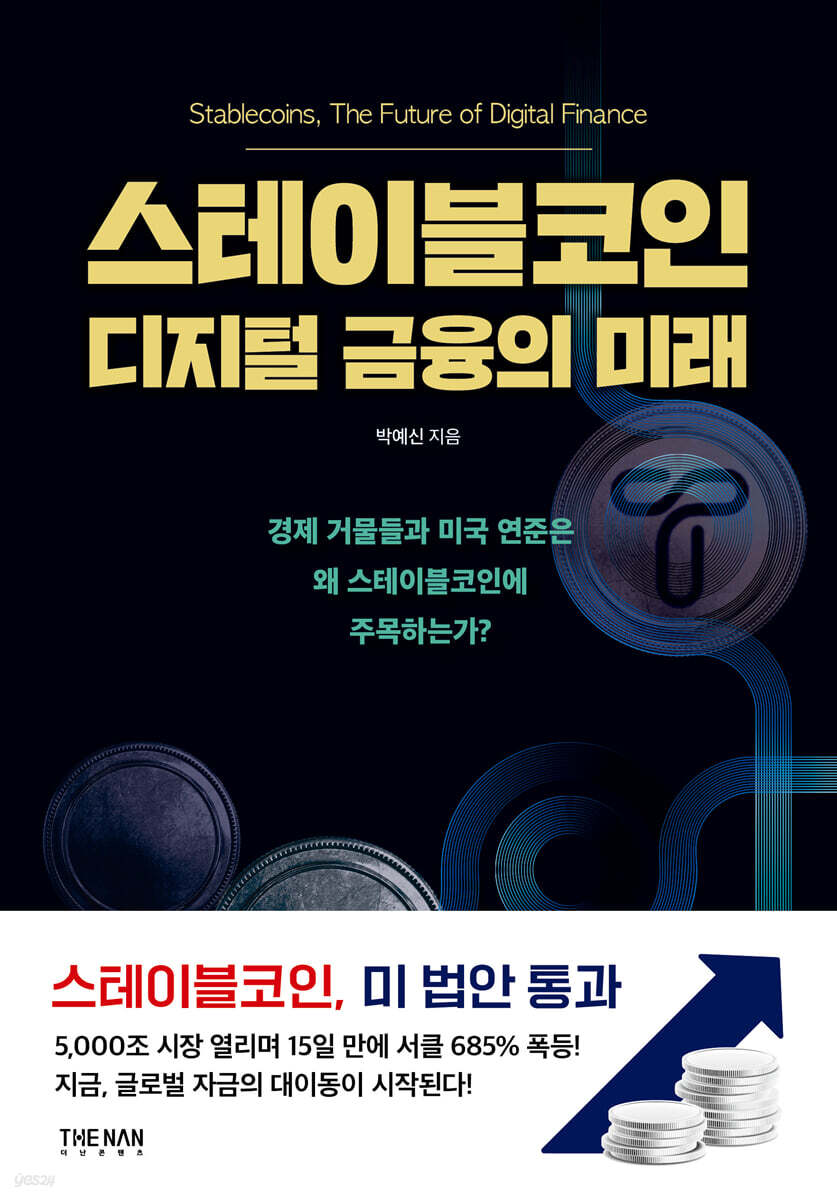
Dollar crisis, inflation and Stablecoins Rising Together Web 3.0, the era of the blockchain economy Prepare with stablecoins As the value of currency falls day by day Virtual assets that will protect my assets With digital currency stablecoin From small payments to overseas remittances, savings, and investment returns. Stablecoins: An Alternative to Bitcoin or a Substitute for the Dollar? The first cryptocurrency, Bitcoin, appeared in 2008. Compared to the long history of currency, Bitcoin's history is extremely short, lasting only 14 years. There's probably no one who doesn't know about Bitcoin, which has led and grown the virtual asset (cryptocurrency) market while straddling the line between fraud and innovation. Cryptocurrencies, which operate on blockchain technology that enables peer-to-peer transactions free from central control, will become a key driver of the financial market in the Web 3.0 era we are entering. Since the first transaction in 2010, where two pizzas were purchased for 10,000 Bitcoins, Bitcoin has dominated the cryptocurrency market, currently being sold for 45 million won per pizza. Over the years, cryptocurrencies, including Bitcoin, have experienced sharp price spikes and crashes every day, affecting the fortunes of investors. Bitcoin was originally developed for online payments. The title of the Bitcoin white paper is also 'Peer-to-Peer Electronic Cash System'. However, the current problem with Bitcoin is that it is too expensive per unit to be used as a means of transaction and its price volatility is too high. Price volatility is the same for other cryptocurrencies. The transfer speed is slow and the transfer fee is too high to be used as electronic money. In that respect, there is also a view that Bitcoin will develop into 'digital gold'. Because it has proven its own value and built public recognition. Blockchain and cryptocurrencies, which aim for decentralization, are not just innovative new technologies, but are also becoming core to the financial market. To function as currency in digital finance, it must first and foremost be price-stable and usable as a means of payment for a wide range of products. Stablecoins are designed to meet these needs. Amidst the growing consensus among financial experts and businesses in major countries that stablecoins for payment will play a powerful role in the 21st-century payment system, we will correct misconceptions about stablecoins and examine their potential as innovative cryptocurrencies that will become a key pillar of the financial ecosystem, including virtual assets. “The Federal Reserve considers stablecoins for settlement purposes to be a type of currency. “I think we need to take a strong role.” Jerome Powell, Federal Reserve Chairman “Among the innovations that will occur in the crypto (virtual asset/cryptocurrency) ecosystem in the future, “The area that will receive the most attention is stablecoins.” Kim Yong-beom, former First Vice Minister of Strategy and Finance and CEO of Hashed Open Research |
- You can preview some of the book's contents.
Preview
index
prolog
Part 1: Stablecoins: From Closed Finance to Open Finance
Chapter 1: The Rise of Stablecoins
The faltering economies of developing countries and their small alternatives.
Stablecoins, information data linked to money
The Key Currency of the Virtual Asset Investment Ecosystem 28
A means of protecting purchasing power and preserving wealth for citizens of developing countries
A payment method that maximizes payment demand in the Internet industry.
maturing technology and market
Resting page? What are coins and tokens?
Chapter 2: A Brief History of Stablecoins
The First Stablecoin and the Relativity of Trust
The Secret Leader: Tether Stablecoin
The emergence of a second-tier player and the pursuit of USD Coin
Facebook's Plans to Launch a Stablecoin
The European Union and Japan are giving weight to stablecoins.
A page on hiatus? What's the real reason Facebook is pursuing the Libra project?
Chapter 3: Types and Mechanisms of Stablecoins
Stablecoins and the Infrastructure of Trust
The Dollar as a Shield of Value: Fiat-Backed Stablecoins
Emphasizing the Value of Real Assets: Real-Asset-Backed Stablecoins
Stability Built on Cryptocurrencies: Cryptocurrency-Based Stablecoins
The Line Between Innovation and Fraud: Uncollateralized Stablecoins
The value and price mechanism of stablecoins
How do stablecoin issuers make money?
How to Buy Stablecoins in Korea
Stablecoins, aren't actually coins?
A Resting Page? The Changing Constitution of Dai and the Illusion of Decentralization
Part 2 ● Between substitutes and complements to legal tender
Chapter 1: Stablecoins and Fiat Currencies: Similar or Different?
Developing country currencies and stablecoins that have become scraps of paper
Fiat currencies and stablecoins: What's the same and what's different?
Stablecoins: A Financial Lifeline for Citizens in Developing Countries
Afghan Citizens Preserve Wealth with Crypto Against the Taliban
Tether Permeates Lebanon, the 'Paris of the Middle East'
Turkey's President's Stubborn Stubbornness in Low Interest Rates Fuels Tether Fever
Demand for stablecoins is rising in Messi's failing homeland.
Nigeria's Falling Resources and the Stablecoin Awakening
Stablecoin aid delivered to war-torn Ukraine
Venezuela's Stablecoin Utilization Reeling from US Sanctions
Will citizens of developing countries really use stablecoins?
What if stablecoins are used as dirty money?
Chapter 2: Stablecoins: The Swiss Army Knife of the Digital World
The Rise of Programmable Money and Stablecoins
Overseas remittance, the fee is 300 won, but it only takes 10 seconds?
Venture capital investment takes flight with stablecoins.
Shopify now accepts payments in stablecoins.
Earn 20% annual interest with stablecoins
What if you could pay 10 cents per article?
Stablecoins as Web3 Game Money
What if stablecoins could accelerate interbank payments?
A Resting Page? Stablecoin OTC, Secret Transactions Outside Exchanges
Part 3: The Struggle for Digital Hegemony and Stablecoins
Chapter 1: Stablecoins and the International Community
Bitcoin and stablecoins
The Rising Dollar Crisis and the Prospects for Stablecoins
A History of Monetary Power: From Britain to America
Major countries challenging the US and the dollar
America's Steps to Protect Digital Currency Hegemony
Stablecoin or CBDC?
Will stablecoins become a key player in the US Treasury market?
De-dollarization of stablecoins
Stablecoin Walls and Territories: Stronger and Broader
Stablecoin Regulations and Signals from Financial Authorities in Each Country
Chapter 2: How to Make Money with Stablecoins
DeFi and SiFi
Virtual asset exchange deposit products
Virtual Asset Exchange Prediction Products
DeFi platform deposit products
Investing in US Treasury Bonds with USD Coin
Loan with USD Coin and receive interest
Epilogue
Part 1: Stablecoins: From Closed Finance to Open Finance
Chapter 1: The Rise of Stablecoins
The faltering economies of developing countries and their small alternatives.
Stablecoins, information data linked to money
The Key Currency of the Virtual Asset Investment Ecosystem 28
A means of protecting purchasing power and preserving wealth for citizens of developing countries
A payment method that maximizes payment demand in the Internet industry.
maturing technology and market
Resting page? What are coins and tokens?
Chapter 2: A Brief History of Stablecoins
The First Stablecoin and the Relativity of Trust
The Secret Leader: Tether Stablecoin
The emergence of a second-tier player and the pursuit of USD Coin
Facebook's Plans to Launch a Stablecoin
The European Union and Japan are giving weight to stablecoins.
A page on hiatus? What's the real reason Facebook is pursuing the Libra project?
Chapter 3: Types and Mechanisms of Stablecoins
Stablecoins and the Infrastructure of Trust
The Dollar as a Shield of Value: Fiat-Backed Stablecoins
Emphasizing the Value of Real Assets: Real-Asset-Backed Stablecoins
Stability Built on Cryptocurrencies: Cryptocurrency-Based Stablecoins
The Line Between Innovation and Fraud: Uncollateralized Stablecoins
The value and price mechanism of stablecoins
How do stablecoin issuers make money?
How to Buy Stablecoins in Korea
Stablecoins, aren't actually coins?
A Resting Page? The Changing Constitution of Dai and the Illusion of Decentralization
Part 2 ● Between substitutes and complements to legal tender
Chapter 1: Stablecoins and Fiat Currencies: Similar or Different?
Developing country currencies and stablecoins that have become scraps of paper
Fiat currencies and stablecoins: What's the same and what's different?
Stablecoins: A Financial Lifeline for Citizens in Developing Countries
Afghan Citizens Preserve Wealth with Crypto Against the Taliban
Tether Permeates Lebanon, the 'Paris of the Middle East'
Turkey's President's Stubborn Stubbornness in Low Interest Rates Fuels Tether Fever
Demand for stablecoins is rising in Messi's failing homeland.
Nigeria's Falling Resources and the Stablecoin Awakening
Stablecoin aid delivered to war-torn Ukraine
Venezuela's Stablecoin Utilization Reeling from US Sanctions
Will citizens of developing countries really use stablecoins?
What if stablecoins are used as dirty money?
Chapter 2: Stablecoins: The Swiss Army Knife of the Digital World
The Rise of Programmable Money and Stablecoins
Overseas remittance, the fee is 300 won, but it only takes 10 seconds?
Venture capital investment takes flight with stablecoins.
Shopify now accepts payments in stablecoins.
Earn 20% annual interest with stablecoins
What if you could pay 10 cents per article?
Stablecoins as Web3 Game Money
What if stablecoins could accelerate interbank payments?
A Resting Page? Stablecoin OTC, Secret Transactions Outside Exchanges
Part 3: The Struggle for Digital Hegemony and Stablecoins
Chapter 1: Stablecoins and the International Community
Bitcoin and stablecoins
The Rising Dollar Crisis and the Prospects for Stablecoins
A History of Monetary Power: From Britain to America
Major countries challenging the US and the dollar
America's Steps to Protect Digital Currency Hegemony
Stablecoin or CBDC?
Will stablecoins become a key player in the US Treasury market?
De-dollarization of stablecoins
Stablecoin Walls and Territories: Stronger and Broader
Stablecoin Regulations and Signals from Financial Authorities in Each Country
Chapter 2: How to Make Money with Stablecoins
DeFi and SiFi
Virtual asset exchange deposit products
Virtual Asset Exchange Prediction Products
DeFi platform deposit products
Investing in US Treasury Bonds with USD Coin
Loan with USD Coin and receive interest
Epilogue
Detailed image

Into the book
Stablecoins can be thought of as 'money' linked to this information data.
And it's not just any money, it's money with a stable value like the US dollar.
What does it mean when information data is linked to money? It means it has monetary value.
This information data can be easily and quickly transmitted to anywhere in the world via the Internet.
--- p.25, from “Part 1_Chapter 1: The Rise of Stablecoins”
This incident was the moment when the name "stablecoin" became widely known worldwide and was seen as a heresy that threatened the existing monetary order.
Had the US given its backing to Facebook's Libra project, Libra might now be a massive digital currency circulating within Facebook's ecosystem, with billions of users.
--- p.63, from “Part 1_Chapter 2 A Brief History of Stablecoins”
If Tether could only be sent and received through the Ethereum network, its market share would not have grown to its current size.
However, major stablecoins, including Tether, are 'tokens' that can be sent and received on networks that are much faster and cheaper than Ethereum, such as Solana, Tron, Algorand, and Arbitrum.
Tokens are more convenient than coins for sending money.
--- p.124, from “Part 1_Chapter 3 Types and Mechanisms of Stable Coins”
If stablecoins can be used to make money, prevent wealth evaporation, and process remittances and payments, the cumbersome UI and UX of Web 3.0 services, as well as Know Your Customer (KYC) and Anti-Money Laundering (AML) procedures, won't be seen as significant barriers.
If stablecoins are a tool that solves pressing problems and provides benefits.
--- p.188, from “Part 2_Chapter 1: Stablecoins and Fiat Currency: Similar or Different?”
Bitcoin and Ethereum have high price volatility, making them difficult to use for everyday payments.
However, stablecoins maintain a stable value and price, so they can be used for payments.
Additionally, it can be programmed to enable conditional payments in a variety of business environments.
In other words, the flow of money can be controlled more flexibly.
--- p.197, from “Part 2_Chapter 2: Stablecoins, the Swiss Army Knife of the Digital World”
One of the most forward-thinking financial authorities regarding stablecoins is the U.S. Office of the Comptroller of the Currency (OCC). The OCC issued an interpretation stating that commercial banks can only accept stablecoins as collateral if they are backed 1:1 by fiat currency.
This is a landmark event in the blockchain industry.
This is because it is the legal basis for recognizing stablecoins issued by U.S. banks as the U.S. base currency (dollar).
This means that dollars can circulate on private blockchains.
--- p.254, from “Part 3_Chapter 1: Stablecoins and the International Community’s Perspective”
After a certain period of time, when the Bitcoin/Ethereum price rises or falls within the price range set by the exchange, product subscribers receive differential interest.
Predicting future prices in the virtual asset market is never easy, but if your prediction is accurate, you can expect higher interest rates than with simple deposit products.
And it's not just any money, it's money with a stable value like the US dollar.
What does it mean when information data is linked to money? It means it has monetary value.
This information data can be easily and quickly transmitted to anywhere in the world via the Internet.
--- p.25, from “Part 1_Chapter 1: The Rise of Stablecoins”
This incident was the moment when the name "stablecoin" became widely known worldwide and was seen as a heresy that threatened the existing monetary order.
Had the US given its backing to Facebook's Libra project, Libra might now be a massive digital currency circulating within Facebook's ecosystem, with billions of users.
--- p.63, from “Part 1_Chapter 2 A Brief History of Stablecoins”
If Tether could only be sent and received through the Ethereum network, its market share would not have grown to its current size.
However, major stablecoins, including Tether, are 'tokens' that can be sent and received on networks that are much faster and cheaper than Ethereum, such as Solana, Tron, Algorand, and Arbitrum.
Tokens are more convenient than coins for sending money.
--- p.124, from “Part 1_Chapter 3 Types and Mechanisms of Stable Coins”
If stablecoins can be used to make money, prevent wealth evaporation, and process remittances and payments, the cumbersome UI and UX of Web 3.0 services, as well as Know Your Customer (KYC) and Anti-Money Laundering (AML) procedures, won't be seen as significant barriers.
If stablecoins are a tool that solves pressing problems and provides benefits.
--- p.188, from “Part 2_Chapter 1: Stablecoins and Fiat Currency: Similar or Different?”
Bitcoin and Ethereum have high price volatility, making them difficult to use for everyday payments.
However, stablecoins maintain a stable value and price, so they can be used for payments.
Additionally, it can be programmed to enable conditional payments in a variety of business environments.
In other words, the flow of money can be controlled more flexibly.
--- p.197, from “Part 2_Chapter 2: Stablecoins, the Swiss Army Knife of the Digital World”
One of the most forward-thinking financial authorities regarding stablecoins is the U.S. Office of the Comptroller of the Currency (OCC). The OCC issued an interpretation stating that commercial banks can only accept stablecoins as collateral if they are backed 1:1 by fiat currency.
This is a landmark event in the blockchain industry.
This is because it is the legal basis for recognizing stablecoins issued by U.S. banks as the U.S. base currency (dollar).
This means that dollars can circulate on private blockchains.
--- p.254, from “Part 3_Chapter 1: Stablecoins and the International Community’s Perspective”
After a certain period of time, when the Bitcoin/Ethereum price rises or falls within the price range set by the exchange, product subscribers receive differential interest.
Predicting future prices in the virtual asset market is never easy, but if your prediction is accurate, you can expect higher interest rates than with simple deposit products.
--- p.306, from “Part 3_Chapter 2 How to Make Money with Stablecoins”
Publisher's Review
The era is coming when everyone carries stablecoins in their wallets.
Stablecoins are virtual assets designed to minimize price volatility.
Thanks to its stability, it is said to be a virtual asset that will revolutionize remittance and payment.
The reason the price can be stable is because it is issued with safe assets such as the US dollar, euro, and gold as collateral.
For dollar-based stablecoins, they are designed to be exchanged at a fixed exchange rate of 1:1.
For example, if you purchase one dollar-based stablecoin and later return it to the issuer, you can get it back at a fixed exchange rate.
Representative stablecoins are Tether (USDT) and USD Coin (USDC).
Recently, PayPal, the world's leading payment and remittance platform, also attracted attention by launching its own stablecoin.
Stablecoins are not the type of virtual asset whose price fluctuates up and down like Bitcoin.
It has less price volatility and is distributed through blockchain, so it is less subject to border restrictions.
In this respect, it has the potential to function as a digital currency.
It also has the characteristics of programmable money, which can be customized for various purposes.
In particular, stablecoins have the advantage of being able to be easily transferred anywhere in the world through multiple blockchain networks.
Stablecoins allow for transfers of US dollars much cheaper and faster than through bank transfers.
Moreover, because stablecoins are digital in nature, anyone can easily send and receive them via an internet-connected smartphone.
Considering the increasing smartphone penetration rate in developing countries and around the world, stablecoins hold the potential to usher in the future of digital finance.
Stablecoins Dominate the Crypto Economy
Initially, stablecoins were used solely as reserve currencies for virtual asset trading, but their uses are gradually diversifying.
The author presents several interesting examples, explaining how stablecoins can be widely applied to various areas, including international remittances, venture investment, shopping mall payments, and payment acceleration.
While there have been some negative developments and doubts surrounding stablecoins, major financial institutions around the world are increasingly recognizing their potential as digital currencies.
The author, first introduced to blockchain technology in 2016, has since become immersed in the industry, experiencing both the bright and dark sides of the virtual asset market.
Public opinion on stablecoins, especially in Korean society, is largely pessimistic.
Rather than a technology that will open up a new future for finance and currency, there is a strong view that it is just a potential 'scam' coin.
For this reason, unlike leading countries, the technological potential and utility of stablecoins are not being properly discussed.
This book will address these imbalanced perspectives and examine stablecoins from the perspective of their potential to lead financial innovation.
Part 1: Stablecoins: From Closed Finance to Open Finance
Chapter 1: The Rise of Stablecoins
Bitcoin has been around for 14 years, and stablecoins have been around for about 10 years.
It is an extremely short period of time compared to the long history of currency.
Therefore, the stability and reliability of cryptocurrencies are still in a mixed state.
The era of the decentralized blockchain economy has already arrived, and we examine the rapid rise of stablecoins, which have evolved to overcome the shortcomings and limitations of cryptocurrencies within the financial ecosystem.
Chapter 2: A Brief History of Stablecoins
The virtual asset market has grown explosively as Bitcoin's price has surged, intertwined with the realities of the global economy and finance.
However, stablecoins emerged to compensate for price volatility as prices fluctuate rapidly from day to day.
We explore the background of the emergence of stablecoins with the highest trading volume and market capitalization, and examine their position in the current virtual asset investment ecosystem to anticipate their future.
Chapter 3: Types and Mechanisms of Stablecoins
Stablecoins are divided into various types depending on the collateral asset.
Collateral assets that support the value of stablecoins include the US dollar, gold, virtual assets, and algorithms.
We'll explore which stablecoins are in circulation by type and examine the properties and prospects of the top coins by trading volume and market capitalization, including Tether, USD Coin, and Dai.
We explore the mechanisms by which stablecoins maintain their value and price stability on the blockchain.
Part 2: Between Substitutes and Complements to Fiat Money
Chapter 1: Stablecoins and Fiat Currencies: Similar or Different?
Bitcoin is clearly different from physical currencies like the dollar or the euro.
In terms of nature, it is similar to investment vehicles such as stocks or gold.
Stablecoins combine the advantages of cryptocurrencies like Bitcoin with the stability of fiat currency.
We explore how stablecoins, which feature many features unique to fiat currencies, can replace and complement fiat currencies like the dollar and euro.
Chapter 2: Stablecoins: The Swiss Army Knife of the Digital World
Bitcoin and Ethereum are risky because their prices fluctuate greatly, making them difficult to use for everyday payments.
On the other hand, stablecoins maintain stable value and price, making them suitable for use in payments across a variety of businesses.
Because there are no intermediate steps involved, there are virtually no fees, and because it is digital currency, the transfer speed is almost real-time.
Learn how stablecoins are being used in a variety of business sectors.
Part 3: The Struggle for Digital Hegemony and Stablecoins
Chapter 1: Stablecoins and the International Community
With stablecoins, with a market capitalization exceeding 200 trillion won, presenting both potential and risks, major countries such as the United States, the European Union, and Japan are developing regulatory proposals to adopt stablecoins.
In particular, it includes the perspective of the United States on stablecoins and the phenomenon of stablecoin issuers actively purchasing U.S. Treasury bonds and thus being incorporated into financial assets.
We will also explore how it can be differentiated from central bank digital currencies (CBDCs).
Chapter 2: How to Make Money with Stablecoins
So how can ordinary individuals make money with stablecoins? The biggest advantage of virtual assets is that there are no intermediaries who incur various fees.
There are also significant fees for overseas payments, overseas remittances, and investments in dollars or gold.
In addition, like other virtual assets, you can make profits by trading them depending on the market price.
Learn how to invest in deposit, betting, and lending products that can generate returns using stablecoins.
Stablecoins are virtual assets designed to minimize price volatility.
Thanks to its stability, it is said to be a virtual asset that will revolutionize remittance and payment.
The reason the price can be stable is because it is issued with safe assets such as the US dollar, euro, and gold as collateral.
For dollar-based stablecoins, they are designed to be exchanged at a fixed exchange rate of 1:1.
For example, if you purchase one dollar-based stablecoin and later return it to the issuer, you can get it back at a fixed exchange rate.
Representative stablecoins are Tether (USDT) and USD Coin (USDC).
Recently, PayPal, the world's leading payment and remittance platform, also attracted attention by launching its own stablecoin.
Stablecoins are not the type of virtual asset whose price fluctuates up and down like Bitcoin.
It has less price volatility and is distributed through blockchain, so it is less subject to border restrictions.
In this respect, it has the potential to function as a digital currency.
It also has the characteristics of programmable money, which can be customized for various purposes.
In particular, stablecoins have the advantage of being able to be easily transferred anywhere in the world through multiple blockchain networks.
Stablecoins allow for transfers of US dollars much cheaper and faster than through bank transfers.
Moreover, because stablecoins are digital in nature, anyone can easily send and receive them via an internet-connected smartphone.
Considering the increasing smartphone penetration rate in developing countries and around the world, stablecoins hold the potential to usher in the future of digital finance.
Stablecoins Dominate the Crypto Economy
Initially, stablecoins were used solely as reserve currencies for virtual asset trading, but their uses are gradually diversifying.
The author presents several interesting examples, explaining how stablecoins can be widely applied to various areas, including international remittances, venture investment, shopping mall payments, and payment acceleration.
While there have been some negative developments and doubts surrounding stablecoins, major financial institutions around the world are increasingly recognizing their potential as digital currencies.
The author, first introduced to blockchain technology in 2016, has since become immersed in the industry, experiencing both the bright and dark sides of the virtual asset market.
Public opinion on stablecoins, especially in Korean society, is largely pessimistic.
Rather than a technology that will open up a new future for finance and currency, there is a strong view that it is just a potential 'scam' coin.
For this reason, unlike leading countries, the technological potential and utility of stablecoins are not being properly discussed.
This book will address these imbalanced perspectives and examine stablecoins from the perspective of their potential to lead financial innovation.
Part 1: Stablecoins: From Closed Finance to Open Finance
Chapter 1: The Rise of Stablecoins
Bitcoin has been around for 14 years, and stablecoins have been around for about 10 years.
It is an extremely short period of time compared to the long history of currency.
Therefore, the stability and reliability of cryptocurrencies are still in a mixed state.
The era of the decentralized blockchain economy has already arrived, and we examine the rapid rise of stablecoins, which have evolved to overcome the shortcomings and limitations of cryptocurrencies within the financial ecosystem.
Chapter 2: A Brief History of Stablecoins
The virtual asset market has grown explosively as Bitcoin's price has surged, intertwined with the realities of the global economy and finance.
However, stablecoins emerged to compensate for price volatility as prices fluctuate rapidly from day to day.
We explore the background of the emergence of stablecoins with the highest trading volume and market capitalization, and examine their position in the current virtual asset investment ecosystem to anticipate their future.
Chapter 3: Types and Mechanisms of Stablecoins
Stablecoins are divided into various types depending on the collateral asset.
Collateral assets that support the value of stablecoins include the US dollar, gold, virtual assets, and algorithms.
We'll explore which stablecoins are in circulation by type and examine the properties and prospects of the top coins by trading volume and market capitalization, including Tether, USD Coin, and Dai.
We explore the mechanisms by which stablecoins maintain their value and price stability on the blockchain.
Part 2: Between Substitutes and Complements to Fiat Money
Chapter 1: Stablecoins and Fiat Currencies: Similar or Different?
Bitcoin is clearly different from physical currencies like the dollar or the euro.
In terms of nature, it is similar to investment vehicles such as stocks or gold.
Stablecoins combine the advantages of cryptocurrencies like Bitcoin with the stability of fiat currency.
We explore how stablecoins, which feature many features unique to fiat currencies, can replace and complement fiat currencies like the dollar and euro.
Chapter 2: Stablecoins: The Swiss Army Knife of the Digital World
Bitcoin and Ethereum are risky because their prices fluctuate greatly, making them difficult to use for everyday payments.
On the other hand, stablecoins maintain stable value and price, making them suitable for use in payments across a variety of businesses.
Because there are no intermediate steps involved, there are virtually no fees, and because it is digital currency, the transfer speed is almost real-time.
Learn how stablecoins are being used in a variety of business sectors.
Part 3: The Struggle for Digital Hegemony and Stablecoins
Chapter 1: Stablecoins and the International Community
With stablecoins, with a market capitalization exceeding 200 trillion won, presenting both potential and risks, major countries such as the United States, the European Union, and Japan are developing regulatory proposals to adopt stablecoins.
In particular, it includes the perspective of the United States on stablecoins and the phenomenon of stablecoin issuers actively purchasing U.S. Treasury bonds and thus being incorporated into financial assets.
We will also explore how it can be differentiated from central bank digital currencies (CBDCs).
Chapter 2: How to Make Money with Stablecoins
So how can ordinary individuals make money with stablecoins? The biggest advantage of virtual assets is that there are no intermediaries who incur various fees.
There are also significant fees for overseas payments, overseas remittances, and investments in dollars or gold.
In addition, like other virtual assets, you can make profits by trading them depending on the market price.
Learn how to invest in deposit, betting, and lending products that can generate returns using stablecoins.
GOODS SPECIFICS
- Date of issue: November 10, 2023
- Page count, weight, size: 324 pages | 562g | 150*215*18mm
- ISBN13: 9791198292865
- ISBN10: 1198292865
You may also like
카테고리
korean


korean

![GQ KOREA Mark (Monthly): December [2025]](http://librairie.coreenne.fr/cdn/shop/files/8ef265dbbfbf186523ed75ba7319009d.jpg?v=1765340328&width=3840)


