

Process Economy
 |
Description
Book Introduction
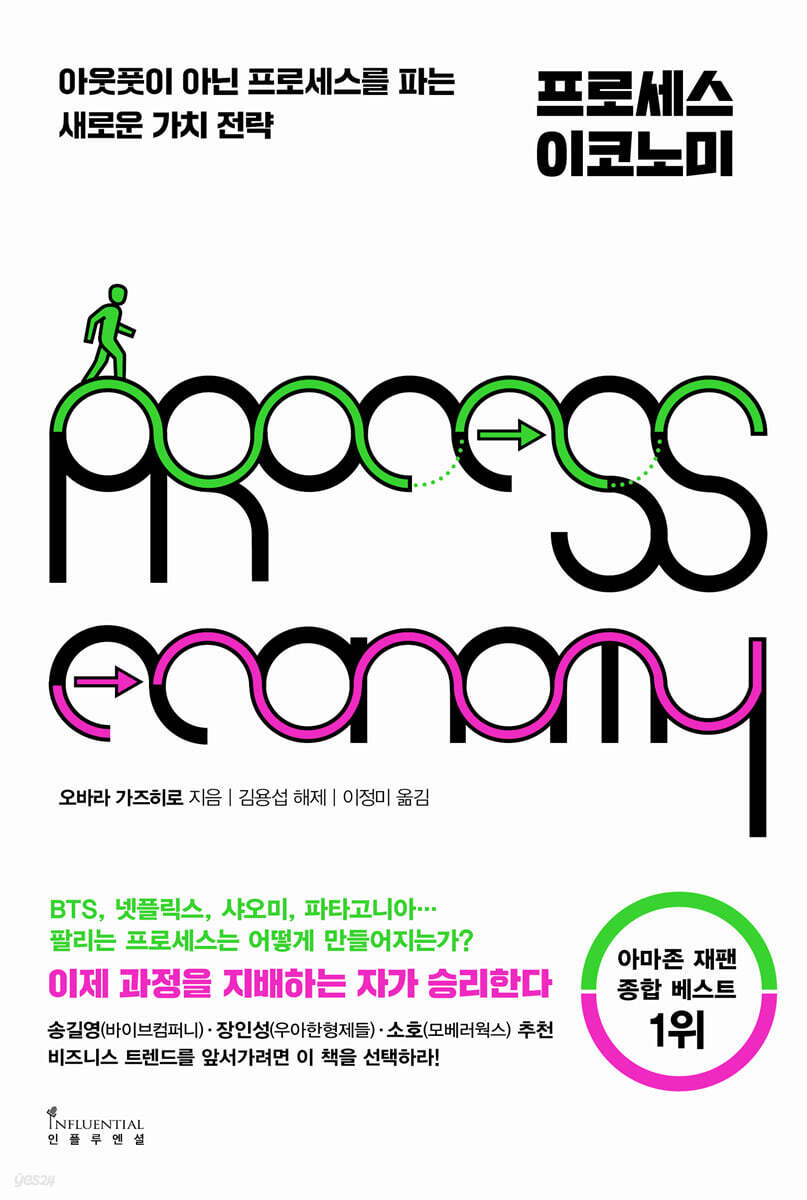
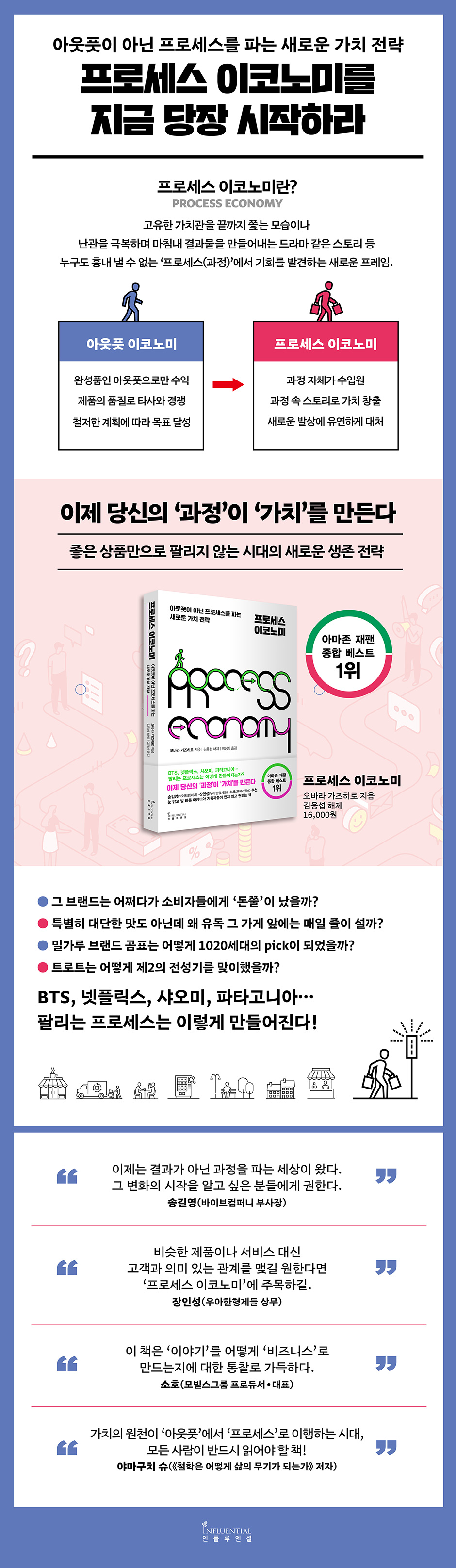
BTS, Netflix, Xiaomi, Patagonia… How is a selling process created? Now your 'process' creates 'value' In an era where the source of value is shifting from 'output' to 'process', A book everyone must read - Shu Yamaguchi (author of "How Philosophy Becomes a Weapon for Life") The days when only good products sold well are over. No matter how innovative a product is, later entrants with similar quality but lower prices quickly catch up. We, who have been taught that we must create 'quality products', are confused. What should we create and how should we sell it in the future? Where does our competitive edge lie? “How different is there between a 30,000 won pair of Uniqlo jeans and a 100,000 won pair of Levi’s jeans?” According to experts, there is not much difference in quality between the two. However, even if they are the same clothes, the ‘process’ of making the clothes and the ‘story’ surrounding it create a gap. As differences in output gradually disappear, we have entered a world where value comes from the 'process'. This book presents a new framework called the "process economy" as a competitive edge for survival in a world where people and things are easily forgotten. Process economy is a strategy that sells the ‘process’ rather than the finished product. We capture unique value and business opportunities in the "process" that can only be encountered in that moment, such as pursuing unique values to the end or overcoming difficulties to finally produce results, like a dramatic story. How did BTS, a group from a small agency, become a global idol group? How did Xiaomi survive between Samsung and Apple? How did Gompyo, with its 70-year tradition, become the pick of the 1020 generation? "Process Economy" explores why we need to focus on process now, the principles of the "process economy," and the stories of brands that, under similar conditions, have created unique value that no one else can replicate. If you're paying attention to the changing world and seeking new sources of value, you'll find the answer in this book. |
- You can preview some of the book's contents.
Preview
index
Preface: Now sell the 'process', not the 'result'!
Chapter 1 Why Process?
The emergence of a generation without desire
What Benz has but Toyota doesn't
Quality vs.
Community: What Will It Take to Win?
Consumers who feel a sense of belonging to the brand
The brands I use speak for me.
Brands that replace religion
A generation that uses the internet as its playground
Why bother shopping at Patagonia?
There comes a time when you can't make money with output.
Free electricity in 2050?
Exponential Thinking at Singularity University
Chapter 2 When Do We Empathize with a Process?
The Empathy Mechanism That Created President Obama
Appeal to emotions with a story
A captivating signature story
What is the ultimate desire of human beings?
The power of process as demonstrated by Heineken's commercial.
Chapter 3: What You See When You Let Go of the One 'Correct Answer'
The answer can be revised at any time.
The bluebird that brings success is hidden in the process.
A jazz-style work style instead of an orchestra-style
The first person to raise a flag gains the most information.
Second creators, voluntary participants in the process
An Inside-Out Approach to Captivating Customers
Chapter 4: How to Practice Process Economy?
When the "why" is missing from a process, it's easy to get caught up.
Gain fans with relatable concerns and philosophies.
Steve Jobs on Apple's 'Why'
Learning from the best brand 'religion'
People open their wallets for the "why," not the "what."
The 3 Rules of Popular Rakuten Stores
Make them empathize passionately
Give your customers any role they want.
Chapter 5: Whoever Dominates the Community Wins
Why BTS Conquered the Global Market
Johnny's Office's meticulous fan strategy
Xiaomi and Mi Fans Create a Dream Smartphone
Sell vegetables on second-hand trading platforms.
A Nordic lifestyle store presents a drama about objects.
The unpredictable process is the best fun.
Zappos, a company that doesn't spend money on advertising
Office Hours: The Launch of Airbnb and Stripe
To avoid falling into the trap of Chapter 6 process
Focusing solely on the process is dangerous.
Dreams without substance are prone to temptation.
Focus on your own firm standards
Stay objective and don't get caught up in filter bubbles.
Don't let social media control your life.
Face the gap between ideals and reality
You don't have to be tied down by will-can-must.
Chapter 7: How Processes Become Weapons of the New Age
The Process Economy of Tidying Up Consultant Marie Kondo
EX who enjoys the process itself
3 Conditions for Immersion
Google's '20 Percent Rule' and 'Mindfulness'
How do worker ants find sugar?
Innovations Achieved by Wandering Ant Netflix
From puzzle to Lego, your life paradigm shifts.
Conclusion: From ‘Answer-Oriented’ to ‘Process-Oriented’
A world of possibility led by "process" instead of the period "output" in the text of "Release" - Kim Yong-seop
Detailed image
Into the book
The days when just because something is good it sells well are over.
Because all information spreads quickly on the Internet and copies appear in the blink of an eye, product functions quickly become similar.
No matter which company's TV you choose, there is no significant difference in performance.
Although quality is improving and prices are continuously falling, there is an abundance of similar products and services, making it difficult for new products to attract much attention.
Even when a new, unprecedented technology is developed, it soon becomes less competitive in terms of price as emerging countries soon launch similar products.
--- p.
5
In a world where people and things are easily forgotten, we need a new strategy that sells the 'process' rather than the finished product.
This is the 'process economy'.
The 'process' is something that no one can imitate.
This is because the dramatic story of a creator pursuing their unique values to the end or overcoming difficulties to finally produce a result can only be encountered at that moment.
To truly do what you want to do and create what you want to create, you need a powerful weapon called 'process economy.'
--- p.
6
Either we fight for a single seat, or we turn our attention to meaning and seek other markets.
For a product or service to survive, it must choose between use value and meaning value.
Products that are neither here nor there will quickly be eliminated.
--- p.
34
We need to verbalize stories and narratives that will make the listener want to voluntarily walk alongside the brand.
This allows customers to become willing companions on their adventures.
As each customer spreads the word about the brand to those around them, more and more associates are created, and the brand can create products and services with them.
If this process is repeated, it will eventually lead to the conclusion that 'community is the core of management strategy.'
And the elements that support this community from the very bottom are stories and narratives.
--- p.
79
In short, we must move away from the fixed idea of ‘correct answer-ism’ and move towards ‘revisionism.’
It was common sense that we would show the world the output in perfect condition without showing the process.
As a result, process economy may still seem awkward to those who learned correct answer-oriented thinking in public education.
However, in today's rapidly changing world, it is actually better to disclose the process and constantly revise it while observing the reactions.
Revisionism, which assumes that one can change course at any time, is the right way to live in today's rapidly changing times.
--- p.
93
Jazz musicians travel today to find music that can only be found here.
The audience gathered at the club will not be able to hear the same performance tomorrow or the day after as they did today.
So, even if I watch the same performance over and over again, I don't get tired of it.
Jazz is a music that pursues revisionism rather than correctness, and is the process economy itself.
In today's rapidly changing society, a jazz-style lifestyle and work direction, where one sets out to find answers without knowing where they lie, is more desirable than an orchestra-style lifestyle that steadily moves toward a set goal.
--- p.
101
‘What’ and ‘how’ can be measured by certain standards and can be ranked, but ‘why’ is unique because it depends on that person’s lifestyle.
Opening up my process allows me to share with my fans why I do what I do—my philosophy.
The social media market is overflowing with users and is fiercely competitive, so people are increasingly trying to gain public attention by covering sensational content or imitating popular products.
But the more this happens, the more it loses its uniqueness and becomes a common object that can be seen everywhere, while simultaneously sinking into a sea of information.
Therefore, I must reveal the 'why' within me and secure a support base that is not inferior to anyone else's in terms of loyalty, even if the number is small.
--- p.
119
People who have gathered through the process economy also feel this excitement.
It's about embarking on an adventure under the captain's guidance on a battlefield without bullets, in pursuit of the dream of creating a service that will change the world or an entertainment experience that has never been seen before.
This is the greatest value of process economy.
--- p.
143
To produce a smartphone at a reasonable price, it is necessary to select only the essential features rather than trying to include all the features of smartphones from Samsung or Apple.
So, after thinking about what kind of smartphone would be best for them, Xiaomi chose a strategy that focuses on hardware rather than software.
--- p.
156~157
Why are people drawn to process?
This is because of the 'why' that only that person has.
I am fascinated by that person's unwavering 'why' and 'values' and want to be like them.
That's why I'm willing to become a participant in the process economy and, furthermore, a second creator and supporter.
Because all information spreads quickly on the Internet and copies appear in the blink of an eye, product functions quickly become similar.
No matter which company's TV you choose, there is no significant difference in performance.
Although quality is improving and prices are continuously falling, there is an abundance of similar products and services, making it difficult for new products to attract much attention.
Even when a new, unprecedented technology is developed, it soon becomes less competitive in terms of price as emerging countries soon launch similar products.
--- p.
5
In a world where people and things are easily forgotten, we need a new strategy that sells the 'process' rather than the finished product.
This is the 'process economy'.
The 'process' is something that no one can imitate.
This is because the dramatic story of a creator pursuing their unique values to the end or overcoming difficulties to finally produce a result can only be encountered at that moment.
To truly do what you want to do and create what you want to create, you need a powerful weapon called 'process economy.'
--- p.
6
Either we fight for a single seat, or we turn our attention to meaning and seek other markets.
For a product or service to survive, it must choose between use value and meaning value.
Products that are neither here nor there will quickly be eliminated.
--- p.
34
We need to verbalize stories and narratives that will make the listener want to voluntarily walk alongside the brand.
This allows customers to become willing companions on their adventures.
As each customer spreads the word about the brand to those around them, more and more associates are created, and the brand can create products and services with them.
If this process is repeated, it will eventually lead to the conclusion that 'community is the core of management strategy.'
And the elements that support this community from the very bottom are stories and narratives.
--- p.
79
In short, we must move away from the fixed idea of ‘correct answer-ism’ and move towards ‘revisionism.’
It was common sense that we would show the world the output in perfect condition without showing the process.
As a result, process economy may still seem awkward to those who learned correct answer-oriented thinking in public education.
However, in today's rapidly changing world, it is actually better to disclose the process and constantly revise it while observing the reactions.
Revisionism, which assumes that one can change course at any time, is the right way to live in today's rapidly changing times.
--- p.
93
Jazz musicians travel today to find music that can only be found here.
The audience gathered at the club will not be able to hear the same performance tomorrow or the day after as they did today.
So, even if I watch the same performance over and over again, I don't get tired of it.
Jazz is a music that pursues revisionism rather than correctness, and is the process economy itself.
In today's rapidly changing society, a jazz-style lifestyle and work direction, where one sets out to find answers without knowing where they lie, is more desirable than an orchestra-style lifestyle that steadily moves toward a set goal.
--- p.
101
‘What’ and ‘how’ can be measured by certain standards and can be ranked, but ‘why’ is unique because it depends on that person’s lifestyle.
Opening up my process allows me to share with my fans why I do what I do—my philosophy.
The social media market is overflowing with users and is fiercely competitive, so people are increasingly trying to gain public attention by covering sensational content or imitating popular products.
But the more this happens, the more it loses its uniqueness and becomes a common object that can be seen everywhere, while simultaneously sinking into a sea of information.
Therefore, I must reveal the 'why' within me and secure a support base that is not inferior to anyone else's in terms of loyalty, even if the number is small.
--- p.
119
People who have gathered through the process economy also feel this excitement.
It's about embarking on an adventure under the captain's guidance on a battlefield without bullets, in pursuit of the dream of creating a service that will change the world or an entertainment experience that has never been seen before.
This is the greatest value of process economy.
--- p.
143
To produce a smartphone at a reasonable price, it is necessary to select only the essential features rather than trying to include all the features of smartphones from Samsung or Apple.
So, after thinking about what kind of smartphone would be best for them, Xiaomi chose a strategy that focuses on hardware rather than software.
--- p.
156~157
Why are people drawn to process?
This is because of the 'why' that only that person has.
I am fascinated by that person's unwavering 'why' and 'values' and want to be like them.
That's why I'm willing to become a participant in the process economy and, furthermore, a second creator and supporter.
--- p.
185
185
Publisher's Review
★ Amazon Japan Comprehensive Bestseller #1
★ Highly recommended by Song Gil-young (Vice President, Vibe Company), Jang In-seong (Managing Director, Woowa Brothers), and Soho (Movereworks)
A book that is read first and recommended by sharp-eyed and quick-witted marketers and planners.
How does 'process' become a weapon of the new era?
Why you need to focus on the 'process' right now
Just a few years ago, there were quite a few bad restaurants, and choosing a chain restaurant could be a safe choice.
But these days, no matter which restaurant you go to, the chances of failure are very low.
Because there is a lot of information about restaurant operations and recipes on the Internet, and reviews of restaurants are quickly shared on social media, the success or failure of a restaurant can be determined in an instant.
This 'quality standardization' is happening across all sectors and is what makes our work difficult.
If the era of quality as the answer is over, how can we remain competitive in the future?
Shu Yamaguchi, author of “How Philosophy Becomes a Weapon for Life,” says that we are living in an era where “the source of value is shifting from ‘output’ to ‘process.’”
As the quality gap narrows, consumers no longer scrutinize the functional differences between brands as they used to.
As a result, ‘process’ has become relatively important.
Because the output economy, which relies on finished products, has reached a certain scale, the only area for differentiation is now the process.
The emergence of the "non-desire generation" that pursues spiritual "meaning" rather than material value in consumption, and the emergence of consumers who believe that "the brand I use speaks for me" and seek a sense of belonging from brands, make the meaning of "process" even more important.
The trend of 'sustainable fashion' in the fashion industry, such as The North Face making fleece from recycled plastic bottles and Adidas making running shoes from ocean plastic waste, can be understood in the same context.
This is how the selling process is created
- The power of empathy mechanisms and the inside-out process of creating new value
By sharing the process, people can become close with people who have very different political views or ideologies than themselves.
Because we feel like colleagues while going through the process together.
A good example of this is the Heineken advertisement.
In the commercial, two people from each side meet for the first time: a leftist and a rightist, a feminist and an anti-feminist, a climate change skeptic and an environmentalist.
Two people who know nothing about each other assemble a chair and table together while exchanging opinions.
The moment the fancy bar counter is completed, the two realize how different they are, but still decide to share a glass of Heineken.
The process economy is based on these ‘empathy mechanisms’.
When you share the process, the initial feeling of 'empathy' becomes stronger and progresses to the stage of 'enthusiasm'.
The 'attachment' to a brand leads to the feeling that it is a 'one-of-a-kind' brand, one that is unique in the world.
Also, fans' passive trust develops into active support.
In this way, whoever dominates the community dominates everything, breaking away from the winner-takes-all structure.
The way we create something while exposing the process can also be described as 'inside-out', which is like sparring, a practice match in boxing.
Just like an athlete practices by bouncing a ball against a wall, we share the process to flesh out our ideas and refine our direction by referring to fan reactions and comments.
Of course, you may be concerned about the risk of imitation during this process, but while the functions and performance of any product can be copied, it is difficult to replicate the values and tastes contained in the idea.
Ultimately, what is important in process economy is how to convey your own taste.
What You See When You Understand 'Process Economy'
From BTS to Gompyo Flour, Success Stories of the "Process Economy"
Has there ever been a time when we've been this fascinated by "girls hip-hop"? "Street Woman Fighter," a survival program for female dancers, has brought street dance enthusiasts to the forefront of the world.
“Singer Gain,” a program that aims to rediscover unknown singers, found the name “Lee Seung-yoon” instead of “Unknown Singer No. 30.”
Why do people get so excited about survival and audition programs? At the root of that enthusiasm lies the "process."
The process of sharing the participants' growth stories and making them superstars together is what really captivates people.
The power of process is this powerful.
By leveraging the "process economy," you can create absolute value that no one else can replicate under similar (or even inferior) conditions. There are already numerous success stories around us, such as BTS, Xiaomi, and Netflix, where understanding the "process economy" can help us understand its meaning.
In this Korean edition, trend analyst Kim Yong-seop (Sharp Imagination Research Institute) participates as an interpreter and deeply analyzes the meaning of familiar cases such as Calm Man (Lee Mal-nyeon), MKTV+MKYU (Kim Mi-kyung), Gompyo Flour, and the Trot craze through the lens of 'process economy.'
How did BTS, a group from a small agency, become a global idol group that conquers the world? (pp. 149-151)
By sharing the process, BTS and their fans become companions, walking together through life. BTS permeates the lives of each and every fan with lyrics that embody their "why."
The fan club ARMY voluntarily promotes the artists and their music by crowdfunding and placing BTS advertisements in major cities around the world.
How did Xiaomi carve out its own niche between Samsung and Apple? (pp. 156-159)
After much deliberation about what kind of smartphone would be best for them, Xiaomi chose a strategy that focused on hardware.
Then, by revealing the production process to the community of 'Mi Fans', which are their fans, and actively incorporating users' opinions into the product, they secured potential customers even before the release, thereby solidifying their position as a latecomer.
How did Gompyo, a flour brand with a 70-year tradition, become the pick of the 1020 generation? (pp. 237-238)
Daehan Flour Mills, famous for its Gompyo flour, was founded in 1952.
Even if today's 1020 generation has never bought Gompyo flour, which has a 70-year tradition, they often drink Gompyo beer and compete to buy goods with Gompyo characters on them.
This can be said to be an example of implementing process economy as a flour brand by putting the bear character at the forefront.
How did trot experience its second heyday? (pp. 239-240)
The reason why trot audition programs became a hit in Korea and created a trot craze was because the singers' fandoms grew by leaps and bounds through the audition programs.
Trot, a product of the old days, has been revived thanks to the process economy, giving birth to the 1020 generation of trot singers and 1020 generation trot fans.
The 'process economy' opens doors to unprecedented opportunities for us.
Have you ever felt overwhelmed by traditional business methods or weary of price competition? Have you given up on promising plans and ideas due to a lack of capital? For these companies and individuals, the process economy offers a new revenue structure and enables them to take on new challenges.
If you've lived your life by setting a goal and overcoming obstacles one by one, how about starting with the "process economy" and taking on new challenges by feeling joy in the process itself of walking each day and responding flexibly to ideas that come to mind at any given moment?
★ Highly recommended by Song Gil-young (Vice President, Vibe Company), Jang In-seong (Managing Director, Woowa Brothers), and Soho (Movereworks)
A book that is read first and recommended by sharp-eyed and quick-witted marketers and planners.
How does 'process' become a weapon of the new era?
Why you need to focus on the 'process' right now
Just a few years ago, there were quite a few bad restaurants, and choosing a chain restaurant could be a safe choice.
But these days, no matter which restaurant you go to, the chances of failure are very low.
Because there is a lot of information about restaurant operations and recipes on the Internet, and reviews of restaurants are quickly shared on social media, the success or failure of a restaurant can be determined in an instant.
This 'quality standardization' is happening across all sectors and is what makes our work difficult.
If the era of quality as the answer is over, how can we remain competitive in the future?
Shu Yamaguchi, author of “How Philosophy Becomes a Weapon for Life,” says that we are living in an era where “the source of value is shifting from ‘output’ to ‘process.’”
As the quality gap narrows, consumers no longer scrutinize the functional differences between brands as they used to.
As a result, ‘process’ has become relatively important.
Because the output economy, which relies on finished products, has reached a certain scale, the only area for differentiation is now the process.
The emergence of the "non-desire generation" that pursues spiritual "meaning" rather than material value in consumption, and the emergence of consumers who believe that "the brand I use speaks for me" and seek a sense of belonging from brands, make the meaning of "process" even more important.
The trend of 'sustainable fashion' in the fashion industry, such as The North Face making fleece from recycled plastic bottles and Adidas making running shoes from ocean plastic waste, can be understood in the same context.
This is how the selling process is created
- The power of empathy mechanisms and the inside-out process of creating new value
By sharing the process, people can become close with people who have very different political views or ideologies than themselves.
Because we feel like colleagues while going through the process together.
A good example of this is the Heineken advertisement.
In the commercial, two people from each side meet for the first time: a leftist and a rightist, a feminist and an anti-feminist, a climate change skeptic and an environmentalist.
Two people who know nothing about each other assemble a chair and table together while exchanging opinions.
The moment the fancy bar counter is completed, the two realize how different they are, but still decide to share a glass of Heineken.
The process economy is based on these ‘empathy mechanisms’.
When you share the process, the initial feeling of 'empathy' becomes stronger and progresses to the stage of 'enthusiasm'.
The 'attachment' to a brand leads to the feeling that it is a 'one-of-a-kind' brand, one that is unique in the world.
Also, fans' passive trust develops into active support.
In this way, whoever dominates the community dominates everything, breaking away from the winner-takes-all structure.
The way we create something while exposing the process can also be described as 'inside-out', which is like sparring, a practice match in boxing.
Just like an athlete practices by bouncing a ball against a wall, we share the process to flesh out our ideas and refine our direction by referring to fan reactions and comments.
Of course, you may be concerned about the risk of imitation during this process, but while the functions and performance of any product can be copied, it is difficult to replicate the values and tastes contained in the idea.
Ultimately, what is important in process economy is how to convey your own taste.
What You See When You Understand 'Process Economy'
From BTS to Gompyo Flour, Success Stories of the "Process Economy"
Has there ever been a time when we've been this fascinated by "girls hip-hop"? "Street Woman Fighter," a survival program for female dancers, has brought street dance enthusiasts to the forefront of the world.
“Singer Gain,” a program that aims to rediscover unknown singers, found the name “Lee Seung-yoon” instead of “Unknown Singer No. 30.”
Why do people get so excited about survival and audition programs? At the root of that enthusiasm lies the "process."
The process of sharing the participants' growth stories and making them superstars together is what really captivates people.
The power of process is this powerful.
By leveraging the "process economy," you can create absolute value that no one else can replicate under similar (or even inferior) conditions. There are already numerous success stories around us, such as BTS, Xiaomi, and Netflix, where understanding the "process economy" can help us understand its meaning.
In this Korean edition, trend analyst Kim Yong-seop (Sharp Imagination Research Institute) participates as an interpreter and deeply analyzes the meaning of familiar cases such as Calm Man (Lee Mal-nyeon), MKTV+MKYU (Kim Mi-kyung), Gompyo Flour, and the Trot craze through the lens of 'process economy.'
How did BTS, a group from a small agency, become a global idol group that conquers the world? (pp. 149-151)
By sharing the process, BTS and their fans become companions, walking together through life. BTS permeates the lives of each and every fan with lyrics that embody their "why."
The fan club ARMY voluntarily promotes the artists and their music by crowdfunding and placing BTS advertisements in major cities around the world.
How did Xiaomi carve out its own niche between Samsung and Apple? (pp. 156-159)
After much deliberation about what kind of smartphone would be best for them, Xiaomi chose a strategy that focused on hardware.
Then, by revealing the production process to the community of 'Mi Fans', which are their fans, and actively incorporating users' opinions into the product, they secured potential customers even before the release, thereby solidifying their position as a latecomer.
How did Gompyo, a flour brand with a 70-year tradition, become the pick of the 1020 generation? (pp. 237-238)
Daehan Flour Mills, famous for its Gompyo flour, was founded in 1952.
Even if today's 1020 generation has never bought Gompyo flour, which has a 70-year tradition, they often drink Gompyo beer and compete to buy goods with Gompyo characters on them.
This can be said to be an example of implementing process economy as a flour brand by putting the bear character at the forefront.
How did trot experience its second heyday? (pp. 239-240)
The reason why trot audition programs became a hit in Korea and created a trot craze was because the singers' fandoms grew by leaps and bounds through the audition programs.
Trot, a product of the old days, has been revived thanks to the process economy, giving birth to the 1020 generation of trot singers and 1020 generation trot fans.
The 'process economy' opens doors to unprecedented opportunities for us.
Have you ever felt overwhelmed by traditional business methods or weary of price competition? Have you given up on promising plans and ideas due to a lack of capital? For these companies and individuals, the process economy offers a new revenue structure and enables them to take on new challenges.
If you've lived your life by setting a goal and overcoming obstacles one by one, how about starting with the "process economy" and taking on new challenges by feeling joy in the process itself of walking each day and responding flexibly to ideas that come to mind at any given moment?
GOODS SPECIFICS
- Date of issue: May 3, 2022
- Page count, weight, size: 244 pages | 368g | 138*217*205mm
- ISBN13: 9791168340220
- ISBN10: 1168340225
You may also like
카테고리
korean


korean

![GQ KOREA Mark (Monthly): December [2025]](http://librairie.coreenne.fr/cdn/shop/files/8ef265dbbfbf186523ed75ba7319009d.jpg?v=1765340328&width=3840)


