

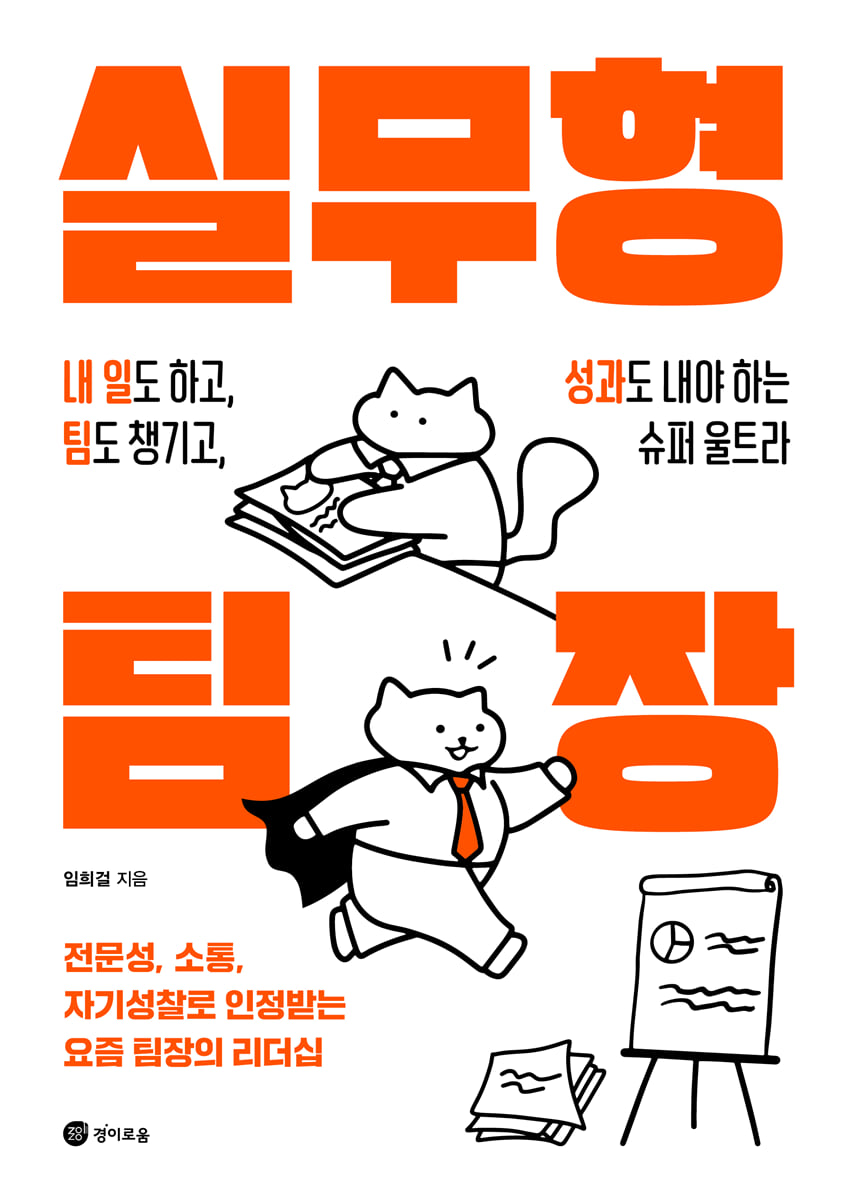
Practical team leader
 |
Description
Book Introduction
No to a team leader who only manages!
The "hands-on team leader"—a hard worker with a keen understanding of practical matters—is the new trend.
A survival strategy book has been published for 'practical team leaders' who must take care of their work, team members, and performance.
Lim Hee-geol, the author of "Practical Team Leader," is a South Korean office worker who has worked in a large corporation for over 20 years.
After serving as a team leader for a long time, I participated in reading groups and study groups to build my expertise as a team leader model, and consistently studied how to "grow together and become a master of my work."
And this book contains methods that have been developed and applied directly in the field.
The position of 'team leader' was and still is a difficult one.
However, the reason why being a team leader in the present era is particularly difficult is because the role required of a team leader has changed due to 'restructuring' caused by the recession and the spread of AI, and 'management trends that seek to benchmark startup leadership' while admiring the tremendous growth of innovative companies like Google and Apple.
The 'management-type team leader' who only supported the performance of team members and did not engage in practical work is no longer welcomed by companies and team members.
A team leader who does not know the field well cannot take care of the team, its performance, or even his own career.
In today's changing work environment, leadership is about practical skills, not management skills.
The author's practical and realistic advice for today's team leaders, who must juggle two daunting roles—general and soldier, coach and player—will serve as a North Star for practical team leaders of this era, who struggle to find their footing in the field.
Just because you're a team leader doesn't mean you can be perfect at everything.
However, if you properly understand the actual work environment, establish a proper work system, consider appropriate leadership, and strive for self-management, you will be able to become the team leader this era truly desires, leading to trust and performance from your team members.
The "hands-on team leader"—a hard worker with a keen understanding of practical matters—is the new trend.
A survival strategy book has been published for 'practical team leaders' who must take care of their work, team members, and performance.
Lim Hee-geol, the author of "Practical Team Leader," is a South Korean office worker who has worked in a large corporation for over 20 years.
After serving as a team leader for a long time, I participated in reading groups and study groups to build my expertise as a team leader model, and consistently studied how to "grow together and become a master of my work."
And this book contains methods that have been developed and applied directly in the field.
The position of 'team leader' was and still is a difficult one.
However, the reason why being a team leader in the present era is particularly difficult is because the role required of a team leader has changed due to 'restructuring' caused by the recession and the spread of AI, and 'management trends that seek to benchmark startup leadership' while admiring the tremendous growth of innovative companies like Google and Apple.
The 'management-type team leader' who only supported the performance of team members and did not engage in practical work is no longer welcomed by companies and team members.
A team leader who does not know the field well cannot take care of the team, its performance, or even his own career.
In today's changing work environment, leadership is about practical skills, not management skills.
The author's practical and realistic advice for today's team leaders, who must juggle two daunting roles—general and soldier, coach and player—will serve as a North Star for practical team leaders of this era, who struggle to find their footing in the field.
Just because you're a team leader doesn't mean you can be perfect at everything.
However, if you properly understand the actual work environment, establish a proper work system, consider appropriate leadership, and strive for self-management, you will be able to become the team leader this era truly desires, leading to trust and performance from your team members.
- You can preview some of the book's contents.
Preview
index
Prologue: The Practical Team Leader Arrives
CHAPTER 1 Why a Practical Team Leader?
Why did the practical team leader come into being?
Managerial Team Leader vs.
Practical team leader
A team leader who is like a friend, a team leader who is like a colleague
You need to be good at handling multi-generational teams.
Team Leader, why are you doing that?
Why a career that doesn't compromise on practical experience is a good one
CHAPTER 2 Hello, sucker?
Practical Team Leader, What Do I Do?
Feeling disconnected from above and below, feeling left alone
You do practical work, but your expertise is lacking?
Beware of Confirmation Bias
Why it's difficult to determine the proportion of practical and management work
CHAPTER 3: Team Operations Manual for Practical Team Leaders
Building a system that makes things work
A paradise-like team that works autonomously
Autonomy and motivation
Career support that impresses your team members
New HR Management with Colleagues
Creating our own team culture that fosters strong teamwork
Performance management focused on the core
Case-by-case decision-making method
Team member growth, growth, growth
CHAPTER 4: A Practical Team Leader's "Surviving First"
Practical Team Leader, Who Am I?
Become a leader who is true to yourself, not a perfect leader.
The ultra-expertise of a practical team leader
A team leader's content creates authority.
Team Leaders: Time Management: All You Need to Know
Team Leader Leadership: Your Most Powerful Career Asset
How to keep your mental strength strong
Epilogue_I hope my sincerity reaches you
CHAPTER 1 Why a Practical Team Leader?
Why did the practical team leader come into being?
Managerial Team Leader vs.
Practical team leader
A team leader who is like a friend, a team leader who is like a colleague
You need to be good at handling multi-generational teams.
Team Leader, why are you doing that?
Why a career that doesn't compromise on practical experience is a good one
CHAPTER 2 Hello, sucker?
Practical Team Leader, What Do I Do?
Feeling disconnected from above and below, feeling left alone
You do practical work, but your expertise is lacking?
Beware of Confirmation Bias
Why it's difficult to determine the proportion of practical and management work
CHAPTER 3: Team Operations Manual for Practical Team Leaders
Building a system that makes things work
A paradise-like team that works autonomously
Autonomy and motivation
Career support that impresses your team members
New HR Management with Colleagues
Creating our own team culture that fosters strong teamwork
Performance management focused on the core
Case-by-case decision-making method
Team member growth, growth, growth
CHAPTER 4: A Practical Team Leader's "Surviving First"
Practical Team Leader, Who Am I?
Become a leader who is true to yourself, not a perfect leader.
The ultra-expertise of a practical team leader
A team leader's content creates authority.
Team Leaders: Time Management: All You Need to Know
Team Leader Leadership: Your Most Powerful Career Asset
How to keep your mental strength strong
Epilogue_I hope my sincerity reaches you
Detailed image
.jpg)
Into the book
Many organizations still worry that if team leaders get involved in practical matters, they will lose focus on managing their teams.
This is because I believe that a team leader's main job is to help team members achieve greater results rather than directly handling the tasks at hand.
However, many team leaders have already become practical and are changing in that direction.
The question is not whether it is right or wrong for a team leader to be hands-on, but rather that reality has become one that demands a hands-on team leader.
--- p.23~24
Let me emphasize again that there is no absolute right answer to the criteria for determining the proportion of practical and management skills.
It's important to think carefully about the criteria that fit your team's situation and set priorities in advance.
We design an appropriate distribution of practical and management tasks by comprehensively considering the team size, team leader's practical expertise, career history, and goals.
--- p.116
In order for an autonomous management team to operate properly, the team leader must establish a working system and document and share it before creating the autonomous management team.
The goal is to create a guideline so that anyone assigned to a task can work according to certain standards.
Documented content should be updated regularly within the team.
--- p.143
Most leaders have a set of criteria for what constitutes a "good person," but they don't clearly define what constitutes "someone you shouldn't work with."
However, in order to create strong teamwork and high performance, the criteria for 'who should be excluded' must be established first, rather than 'who should be good to work with.'
--- p.190
In this way, growth is contagious among team members, and this contagious growth returns as performance.
The team leader's job is to create this 'learning point'.
Let's increase opportunities for collaboration, design joint projects, and make sure to take time for reflection after each success.
In this process, teamwork improves, and team members feel their own growth and become motivated.
As a result, the overall team's skills improve.
--- p.224
Team leaders must create leadership content not only for the growth of their team members but also for their own competitiveness.
The 'leader's content' mentioned here means that the team leader first acquires expertise and then processes that expertise so that it is easily accepted by team members.
The first step to building a leader's content is for the team leader to constantly learn, research, and think to become an expert.
Finally, it includes thinking about how to convey it.
--- p.274
For a leader's recovery routine, to stay strong without breaking down, and to find the strength to run again, be sure to set aside time and budget for self-care.
--- p.311
You don't have to struggle to find a grand answer to the question, "Why should I become a hands-on team leader?"
First, let's try one of the methods introduced in the book.
Even if you are not a hands-on team leader, you must systematize work processes and create a team management system.
Even if you're not a team leader, you can work more effectively by creating a work system and improving collaboration methods.
Rather than blaming the organization and lamenting our fate, it is wiser to make an effort to improve the current reality, even if only a little.
This is because I believe that a team leader's main job is to help team members achieve greater results rather than directly handling the tasks at hand.
However, many team leaders have already become practical and are changing in that direction.
The question is not whether it is right or wrong for a team leader to be hands-on, but rather that reality has become one that demands a hands-on team leader.
--- p.23~24
Let me emphasize again that there is no absolute right answer to the criteria for determining the proportion of practical and management skills.
It's important to think carefully about the criteria that fit your team's situation and set priorities in advance.
We design an appropriate distribution of practical and management tasks by comprehensively considering the team size, team leader's practical expertise, career history, and goals.
--- p.116
In order for an autonomous management team to operate properly, the team leader must establish a working system and document and share it before creating the autonomous management team.
The goal is to create a guideline so that anyone assigned to a task can work according to certain standards.
Documented content should be updated regularly within the team.
--- p.143
Most leaders have a set of criteria for what constitutes a "good person," but they don't clearly define what constitutes "someone you shouldn't work with."
However, in order to create strong teamwork and high performance, the criteria for 'who should be excluded' must be established first, rather than 'who should be good to work with.'
--- p.190
In this way, growth is contagious among team members, and this contagious growth returns as performance.
The team leader's job is to create this 'learning point'.
Let's increase opportunities for collaboration, design joint projects, and make sure to take time for reflection after each success.
In this process, teamwork improves, and team members feel their own growth and become motivated.
As a result, the overall team's skills improve.
--- p.224
Team leaders must create leadership content not only for the growth of their team members but also for their own competitiveness.
The 'leader's content' mentioned here means that the team leader first acquires expertise and then processes that expertise so that it is easily accepted by team members.
The first step to building a leader's content is for the team leader to constantly learn, research, and think to become an expert.
Finally, it includes thinking about how to convey it.
--- p.274
For a leader's recovery routine, to stay strong without breaking down, and to find the strength to run again, be sure to set aside time and budget for self-care.
--- p.311
You don't have to struggle to find a grand answer to the question, "Why should I become a hands-on team leader?"
First, let's try one of the methods introduced in the book.
Even if you are not a hands-on team leader, you must systematize work processes and create a team management system.
Even if you're not a team leader, you can work more effectively by creating a work system and improving collaboration methods.
Rather than blaming the organization and lamenting our fate, it is wiser to make an effort to improve the current reality, even if only a little.
--- p.321
Publisher's Review
The way we work has changed!
3 Skills to Become a Practical Team Leader Welcomed by Everyone
No one wants a team leader who just sits there with his arms folded and manages his team.
The model of a team leader this era wants is a strategist who designs the future using insights gained from work.
And that's not all.
Only by taking care of your team members' careers and their hearts can you become the true super ultra team leader that this era demands.
"Practical Team Leader" is a kind of "practical team leader tutorial" that contains the author's know-how gained from studying team leader leadership in the field and in studies for a long time.
The author lists three competencies that a team leader with recognized leadership skills must possess.
First, it is professionalism.
With practical expertise, you can establish a work system and manage a team that builds trust and performance among team members.
This is because you need to have a clear understanding of the core practices to be able to clearly present the direction.
The second is communication with team members.
With the introduction of the peak wage system, conflicts have become more frequent as the senior generation, who have become team members again, and the newly emerged Generation Z have gathered together on the same team.
However, multi-generational teams can produce creative results because they have diverse members.
Because a practical team leader has a high level of understanding of the work, he or she can clearly define roles and responsibilities, and is also advantageous in coordinating work conflicts, which can actually lead to synergy among multiple generations.
Not only that, it can provide intrinsic motivation and career support so that team members can grow through their work.
Finally, there is self-reflection.
The reality is that practical team leaders have a greater workload than management team leaders, which makes them physically and mentally exhausted, but they receive no comfort from either superiors or subordinates.
There is no senior to tell me what kind of leadership skills I should have as a team leader.
In the midst of the changing role of team leaders, I must find my own identity and leadership style.
And to recover from your mental fatigue, you need to intentionally budget and set aside time for self-care.
Rather than blaming reality and asking, "Why do we have to walk such a difficult path?", let's go with the flow of the times.
Soon, most team leaders will become hands-on.
Rather than seeking answers to "why," let's focus on "how." By practicing at least one of the methods introduced in this book, let's take a step closer to becoming the team leader model this era desires.
3 Skills to Become a Practical Team Leader Welcomed by Everyone
No one wants a team leader who just sits there with his arms folded and manages his team.
The model of a team leader this era wants is a strategist who designs the future using insights gained from work.
And that's not all.
Only by taking care of your team members' careers and their hearts can you become the true super ultra team leader that this era demands.
"Practical Team Leader" is a kind of "practical team leader tutorial" that contains the author's know-how gained from studying team leader leadership in the field and in studies for a long time.
The author lists three competencies that a team leader with recognized leadership skills must possess.
First, it is professionalism.
With practical expertise, you can establish a work system and manage a team that builds trust and performance among team members.
This is because you need to have a clear understanding of the core practices to be able to clearly present the direction.
The second is communication with team members.
With the introduction of the peak wage system, conflicts have become more frequent as the senior generation, who have become team members again, and the newly emerged Generation Z have gathered together on the same team.
However, multi-generational teams can produce creative results because they have diverse members.
Because a practical team leader has a high level of understanding of the work, he or she can clearly define roles and responsibilities, and is also advantageous in coordinating work conflicts, which can actually lead to synergy among multiple generations.
Not only that, it can provide intrinsic motivation and career support so that team members can grow through their work.
Finally, there is self-reflection.
The reality is that practical team leaders have a greater workload than management team leaders, which makes them physically and mentally exhausted, but they receive no comfort from either superiors or subordinates.
There is no senior to tell me what kind of leadership skills I should have as a team leader.
In the midst of the changing role of team leaders, I must find my own identity and leadership style.
And to recover from your mental fatigue, you need to intentionally budget and set aside time for self-care.
Rather than blaming reality and asking, "Why do we have to walk such a difficult path?", let's go with the flow of the times.
Soon, most team leaders will become hands-on.
Rather than seeking answers to "why," let's focus on "how." By practicing at least one of the methods introduced in this book, let's take a step closer to becoming the team leader model this era desires.
GOODS SPECIFICS
- Date of issue: September 3, 2025
- Page count, weight, size: 324 pages | 542g | 152*216*21mm
- ISBN13: 9791194508458
- ISBN10: 1194508456
You may also like
카테고리
korean


korean

![GQ KOREA Mark (Monthly): December [2025]](http://librairie.coreenne.fr/cdn/shop/files/8ef265dbbfbf186523ed75ba7319009d.jpg?v=1765340328&width=3840)


