

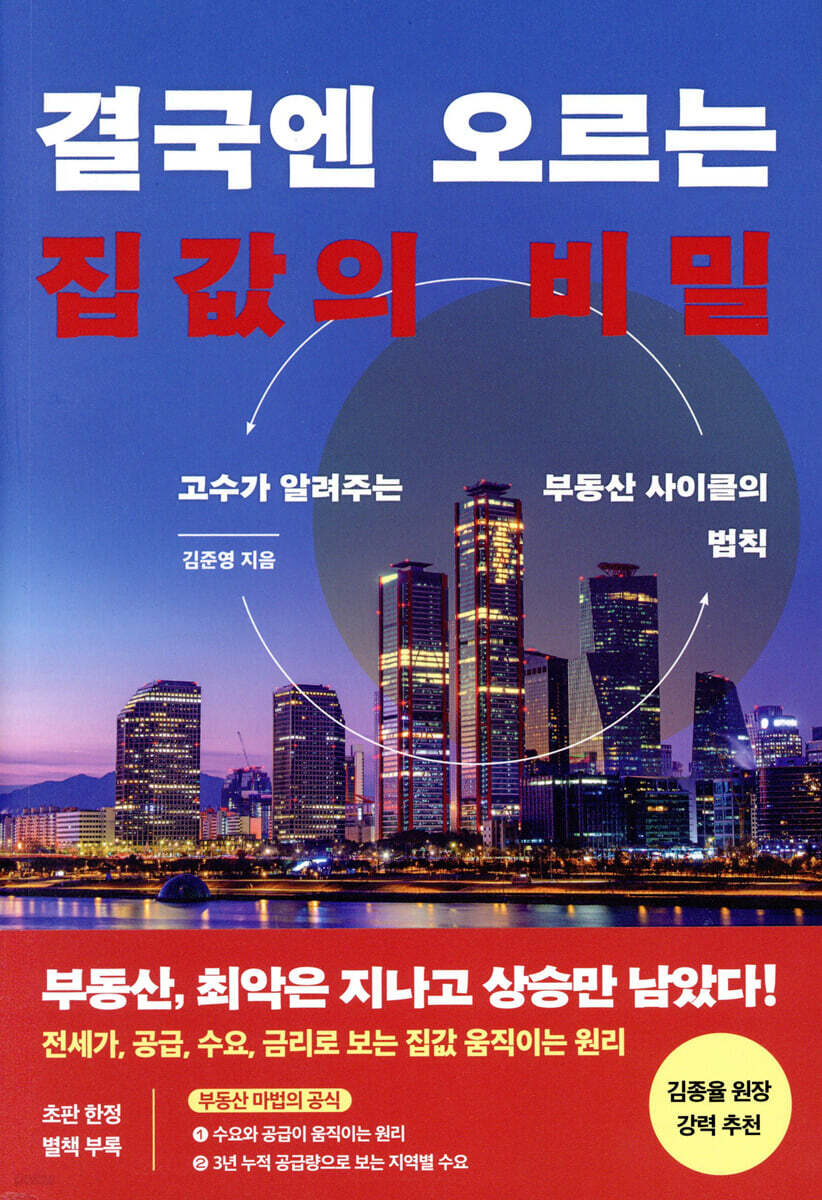
The secret behind rising house prices
 |
Description
Book Introduction
In "The Secret of Rising Housing Prices," the principle of real estate price changes is found in the "jeonse" that moves according to supply and demand, and based on this, the current movement of housing prices and the possibility of future changes are predicted in detail.
This book analyzes the market based on the rental price, and also clearly explains how to analyze recent issues such as interest rates and policies.
We also introduce investment methods that vary depending on the investment destination, based on differences in price trends between the metropolitan area and the provinces, as well as points to keep in mind when investing in real estate now.
This book analyzes the market based on the rental price, and also clearly explains how to analyze recent issues such as interest rates and policies.
We also introduce investment methods that vary depending on the investment destination, based on differences in price trends between the metropolitan area and the provinces, as well as points to keep in mind when investing in real estate now.
- You can preview some of the book's contents.
Preview
index
Prologue: In times of chaos, we must see the essence.
Prologue: The impact of supply reductions is greater than population declines.
Chapter 1.
This is how house prices are created - Understanding jeonse
1. Why the Rent Price Pushes Up the Sale Price
2 Real estate growth depends on the rate of increase in jeonse prices.
3 Why is Seoul's rental rate so low?
4 Two Paths to Housing Value Change: Rent and Interest Rates
5 Hidden Meanings in Sale and Lease Prices
6. How should the current real estate value be assessed?
Chapter 2: Distinguish between real estate market volatility and changes in asset values.
1. Real Estate Market: The Difference Between Short-Term and Long-Term Outlooks
2 Changes in asset value lead to changes in required rate of return
3 Reasons to Predict the Market with Interest Rates
4 Will the shortage of rental housing lead to rising housing prices?
Chapter 3: How to Understand Moving Demand
1. Pay attention to the cumulative supply over the past 3 years.
2 The population is the same, but why is the supply different?
3. How to Find High-Demand Areas
4 Find the maximum demand
Chapter 4: Why Forecasting Isn't Easy Even When You Know Supply
1 The biggest difference between the metropolitan area and the provinces
2. How to Interpret the Seoul and Metropolitan Area Markets
3. The most important thing in the 3-year cumulative supply is the 3-year cumulative supply.
How should we interpret small and medium-sized cities?
5. Which comes first: supply or price?
6 Real Estate Cycles: Supply Drives
7. What is the real supply? The amount of housing available for occupancy and the amount of housing available for sale.
8 How much power will the influx of residents have?
Chapter 5: Understanding the Differences Between the Metropolitan Area and the Provincial Regions Reveals Investment Opportunities
1. Differences between the metropolitan area and local areas: differences in returns and risks
2. In the Seoul metropolitan area, the rental rate is important, and in local areas, the rental supply and demand index is important.
3. The clear difference between growing and dying cities
4. Small towns in the countryside still have opportunities.
5. Pay attention to new apartments
6 Even though the population declines, the number of households increases.
7 Declining demand, no cause for concern
8 How much do interest rates affect home prices?
Chapter 6: What Will Change in the Era of Monthly Rent?
1 The disappearance of jeonse and the transition to monthly rent are unavoidable realities.
Why Monthly Rents Are Inevitably Going Up
As rents rise, supply decreases.
4. How sales, leases, and monthly rents will change in the future
Chapter 7: How Effective Will Real Estate Policies Be?
1. Three rental laws that only increase price volatility.
2. Mortgage loans that create price bubbles
3 The reverse trend is a structural problem
4. Policies do not move the market for a long time.
Chapter 8: Why You Shouldn't Over-Confidently Observe Statistics
1 Statistics that can be interpreted in many ways
2 Don't judge the market by unsold units.
3. How should we view trading volume?
4 Leading Indicators, Coincident Indicators, and Lagging Indicators
Chapter 9: Where to Invest
1. Invest in growing regions and products.
2. The weaker the city's competitiveness, the more it should focus on individual housing.
3. Local government-backed apartments that are losing power
4 Unsold units are always a product of opportunity
5. The Inconvenience of Gangnam's Rent Rise, More Soaring Than Gangnam's Invincibility
Chapter 10: Regional Real Estate Analysis
1. Analysis of real estate in the metropolitan area
2 Busan Real Estate Analysis
3. Daegu Real Estate Analysis
4 Gwangju Real Estate Analysis
5 Daejeon Real Estate Analysis
6. Ulsan Real Estate Analysis
7 Real Estate Analysis in Small and Medium-Sized Cities
Epilogue: Supply, Not Interest Rates, Influences the Market
Prologue: The impact of supply reductions is greater than population declines.
Chapter 1.
This is how house prices are created - Understanding jeonse
1. Why the Rent Price Pushes Up the Sale Price
2 Real estate growth depends on the rate of increase in jeonse prices.
3 Why is Seoul's rental rate so low?
4 Two Paths to Housing Value Change: Rent and Interest Rates
5 Hidden Meanings in Sale and Lease Prices
6. How should the current real estate value be assessed?
Chapter 2: Distinguish between real estate market volatility and changes in asset values.
1. Real Estate Market: The Difference Between Short-Term and Long-Term Outlooks
2 Changes in asset value lead to changes in required rate of return
3 Reasons to Predict the Market with Interest Rates
4 Will the shortage of rental housing lead to rising housing prices?
Chapter 3: How to Understand Moving Demand
1. Pay attention to the cumulative supply over the past 3 years.
2 The population is the same, but why is the supply different?
3. How to Find High-Demand Areas
4 Find the maximum demand
Chapter 4: Why Forecasting Isn't Easy Even When You Know Supply
1 The biggest difference between the metropolitan area and the provinces
2. How to Interpret the Seoul and Metropolitan Area Markets
3. The most important thing in the 3-year cumulative supply is the 3-year cumulative supply.
How should we interpret small and medium-sized cities?
5. Which comes first: supply or price?
6 Real Estate Cycles: Supply Drives
7. What is the real supply? The amount of housing available for occupancy and the amount of housing available for sale.
8 How much power will the influx of residents have?
Chapter 5: Understanding the Differences Between the Metropolitan Area and the Provincial Regions Reveals Investment Opportunities
1. Differences between the metropolitan area and local areas: differences in returns and risks
2. In the Seoul metropolitan area, the rental rate is important, and in local areas, the rental supply and demand index is important.
3. The clear difference between growing and dying cities
4. Small towns in the countryside still have opportunities.
5. Pay attention to new apartments
6 Even though the population declines, the number of households increases.
7 Declining demand, no cause for concern
8 How much do interest rates affect home prices?
Chapter 6: What Will Change in the Era of Monthly Rent?
1 The disappearance of jeonse and the transition to monthly rent are unavoidable realities.
Why Monthly Rents Are Inevitably Going Up
As rents rise, supply decreases.
4. How sales, leases, and monthly rents will change in the future
Chapter 7: How Effective Will Real Estate Policies Be?
1. Three rental laws that only increase price volatility.
2. Mortgage loans that create price bubbles
3 The reverse trend is a structural problem
4. Policies do not move the market for a long time.
Chapter 8: Why You Shouldn't Over-Confidently Observe Statistics
1 Statistics that can be interpreted in many ways
2 Don't judge the market by unsold units.
3. How should we view trading volume?
4 Leading Indicators, Coincident Indicators, and Lagging Indicators
Chapter 9: Where to Invest
1. Invest in growing regions and products.
2. The weaker the city's competitiveness, the more it should focus on individual housing.
3. Local government-backed apartments that are losing power
4 Unsold units are always a product of opportunity
5. The Inconvenience of Gangnam's Rent Rise, More Soaring Than Gangnam's Invincibility
Chapter 10: Regional Real Estate Analysis
1. Analysis of real estate in the metropolitan area
2 Busan Real Estate Analysis
3. Daegu Real Estate Analysis
4 Gwangju Real Estate Analysis
5 Daejeon Real Estate Analysis
6. Ulsan Real Estate Analysis
7 Real Estate Analysis in Small and Medium-Sized Cities
Epilogue: Supply, Not Interest Rates, Influences the Market
Detailed image

Publisher's Review
Real Estate: The Worst Is Over, Only Upwards!
The Principle of Housing Price Movement as Seen Through 'Jeonse'
The author's new book, five years after the much-talked-about first book, nicknamed "The Red Book,"
The perfect investment strategy armed with the latest data!
Kim Jun-young, author of "Real Estate Investment Insights," a book widely considered the best textbook in real estate study groups and rumored to be a must-read for investors (aka "the red book"), has returned with his second book after five years.
The author, a 25-year veteran investor, has written numerous columns as a member of the Daegu Ten In Ten management team for 20 years, and has taught high-quality lectures through the Daegu Investment Real Estate Research Association, presents the best theories and investment methods on "How to Interpret Housing Prices."
In recent years, the real estate market has shown extreme volatility that has been difficult even for experts to understand.
In short, this means that it was not easy to predict and invest in housing prices.
The author says that in times like these, it's crucial to understand the causes of extreme volatility and properly interpret the intrinsic value of an asset before making decisions.
This book argues that the principle of real estate price fluctuations lies in the "jeonse" (rental price) that moves according to supply and demand, and based on this, it provides detailed predictions of the current movement of housing prices and the potential for future changes.
In fact, it is no exaggeration to say that understanding our housing market means accurately interpreting the meaning contained in terms such as jeonse prices, jeonse supply and demand, and jeonse price increase rates.
This is because the rental form called jeonse has a significant impact on the supply of new housing and unsold units, and this plays a decisive role in the rise and fall of housing prices.
This book analyzes the market based on these market values, and also clearly explains how to analyze other recent issues such as interest rates and policies.
We also introduce investment methods that vary depending on the investment destination, based on differences in price trends between the metropolitan area and the provinces, as well as points to keep in mind when investing in real estate now.
The Principle of Housing Price Movement as Seen Through 'Jeonse'
The author's new book, five years after the much-talked-about first book, nicknamed "The Red Book,"
The perfect investment strategy armed with the latest data!
Kim Jun-young, author of "Real Estate Investment Insights," a book widely considered the best textbook in real estate study groups and rumored to be a must-read for investors (aka "the red book"), has returned with his second book after five years.
The author, a 25-year veteran investor, has written numerous columns as a member of the Daegu Ten In Ten management team for 20 years, and has taught high-quality lectures through the Daegu Investment Real Estate Research Association, presents the best theories and investment methods on "How to Interpret Housing Prices."
In recent years, the real estate market has shown extreme volatility that has been difficult even for experts to understand.
In short, this means that it was not easy to predict and invest in housing prices.
The author says that in times like these, it's crucial to understand the causes of extreme volatility and properly interpret the intrinsic value of an asset before making decisions.
This book argues that the principle of real estate price fluctuations lies in the "jeonse" (rental price) that moves according to supply and demand, and based on this, it provides detailed predictions of the current movement of housing prices and the potential for future changes.
In fact, it is no exaggeration to say that understanding our housing market means accurately interpreting the meaning contained in terms such as jeonse prices, jeonse supply and demand, and jeonse price increase rates.
This is because the rental form called jeonse has a significant impact on the supply of new housing and unsold units, and this plays a decisive role in the rise and fall of housing prices.
This book analyzes the market based on these market values, and also clearly explains how to analyze other recent issues such as interest rates and policies.
We also introduce investment methods that vary depending on the investment destination, based on differences in price trends between the metropolitan area and the provinces, as well as points to keep in mind when investing in real estate now.
GOODS SPECIFICS
- Date of issue: June 27, 2024
- Page count, weight, size: 284 pages | 570g | 152*225*18mm
- ISBN13: 9788947549608
- ISBN10: 8947549606
You may also like
카테고리
korean


korean

![GQ KOREA Mark (Monthly): December [2025]](http://librairie.coreenne.fr/cdn/shop/files/8ef265dbbfbf186523ed75ba7319009d.jpg?v=1765340328&width=3840)


