

consumer instinct
 |
Description
Book Introduction
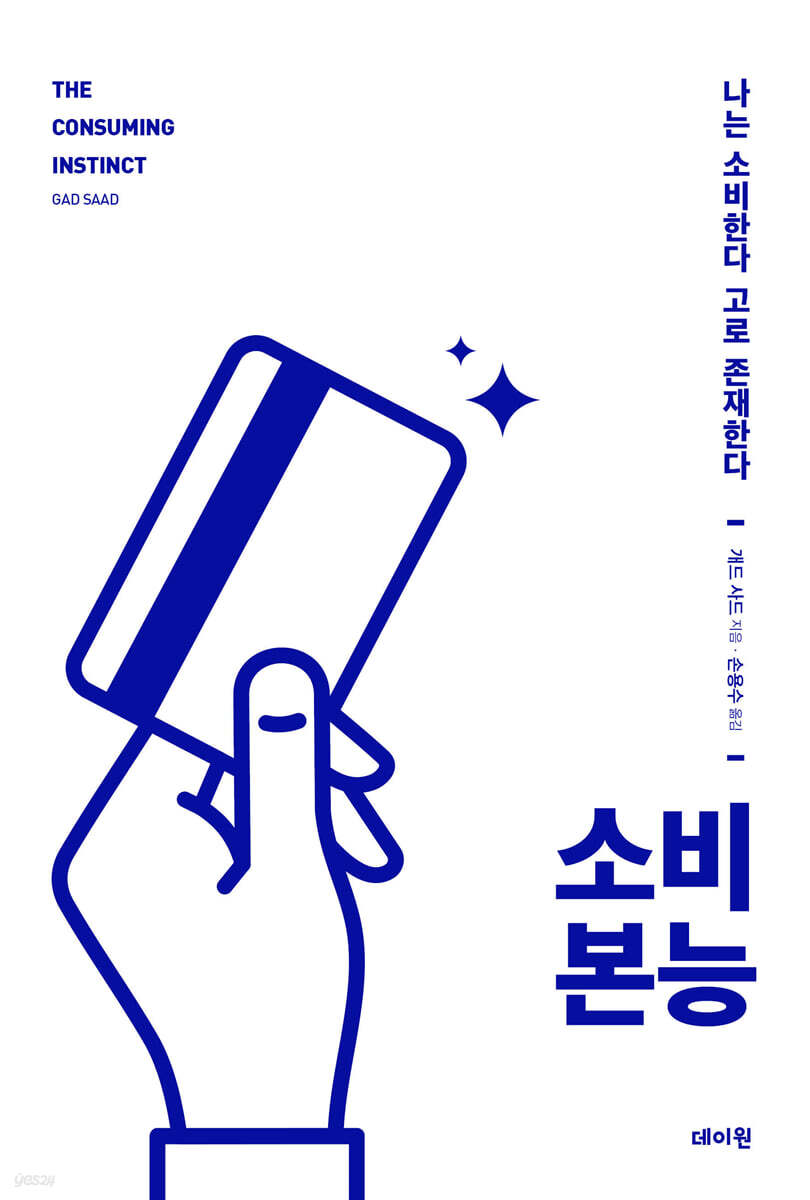
Scientifically uncovering the true nature of the earth's magnetic field The Secret to Consumption That Makes Us Open Our Wallets An era of recession where you can't see even an inch ahead. Eunsu is barely making ends meet with her part-time job this month, but she can't give up the sushi omakase she promised to go to with her friends. Manager Kim doesn't feel tired of working overtime today because he's thinking about breaking into the savings he's been saving for two years to buy the luxury bag he's been wanting. Team Leader Park felt good as he proudly bought an expensive car that cost far more than his annual salary at the flagship store. To others, it's overspending, but to me, it's a small happiness. Why do people often lose their reason and make irrational purchases? This book states that the key factors that determine consumption are survival, reproduction, blood ties, and 'selfishness' disguised as altruism. The brains of modern people, dressed in suits, are imprinted with primitive memories that are much more powerful than we think. The instincts of our ancestors, who risked their lives to survive in a world of scarce resources and unsafe environments, come across as quite harsh to us. If you get caught up in this instinct, you'll have no hesitation ordering cheesecake for dessert even after eating tteokbokki with lots of cheese for dinner. Men want to show off their positions by driving expensive foreign cars to work, and women want to make their beauty stand out by wearing the latest luxury lipstick. Parents spend a lot of money on private education to ensure their children can survive and settle down in this competitive society. The goodwill I show to my acquaintances is actually hidden in my desire to strengthen my bond with others and avoid being excluded from the group. In other words, consumption is not simply the act of 'buying' something, but rather the very act of 'living', the instinct to live. The author helps readers easily understand this familiar yet difficult subject by providing interesting examples instead of complex concepts and social theories. Why do grandmothers love their grandchildren so much? Why do we inevitably overeat at buffets? Why are men obsessed with cars, and women with dieting? Through common examples from everyday life, readers will understand the nature and interplay between consumption, evolution, and instinct, and through this, gain insight into how to wisely control the instinct to consume. |
- You can preview some of the book's contents.
Preview
index
preface
Chapter 1.
Humans are living beings
False Anti-Evolutionary Arguments | The Book's Roadmap and Key Takeaways | Conclusion
Chapter 2.
Live to eat
We eat to live, but we also live to eat | Why we season our food | How genes and environment interact | Why we overeat at buffets | How our appetites change with mood and circumstances | Why people prefer nature | Conclusion
Chapter 3.
Live to show off
Showing off your charm through your looks | Why we're obsessed with expensive cars | Why we buy expensive gifts to woo someone | The power of perfume and smell | Why we love high heels | Clothes make us feel good | Why women don't skimp on cosmetics | Why we're more attracted to men with thick hair | Women are more provocative during ovulation | Scams to impress the opposite sex | Conclusion
Chapter 4.
Live for your family
Family commitment is etched in our genes | Marriage is the union of two families' genes | The value of toys and play from a genetic perspective | Sibling rivalry begins at birth | Why are more unfortunate events occurring in adoptive families? | Why maternal grandmothers are particularly fond of their grandchildren | Are sons and daughters treated equally? | The bond between dogs and their owners | Conclusion
Chapter 5.
Live for your friends
Friendships that sprouted from the ashes of war | Friendship is also about give and take | Friendship and solidarity in popular culture and commerce | Are American friendships really that shallow? | The correlation between hormones and trust | Dividing sides | Fashion is about identity, not clothes | Why we cheer for sports | Online social networking and human interconnectedness | Conclusion
Chapter 6.
Living with culture
Lyrics, music videos, and a record of the opposite sex you prefer | Why people are so hooked on television | Why the public loves gossip | Human desires seen in movies | Why we're drawn to literary characters | Conclusion
Chapter 7.
Living in a world of advertising
Advertising Effectiveness Based on Evolutionary Theory | Advertising Effectiveness and Signals Applicable to a Global Approach | Advertising Effectiveness and Signals Appropriate for Local Advertising | Conclusion
Chapter 8.
I live for hope
Religion is the greatest commodity in history | Why are people drawn to religion? | The commercialization of religion using evolutionary psychology | The infallibility dilemma of religion | Disasters caused by religion | Pseudomedicine using religion | Beauty is always right | Praying at the altar of self-help gurus | Conclusion
Chapter 9.
Live to buy
What Causes Compulsive Buying? | Why Women Suffer More from Eating Disorders Than Men? | Why Men Are More Likely to Become Gambling Addicted? | Why Men Cheat More? | Why the Porn Industry Is Booming | Why Men Defy Their Fear and Participate in Risky Sports | Conclusion
Chapter 10.
The more fiercely you live, the better you live.
Changing Business Trends | The Underside of Consumer Psychology | Evolutionary Rationality vs. Economic Rationality | The Financial Market: A Battleground for Male Hormones | Want It Now | A Half-Blooded Man Makes More Money | Is It True That Cars Take After Their Owners? | Biomimicry: Innovating with Nature's Inspiration | Conclusion
Chapter 11.
Living is an instinct
The Future of Science: Convergence and Interdisciplinary Research
Acknowledgements
Notes and References
Chapter 1.
Humans are living beings
False Anti-Evolutionary Arguments | The Book's Roadmap and Key Takeaways | Conclusion
Chapter 2.
Live to eat
We eat to live, but we also live to eat | Why we season our food | How genes and environment interact | Why we overeat at buffets | How our appetites change with mood and circumstances | Why people prefer nature | Conclusion
Chapter 3.
Live to show off
Showing off your charm through your looks | Why we're obsessed with expensive cars | Why we buy expensive gifts to woo someone | The power of perfume and smell | Why we love high heels | Clothes make us feel good | Why women don't skimp on cosmetics | Why we're more attracted to men with thick hair | Women are more provocative during ovulation | Scams to impress the opposite sex | Conclusion
Chapter 4.
Live for your family
Family commitment is etched in our genes | Marriage is the union of two families' genes | The value of toys and play from a genetic perspective | Sibling rivalry begins at birth | Why are more unfortunate events occurring in adoptive families? | Why maternal grandmothers are particularly fond of their grandchildren | Are sons and daughters treated equally? | The bond between dogs and their owners | Conclusion
Chapter 5.
Live for your friends
Friendships that sprouted from the ashes of war | Friendship is also about give and take | Friendship and solidarity in popular culture and commerce | Are American friendships really that shallow? | The correlation between hormones and trust | Dividing sides | Fashion is about identity, not clothes | Why we cheer for sports | Online social networking and human interconnectedness | Conclusion
Chapter 6.
Living with culture
Lyrics, music videos, and a record of the opposite sex you prefer | Why people are so hooked on television | Why the public loves gossip | Human desires seen in movies | Why we're drawn to literary characters | Conclusion
Chapter 7.
Living in a world of advertising
Advertising Effectiveness Based on Evolutionary Theory | Advertising Effectiveness and Signals Applicable to a Global Approach | Advertising Effectiveness and Signals Appropriate for Local Advertising | Conclusion
Chapter 8.
I live for hope
Religion is the greatest commodity in history | Why are people drawn to religion? | The commercialization of religion using evolutionary psychology | The infallibility dilemma of religion | Disasters caused by religion | Pseudomedicine using religion | Beauty is always right | Praying at the altar of self-help gurus | Conclusion
Chapter 9.
Live to buy
What Causes Compulsive Buying? | Why Women Suffer More from Eating Disorders Than Men? | Why Men Are More Likely to Become Gambling Addicted? | Why Men Cheat More? | Why the Porn Industry Is Booming | Why Men Defy Their Fear and Participate in Risky Sports | Conclusion
Chapter 10.
The more fiercely you live, the better you live.
Changing Business Trends | The Underside of Consumer Psychology | Evolutionary Rationality vs. Economic Rationality | The Financial Market: A Battleground for Male Hormones | Want It Now | A Half-Blooded Man Makes More Money | Is It True That Cars Take After Their Owners? | Biomimicry: Innovating with Nature's Inspiration | Conclusion
Chapter 11.
Living is an instinct
The Future of Science: Convergence and Interdisciplinary Research
Acknowledgements
Notes and References
Into the book
Consumers are both cultural and biological beings.
While many consumer preferences, needs, and desires vary across cultural environments, many are often similar.
This is because these preferences, needs, and desires represent common consumer instincts.
Sometimes, consumer differences across cultures are themselves rooted in biological forces (in other words, nature shapes nurture).
Our common biological heritage, shaped by the dual evolutionary forces of natural and sexual selection, unites us as members of what we call a consumer planet.
Ultimately, recognizing the evolutionary roots of our consumer instincts can greatly help us understand our shared preferences, needs, and desires as humans.
---「Chapter 1.
From “Humans are living beings”
Consumer behavior is ultimately largely about sex.
The act of choosing a partner itself can be considered the ultimate consumer decision.
Humans are commodities in the mating market.
We advertise ourselves to potential future partners through products that serve as sexual signals (cosmetics, high heels, luxury cars, perfume, hairstyles, plastic surgery, etc.).
Women shop for good genes, deciding when and with whom to have sexual intercourse, or searching for desirable traits at sperm banks or online dating services.
Men are crazy about pornography, but women prefer erotica or romance novels.
Men put a lot of effort into courtship rituals and prepare engagement rings.
They engage in uncontrollable, conspicuous consumption to show off their social status, which is 'not inferior to others'.
Men also take a variety of risks, including short-term stock trading, extreme sports, and gambling.
---「Chapter 3.
From "I Live to Show Off"
In its most basic sense, clothing serves the function of protecting us from the external environment, such as wind and rain, and thus helping us survive.
But today, few people think of clothing in such a restrictive way.
The main purpose of clothing and fashion in particular is to satisfy our desire to express our individuality.
Ultimately, our clothes and accessories are signals to the world about who we are.
We express our individuality through our countless fashion choices.
It may sound paradoxical, but fashion also caters to our innate need to belong.
That is, by adopting a particular style, we want to show that we belong to one of the countless fashion subcultures.
---「Chapter 5.
From "Living for Friends"
Beyond entertainment news, we can study sensational news (headlines) to determine which stories capture our attention and elicit our emotions.
How do news outlets determine which stories are newsworthy? I believe stories that serve key evolutionary purposes (survival, mating, kinship, reciprocity) will receive significant coverage.
News about predator attacks, natural disasters, and violent crimes reflect our concern for survival (or death).
News about infidelity certainly fits our preoccupation with mating issues.
Horrifying tales of infanticide and heartwarming tales of long-lost siblings reunited tell of a key evolutionary driver of kinship.
Finally, news of heroic acts of courageous physical risk (such as jumping into a river to save a stranger) or remarkable generosity (such as a retiring CEO leaving his company to his employees) reflect a key evolutionary driver called reciprocity (altruistic behavior toward non-kin is generally rooted in the desire to establish reciprocal bonds).
---「Chapter 6.
From “Living with Culture”
Humans suffer from numerous anxieties.
The most powerful of these concern evolutionarily important issues such as death, love, sex, parenting, diet, health, status, and social influence.
So it's no surprise that countless hope mongers have historically exploited this evolutionary anxiety, peddling various "safe-for-all" solutions to desperately desperate audiences.
Religion guarantees us eternal life.
Cosmetic companies promise forever young skin.
The mantra that beauty is a social construct asserts that we are all equally beautiful in our own way.
New Age healers claim to have the perfect cure.
Self-help books offer solutions to every ailment, desire, need, and need.
All these means of promise form a belief system, like a religion.
Therefore, it is easy to capture the human mind, and very difficult to eradicate.
---「Chapter 8.
From “I Live for Hope”
Why do men commit sexual misconduct that can ruin their careers and destroy their families? Why do men cheat on women who are exceptionally attractive and sensual? I believe the most appropriate answer to these questions is a saying that has now entered the hall of proverbs:
“Show me a beautiful woman and I will show you a man who is tired of sleeping with her.”
---「Chapter 9.
From "Living to Buy"
I hope that more scholars who study consumers, and indeed business studies, will ultimately realize that the human mind is a product of sexual and natural selection.
They will then see evolutionary theory as a theoretical framework that can help enhance the explanatory power of their research in economics, organizational behavior, advertising, or consumer behavior.
While many consumer preferences, needs, and desires vary across cultural environments, many are often similar.
This is because these preferences, needs, and desires represent common consumer instincts.
Sometimes, consumer differences across cultures are themselves rooted in biological forces (in other words, nature shapes nurture).
Our common biological heritage, shaped by the dual evolutionary forces of natural and sexual selection, unites us as members of what we call a consumer planet.
Ultimately, recognizing the evolutionary roots of our consumer instincts can greatly help us understand our shared preferences, needs, and desires as humans.
---「Chapter 1.
From “Humans are living beings”
Consumer behavior is ultimately largely about sex.
The act of choosing a partner itself can be considered the ultimate consumer decision.
Humans are commodities in the mating market.
We advertise ourselves to potential future partners through products that serve as sexual signals (cosmetics, high heels, luxury cars, perfume, hairstyles, plastic surgery, etc.).
Women shop for good genes, deciding when and with whom to have sexual intercourse, or searching for desirable traits at sperm banks or online dating services.
Men are crazy about pornography, but women prefer erotica or romance novels.
Men put a lot of effort into courtship rituals and prepare engagement rings.
They engage in uncontrollable, conspicuous consumption to show off their social status, which is 'not inferior to others'.
Men also take a variety of risks, including short-term stock trading, extreme sports, and gambling.
---「Chapter 3.
From "I Live to Show Off"
In its most basic sense, clothing serves the function of protecting us from the external environment, such as wind and rain, and thus helping us survive.
But today, few people think of clothing in such a restrictive way.
The main purpose of clothing and fashion in particular is to satisfy our desire to express our individuality.
Ultimately, our clothes and accessories are signals to the world about who we are.
We express our individuality through our countless fashion choices.
It may sound paradoxical, but fashion also caters to our innate need to belong.
That is, by adopting a particular style, we want to show that we belong to one of the countless fashion subcultures.
---「Chapter 5.
From "Living for Friends"
Beyond entertainment news, we can study sensational news (headlines) to determine which stories capture our attention and elicit our emotions.
How do news outlets determine which stories are newsworthy? I believe stories that serve key evolutionary purposes (survival, mating, kinship, reciprocity) will receive significant coverage.
News about predator attacks, natural disasters, and violent crimes reflect our concern for survival (or death).
News about infidelity certainly fits our preoccupation with mating issues.
Horrifying tales of infanticide and heartwarming tales of long-lost siblings reunited tell of a key evolutionary driver of kinship.
Finally, news of heroic acts of courageous physical risk (such as jumping into a river to save a stranger) or remarkable generosity (such as a retiring CEO leaving his company to his employees) reflect a key evolutionary driver called reciprocity (altruistic behavior toward non-kin is generally rooted in the desire to establish reciprocal bonds).
---「Chapter 6.
From “Living with Culture”
Humans suffer from numerous anxieties.
The most powerful of these concern evolutionarily important issues such as death, love, sex, parenting, diet, health, status, and social influence.
So it's no surprise that countless hope mongers have historically exploited this evolutionary anxiety, peddling various "safe-for-all" solutions to desperately desperate audiences.
Religion guarantees us eternal life.
Cosmetic companies promise forever young skin.
The mantra that beauty is a social construct asserts that we are all equally beautiful in our own way.
New Age healers claim to have the perfect cure.
Self-help books offer solutions to every ailment, desire, need, and need.
All these means of promise form a belief system, like a religion.
Therefore, it is easy to capture the human mind, and very difficult to eradicate.
---「Chapter 8.
From “I Live for Hope”
Why do men commit sexual misconduct that can ruin their careers and destroy their families? Why do men cheat on women who are exceptionally attractive and sensual? I believe the most appropriate answer to these questions is a saying that has now entered the hall of proverbs:
“Show me a beautiful woman and I will show you a man who is tired of sleeping with her.”
---「Chapter 9.
From "Living to Buy"
I hope that more scholars who study consumers, and indeed business studies, will ultimately realize that the human mind is a product of sexual and natural selection.
They will then see evolutionary theory as a theoretical framework that can help enhance the explanatory power of their research in economics, organizational behavior, advertising, or consumer behavior.
---「Chapter 11.
From “Living is an instinct”
From “Living is an instinct”
Publisher's Review
It's a scientific fact that spending makes you feel better!
Before blaming God
Let's find out what leads you to overspend!
A complete analysis of the relationship between human instinct and consumption!
People make hundreds of consumer-related decisions and concerns every day.
What to eat for breakfast, whether to buy that outfit now, what gift to give to your lover, etc.
At this point, human desire to consume can almost be called an instinct.
But at the same time, we also spend a lot of time thinking about 'rational consumption'.
Is consumption really a realm of reason or of instinct?
The authors state that consumption is an evolutionary behavior that has developed for goals such as survival, reproduction, kin selection, and reciprocity.
From food (fast food) to products for showing off one's sexual appeal (foreign cars, luxury bags), cultural products that stimulate the imagination (porn), and gifts for the advancement of relationships (wedding rings), the selfish instincts hidden beneath consumption, once seen as a simple cultural activity, are revealed in detail.
Reading the book will help you understand the various ways in which our shared evolutionary heritage manifests itself through human consumption behavior.
For example, choosing a hamburger over healthy food is a result of our preference for high-calorie foods for survival, buying expensive luxury goods is a way to show off our wealth and appeal to the person we like, or the reason the porn industry is always booming is because of our instinctive thirst for more and more stimulating sexual fantasies.
This book reveals in detail the evolutionary and physiological principles that are intricately embedded in human consumption behavior.
Consumption is not simply a bartering or stress-relieving act, much less an act of guilt.
Consumption is a powerful physiological force imprinted in our genes, and accurate and insightful knowledge about it gives readers a sense of liberation and autonomy.
By recognizing the roots of our consumer instincts, which evolved at the genetic level through natural selection, the author helps readers easily understand common human preferences, desires, and needs.
As Socrates said, quoting the inscription on the temple at Delphi, “Know thyself.”
Then, after reading this book, your consumption will become wiser and smarter.
Before blaming God
Let's find out what leads you to overspend!
A complete analysis of the relationship between human instinct and consumption!
People make hundreds of consumer-related decisions and concerns every day.
What to eat for breakfast, whether to buy that outfit now, what gift to give to your lover, etc.
At this point, human desire to consume can almost be called an instinct.
But at the same time, we also spend a lot of time thinking about 'rational consumption'.
Is consumption really a realm of reason or of instinct?
The authors state that consumption is an evolutionary behavior that has developed for goals such as survival, reproduction, kin selection, and reciprocity.
From food (fast food) to products for showing off one's sexual appeal (foreign cars, luxury bags), cultural products that stimulate the imagination (porn), and gifts for the advancement of relationships (wedding rings), the selfish instincts hidden beneath consumption, once seen as a simple cultural activity, are revealed in detail.
Reading the book will help you understand the various ways in which our shared evolutionary heritage manifests itself through human consumption behavior.
For example, choosing a hamburger over healthy food is a result of our preference for high-calorie foods for survival, buying expensive luxury goods is a way to show off our wealth and appeal to the person we like, or the reason the porn industry is always booming is because of our instinctive thirst for more and more stimulating sexual fantasies.
This book reveals in detail the evolutionary and physiological principles that are intricately embedded in human consumption behavior.
Consumption is not simply a bartering or stress-relieving act, much less an act of guilt.
Consumption is a powerful physiological force imprinted in our genes, and accurate and insightful knowledge about it gives readers a sense of liberation and autonomy.
By recognizing the roots of our consumer instincts, which evolved at the genetic level through natural selection, the author helps readers easily understand common human preferences, desires, and needs.
As Socrates said, quoting the inscription on the temple at Delphi, “Know thyself.”
Then, after reading this book, your consumption will become wiser and smarter.
GOODS SPECIFICS
- Date of issue: May 22, 2024
- Page count, weight, size: 382 pages | 152*255*30mm
- ISBN13: 9791168476905
- ISBN10: 1168476909
You may also like
카테고리
korean


korean

![GQ KOREA Mark (Monthly): December [2025]](http://librairie.coreenne.fr/cdn/shop/files/8ef265dbbfbf186523ed75ba7319009d.jpg?v=1765340328&width=3840)


