

Leader's attitude
 |
Description
Book Introduction
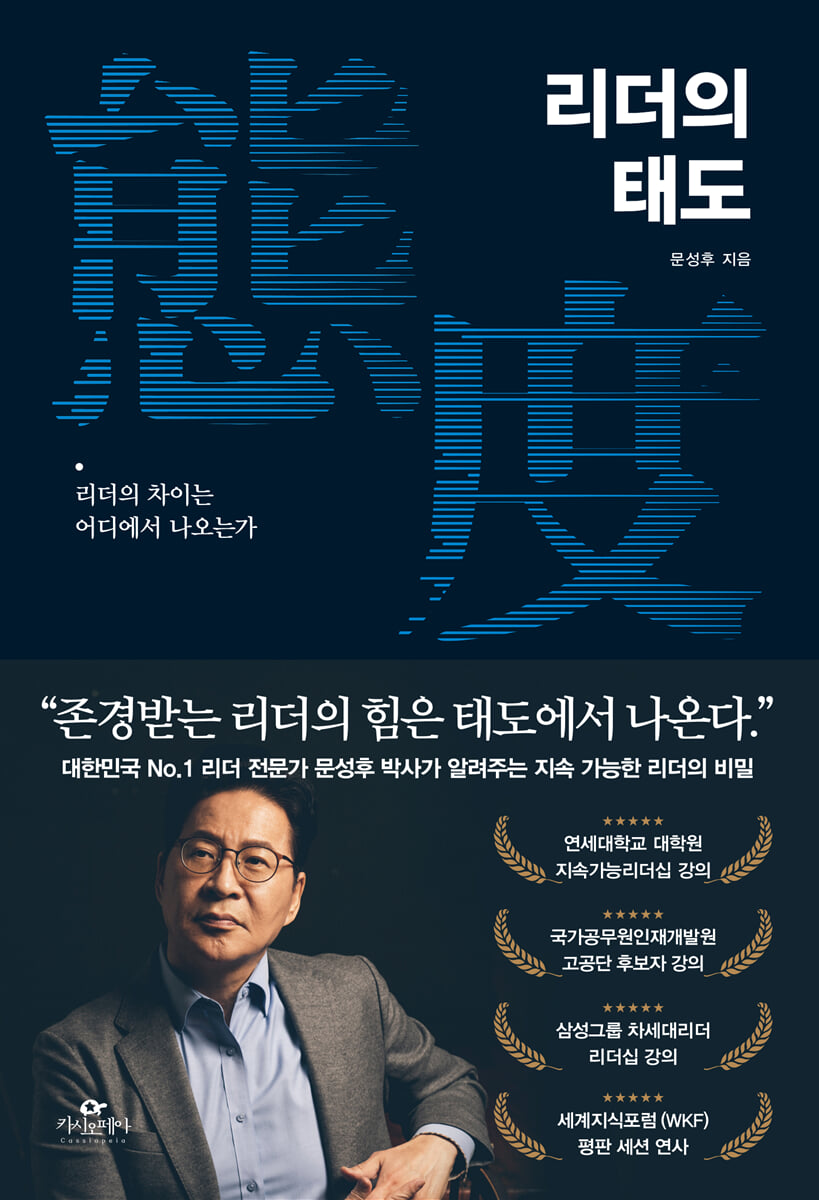
“The power of a leader who is respected for a long time comes from his attitude.” Lectures for candidates for the National Civil Service Human Resources Development Institute's High-Tech Academy and Samsung Group's Next-Generation Leadership Lecture Speaker at the World Knowledge Forum (WKF) Reputation Session, recipient of the Best Lecture Award from the International Management Institute (IMI) The Secrets of Sustainable Leadership as Explained by Dr. Moon Sung-hoo, Korea's No. 1 Leadership Expert As major changes sweep through organizations both internally and externally, the role of leaders who guide members and make important decisions becomes increasingly important. In this era of change and innovation—the COVID-19 pandemic, ESG, shifting work environments, and the rise of a new generation—what kind of leader should they be? What are the core qualities of a leader this new era demands? While there are many, the author singles out a leader's "attitude" as the most crucial. This is because, in complex and challenging times that require new challenges, what is most needed is the most basic 'attitude'. A leader's attitude means not being complacent and obsessed with a single success, but rather being goal-oriented and able to move himself, his members, and the entire organization forward toward a greater goal. The author, who has experienced everything that can be experienced within an organization, from one-person businesses to large corporations, from rank-and-file employees to executives, has compiled his decades of tacit knowledge from organizational life into a single book, combining it with leadership research. In this book, you will find the essential "leader's attitude" that this era desires, that this era absolutely needs, and that will lead this era. |
- You can preview some of the book's contents.
Preview
index
time
Prologue_ The Leader's Attitude for Elevating Individuals and Society 4
Chapter 1 Loyalty: An honest and truthful attitude toward work and people
· Don't lie at work 17
· People and work are inherently one 28
· Concentration is the power that creates a leader's super gap. 39
· Never let your trust be stolen 46
Chapter 2 Self-Esteem - The Attitude of Knowing What I'm Good at
· Leaders with superior metacognition also perform well at work. 59
· You need to keep your eyes and ears open to make good decisions. 70
· Dealing with fear effectively can give you greater strength. 82
· A leader without self-love quickly falls apart. 91
Chapter 3: Consideration: A humble attitude that grows with team members
· We can go far if we walk together 103
· Fear cannot win people's hearts 113
· Gently control the power you have 120
· A leader's mindfulness is self-care 130
Chapter 4: Openness: An Innovative Attitude that Accepts Diverse Values
· Add competence to sincerity 145
· A leader's speech must be principled 156
· A leader must be a comfortable sofa 169
· Flexibly use various roles according to the situation 180
Chapter 5: Longing: A firm attitude to constantly walk toward a vision
· Use lack as a driving force for motivation 193
· Leaders must be rational optimists 204
· Leaders must become nerds in their fields. 215
· If you overcome failure and move forward, you will eventually reach success. 225
Chapter 6: Neatness_ A neat attitude that does not lose focus and originality
· Maintain good habits repeatedly in work and life 241
· Remember that your reputation is your face. 253
· Pursue Sustainable Leadership 264
· Attitude says it all about a leader 276
Reference 286
Prologue_ The Leader's Attitude for Elevating Individuals and Society 4
Chapter 1 Loyalty: An honest and truthful attitude toward work and people
· Don't lie at work 17
· People and work are inherently one 28
· Concentration is the power that creates a leader's super gap. 39
· Never let your trust be stolen 46
Chapter 2 Self-Esteem - The Attitude of Knowing What I'm Good at
· Leaders with superior metacognition also perform well at work. 59
· You need to keep your eyes and ears open to make good decisions. 70
· Dealing with fear effectively can give you greater strength. 82
· A leader without self-love quickly falls apart. 91
Chapter 3: Consideration: A humble attitude that grows with team members
· We can go far if we walk together 103
· Fear cannot win people's hearts 113
· Gently control the power you have 120
· A leader's mindfulness is self-care 130
Chapter 4: Openness: An Innovative Attitude that Accepts Diverse Values
· Add competence to sincerity 145
· A leader's speech must be principled 156
· A leader must be a comfortable sofa 169
· Flexibly use various roles according to the situation 180
Chapter 5: Longing: A firm attitude to constantly walk toward a vision
· Use lack as a driving force for motivation 193
· Leaders must be rational optimists 204
· Leaders must become nerds in their fields. 215
· If you overcome failure and move forward, you will eventually reach success. 225
Chapter 6: Neatness_ A neat attitude that does not lose focus and originality
· Maintain good habits repeatedly in work and life 241
· Remember that your reputation is your face. 253
· Pursue Sustainable Leadership 264
· Attitude says it all about a leader 276
Reference 286
Detailed image

Into the book
I believe that a leader is not a person, but a role.
That is, rather than viewing leaders as people themselves, they viewed them as positions that must be filled with specific roles.
Having defined a leader through that lens, I couldn't help but talk about the various attitudes necessary to take on that role.
There is another reason why I am talking about the leader's attitude.
Attitudes create behavior, behaviors become automatic and become habits, and ultimately habits determine a person's destiny.
A makes B, B makes C, C makes D.
The small actions of a leader accumulate and become the leader's fate, and the fate of the organization to which the leader belongs is determined.
There is a reason why the saying, “People are everything” in organizational management comes from this.
--- p.7
The attitude of putting in one's best effort and sincerity might seem a bit too obvious.
But everything starts with the basics.
If you want to build a tall building, the foundation must be even stronger.
That way, it won't be shaken.
The same goes for leaders.
If you demonstrate loyalty appropriate to your position, you will be remembered as a good person not only while you are working as a leader, but also after you leave the position.
The path to becoming a good leader is the same as the path to becoming a good person.
The first step is to be sincere and honest in everything you do.
--- p.27
There is a common misconception that leaders face.
I think that leaders have their own unique job.
'I'm a manager now, so I don't have to do any practical work.
'I just need to motivate and supervise my employees.' But this is a wrong idea.
Being a leader means you have to do more.
As you rise to a high position, you must bear the weight of the crown.
Even as the head of a small, one-person business like mine, there are many things I need to take care of as a leader.
There is one thing people misunderstand about leaders.
I think that a leader is someone who leads, so he or she must have followers or team members.
This is wrong.
Leadership is a role.
So, if a person is performing a role of leading an organization without having any team members, then that person is a leader.
--- p.40
A truly competent leader is one who knows how to take good care of his or her own mind and has high resilience.
Taking good care of your mind also means taking good care of yourself.
A competent leader not only cares about the needs of the people in his or her organization, but also considers himself or herself a subject of care.
I express this in my lectures and other occasions by saying, "You have to know how to read your own mind."
The dictionary definition of intuition is 'the ability to understand another person's feelings based on the situation at hand,' but we need to understand our own feelings as well as we can to understand others' feelings.
This is especially true if you are in the lonely position of a leader.
--- p.139
Earlier I said that a leader must have an open attitude.
We must boldly reveal ourselves and open up fully.
This attitude is very bold and spirited.
However, there is one thing to be careful about when a leader shows an attitude of full openness.
We must not end up with a self-satisfied openness that is so intoxicated with ourselves that we become open-minded.
'I'm open like this.
Everyone is so self-conscious, tsk tsk...' That's not what you should do.
Leaders shouldn't just open the door to their workspace and wait; they should humble themselves and consider the challenges their team members might face within the organization.
--- p.176
When the leader gets tired, the team members get tired too.
Markets and organizations are very perceptive and sensitive, so they quickly sense a leader's lethargy and indifference.
Of course, the leader himself knows best.
I once read an interview with a master pianist and was deeply moved.
A reporter asked the master pianist:
“Even if you don’t practice piano every day, no one will know.
“Why do you practice every single day?” the pianist replied.
“Because even if the world doesn’t know, I know.
“Did I practice or not?” That’s a truly masterful answer.
I think leaders should also work with this mindset.
Even when you feel tired and drained for various reasons, you must dedicate yourself to your work and not forget your role as a leader, with the intention of maintaining your own integrity.
--- p.198
A leader must be decisive.
A leader's conduct must be clean and orderly.
Management values considered important always change with the times.
The recent rise of morality and character as qualities of a leader is not unrelated to the market's response to the importance of ethical management.
Society no longer demands that leaders of organizations simply do a good job.
We want exemplary leaders who are not only competent but also possess morality and character.
And their own unique routines serve as a safeguard to help leaders maintain consistency and never lose their original intentions.
That is, rather than viewing leaders as people themselves, they viewed them as positions that must be filled with specific roles.
Having defined a leader through that lens, I couldn't help but talk about the various attitudes necessary to take on that role.
There is another reason why I am talking about the leader's attitude.
Attitudes create behavior, behaviors become automatic and become habits, and ultimately habits determine a person's destiny.
A makes B, B makes C, C makes D.
The small actions of a leader accumulate and become the leader's fate, and the fate of the organization to which the leader belongs is determined.
There is a reason why the saying, “People are everything” in organizational management comes from this.
--- p.7
The attitude of putting in one's best effort and sincerity might seem a bit too obvious.
But everything starts with the basics.
If you want to build a tall building, the foundation must be even stronger.
That way, it won't be shaken.
The same goes for leaders.
If you demonstrate loyalty appropriate to your position, you will be remembered as a good person not only while you are working as a leader, but also after you leave the position.
The path to becoming a good leader is the same as the path to becoming a good person.
The first step is to be sincere and honest in everything you do.
--- p.27
There is a common misconception that leaders face.
I think that leaders have their own unique job.
'I'm a manager now, so I don't have to do any practical work.
'I just need to motivate and supervise my employees.' But this is a wrong idea.
Being a leader means you have to do more.
As you rise to a high position, you must bear the weight of the crown.
Even as the head of a small, one-person business like mine, there are many things I need to take care of as a leader.
There is one thing people misunderstand about leaders.
I think that a leader is someone who leads, so he or she must have followers or team members.
This is wrong.
Leadership is a role.
So, if a person is performing a role of leading an organization without having any team members, then that person is a leader.
--- p.40
A truly competent leader is one who knows how to take good care of his or her own mind and has high resilience.
Taking good care of your mind also means taking good care of yourself.
A competent leader not only cares about the needs of the people in his or her organization, but also considers himself or herself a subject of care.
I express this in my lectures and other occasions by saying, "You have to know how to read your own mind."
The dictionary definition of intuition is 'the ability to understand another person's feelings based on the situation at hand,' but we need to understand our own feelings as well as we can to understand others' feelings.
This is especially true if you are in the lonely position of a leader.
--- p.139
Earlier I said that a leader must have an open attitude.
We must boldly reveal ourselves and open up fully.
This attitude is very bold and spirited.
However, there is one thing to be careful about when a leader shows an attitude of full openness.
We must not end up with a self-satisfied openness that is so intoxicated with ourselves that we become open-minded.
'I'm open like this.
Everyone is so self-conscious, tsk tsk...' That's not what you should do.
Leaders shouldn't just open the door to their workspace and wait; they should humble themselves and consider the challenges their team members might face within the organization.
--- p.176
When the leader gets tired, the team members get tired too.
Markets and organizations are very perceptive and sensitive, so they quickly sense a leader's lethargy and indifference.
Of course, the leader himself knows best.
I once read an interview with a master pianist and was deeply moved.
A reporter asked the master pianist:
“Even if you don’t practice piano every day, no one will know.
“Why do you practice every single day?” the pianist replied.
“Because even if the world doesn’t know, I know.
“Did I practice or not?” That’s a truly masterful answer.
I think leaders should also work with this mindset.
Even when you feel tired and drained for various reasons, you must dedicate yourself to your work and not forget your role as a leader, with the intention of maintaining your own integrity.
--- p.198
A leader must be decisive.
A leader's conduct must be clean and orderly.
Management values considered important always change with the times.
The recent rise of morality and character as qualities of a leader is not unrelated to the market's response to the importance of ethical management.
Society no longer demands that leaders of organizations simply do a good job.
We want exemplary leaders who are not only competent but also possess morality and character.
And their own unique routines serve as a safeguard to help leaders maintain consistency and never lose their original intentions.
--- p.244
Publisher's Review
“Why are some leaders respected, while others are incompetent?”
Six Essential Attitudes for Sustainable and Respected Leaders
From the COVID-19 pandemic to ESG and work-life balance, and a head-on confrontation with the MZ generation, those who take on the role of "leader" in organizations today face significant challenges.
In these complex and challenging times, what is most needed is the most fundamental 'leader's attitude.'
The author, who has experienced everything that can be experienced within an organization, from one-person businesses to large corporations, from rank-and-file employees to executives, has compiled decades of tacit knowledge from organizational life, combined with leadership research.
In this book, you will find the essential "leader's attitude" that this era desires, that this era absolutely needs, and that will lead this era.
In times of great change both internally and externally, the role of leaders in leading members and making important decisions becomes even more important.
In this era of change and innovation—the aforementioned COVID-19 pandemic, ESG, shifting work environments, and the rise of a new generation—what kind of leader should they be? What are the core qualities of a leader this new era demands? While there are many possible answers, the author singles out "leadership attitude" as the most crucial.
Attitudes create behavior, and when behavior becomes automated, it becomes a habit, and ultimately, habits determine a person's destiny.
The small actions of a leader accumulate and become the leader's fate, and the fate of the organization to which the leader belongs is determined.
Lectures for candidates for the National Civil Service Human Resources Development Institute's High-Tech Academy and Samsung Group's Next-Generation Leadership Lecture
Speaker at the World Knowledge Forum (WKF) Reputation Session, recipient of the Best Lecture Award from the International Management Institute (IMI)
The Secrets of Sustainable Leadership as Explained by Dr. Moon Sung-hoo, Korea's No. 1 Leadership Expert
The author is a leadership expert and an ESG specialist. ESG moves beyond the traditional approach of evaluating companies solely on their financial performance. It focuses on environmental, social, and governance factors—key factors that can impact a company's value and sustainability over the long term. In other words, it evaluates companies based on non-financial factors, not monetary ones. ESG can be considered a new management grammar designed to overcome the negative effects of quantitative expansion and growth-focused corporate operations, such as environmental pollution and moral hazard, and to promote more sustainable corporate growth.
In order to achieve sustainable management like this, the role of the leader, who is at the center of corporate operations, is important.
“In this era of change and innovation, if you want to become a good leader rather than just a good leader,
Learn and practice the six attitudes of a leader.
This book will be a welcome gift.”
In this book, a leader is not a person, but a role.
A leader is not a person in and of himself, but rather a position that requires him to take on a specific role.
Bill Gates, who founded Microsoft, was and still is a leader. While he previously played the role of Microsoft CEO, a man of tremendous effort and ruthless judgment, he now plays the role of the head of a charity that contributes to the advancement of humanity by looking at the bigger picture without putting much pressure on those around him.
Bill Gates is still the same person, but the role he has to play has changed.
What a leader needs to do well in this role is ‘attitude.’
In this book, the author divides the qualities that a leader living in this era must possess into six keywords.
These are ‘loyalty’, ‘self-respect’, ‘consideration’, ‘openness’, ‘longing’, and ‘neatness’.
① Loyalty
- It is an attitude of working with sincerity and consistency, without falsehood in work and people.
Loyalty is the number one secret to gaining the trust of your coworkers and achieving exceptional results.
② Self-esteem
- It is an attitude of ‘recognizing oneself correctly.’
Self-esteem is often used to mean 'respect for oneself,' but this book redefines its meaning.
When a leader knows how to accept his or her strengths and weaknesses, he or she can work beautifully with both pride and humility.
③ Consideration
- It is an attitude that allows you to use details to understand the situations of the members you work with without pushing yourself too hard.
Consideration is something a leader must demonstrate to grow with his team members and achieve goals.
Because we can go further if we walk together.
④ Open
- It is an attitude that embraces diverse values and pursues innovation.
When a leader opens his eyes, ears, and heart wide and communicates honestly and openly with his organization members without any prejudice, the organization he leads will be filled with healthy energy and creative ideas.
⑤ Longing
- It is an attitude of not being afraid of failure and constantly moving forward toward a higher vision and goal.
Only leaders who are always thirsty for new challenges ultimately become the protagonists of a myth that turns failure into success.
⑥ Neatness
- It is an attitude of maintaining order in work and life through a regular routine by repeatedly developing good habits both inside and outside.
A leader who maintains a clear inner order and never loses his original intention or focus can make sound judgments and give clear instructions. Members naturally trust and follow such an unwavering leader.
In this age of change and innovation, the one book every leader who wants to survive must read.
This book will serve as an opportunity for reflection and advancement for current leaders, and a guide for aspiring leaders to think ahead and prepare for the kind of leader they will become in the future.
When we think of leaders, we often picture managers in a specific organization, but anyone who actively leads their life with a goal in mind can be considered a leader in their own life.
In other words, this book will serve as a guide for anyone who wants to take charge of their own life and foster future growth.
Six Essential Attitudes for Sustainable and Respected Leaders
From the COVID-19 pandemic to ESG and work-life balance, and a head-on confrontation with the MZ generation, those who take on the role of "leader" in organizations today face significant challenges.
In these complex and challenging times, what is most needed is the most fundamental 'leader's attitude.'
The author, who has experienced everything that can be experienced within an organization, from one-person businesses to large corporations, from rank-and-file employees to executives, has compiled decades of tacit knowledge from organizational life, combined with leadership research.
In this book, you will find the essential "leader's attitude" that this era desires, that this era absolutely needs, and that will lead this era.
In times of great change both internally and externally, the role of leaders in leading members and making important decisions becomes even more important.
In this era of change and innovation—the aforementioned COVID-19 pandemic, ESG, shifting work environments, and the rise of a new generation—what kind of leader should they be? What are the core qualities of a leader this new era demands? While there are many possible answers, the author singles out "leadership attitude" as the most crucial.
Attitudes create behavior, and when behavior becomes automated, it becomes a habit, and ultimately, habits determine a person's destiny.
The small actions of a leader accumulate and become the leader's fate, and the fate of the organization to which the leader belongs is determined.
Lectures for candidates for the National Civil Service Human Resources Development Institute's High-Tech Academy and Samsung Group's Next-Generation Leadership Lecture
Speaker at the World Knowledge Forum (WKF) Reputation Session, recipient of the Best Lecture Award from the International Management Institute (IMI)
The Secrets of Sustainable Leadership as Explained by Dr. Moon Sung-hoo, Korea's No. 1 Leadership Expert
The author is a leadership expert and an ESG specialist. ESG moves beyond the traditional approach of evaluating companies solely on their financial performance. It focuses on environmental, social, and governance factors—key factors that can impact a company's value and sustainability over the long term. In other words, it evaluates companies based on non-financial factors, not monetary ones. ESG can be considered a new management grammar designed to overcome the negative effects of quantitative expansion and growth-focused corporate operations, such as environmental pollution and moral hazard, and to promote more sustainable corporate growth.
In order to achieve sustainable management like this, the role of the leader, who is at the center of corporate operations, is important.
“In this era of change and innovation, if you want to become a good leader rather than just a good leader,
Learn and practice the six attitudes of a leader.
This book will be a welcome gift.”
In this book, a leader is not a person, but a role.
A leader is not a person in and of himself, but rather a position that requires him to take on a specific role.
Bill Gates, who founded Microsoft, was and still is a leader. While he previously played the role of Microsoft CEO, a man of tremendous effort and ruthless judgment, he now plays the role of the head of a charity that contributes to the advancement of humanity by looking at the bigger picture without putting much pressure on those around him.
Bill Gates is still the same person, but the role he has to play has changed.
What a leader needs to do well in this role is ‘attitude.’
In this book, the author divides the qualities that a leader living in this era must possess into six keywords.
These are ‘loyalty’, ‘self-respect’, ‘consideration’, ‘openness’, ‘longing’, and ‘neatness’.
① Loyalty
- It is an attitude of working with sincerity and consistency, without falsehood in work and people.
Loyalty is the number one secret to gaining the trust of your coworkers and achieving exceptional results.
② Self-esteem
- It is an attitude of ‘recognizing oneself correctly.’
Self-esteem is often used to mean 'respect for oneself,' but this book redefines its meaning.
When a leader knows how to accept his or her strengths and weaknesses, he or she can work beautifully with both pride and humility.
③ Consideration
- It is an attitude that allows you to use details to understand the situations of the members you work with without pushing yourself too hard.
Consideration is something a leader must demonstrate to grow with his team members and achieve goals.
Because we can go further if we walk together.
④ Open
- It is an attitude that embraces diverse values and pursues innovation.
When a leader opens his eyes, ears, and heart wide and communicates honestly and openly with his organization members without any prejudice, the organization he leads will be filled with healthy energy and creative ideas.
⑤ Longing
- It is an attitude of not being afraid of failure and constantly moving forward toward a higher vision and goal.
Only leaders who are always thirsty for new challenges ultimately become the protagonists of a myth that turns failure into success.
⑥ Neatness
- It is an attitude of maintaining order in work and life through a regular routine by repeatedly developing good habits both inside and outside.
A leader who maintains a clear inner order and never loses his original intention or focus can make sound judgments and give clear instructions. Members naturally trust and follow such an unwavering leader.
In this age of change and innovation, the one book every leader who wants to survive must read.
This book will serve as an opportunity for reflection and advancement for current leaders, and a guide for aspiring leaders to think ahead and prepare for the kind of leader they will become in the future.
When we think of leaders, we often picture managers in a specific organization, but anyone who actively leads their life with a goal in mind can be considered a leader in their own life.
In other words, this book will serve as a guide for anyone who wants to take charge of their own life and foster future growth.
GOODS SPECIFICS
- Date of issue: February 6, 2023
- Page count, weight, size: 288 pages | 370g | 148*205*17mm
- ISBN13: 9791168270930
- ISBN10: 1168270936
You may also like
카테고리
korean


korean

![GQ KOREA Mark (Monthly): December [2025]](http://librairie.coreenne.fr/cdn/shop/files/8ef265dbbfbf186523ed75ba7319009d.jpg?v=1765340328&width=3840)


