

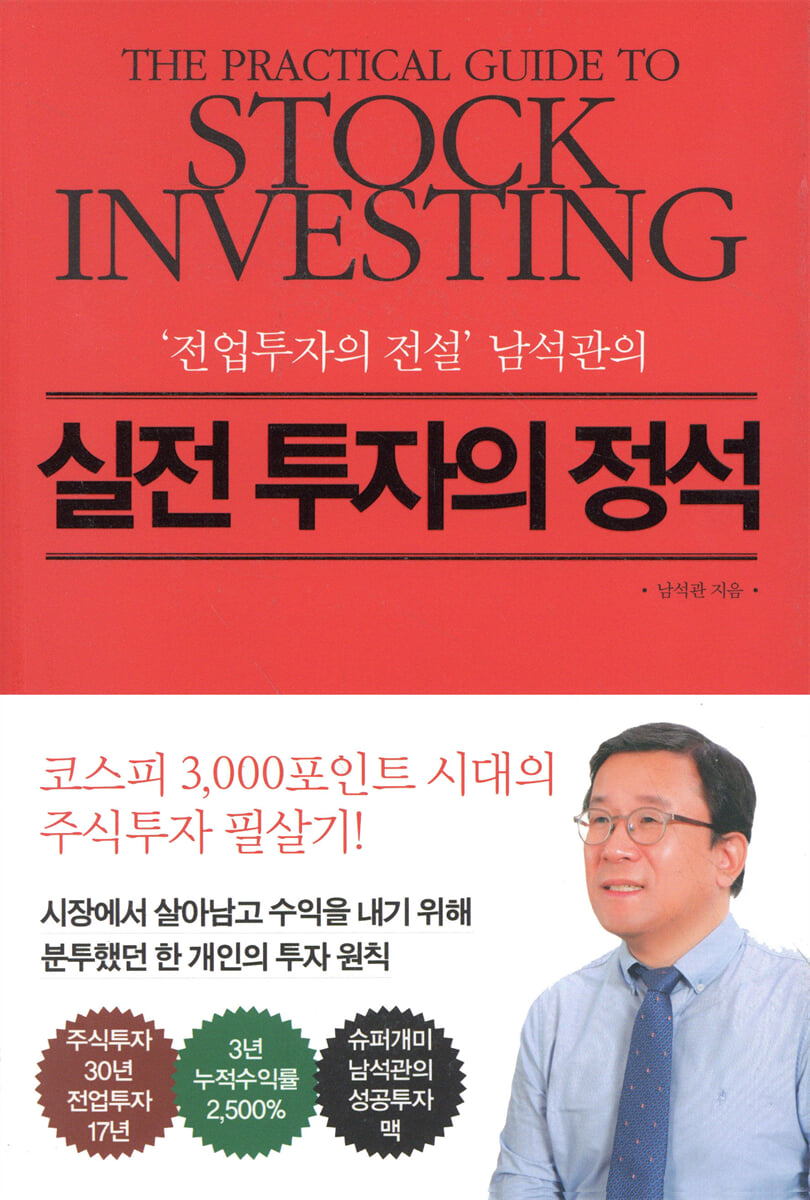
The basics of real-world investing
 |
Description
Book Introduction
Individual investors who have succeeded in stock investment are called 'super ants'.
On the other hand, full-time investors who operate solely on investment returns must have a different perspective on investment because they must make a profit.
Here's a guy who is a 'super ant' and a 'full-time investor'.
Investor Nam Seok-kwan, a "legend of professional investment," has been making profits every year for 17 years and has a cumulative return of 2,500% over three years.
I've been investing in stocks for 30 years.
He was desperate because he absolutely had to survive, and he studied broadly and deeply because he absolutely had to make a profit, and he revealed his experience and know-how in the stock market and investing.
While it covers investment fundamentals and step-by-step strategies, this book particularly emphasizes the ruthless, realistic, and practical strategies that can actually make you profitable in the markets.
That's why the title is "The Principles of Practical Investment."
The author summarizes the secret to consistently generating profits over a long period of time as 'building a profit model.'
This book is a valuable investment bible for everyone, whether you're just starting out, a seasoned investor, or looking to take your investment strategy to the next level.
On the other hand, full-time investors who operate solely on investment returns must have a different perspective on investment because they must make a profit.
Here's a guy who is a 'super ant' and a 'full-time investor'.
Investor Nam Seok-kwan, a "legend of professional investment," has been making profits every year for 17 years and has a cumulative return of 2,500% over three years.
I've been investing in stocks for 30 years.
He was desperate because he absolutely had to survive, and he studied broadly and deeply because he absolutely had to make a profit, and he revealed his experience and know-how in the stock market and investing.
While it covers investment fundamentals and step-by-step strategies, this book particularly emphasizes the ruthless, realistic, and practical strategies that can actually make you profitable in the markets.
That's why the title is "The Principles of Practical Investment."
The author summarizes the secret to consistently generating profits over a long period of time as 'building a profit model.'
This book is a valuable investment bible for everyone, whether you're just starting out, a seasoned investor, or looking to take your investment strategy to the next level.
- You can preview some of the book's contents.
Preview
index
Prologue | The Core of Practical Investment, Gained Through 17 Years of Professional Investing
PART 1: The Rapidly Changing Stock Investment Environment
CHAPTER 1: FUTURE PREDICTION AND INVESTMENT
01 Rapid changes in the world
02 The Advent of the Fourth Industrial Revolution
03 Keep an eye on megatrends
CHAPTER 2: The Basics of Stock Investment
01 Stock investment is a personal survival strategy.
02 Market Forecast and Response
03 Stocks: Investment or Speculation?
04 First Steps to Stock Investment
05 High Risk, High Return
06 Stock Investment in Daily Life
CHAPTER 3 TRENDS IMPACTING STOCK INVESTMENT
01 Four Trends That Will Lead the Future
02 Kunio Uragami's Four Seasons of the Stock Market Theory
03 Masters of Value Investing
PART 2: Practical Stock Investing That Beats the Market
CHAPTER 4: General Stock Investment Theory
01 Change in value
02 Value Stock Investment
03 Growth Stock Investment
04 Theme Stock Investment
05 Seasonal Stock Investment
06 Mid- to long-term investment
07 Short-term investment
CHAPTER 5 Stock Analysis Techniques
01 Fundamental Analysis
02 Technical Analysis
03 Market Analysis
CHAPTER 6 Buying Stocks
01 Timing Your Purchase
02 Stocks to Buy
03 Stocks you should not buy
04 Stock Purchase for Mid- to Long-Term Investment
05 Buying stocks for short-term investment
CHAPTER 7 Selling Stocks
01 Timing the Sell
02 Profit-taking Sell: Take Profit
03 Loss Confirmation Sell: Stop Loss
04 Selling stocks for mid- to long-term investment
05 Selling stocks for short-term investment
CHAPTER 8: ESTABLISHING A PROFIT MODEL
01 Nam Seok-gwan's Four Seasons of the Stock Market Theory
02 Preemptive Purchase Know-How
03 Market-Centric Stock Investment
04 Profit Model for Long-Term Investments
05 Profit Model in Short-Term Investments
PART 3: Grow Your Assets 100x
CHAPTER 9: Behavioral Finance and Stock Investment
01 What is Behavioral Finance?
02 Understanding Behavioral Finance
03 Stock Market Analysis through Behavioral Finance
CHAPTER 10 RISK MANAGEMENT
01 Relationship between risk and return
02 Systematic Risk
03 Unsystematic risk
04 Portfolio Composition and Management
CHAPTER 11 Asset Management Know-How
01 One Shot, One Kill
02 The Importance of Account Splitting
03 Nam Seok-gwan's Account Management Method
04 How to become rich through stock investment
Epilogue | Is there a magic trick in stock investing?
PART 1: The Rapidly Changing Stock Investment Environment
CHAPTER 1: FUTURE PREDICTION AND INVESTMENT
01 Rapid changes in the world
02 The Advent of the Fourth Industrial Revolution
03 Keep an eye on megatrends
CHAPTER 2: The Basics of Stock Investment
01 Stock investment is a personal survival strategy.
02 Market Forecast and Response
03 Stocks: Investment or Speculation?
04 First Steps to Stock Investment
05 High Risk, High Return
06 Stock Investment in Daily Life
CHAPTER 3 TRENDS IMPACTING STOCK INVESTMENT
01 Four Trends That Will Lead the Future
02 Kunio Uragami's Four Seasons of the Stock Market Theory
03 Masters of Value Investing
PART 2: Practical Stock Investing That Beats the Market
CHAPTER 4: General Stock Investment Theory
01 Change in value
02 Value Stock Investment
03 Growth Stock Investment
04 Theme Stock Investment
05 Seasonal Stock Investment
06 Mid- to long-term investment
07 Short-term investment
CHAPTER 5 Stock Analysis Techniques
01 Fundamental Analysis
02 Technical Analysis
03 Market Analysis
CHAPTER 6 Buying Stocks
01 Timing Your Purchase
02 Stocks to Buy
03 Stocks you should not buy
04 Stock Purchase for Mid- to Long-Term Investment
05 Buying stocks for short-term investment
CHAPTER 7 Selling Stocks
01 Timing the Sell
02 Profit-taking Sell: Take Profit
03 Loss Confirmation Sell: Stop Loss
04 Selling stocks for mid- to long-term investment
05 Selling stocks for short-term investment
CHAPTER 8: ESTABLISHING A PROFIT MODEL
01 Nam Seok-gwan's Four Seasons of the Stock Market Theory
02 Preemptive Purchase Know-How
03 Market-Centric Stock Investment
04 Profit Model for Long-Term Investments
05 Profit Model in Short-Term Investments
PART 3: Grow Your Assets 100x
CHAPTER 9: Behavioral Finance and Stock Investment
01 What is Behavioral Finance?
02 Understanding Behavioral Finance
03 Stock Market Analysis through Behavioral Finance
CHAPTER 10 RISK MANAGEMENT
01 Relationship between risk and return
02 Systematic Risk
03 Unsystematic risk
04 Portfolio Composition and Management
CHAPTER 11 Asset Management Know-How
01 One Shot, One Kill
02 The Importance of Account Splitting
03 Nam Seok-gwan's Account Management Method
04 How to become rich through stock investment
Epilogue | Is there a magic trick in stock investing?
Into the book
We live in the midst of rapid change.
In this era of endless competition, if you don't keep up with the ever-changing trends, you'll lose your place.
However, if you think about it carefully, there are countless investment opportunities hidden in the midst of rapid change and trends that individuals are unaware of. If you seize these opportunities, you can achieve great success and wealth.
As countless individuals and businesses have done.
--- p.
20
Let's gradually expand our investment scope to industries related to the companies we've invested in.
If you want to increase your holdings, it's helpful to search for and list industries you're interested in, then analyze and learn about articles, information, issues, and trends related to those industries.
The idea is to add these listed companies to your investment list one by one.
This type of investment method not only reduces the risks associated with investing in unfamiliar stocks, but also significantly increases the likelihood of generating investment returns.
--- p.
53
The disadvantages of short-term investing are that it fails to achieve long-term returns from stocks that have been rising for a long time, and that it remains limited to short-term returns, and that frequent trading incurs significant costs.
Additionally, if you are not careful, it can easily lead to chasing purchases or investments swayed by emotions.
Therefore, unprepared investors should avoid short-term investments as much as possible.
However, this does not mean that short-term investments should be absolutely prohibited.
Short-term investing is actually very helpful for learning about stock market trends and real-world stocks in a short period of time. If you have the skills, you can generate steady profits with a small amount of money while being less affected by market sentiment.
--- p.
119
According to the 'Stock Market Four Seasons Theory' that I have solidified through experience, the first quarter (January to March) is the best time to buy.
In particular, during this period, you should keep an eye on stocks that are forming a positive chart and keep them as candidates for buying.
For stocks that start to rise in the spring and trend upward, wait as long as possible and sell them at the top.
The stock price may fluctuate in the middle, but you should not sell hastily.
If you buy stocks like this, you can easily make a lot of money that year.
--- p.
153
While a long-term holding strategy is certainly a good choice in stock investing, it's also crucial to seize the right moment to sell and realize profits when the stock price rises.
In particular, individual investors tend to have limited investment funds.
There are many cases where there is neither the luxury nor the circumstances to hold stocks for a long time.
Therefore, from the perspective of an individual investor, I think it is ideal to manage funds in a circular structure, selling profitable stocks at an appropriate time and reinvesting the cashed-up funds in stocks that are likely to generate profits.
In this era of endless competition, if you don't keep up with the ever-changing trends, you'll lose your place.
However, if you think about it carefully, there are countless investment opportunities hidden in the midst of rapid change and trends that individuals are unaware of. If you seize these opportunities, you can achieve great success and wealth.
As countless individuals and businesses have done.
--- p.
20
Let's gradually expand our investment scope to industries related to the companies we've invested in.
If you want to increase your holdings, it's helpful to search for and list industries you're interested in, then analyze and learn about articles, information, issues, and trends related to those industries.
The idea is to add these listed companies to your investment list one by one.
This type of investment method not only reduces the risks associated with investing in unfamiliar stocks, but also significantly increases the likelihood of generating investment returns.
--- p.
53
The disadvantages of short-term investing are that it fails to achieve long-term returns from stocks that have been rising for a long time, and that it remains limited to short-term returns, and that frequent trading incurs significant costs.
Additionally, if you are not careful, it can easily lead to chasing purchases or investments swayed by emotions.
Therefore, unprepared investors should avoid short-term investments as much as possible.
However, this does not mean that short-term investments should be absolutely prohibited.
Short-term investing is actually very helpful for learning about stock market trends and real-world stocks in a short period of time. If you have the skills, you can generate steady profits with a small amount of money while being less affected by market sentiment.
--- p.
119
According to the 'Stock Market Four Seasons Theory' that I have solidified through experience, the first quarter (January to March) is the best time to buy.
In particular, during this period, you should keep an eye on stocks that are forming a positive chart and keep them as candidates for buying.
For stocks that start to rise in the spring and trend upward, wait as long as possible and sell them at the top.
The stock price may fluctuate in the middle, but you should not sell hastily.
If you buy stocks like this, you can easily make a lot of money that year.
--- p.
153
While a long-term holding strategy is certainly a good choice in stock investing, it's also crucial to seize the right moment to sell and realize profits when the stock price rises.
In particular, individual investors tend to have limited investment funds.
There are many cases where there is neither the luxury nor the circumstances to hold stocks for a long time.
Therefore, from the perspective of an individual investor, I think it is ideal to manage funds in a circular structure, selling profitable stocks at an appropriate time and reinvesting the cashed-up funds in stocks that are likely to generate profits.
--- p.
186
186
Publisher's Review
I absolutely had to make a profit
Investment know-how imbued with the urgency of a professional investor
Super Ant Nam Seok-gwan started investing full-time at the age of 41 with a seed capital of 10 million won.
It was desperate and urgent because I needed to make a living every month with my investment income.
Failure soon became a matter of survival.
The investment had to be successful and profitable.
17 years have passed since then.
Through effort, study, and experience, I have now found my place.
I've been through all kinds of ups and downs in the stock market.
I have experienced countless gains and losses.
However, as I accumulated experience with such mistakes and failures, I was able to see the flow of the market and grasp the pulse of investment.
"The Essentials of Practical Investment" was born from the desire to share the accumulated experience and know-how of practical investment with ordinary investors.
Investing in stocks is a financial investment with a high probability of success depending on the amount of interest and effort put into it.
But it is also dangerous and there are many imitators who say that success is easy.
The author says that these things can never surpass the established rules.
He emphasizes that in times of rapid change, it is important to know the principles and practice investments that do not deviate from the basics and are not speculative.
This book systematically teaches the fundamentals of successful stock investment, principles for generating profits, and the author's own experience-based know-how, helping you master the fundamentals of real-world investing.
What is the secret to successful investing?
Create a profitable model!
The author is often referred to as a "master" in real-world investing.
He has also won several awards in real investment competitions.
People think he has some secret investment secret, but he says, "There is no secret."
Instead, the 'masterstroke' in stock investing he speaks of is having a 'profitable model'.
This is like saying that you should stick to the principles of profitable investment.
Investors themselves must have a profitable model and practice it thoroughly, correcting bad investment habits and managing risks.
There is no one in the world who is good at stock investing from the beginning.
It is necessary to take an investment stance in the direction of profit, or in terms of games, in the direction of high winning percentage.
That's why it's important to have a profitable model.
Since each investor has different goals, investment methods, tastes, and tendencies, the 'profitable model' varies for each individual.
Once you have your own profit model based on long experience, you are no longer afraid of the market.
For individual investors to avoid becoming prey or playthings for institutional or foreign investors, and to avoid being swept up in rapid changes and trends, establishing a profit model is key to investing.
An example of a profit model divided into mid- to long-term and short-term investments is as follows.
To make profits from mid- to long-term investments, you need to learn 'investment timing,' 'golden cross,' and 'U-shaped (disk-shaped) investment techniques.'
The mid-term investment account primarily purchases stocks that fit the mid-term trend at the time.
The amount is around 20-30% of the long-term account.
Trading is done only once or twice a year.
Usually, they buy in the first quarter and sell in the second quarter or around summer.
Of course, the principle of 'absolutely no loss' must be maintained.
In short-term investing, three factors are important: 'intuition', 'technical trading', and 'psychological trading'.
Short-term investments aim for short-term profits.
Of course, short-term trading skills and techniques are also very important.
Needless to say, the risks are high.
Short-term investing basically requires you to always keep in mind short-term holding and quick selling depending on the stock's situation.
After laying a solid foundation in the basics and fundamentals
Learn investment principles that work in practice.
There are many different ways to invest in stocks.
Investment methods may vary depending on the size of the investment amount, the investment period, or market conditions.
The author emphasizes the "keys to market-beating, practical stock investing": preemptive buying, investing in market-leading stocks, and asset growth.
Preemptive buying is the answer to the investor's fundamental question: "Which stocks should I buy?"
This naturally leads to the author's 'Four Seasons of the Stock Market Theory', which is the culmination of his know-how acquired through extensive experience.
Beyond simple seasonal stock trading tips, we provide detailed explanations of selling techniques that must be handled in detail on a quarterly basis.
Market-driven investing refers to investing heavily in "star stocks" that represent and lead the market, or stocks expected to have promising future performance.
It attracts investors' attention with its high trading volume and high rate of increase, which the author explains with the 'handkerchief theory'.
Managing yourself after buying and selling is also a key element of practical investing, as emphasized by the author.
As an investor, it is important to earn money, but you must also have the ability to manage large sums of money.
The author advises that if you make a profit from stock investment, you should periodically 'capitalize' your assets.
The foundation of practical investment know-how is solid principles and rules.
This book provides a comprehensive overview of the rapidly changing investment environment, meticulously examining forecasting methods, the fundamentals of investing, and trends influencing investment from the ground up.
The practical investment techniques that beat the market include general investment theory, stock analysis techniques, buying and selling techniques, and how to build a profit model.
Key techniques such as value stocks, growth stocks, thematic stocks, seasonal stocks, mid- to long-term investment, and short-term investment methods, as well as fundamental analysis, technical analysis, market analysis, risk management, and portfolio composition and management, are explained in detail with accompanying data such as charts, graphs, and tables.
The author's account management method, focusing on cash management and account division, is described in detail using his asset management know-how.
Sticking to the principles and rules
It's a 'godsend' for stock investment!
The author summarizes the personal "god's move" that investors must possess as urgency and self-control.
If you have a sense of urgency, thinking, “This is all my money,” you need to boldly change the small bad habits that cause losses and the small actions that hinder success.
Also, psychologically, self-control is necessary.
When the market crashes, you need to overcome fear, and when the market is overheated, you need to be cool instead of excited.
In the end, you have no choice but to keep studying, practicing, and controlling your mind.
The more frequently you buy stocks and make a profit, the higher your chances of surviving and succeeding in the stock market in the long run.
Even if the amount is small, having experience of success is important.
Small successes lead to bigger successes.
This book will help you develop the practical skills to experience small successes in stock investing.
It will also help you understand the essence of investing, establish principles, and guide you to ensure profits even when the market fluctuates.
Investment know-how imbued with the urgency of a professional investor
Super Ant Nam Seok-gwan started investing full-time at the age of 41 with a seed capital of 10 million won.
It was desperate and urgent because I needed to make a living every month with my investment income.
Failure soon became a matter of survival.
The investment had to be successful and profitable.
17 years have passed since then.
Through effort, study, and experience, I have now found my place.
I've been through all kinds of ups and downs in the stock market.
I have experienced countless gains and losses.
However, as I accumulated experience with such mistakes and failures, I was able to see the flow of the market and grasp the pulse of investment.
"The Essentials of Practical Investment" was born from the desire to share the accumulated experience and know-how of practical investment with ordinary investors.
Investing in stocks is a financial investment with a high probability of success depending on the amount of interest and effort put into it.
But it is also dangerous and there are many imitators who say that success is easy.
The author says that these things can never surpass the established rules.
He emphasizes that in times of rapid change, it is important to know the principles and practice investments that do not deviate from the basics and are not speculative.
This book systematically teaches the fundamentals of successful stock investment, principles for generating profits, and the author's own experience-based know-how, helping you master the fundamentals of real-world investing.
What is the secret to successful investing?
Create a profitable model!
The author is often referred to as a "master" in real-world investing.
He has also won several awards in real investment competitions.
People think he has some secret investment secret, but he says, "There is no secret."
Instead, the 'masterstroke' in stock investing he speaks of is having a 'profitable model'.
This is like saying that you should stick to the principles of profitable investment.
Investors themselves must have a profitable model and practice it thoroughly, correcting bad investment habits and managing risks.
There is no one in the world who is good at stock investing from the beginning.
It is necessary to take an investment stance in the direction of profit, or in terms of games, in the direction of high winning percentage.
That's why it's important to have a profitable model.
Since each investor has different goals, investment methods, tastes, and tendencies, the 'profitable model' varies for each individual.
Once you have your own profit model based on long experience, you are no longer afraid of the market.
For individual investors to avoid becoming prey or playthings for institutional or foreign investors, and to avoid being swept up in rapid changes and trends, establishing a profit model is key to investing.
An example of a profit model divided into mid- to long-term and short-term investments is as follows.
To make profits from mid- to long-term investments, you need to learn 'investment timing,' 'golden cross,' and 'U-shaped (disk-shaped) investment techniques.'
The mid-term investment account primarily purchases stocks that fit the mid-term trend at the time.
The amount is around 20-30% of the long-term account.
Trading is done only once or twice a year.
Usually, they buy in the first quarter and sell in the second quarter or around summer.
Of course, the principle of 'absolutely no loss' must be maintained.
In short-term investing, three factors are important: 'intuition', 'technical trading', and 'psychological trading'.
Short-term investments aim for short-term profits.
Of course, short-term trading skills and techniques are also very important.
Needless to say, the risks are high.
Short-term investing basically requires you to always keep in mind short-term holding and quick selling depending on the stock's situation.
After laying a solid foundation in the basics and fundamentals
Learn investment principles that work in practice.
There are many different ways to invest in stocks.
Investment methods may vary depending on the size of the investment amount, the investment period, or market conditions.
The author emphasizes the "keys to market-beating, practical stock investing": preemptive buying, investing in market-leading stocks, and asset growth.
Preemptive buying is the answer to the investor's fundamental question: "Which stocks should I buy?"
This naturally leads to the author's 'Four Seasons of the Stock Market Theory', which is the culmination of his know-how acquired through extensive experience.
Beyond simple seasonal stock trading tips, we provide detailed explanations of selling techniques that must be handled in detail on a quarterly basis.
Market-driven investing refers to investing heavily in "star stocks" that represent and lead the market, or stocks expected to have promising future performance.
It attracts investors' attention with its high trading volume and high rate of increase, which the author explains with the 'handkerchief theory'.
Managing yourself after buying and selling is also a key element of practical investing, as emphasized by the author.
As an investor, it is important to earn money, but you must also have the ability to manage large sums of money.
The author advises that if you make a profit from stock investment, you should periodically 'capitalize' your assets.
The foundation of practical investment know-how is solid principles and rules.
This book provides a comprehensive overview of the rapidly changing investment environment, meticulously examining forecasting methods, the fundamentals of investing, and trends influencing investment from the ground up.
The practical investment techniques that beat the market include general investment theory, stock analysis techniques, buying and selling techniques, and how to build a profit model.
Key techniques such as value stocks, growth stocks, thematic stocks, seasonal stocks, mid- to long-term investment, and short-term investment methods, as well as fundamental analysis, technical analysis, market analysis, risk management, and portfolio composition and management, are explained in detail with accompanying data such as charts, graphs, and tables.
The author's account management method, focusing on cash management and account division, is described in detail using his asset management know-how.
Sticking to the principles and rules
It's a 'godsend' for stock investment!
The author summarizes the personal "god's move" that investors must possess as urgency and self-control.
If you have a sense of urgency, thinking, “This is all my money,” you need to boldly change the small bad habits that cause losses and the small actions that hinder success.
Also, psychologically, self-control is necessary.
When the market crashes, you need to overcome fear, and when the market is overheated, you need to be cool instead of excited.
In the end, you have no choice but to keep studying, practicing, and controlling your mind.
The more frequently you buy stocks and make a profit, the higher your chances of surviving and succeeding in the stock market in the long run.
Even if the amount is small, having experience of success is important.
Small successes lead to bigger successes.
This book will help you develop the practical skills to experience small successes in stock investing.
It will also help you understand the essence of investing, establish principles, and guide you to ensure profits even when the market fluctuates.
GOODS SPECIFICS
- Date of issue: January 10, 2018
- Page count, weight, size: 303 pages | 535g | 152*225*18mm
- ISBN13: 9791188167128
- ISBN10: 118816712X
You may also like
카테고리
korean


korean

![GQ KOREA Mark (Monthly): December [2025]](http://librairie.coreenne.fr/cdn/shop/files/8ef265dbbfbf186523ed75ba7319009d.jpg?v=1765340328&width=3840)


