

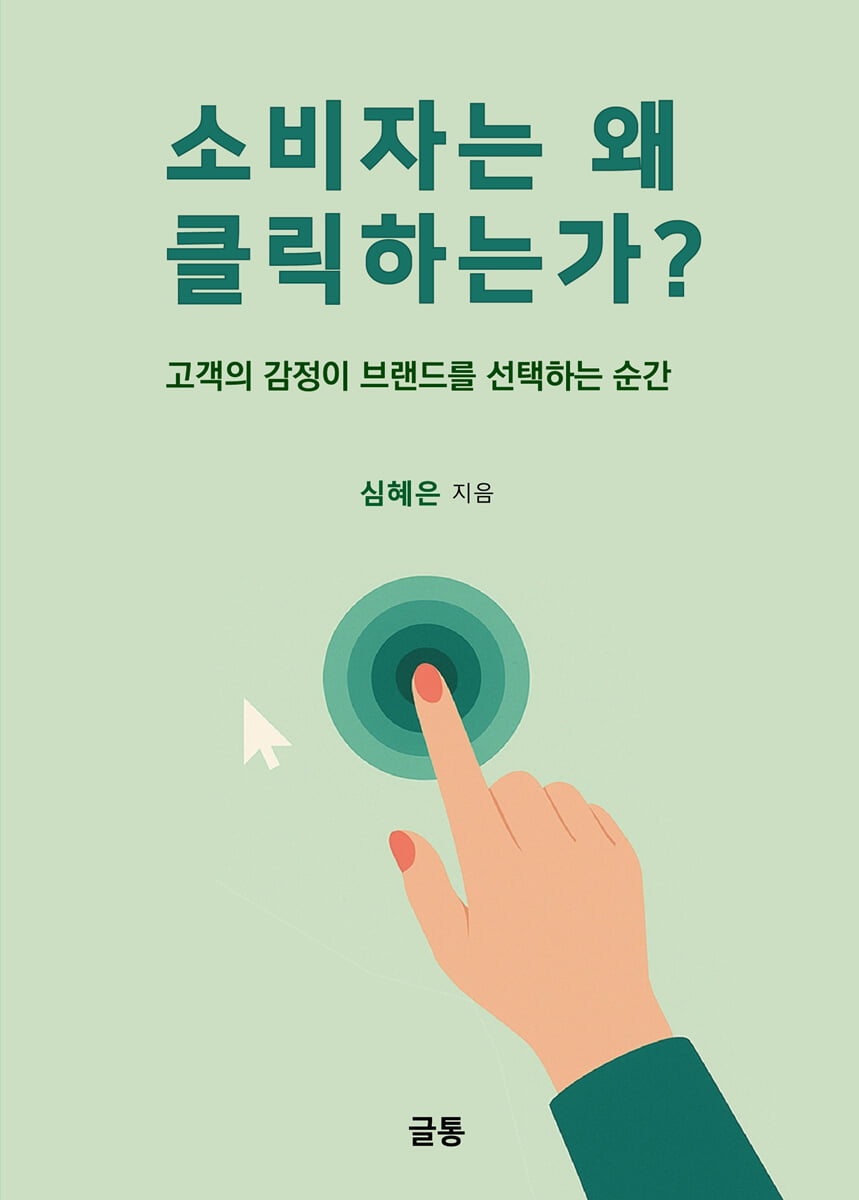
Why Consumers Click
 |
Description
Book Introduction
The author, who majored in distribution marketing and has studied consumer behavior and emotionally driven consumption, explores the essential driving force behind "clicks" by studying consumer choice, brand trust, and the flow of emotions in digital distribution.
The small choices we make in our daily lives reflect the emotions we feel and the way we live.
Rather than viewing consumers as mere 'targets,' the book emphasizes the power of trust and empathy hidden in the relationship between consumption and brands.
The small choices we make in our daily lives reflect the emotions we feel and the way we live.
Rather than viewing consumers as mere 'targets,' the book emphasizes the power of trust and empathy hidden in the relationship between consumption and brands.
- You can preview some of the book's contents.
Preview
index
Part 1: The Trends and Changes of Emotion-Driven Consumption
Emotions drive consumption
Chapter 1: Where Are Consumers Going?
Chapter 2. HMR, a Choice That Became Everyday
Chapter 3.
Live commerce
Chapter 4.
Clicks are emotions
Chapter 5.
Experience sustains emotions
Part 2: Brand Strategy Designed with Emotion
Brands understand and design emotions.
Chapter 6.
Relationships go beyond feelings
Chapter 7.
I speak my feelings with this brand
Chapter 8.
Why we leave reviews
Chapter 9.
Consumers connected by hashtags
Chapter 10.
A brand only I know, its specialness
Chapter 11.
Why Does Gen Z Respond to Memes?
Chapter 12.
How do emotions become algorithms?
Part 3: Strategizing Emotions: The Future of Brands
Lasting emotions become the future of brands.
Chapter 13.
Emotions also become tired
Chapter 14.
Building perceived value and brand trust
Chapter 15.
The Correlation Between Emotions and Brand Trust
Chapter 16.
Emotional Loyalty: The Enduring Relationship Between a Brand and a Consumer
Chapter 17.
Emotions are remembered
Chapter 18.
A brand that doesn't trade on emotions
Chapter 19.
The Future of Brand Experience
Chapter 20.
Why Consumers Click
Acknowledgements
References
Emotions drive consumption
Chapter 1: Where Are Consumers Going?
Chapter 2. HMR, a Choice That Became Everyday
Chapter 3.
Live commerce
Chapter 4.
Clicks are emotions
Chapter 5.
Experience sustains emotions
Part 2: Brand Strategy Designed with Emotion
Brands understand and design emotions.
Chapter 6.
Relationships go beyond feelings
Chapter 7.
I speak my feelings with this brand
Chapter 8.
Why we leave reviews
Chapter 9.
Consumers connected by hashtags
Chapter 10.
A brand only I know, its specialness
Chapter 11.
Why Does Gen Z Respond to Memes?
Chapter 12.
How do emotions become algorithms?
Part 3: Strategizing Emotions: The Future of Brands
Lasting emotions become the future of brands.
Chapter 13.
Emotions also become tired
Chapter 14.
Building perceived value and brand trust
Chapter 15.
The Correlation Between Emotions and Brand Trust
Chapter 16.
Emotional Loyalty: The Enduring Relationship Between a Brand and a Consumer
Chapter 17.
Emotions are remembered
Chapter 18.
A brand that doesn't trade on emotions
Chapter 19.
The Future of Brand Experience
Chapter 20.
Why Consumers Click
Acknowledgements
References
Into the book
HMR is not simply a convenient meal for busy lives.
That choice involves not only a change in lifestyle, but also
It deeply reflects the emotions and rhythm of life of consumers.
Consumers are now emotional consumers who choose food that resonates with their lives rather than food that satisfies hunger.
Brands must approach consumers with language that touches their hearts before focusing on functionality.
It adds emotion to the table with emotional comfort and message.
Live commerce continues to elicit emotional choices through clicks on stage.
Clicks are not information.
Emotions drive and the host becomes the emotional ambassador of the brand.
Trust is ultimately a predictable sense of certainty that is formed through repeated emotional experiences.
Distribution has now become an industry that deals with emotions.
Clicks start with empathy, not logic, and brands must be able to speak like people to survive.
Consumers are no longer waiting.
Smartphones have become the new shopping space, and consumers don't wait.
'Now, here, right now' is no longer a trend, but an instinct of the digital age.
This change is changing the very nature of distribution.
In the past, 'where to sell' was important, but now 'at what moment will it be chosen' is the key.
Experiences over products, emotions over functions, modern retail no longer sells products.
Now we sell experiences.
In today's busy world, consumers no longer want to research recipes or take the time to cook.
They are looking for 'tasty, quick, and healthy alternatives'.
Stimulation is not something you think about, it's something you feel.
SOR theory explains that the 'emotional middle stage (organism)' is at the core of consumer response.
The act of clicking is more of an emotional reaction than a logical one.
That emotion leads to a flow of impressions, trust, and attachment to the brand.
Ultimately, consumers are driven by emotions rather than reason.
A click is not a simple reaction.
It is the first action created by emotion.
That choice involves not only a change in lifestyle, but also
It deeply reflects the emotions and rhythm of life of consumers.
Consumers are now emotional consumers who choose food that resonates with their lives rather than food that satisfies hunger.
Brands must approach consumers with language that touches their hearts before focusing on functionality.
It adds emotion to the table with emotional comfort and message.
Live commerce continues to elicit emotional choices through clicks on stage.
Clicks are not information.
Emotions drive and the host becomes the emotional ambassador of the brand.
Trust is ultimately a predictable sense of certainty that is formed through repeated emotional experiences.
Distribution has now become an industry that deals with emotions.
Clicks start with empathy, not logic, and brands must be able to speak like people to survive.
Consumers are no longer waiting.
Smartphones have become the new shopping space, and consumers don't wait.
'Now, here, right now' is no longer a trend, but an instinct of the digital age.
This change is changing the very nature of distribution.
In the past, 'where to sell' was important, but now 'at what moment will it be chosen' is the key.
Experiences over products, emotions over functions, modern retail no longer sells products.
Now we sell experiences.
In today's busy world, consumers no longer want to research recipes or take the time to cook.
They are looking for 'tasty, quick, and healthy alternatives'.
Stimulation is not something you think about, it's something you feel.
SOR theory explains that the 'emotional middle stage (organism)' is at the core of consumer response.
The act of clicking is more of an emotional reaction than a logical one.
That emotion leads to a flow of impressions, trust, and attachment to the brand.
Ultimately, consumers are driven by emotions rather than reason.
A click is not a simple reaction.
It is the first action created by emotion.
--- From the text
GOODS SPECIFICS
- Date of issue: November 1, 2025
- Page count, weight, size: 172 pages | 150*220*20mm
- ISBN13: 9791194546078
- ISBN10: 1194546072
You may also like
카테고리
korean


korean

![GQ KOREA Mark (Monthly): December [2025]](http://librairie.coreenne.fr/cdn/shop/files/8ef265dbbfbf186523ed75ba7319009d.jpg?v=1765340328&width=3840)


