

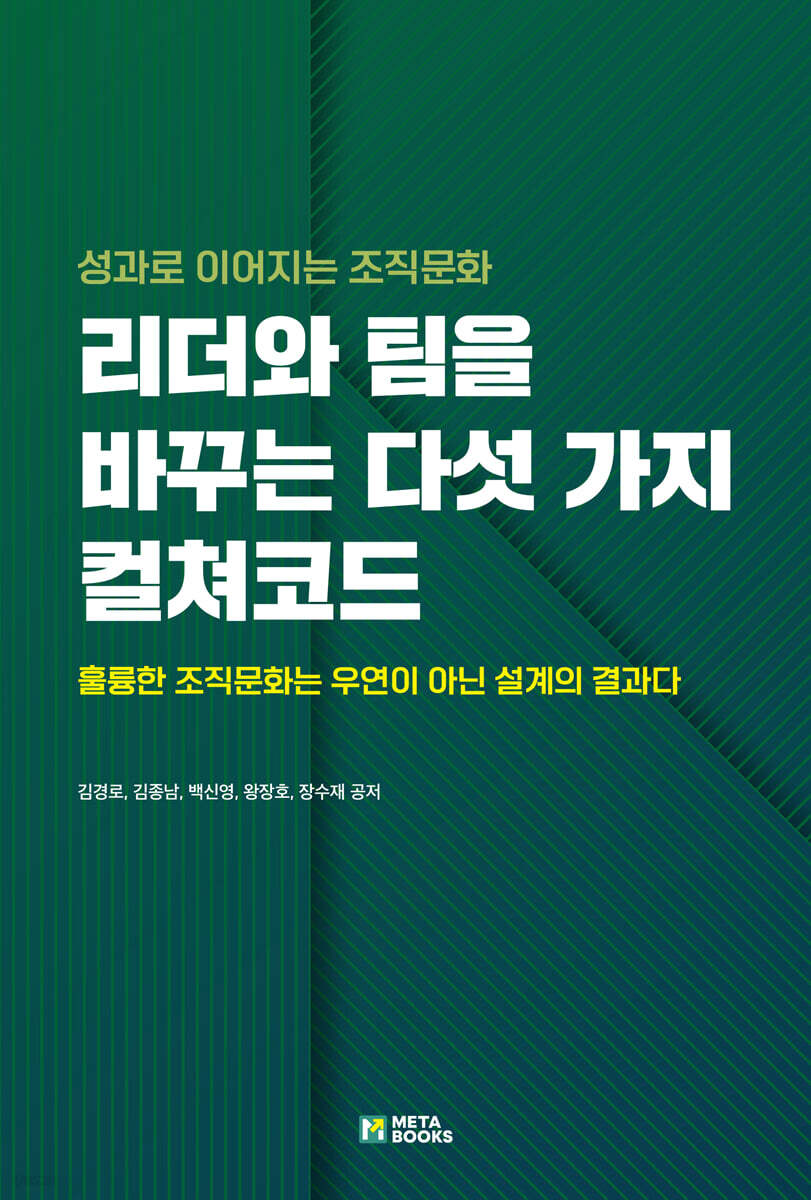
Five Culture Codes That Transform Leaders and Teams
 |
Description
Book Introduction
Five 'Culture Codes' That Guide Teams and Leaders
Organizations are built on strategy, but they crumble on culture.
The book begins with just one sentence.
“From its inception to its demise, organizations move along the trajectory of culture.”
The authors argue that culture is not simply a matter of "good vibes" or "office well-being," but rather an invisible system that governs an organization's identity and direction, the nature of leadership, and even the flow of emotions.
Observing numerous organizations in the field, we discovered common patterns.
Even if the strategy is excellent, if the culture is distorted, execution will stop, and even if results are achieved, if there is no trust, the organization will quickly fall apart.
This book summarizes the "power of culture" into five culture codes: values, communication, leadership, performance, and diversity and inclusion (D&I).
“Values are the invisible, real power of an organization.”
The authors argue that it is the behaviors that are actually rewarded, rather than the stated core values, that create a true organizational culture.
For example, if the organization emphasizes "collaboration" but promotions are based solely on performance, the true culture of the organization becomes one of "survival alone."
In this way, culture is not a declaration but a choice, and it is revealed in everyday decisions.
The second code is communication.
The book says, “Communication is the window through which culture is first revealed.”
Whether leaders share their failures and how communication flows between departments determines the psychological safety and engagement of an organization.
In other words, the structure of language is the structure of culture.
The third leadership code is the heart of organizational culture.
Leaders are both the 'designers' and 'testers' of culture.
Their one word, one decision, can destroy years of trust, or set the tone for an organization in a single day.
Leadership is ultimately evidence of the 'practical power of culture.'
Performance and D&I are the outcome of that culture and determine its future.
The book defines performance not as short-term metrics but as "sustainability created by culture," and emphasizes that diversity and inclusion are not strategies but the result of cultural design.
In other words, true achievement and diversity only grow on top of a healthy culture.
The co-authors of this book are all people with practical and field-experienced cultural backgrounds.
Kim Kyung-ro, who has been in charge of HR at POSCO Group and the financial sector; Kim Jong-nam, CEO of Culture Engine, who has led over 450 organizational culture projects; Baek Shin-young, a 25-year leadership coach and Korea's 179th renowned lecturer; Wang Jang-ho, an ESG expert with 30 years of experience; and Jang Su-jae, a member of the SK Academy Core Value Research Team.
They all agree that “culture is not a slogan, but a leader’s daily choices, and the accumulation of those choices determines the fate of the organization.”
Organizations are built on strategy, but they crumble on culture.
The book begins with just one sentence.
“From its inception to its demise, organizations move along the trajectory of culture.”
The authors argue that culture is not simply a matter of "good vibes" or "office well-being," but rather an invisible system that governs an organization's identity and direction, the nature of leadership, and even the flow of emotions.
Observing numerous organizations in the field, we discovered common patterns.
Even if the strategy is excellent, if the culture is distorted, execution will stop, and even if results are achieved, if there is no trust, the organization will quickly fall apart.
This book summarizes the "power of culture" into five culture codes: values, communication, leadership, performance, and diversity and inclusion (D&I).
“Values are the invisible, real power of an organization.”
The authors argue that it is the behaviors that are actually rewarded, rather than the stated core values, that create a true organizational culture.
For example, if the organization emphasizes "collaboration" but promotions are based solely on performance, the true culture of the organization becomes one of "survival alone."
In this way, culture is not a declaration but a choice, and it is revealed in everyday decisions.
The second code is communication.
The book says, “Communication is the window through which culture is first revealed.”
Whether leaders share their failures and how communication flows between departments determines the psychological safety and engagement of an organization.
In other words, the structure of language is the structure of culture.
The third leadership code is the heart of organizational culture.
Leaders are both the 'designers' and 'testers' of culture.
Their one word, one decision, can destroy years of trust, or set the tone for an organization in a single day.
Leadership is ultimately evidence of the 'practical power of culture.'
Performance and D&I are the outcome of that culture and determine its future.
The book defines performance not as short-term metrics but as "sustainability created by culture," and emphasizes that diversity and inclusion are not strategies but the result of cultural design.
In other words, true achievement and diversity only grow on top of a healthy culture.
The co-authors of this book are all people with practical and field-experienced cultural backgrounds.
Kim Kyung-ro, who has been in charge of HR at POSCO Group and the financial sector; Kim Jong-nam, CEO of Culture Engine, who has led over 450 organizational culture projects; Baek Shin-young, a 25-year leadership coach and Korea's 179th renowned lecturer; Wang Jang-ho, an ESG expert with 30 years of experience; and Jang Su-jae, a member of the SK Academy Core Value Research Team.
They all agree that “culture is not a slogan, but a leader’s daily choices, and the accumulation of those choices determines the fate of the organization.”
- You can preview some of the book's contents.
Preview
index
Part 1: Corporate Culture and Value System · 15
1.
The Center of Corporate Culture: Value System · 16
(1) Corporate culture outside the company · 16
(2) Things everyone knows but find difficult to do properly · 18
(3) What should I focus on? · 21
(4) Culture does not exist in isolation. · 27
(5) Value System for Creating Sustainable Growth · 32
2.
Conditions for a Great Value System · 37
(1) The Beginning of Change Management: A Proper Value System · 37
(2) Conditions for a Great Mission · 40
(3) Conditions for Excellent Core Values · 53
(4) Changes to Create New Growth Engines · 66
Part 2: Organizational Culture and Communication · 81
1.
A Frequent Topic in Organizational Culture: Communication · 82
2.
Why is communication necessary in organizational culture? · 84
(1) Conditions for Survival of Businesses and Individuals in the VUCA Era · 84
(2) Communication: The Key and Shortcut to Achieving Results · 86
(3) Essential Elements of Organizational Culture Innovation · 87
(4) The Core of Long-Term Survival and Growth: 'Communication' · 89
3.
Things That Make Communication Difficult · 91
(1) Common Misconceptions About Communication · 91
(2) Rigid existing culture · 93
(3) Absence of communication channels · 94
(4) Intergenerational Perception Differences · 95
(5) An era where it is difficult to meet and talk · 96
4.
Bamboo Forest for Office Workers: "Blind" · 97
(1) Blinds that contribute to communication activation · 97
(2) The Communication Problems Created by Blinds · 98
(3) If blind risk occurs · 99
5.
If you want to communicate, this is a must! · 100
(1) Communication begins with mutual trust. · 100
(2) Zero misunderstandings if disclosed transparently · 102
6.
What a Communications Manager Should Do: Building a Culture of Communication · 104
7.
Various communication programs and operation methods · 108
Part 3: Leadership and Organizational Culture · 121
1.
Is organizational culture just a leader's problem? · 122
(1) “If the leader changes, doesn’t the organizational culture change?” · 122
(2) Can an organization change when its members change? · 139
2.
Is Psychological Safety the Answer to Changing Organizational Culture? · 156
(1) Why is everyone so obsessed with psychological safety? · 156
(2) What sets organizations apart from others that effectively utilize psychological safety? · 156
(3) Does psychological safety work in all organizations? · 161
(4) A movement to transform failure into a successful organizational culture · 165
Part 4: Organizational Culture and D&I · 177
1.
Awareness of D&I · 179
(1) What is D&I and Why Is It Important? · 179
(2) Members' sense of identity and D&I · 180
(3) Anonymity and Culture · 181
(4) Speak Up and D&I · 182
2.
D&I and Organizational Practices · 183
(1) Gender Practices and D&I · 183
(2) Workplace Bullying and D&I · 184
(3) Implicit Discrimination and D&I within Organizations · 186
(4) Groupthink and D&I · 187
3.
D&I and Leadership · 188
(1) Leader Role Modeling and D&I · 188
(2) Respect for Diversity and D&I in Leaders · 189
(3) Leader Listening and D&I · 191
4.
D&I and Systems · 193
(1) Personnel System and D&I · 193
(2) Systems, Practices, and D&I · 194
(3) Grievances and Internal Support and D&I · 196
5.
D&I and Culture · 198
(1) Competency-Based Culture and D&I · 198
(2) Cultural Effectiveness and D&I · 199
(3) Belonging and D&I · 200
(4) Intergenerational Bias and D&I · 202
6.
Suggestions for Encouraging D&I · 204
(1) Management's Genuine Will and Cultural Leadership · 205
(2) Internalization into systems, work methods, and operating systems · 205
(3) Institutionalization of Leadership Competency and D&I Sensitivity · 206
(4) Autonomous cultural movement based on member participation · 207
(5) Regular assessment and feedback loop: Culture must be measurable to improve. · 208
Conclusion · 209
Part 5: The Roots of a Performance-Creating Organization: Reflection, People, and Culture · 211
1.
The Meaning and Definition of Achievement · 212
2.
Growth through Reflection · 214
3.
Human-Centered Organizations: Human Competencies · 221
4.
The Impact of Psychological Safety on Performance · 228
5.
The Link Between Company Dinners and Organizational Performance · 237
6.
The Co-relationship Between Organizational Culture and Performance · 243
Appendix Organizational Culture Practice Checklist · 248
1.
The Center of Corporate Culture: Value System · 16
(1) Corporate culture outside the company · 16
(2) Things everyone knows but find difficult to do properly · 18
(3) What should I focus on? · 21
(4) Culture does not exist in isolation. · 27
(5) Value System for Creating Sustainable Growth · 32
2.
Conditions for a Great Value System · 37
(1) The Beginning of Change Management: A Proper Value System · 37
(2) Conditions for a Great Mission · 40
(3) Conditions for Excellent Core Values · 53
(4) Changes to Create New Growth Engines · 66
Part 2: Organizational Culture and Communication · 81
1.
A Frequent Topic in Organizational Culture: Communication · 82
2.
Why is communication necessary in organizational culture? · 84
(1) Conditions for Survival of Businesses and Individuals in the VUCA Era · 84
(2) Communication: The Key and Shortcut to Achieving Results · 86
(3) Essential Elements of Organizational Culture Innovation · 87
(4) The Core of Long-Term Survival and Growth: 'Communication' · 89
3.
Things That Make Communication Difficult · 91
(1) Common Misconceptions About Communication · 91
(2) Rigid existing culture · 93
(3) Absence of communication channels · 94
(4) Intergenerational Perception Differences · 95
(5) An era where it is difficult to meet and talk · 96
4.
Bamboo Forest for Office Workers: "Blind" · 97
(1) Blinds that contribute to communication activation · 97
(2) The Communication Problems Created by Blinds · 98
(3) If blind risk occurs · 99
5.
If you want to communicate, this is a must! · 100
(1) Communication begins with mutual trust. · 100
(2) Zero misunderstandings if disclosed transparently · 102
6.
What a Communications Manager Should Do: Building a Culture of Communication · 104
7.
Various communication programs and operation methods · 108
Part 3: Leadership and Organizational Culture · 121
1.
Is organizational culture just a leader's problem? · 122
(1) “If the leader changes, doesn’t the organizational culture change?” · 122
(2) Can an organization change when its members change? · 139
2.
Is Psychological Safety the Answer to Changing Organizational Culture? · 156
(1) Why is everyone so obsessed with psychological safety? · 156
(2) What sets organizations apart from others that effectively utilize psychological safety? · 156
(3) Does psychological safety work in all organizations? · 161
(4) A movement to transform failure into a successful organizational culture · 165
Part 4: Organizational Culture and D&I · 177
1.
Awareness of D&I · 179
(1) What is D&I and Why Is It Important? · 179
(2) Members' sense of identity and D&I · 180
(3) Anonymity and Culture · 181
(4) Speak Up and D&I · 182
2.
D&I and Organizational Practices · 183
(1) Gender Practices and D&I · 183
(2) Workplace Bullying and D&I · 184
(3) Implicit Discrimination and D&I within Organizations · 186
(4) Groupthink and D&I · 187
3.
D&I and Leadership · 188
(1) Leader Role Modeling and D&I · 188
(2) Respect for Diversity and D&I in Leaders · 189
(3) Leader Listening and D&I · 191
4.
D&I and Systems · 193
(1) Personnel System and D&I · 193
(2) Systems, Practices, and D&I · 194
(3) Grievances and Internal Support and D&I · 196
5.
D&I and Culture · 198
(1) Competency-Based Culture and D&I · 198
(2) Cultural Effectiveness and D&I · 199
(3) Belonging and D&I · 200
(4) Intergenerational Bias and D&I · 202
6.
Suggestions for Encouraging D&I · 204
(1) Management's Genuine Will and Cultural Leadership · 205
(2) Internalization into systems, work methods, and operating systems · 205
(3) Institutionalization of Leadership Competency and D&I Sensitivity · 206
(4) Autonomous cultural movement based on member participation · 207
(5) Regular assessment and feedback loop: Culture must be measurable to improve. · 208
Conclusion · 209
Part 5: The Roots of a Performance-Creating Organization: Reflection, People, and Culture · 211
1.
The Meaning and Definition of Achievement · 212
2.
Growth through Reflection · 214
3.
Human-Centered Organizations: Human Competencies · 221
4.
The Impact of Psychological Safety on Performance · 228
5.
The Link Between Company Dinners and Organizational Performance · 237
6.
The Co-relationship Between Organizational Culture and Performance · 243
Appendix Organizational Culture Practice Checklist · 248
Publisher's Review
Organizational culture expert Kim Jong-nam says this:
“Culture is not a feeling, it is a system.
“It is invisible, but it supports all strategies and makes all changes possible.”
"Five Culture Codes for Leading Teams and Leaders" conveys the message that culture drives strategy, redefines leadership, and ultimately determines the life cycle of an organization.
“Is your organizational culture an asset or a liability now?”
Through this question, the book makes leaders and teams look at themselves again.
“Culture is not a feeling, it is a system.
“It is invisible, but it supports all strategies and makes all changes possible.”
"Five Culture Codes for Leading Teams and Leaders" conveys the message that culture drives strategy, redefines leadership, and ultimately determines the life cycle of an organization.
“Is your organizational culture an asset or a liability now?”
Through this question, the book makes leaders and teams look at themselves again.
GOODS SPECIFICS
- Date of issue: October 24, 2025
- Page count, weight, size: 252 pages | 152*225*20mm
- ISBN13: 9791197435867
- ISBN10: 1197435867
You may also like
카테고리
korean


korean

![GQ KOREA Mark (Monthly): December [2025]](http://librairie.coreenne.fr/cdn/shop/files/8ef265dbbfbf186523ed75ba7319009d.jpg?v=1765340328&width=3840)


