

Reading life-changing books
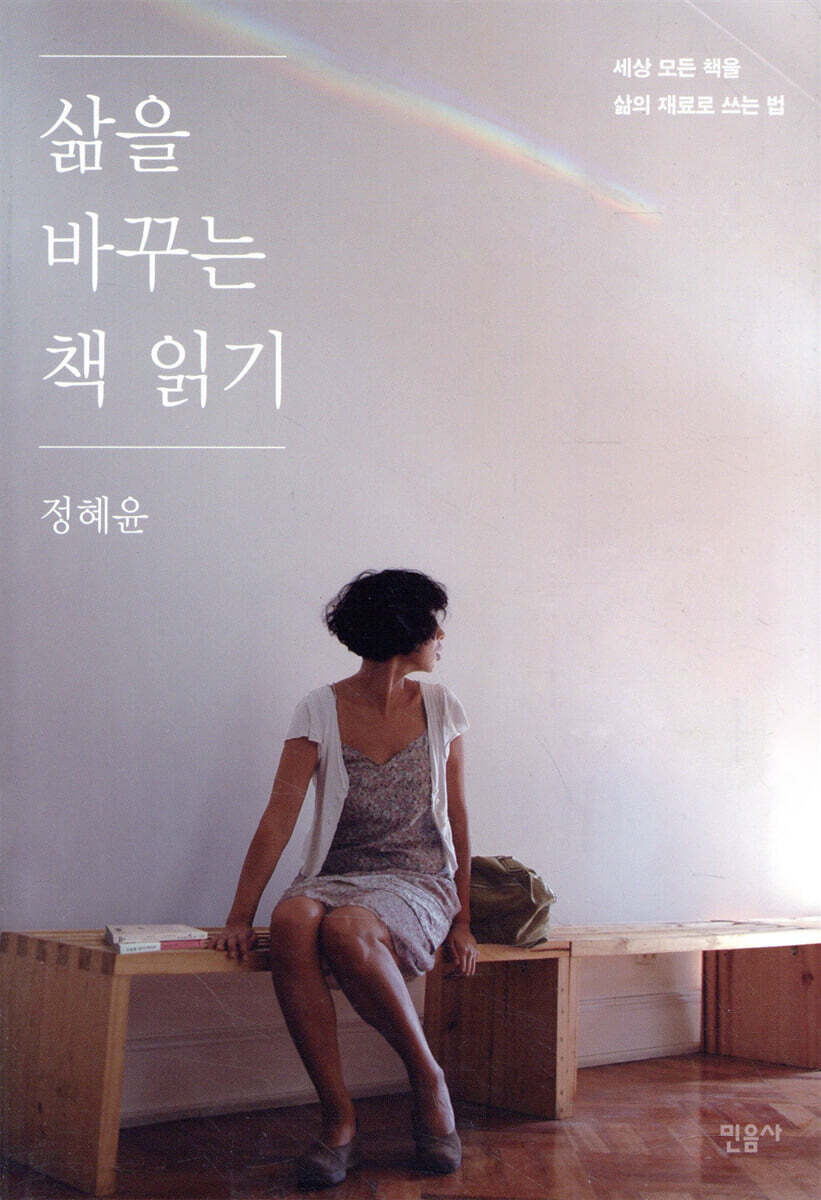 |
Description
Book Introduction
The skill of reading is the skill of life.
How to Use All the Books in the World as Materials for Life
Jeong Hye-yoon's new book is a sensory reading that always delivers a fresh impression through her extensive reading across genres and vivid, sensuous writing.
The book begins with eight questions about reading that we often ask ourselves.
“I’m so busy trying to make a living that when will I ever read a book?”, “I don’t have the ability to read, what should I do?”, “I’m anxious about life, so should I read a book?”, “I feel like books are useless.
“Is the book useful?” etc.
The author answers the above questions through the countless books she has read and through interviews with "street teachers" she has met in the field of life, and unfolds her own reading theory, reading method, and philosophy of life.
This is the first time that the author, who has always been accustomed to meeting readers through serial publication and then publishing it as a book, has published a book without serial publication, making his writings available to readers for the first time.
“What good is reading a book for?”
Reading is not about achieving cheap success or becoming a leader.
Reading has true meaning when it is for 'self-development', when it is for changing one's life, when it is for moving into another being.
Reading truly becomes powerful when you make time just for yourself, immerse yourself in solitude, read about life, reflect on others, and nurture yourself.
This is the 'reading skill' we need, and it will change our lives.
This is because the ‘reading skills’ that Jeong Hye-yoon presents in this book are ‘life skills.’
How to Use All the Books in the World as Materials for Life
Jeong Hye-yoon's new book is a sensory reading that always delivers a fresh impression through her extensive reading across genres and vivid, sensuous writing.
The book begins with eight questions about reading that we often ask ourselves.
“I’m so busy trying to make a living that when will I ever read a book?”, “I don’t have the ability to read, what should I do?”, “I’m anxious about life, so should I read a book?”, “I feel like books are useless.
“Is the book useful?” etc.
The author answers the above questions through the countless books she has read and through interviews with "street teachers" she has met in the field of life, and unfolds her own reading theory, reading method, and philosophy of life.
This is the first time that the author, who has always been accustomed to meeting readers through serial publication and then publishing it as a book, has published a book without serial publication, making his writings available to readers for the first time.
“What good is reading a book for?”
Reading is not about achieving cheap success or becoming a leader.
Reading has true meaning when it is for 'self-development', when it is for changing one's life, when it is for moving into another being.
Reading truly becomes powerful when you make time just for yourself, immerse yourself in solitude, read about life, reflect on others, and nurture yourself.
This is the 'reading skill' we need, and it will change our lives.
This is because the ‘reading skills’ that Jeong Hye-yoon presents in this book are ‘life skills.’
- You can preview some of the book's contents.
Preview
index
prolog
In the form of a loved one
First question: You're so busy trying to make a living, when do you find time to read?
A time of autonomy, a time to indulge in joy
Second question: What if I don't have the ability to read?
The ability to see life beyond words
Third question: Should I read books even if my life is uncertain?
The power of choice is greater than fate
Fourth question: Can books really comfort you?
Your own way of expressing sadness
Question number five: Is the book useful?
The true meaning of self-development
Question Six: What is the real use of books?
The experience of commonality, becoming capable, the beginning of knowledge
Seventh question: Is there a way to remember the books you read for a long time?
Forgetting, remembering with your hands, recording with your body
Question 8: Which book should I start reading?
A list that keeps us dreaming
Last, secret question
Books within books
In the form of a loved one
First question: You're so busy trying to make a living, when do you find time to read?
A time of autonomy, a time to indulge in joy
Second question: What if I don't have the ability to read?
The ability to see life beyond words
Third question: Should I read books even if my life is uncertain?
The power of choice is greater than fate
Fourth question: Can books really comfort you?
Your own way of expressing sadness
Question number five: Is the book useful?
The true meaning of self-development
Question Six: What is the real use of books?
The experience of commonality, becoming capable, the beginning of knowledge
Seventh question: Is there a way to remember the books you read for a long time?
Forgetting, remembering with your hands, recording with your body
Question 8: Which book should I start reading?
A list that keeps us dreaming
Last, secret question
Books within books
Into the book
The reason I say life has answers is because the answers are far more creative than the problems.
The problem is heavy, but the solution can lighten the load.
The problem is obvious, but the solution is abundant.
These questions are really valuable.
“I don’t need any changes in my life.
People who think, “I’m so satisfied!” don’t ask this question.
You probably don't need to read the book.
People who read books have a word in their hearts.
“Help me!” We, like the people in Borges’ “The Library of Babel,” search the bookshelves in the hope of finding that one book for ourselves.
Therefore, anyone who asks such questions must inevitably find clues to change their life in the process of finding answers. ---pp.8~9
After seeing that store owner, I started calling my time of autonomy “time to grow myself.”
During that time, we become the masters of our own selves.
We use the word craftsman only in reference to labor, but this time we will use the word craftsman to refer to our own soul.
Study yourself as if you were studying an old, broken, and useless radio.
I'm trying to solder my soul too.
It's about rearranging things you already know and are familiar with to make them sound better.
(Omitted) We also raise ourselves like we raise a child or a tree, watering and fertilizing ourselves.
We definitely need this kind of ‘time to grow myself.’
Because at some point, our entire lives became filled with unwanted times, meaningless, boring, and tiring times that had no fun, times that were both tragedy and comedy.
So it becomes increasingly difficult for us to say that this life was the life I wanted. ---pp.35~36
There is no such thing as a separate ability to read, but there are certain skills that are essential for reading.
It's the ability to not be afraid of solitude, the ability to empty yourself of the repetition and routine that has filled you, and to embrace new rhythms and order.
People often ask me if I need to have reading skills to read 100 books a year, but I generally disagree with that idea.
It may not be important to read many books, but it may be more important to look at the same book over and over again or to savor it.
Having some regular reading time is more important than how many books you read.
True reading comprehension is not the ability to read words accurately, but the ability to see life from whatever you read. ---pp. 57-58
Isn't my life, too, a memory for someone else to tell their own story? A mother will become a son's memory, and a senior will become a junior's memory.
The perpetrator will become the victim's memory.
We are on that continuum.
And if we view our lives from the perspective of a story, aren't our lives also stories that have intervened in someone else's? Then, isn't it ultimately our story, not mine? Patrick Modiano wrote "The Street of Dark Shops" to suggest that our lives are also stories intervening in someone else's memory.
The mystery and beauty of the novel comes from the fact that my memories and stories absolutely need others.
We walk through the dark streets in search of someone who will remember us. ---pp.98-99
Books are useful for just that.
A good book is a magic flute that gives form to our souls, limits our suffering, dispels misconceptions, and opens us to new ideas.
The book makes us think about the insects that burrow into the skin of all humanity in this era and eat away at our flesh—the anxiety and suffering we all suffer from together.
The book does not deny anxiety and pain, but rather helps us overcome them by speaking to us through the melody, rhythm, and language of the air passing through the flute.
The reason the book speaks of anxiety and pain is precisely because it thinks about the future. ---pp. 118-119
Books and life have one fatal thing in common.
It's about destiny.
One book.
When is the fate of this book decided? When the author puts a period to it? When it's on the shelves of bookstores? When it goes to the printer? When the library doesn't catch fire? The same question can be asked about the fate of humanity.
When is our destiny decided? When my parents gave birth to me? When I went to college? When I got a job? When I got married? When I got on the wrong bus? When I lent that man my umbrella. Borges said that each book is reborn through each reading.
In other words, the meaning is infinite depending on who reads it and how.
It has been said that the fate of a book is not determined by the time it was written, or the year the author published it, or the time the reader purchased it, but by the very moment a person reads it.
Just as books are not complete, people are not complete, but rather await some "meaning" to come. ---p.157
Even though we have love, there is also a resignation that the world remains the same no matter how hard we try.
I also wonder who will know.
I also wonder if it will really work.
However, the people with the strongest complexes are those who believe that what is given is unchangeable.
The most cynical people are those who do not know or believe in the power of human beings.
(And the reason we have become cynical is because we live in a society that produces cynical people.) Some people say that books are boring.
There are a lot of really boring parts in the book.
But there are also people for whom life itself is boring.
The people who say they are bored the most are those who believe that there is nothing to pursue other than success or profit.
The problem is heavy, but the solution can lighten the load.
The problem is obvious, but the solution is abundant.
These questions are really valuable.
“I don’t need any changes in my life.
People who think, “I’m so satisfied!” don’t ask this question.
You probably don't need to read the book.
People who read books have a word in their hearts.
“Help me!” We, like the people in Borges’ “The Library of Babel,” search the bookshelves in the hope of finding that one book for ourselves.
Therefore, anyone who asks such questions must inevitably find clues to change their life in the process of finding answers. ---pp.8~9
After seeing that store owner, I started calling my time of autonomy “time to grow myself.”
During that time, we become the masters of our own selves.
We use the word craftsman only in reference to labor, but this time we will use the word craftsman to refer to our own soul.
Study yourself as if you were studying an old, broken, and useless radio.
I'm trying to solder my soul too.
It's about rearranging things you already know and are familiar with to make them sound better.
(Omitted) We also raise ourselves like we raise a child or a tree, watering and fertilizing ourselves.
We definitely need this kind of ‘time to grow myself.’
Because at some point, our entire lives became filled with unwanted times, meaningless, boring, and tiring times that had no fun, times that were both tragedy and comedy.
So it becomes increasingly difficult for us to say that this life was the life I wanted. ---pp.35~36
There is no such thing as a separate ability to read, but there are certain skills that are essential for reading.
It's the ability to not be afraid of solitude, the ability to empty yourself of the repetition and routine that has filled you, and to embrace new rhythms and order.
People often ask me if I need to have reading skills to read 100 books a year, but I generally disagree with that idea.
It may not be important to read many books, but it may be more important to look at the same book over and over again or to savor it.
Having some regular reading time is more important than how many books you read.
True reading comprehension is not the ability to read words accurately, but the ability to see life from whatever you read. ---pp. 57-58
Isn't my life, too, a memory for someone else to tell their own story? A mother will become a son's memory, and a senior will become a junior's memory.
The perpetrator will become the victim's memory.
We are on that continuum.
And if we view our lives from the perspective of a story, aren't our lives also stories that have intervened in someone else's? Then, isn't it ultimately our story, not mine? Patrick Modiano wrote "The Street of Dark Shops" to suggest that our lives are also stories intervening in someone else's memory.
The mystery and beauty of the novel comes from the fact that my memories and stories absolutely need others.
We walk through the dark streets in search of someone who will remember us. ---pp.98-99
Books are useful for just that.
A good book is a magic flute that gives form to our souls, limits our suffering, dispels misconceptions, and opens us to new ideas.
The book makes us think about the insects that burrow into the skin of all humanity in this era and eat away at our flesh—the anxiety and suffering we all suffer from together.
The book does not deny anxiety and pain, but rather helps us overcome them by speaking to us through the melody, rhythm, and language of the air passing through the flute.
The reason the book speaks of anxiety and pain is precisely because it thinks about the future. ---pp. 118-119
Books and life have one fatal thing in common.
It's about destiny.
One book.
When is the fate of this book decided? When the author puts a period to it? When it's on the shelves of bookstores? When it goes to the printer? When the library doesn't catch fire? The same question can be asked about the fate of humanity.
When is our destiny decided? When my parents gave birth to me? When I went to college? When I got a job? When I got married? When I got on the wrong bus? When I lent that man my umbrella. Borges said that each book is reborn through each reading.
In other words, the meaning is infinite depending on who reads it and how.
It has been said that the fate of a book is not determined by the time it was written, or the year the author published it, or the time the reader purchased it, but by the very moment a person reads it.
Just as books are not complete, people are not complete, but rather await some "meaning" to come. ---p.157
Even though we have love, there is also a resignation that the world remains the same no matter how hard we try.
I also wonder who will know.
I also wonder if it will really work.
However, the people with the strongest complexes are those who believe that what is given is unchangeable.
The most cynical people are those who do not know or believe in the power of human beings.
(And the reason we have become cynical is because we live in a society that produces cynical people.) Some people say that books are boring.
There are a lot of really boring parts in the book.
But there are also people for whom life itself is boring.
The people who say they are bored the most are those who believe that there is nothing to pursue other than success or profit.
---p.232
Publisher's Review
Every time I turn the page, a new me is born.
I fall in love with life again
“What good is reading a book for?”
Eight questions familiar to everyone about books and life.
A creative solution to a new life that no one has ever thought of
『Reading Books that Change Your Life』 by Jeong Hye-yoon, a sensory reader who always delivers a fresh impression with her extensive reading across genres and vivid, sensuous writing, has been published by Minumsa.
The book begins with eight questions about reading that we often ask ourselves.
“I’m so busy trying to make a living that when will I ever read a book?”, “I don’t have the ability to read, what should I do?”, “I’m anxious about life, so should I read a book?”, “I feel like books are useless.
“Is the book useful?” etc.
Jeong Hye-yoon wrote this book to answer these eight questions, which she had heard countless times while giving lectures.
Because these are all important questions that lead to answers about the 'different life' that everyone desires.
This book is everything the author, who is known as an avid reader, has felt while reading books and writing reviews.
The author answers questions through the countless books she has read and through interviews with "street teachers" she has met in the field of life, and unfolds her own reading theory, reading method, and philosophy of life.
This is the first time that the author, who has always been accustomed to meeting readers through serial publication and then publishing it as a book, has published a book without serial publication, making his writings available to readers for the first time.
The skill of reading is the skill of life.
Everyone has a desire to change their life.
And everyone feels anxious about their current life, wants to rely on something, and wants help.
The author says that the eight questions about books mentioned above are not simply limited to the 'skills of reading', but are themselves questions about the 'skills of life'.
For example, the most common question, “When can I read when I’m so busy trying to make a living?” is no different from the question, “How can we spend some of our limited time in a day, not just surviving and prolonging our lives, but spending some of that time meaningfully for ourselves?”
Jeong Hye-yoon responds by changing the concept of ‘time for autonomy’ to ‘time to grow myself.’
If we spend part of our day immersed in joy, not because someone told us to, but purely out of our own will and desire, 'however short that time may be,' we can gradually grow our souls and ultimately transform the rest of our lives into something more meaningful.
Because what matters is not the ‘amount of time’, but the ‘meaning’ we give to time.
It may seem like something anyone could easily say, but Jeong Hye-yoon movingly explains how this difference governs physical time through books such as Stendhal's "The Red and the Black" and Bernhard's "Jauregg," as well as the story of an old farmer whom she actually interviewed.
In this way, the author answers each question and talks about 'the art of reading that changes life', or 'the art of creative living'.
Questions like “What should I do if I don’t have the ability to read?” and “Should I read if my life is uncertain?” are all the same.
All of these can be turned into life problems.
Hidden in these questions are questions like, “What should I do if I don’t have the ability to live?” and “Should I continue living even though I feel anxious?”
All these questions about reading books ultimately came from a desire for a different life than the one I have now.
The author says:
The answers to all these questions lie in our lives.
People who read books well (richly) can also live well (richly) in life.
Read life in books, read stories in life
One of the most important reading techniques emphasized in this book is to read life before the words in the book.
Some people place more importance on reading comprehension or vocabulary when reading books (usually for success or to become a leader) and demand that they be trained or studied, but in Jeong Hye-yoon's 'Reading Books that Change Lives', the most important reading ability is the ability to empathize, look back on others, and see the world and oneself.
The author also says that it is just as important to read stories from life as it is to read life from books.
Jeong Hye-yoon confesses that after reading books and writing book reviews for a long time, she was initially amazed by discovering life in books, but later on, she was surprised by discovering stories in real life (something she had seen in books or was more amazing than books).
I witnessed not only the moment when the skill of reading became a skill of life, but also when the skill of life became the skill of reading.
This book features the 'street teachers' that Jeong Hye-yoon talks about.
They are a farmer grandmother, a housekeeper, and a taxi driver grandfather in his nineties.
A farmer grandmother who is over seventy and taking poetry classes spends her nights chasing sleep away from reading poetry for pleasure rather than for use, and a housekeeper who has experienced many hardships finds solace in discovering in words in books what she feels but cannot express.
The taxi driver, now over ninety years old, is often overcome with sadness because of his first love, and his appearance is strikingly similar to a character in Galeano's book, The Voice of Time.
Jeong Hye-yoon learns how to manage her time from her grandmother, a farmer, and applies that knowledge to her reading method. She also learns how a housekeeper finds comfort in books and realizes that her comforting methods are also necessary in our lives.
Watching the old taxi driver, I am surprised to see that life is more intense than the books I read.
Books and life are similar, and reading life only from books is only one-way reading.
Only by looking back on our lives can we remember why we read books.
We read books to live better, and the way we live becomes a book.
The books we read are our lives and the lives of others.
If we do not look back on these lives, our lives will inevitably stagnate.
This is why reading books can change your life.
I fall in love with life again
“What good is reading a book for?”
Eight questions familiar to everyone about books and life.
A creative solution to a new life that no one has ever thought of
『Reading Books that Change Your Life』 by Jeong Hye-yoon, a sensory reader who always delivers a fresh impression with her extensive reading across genres and vivid, sensuous writing, has been published by Minumsa.
The book begins with eight questions about reading that we often ask ourselves.
“I’m so busy trying to make a living that when will I ever read a book?”, “I don’t have the ability to read, what should I do?”, “I’m anxious about life, so should I read a book?”, “I feel like books are useless.
“Is the book useful?” etc.
Jeong Hye-yoon wrote this book to answer these eight questions, which she had heard countless times while giving lectures.
Because these are all important questions that lead to answers about the 'different life' that everyone desires.
This book is everything the author, who is known as an avid reader, has felt while reading books and writing reviews.
The author answers questions through the countless books she has read and through interviews with "street teachers" she has met in the field of life, and unfolds her own reading theory, reading method, and philosophy of life.
This is the first time that the author, who has always been accustomed to meeting readers through serial publication and then publishing it as a book, has published a book without serial publication, making his writings available to readers for the first time.
The skill of reading is the skill of life.
Everyone has a desire to change their life.
And everyone feels anxious about their current life, wants to rely on something, and wants help.
The author says that the eight questions about books mentioned above are not simply limited to the 'skills of reading', but are themselves questions about the 'skills of life'.
For example, the most common question, “When can I read when I’m so busy trying to make a living?” is no different from the question, “How can we spend some of our limited time in a day, not just surviving and prolonging our lives, but spending some of that time meaningfully for ourselves?”
Jeong Hye-yoon responds by changing the concept of ‘time for autonomy’ to ‘time to grow myself.’
If we spend part of our day immersed in joy, not because someone told us to, but purely out of our own will and desire, 'however short that time may be,' we can gradually grow our souls and ultimately transform the rest of our lives into something more meaningful.
Because what matters is not the ‘amount of time’, but the ‘meaning’ we give to time.
It may seem like something anyone could easily say, but Jeong Hye-yoon movingly explains how this difference governs physical time through books such as Stendhal's "The Red and the Black" and Bernhard's "Jauregg," as well as the story of an old farmer whom she actually interviewed.
In this way, the author answers each question and talks about 'the art of reading that changes life', or 'the art of creative living'.
Questions like “What should I do if I don’t have the ability to read?” and “Should I read if my life is uncertain?” are all the same.
All of these can be turned into life problems.
Hidden in these questions are questions like, “What should I do if I don’t have the ability to live?” and “Should I continue living even though I feel anxious?”
All these questions about reading books ultimately came from a desire for a different life than the one I have now.
The author says:
The answers to all these questions lie in our lives.
People who read books well (richly) can also live well (richly) in life.
Read life in books, read stories in life
One of the most important reading techniques emphasized in this book is to read life before the words in the book.
Some people place more importance on reading comprehension or vocabulary when reading books (usually for success or to become a leader) and demand that they be trained or studied, but in Jeong Hye-yoon's 'Reading Books that Change Lives', the most important reading ability is the ability to empathize, look back on others, and see the world and oneself.
The author also says that it is just as important to read stories from life as it is to read life from books.
Jeong Hye-yoon confesses that after reading books and writing book reviews for a long time, she was initially amazed by discovering life in books, but later on, she was surprised by discovering stories in real life (something she had seen in books or was more amazing than books).
I witnessed not only the moment when the skill of reading became a skill of life, but also when the skill of life became the skill of reading.
This book features the 'street teachers' that Jeong Hye-yoon talks about.
They are a farmer grandmother, a housekeeper, and a taxi driver grandfather in his nineties.
A farmer grandmother who is over seventy and taking poetry classes spends her nights chasing sleep away from reading poetry for pleasure rather than for use, and a housekeeper who has experienced many hardships finds solace in discovering in words in books what she feels but cannot express.
The taxi driver, now over ninety years old, is often overcome with sadness because of his first love, and his appearance is strikingly similar to a character in Galeano's book, The Voice of Time.
Jeong Hye-yoon learns how to manage her time from her grandmother, a farmer, and applies that knowledge to her reading method. She also learns how a housekeeper finds comfort in books and realizes that her comforting methods are also necessary in our lives.
Watching the old taxi driver, I am surprised to see that life is more intense than the books I read.
Books and life are similar, and reading life only from books is only one-way reading.
Only by looking back on our lives can we remember why we read books.
We read books to live better, and the way we live becomes a book.
The books we read are our lives and the lives of others.
If we do not look back on these lives, our lives will inevitably stagnate.
This is why reading books can change your life.
GOODS SPECIFICS
- Date of publication: June 25, 2012
- Page count, weight, size: 258 pages | 415g | 140*205*20mm
- ISBN13: 9788937484872
- ISBN10: 8937484870
You may also like
카테고리
korean


korean

![GQ KOREA Mark (Monthly): December [2025]](http://librairie.coreenne.fr/cdn/shop/files/8ef265dbbfbf186523ed75ba7319009d.jpg?v=1765340328&width=3840)


