

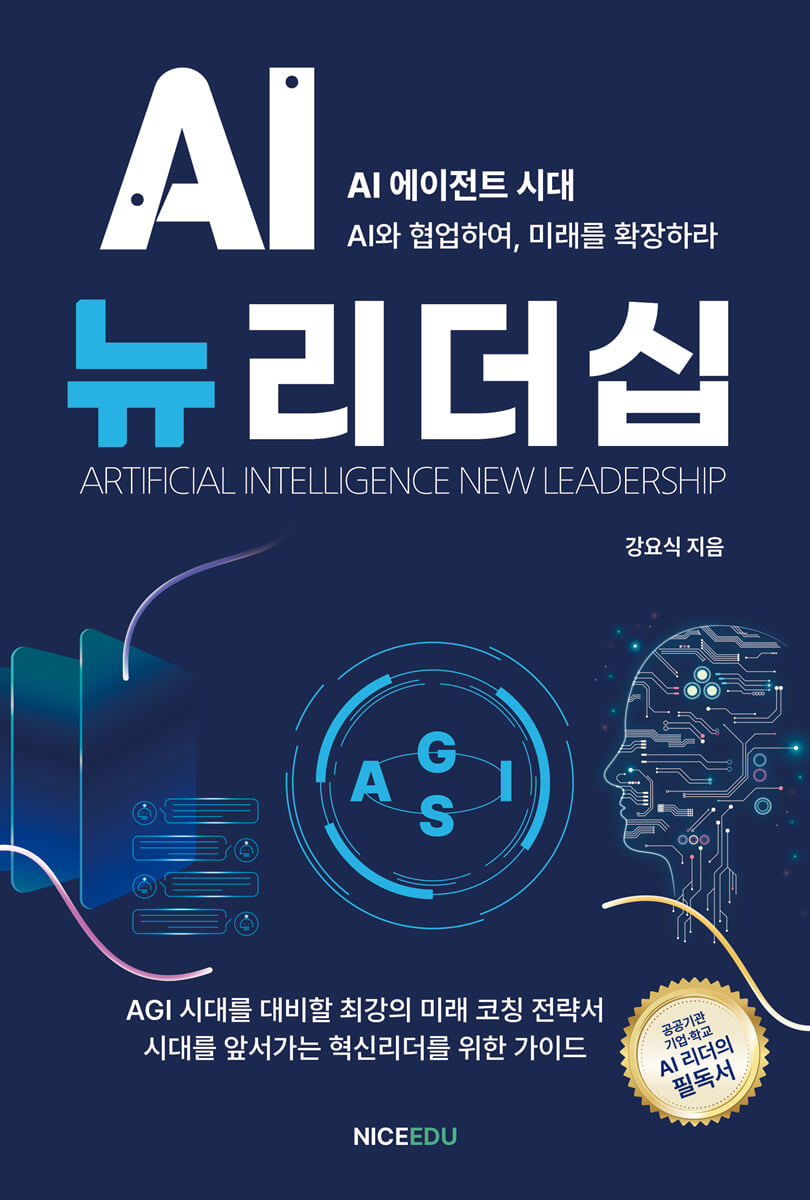
AI New Leadership
 |
Description
Book Introduction
AI New Leadership
The Ultimate Future Coaching Strategy Book for the AGI Era
A Guide for Innovation Leaders Ahead of Their Times
"AI New Leadership": Setting a New Standard for Leadership in the Age of Artificial Intelligence
“AI is not a tool, but a collaborative partner.
“Choose the path of ‘growing together’ rather than replacement.”
In the era of AI transformation, artificial intelligence is now transforming not only technology but also human thinking, organizational operations, and the entire social structure.
Amidst these massive changes, "AI New Leadership" presents a new solution: "Leadership Collaborating with AI."
Rather than simply understanding or utilizing AI, we present a model of a "new leader" who grows with AI based on human-centered values and ethics.
This book explores the essence of the AI revolution and views AI as a collaborative, rather than a competitive, medium.
The author emphasizes that AI cannot replace human creativity and empathy, and that true leaders are those who create synergy with AI.
"AI New Leadership" consists of 30% theory and 70% practice, offering practical guidance and a checklist for preparing for AGI (Artificial Intelligence). AI New Leadership presents a five-step framework: "Understanding AI → Human-Centered → Applying Ethics → Creating Innovation → Expanding Collaboration."
Leaders must lead the AI era with insight into technological trends, people-centered empathy, ethical judgment, and execution skills.
The author says, “Leaders in the AI era must be first movers.
He emphasizes leadership through action, saying, “If you wait, you will miss the opportunity forever.”
The author, Dr. Kang Yo-sik, is a practical leader with extensive military leadership experience, literary insight, and practical experience in public sector policymaking.
He has garnered attention for his leadership series that transcends the changing times, including 『Social Leadership』 and 『Digital Innovation Leadership』, and has compiled the core competencies of the AI era through his new book 『AI New Leadership』.
The book's end includes seven practical appendices, including an AI leadership self-diagnosis table, a step-by-step implementation roadmap, and a legal and ethical checklist.
This is not just a simple theoretical book, but a "ready-to-use leadership manual," making it a must-read not only for corporate and institutional leaders but also for all workers preparing for the AI era.
AI is no longer the future, it is our reality right now.
"AI New Leadership" is a new compass for corporate and public institution leaders, educators, coaching experts, and all aspiring future leaders navigating the AI transition.
You will experience a new paradigm of leadership that prioritizes people over technology, cooperation over competition, and sustainable growth over short-term performance.
The Ultimate Future Coaching Strategy Book for the AGI Era
A Guide for Innovation Leaders Ahead of Their Times
"AI New Leadership": Setting a New Standard for Leadership in the Age of Artificial Intelligence
“AI is not a tool, but a collaborative partner.
“Choose the path of ‘growing together’ rather than replacement.”
In the era of AI transformation, artificial intelligence is now transforming not only technology but also human thinking, organizational operations, and the entire social structure.
Amidst these massive changes, "AI New Leadership" presents a new solution: "Leadership Collaborating with AI."
Rather than simply understanding or utilizing AI, we present a model of a "new leader" who grows with AI based on human-centered values and ethics.
This book explores the essence of the AI revolution and views AI as a collaborative, rather than a competitive, medium.
The author emphasizes that AI cannot replace human creativity and empathy, and that true leaders are those who create synergy with AI.
"AI New Leadership" consists of 30% theory and 70% practice, offering practical guidance and a checklist for preparing for AGI (Artificial Intelligence). AI New Leadership presents a five-step framework: "Understanding AI → Human-Centered → Applying Ethics → Creating Innovation → Expanding Collaboration."
Leaders must lead the AI era with insight into technological trends, people-centered empathy, ethical judgment, and execution skills.
The author says, “Leaders in the AI era must be first movers.
He emphasizes leadership through action, saying, “If you wait, you will miss the opportunity forever.”
The author, Dr. Kang Yo-sik, is a practical leader with extensive military leadership experience, literary insight, and practical experience in public sector policymaking.
He has garnered attention for his leadership series that transcends the changing times, including 『Social Leadership』 and 『Digital Innovation Leadership』, and has compiled the core competencies of the AI era through his new book 『AI New Leadership』.
The book's end includes seven practical appendices, including an AI leadership self-diagnosis table, a step-by-step implementation roadmap, and a legal and ethical checklist.
This is not just a simple theoretical book, but a "ready-to-use leadership manual," making it a must-read not only for corporate and institutional leaders but also for all workers preparing for the AI era.
AI is no longer the future, it is our reality right now.
"AI New Leadership" is a new compass for corporate and public institution leaders, educators, coaching experts, and all aspiring future leaders navigating the AI transition.
You will experience a new paradigm of leadership that prioritizes people over technology, cooperation over competition, and sustainable growth over short-term performance.
- You can preview some of the book's contents.
Preview
index
Prologue | In the Age of AI Agents, Become a Collaborative Partner with AI 6
Mind Map: AI New Leadership
PART 01. Understanding the Foundations of AI New Leadership
Chapter 1: New Leadership in the Age of AI Agents
Differences from traditional leadership
A shift in the leadership paradigm
Strengthening the Core Competencies of AI Leaders
Communicating with Digital Natives Chapter 2: Understanding and Utilizing AI Technology Effectively
Understanding key AI technology trends
Business Applications of AI
Criteria for AI Technology Selection
Chapter 3: Effective Data-Driven Decision-Making: Analyzing the Return on Investment in AI
Data Literacy
Analytical Thinking Framework
Balance between intuition and data
Chapter 4: Quality Management in Decision Making: Innovative Organizational Design in the AI Era
Hybrid Organizational Structures in the AI Era
Redefining member roles and responsibilities
Establishment of various communication systems
Balanced performance measurement and evaluation
PART 02. AI New Leadership Must Be Human-Centered
Chapter 5: The Importance of Human Factors in Interaction
Rediscovering the inherent value of human beings
Utilizing personal emotional intelligence
Maximizing creativity and innovation
Strong ethical judgment
Chapter 6: Team Building and Collaboration in Innovative Organizations
Respecting diversity and expanding inclusion
Consistent trust-building strategy
Conflict Resolution and Win-Win Solutions
Harnessing the collective intelligence of diversity
Chapter 7: AI-Based Talent Development and Education
Strengthening AI literacy education
Skill-based learning and updates
Effective Mentoring and Coaching
Building an organizational culture of lifelong learning
Chapter 8: Managing Change and Adaptation in Innovative Organizations
Effectively Overcoming Resistance to Change
Innovation in organizational culture rather than technology
The DNA of Innovation: Agility and Flexibility
Building rapid resilience
PART 3. We Must Protect the Ethical Use of AI
Chapter 9: Basic Principles of Human-Centered AI Ethics
Augmented with human-centered AI
Transparency and explainability of AI systems
Fairness and Bias Prevention in AI Systems
Privacy Protection and Cybersecurity
Chapter 10: Responsible and Transparent AI Development
Systematic Ethics Review Process
Participation of various stakeholders
Systematic risk assessment and management
Continuous monitoring and relearning
Chapter 11: Social Impact and Responsibility of AI Transition
Effective response to job changes
Diffusion of digital technology and bridging the gap
Contribution to creating social value
Active cooperation with the local community
Chapter 12: Global AI Ethics Standards and Cooperation Framework
Understanding Global Ethics Guidelines
Proactive Compliance Strategy
Understanding and respecting cultural diversity
Actively utilize multilateral cooperation platforms
PART 4. Leading AI-Based Innovation and Creation
Chapter 13: Building AI-Based Innovation Strategies and Ecosystems
Discovering and Executing Hidden Innovation Opportunities
Systematic experimentation and prototyping
Successfully Managing Failure and Learning
Building a self-sustaining innovation ecosystem
Chapter 14: AI-Based Creative Problem Solving and Change Management
Fusion of AI and human creativity
Correct problem definition and solution process
Systematic discovery of innovative ideas
Real-world implementation strategies and change management
Chapter 15 Organizational Digital Transformation (DX) and Improvement
Your organization's digital transformation strategy
Process Innovation and Automation
Strategic selection and application of technology
Performance Measurement and Continuous Improvement
Chapter 16: Exploring Game Changers in AI Future Technologies
Systematizing the monitoring of technology trends
Assessing the organization's overall capacity and readiness
Developing an agile organizational strategy for change
Mechanisms of continuous evolution and innovation
PART 5. AI-Powered Collaboration and Scalability
Chapter 17: Building a Global Cooperation and Networking System
Building a global cooperation system
Respect for intercultural understanding and communication
Technology standardization and interoperability
Participation in global AI governance
Chapter 18: Crisis Management and Resilience in the AI Era
Types of AI crises and response measures
AI-based crisis prediction and early warning
Incident Command System and Decision Priority
Post-crisis recovery design and policy reflection
Chapter 19: New AI Leadership for a Sustainable Future
Environmentally friendly development and the use of AI tools
AI for ALL
Economic Sustainability and Value Creation
Educating future generations for the AGI era
Chapter 20: Innovation Leaders and AI: A Future Outlook for New Leadership
New Jobs and a Leadership Paradigm Shift
Human-AI Collaboration Model and Capacity Building
Creating a sustainable innovation ecosystem
The Social Responsibility of AI Innovation Leaders
Epilogue | Prepare for the Coming AGI Era!
supplement
1. AI New Leadership Self-Diagnosis Checklist
2. AI New Leadership Development Roadmap
3. AI Case Study Template
4. AI New Leadership Practice Tools
5. Analysis of AI future scenarios
6. AI Key Terminology
7. AI-Recommended Books and Reference Materials
Mind Map: AI New Leadership
PART 01. Understanding the Foundations of AI New Leadership
Chapter 1: New Leadership in the Age of AI Agents
Differences from traditional leadership
A shift in the leadership paradigm
Strengthening the Core Competencies of AI Leaders
Communicating with Digital Natives Chapter 2: Understanding and Utilizing AI Technology Effectively
Understanding key AI technology trends
Business Applications of AI
Criteria for AI Technology Selection
Chapter 3: Effective Data-Driven Decision-Making: Analyzing the Return on Investment in AI
Data Literacy
Analytical Thinking Framework
Balance between intuition and data
Chapter 4: Quality Management in Decision Making: Innovative Organizational Design in the AI Era
Hybrid Organizational Structures in the AI Era
Redefining member roles and responsibilities
Establishment of various communication systems
Balanced performance measurement and evaluation
PART 02. AI New Leadership Must Be Human-Centered
Chapter 5: The Importance of Human Factors in Interaction
Rediscovering the inherent value of human beings
Utilizing personal emotional intelligence
Maximizing creativity and innovation
Strong ethical judgment
Chapter 6: Team Building and Collaboration in Innovative Organizations
Respecting diversity and expanding inclusion
Consistent trust-building strategy
Conflict Resolution and Win-Win Solutions
Harnessing the collective intelligence of diversity
Chapter 7: AI-Based Talent Development and Education
Strengthening AI literacy education
Skill-based learning and updates
Effective Mentoring and Coaching
Building an organizational culture of lifelong learning
Chapter 8: Managing Change and Adaptation in Innovative Organizations
Effectively Overcoming Resistance to Change
Innovation in organizational culture rather than technology
The DNA of Innovation: Agility and Flexibility
Building rapid resilience
PART 3. We Must Protect the Ethical Use of AI
Chapter 9: Basic Principles of Human-Centered AI Ethics
Augmented with human-centered AI
Transparency and explainability of AI systems
Fairness and Bias Prevention in AI Systems
Privacy Protection and Cybersecurity
Chapter 10: Responsible and Transparent AI Development
Systematic Ethics Review Process
Participation of various stakeholders
Systematic risk assessment and management
Continuous monitoring and relearning
Chapter 11: Social Impact and Responsibility of AI Transition
Effective response to job changes
Diffusion of digital technology and bridging the gap
Contribution to creating social value
Active cooperation with the local community
Chapter 12: Global AI Ethics Standards and Cooperation Framework
Understanding Global Ethics Guidelines
Proactive Compliance Strategy
Understanding and respecting cultural diversity
Actively utilize multilateral cooperation platforms
PART 4. Leading AI-Based Innovation and Creation
Chapter 13: Building AI-Based Innovation Strategies and Ecosystems
Discovering and Executing Hidden Innovation Opportunities
Systematic experimentation and prototyping
Successfully Managing Failure and Learning
Building a self-sustaining innovation ecosystem
Chapter 14: AI-Based Creative Problem Solving and Change Management
Fusion of AI and human creativity
Correct problem definition and solution process
Systematic discovery of innovative ideas
Real-world implementation strategies and change management
Chapter 15 Organizational Digital Transformation (DX) and Improvement
Your organization's digital transformation strategy
Process Innovation and Automation
Strategic selection and application of technology
Performance Measurement and Continuous Improvement
Chapter 16: Exploring Game Changers in AI Future Technologies
Systematizing the monitoring of technology trends
Assessing the organization's overall capacity and readiness
Developing an agile organizational strategy for change
Mechanisms of continuous evolution and innovation
PART 5. AI-Powered Collaboration and Scalability
Chapter 17: Building a Global Cooperation and Networking System
Building a global cooperation system
Respect for intercultural understanding and communication
Technology standardization and interoperability
Participation in global AI governance
Chapter 18: Crisis Management and Resilience in the AI Era
Types of AI crises and response measures
AI-based crisis prediction and early warning
Incident Command System and Decision Priority
Post-crisis recovery design and policy reflection
Chapter 19: New AI Leadership for a Sustainable Future
Environmentally friendly development and the use of AI tools
AI for ALL
Economic Sustainability and Value Creation
Educating future generations for the AGI era
Chapter 20: Innovation Leaders and AI: A Future Outlook for New Leadership
New Jobs and a Leadership Paradigm Shift
Human-AI Collaboration Model and Capacity Building
Creating a sustainable innovation ecosystem
The Social Responsibility of AI Innovation Leaders
Epilogue | Prepare for the Coming AGI Era!
supplement
1. AI New Leadership Self-Diagnosis Checklist
2. AI New Leadership Development Roadmap
3. AI Case Study Template
4. AI New Leadership Practice Tools
5. Analysis of AI future scenarios
6. AI Key Terminology
7. AI-Recommended Books and Reference Materials
Detailed image

GOODS SPECIFICS
- Date of issue: November 1, 2025
- Page count, weight, size: 340 pages | 152*225*30mm
- ISBN13: 9791198808691
- ISBN10: 1198808691
You may also like
카테고리
korean


korean

![GQ KOREA Mark (Monthly): December [2025]](http://librairie.coreenne.fr/cdn/shop/files/8ef265dbbfbf186523ed75ba7319009d.jpg?v=1765340328&width=3840)


