

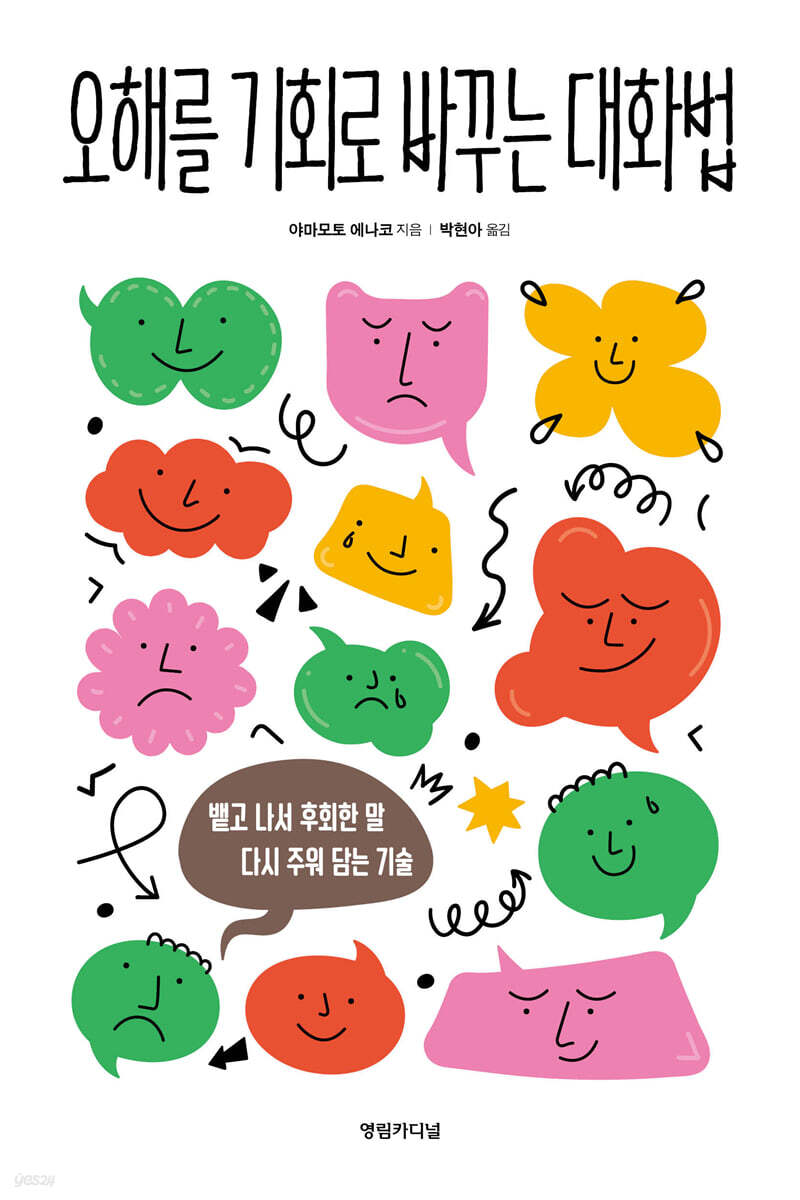
How to Turn Misunderstandings into Opportunities
 |
Description
Book Introduction
'Can't I take back what I said?'
The moment when you want to go back by pressing the reset button
A Relationship-Repairing Word Recipes
'Why did you say that back then?'
'I should have just stayed still!'
'Wouldn't it have been better not to say that?'
Haven't we all experienced the experience of kicking the blanket, unable to sleep due to these regrets creeping in just before bed? Every time, we feel frustrated, wondering why we can't have a perfect conversation free of regrets?
The author, who has a unique perspective on human relationships and communication due to his unique background as a theater major, says in this book that we all make mistakes when we talk, and that even if we do make a mistake, it is more important to not be afraid and to properly correct it.
Through the author's various situations and practical coping strategies, let's learn how to win back a lost battle even if you mess up a conversation.
The moment when you want to go back by pressing the reset button
A Relationship-Repairing Word Recipes
'Why did you say that back then?'
'I should have just stayed still!'
'Wouldn't it have been better not to say that?'
Haven't we all experienced the experience of kicking the blanket, unable to sleep due to these regrets creeping in just before bed? Every time, we feel frustrated, wondering why we can't have a perfect conversation free of regrets?
The author, who has a unique perspective on human relationships and communication due to his unique background as a theater major, says in this book that we all make mistakes when we talk, and that even if we do make a mistake, it is more important to not be afraid and to properly correct it.
Through the author's various situations and practical coping strategies, let's learn how to win back a lost battle even if you mess up a conversation.
- You can preview some of the book's contents.
Preview
index
To begin with
Chapter 1.
It's difficult to answer well at once.
When you feel discouraged because the answer doesn't come right away
The quality of conversation is determined by 'what to say' and 'how to say it'.
Even if it's not the right answer, it can be fixed.
Chapter 2.
Conversation Points and Tips for Recovering from Mistakes
We were left alone in the elevator at work, and the mood became awkward because I missed the right moment to talk.
· Let's change my impression at the first and last moments.
· The important thing is to say a word when leaving the place.
After greeting, the conversation doesn't continue.
· The best topic of conversation is the current situation.
The awkward silence that flows during a conversation with a friend, making both parties uncomfortable as they wait for the other person to speak first.
· Comfortable conversation starts with showing your true feelings.
I keep turning down lunch dates at work, so I guess they see me as someone who's hard to get close to.
· Let's close the distance again by talking often.
It's hard to get along with a senior who keeps gossiping and complaining.
· Let's make humor our ally.
When I said, "I know that too," and sympathized, the other person got angry and said, "Don't interrupt like that."
· The other person wants to listen quietly
The atmosphere got worse when I pointed out that my coworker was blaming others for his mistake.
· The right thing to say is not necessarily the right answer.
I heard people say, "Why are you so negative?"
· People want to know the reason
I was annoyed by the person asking me the same question over and over again, so I coldly said, "Haven't I told you this before?"
· Self-justification and rationalization
· Emotions are not something to be felt, but rather something to be conveyed.
When I tried to comfort him by saying, "It's not that big of a deal," he said, "You don't even know."
· Let's cleanly retract and retract our slip of the tongue.
A close friend of mine spread a rumor that she was getting married, but it seems like it's still a secret from everyone.
Did I act rashly?
· Spilled water cannot be gathered up.
· Let's create a space where people can speak for themselves.
I gossiped about him, but he responded, "He's not that bad of a person." Somehow, I feel like I'm the only one being treated badly.
· Understanding is created through emotions and opinions.
I tried to compliment the other person, but I ended up comparing them to someone else without realizing it, which made the atmosphere worse.
· Trying to fix something can actually cause harm
· Let's mention everyone's strengths
I later learned that the words I had casually said were actually a complex for the other person, and I regretted saying them.
· Sometimes apologizing can actually hurt someone twice.
· Doing nothing training
A friend who came in while coworkers were chatting and ended up feeling bad because he thought they were gossiping about him.
· Let's provide information before asking for opinions.
It seems like the person I sent an email to was perceived as being rude and suddenly started distancing themselves from me.
· A rift develops in a relationship without you knowing it.
· Think from the other person's perspective
During the conversation, I got so emotional that I ended up denying everything the other person said.
· Negative words are an expression of a negative attitude.
· Leave it to the other person, saying, "Take it easy."
He suddenly spoke to me and I didn't know how to respond, so I just rambled on.
· Let's talk about the current situation
· The thought that 'I have to do it' gets in the way
In a meeting, I unconsciously tried to outsmart the other person verbally.
· Try to hold back your anger for just 6 seconds.
When I spoke negatively about a coworker's opinion, he responded coldly, "You used to agree with me, didn't you?"
· A training method that can be supplemented at any time
I seem to have been caught after forgetting that I had declined the invitation with work as an excuse and posting photos from another gathering on social media.
· How to say 'I didn't mean to'
· Characteristics of people who are overly self-protective
· Let's invite them first
I got a text saying, "We're supposed to meet tomorrow, right?" and when I remembered, I had completely forgotten and already made another appointment.
· Let's express our gratitude with an apology.
I was annoyed because it didn't get fixed no matter how many times I warned him, so I blurted out, "Are you stupid?"
· When expressing your feelings, let me be the subject.
I was so flustered when I ran into a coworker in an unexpected place that I couldn't even say hello properly and felt awkward.
· Let's check it out later
· A smile is the best makeup
Chapter 3.
Misconceptions People Who Have Difficulty Conversing Make
Theory or technique is not necessarily required.
It's okay if there are people who are uncomfortable
Let's stop doing things that don't work for me.
It doesn't matter if you don't become a role model.
You don't have to speak brightly and clearly
It's normal to have worries and anxieties.
Don't be tied down by your own appearance
Decide what not to do rather than what to do.
There's no need to force it
In conclusion
Chapter 1.
It's difficult to answer well at once.
When you feel discouraged because the answer doesn't come right away
The quality of conversation is determined by 'what to say' and 'how to say it'.
Even if it's not the right answer, it can be fixed.
Chapter 2.
Conversation Points and Tips for Recovering from Mistakes
We were left alone in the elevator at work, and the mood became awkward because I missed the right moment to talk.
· Let's change my impression at the first and last moments.
· The important thing is to say a word when leaving the place.
After greeting, the conversation doesn't continue.
· The best topic of conversation is the current situation.
The awkward silence that flows during a conversation with a friend, making both parties uncomfortable as they wait for the other person to speak first.
· Comfortable conversation starts with showing your true feelings.
I keep turning down lunch dates at work, so I guess they see me as someone who's hard to get close to.
· Let's close the distance again by talking often.
It's hard to get along with a senior who keeps gossiping and complaining.
· Let's make humor our ally.
When I said, "I know that too," and sympathized, the other person got angry and said, "Don't interrupt like that."
· The other person wants to listen quietly
The atmosphere got worse when I pointed out that my coworker was blaming others for his mistake.
· The right thing to say is not necessarily the right answer.
I heard people say, "Why are you so negative?"
· People want to know the reason
I was annoyed by the person asking me the same question over and over again, so I coldly said, "Haven't I told you this before?"
· Self-justification and rationalization
· Emotions are not something to be felt, but rather something to be conveyed.
When I tried to comfort him by saying, "It's not that big of a deal," he said, "You don't even know."
· Let's cleanly retract and retract our slip of the tongue.
A close friend of mine spread a rumor that she was getting married, but it seems like it's still a secret from everyone.
Did I act rashly?
· Spilled water cannot be gathered up.
· Let's create a space where people can speak for themselves.
I gossiped about him, but he responded, "He's not that bad of a person." Somehow, I feel like I'm the only one being treated badly.
· Understanding is created through emotions and opinions.
I tried to compliment the other person, but I ended up comparing them to someone else without realizing it, which made the atmosphere worse.
· Trying to fix something can actually cause harm
· Let's mention everyone's strengths
I later learned that the words I had casually said were actually a complex for the other person, and I regretted saying them.
· Sometimes apologizing can actually hurt someone twice.
· Doing nothing training
A friend who came in while coworkers were chatting and ended up feeling bad because he thought they were gossiping about him.
· Let's provide information before asking for opinions.
It seems like the person I sent an email to was perceived as being rude and suddenly started distancing themselves from me.
· A rift develops in a relationship without you knowing it.
· Think from the other person's perspective
During the conversation, I got so emotional that I ended up denying everything the other person said.
· Negative words are an expression of a negative attitude.
· Leave it to the other person, saying, "Take it easy."
He suddenly spoke to me and I didn't know how to respond, so I just rambled on.
· Let's talk about the current situation
· The thought that 'I have to do it' gets in the way
In a meeting, I unconsciously tried to outsmart the other person verbally.
· Try to hold back your anger for just 6 seconds.
When I spoke negatively about a coworker's opinion, he responded coldly, "You used to agree with me, didn't you?"
· A training method that can be supplemented at any time
I seem to have been caught after forgetting that I had declined the invitation with work as an excuse and posting photos from another gathering on social media.
· How to say 'I didn't mean to'
· Characteristics of people who are overly self-protective
· Let's invite them first
I got a text saying, "We're supposed to meet tomorrow, right?" and when I remembered, I had completely forgotten and already made another appointment.
· Let's express our gratitude with an apology.
I was annoyed because it didn't get fixed no matter how many times I warned him, so I blurted out, "Are you stupid?"
· When expressing your feelings, let me be the subject.
I was so flustered when I ran into a coworker in an unexpected place that I couldn't even say hello properly and felt awkward.
· Let's check it out later
· A smile is the best makeup
Chapter 3.
Misconceptions People Who Have Difficulty Conversing Make
Theory or technique is not necessarily required.
It's okay if there are people who are uncomfortable
Let's stop doing things that don't work for me.
It doesn't matter if you don't become a role model.
You don't have to speak brightly and clearly
It's normal to have worries and anxieties.
Don't be tied down by your own appearance
Decide what not to do rather than what to do.
There's no need to force it
In conclusion
Detailed image

Into the book
A person with excellent communication skills does not mean someone who 'never makes mistakes'.
This refers to a person who does not give up on their relationship with others, does not let mistakes become mistakes, and is able to ‘correct mistakes.’
Rather, people who make a lot of mistakes tend to be kind to others, relaxed, and confident in their communication with others.
This is because I have a wealth of experience in recovering from mistakes as many times as I have made them, so I know that I can recover from mistakes even if I make them.
This book summarizes training tips to make conversations and relationships smoother.
The trick is introduced through specific, easily recallable, frequently occurring situations.
--- p6, from 'Starting'
Even if you do something you regret, your relationship with the other person will not become zero at that moment.
So, the most important thing is not to give up on the relationship.
If you take the attitude of 'I don't care what happens now', you won't be able to come up with a way to resolve the situation in the first place.
If the situation and relationship are left unattended, it may get worse, but the chances of it getting better are slim.
There are many cases where the feelings of 'I don't want to be hated by the other person' or 'I don't want to ruin the relationship any longer' are so strong that one is unable to say anything, let alone try to mend the situation.
However, if you think about how to approach the other person and think about how to recover from a mistake without having the right answer, certainty, or confirmation, then at that point you have already taken the first step toward recovery.
--- p27, from 'Even if it's not the right answer, it can be fixed'
The more I think about having a conversation, the more I find myself wondering what to say or what to ask.
But, in reality, you can maintain smooth interpersonal relationships without having to talk, just by saying a word when leaving.
For example, when the other person gets off the elevator first, press the open button, say “Goodbye,” and smile.
If you are the first to get off, say “Excuse me first” and then bow.
Just doing this will change the impression you give to the other person.
Because we are overly conscious of the other person's reactions and responses, we become afraid and hesitant to talk.
Even if it's just one word, if you talk with the feeling of 'leaving it there', you'll have fewer regrets like 'I should have done this'.
--- p33, from 'We were left alone in the elevator at work, and the mood became awkward because I missed the right moment to talk to him'
To bridge the gap that has already formed, it is more effective to try to gradually increase friendly contact rather than worrying about this and that.
While it's certainly nice to exchange a quick hello or nod as you pass by, asking for favors is even more effective in bridging the gap.
Because people have a fundamental desire for recognition, they feel that the other person needs them when they receive a request.
So, when you help someone with a request, you may feel like, 'I helped this person because I like him,' and you may think of him in a more favorable light.
In psychology, this is called 'cognitive dissonance theory'.
--- p52, from 'I kept refusing to have lunch together at work, so I think he sees me as someone who is difficult to get close to'
If you use words like the 'G word' as a habit, it can be a major obstacle to communication, so you need to be careful.
G-words are negative words that begin with the letter 'G', such as 'even so', 'that's right', 'that's right', and 'even so'.
These words, when used, carry negative connotations, regardless of one's intention.
The reason you should be wary of the G-word isn't just because it can make the other person feel rejected.
This is because using these words automatically leads to negative thoughts and negative views becoming ingrained in your mind.
--- p70, from 'I heard people say, 'Why are you so negative?'
The phrase “I told you before” means that the desire to be understood has not been satisfied.
So, by thinking, 'I conveyed it correctly, so it's the other person's fault if they don't understand,' they try to protect their own righteousness.
But let's think about it calmly. Even if the other person has a problem, will saying, "Didn't I tell you this before?" make any difference? If you say, "How many times do I have to tell you?", will the other person understand right away?
The only thing the other person can understand from your annoying words is the feeling of being annoyed.
If you get annoyed, the other person may feel a little scared and embarrassed.
However, the behavior does not improve and the same thing is likely to happen again.
--- p79, from 'I was annoyed by the person who asked me the same thing over and over again, so I coldly said, "Haven't I told you this before?"'
For me, it's not difficult, so I'll be able to learn it quickly.
I was thinking of saying something like, 'It's okay,' but I think what the other person took it as was an accusation like, 'Can't you even do something this simple?'
In the first place, it is not me but the other person who decides whether something is a big deal or not.
By the time the other person seriously requests counseling, the situation is already quite dire for them.
Even if it's something that I don't think is a big deal.
When dealing with others, let us be conscious of respecting their values, emotions, feelings, and emotions, rather than judging them.
Then, there would be no need to utter a careless word in the first place.
--- p85, from 'I tried to comfort him by saying, "It's not a big deal," but he said, "You don't even know."'
For example, if you point out someone else's mistake, as in this case, and they react unexpectedly, quickly realize that you are attacking them out of anger. Instead, try to change your mindset and words by properly expressing your opinion, such as, "Recycling isn't being separated, so I hope you take action."
“You must separate your waste.
If you know that person well, it would be great if you could teach me how to convey this message.”
The problem in the first place is the behavior of 'not separating trash before throwing it away', not the character.
In addition to these cases, be careful of words or actions that seem to deny someone's personality, as these are highly aggressive and often ruin interpersonal relationships.
--- p98, from 'I talked behind his back, but he responded, "He's not that bad of a person." Somehow, I feel like I'm the only one who's bad.'
If you decline an invitation and then get caught going to another gathering, don't panic and come up with excuses.
Making excuses can lead to repeated lies, and the situation can become more complicated.
If you declined an invitation not because you felt uncomfortable with the other person, but because you wanted to continue to be on good terms with them, why not try inviting them first after some time has passed?
You might think, 'Wouldn't they think it's shameless to invite someone after making them uncomfortable?'
Only the other person knows if they really think that way.
You might get angry and say that you are shameless, but the other person might also be quite hurt and afraid to face you.
If you invite someone and they clearly show dislike, forcing them to do so will be counterproductive.
So, just tell them that you want to meet and talk, and wait for the right time before talking again.
--- p153, from 'I forgot that I had declined the invitation with the excuse of work and uploaded a photo of another gathering on SNS, and I think I got caught.'
If you forget a date, don't just say, "I'm so sorry. Are you free next week?" Instead, suggest something like, "If it's alright, would you like to go to that restaurant you mentioned last time? I'll ask if you can make a reservation if we can go together."
This is a way to express not only an apology but also a favor.
The other person may have been hurt because they felt, 'You didn't keep your promise = You think that I don't care what happens to me.'
In this case, even if you desperately explain, “I didn’t think of it that way,” it won’t be convincing because you’ve already broken your promise.
So, you have to think about what you can do for that person.
This refers to a person who does not give up on their relationship with others, does not let mistakes become mistakes, and is able to ‘correct mistakes.’
Rather, people who make a lot of mistakes tend to be kind to others, relaxed, and confident in their communication with others.
This is because I have a wealth of experience in recovering from mistakes as many times as I have made them, so I know that I can recover from mistakes even if I make them.
This book summarizes training tips to make conversations and relationships smoother.
The trick is introduced through specific, easily recallable, frequently occurring situations.
--- p6, from 'Starting'
Even if you do something you regret, your relationship with the other person will not become zero at that moment.
So, the most important thing is not to give up on the relationship.
If you take the attitude of 'I don't care what happens now', you won't be able to come up with a way to resolve the situation in the first place.
If the situation and relationship are left unattended, it may get worse, but the chances of it getting better are slim.
There are many cases where the feelings of 'I don't want to be hated by the other person' or 'I don't want to ruin the relationship any longer' are so strong that one is unable to say anything, let alone try to mend the situation.
However, if you think about how to approach the other person and think about how to recover from a mistake without having the right answer, certainty, or confirmation, then at that point you have already taken the first step toward recovery.
--- p27, from 'Even if it's not the right answer, it can be fixed'
The more I think about having a conversation, the more I find myself wondering what to say or what to ask.
But, in reality, you can maintain smooth interpersonal relationships without having to talk, just by saying a word when leaving.
For example, when the other person gets off the elevator first, press the open button, say “Goodbye,” and smile.
If you are the first to get off, say “Excuse me first” and then bow.
Just doing this will change the impression you give to the other person.
Because we are overly conscious of the other person's reactions and responses, we become afraid and hesitant to talk.
Even if it's just one word, if you talk with the feeling of 'leaving it there', you'll have fewer regrets like 'I should have done this'.
--- p33, from 'We were left alone in the elevator at work, and the mood became awkward because I missed the right moment to talk to him'
To bridge the gap that has already formed, it is more effective to try to gradually increase friendly contact rather than worrying about this and that.
While it's certainly nice to exchange a quick hello or nod as you pass by, asking for favors is even more effective in bridging the gap.
Because people have a fundamental desire for recognition, they feel that the other person needs them when they receive a request.
So, when you help someone with a request, you may feel like, 'I helped this person because I like him,' and you may think of him in a more favorable light.
In psychology, this is called 'cognitive dissonance theory'.
--- p52, from 'I kept refusing to have lunch together at work, so I think he sees me as someone who is difficult to get close to'
If you use words like the 'G word' as a habit, it can be a major obstacle to communication, so you need to be careful.
G-words are negative words that begin with the letter 'G', such as 'even so', 'that's right', 'that's right', and 'even so'.
These words, when used, carry negative connotations, regardless of one's intention.
The reason you should be wary of the G-word isn't just because it can make the other person feel rejected.
This is because using these words automatically leads to negative thoughts and negative views becoming ingrained in your mind.
--- p70, from 'I heard people say, 'Why are you so negative?'
The phrase “I told you before” means that the desire to be understood has not been satisfied.
So, by thinking, 'I conveyed it correctly, so it's the other person's fault if they don't understand,' they try to protect their own righteousness.
But let's think about it calmly. Even if the other person has a problem, will saying, "Didn't I tell you this before?" make any difference? If you say, "How many times do I have to tell you?", will the other person understand right away?
The only thing the other person can understand from your annoying words is the feeling of being annoyed.
If you get annoyed, the other person may feel a little scared and embarrassed.
However, the behavior does not improve and the same thing is likely to happen again.
--- p79, from 'I was annoyed by the person who asked me the same thing over and over again, so I coldly said, "Haven't I told you this before?"'
For me, it's not difficult, so I'll be able to learn it quickly.
I was thinking of saying something like, 'It's okay,' but I think what the other person took it as was an accusation like, 'Can't you even do something this simple?'
In the first place, it is not me but the other person who decides whether something is a big deal or not.
By the time the other person seriously requests counseling, the situation is already quite dire for them.
Even if it's something that I don't think is a big deal.
When dealing with others, let us be conscious of respecting their values, emotions, feelings, and emotions, rather than judging them.
Then, there would be no need to utter a careless word in the first place.
--- p85, from 'I tried to comfort him by saying, "It's not a big deal," but he said, "You don't even know."'
For example, if you point out someone else's mistake, as in this case, and they react unexpectedly, quickly realize that you are attacking them out of anger. Instead, try to change your mindset and words by properly expressing your opinion, such as, "Recycling isn't being separated, so I hope you take action."
“You must separate your waste.
If you know that person well, it would be great if you could teach me how to convey this message.”
The problem in the first place is the behavior of 'not separating trash before throwing it away', not the character.
In addition to these cases, be careful of words or actions that seem to deny someone's personality, as these are highly aggressive and often ruin interpersonal relationships.
--- p98, from 'I talked behind his back, but he responded, "He's not that bad of a person." Somehow, I feel like I'm the only one who's bad.'
If you decline an invitation and then get caught going to another gathering, don't panic and come up with excuses.
Making excuses can lead to repeated lies, and the situation can become more complicated.
If you declined an invitation not because you felt uncomfortable with the other person, but because you wanted to continue to be on good terms with them, why not try inviting them first after some time has passed?
You might think, 'Wouldn't they think it's shameless to invite someone after making them uncomfortable?'
Only the other person knows if they really think that way.
You might get angry and say that you are shameless, but the other person might also be quite hurt and afraid to face you.
If you invite someone and they clearly show dislike, forcing them to do so will be counterproductive.
So, just tell them that you want to meet and talk, and wait for the right time before talking again.
--- p153, from 'I forgot that I had declined the invitation with the excuse of work and uploaded a photo of another gathering on SNS, and I think I got caught.'
If you forget a date, don't just say, "I'm so sorry. Are you free next week?" Instead, suggest something like, "If it's alright, would you like to go to that restaurant you mentioned last time? I'll ask if you can make a reservation if we can go together."
This is a way to express not only an apology but also a favor.
The other person may have been hurt because they felt, 'You didn't keep your promise = You think that I don't care what happens to me.'
In this case, even if you desperately explain, “I didn’t think of it that way,” it won’t be convincing because you’ve already broken your promise.
So, you have to think about what you can do for that person.
--- p160, from ““I got a text saying, ‘We decided to meet tomorrow, right?’ and when I thought about it, I completely forgot and had already made another appointment.”
Publisher's Review
No more 'kicking the blanket' before going to bed!
The situation became difficult because of that one word,
When you want to turn back, say this
It would be great if we could go to bed every night refreshed and refreshed, without any worries or concerns, at the end of the day, but that's often not the case for us.
We've all probably had the experience of kicking the blanket secretly and having trouble falling asleep, always feeling regretful about something in our relationships, thinking things like, "Why did I ruin the mood by saying that back then?", "If I had just kept quiet, it would have passed", or "I didn't know it would be taken that way."
The author, who originally majored in theater in college, but was deeply impressed by the different interpersonal relationships and conversation styles overseas than in Japan while studying abroad in London, and subsequently pursued a career as a communications instructor. In this book, the author shares his know-how and teaches that the most important thing in conversation is not to avoid mistakes, but to be able to recover from them on the spot.
So then, what exactly is the best way to manage the conversation we're talking about here?
A person who is good at conversation is,
Not someone who 'never makes mistakes'
‘A person who can correct mistakes.’
This book presents various examples of verbal mistakes that can be made not only in theory but also in practice, such as when working at a company or meeting friends and acquaintances. It explains how to prevent such mistakes and how to recover from them when they have already been made, and based on this, suggests the most important key in conversation, "putting yourself in the other person's shoes."
All relationship troubles ultimately stem from hurting the other person's feelings by forcing your feelings or thoughts on them without considering their position, and that's where the process of recovering from mistakes begins.
A relationship doesn't end just because you made a mistake once.
Spilled water cannot be gathered back up, but words can be gathered and not only can they be used to resolve accumulated misunderstandings, but they can also become an opportunity to strengthen relationships.
If you follow the advice in this book and make a genuine effort to understand how the other person must have felt and to properly convey your regret, you'll be able to end each day in peace, lying in bed every night.
The situation became difficult because of that one word,
When you want to turn back, say this
It would be great if we could go to bed every night refreshed and refreshed, without any worries or concerns, at the end of the day, but that's often not the case for us.
We've all probably had the experience of kicking the blanket secretly and having trouble falling asleep, always feeling regretful about something in our relationships, thinking things like, "Why did I ruin the mood by saying that back then?", "If I had just kept quiet, it would have passed", or "I didn't know it would be taken that way."
The author, who originally majored in theater in college, but was deeply impressed by the different interpersonal relationships and conversation styles overseas than in Japan while studying abroad in London, and subsequently pursued a career as a communications instructor. In this book, the author shares his know-how and teaches that the most important thing in conversation is not to avoid mistakes, but to be able to recover from them on the spot.
So then, what exactly is the best way to manage the conversation we're talking about here?
A person who is good at conversation is,
Not someone who 'never makes mistakes'
‘A person who can correct mistakes.’
This book presents various examples of verbal mistakes that can be made not only in theory but also in practice, such as when working at a company or meeting friends and acquaintances. It explains how to prevent such mistakes and how to recover from them when they have already been made, and based on this, suggests the most important key in conversation, "putting yourself in the other person's shoes."
All relationship troubles ultimately stem from hurting the other person's feelings by forcing your feelings or thoughts on them without considering their position, and that's where the process of recovering from mistakes begins.
A relationship doesn't end just because you made a mistake once.
Spilled water cannot be gathered back up, but words can be gathered and not only can they be used to resolve accumulated misunderstandings, but they can also become an opportunity to strengthen relationships.
If you follow the advice in this book and make a genuine effort to understand how the other person must have felt and to properly convey your regret, you'll be able to end each day in peace, lying in bed every night.
GOODS SPECIFICS
- Date of issue: September 30, 2025
- Page count, weight, size: 216 pages | 362g | 140*210*14mm
- ISBN13: 9788984012714
- ISBN10: 8984012718
You may also like
카테고리
korean


korean

![GQ KOREA Mark (Monthly): December [2025]](http://librairie.coreenne.fr/cdn/shop/files/8ef265dbbfbf186523ed75ba7319009d.jpg?v=1765340328&width=3840)


