

The Second Cold War
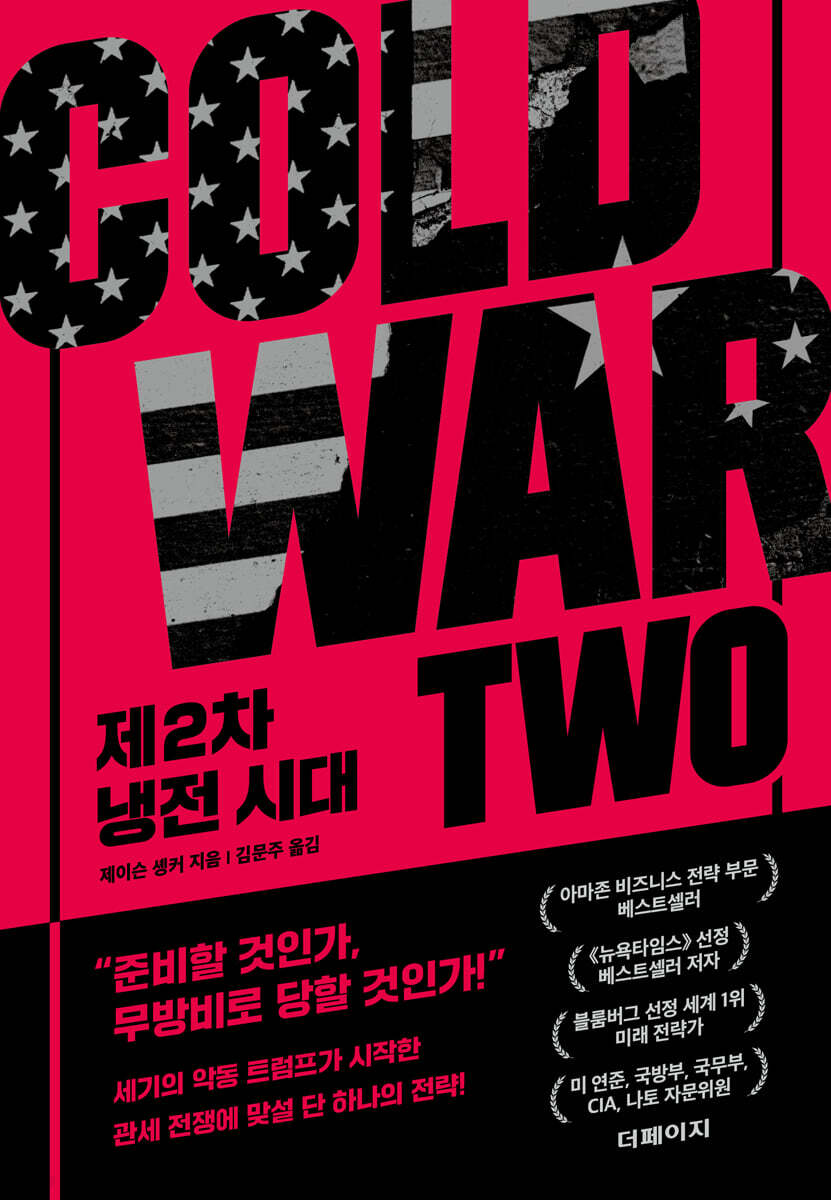 |
Description
Book Introduction
"Now that we are on the battlefield of the new Cold War, will we prepare or will we be hit?"
In an age of chaos, strategy is not a choice, it's survival!
“The war has begun.
Jason Schenker puts a map of that battlefield in our hands.” _Forbes
Now, the world has entered a second Cold War, a battle for survival.
It's on a different level from the Cold War of the past.
Instead of physical conflict between nations, a new war is unfolding where supply chains are weaponized, technology replaces borders, and information and data become the center of the battlefield.
Author Jason Schenker is ranked by Bloomberg as the world's number one futures strategist.
He has served as a strategic advisor to various governments, international organizations, and the private sector, including the U.S. Department of Defense, the State Department, NATO, the CIA, and the Federal Reserve, and has delivered over 1,200 keynote speeches.
He gained attention when he presented a way to turn the crisis into an opportunity through "The World After Corona" when the world was gripped by extreme uncertainty due to COVID-19.
And in the face of the intensifying new Cold War in 2025, he once again demonstrates his keen insight and strategic perspective in this book, "The Second Cold War," sharply dissecting the reality of this unprecedented global conflict.
The bipolar system formed around the United States, China, Russia, Iran, and North Korea is no longer just a 'great power competition.'
It is a structured Cold War order, and it is also the cause of the economic, technological, and security chaos we face every day.
The author says:
This war is no longer fought solely with tanks and missiles.
Now, semiconductors, energy, rare earths, algorithms, and AI-based disinformation dominate the battlefield.
In an era of increasingly interconnected economies, severing supply chains and blocking technology has become the most powerful strategy for overthrowing an enemy.
In this book, he examines the structure in which tariffs serve as both an economic shield and a sword, the reality that cyberwarfare has emerged as a central element of national security, and the polarized world surrounding technological hegemony.
Rather than instigating fear through the zeitgeist of the new Cold War, the author presents a strategic scenario for navigating this complex conflict.
Businesses, governments, the military, and individuals must all learn to "think about the future" and redesign their organizational structures and mindsets accordingly.
Economic security, cyber defense, technological sovereignty, and supply chain resilience are now not optional but survival criteria.
"The Second Cold War" is not a prophecy.
It is a declaration, a reality, and a strategy that demands action.
This book reminds you that no matter where you stand, you are in the middle of this Cold War.
And he hands me a map of the battlefield.
Now the choice is yours.
Will you be prepared or will you be caught off guard?
In an age of chaos, strategy is not a choice, it's survival!
“The war has begun.
Jason Schenker puts a map of that battlefield in our hands.” _Forbes
Now, the world has entered a second Cold War, a battle for survival.
It's on a different level from the Cold War of the past.
Instead of physical conflict between nations, a new war is unfolding where supply chains are weaponized, technology replaces borders, and information and data become the center of the battlefield.
Author Jason Schenker is ranked by Bloomberg as the world's number one futures strategist.
He has served as a strategic advisor to various governments, international organizations, and the private sector, including the U.S. Department of Defense, the State Department, NATO, the CIA, and the Federal Reserve, and has delivered over 1,200 keynote speeches.
He gained attention when he presented a way to turn the crisis into an opportunity through "The World After Corona" when the world was gripped by extreme uncertainty due to COVID-19.
And in the face of the intensifying new Cold War in 2025, he once again demonstrates his keen insight and strategic perspective in this book, "The Second Cold War," sharply dissecting the reality of this unprecedented global conflict.
The bipolar system formed around the United States, China, Russia, Iran, and North Korea is no longer just a 'great power competition.'
It is a structured Cold War order, and it is also the cause of the economic, technological, and security chaos we face every day.
The author says:
This war is no longer fought solely with tanks and missiles.
Now, semiconductors, energy, rare earths, algorithms, and AI-based disinformation dominate the battlefield.
In an era of increasingly interconnected economies, severing supply chains and blocking technology has become the most powerful strategy for overthrowing an enemy.
In this book, he examines the structure in which tariffs serve as both an economic shield and a sword, the reality that cyberwarfare has emerged as a central element of national security, and the polarized world surrounding technological hegemony.
Rather than instigating fear through the zeitgeist of the new Cold War, the author presents a strategic scenario for navigating this complex conflict.
Businesses, governments, the military, and individuals must all learn to "think about the future" and redesign their organizational structures and mindsets accordingly.
Economic security, cyber defense, technological sovereignty, and supply chain resilience are now not optional but survival criteria.
"The Second Cold War" is not a prophecy.
It is a declaration, a reality, and a strategy that demands action.
This book reminds you that no matter where you stand, you are in the middle of this Cold War.
And he hands me a map of the battlefield.
Now the choice is yours.
Will you be prepared or will you be caught off guard?
- You can preview some of the book's contents.
Preview
index
Acknowledgements
introduction
prolog
PART 1.
Why the Cold War Again
The Cold War is not over.
Geopolitical conflicts of the past continue in different forms to this day.
We revisit the nature of the First Cold War and analyze how it led to the Second Cold War today.
CHAP 1.
Cold War Misconceptions: The Real Beneficiary Was China
CHAP 2.
The Beginning of a Strange War
CHAP 3.
War is not far away: Three fronts
CHAP 4.
Europe is always in the shadow of war.
CHAP 5.
Why does the Middle East always explode?
CHAP 6.
The breathtaking game between the US and China over Taiwan
CHAP 7.
As the battlefield expands: New conditions for conflict
CHAP 8.
Weaponizing Digital Propaganda and Public Opinion
CHAP 9.
Five Signs of a Systemic Crisis
CHAP 10.
The Arctic, space, and the internet are also becoming battlefields.
CHAP 11.
The economy has become the ultimate threat
PART 2.
Now is the era of Cold War 2.0
Wars are no longer fought solely with guns.
Power is being reorganized in technology, energy, finance, and supply chains.
Dissecting the operating environment of the second period of the Cold War.
CHAP 12.
Who will lead the global economy in the future?
CHAP 13.
Money Wars: The Capital Battle Between the US and China
CHAP 14.
Energy independence is at the heart of the national strategy.
CHAP 15.
How Supply Chains Hold Nations Hostage
CHAP 16.
Trade is War, Too: The Age of Tariffs and Blockades
CHAP 17. AI, Semiconductors, and Robots: Technology Transforming Warfare
CHAP 18.
When Climate and Geopolitics Collide
PART 3.
Survival Scenario for the Next Decade
The uncertainty of the coming future is unavoidable.
But you can prepare.
It presents strategic thinking, scenario design, and organizational survival conditions for predicting and responding to the future.
Chap 19.
Those who predict change the world.
Chap 20.
Framework for Preparing for the Future
Chap 21.
Four Future Scenarios for Cold War II
Chap 22.
What Strategic Companies See Differently
Chap 23.
What Corporate Boards Need to Discuss Now
Chap 24.
The economy as a weapon of war
Epilogue: Navigating a New Era of Uncertainty
introduction
prolog
PART 1.
Why the Cold War Again
The Cold War is not over.
Geopolitical conflicts of the past continue in different forms to this day.
We revisit the nature of the First Cold War and analyze how it led to the Second Cold War today.
CHAP 1.
Cold War Misconceptions: The Real Beneficiary Was China
CHAP 2.
The Beginning of a Strange War
CHAP 3.
War is not far away: Three fronts
CHAP 4.
Europe is always in the shadow of war.
CHAP 5.
Why does the Middle East always explode?
CHAP 6.
The breathtaking game between the US and China over Taiwan
CHAP 7.
As the battlefield expands: New conditions for conflict
CHAP 8.
Weaponizing Digital Propaganda and Public Opinion
CHAP 9.
Five Signs of a Systemic Crisis
CHAP 10.
The Arctic, space, and the internet are also becoming battlefields.
CHAP 11.
The economy has become the ultimate threat
PART 2.
Now is the era of Cold War 2.0
Wars are no longer fought solely with guns.
Power is being reorganized in technology, energy, finance, and supply chains.
Dissecting the operating environment of the second period of the Cold War.
CHAP 12.
Who will lead the global economy in the future?
CHAP 13.
Money Wars: The Capital Battle Between the US and China
CHAP 14.
Energy independence is at the heart of the national strategy.
CHAP 15.
How Supply Chains Hold Nations Hostage
CHAP 16.
Trade is War, Too: The Age of Tariffs and Blockades
CHAP 17. AI, Semiconductors, and Robots: Technology Transforming Warfare
CHAP 18.
When Climate and Geopolitics Collide
PART 3.
Survival Scenario for the Next Decade
The uncertainty of the coming future is unavoidable.
But you can prepare.
It presents strategic thinking, scenario design, and organizational survival conditions for predicting and responding to the future.
Chap 19.
Those who predict change the world.
Chap 20.
Framework for Preparing for the Future
Chap 21.
Four Future Scenarios for Cold War II
Chap 22.
What Strategic Companies See Differently
Chap 23.
What Corporate Boards Need to Discuss Now
Chap 24.
The economy as a weapon of war
Epilogue: Navigating a New Era of Uncertainty
Detailed image

Into the book
Mark Twain is often quoted as saying, “History doesn’t repeat itself, but sometimes it rhymes.”
The current international situation is influenced by a hostile coalition of discontented and snarling losers of the Cold War.
--- p.20
The main battlefields were not Europe, but Korea, Vietnam, and Southeast Asia.
Despite the ideological clash with the Soviet Union, the most intense clashes of the Cold War took place in China's sphere of influence and in areas where China's strategic interests were significant.
--- p.33
The Second Cold War is unfolding as a hybrid war, extending beyond traditional military conflict and economic competition into a new battlefield that will shape global power dynamics for decades to come.
Nations are now engaged in a multifaceted struggle for technological superiority, economic security, military dominance, and geopolitical influence in four rapidly emerging battlegrounds.
These are the Arctic, cyberspace, space, and supply chains.
--- p.83
Cold War II is reshaping global trade policy.
The United States and its allies use tariffs, trade restrictions, and economic strategies as tools for national and economic security.
The strategic application of tariffs and trade threats has become a cornerstone of U.S. economic policy, intended to stabilize supply chains, counter the economic influence of adversaries, and deter military conflict.
--- p.142
At the heart of applied futurology are questions about what will change, what will remain the same, and what key drivers will alter the trajectory of Cold War II.
Rather than predicting single outcomes, applied futurists should develop systematic scenarios to help policymakers navigate global uncertainty.
--- p.174
As economic security becomes an increasingly important factor in geopolitical competition, SOF must incorporate the principles of economic warfare into its operational planning.
The ability to weaken adversary economic networks, build alliance resilience, and leverage economic influence as a strategic tool will be critical to deterring attacks in hotspots and ensuring success in:
The current international situation is influenced by a hostile coalition of discontented and snarling losers of the Cold War.
--- p.20
The main battlefields were not Europe, but Korea, Vietnam, and Southeast Asia.
Despite the ideological clash with the Soviet Union, the most intense clashes of the Cold War took place in China's sphere of influence and in areas where China's strategic interests were significant.
--- p.33
The Second Cold War is unfolding as a hybrid war, extending beyond traditional military conflict and economic competition into a new battlefield that will shape global power dynamics for decades to come.
Nations are now engaged in a multifaceted struggle for technological superiority, economic security, military dominance, and geopolitical influence in four rapidly emerging battlegrounds.
These are the Arctic, cyberspace, space, and supply chains.
--- p.83
Cold War II is reshaping global trade policy.
The United States and its allies use tariffs, trade restrictions, and economic strategies as tools for national and economic security.
The strategic application of tariffs and trade threats has become a cornerstone of U.S. economic policy, intended to stabilize supply chains, counter the economic influence of adversaries, and deter military conflict.
--- p.142
At the heart of applied futurology are questions about what will change, what will remain the same, and what key drivers will alter the trajectory of Cold War II.
Rather than predicting single outcomes, applied futurists should develop systematic scenarios to help policymakers navigate global uncertainty.
--- p.174
As economic security becomes an increasingly important factor in geopolitical competition, SOF must incorporate the principles of economic warfare into its operational planning.
The ability to weaken adversary economic networks, build alliance resilience, and leverage economic influence as a strategic tool will be critical to deterring attacks in hotspots and ensuring success in:
--- p.206
Publisher's Review
"Opportunity is hidden in chaos!"
A future strategy book that penetrates the battlefields of economy, technology, and security.
★ #1 bestseller in the macro category on Amazon US immediately after publication
★ In-depth analysis of key areas such as geopolitics, economy, and technology
★ Crisis response and opportunity capture strategies
★ A practical action manual for businesses and investors
Humanity is currently in the midst of a new form of cold war, the likes of which have never been experienced before in history.
Although no shots are fired, the war is clearly ongoing, and its battlefields span technology, finance, energy, and information.
"The Second Cold War" analyzes the true nature of this invisible conflict and meticulously suggests how we should respond to the coming future.
The author speaks decisively.
“Cold War II is not a prediction, but a reality unfolding before our eyes at this very moment.” This book is a precise strategic map necessary to understand and prepare for that war.
The author divides this book into three major parts.
In the first part, we look back at the past to read the future.
Examining the historical context of the First Cold War, it emphasizes that the unresolved geopolitical tensions with China at the time led to the Second Cold War today.
The second part examines the ongoing Second Cold War's impact and ramifications on the global economy, finance, energy, supply chains, and technology.
The third part presents practical guidance on what nations, businesses, and societies should prepare for based on a multi-scenario strategy surrounding Cold War II.
A war where tariffs, economics, and technology become weapons
21st Century New Cold War Report
What makes the Second Cold War different from past ones is that it is an invisible war.
The author devotes a chapter to the weaponization of social media, which has become an inseparable part of our daily lives. He warns that social media has become a tool of war between nations, exposing the reality of non-military psychological warfare, such as deepfakes, algorithmic manipulation, and emotional exhaustion.
He diagnoses that “social platforms have become precision weapons for manipulating public opinion, and a silent invasion is underway that is causing internal divisions in democratic countries.”
There is no safe zone in this war.
We have already realized through the national crisis of martial law that our society is also on the front lines.
If the chaos was not a one-off incident but part of a geopolitical design, we should now look for a wise solution in the strategy the author presents.
With President Trump's re-election and the intensifying all-out tariff war, tariffs are once again emerging as a hot topic.
In this book, the author sheds new light on the strategic significance of tariffs.
Tariffs, once a tool of trade, now function as both a sword and a shield to protect America's economic security.
The author analyzes tariffs as a geopolitical tool to deter strategic competitors such as China.
This allows readers to understand the intentions and deterrence behind national strategy beyond superficial export and import figures.
What is particularly noteworthy is that this book was written before President Trump launched his global tariff war in earnest.
Schenker had already sensed future movements and predicted new conflict structures.
His insights are even more valuable because they go beyond general economic analysis and reflect the mindset of policymakers and strategists.
Strategies that will determine your survival over the next 10 years
“Prepare, think, restructure!”
In the midst of a new form of conflict called 'Cold War 2.0,' the author presents a practical response strategy that goes beyond conventional analysis of reality.
He emphasizes that "the first step to overcoming a crisis is to properly recognize it," and points out that we have entered an era where traditional risk management methods no longer work.
According to him, supply chain resilience, geopolitical risk analysis, cybersecurity internalization, and technological sovereignty have now become core survival strategies that businesses, governments, and all organizations must possess.
Past forecasting models and short-term responses are no longer valid.
The author does not fix the future with a single prediction.
Rather, he emphasizes the importance of a multi-scenario strategy.
In this uncertain era, where countless variables intersect, including China's invasion of Taiwan, North Korea's provocations, the digital Iron Curtain, technological blocs, and the polarization of energy supply, we present strategic response plans for each scenario: Continuation, Plateau, Collapse, and Transformation.
This is not a simple list of information; it is a framework for future strategies that can be applied to actual corporate crisis response, government policymaking, and even military decision-making.
In other words, this book does not stop at analyzing reality, but provides an actionable thinking structure for changing reality.
"Cold War II" is not a book warning of a scary world.
Rather, this book is a strategy for turning crises into opportunities, a compass of reason and intuition for navigating complex times.
For business leaders, it offers survival strategies to combat global risks; for policymakers, it offers tools for designing national interests for a new era; and for general readers, it offers a perspective that penetrates the world we live in.
At the end, the author asks:
"Will you disappear in the next ten years, or will you become a world leader?" If we want to seriously answer that question, we need to open this book now.
A future strategy book that penetrates the battlefields of economy, technology, and security.
★ #1 bestseller in the macro category on Amazon US immediately after publication
★ In-depth analysis of key areas such as geopolitics, economy, and technology
★ Crisis response and opportunity capture strategies
★ A practical action manual for businesses and investors
Humanity is currently in the midst of a new form of cold war, the likes of which have never been experienced before in history.
Although no shots are fired, the war is clearly ongoing, and its battlefields span technology, finance, energy, and information.
"The Second Cold War" analyzes the true nature of this invisible conflict and meticulously suggests how we should respond to the coming future.
The author speaks decisively.
“Cold War II is not a prediction, but a reality unfolding before our eyes at this very moment.” This book is a precise strategic map necessary to understand and prepare for that war.
The author divides this book into three major parts.
In the first part, we look back at the past to read the future.
Examining the historical context of the First Cold War, it emphasizes that the unresolved geopolitical tensions with China at the time led to the Second Cold War today.
The second part examines the ongoing Second Cold War's impact and ramifications on the global economy, finance, energy, supply chains, and technology.
The third part presents practical guidance on what nations, businesses, and societies should prepare for based on a multi-scenario strategy surrounding Cold War II.
A war where tariffs, economics, and technology become weapons
21st Century New Cold War Report
What makes the Second Cold War different from past ones is that it is an invisible war.
The author devotes a chapter to the weaponization of social media, which has become an inseparable part of our daily lives. He warns that social media has become a tool of war between nations, exposing the reality of non-military psychological warfare, such as deepfakes, algorithmic manipulation, and emotional exhaustion.
He diagnoses that “social platforms have become precision weapons for manipulating public opinion, and a silent invasion is underway that is causing internal divisions in democratic countries.”
There is no safe zone in this war.
We have already realized through the national crisis of martial law that our society is also on the front lines.
If the chaos was not a one-off incident but part of a geopolitical design, we should now look for a wise solution in the strategy the author presents.
With President Trump's re-election and the intensifying all-out tariff war, tariffs are once again emerging as a hot topic.
In this book, the author sheds new light on the strategic significance of tariffs.
Tariffs, once a tool of trade, now function as both a sword and a shield to protect America's economic security.
The author analyzes tariffs as a geopolitical tool to deter strategic competitors such as China.
This allows readers to understand the intentions and deterrence behind national strategy beyond superficial export and import figures.
What is particularly noteworthy is that this book was written before President Trump launched his global tariff war in earnest.
Schenker had already sensed future movements and predicted new conflict structures.
His insights are even more valuable because they go beyond general economic analysis and reflect the mindset of policymakers and strategists.
Strategies that will determine your survival over the next 10 years
“Prepare, think, restructure!”
In the midst of a new form of conflict called 'Cold War 2.0,' the author presents a practical response strategy that goes beyond conventional analysis of reality.
He emphasizes that "the first step to overcoming a crisis is to properly recognize it," and points out that we have entered an era where traditional risk management methods no longer work.
According to him, supply chain resilience, geopolitical risk analysis, cybersecurity internalization, and technological sovereignty have now become core survival strategies that businesses, governments, and all organizations must possess.
Past forecasting models and short-term responses are no longer valid.
The author does not fix the future with a single prediction.
Rather, he emphasizes the importance of a multi-scenario strategy.
In this uncertain era, where countless variables intersect, including China's invasion of Taiwan, North Korea's provocations, the digital Iron Curtain, technological blocs, and the polarization of energy supply, we present strategic response plans for each scenario: Continuation, Plateau, Collapse, and Transformation.
This is not a simple list of information; it is a framework for future strategies that can be applied to actual corporate crisis response, government policymaking, and even military decision-making.
In other words, this book does not stop at analyzing reality, but provides an actionable thinking structure for changing reality.
"Cold War II" is not a book warning of a scary world.
Rather, this book is a strategy for turning crises into opportunities, a compass of reason and intuition for navigating complex times.
For business leaders, it offers survival strategies to combat global risks; for policymakers, it offers tools for designing national interests for a new era; and for general readers, it offers a perspective that penetrates the world we live in.
At the end, the author asks:
"Will you disappear in the next ten years, or will you become a world leader?" If we want to seriously answer that question, we need to open this book now.
GOODS SPECIFICS
- Date of issue: May 7, 2025
- Page count, weight, size: 224 pages | 384g | 147*212*14mm
- ISBN13: 9791194156185
- ISBN10: 1194156185
You may also like
카테고리
korean


korean

![GQ KOREA Mark (Monthly): December [2025]](http://librairie.coreenne.fr/cdn/shop/files/8ef265dbbfbf186523ed75ba7319009d.jpg?v=1765340328&width=3840)


