![Meanwhile, Festival No. 18 [2025]](http://librairie.coreenne.fr/cdn/shop/files/8eb25c0206f663d10f73ea371d626e8c.jpg?v=1765330155&width=3840)

Meanwhile, Festival No. 18 [2025]
 |
Description
Book Introduction
"Do you like festivals?" From midsummer rock festivals to seasonal festivals held in Korea's mountains and rivers, to book fairs where you can be the first to discover new books.
Festivals held here and there are always spaces of escape and liberation where we can break away from the same old routine and become a new 'me'.
But how can we find renewed excitement when festivals, which are often a new meeting place for participants, become burdensome for organizers, when we find ourselves alone and unable to melt into the midst of this exciting celebration? From traditional death rituals to modern "otaku" festivals and "festival-like gatherings," Issue 18 of "Han-Gi-Oh" examines the conditions that create festivals and explores ways to transform the stifling everyday into a festival-like experience.
Festivals held here and there are always spaces of escape and liberation where we can break away from the same old routine and become a new 'me'.
But how can we find renewed excitement when festivals, which are often a new meeting place for participants, become burdensome for organizers, when we find ourselves alone and unable to melt into the midst of this exciting celebration? From traditional death rituals to modern "otaku" festivals and "festival-like gatherings," Issue 18 of "Han-Gi-Oh" examines the conditions that create festivals and explores ways to transform the stifling everyday into a festival-like experience.
- You can preview some of the book's contents.
Preview
index
Publishing 'Festival', the beginning and end of the festival 4
Lee Su-yu's Death and Festival 19
Here, "What are you doing?" 35
The Story of the Choi Yeo-ul 10,000-Year Festival, Part 53
Jeong Yun-yeong Children's Festival Horseback Riding Experience 69
Kim Kyung-eun Breaks the Red Light 85
A festival-like gathering and hope for the 103rd National Flag
Park Seon-young's Celebrating in the Age of Climate Change 125
Shin Dong-il, At the Crossroads of Two Languages 137
Reference 153
List of past issues 156
Lee Su-yu's Death and Festival 19
Here, "What are you doing?" 35
The Story of the Choi Yeo-ul 10,000-Year Festival, Part 53
Jeong Yun-yeong Children's Festival Horseback Riding Experience 69
Kim Kyung-eun Breaks the Red Light 85
A festival-like gathering and hope for the 103rd National Flag
Park Seon-young's Celebrating in the Age of Climate Change 125
Shin Dong-il, At the Crossroads of Two Languages 137
Reference 153
List of past issues 156
Into the book
“Death is not an event to be endured alone, but rather something that passes through a crowd of people, amidst a chaotic mix of laughter and tears.
“The festival did not drive out death, but embraced it.”
---From "Lee Su-yu - Death and Festival"
“The joy that makes you empty your wallet and fill your shopping bag.
“A new surge of enthusiasm, a fresh inspiration for my work, and a passion that gives me the will to live until the day the next exhibition opens.”
---「Iriye - “What are you doing?”」
“The Ainu Mosiri Ten Thousand-Year Festival I experienced was more like a place where we joyfully welcomed one another and brought back what we had lost to us gathered here now.”
---From "Choi Yeo-ul - The Story of the Ten Thousand-Year Festival"
“I found it strange that at a children’s festival, children would enjoy themselves by riding horses and pretending to shoot guns.
“It was uncomfortable that no one found that appearance strange.”
---From "Jeong Yun-yeong - Horseback Riding Experience at the Children's Festival"
“Resistance, initiated with immediate determination and without external help, by asking about the cause of accumulated suffering, brings the excitement of being the subject, a sense of solidarity like a festival, and, unexpectedly, excitement about the future.
"
---From "Kim Kyung-eun - Breaking the Red Light"
"What kind of life is the momentum for a new future created by the impeachment rally living within the discourse? Are these discourses expanding this momentum, or are they simply dedicated to preserving the memory of that time as a utopian fantasy?"
---From "National Nameplate - Festival-like Gathering and Hope"
"In the age of climate crisis, festivals can be a special time and space, a lifelong journey where we can empathize with the difficulties and depression caused by the climate crisis, encourage one another, and broaden our sense of cooperation."
---From "Park Seon-yeong - Celebrating in the Age of Climate Change"
"But what if, after a festival or trip, I keep thinking, 'I really want to be a different person now?' I can't forget the afterimages and events I encountered outside of everyday life."
“The festival did not drive out death, but embraced it.”
---From "Lee Su-yu - Death and Festival"
“The joy that makes you empty your wallet and fill your shopping bag.
“A new surge of enthusiasm, a fresh inspiration for my work, and a passion that gives me the will to live until the day the next exhibition opens.”
---「Iriye - “What are you doing?”」
“The Ainu Mosiri Ten Thousand-Year Festival I experienced was more like a place where we joyfully welcomed one another and brought back what we had lost to us gathered here now.”
---From "Choi Yeo-ul - The Story of the Ten Thousand-Year Festival"
“I found it strange that at a children’s festival, children would enjoy themselves by riding horses and pretending to shoot guns.
“It was uncomfortable that no one found that appearance strange.”
---From "Jeong Yun-yeong - Horseback Riding Experience at the Children's Festival"
“Resistance, initiated with immediate determination and without external help, by asking about the cause of accumulated suffering, brings the excitement of being the subject, a sense of solidarity like a festival, and, unexpectedly, excitement about the future.
"
---From "Kim Kyung-eun - Breaking the Red Light"
"What kind of life is the momentum for a new future created by the impeachment rally living within the discourse? Are these discourses expanding this momentum, or are they simply dedicated to preserving the memory of that time as a utopian fantasy?"
---From "National Nameplate - Festival-like Gathering and Hope"
"In the age of climate crisis, festivals can be a special time and space, a lifelong journey where we can empathize with the difficulties and depression caused by the climate crisis, encourage one another, and broaden our sense of cooperation."
---From "Park Seon-yeong - Celebrating in the Age of Climate Change"
"But what if, after a festival or trip, I keep thinking, 'I really want to be a different person now?' I can't forget the afterimages and events I encountered outside of everyday life."
---From "Shin Dong-il - At the Crossroads of Two Languages"
Publisher's Review
The festival takes place in a place
The driving force of a festival is the energy generated by people coming together.
From quiet secret meetings to village festivals and funerals filled with laughter and tears, all festivals began with people gathering in yards, alleys, and streets.
Anthropologist Lee Su-yu's "Death and Festival," which opens the door to the "Festival" movement, looks into Korea, where the yard of a house that has suffered a bereavement naturally becomes a place for neighbors to gather and celebrate the deceased.
For modern people, festivals are considered something far removed from death and tears, something surplus rather than essential, a matter of consumption and taste, but for a long time, festivals were integrated into life and embraced death.
“What Are You Doing?” by Lee Ri-ye, a feminist researcher, is a story about creating a place to exercise “imagination that makes us laugh” within the “common sense order that makes us cry.”
It's not easy to give a straight answer to the question, "What do you do here?", but the 'otaku' festival of those who talk, write, and draw about their favorite works is unforgettable.
In "The Story of the Ten Thousand-Year Festival" by Choi Yeo-ul, a graduate of Seongmisan School, the village festival that "served as a corner to lean on when there was something I wanted to do" meets the Ainu Mosiri Ten Thousand-Year Festival in Japan.
A welcoming space where you don't have to do anything, but can try whatever you want without feeling pressured.
The festival is an event that “brings back what we have lost to the present.”
The beginning and end of the festival
A festival that occupies a place soon becomes a form of resistance.
In "Breaking the Red Lantern," a Korean literature researcher, Kim Kyung-eun reads Lee Hyo-seok's short story "The Broken Red Lantern," in which gisaengs decide to find out "what is it that has made us like this, outside of our fate."
The moment we ask questions about the absurdity of life and the poverty of the times, the alley where we begin our conversation with our colleagues next to us is the beginning of the festival.
And then there's "Festival-like Protests and Hope," by anthropologist Guk Myeong-pyo, who analyzes the months of protests that followed martial law on December 3rd and the impeachment verdict.
What would change if we focused on the phrase "festival-like rally" before the symbol of the "cheering stick"?
Reporter Jeong Yun-yeong's "Horseback Riding Experience at a Children's Festival" and activist Park Seon-yeong's "Holding a Festival in the Age of Climate Change" address the dark side of festivals.
At festivals, the most natural way for humans to gather and play, some animals suffer and are killed.
Shouldn't festivals, which generate waste and emit carbon in a short period of time, be stopped in the face of climate crisis? These two articles propose a new form of festival that allows for a different way to connect with animals and reduces carbon emissions.
After the festival is over, we have to return to our daily lives.
For those who find themselves lost in the afterglow of a festival and the frustrations of everyday life, where their disciplined and impulsive selves clash every day, linguist Shin Dong-il's "At the Crossroads of Two Languages" reminds us how to refine the language that expresses ourselves.
To make festivals more enjoyable and everyday life more flexible.
A new generation of humanities magazines, "Hanpyeon"
Even in an age of constant flow of images, thoughts begin with a single word and are concluded with a single word.
The humanities magazine "Hanpyeon," launched in 2020, produces meaning by weaving together individual pieces of writing.
At Minumsa, young editors who create philosophy and literature textbooks request manuscripts, and young researchers in the humanities and social sciences write the articles.
This is to enable authors and readers to share the joy of solving problems here and now through a medium that is shorter than a book and easier than a thesis.
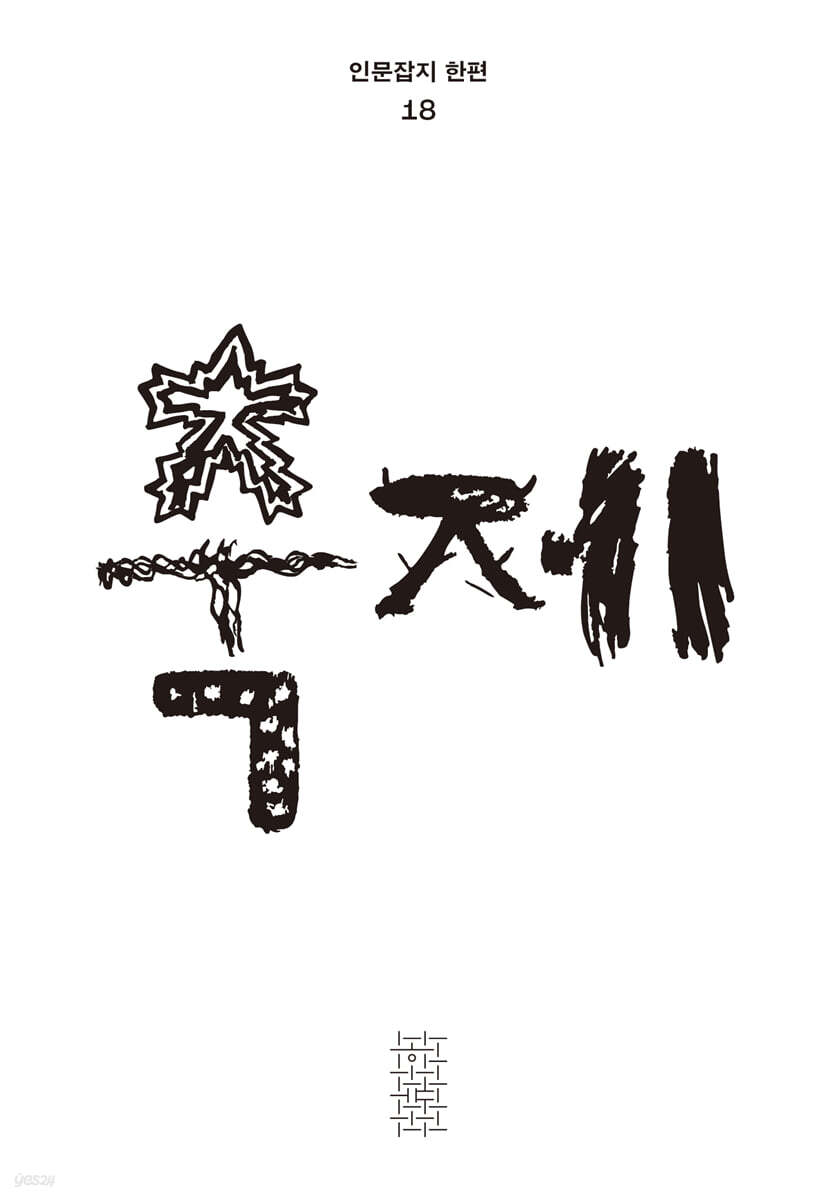
Meanwhile, the font used on the cover of Issue 17 of ‘Korea’ is the Waggle Waggle font of the Goyang Children’s Museum.
It is full of personality, like the various voices heard at a noisy banquet.
The humanities magazine "Hanpyeon" is published three times a year, in January, May, and September, and will continue with the theme of "Alone" in January 2026, following the topics of "Humor," "Korea," and "Festival" in 2025.
The driving force of a festival is the energy generated by people coming together.
From quiet secret meetings to village festivals and funerals filled with laughter and tears, all festivals began with people gathering in yards, alleys, and streets.
Anthropologist Lee Su-yu's "Death and Festival," which opens the door to the "Festival" movement, looks into Korea, where the yard of a house that has suffered a bereavement naturally becomes a place for neighbors to gather and celebrate the deceased.
For modern people, festivals are considered something far removed from death and tears, something surplus rather than essential, a matter of consumption and taste, but for a long time, festivals were integrated into life and embraced death.
“What Are You Doing?” by Lee Ri-ye, a feminist researcher, is a story about creating a place to exercise “imagination that makes us laugh” within the “common sense order that makes us cry.”
It's not easy to give a straight answer to the question, "What do you do here?", but the 'otaku' festival of those who talk, write, and draw about their favorite works is unforgettable.
In "The Story of the Ten Thousand-Year Festival" by Choi Yeo-ul, a graduate of Seongmisan School, the village festival that "served as a corner to lean on when there was something I wanted to do" meets the Ainu Mosiri Ten Thousand-Year Festival in Japan.
A welcoming space where you don't have to do anything, but can try whatever you want without feeling pressured.
The festival is an event that “brings back what we have lost to the present.”
The beginning and end of the festival
A festival that occupies a place soon becomes a form of resistance.
In "Breaking the Red Lantern," a Korean literature researcher, Kim Kyung-eun reads Lee Hyo-seok's short story "The Broken Red Lantern," in which gisaengs decide to find out "what is it that has made us like this, outside of our fate."
The moment we ask questions about the absurdity of life and the poverty of the times, the alley where we begin our conversation with our colleagues next to us is the beginning of the festival.
And then there's "Festival-like Protests and Hope," by anthropologist Guk Myeong-pyo, who analyzes the months of protests that followed martial law on December 3rd and the impeachment verdict.
What would change if we focused on the phrase "festival-like rally" before the symbol of the "cheering stick"?
Reporter Jeong Yun-yeong's "Horseback Riding Experience at a Children's Festival" and activist Park Seon-yeong's "Holding a Festival in the Age of Climate Change" address the dark side of festivals.
At festivals, the most natural way for humans to gather and play, some animals suffer and are killed.
Shouldn't festivals, which generate waste and emit carbon in a short period of time, be stopped in the face of climate crisis? These two articles propose a new form of festival that allows for a different way to connect with animals and reduces carbon emissions.
After the festival is over, we have to return to our daily lives.
For those who find themselves lost in the afterglow of a festival and the frustrations of everyday life, where their disciplined and impulsive selves clash every day, linguist Shin Dong-il's "At the Crossroads of Two Languages" reminds us how to refine the language that expresses ourselves.
To make festivals more enjoyable and everyday life more flexible.
A new generation of humanities magazines, "Hanpyeon"
Even in an age of constant flow of images, thoughts begin with a single word and are concluded with a single word.
The humanities magazine "Hanpyeon," launched in 2020, produces meaning by weaving together individual pieces of writing.
At Minumsa, young editors who create philosophy and literature textbooks request manuscripts, and young researchers in the humanities and social sciences write the articles.
This is to enable authors and readers to share the joy of solving problems here and now through a medium that is shorter than a book and easier than a thesis.
Meanwhile, the font used on the cover of Issue 17 of ‘Korea’ is the Waggle Waggle font of the Goyang Children’s Museum.
It is full of personality, like the various voices heard at a noisy banquet.
The humanities magazine "Hanpyeon" is published three times a year, in January, May, and September, and will continue with the theme of "Alone" in January 2026, following the topics of "Humor," "Korea," and "Festival" in 2025.
GOODS SPECIFICS
- Date of issue: September 19, 2025
- Page count, weight, size: 160 pages | 127*182*20mm
- ISBN13: 9788937491757
- ISBN10: 8937491753
You may also like
카테고리
korean


korean

![GQ KOREA Mark (Monthly): December [2025]](http://librairie.coreenne.fr/cdn/shop/files/8ef265dbbfbf186523ed75ba7319009d.jpg?v=1765340328&width=3840)


