

Magazine C: No. 1 Standard Chair Inaugural Issue
 |
Description
Book Introduction
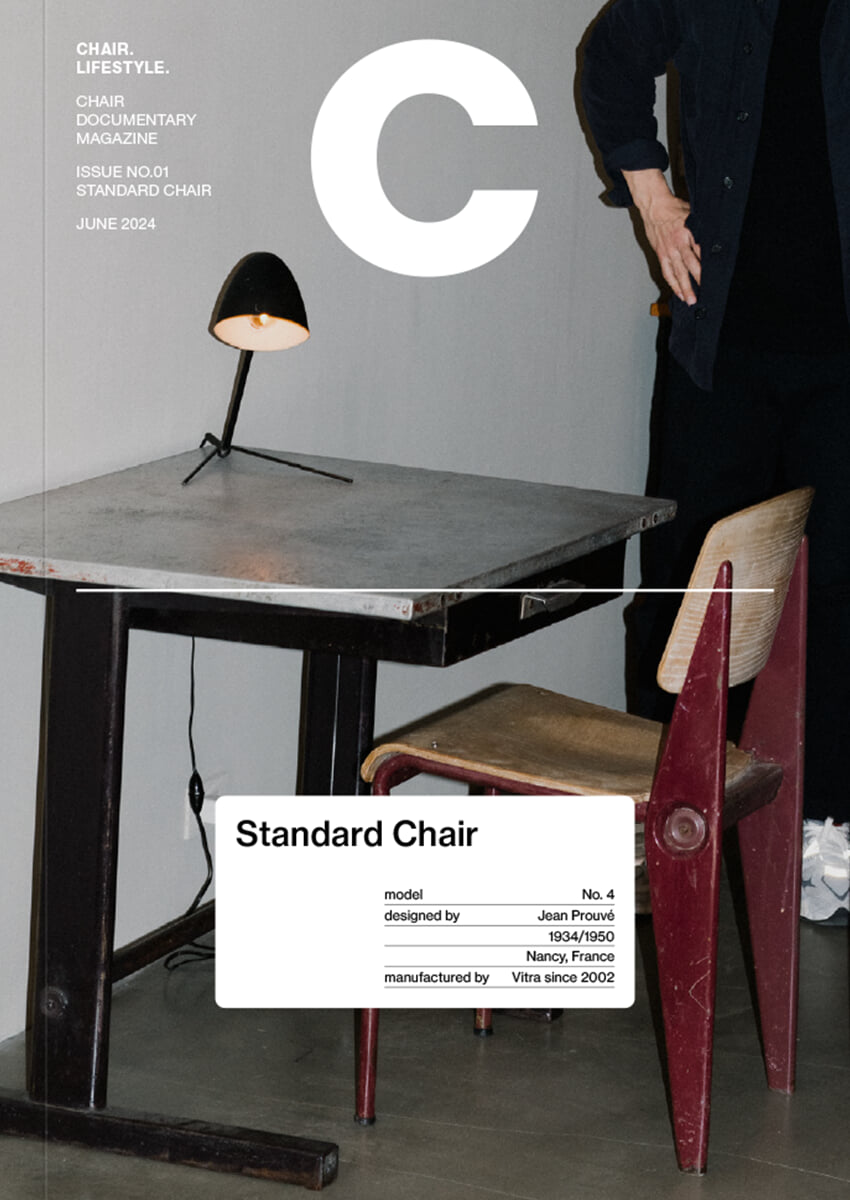
Magazine <C> is a chair documentary magazine that introduces design and lifestyle centered around an iconic chair selected by Grande Clip and Magazine <B> each issue.
Covering everything from famous chairs that have had a profound impact on related industries and public life to street chairs, it illuminates the designers, brands, manufacturers, collectors, and the lifestyles of those who sit in them, as well as their contemporary influence.
Grande Clip, which publishes the magazine “C,” is a new startup launched by Kim Bong-jin, founder of Woowa Brothers (Baedal Minjok). With the motto of “making small things great,” the company aims to find value in small and ordinary things like clips and make them meaningful and great.
Covering everything from famous chairs that have had a profound impact on related industries and public life to street chairs, it illuminates the designers, brands, manufacturers, collectors, and the lifestyles of those who sit in them, as well as their contemporary influence.
Grande Clip, which publishes the magazine “C,” is a new startup launched by Kim Bong-jin, founder of Woowa Brothers (Baedal Minjok). With the motto of “making small things great,” the company aims to find value in small and ordinary things like clips and make them meaningful and great.
index
02 intro
08 letter from c
Publisher's Note
12 quotes
Jean Prouvé as told by renowned architects and designers
14 5cities 5homes
Five homes in five cities: Paris, New Jersey, Amsterdam, Seoul, and Tokyo, featuring standard chairs.
Thierry Lamoine, CEO of Galerie One
new jersey Glenn Mariconda, Vice President of Denim Design at American Eagle
Thomas Vermeer, stylist in Amsterdam
Seoul Park Geun-ha, CEO of Rooming
Tokyo Yusaku Maezawa, founder of Zozotown
60 designer, Jean Prouve
Jean Prouvé's life and design, with keywords such as function, practicality, factory, society, and evolution.
68 iconic chair
From the No. 4 chair produced in 1934 to the Metropole No. 305 chair introduced in 1950, the birth of the standard chair.
74 shape of Prouve
Jean Prouvé's signature collection with clear design principles and structural principles.
80 essay
Dejan Sudich, Honorary Director of the Design Museum in London, discusses the essence of Jean Prouvé's designs.
84 special interview
An Interview with Rolf Fehlbaum, Honorary Chairman of Vitra and Chair Collector
95 about vitra
Respect for design, innovative technology, and even a perspective that views chairs as a culture.
Vitra's philosophy of producing standard chairs.
100 vitra classics
A line of classic designs produced by Vitra, including Jean Prouvé, Charles & Ray Eames, and Verner Panton.
105 assembly system
The Standard Chair's assembly system reflects the philosophy that "making furniture is no different from building a house."
108 digest
How Vitra modernized and evolved the Standard Chair and the Jean Prouvé collection
112 on the scene
Standard chairs are placed throughout the Vitra campus, which is filled with design icons.
122 opinions
Patrick Seguin, who deeply studied and widely promoted the value and historical significance of Jean Prouvé's designs.
130 spots
From rare and expensive art pieces to used furniture chosen for sustainability.
A place where you can find standard chairs consumed with various symbols and meanings.
148 viewing rooms
The styling of the standard chair, which is the most basic chair and can be recreated with color combinations.
158 opinions
John Kawillman, Global Lead of Workplace Design for On, a sportswear brand, filled the headquarters with Jean Prouvé collections.
164 opinions
Marco Posi, Chairman of the ISO Furniture Technical Committee, which establishes furniture standardization.
170 new wave
Bul-dweller, Hale-tears Achaia, and Beformative.
The design methodology of three teams of designers who digested 'standard' as a keyword.
180 chairpunk
A chair that rides like a sled, a chair that looks like a still life sculpture, and a chair for the anxious.
Kwon Oh-sang, Park Gil-jong, and Damo Twist the "Standard Chair"
184 chair index
my favorite chair
186 outro
08 letter from c
Publisher's Note
12 quotes
Jean Prouvé as told by renowned architects and designers
14 5cities 5homes
Five homes in five cities: Paris, New Jersey, Amsterdam, Seoul, and Tokyo, featuring standard chairs.
Thierry Lamoine, CEO of Galerie One
new jersey Glenn Mariconda, Vice President of Denim Design at American Eagle
Thomas Vermeer, stylist in Amsterdam
Seoul Park Geun-ha, CEO of Rooming
Tokyo Yusaku Maezawa, founder of Zozotown
60 designer, Jean Prouve
Jean Prouvé's life and design, with keywords such as function, practicality, factory, society, and evolution.
68 iconic chair
From the No. 4 chair produced in 1934 to the Metropole No. 305 chair introduced in 1950, the birth of the standard chair.
74 shape of Prouve
Jean Prouvé's signature collection with clear design principles and structural principles.
80 essay
Dejan Sudich, Honorary Director of the Design Museum in London, discusses the essence of Jean Prouvé's designs.
84 special interview
An Interview with Rolf Fehlbaum, Honorary Chairman of Vitra and Chair Collector
95 about vitra
Respect for design, innovative technology, and even a perspective that views chairs as a culture.
Vitra's philosophy of producing standard chairs.
100 vitra classics
A line of classic designs produced by Vitra, including Jean Prouvé, Charles & Ray Eames, and Verner Panton.
105 assembly system
The Standard Chair's assembly system reflects the philosophy that "making furniture is no different from building a house."
108 digest
How Vitra modernized and evolved the Standard Chair and the Jean Prouvé collection
112 on the scene
Standard chairs are placed throughout the Vitra campus, which is filled with design icons.
122 opinions
Patrick Seguin, who deeply studied and widely promoted the value and historical significance of Jean Prouvé's designs.
130 spots
From rare and expensive art pieces to used furniture chosen for sustainability.
A place where you can find standard chairs consumed with various symbols and meanings.
148 viewing rooms
The styling of the standard chair, which is the most basic chair and can be recreated with color combinations.
158 opinions
John Kawillman, Global Lead of Workplace Design for On, a sportswear brand, filled the headquarters with Jean Prouvé collections.
164 opinions
Marco Posi, Chairman of the ISO Furniture Technical Committee, which establishes furniture standardization.
170 new wave
Bul-dweller, Hale-tears Achaia, and Beformative.
The design methodology of three teams of designers who digested 'standard' as a keyword.
180 chairpunk
A chair that rides like a sled, a chair that looks like a still life sculpture, and a chair for the anxious.
Kwon Oh-sang, Park Gil-jong, and Damo Twist the "Standard Chair"
184 chair index
my favorite chair
186 outro
Detailed image

Publisher's Review
■ Issue Introduction
The Standard Chair is based on the No. 4 Chair, created by French designer and architect Jean Prouvé in 1934.
Jean Prouvé spent a long time modifying the material and design of the No. 4 chair, and in the 1950s he completed a 'standard' chair that was easy to mass-produce.
With a classic design, excellent durability, reasonable price, and practicality for various uses, the Standard Chair is the most 'chair-like' chair and sets the 'standard' for chairs.
Magazine C covers everything about the 'Standard Chair' from a professional perspective, from Jean Prouvé's design story, to how the No. 4 chair evolved through many stages to become an iconic chair, and to Vitra's manufacturing industry that produces it today.
We also interview people who use and collect standard chairs around the world to explore their influence on our lifestyles today and the values of 'standardization,' 'practicality,' and 'classicism.'
How many chairs are there in the world? Whether rich or poor, living in the city or in the countryside, everyone probably has at least one chair to sit on.
Considering the chairs used at home and in the office, as well as those in cafes and public facilities, I believe there are far more chairs in the world than people.
Besides, chairs are discarded very slowly.
As of 2024, the world's population will exceed 8.1 billion, so let's leave that number to your imagination.
Many chairs have been made so far.
Just as people are classified as famous or unknown, so are chairs.
There are pieces that cost hundreds of millions of won, as well as chairs that cost a few thousand won.
Some chairs are remembered for a very long time and are consistently loved by people.
But what designer would dare call a chair they created "Standard"? It feels like a grand declaration of intent to establish the prototype and standard for chairs.
The definition of a standard chair is interesting from the start.
As the name "Standard" suggests, I wasn't particularly impressed when I first saw it.
(Laughs) It’s a familiar shape to our eyes these days, so much so that it’s called a ‘school chair.’
When you understand Jean Prouvé's background—he was a pragmatist who emphasized function over decoration and developed his own manufacturing standards that facilitated mass production—it becomes understandable why he came up with this design.
His goal was to create an affordable chair that people could sit comfortably in and that could be widely used in public places such as schools and libraries.
As a result, Vitra continues to produce them to this day, and they are traded at 'non-standard' prices in the vintage market.
Factory-made goods are traded as art pieces, and many people still talk about Jean Prouvé and the Standard Chair.
The Standard Chair, which set a new standard for chairs, has become a design icon that designers and architects are eager to emulate.
So, it feels meaningful that the inaugural issue features the Standard Chair.
We plan to gradually learn about this iconic chair together with the magazine C.
I decided to study design after watching a documentary about IKEA when I was in high school.
I had fun studying and even entered it into a contest and won a prize.
I really wanted to try my hand at the furniture business, but I failed.
I thought I should never do furniture business again. (Laughs) I learned that furniture is a complex and difficult business.
After that, he founded Baedal Minjok.
But because I love furniture so much, I wanted to support this industry by investing in furniture businesses or creating related media.
The first reason I am publishing this magazine, C, is to pay tribute to and pay respect to senior designers.
Second, we wanted to widely introduce valuable content from those in the furniture industry, and third, we wanted to provide useful information to those who love furniture.
Magazine C, planned by my new company Grandeclip, is published as a sister publication to magazine B.
People say the magazine industry is in decline, but the editor-in-chief of magazine B, Jo Su-yong, created a special format and successfully established it in the market.
I, too, sympathized with this challenge, and after several discussions, we launched the magazine "F," which selects and introduces ingredients that influence food culture.
And the second collaboration is with the magazine C, which covers the sharpest chairs in the furniture world.
Magazine <F> once said that the measure of success is becoming a magazine that chefs collect, and I hope Magazine <C> will become a book that people place next to their favorite furniture.
Publisher Kim Bong-jin
The Standard Chair is based on the No. 4 Chair, created by French designer and architect Jean Prouvé in 1934.
Jean Prouvé spent a long time modifying the material and design of the No. 4 chair, and in the 1950s he completed a 'standard' chair that was easy to mass-produce.
With a classic design, excellent durability, reasonable price, and practicality for various uses, the Standard Chair is the most 'chair-like' chair and sets the 'standard' for chairs.
Magazine C covers everything about the 'Standard Chair' from a professional perspective, from Jean Prouvé's design story, to how the No. 4 chair evolved through many stages to become an iconic chair, and to Vitra's manufacturing industry that produces it today.
We also interview people who use and collect standard chairs around the world to explore their influence on our lifestyles today and the values of 'standardization,' 'practicality,' and 'classicism.'
How many chairs are there in the world? Whether rich or poor, living in the city or in the countryside, everyone probably has at least one chair to sit on.
Considering the chairs used at home and in the office, as well as those in cafes and public facilities, I believe there are far more chairs in the world than people.
Besides, chairs are discarded very slowly.
As of 2024, the world's population will exceed 8.1 billion, so let's leave that number to your imagination.
Many chairs have been made so far.
Just as people are classified as famous or unknown, so are chairs.
There are pieces that cost hundreds of millions of won, as well as chairs that cost a few thousand won.
Some chairs are remembered for a very long time and are consistently loved by people.
But what designer would dare call a chair they created "Standard"? It feels like a grand declaration of intent to establish the prototype and standard for chairs.
The definition of a standard chair is interesting from the start.
As the name "Standard" suggests, I wasn't particularly impressed when I first saw it.
(Laughs) It’s a familiar shape to our eyes these days, so much so that it’s called a ‘school chair.’
When you understand Jean Prouvé's background—he was a pragmatist who emphasized function over decoration and developed his own manufacturing standards that facilitated mass production—it becomes understandable why he came up with this design.
His goal was to create an affordable chair that people could sit comfortably in and that could be widely used in public places such as schools and libraries.
As a result, Vitra continues to produce them to this day, and they are traded at 'non-standard' prices in the vintage market.
Factory-made goods are traded as art pieces, and many people still talk about Jean Prouvé and the Standard Chair.
The Standard Chair, which set a new standard for chairs, has become a design icon that designers and architects are eager to emulate.
So, it feels meaningful that the inaugural issue features the Standard Chair.
We plan to gradually learn about this iconic chair together with the magazine C.
I decided to study design after watching a documentary about IKEA when I was in high school.
I had fun studying and even entered it into a contest and won a prize.
I really wanted to try my hand at the furniture business, but I failed.
I thought I should never do furniture business again. (Laughs) I learned that furniture is a complex and difficult business.
After that, he founded Baedal Minjok.
But because I love furniture so much, I wanted to support this industry by investing in furniture businesses or creating related media.
The first reason I am publishing this magazine, C, is to pay tribute to and pay respect to senior designers.
Second, we wanted to widely introduce valuable content from those in the furniture industry, and third, we wanted to provide useful information to those who love furniture.
Magazine C, planned by my new company Grandeclip, is published as a sister publication to magazine B.
People say the magazine industry is in decline, but the editor-in-chief of magazine B, Jo Su-yong, created a special format and successfully established it in the market.
I, too, sympathized with this challenge, and after several discussions, we launched the magazine "F," which selects and introduces ingredients that influence food culture.
And the second collaboration is with the magazine C, which covers the sharpest chairs in the furniture world.
Magazine <F> once said that the measure of success is becoming a magazine that chefs collect, and I hope Magazine <C> will become a book that people place next to their favorite furniture.
Publisher Kim Bong-jin
GOODS SPECIFICS
- Date of issue: July 1, 2024
- Page count, weight, size: 192 pages | 352g | 170*240*20mm
- ISBN13: 9791198807007
- ISBN10: 1198807008
You may also like
카테고리
korean


korean

![GQ KOREA Mark (Monthly): December [2025]](http://librairie.coreenne.fr/cdn/shop/files/8ef265dbbfbf186523ed75ba7319009d.jpg?v=1765340328&width=3840)


