![Magazine B (Monthly): June Korean Edition [2018]](http://librairie.coreenne.fr/cdn/shop/files/33972b64d53bf5b8e387eb40641210d1.jpg?v=1765333820&width=3840)

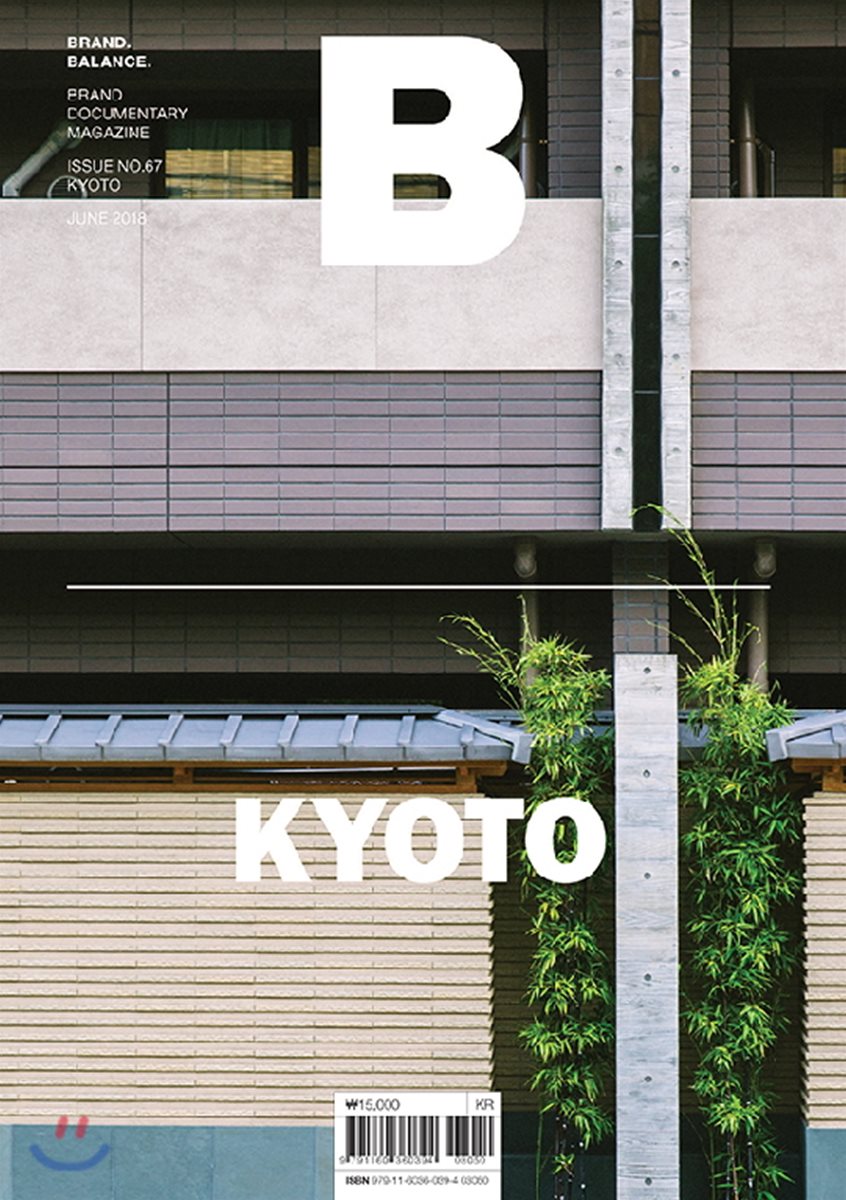
Magazine B (Monthly): June Korean Edition [2018]
 |
Description
index
02 Intro
09 Editor's Letter
12 Impression
Kyoto seen through the scenery
18 Observers
The beauty of Kyoto as told by those who have experienced it
22 Collected
Things that remind me of Kyoto
26 Overview
Socio-cultural keywords for understanding Kyoto and figures that provide a glimpse into the city's diverse aspects.
36 At Dawn
A morning at the Suiran Luxury Collection Hotel
42 Exploration
A walking course by district to savor the charm of Kyoto
48 Coffee Culture
Kyoto cafes that capture the city's ideal lifestyle.
54 Dining Scene
Kyoto's food culture as seen through the eyes of food and restaurant industry experts.
66 Local Tours
Traditional markets and taverns experienced through local tours
72 Objects
Things that resemble Kyoto that I discovered while covering Kyoto.
74 Community
Kyoto's traditions and creativity as seen through a community of people carrying on tradition.
88 New Wave
Potential seen through the movements of individuals and creative groups expanding into new areas
96 Art Platform
Kyotographie, an event showcasing Kyoto's openness and respect for art.
100 At Dusk
Four Seasons Hotel Kyoto, with its night garden
104 Understated
Colors encountered in Kyoto
112 Settlers
Life in Kyoto as told by people from other regions who settled in Kyoto
116 Harmonized
Global brands that fuse their identities with Kyoto's unique sensibilities.
122 Where to Go
Places to visit in Kyoto, organized by area
128 References
Books about Kyoto with a firm perspective
133 Outro
09 Editor's Letter
12 Impression
Kyoto seen through the scenery
18 Observers
The beauty of Kyoto as told by those who have experienced it
22 Collected
Things that remind me of Kyoto
26 Overview
Socio-cultural keywords for understanding Kyoto and figures that provide a glimpse into the city's diverse aspects.
36 At Dawn
A morning at the Suiran Luxury Collection Hotel
42 Exploration
A walking course by district to savor the charm of Kyoto
48 Coffee Culture
Kyoto cafes that capture the city's ideal lifestyle.
54 Dining Scene
Kyoto's food culture as seen through the eyes of food and restaurant industry experts.
66 Local Tours
Traditional markets and taverns experienced through local tours
72 Objects
Things that resemble Kyoto that I discovered while covering Kyoto.
74 Community
Kyoto's traditions and creativity as seen through a community of people carrying on tradition.
88 New Wave
Potential seen through the movements of individuals and creative groups expanding into new areas
96 Art Platform
Kyotographie, an event showcasing Kyoto's openness and respect for art.
100 At Dusk
Four Seasons Hotel Kyoto, with its night garden
104 Understated
Colors encountered in Kyoto
112 Settlers
Life in Kyoto as told by people from other regions who settled in Kyoto
116 Harmonized
Global brands that fuse their identities with Kyoto's unique sensibilities.
122 Where to Go
Places to visit in Kyoto, organized by area
128 References
Books about Kyoto with a firm perspective
133 Outro
Publisher's Review
This is the sixty-seventh issue of Magazine B.
Last year around this time, I was covering the Portland issue, and as we transitioned from spring to summer, I was introduced to another city: Kyoto.
This is the second Asian city to be covered after the Seoul issue, and the first Japanese city to be selected.
Considering that Magazine B has consistently covered Japanese brands, from Snow Peak to Porter, Tsutaya, and Balmuda, perhaps this was a rite of passage that had to be experienced at least once.
I always thought I knew Japan well, having traveled there for brand coverage and personal travel, but Kyoto, when I looked closely, felt like a difficult homework assignment.
Every time I met people who were living and working in the city and talked to them, I felt like several layers of veils were being lifted.
Some cities, stripped of their flashy wrappings, are nothing but densely packed cities, while others are less flashy but still densely packed. Kyoto falls into the latter category.
The difference is clear even when compared to Tokyo, Japan's current capital.
If Tokyo is a city that radiates with things that dazzle the eyes and mind, Kyoto is closer to a city that calmly converges.
Convergence here means focusing on myself.
In modern city life, where we are constantly bombarded by external stimuli, it is not easy to focus on myself.
This is especially true in an age where expression is considered a virtue, encouraging people to vent about trivial emotions or fleeting experiences.
Yet, Kyoto and its people are not easily shaken.
They know how to protect themselves even in the face of tourists and foreign capital flocking like moths to a flame.
So, outsiders visiting Kyoto cannot help but be thorough observers.
To the point where phrases like “live like a local” that represent the current travel trend are becoming meaningless.
Magazine B also tried to maintain an observer's distance while creating this issue.
That's why we follow the same movements of travelers who arrive in a city, have breakfast at their accommodation, take a walk, have coffee, stop by a market, or visit a restaurant that serves dishes using local ingredients.
I also met the younger generation who are preserving Kyoto's traditions.
In Kyoto, where workshops and shops with 200 to 300 years of history are common, taking over a family business is not something to be excited about, but Kyoto creators who embrace new trends and combine them with tradition in a reasonable way are worth paying attention to.
Through their stories, I was able to look at the concept of 'tradition' in a new way.
What Kyoto has preserved is not only its traditions, such as historic sites and old buildings, but also beauty, the eye for beauty, and the technology that embodies it.
It is only natural that precious and valuable things would flock to a city that served as the capital of a nation for a thousand years, and that a sophisticated culture would develop there.
However, it is rare for such assets to continue their legacy as a part of daily life culture rather than being stored in a museum.
As with many Japanese cities, I feel that Kyoto has a particularly high standard of living and culture.
You could say there is a kind of 'Kyoto standard'.
The beauty of a well-preserved temple garden is not so different from the beauty felt in a flowerpot decorating a small house terrace, and the gap between the attentive hospitality received in a cramped shop in a market and the luxurious service enjoyed in a high-class kaiseki restaurant is not so different.
It could be explained by a good agreement in all aspects of the city's composition.
Agreement is a very important keyword when defining the nature of a brand.
Only when the direction and goals of the company drawn by designers, marketers, executives, and employees are aligned can a certain order be created, and that order creates a good brand.
In that sense, I wonder if there is another city that resembles a brand as much as Kyoto.
I hope this city maintains its unique solid construction, pace, and tenacity in a wise way, and that when I return here in the near future, I will do so with the leisurely gaze of a traveler.
Editor-in-Chief Park Eun-seong
Last year around this time, I was covering the Portland issue, and as we transitioned from spring to summer, I was introduced to another city: Kyoto.
This is the second Asian city to be covered after the Seoul issue, and the first Japanese city to be selected.
Considering that Magazine B has consistently covered Japanese brands, from Snow Peak to Porter, Tsutaya, and Balmuda, perhaps this was a rite of passage that had to be experienced at least once.
I always thought I knew Japan well, having traveled there for brand coverage and personal travel, but Kyoto, when I looked closely, felt like a difficult homework assignment.
Every time I met people who were living and working in the city and talked to them, I felt like several layers of veils were being lifted.
Some cities, stripped of their flashy wrappings, are nothing but densely packed cities, while others are less flashy but still densely packed. Kyoto falls into the latter category.
The difference is clear even when compared to Tokyo, Japan's current capital.
If Tokyo is a city that radiates with things that dazzle the eyes and mind, Kyoto is closer to a city that calmly converges.
Convergence here means focusing on myself.
In modern city life, where we are constantly bombarded by external stimuli, it is not easy to focus on myself.
This is especially true in an age where expression is considered a virtue, encouraging people to vent about trivial emotions or fleeting experiences.
Yet, Kyoto and its people are not easily shaken.
They know how to protect themselves even in the face of tourists and foreign capital flocking like moths to a flame.
So, outsiders visiting Kyoto cannot help but be thorough observers.
To the point where phrases like “live like a local” that represent the current travel trend are becoming meaningless.
Magazine B also tried to maintain an observer's distance while creating this issue.
That's why we follow the same movements of travelers who arrive in a city, have breakfast at their accommodation, take a walk, have coffee, stop by a market, or visit a restaurant that serves dishes using local ingredients.
I also met the younger generation who are preserving Kyoto's traditions.
In Kyoto, where workshops and shops with 200 to 300 years of history are common, taking over a family business is not something to be excited about, but Kyoto creators who embrace new trends and combine them with tradition in a reasonable way are worth paying attention to.
Through their stories, I was able to look at the concept of 'tradition' in a new way.
What Kyoto has preserved is not only its traditions, such as historic sites and old buildings, but also beauty, the eye for beauty, and the technology that embodies it.
It is only natural that precious and valuable things would flock to a city that served as the capital of a nation for a thousand years, and that a sophisticated culture would develop there.
However, it is rare for such assets to continue their legacy as a part of daily life culture rather than being stored in a museum.
As with many Japanese cities, I feel that Kyoto has a particularly high standard of living and culture.
You could say there is a kind of 'Kyoto standard'.
The beauty of a well-preserved temple garden is not so different from the beauty felt in a flowerpot decorating a small house terrace, and the gap between the attentive hospitality received in a cramped shop in a market and the luxurious service enjoyed in a high-class kaiseki restaurant is not so different.
It could be explained by a good agreement in all aspects of the city's composition.
Agreement is a very important keyword when defining the nature of a brand.
Only when the direction and goals of the company drawn by designers, marketers, executives, and employees are aligned can a certain order be created, and that order creates a good brand.
In that sense, I wonder if there is another city that resembles a brand as much as Kyoto.
I hope this city maintains its unique solid construction, pace, and tenacity in a wise way, and that when I return here in the near future, I will do so with the leisurely gaze of a traveler.
Editor-in-Chief Park Eun-seong
GOODS SPECIFICS
- Date of issue: June 7, 2018
- Page count, weight, size: 139 pages | 451g | 170*240*20mm
- ISBN13: 9791160360394
- ISBN10: 1160360391
You may also like
카테고리
korean


korean

![GQ KOREA Mark (Monthly): December [2025]](http://librairie.coreenne.fr/cdn/shop/files/8ef265dbbfbf186523ed75ba7319009d.jpg?v=1765340328&width=3840)


