

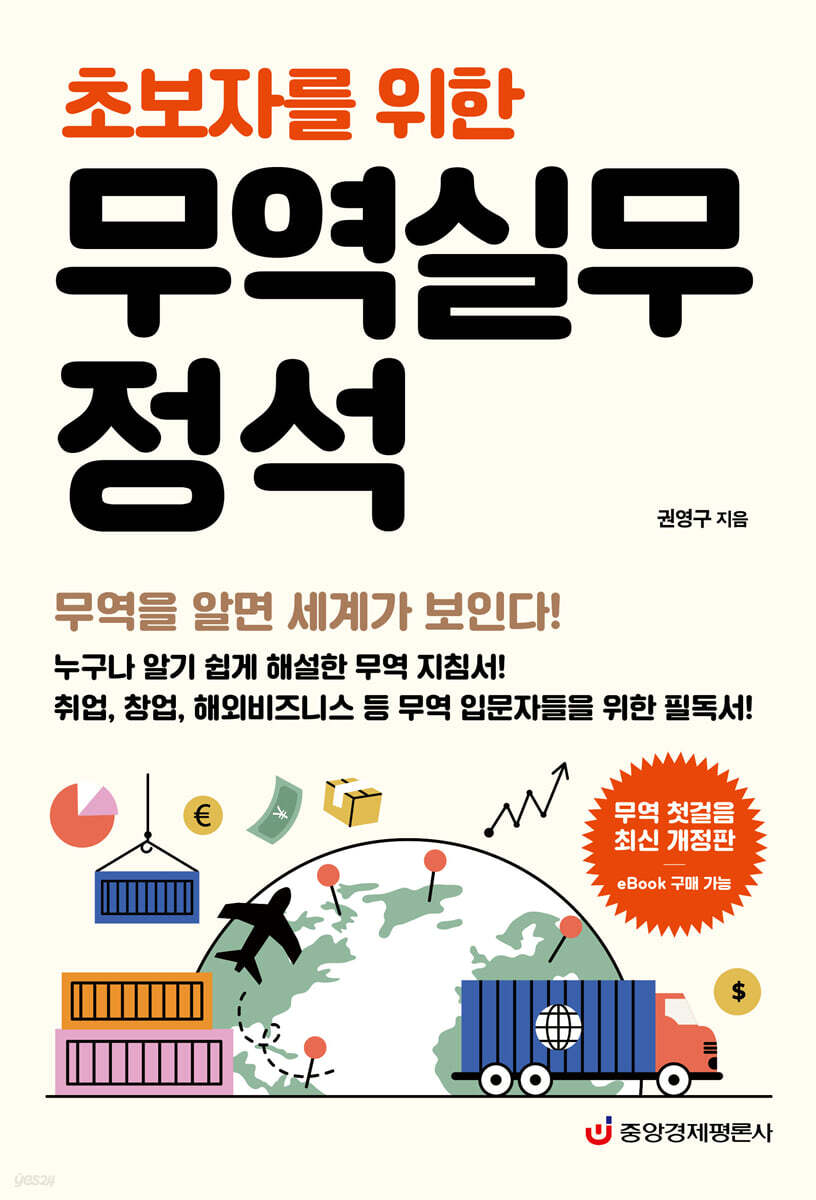
Trade Practice Essentials (for Beginners)
 |
Description
Book Introduction
Basic trade practice knowledge that can be applied immediately in the field!
How to Use Incoterms 2020: Essential for Trade Practice! This book explains various trade practices with pictures, diagrams, and samples to make them easy for readers to understand. In particular, it is designed to help beginners in trade acquire a solid foundation of trade practice and effectively apply it in the field. Therefore, you can master the fundamentals of trade practice with just one book, and it will become a must-read for beginners in trade who are responsible for practical work in the field. We have also prepared a guide to using Incoterms 2020, which is essential for trade practices. It explains the main contents and questions of Incoterms, which are revised every 10 years, in an easy-to-understand manner even for trade beginners, making it highly useful in practice. |
- You can preview some of the book's contents.
Preview
index
preface
Introduction: How to Get Started in Trading
Chapter 1: The Basics of Trade
What is trade? | What is the difference between trade and domestic trade? | Understanding the flow of trade | What risks are there in trade? | What kind of people are involved in trade? | What do you need to prepare when starting trade? | What knowledge is needed to practice trade? | What organizations support trade-related work? | Internet use is essential for trade work. | Understanding the main documents used in trade. | Understanding e-commerce. | What are the trade-related laws and regulations? | Understanding import and export item management.
* Special trade transaction type
Chapter 2: Flow of each trade practice task
Three things to know about export and import practices|Let's learn about the flow of export work|Let's learn about the flow of import work|Let's learn about the flow from the proposal to the conclusion of the contract|Parties and the flow of letters of credit in letter of credit transactions|The flow of customs clearance and shipping documents in letter of credit transactions|What is the flow of export customs clearance|What is the flow of bills of lading corrections|Let's learn about the flow of bills of exchange and purchasing documents|What is the flow of export cargo|What are the preparations for importing|What documents should be prepared for import customs clearance|Let's learn about the flow of import customs clearance|What should I do if the bill of lading arrives later than the cargo|What is the flow of import cargo|What is the flow of FCL cargo|What is the flow of LCL cargo
* Procedures for starting a small-capital trading business
Chapter 3 Trade Practice Documents
Understanding documents related to export and import|You need to know basic terms to read a letter of credit|Let's understand the contents of a letter of credit|Translation and supplementary explanation of a letter of credit|How to write an invoice|What should be included in a packing list|What is the role of a bill of lading|What function does an insurance policy have|What is a bill of exchange|Preparing required documents based on the contents of a letter of credit|Where to get a certificate of origin|Let's learn about other documents related to export and import|Let's learn in detail about the flow of letter of credit transactions|Let's understand the document writers and types of documents
* Small business start-up and taxes
Chapter 4 Trade Practice Points
How to conduct overseas market research | Confirmation of local certification system is a prerequisite for exporting | How to find products and suppliers to handle | How to discover overseas business partners | How to conduct credit checks on overseas business partners | What to include in an offer | What are the basic terms of an export/import contract | How to write an export/import contract | What to check when receiving a letter of credit | What to do if the letter of credit is different from the contract | What should I keep in mind when reserving space | How are ocean freight rates determined | There are various types of bills of lading | What are the checkpoints when receiving a bill of lading | What are the points of export customs clearance | Understanding and making good use of FTAs | What are the methods of ocean transportation | How to pay for export and import | You need to know Incoterms to export and import | Let's learn about Waybills | Let's learn about bonded areas | Why is the quarantine system necessary | Knowing the types of containers is helpful when needed Useful|Let's learn about marine insurance|What are the key points when planning an import business|There are some goods that cannot be imported in parallel|How do I open an import letter of credit|How can I find out if there are import restrictions|What is a tariff schedule|HS numbers affect tariffs|How are tariffs determined|What are the key points of import customs clearance|What should I do if a claim arises|The advantages of transporting by air cargo|How are air freight rates determined|What are the functions of an air cargo waybill|What is international multimodal transport|What types of international multimodal transport are there?
* Technical terms related to loading and unloading
Chapter 5: Developing Trade Skills
How should I approach trade? | How will acquiring practical trade skills help me? | Will trade-related certifications help me get a job? | What are the qualification exams for trade-related qualifications? | What skills are needed for trade professionals? | Document writing skills are one of the most important skills for trade professionals. | What are the key points in trade practice? | Let's find out about fields and companies where trade practice can be utilized.
* Export and small business tax rate system
Chapter 6 Trade Practice Terminology
Korean notation terminology|English notation terminology
- Let's keep this in mind
Trade (transaction) between three countries | Forwarders | Import, from domestic market research to contracts | Shipping Mark entry items | Export customs clearance is generally entrusted to a customs broker | Ship space reservation method and ship types | Basic insurance conditions and indemnified losses according to old insurance terms and conditions | Types of letters of credit and their merits | Marketing flow | Contract flow | Letter of credit terms and common checklists for bills of exchange and shipping documents | Flow of change in letter of credit terms | Precautions when reserving ships | Marine freight conditions | Regarding Surrendered B/L and Check B/L | Methods of collecting payment and confirming shipping documents under letter of credit terms | Types of taxation standards | Comparison of arbitration and trial | Types and contents of losses covered by cargo marine insurance | Regarding PL insurance | Regarding simplified customs clearance | Simplified duty rates and goods subject to simplified declaration
- I'm curious about this!
What is the difference between a bill of exchange and a draft?|What is a UNI-PASS?|What types of charter ships are there?|What is the origin of the term "conventional ship"?|Are there any revocable letters of credit?|What if there is a contradiction between the front (typewritten) and back (printed) of a contract?|What should I do if I actually suffer damage?
References
Search
Introduction: How to Get Started in Trading
Chapter 1: The Basics of Trade
What is trade? | What is the difference between trade and domestic trade? | Understanding the flow of trade | What risks are there in trade? | What kind of people are involved in trade? | What do you need to prepare when starting trade? | What knowledge is needed to practice trade? | What organizations support trade-related work? | Internet use is essential for trade work. | Understanding the main documents used in trade. | Understanding e-commerce. | What are the trade-related laws and regulations? | Understanding import and export item management.
* Special trade transaction type
Chapter 2: Flow of each trade practice task
Three things to know about export and import practices|Let's learn about the flow of export work|Let's learn about the flow of import work|Let's learn about the flow from the proposal to the conclusion of the contract|Parties and the flow of letters of credit in letter of credit transactions|The flow of customs clearance and shipping documents in letter of credit transactions|What is the flow of export customs clearance|What is the flow of bills of lading corrections|Let's learn about the flow of bills of exchange and purchasing documents|What is the flow of export cargo|What are the preparations for importing|What documents should be prepared for import customs clearance|Let's learn about the flow of import customs clearance|What should I do if the bill of lading arrives later than the cargo|What is the flow of import cargo|What is the flow of FCL cargo|What is the flow of LCL cargo
* Procedures for starting a small-capital trading business
Chapter 3 Trade Practice Documents
Understanding documents related to export and import|You need to know basic terms to read a letter of credit|Let's understand the contents of a letter of credit|Translation and supplementary explanation of a letter of credit|How to write an invoice|What should be included in a packing list|What is the role of a bill of lading|What function does an insurance policy have|What is a bill of exchange|Preparing required documents based on the contents of a letter of credit|Where to get a certificate of origin|Let's learn about other documents related to export and import|Let's learn in detail about the flow of letter of credit transactions|Let's understand the document writers and types of documents
* Small business start-up and taxes
Chapter 4 Trade Practice Points
How to conduct overseas market research | Confirmation of local certification system is a prerequisite for exporting | How to find products and suppliers to handle | How to discover overseas business partners | How to conduct credit checks on overseas business partners | What to include in an offer | What are the basic terms of an export/import contract | How to write an export/import contract | What to check when receiving a letter of credit | What to do if the letter of credit is different from the contract | What should I keep in mind when reserving space | How are ocean freight rates determined | There are various types of bills of lading | What are the checkpoints when receiving a bill of lading | What are the points of export customs clearance | Understanding and making good use of FTAs | What are the methods of ocean transportation | How to pay for export and import | You need to know Incoterms to export and import | Let's learn about Waybills | Let's learn about bonded areas | Why is the quarantine system necessary | Knowing the types of containers is helpful when needed Useful|Let's learn about marine insurance|What are the key points when planning an import business|There are some goods that cannot be imported in parallel|How do I open an import letter of credit|How can I find out if there are import restrictions|What is a tariff schedule|HS numbers affect tariffs|How are tariffs determined|What are the key points of import customs clearance|What should I do if a claim arises|The advantages of transporting by air cargo|How are air freight rates determined|What are the functions of an air cargo waybill|What is international multimodal transport|What types of international multimodal transport are there?
* Technical terms related to loading and unloading
Chapter 5: Developing Trade Skills
How should I approach trade? | How will acquiring practical trade skills help me? | Will trade-related certifications help me get a job? | What are the qualification exams for trade-related qualifications? | What skills are needed for trade professionals? | Document writing skills are one of the most important skills for trade professionals. | What are the key points in trade practice? | Let's find out about fields and companies where trade practice can be utilized.
* Export and small business tax rate system
Chapter 6 Trade Practice Terminology
Korean notation terminology|English notation terminology
- Let's keep this in mind
Trade (transaction) between three countries | Forwarders | Import, from domestic market research to contracts | Shipping Mark entry items | Export customs clearance is generally entrusted to a customs broker | Ship space reservation method and ship types | Basic insurance conditions and indemnified losses according to old insurance terms and conditions | Types of letters of credit and their merits | Marketing flow | Contract flow | Letter of credit terms and common checklists for bills of exchange and shipping documents | Flow of change in letter of credit terms | Precautions when reserving ships | Marine freight conditions | Regarding Surrendered B/L and Check B/L | Methods of collecting payment and confirming shipping documents under letter of credit terms | Types of taxation standards | Comparison of arbitration and trial | Types and contents of losses covered by cargo marine insurance | Regarding PL insurance | Regarding simplified customs clearance | Simplified duty rates and goods subject to simplified declaration
- I'm curious about this!
What is the difference between a bill of exchange and a draft?|What is a UNI-PASS?|What types of charter ships are there?|What is the origin of the term "conventional ship"?|Are there any revocable letters of credit?|What if there is a contradiction between the front (typewritten) and back (printed) of a contract?|What should I do if I actually suffer damage?
References
Search
Detailed image

Into the book
In the case of exports, manufacturers can export their own products, but if they are not manufacturers, they must find export products.
In the case of imports, it is necessary to conduct a domestic market survey to determine which products to import.
In this case, you must first check whether there are any problems with domestic imports.
--- p.28
The exporter prepares purchasing documents such as a bill of exchange to receive payment.
In the case of a letter of credit transaction, the required number of documents required by the letter of credit are prepared.
It is also necessary to check whether the contents of the Bill of Lading (B/L) issued by the shipping company and the Insurance Policy (I/P) issued by the insurance company are written accurately according to the contents of the letter of credit.
If there is a difference, immediately request a correction from the issuing company.
--- p.65
Each document that appears in trade practice has its own unique format.
You should know how to read documents and their features so that you can apply them in practice.
It is important to accurately prepare and verify the contents of documents required for export and import, such as invoices, packing lists, bills of lading, letters of credit, bills of exchange, insurance policies, and certificates of origin.
Therefore, let's make sure we understand how to write trade documents, and the nature, function, and role of each document.
--- p.107
A trade transaction is when an exporter sells goods to an importer and collects or pays the price.
Basically, it is a relationship of mutual trust, but unlike domestic transactions, it is difficult to know the circumstances of the overseas counterparty (such as the political and economic conditions of the other country or the counterparty's credit status) due to the different business environment, so an objective credit investigation is absolutely necessary.
--- p.176
If there is any difference between the contents of the letter of credit and the contract, immediately request the importer to amend the contents of the letter of credit.
After receiving the revised version, check the contents and attach the revised version to the original letter of credit when purchasing and request the purchase process.
This is the most desirable method when you have time to spare.
--- p.196
In trade transactions, there is a time lag between the delivery of goods and payment because the counterparty is located overseas.
A way to avoid that risk is a letter of credit (L/C).
A letter of credit is a guarantee that the importer's bank will pay the exporter.
The exporter requests the purchase of a bill of exchange that complies with the terms of the letter of credit and receives payment.
Therefore, exporters can export with confidence because they can avoid the risk of payment collection.
--- p.213
Trade documents are diverse and each document has its own role.
Therefore, you must understand the contents of each type of document required for trade practice and be able to write them accurately.
Mistakes made through carelessness when writing documents can sometimes be irreversible, so it is important to be extremely careful when writing documents.
In particular, the amount notation on a bill of exchange (B/E) cannot be modified, so accuracy is even more important.
In the case of imports, it is necessary to conduct a domestic market survey to determine which products to import.
In this case, you must first check whether there are any problems with domestic imports.
--- p.28
The exporter prepares purchasing documents such as a bill of exchange to receive payment.
In the case of a letter of credit transaction, the required number of documents required by the letter of credit are prepared.
It is also necessary to check whether the contents of the Bill of Lading (B/L) issued by the shipping company and the Insurance Policy (I/P) issued by the insurance company are written accurately according to the contents of the letter of credit.
If there is a difference, immediately request a correction from the issuing company.
--- p.65
Each document that appears in trade practice has its own unique format.
You should know how to read documents and their features so that you can apply them in practice.
It is important to accurately prepare and verify the contents of documents required for export and import, such as invoices, packing lists, bills of lading, letters of credit, bills of exchange, insurance policies, and certificates of origin.
Therefore, let's make sure we understand how to write trade documents, and the nature, function, and role of each document.
--- p.107
A trade transaction is when an exporter sells goods to an importer and collects or pays the price.
Basically, it is a relationship of mutual trust, but unlike domestic transactions, it is difficult to know the circumstances of the overseas counterparty (such as the political and economic conditions of the other country or the counterparty's credit status) due to the different business environment, so an objective credit investigation is absolutely necessary.
--- p.176
If there is any difference between the contents of the letter of credit and the contract, immediately request the importer to amend the contents of the letter of credit.
After receiving the revised version, check the contents and attach the revised version to the original letter of credit when purchasing and request the purchase process.
This is the most desirable method when you have time to spare.
--- p.196
In trade transactions, there is a time lag between the delivery of goods and payment because the counterparty is located overseas.
A way to avoid that risk is a letter of credit (L/C).
A letter of credit is a guarantee that the importer's bank will pay the exporter.
The exporter requests the purchase of a bill of exchange that complies with the terms of the letter of credit and receives payment.
Therefore, exporters can export with confidence because they can avoid the risk of payment collection.
--- p.213
Trade documents are diverse and each document has its own role.
Therefore, you must understand the contents of each type of document required for trade practice and be able to write them accurately.
Mistakes made through carelessness when writing documents can sometimes be irreversible, so it is important to be extremely careful when writing documents.
In particular, the amount notation on a bill of exchange (B/E) cannot be modified, so accuracy is even more important.
--- p.288
Publisher's Review
The ultimate introductory book to trade practices, made easy with illustrations and tables!
Includes 500 of the latest trade terms!
Trade practice is the knowledge necessary to conduct trade smoothly and without problems.
It is difficult to start trading without knowing the practical aspects.
There are many ways to study trade practice.
Among these, the various trade practice knowledge introduced in this book can be said to be a compilation of basic knowledge for each task in trade practice.
The content is organized so that beginners in trade can master the basics of trade practice in this one book.
In this book, we have tried to make it easy for readers to understand by including as many pictures (diagrams) as possible, as well as the content related to import and export.
To help readers understand, the picture is placed on the right page.
This is to ensure that readers can understand the content clearly by first reading the explanatory text on the left page and then looking at the picture that briefly summarizes and organizes the content.
Additionally, any terms that I feel require explanation are briefly explained at the bottom of the page as 'WORD'.
In particular, the last chapter briefly summarizes the trade practice-related terminology used in the trade field.
You can use this book as a textbook to learn unfamiliar trade terms when you encounter them in your trade practice.
A trading guide that's easy for anyone to understand!
A must-read for those new to trade, whether looking for a job, starting a business, or doing business overseas!
First, for those who are just starting out in trading, we introduced how to start trading and how to acquire practical trade knowledge.
And it explained the basics of trade, such as people involved in trade practices, the difference between trade practices and domestic transactions, and especially, to help beginners in trade easily understand each task of trade practices, it explained the flow of exports and imports, as well as the flow of each task, and the contents, roles, and writing methods of important documents related to trade.
The trade process involves a variety of practical tasks, from overseas market research to payment-related practices, including letters of credit, and claims-related practices.
To trade, you need to know the basics of these practices.
Therefore, we have compiled all the basic trade practice points that are good to know when you first start trading and explained them with related pictures.
Additionally, various 'tips' that can be helpful when conducting trade practices were introduced under the titles "Let's Know" and "I'm curious about this!"
Therefore, this book will be helpful not only to readers who are just starting out in trading, but also to schools, businesses, and those already engaged in trade.
This book is especially loved by readers as a must-read for those new to trading.
Includes 500 of the latest trade terms!
Trade practice is the knowledge necessary to conduct trade smoothly and without problems.
It is difficult to start trading without knowing the practical aspects.
There are many ways to study trade practice.
Among these, the various trade practice knowledge introduced in this book can be said to be a compilation of basic knowledge for each task in trade practice.
The content is organized so that beginners in trade can master the basics of trade practice in this one book.
In this book, we have tried to make it easy for readers to understand by including as many pictures (diagrams) as possible, as well as the content related to import and export.
To help readers understand, the picture is placed on the right page.
This is to ensure that readers can understand the content clearly by first reading the explanatory text on the left page and then looking at the picture that briefly summarizes and organizes the content.
Additionally, any terms that I feel require explanation are briefly explained at the bottom of the page as 'WORD'.
In particular, the last chapter briefly summarizes the trade practice-related terminology used in the trade field.
You can use this book as a textbook to learn unfamiliar trade terms when you encounter them in your trade practice.
A trading guide that's easy for anyone to understand!
A must-read for those new to trade, whether looking for a job, starting a business, or doing business overseas!
First, for those who are just starting out in trading, we introduced how to start trading and how to acquire practical trade knowledge.
And it explained the basics of trade, such as people involved in trade practices, the difference between trade practices and domestic transactions, and especially, to help beginners in trade easily understand each task of trade practices, it explained the flow of exports and imports, as well as the flow of each task, and the contents, roles, and writing methods of important documents related to trade.
The trade process involves a variety of practical tasks, from overseas market research to payment-related practices, including letters of credit, and claims-related practices.
To trade, you need to know the basics of these practices.
Therefore, we have compiled all the basic trade practice points that are good to know when you first start trading and explained them with related pictures.
Additionally, various 'tips' that can be helpful when conducting trade practices were introduced under the titles "Let's Know" and "I'm curious about this!"
Therefore, this book will be helpful not only to readers who are just starting out in trading, but also to schools, businesses, and those already engaged in trade.
This book is especially loved by readers as a must-read for those new to trading.
GOODS SPECIFICS
- Date of issue: August 22, 2024
- Page count, weight, size: 348 pages | 612g | 153*225*21mm
- ISBN13: 9788960543393
- ISBN10: 896054339X
You may also like
카테고리
korean


korean

![GQ KOREA Mark (Monthly): December [2025]](http://librairie.coreenne.fr/cdn/shop/files/8ef265dbbfbf186523ed75ba7319009d.jpg?v=1765340328&width=3840)


