

attention area
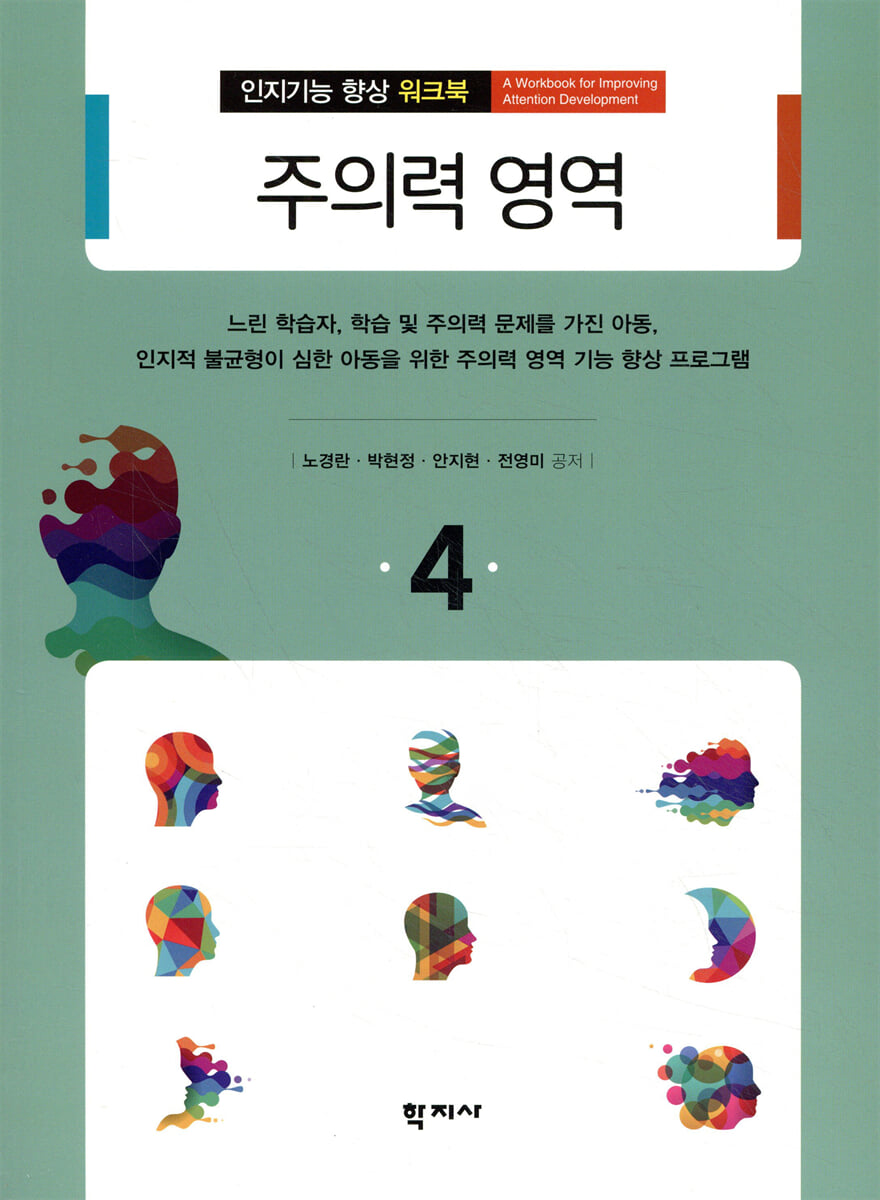 |
Description
Book Introduction
One of the most widely used psychological tests in clinical practice today is the Wechsler Intelligence Scale.
Therefore, although we spend a lot of time, energy, and money administering the Wechsler Intelligence Test, the utility of the results of the intelligence test is very limited compared to the cost.
The Wechsler Intelligence Scale has been used as a management model for testing, classification, and placement in clinical settings, mainly to diagnose mental disorders or to help determine the level of disability based on the total score. In the future, the Wechsler Intelligence Scale should be used in a variety of ways, from the existing management model of testing, classification, and placement to a functional clinical model of evaluation, understanding, and intervention (Weiss, Saklofske, Prifitera, & Holdnack, 2006).
This series consists of a total of five volumes, and Volume 1, "Guidebook for Improving Cognitive Function: Therapeutic and Educational Use of the Wechsler Intelligence Test," provides specific strategies and guidelines for therapeutic and educational interventions based on the results of the Wechsler Intelligence Test.
Volumes 2 through 5 are cognitive function enhancement workbooks, designed to help you improve your cognitive functions in areas where you are weak.
This series is useful not only for identifying and correcting obstacles that hinder children with special needs, such as learning disabilities or attention deficit hyperactivity disorder, from reaching their full potential in educational settings, but also for improving their overall academic and cognitive abilities.
Additionally, it provides intervention methods and practically usable data for vulnerable or deficient areas of cognitive ability in general children and adolescents in the developmental process through an individualized cognitive function enhancement program.
Although this book is primarily intended for children and adolescents, it is expected to be useful in various clinical settings for the purpose of improving cognitive function or cognitive rehabilitation in adults as well.
Therefore, although we spend a lot of time, energy, and money administering the Wechsler Intelligence Test, the utility of the results of the intelligence test is very limited compared to the cost.
The Wechsler Intelligence Scale has been used as a management model for testing, classification, and placement in clinical settings, mainly to diagnose mental disorders or to help determine the level of disability based on the total score. In the future, the Wechsler Intelligence Scale should be used in a variety of ways, from the existing management model of testing, classification, and placement to a functional clinical model of evaluation, understanding, and intervention (Weiss, Saklofske, Prifitera, & Holdnack, 2006).
This series consists of a total of five volumes, and Volume 1, "Guidebook for Improving Cognitive Function: Therapeutic and Educational Use of the Wechsler Intelligence Test," provides specific strategies and guidelines for therapeutic and educational interventions based on the results of the Wechsler Intelligence Test.
Volumes 2 through 5 are cognitive function enhancement workbooks, designed to help you improve your cognitive functions in areas where you are weak.
This series is useful not only for identifying and correcting obstacles that hinder children with special needs, such as learning disabilities or attention deficit hyperactivity disorder, from reaching their full potential in educational settings, but also for improving their overall academic and cognitive abilities.
Additionally, it provides intervention methods and practically usable data for vulnerable or deficient areas of cognitive ability in general children and adolescents in the developmental process through an individualized cognitive function enhancement program.
Although this book is primarily intended for children and adolescents, it is expected to be useful in various clinical settings for the purpose of improving cognitive function or cognitive rehabilitation in adults as well.
index
1.
Required assignment
2.
Follow along
3.
Complete the order
4.
Math Quiz
Required assignment
2.
Follow along
3.
Complete the order
4.
Math Quiz
GOODS SPECIFICS
- Date of issue: January 15, 2018
- Page count, weight, size: 304 pages | 652g | 188*254*30mm
- ISBN13: 9788999714344
- ISBN10: 8999714349
You may also like
카테고리
korean


korean

![ELLE 엘르 스페셜 에디션 A형 : 12월 [2025]](http://librairie.coreenne.fr/cdn/shop/files/b8e27a3de6c9538896439686c6b0e8fb.jpg?v=1766436872&width=3840)


